
Fall Front Porch Shade Planters for a Warm Welcome in Low Light
The mums are already on the steps. The pumpkins are tucked beside the door. A plaid mat has been shaken out, the lanterns are clean and the porch looks, somehow, as if fall got lost on the way up the walk. Nothing is dead. Nothing is ugly. But the shaded entry still has that flat, borrowed look, like a sunny farmhouse idea was dropped under a deep roof and told to behave.
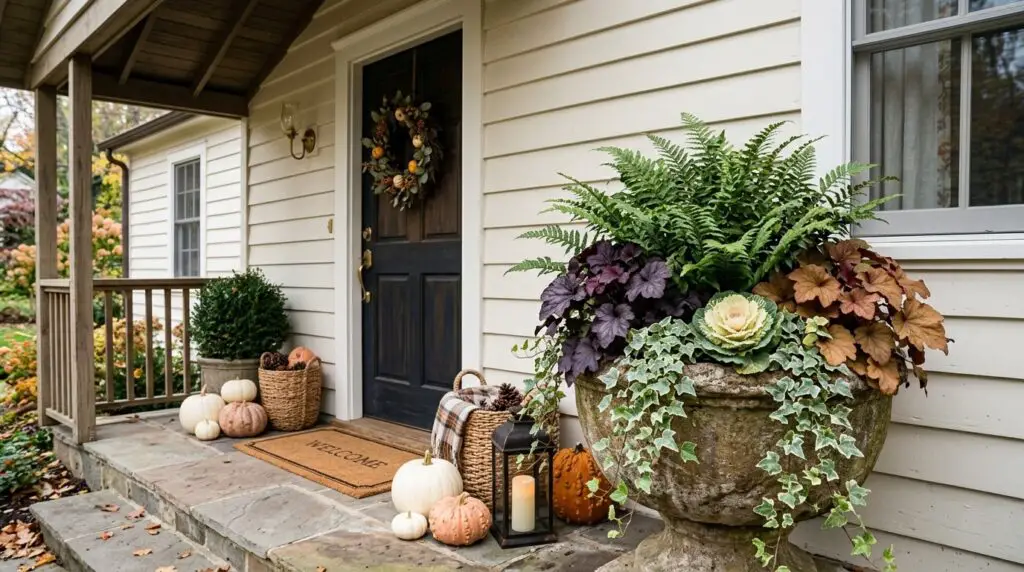
This is where fall front porch shade planters need a different kind of thinking. A covered porch is not a failed sunny porch. It has its own mood. Cooler light, softer color, damp corners and deeper shadows all change what works. The answer is not always more orange. Sometimes it is plum leaves, green fern fronds, cream pumpkins and a pot big enough to look like it belongs near the door.
Why Fall Front Porch Shade Planters Need Their Own Plan
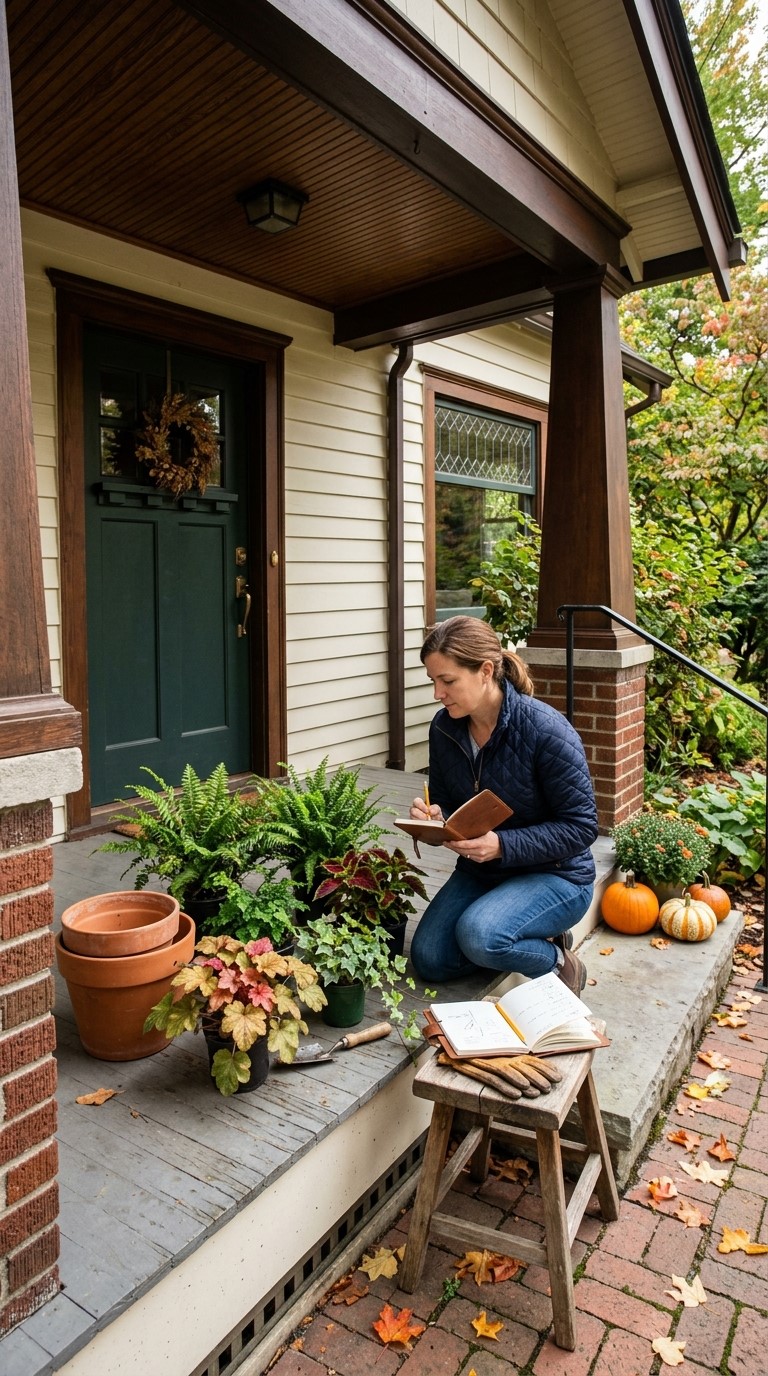
Most fall porch advice assumes sunlight. Big mums, bright pansies, baskets of ornamental peppers and hay bales all look good in an open spot where the afternoon light does half the work. Move the same pieces beneath a porch roof and the color can collapse. Orange becomes muddy. Yellow looks thin. Flowers stop opening with the same confidence.
Shade is not the enemy here. It just asks for better manners. Fall shade planters for front porch spaces need plants with leaf color, shape and weight. Flowers can still play a part, but foliage often carries the whole thing. A burgundy heuchera sitting under a roof may do more for your entry than three tired mums leaning toward the sidewalk.
Fall Shade Planters for Front Porch Areas With Less Direct Sun
Before buying plants, stand outside and look at the porch at different times of day. A north-facing front door may get no direct sun at all. A covered porch with open sides may get a polite wash of morning light. A tree-shaded entry might be bright in spring, then dim once the branches are full.
That difference matters. Bright shade can handle pansies, violas, coleus and ornamental cabbage with more ease. Deep shade is better suited to ferns, ivy, heuchera and other foliage-first choices. If the porch feels gloomy even at lunchtime, don’t fight it with flowers that sulk. Choose plants with leaves worth looking at.
Shaded Fall Porch Planters Work Better With Texture First
A shaded fall porch planter can look rich without many blooms. Texture does the work. Ferns give you airy movement. Heuchera brings rounded leaves in colors that already feel like October. Ivy softens the pot edge. Carex or other sedges add a grassy line without needing the hot, exposed conditions of many ornamental grasses.
Think of the planter like a small autumn arrangement rather than a flower show. You want large leaves beside fine leaves, trailing stems beside upright shapes and a few colors that repeat in the pumpkins or door decor nearby. That is how a shaded porch starts to look designed for its own light.
The Best Fall Porch Planters for Shade Start With Foliage
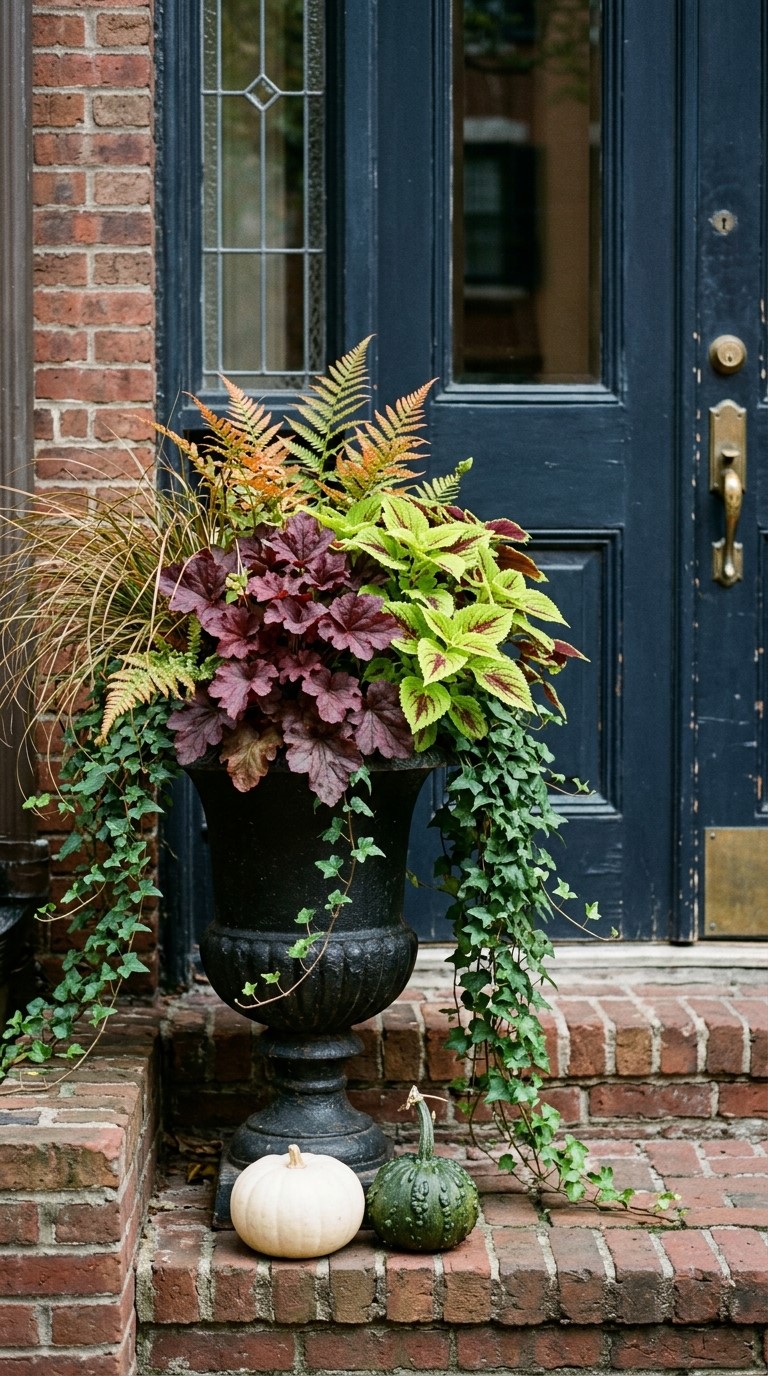
The best fall porch planters for shade usually start at the leaf table, not the flower bench. This is where heuchera earns its place. It comes in smoky purple, caramel, lime, copper, berry and deep green tones, and those colors read as fall without asking the plant to bloom.
Ferns are just as useful. Autumn fern, lady fern, holly fern and other porch-friendly fern types can make a pot feel full even when flowers are scarce. They also make pumpkins look better, which sounds like a small thing until you see a white pumpkin beside soft green fronds. Suddenly the porch has depth.
Shade Loving Fall Porch Planters With Heuchera and Ferns
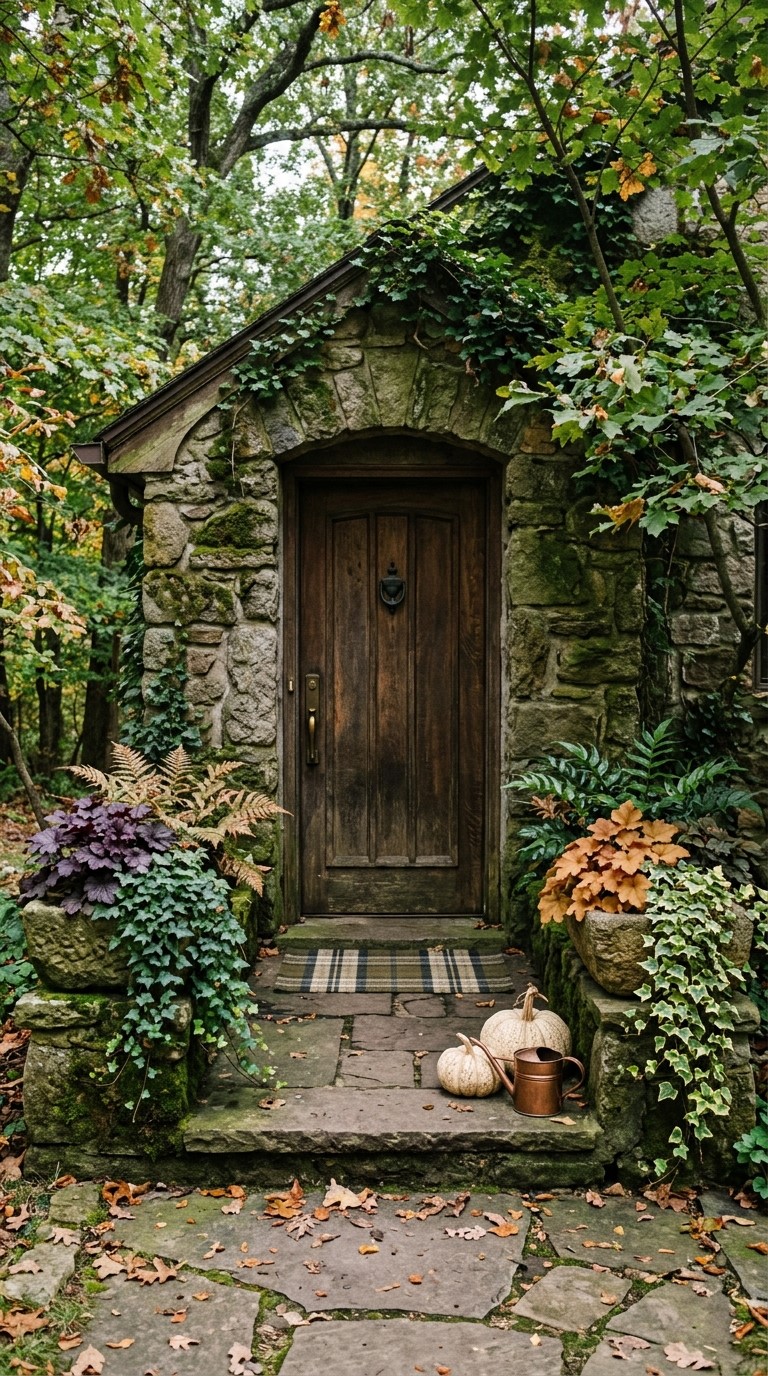
For shade loving fall porch planters, heuchera and ferns are a strong pair because they do opposite jobs. Heuchera sits low and broad, almost like a living ruffle around the pot. Ferns rise and loosen the arrangement. Together, they give a container the kind of body a mum would usually provide in a sunny spot.
Try plum heuchera with autumn fern in a dark urn. Or use caramel heuchera with a green fern and a few cream pumpkins at the base. If your porch has brick, stone or dark siding, these leaf colors will look settled instead of loud. They feel like they belong there.
Fall Container Plants for Shade Porch Pots With Coleus
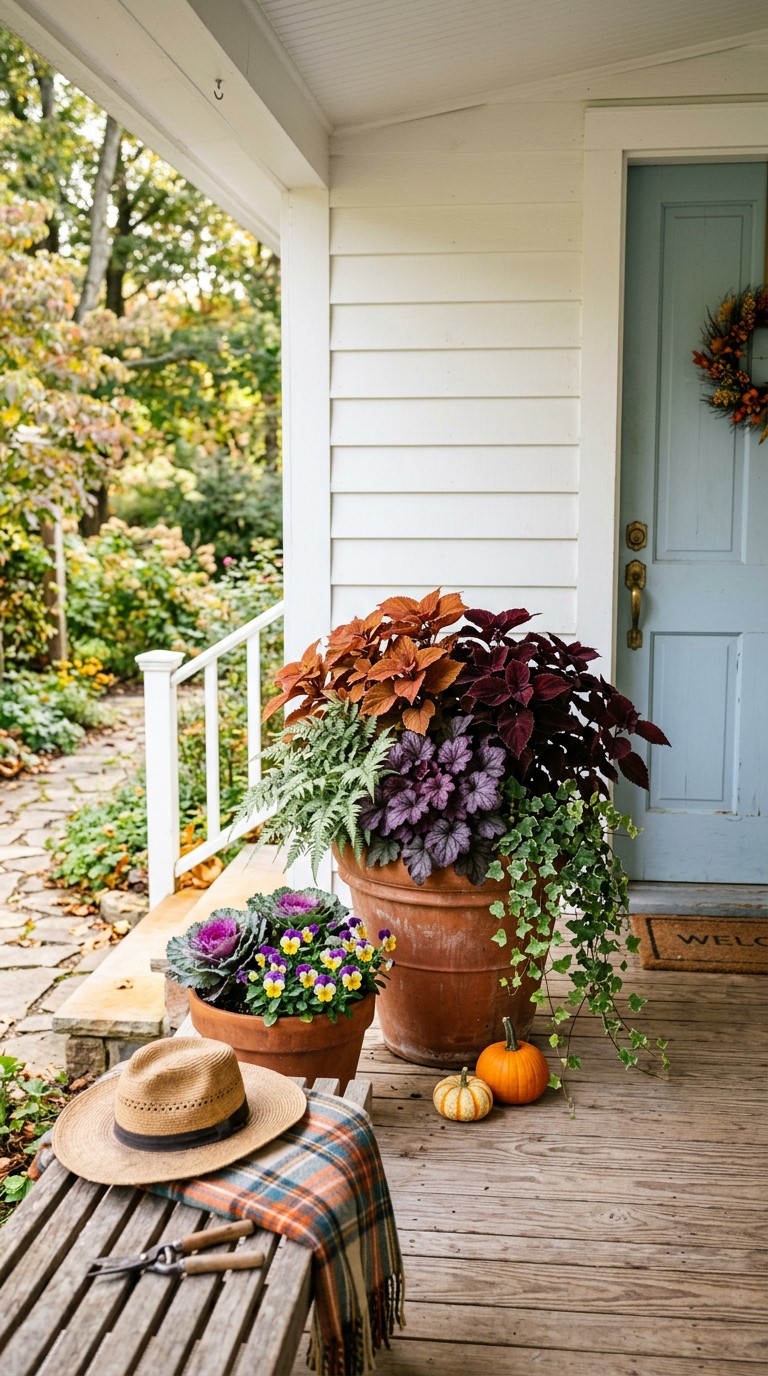
Coleus can be wonderful in fall container plants for shade porch pots, especially before hard frost arrives. It gives you those rust, burgundy, lime and copper tones people keep trying to get from flowers. The leaves are the show, so the plant still looks useful even when the porch light is weak.
There is one catch. Coleus is tender. Cold nights can bruise it fast. Use it as an early fall piece, then replace it with pumpkins, cut branches, hardy ivy or ornamental cabbage when the weather turns mean. That sounds like extra work, but it can also make the porch feel fresh for longer.
Fall Front Door Shade Planters With Ivy, Carex and Trailing Greens
Fall front door shade planters often need something to spill over the edge. Without that, pots can look stiff, especially beside a square door, straight steps and railings. English ivy is the old reliable. Variegated ivy gives a little light in dark corners, while plain green ivy feels classic against brick or painted siding.
Carex can help too, especially in bronze or green forms that stay soft and grassy. In brighter shade, creeping Jenny may add a chartreuse edge, although it can fade in deeper spots. Let one plant drape. The whole planter will feel less like a lump.
How to Build Shaded Fall Porch Planters With Real Fall Color
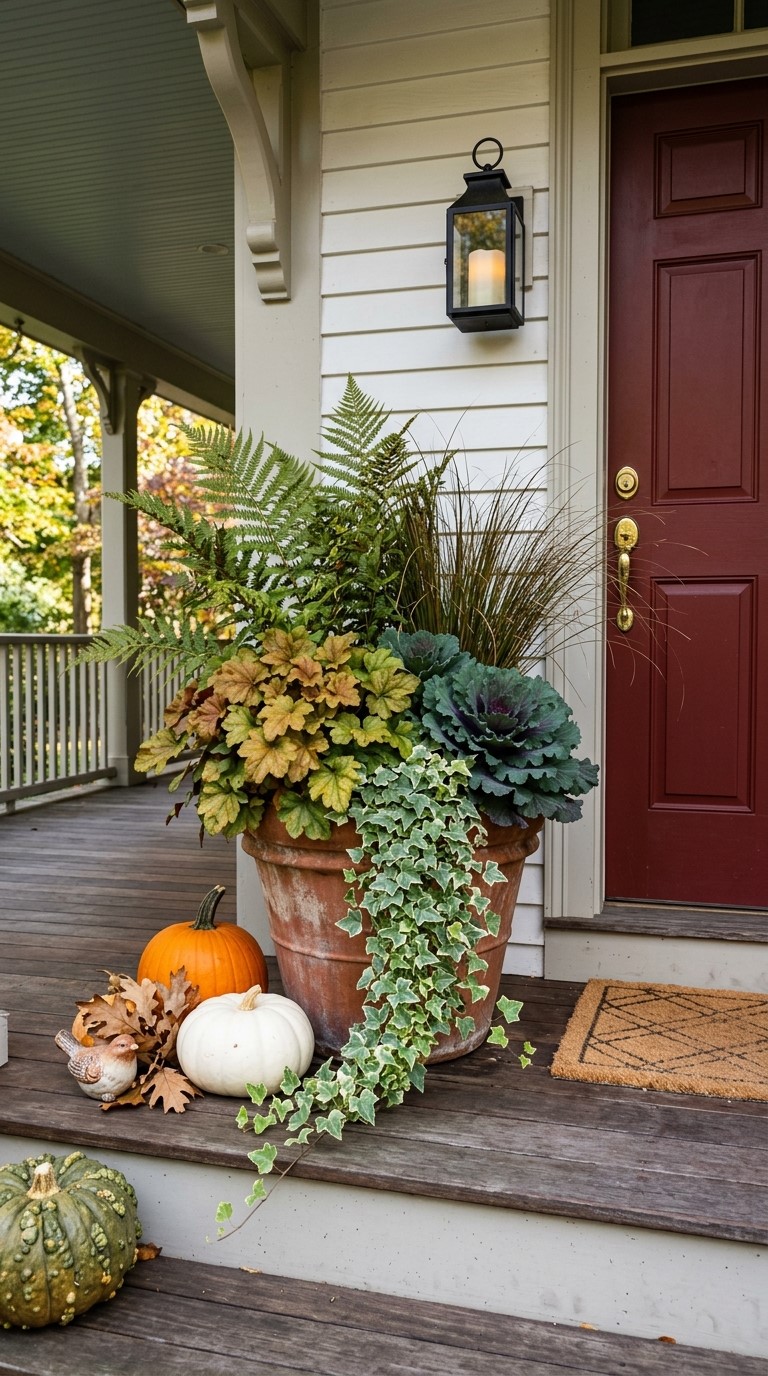
A good shaded fall porch planter needs a few layers. Start with height, add fullness, then let something trail. That old container rule still works, but you don’t have to treat it like a classroom diagram. The point is simple: the eye needs somewhere to start, somewhere to rest and somewhere to follow.
For height, use a fern, ornamental cabbage, small evergreen, upright sedge or even bare branches. For the middle, add heuchera, coleus, violas in bright shade or smaller ferns. For the edge, use ivy, creeping Jenny or a low trailing vine. Then tuck pumpkins near the pot, not necessarily inside it.
Fall Porch Pots for Shade With a Full, Layered Mix
Fall porch pots for shade should feel generous. A small pot with one plant can vanish beside a front door, especially in a shadowed entry. If the porch is narrow, go taller rather than wider. A deeper urn or tapered planter can hold enough plant material without blocking the walkway.
Start with the tallest plant slightly toward the back if the pot sits against a wall. Place the fullest foliage toward the front and sides. Let the trailing plant fall where people can see it from the sidewalk. This small shift makes the pot look fuller from the view that matters most.
Autumn Shade Planters for Porch Steps With Warm Leaf Color
Autumn shade planters for porch steps don’t need blazing flower color. Warm leaf color can do more, and it lasts better in low light. Burgundy, copper, plum, caramel, mustard and deep green all feel seasonal without looking forced. Add cream or pale green if the porch is very dark.
Repeating one color helps. If you use plum heuchera in the top pot, add a dark plum pumpkin, ribbon or doormat detail nearby. If the plants are mostly green, use warm terra-cotta pots or rust-colored lanterns. The porch starts to feel pulled together without being fussy.
Fall Planters for Covered Porch Spots With Seasonal Extras
Fall planters for covered porch spots can lean on seasonal extras when plants are limited. Pumpkins, gourds, lanterns, dried hydrangeas, seed heads, branches and baskets all help. The trick is to let them support the planter rather than bury it.
A fern in a stone pot looks better with two white pumpkins beside it than with a dozen tiny gourds scattered around its feet. A heuchera container near the door may need only a lantern and a low basket of pumpkins. Too much small decor can make a shaded porch look busy, not cozy.
Fall Front Door Shade Planters for Different Porch Styles
Not every porch wants the same container. A cottage entry can take a looser, leafier planter. A modern front door often looks better with fewer colors and stronger shapes. An older brick porch may love terra-cotta and ferns. A small covered step may need one handsome pot and the courage to stop there.
This is where fall front door shade planters become less about plant shopping and more about editing. The plants should suit the house. That sounds obvious, but garden centers make people panic-buy. You go in for ivy and leave with three mums, a scarecrow and a cabbage the size of a helmet.
Fall Front Porch Shade Planters for a Small Covered Entry
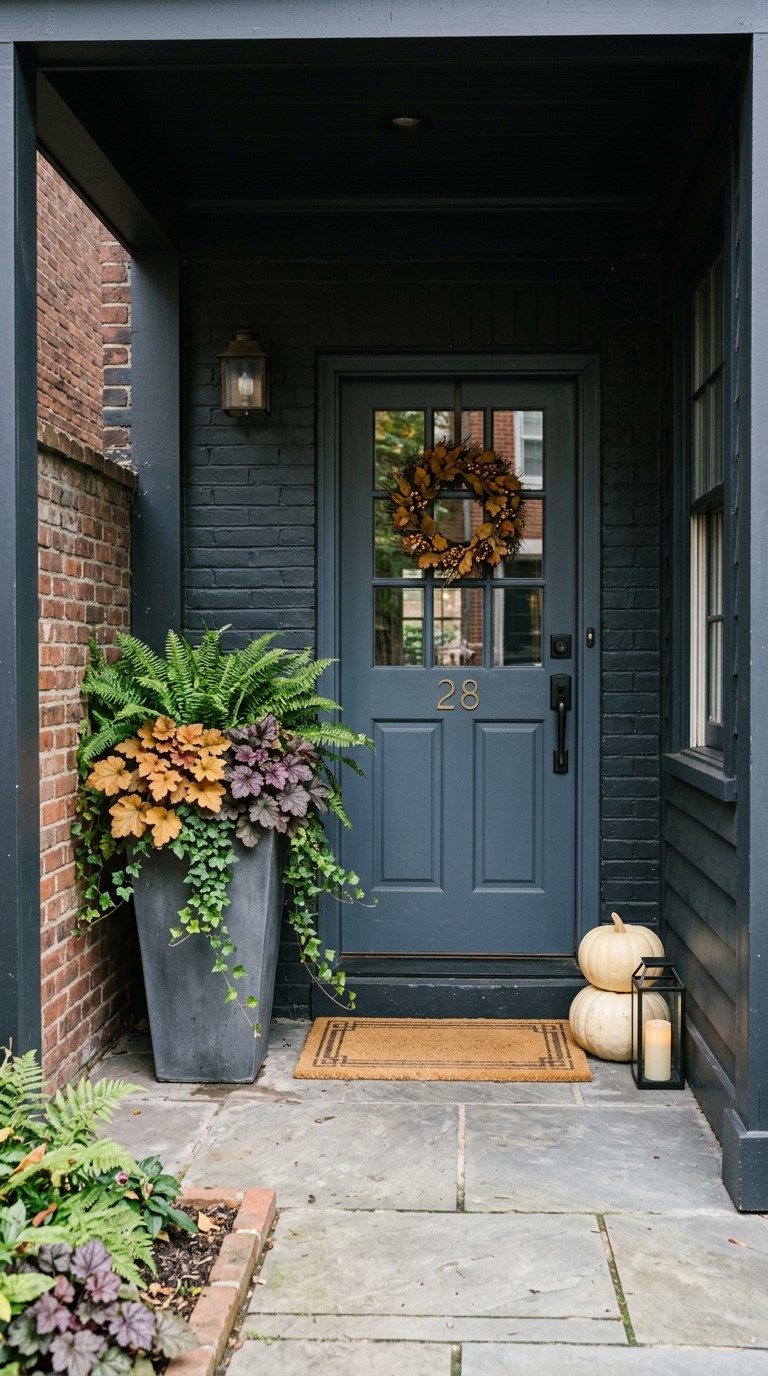
For a small covered entry, use one strong fall front porch shade planter instead of several weak ones. A tall pot beside the hinge side of the door can look polished without stealing space. Add a smaller pumpkin grouping near the opposite side if the step allows it.
Good plant choices include a compact fern, two heucheras and trailing ivy. If there is bright shade, add a few violas at the front for small flowers. Keep the doormat simple and leave enough room for daily life. A porch should still let you carry groceries without performing ballet.
Fall Shade Planters for Front Porch Corners With Old-House Charm
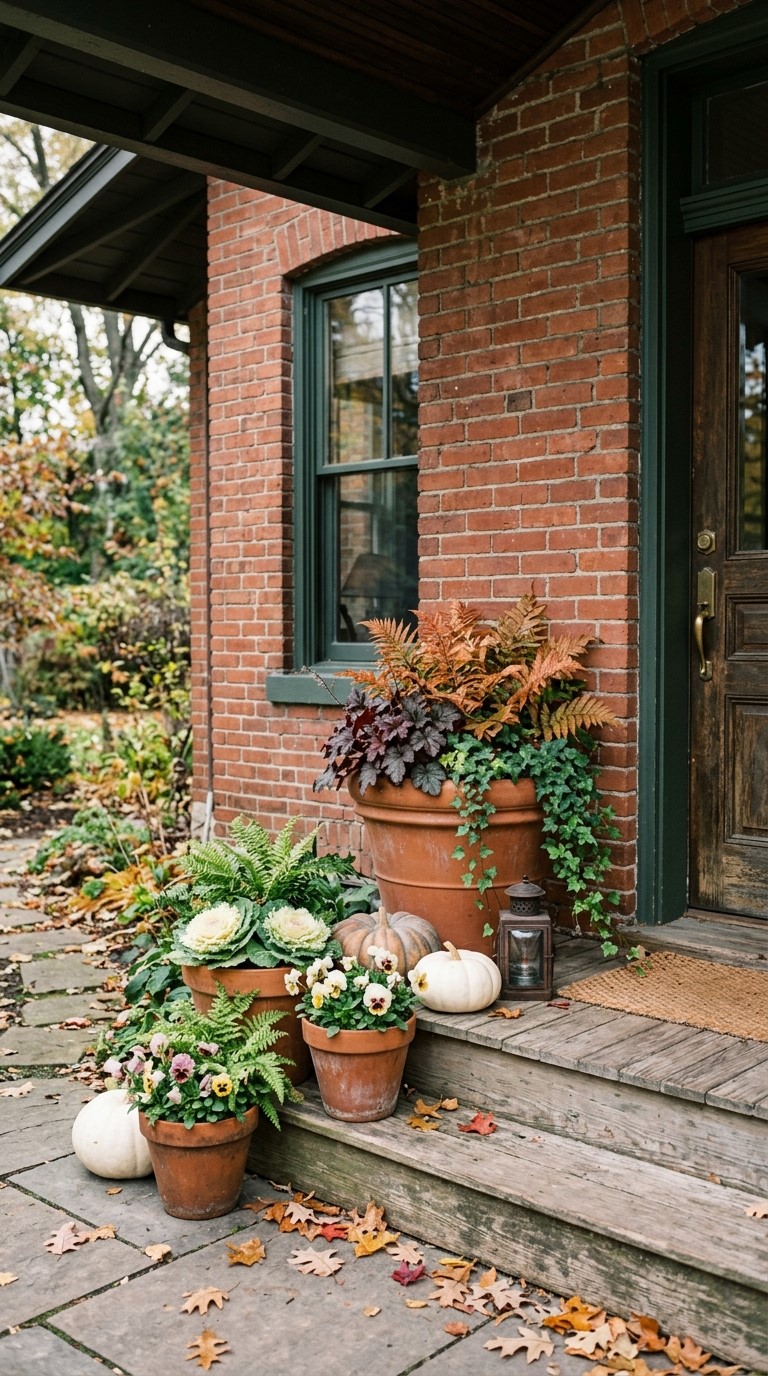
Old-house porches often have the best shade. They also have trim, brick, stone, railings and weathered steps that already bring character. Fall shade planters for front porch corners in these spaces look best when they don’t pretend to be too polished.
Use terra-cotta, aged zinc, stone-look pots or baskets with hidden plastic liners. Fill them with ferns, heuchera, ivy and perhaps ornamental cabbage in cream or green. Add white pumpkins or dusky orange ones rather than bright plastic-looking pieces. The result should feel as if the porch has been doing autumn for years.
Shaded Fall Porch Planters for Modern Front Doors
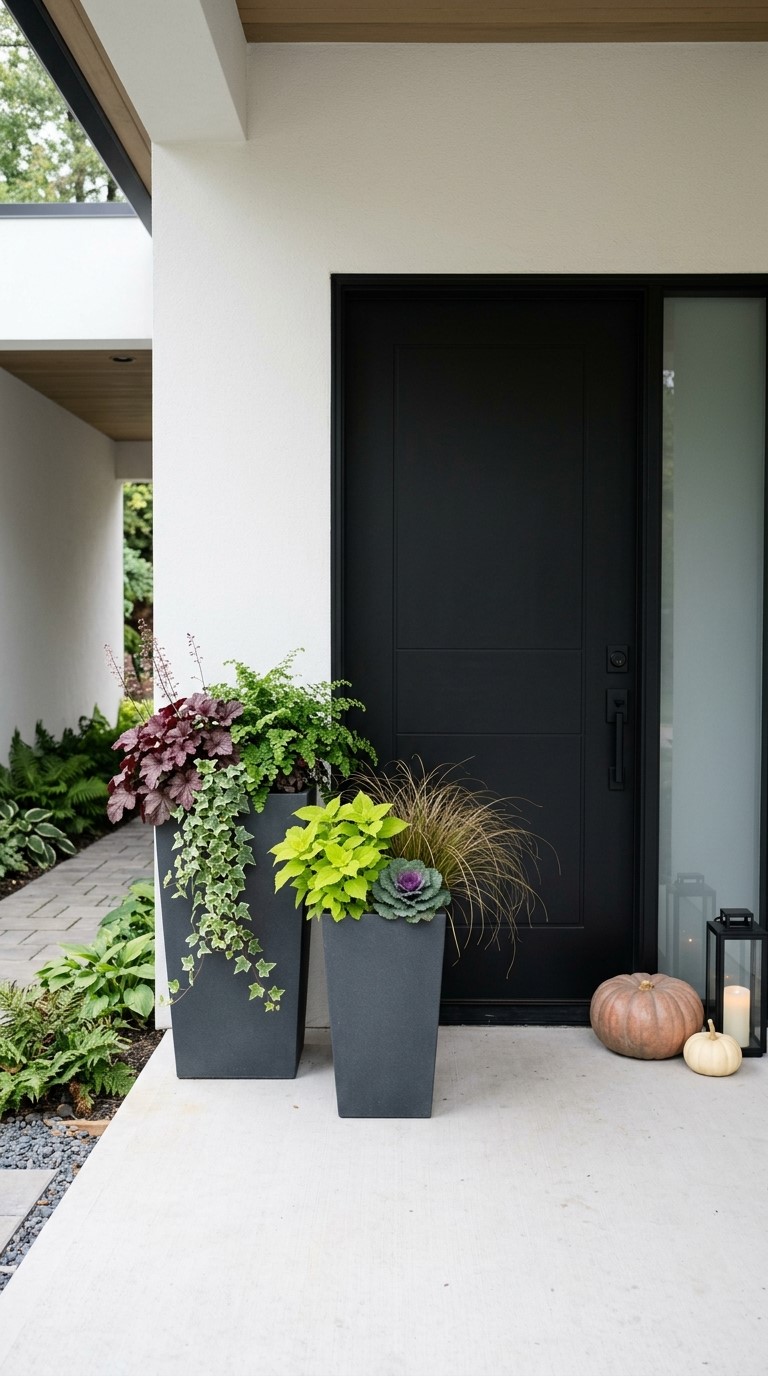
Modern entries usually need restraint. Shaded fall porch planters near a black, charcoal, white or wood front door can look sharp with just two or three plant colors. Try burgundy heuchera, green fern and variegated ivy in a matte black or concrete-style planter.
Skip the cluttered pumpkin pile if the lines of the house are clean. Use one large pumpkin, one lantern and one strong pot. If you want more color, bring it through foliage instead of small decorations. A lime coleus against a dark door can be enough.
Fall Container Plants for Shade Porch Pots by Color Mood
Choosing fall container plants for shade porch pots is easier when you pick a color mood first. Otherwise the cart fills with random pretty things, and the porch ends up arguing with itself. Start with the house. Brick, siding, trim color, door paint and even the porch floor all affect what will look good.
For warm houses, copper and burgundy foliage often fits. For gray, white or blue homes, plum, green and cream can look cleaner. For a wood door, almost everything works, but soft greens and caramel leaves have a lovely way of looking settled rather than staged.
Fall Porch Planters for Shade With Burgundy and Copper Tones
Fall porch planters for shade with burgundy and copper tones feel rich without needing many flowers. Use a burgundy heuchera as the base, then add copper coleus while the weather stays mild. A bronze carex or small fern can lift the shape, and ivy can soften the rim.
This mix looks good with orange pumpkins, dark lanterns and warm wood doors. It can also rescue a porch where orange mums look too harsh. The leaves give you fall color, but the effect is quieter and more grown up.
Autumn Shade Planters for Porch Pots With Soft Neutrals
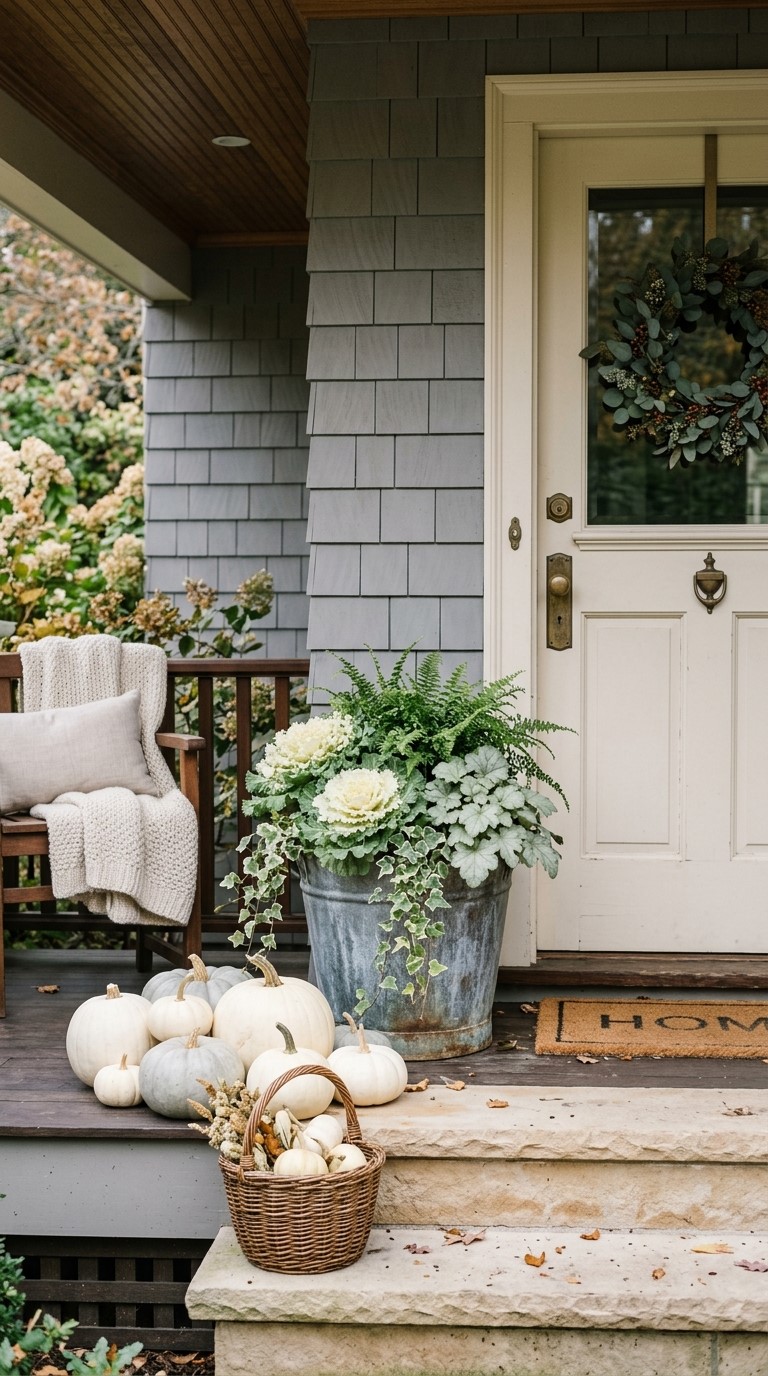
Autumn shade planters for porch pots can also go pale. This works well on darker porches because cream and light green show up better than deep red. Use green ferns, variegated ivy, cream ornamental cabbage and white pumpkins. A pale stone, gray or aged metal planter will keep the look soft.
Neutral does not mean bland. The interest comes from shape: ruffled cabbage leaves, fern fronds, round pumpkins and trailing ivy. If the porch feels too cool, add one small warm detail, like a terra-cotta saucer or a tan coir mat.
Shade Loving Fall Porch Planters With Plum, Green and Gold
Shade loving fall porch planters with plum, green and gold can suit almost any house. Plum heuchera gives depth. Green ferns keep the pot alive and fresh. A gold or chartreuse coleus adds light, especially in bright shade. If creeping Jenny grows well for you, it can spill over the edge like a little ribbon of sun.
This color mix is useful for porches that feel dim but not dark. It brightens the entry without yelling. Pair it with muted pumpkins, brass lanterns or a natural basket and the whole front door area feels warmer.
How to Place Fall Porch Pots for Shade Without Clutter
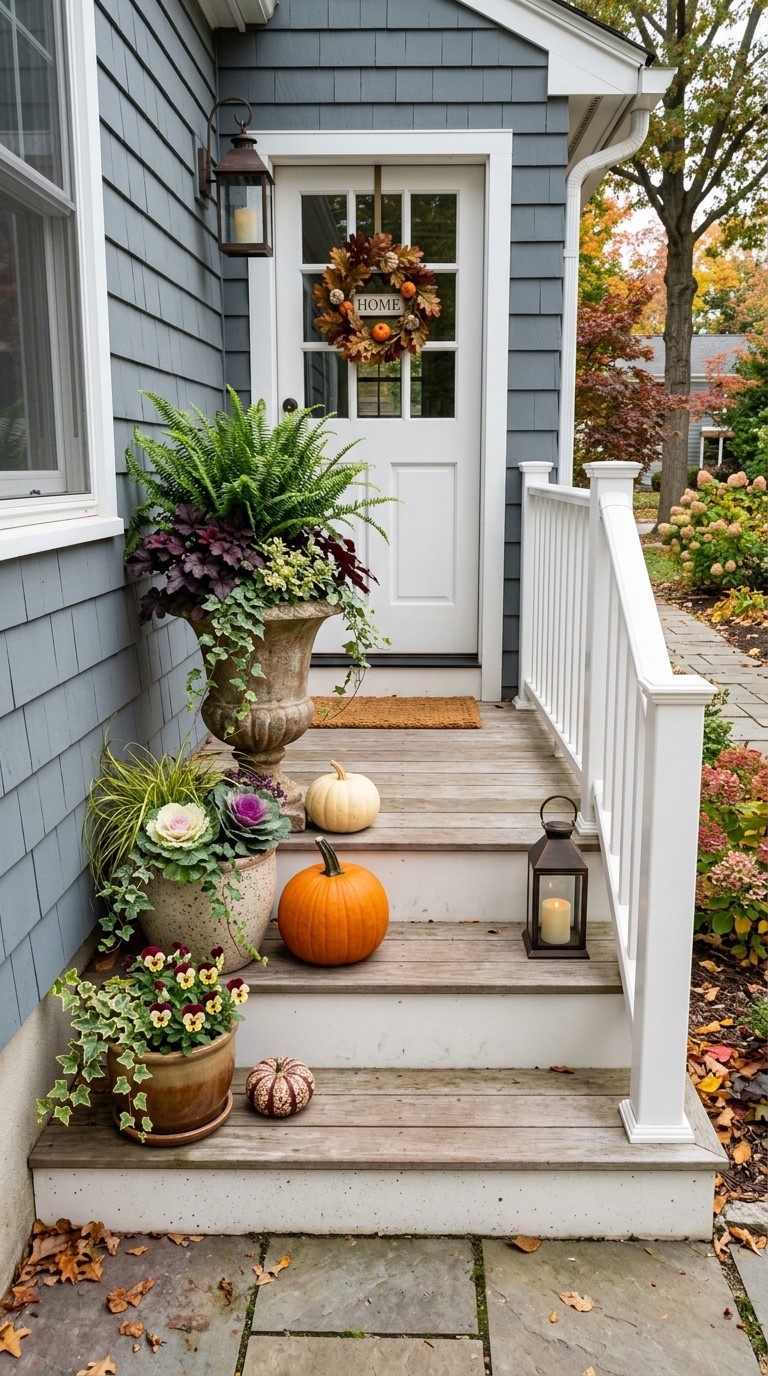
A shaded porch can look crowded faster than a sunny one. The light is softer, so objects don’t separate as clearly. Six small pots, three lanterns and a pumpkin family can become one dark little pile from the street. Scale matters more than quantity.
Use fewer pieces with better size. A large planter near the door, a medium pot on the lower step and one pumpkin group may be plenty. Leave breathing room around the doorframe. The entry should look welcoming from the sidewalk and still work when someone actually steps onto the porch.
Fall Front Porch Shade Planters Near the Door
Fall front porch shade planters near the door should frame the entry without blocking it. If you have a double door or wide landing, matching pots can look lovely. If your porch is narrow, an uneven setup often works better: one larger planter on one side and a lantern or pumpkin stack on the other.
Pay attention to the swing of the door. Also think about bags, pets, kids and deliveries. A planter that looks perfect in a photo can become irritating if everyone bumps it twice a day. Pretty should not be annoying.
Fall Porch Pots for Shade on Steps and Landings
Fall porch pots for shade on steps need enough weight to read from a distance. Tiny pots lined down the stairs can look cute up close but messy from the curb. Use two or three sizes instead. Place the largest pot at the top or bottom, then repeat one plant or one color in the smaller pots.
If the steps are narrow, keep plants tucked to one side. Ivy and trailing vines should fall where they won’t catch shoes. A shaded porch already has a softer mood. It doesn’t need a trip hazard.
Fall Planters for Covered Porch Corners With Height
Fall planters for covered porch corners often need height because corners are where plants disappear. Use a tall urn, a plant stand, a low stool or a sturdy crate to lift the pot into view. This is especially helpful for ferns and heuchera, which can sit too low if the planter is squat.
Branches can also help. A few cut stems, curly willow or dried hydrangea stems can rise from the back of the container. They add shape without asking for sun. Just keep them in scale with the door and roofline.
Low-Maintenance Care for Fall Front Porch Shade Planters
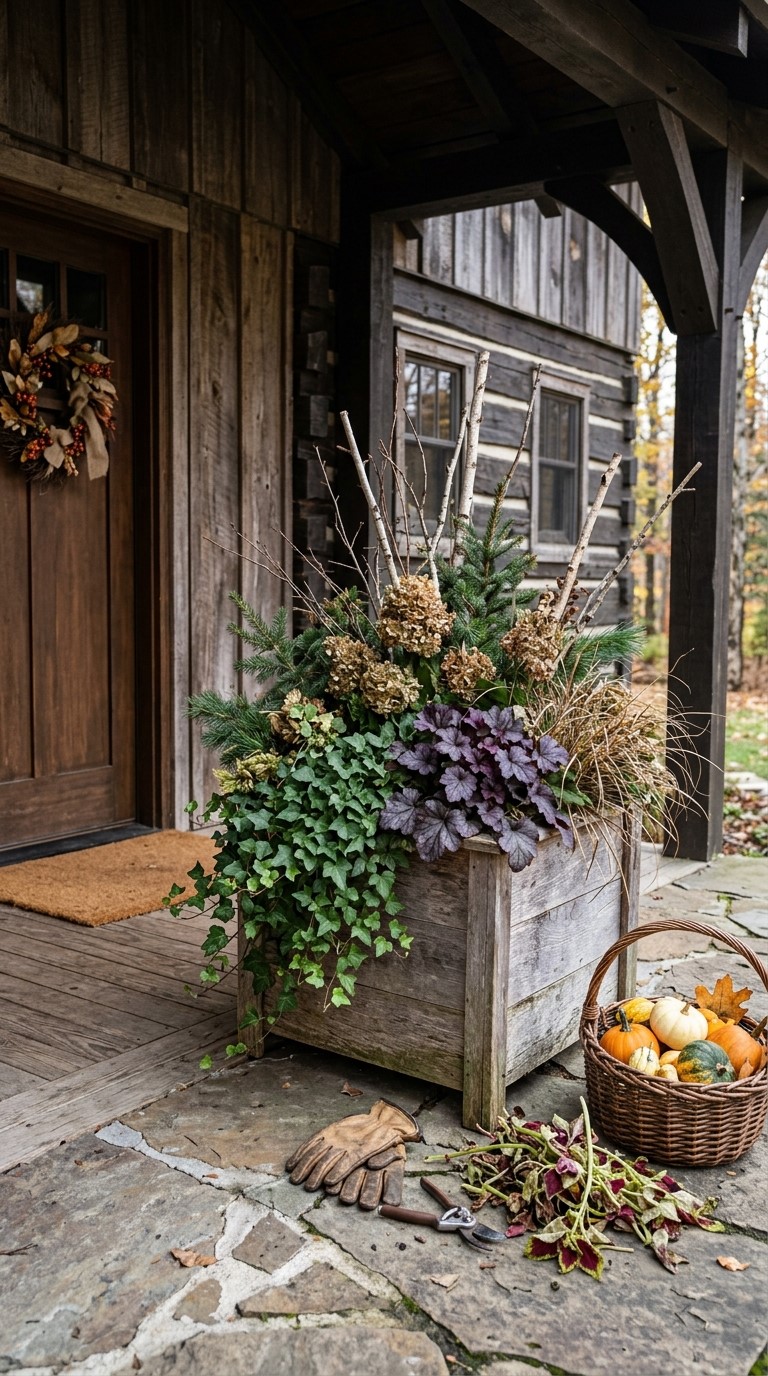
Low-maintenance fall front porch shade planters are possible, but shade does not mean you can ignore them. Covered porches create strange little weather pockets. A pot may stay dry during a rainstorm because the roof blocks every drop. Another pot may stay damp for days because cool shade slows evaporation.
The fix is simple. Check the soil with your finger rather than guessing from the weather. If the top inch feels dry, water. If it still feels damp, wait. Most porch planters suffer more from habit than neglect. People water on a schedule and the roots pay for it.
Watering Fall Shade Planters for Front Porch Pots
Watering fall shade planters for front porch pots is less dramatic than summer watering, but it still matters. Ferns dislike drying out. Heuchera wants moisture without sitting in muck. Ivy can handle a bit more patience. Ornamental cabbage prefers steady moisture, especially in a pot.
Drainage is non-negotiable. Use containers with holes and lift them slightly if water collects beneath. If you love a basket or decorative pot without drainage, place a nursery pot inside it and remove it to water. Wet roots in cold shade are not a charming autumn problem. They are just rot.
Cleaning Up Shaded Fall Porch Planters Through the Season
Shaded fall porch planters stay prettier when you edit them every week or so. Pull yellow fern fronds. Clip tired coleus after cold nights. Remove mushy leaves from ornamental cabbage. If a flower stops performing, don’t keep it out of guilt. Replace it with a pumpkin, a bundle of branches or a small evergreen.
This is also where the porch starts to shift toward late fall. Early September can handle coleus and soft color. November may ask for ivy, hardy foliage, evergreens and pumpkins with thicker skins. Let the planter change instead of forcing one look to survive the whole season.
Helping Fall Container Plants for Shade Porch Displays Last Longer
Fall container plants for shade porch displays last longer when they match the weather, not just the theme. Tender plants like coleus are good early. Hardy foliage plants are better as cold nights arrive. Ferns may keep going for a long stretch in protected places, but they can still collapse after frost.
Move pots closer to the house during cold snaps if they are not too heavy. Remove saucers before freezing weather if water sits in them. And don’t be afraid to tuck evergreen cuttings into the container once the soft plants fade. A fall planter can slide toward winter without looking abandoned.
Easy Fall Front Porch Shade Planter Combinations to Copy
If the garden center makes your brain go blank, start with one of these simple fall front porch shade planter combinations. They are not strict recipes. They are more like safe starting points for porches where sunlight is limited and mums keep disappointing everyone.
For a classic covered porch, combine autumn fern, plum heuchera, variegated ivy and two white pumpkins in a stone-look pot. For a warmer porch, use copper coleus, burgundy heuchera, bronze carex and green ivy in terra-cotta. For a soft cottage entry, try green ferns, cream ornamental cabbage, caramel heuchera and a basket of pale pumpkins nearby.
Fall Front Door Shade Planters With Ferns and White Pumpkins
Fall front door shade planters with ferns and white pumpkins are hard to ruin. Use one full fern as the main plant, then tuck heuchera around the base. Let ivy trail over the front edge. Place white pumpkins beside the pot rather than forcing them into every empty soil gap.
This works especially well with gray siding, brick, black doors and older porches. It has that cool, settled look that shade does best. Add a lantern if the porch needs weight near the floor. Stop before it turns into a display table.
Fall Porch Planters for Shade With Coleus and Brass Lanterns
Fall porch planters for shade with coleus and brass lanterns feel warm even in a dim entry. Choose a coleus with copper, rust or deep pink in the leaves. Pair it with burgundy heuchera and a low trailing ivy. A brass-toned lantern nearby will pick up the warm color without adding another plant.
This is a good early fall setup for September and mild October days. When the coleus starts to complain about cold nights, cut it back or swap in ornamental cabbage. The pot will still have structure because the heuchera and ivy are doing steady work.
Autumn Shade Planters for Porch Steps With Cabbage and Ivy
Autumn shade planters for porch steps with cabbage and ivy are useful when you want something tidy. Ornamental cabbage gives the pot a bold center. Ivy trails over the edge. Add heuchera or small ferns around the middle so the cabbage does not look stranded.
Use this combination in a medium pot on a step or landing. It looks good with small gourds placed beside it, especially if you repeat the cabbage color in the pumpkins or doormat. The whole setup feels seasonal without needing a big pile of decorations.
A Better Way to See Fall Planters for Covered Porch Spaces
Fall planters for covered porch spaces don’t have to apologize for the shade. They just need to stop copying the sunny side of the street. Once you build around foliage, shape, pot size and soft seasonal color, the porch starts to feel warmer in a way bright mums alone often can’t manage.
A shaded entry has its own kind of charm. It can hold ferns, plum leaves, trailing ivy, pale pumpkins and lantern light with more grace than a hot exposed step ever could. And maybe that is the better fall porch anyway: less glare, more texture and a front door that feels ready for the season it actually lives in.
