
From Backyard to Booth: A Home Gardener’s Guide to Farmers Market Signage
The tomatoes are finally ripe, your zinnias are taller than your fence and the kitchen counter has disappeared under a mountain of cucumbers. It’s time to load up the car and claim your spot at the local farmers market. There’s a difference between dumping a crate of produce on a folding table and selling it. Most first-time vendors figure this out around nine in the morning, right after the third person walks past their booth without breaking stride. The problem is rarely the tomatoes. The problem is the table. A blank folding table with a cash box and a few bruised heirlooms sends a clear message: this person isn’t ready to do business. Good farmers market signage fixes that before you say a word.
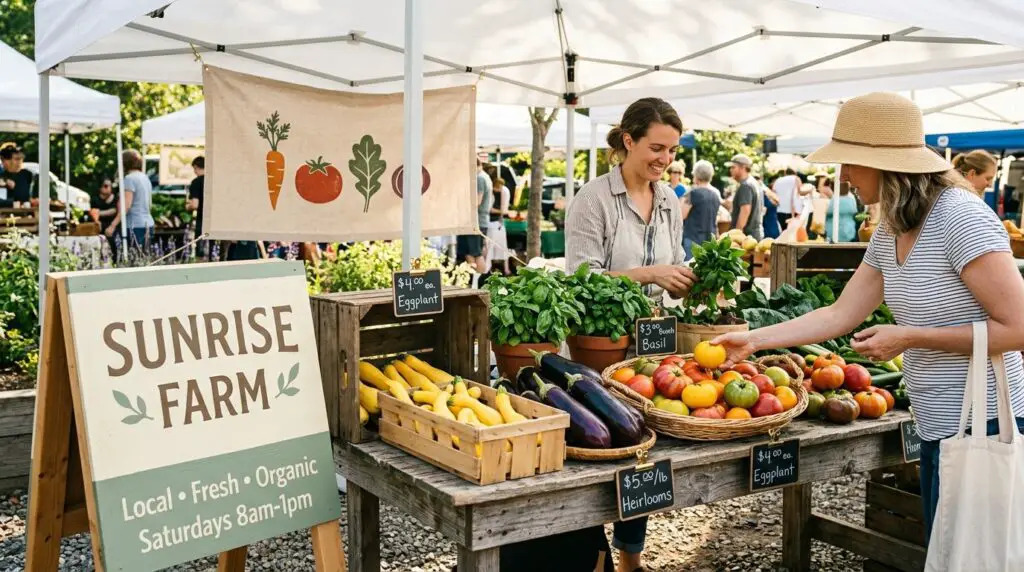
You already grew the food. Now you need to look like someone who knows what to do with it. The right farmers market signage turns a folding table into a farm stand and a nervous gardener into a vendor worth buying from on a Saturday morning.
Why Your Farmers Market Signage Matters More Than You Think
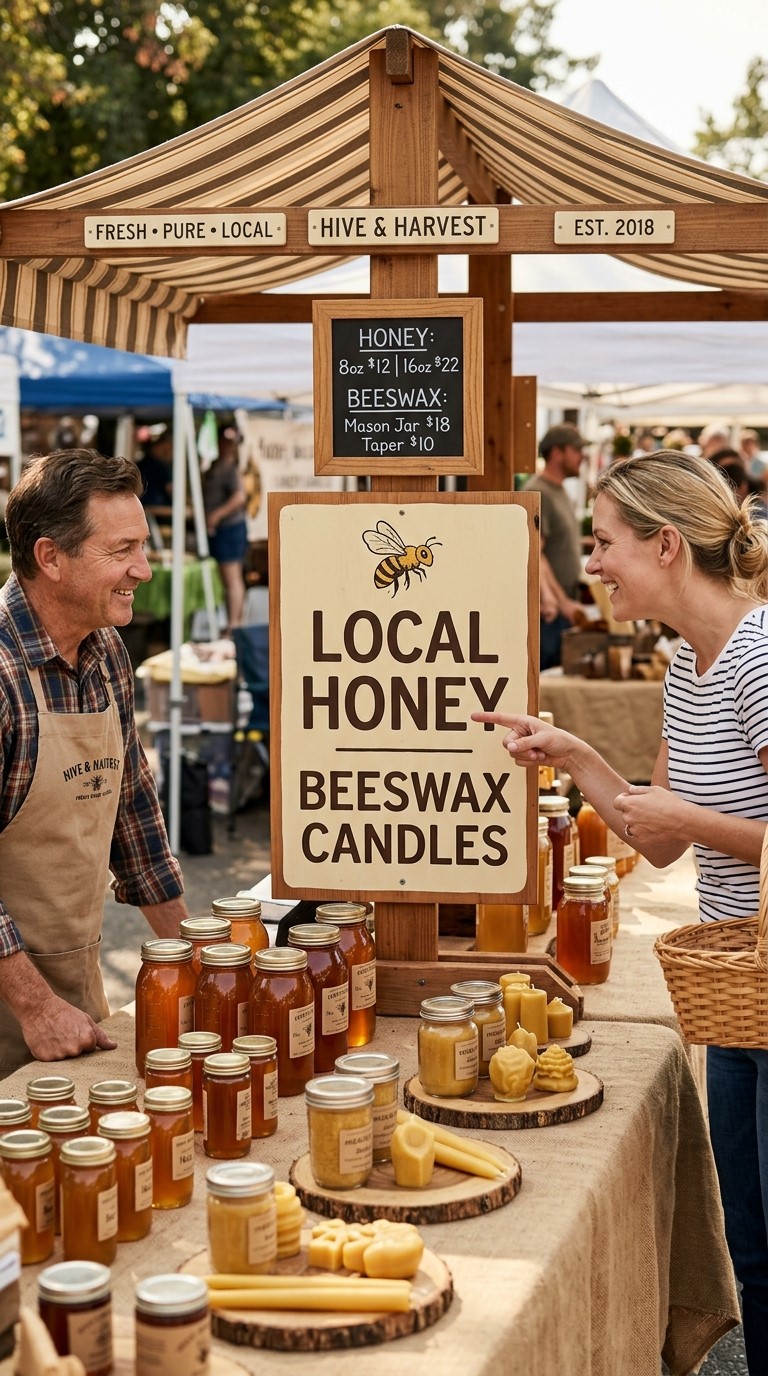
Marianne Hargrove has sold honey and beeswax candles at the Durham Farmers Market for eleven years. She still remembers her first Saturday. She had a white tablecloth, a handwritten price list on loose-leaf paper and a line of customers that never formed. A neighboring vendor leaned over during a lull and told her the paper looked like a garage sale. Hargrove went home that afternoon and built a wooden signboard from scrap cedar. She painted it cream, hand-lettered the word “Honey” in dark brown and added a small line drawing of a bee that looked more like a potato with wings. The next week her sales doubled. She swears the honey was the same.
Shoppers make decisions fast. A person strolling through a market on a Saturday morning isn’t conducting research. They’re hungry, or they’re hunting for flowers, or they’re trying to keep a toddler from knocking over a pyramid of peaches. Your booth has about three seconds to tell them what you’re selling, what it costs and whether you look like someone who grew it yourself or someone who bought bulk produce at a warehouse club and is trying to flip it. Good farmers market signage answers all of that before the customer opens their mouth.
Trust is the other half. People buy from vendors who look like they belong there. A sign that lists your farm name, even if your farm is a quarter-acre lot behind a duplex, tells shoppers you aren’t a tourist. You’re part of the market’s fabric. That matters more than most new vendors realize. A professional-looking display doesn’t mean corporate. It means you cared enough to show up prepared. The same shopper who will pay six dollars for a bundle of herbs from a table with a clean sign will walk right past the same bundle lying on a blanket with no label. Perception is half the sale.
Getting Started: Farmers Market Sign Ideas for First-Time Sellers
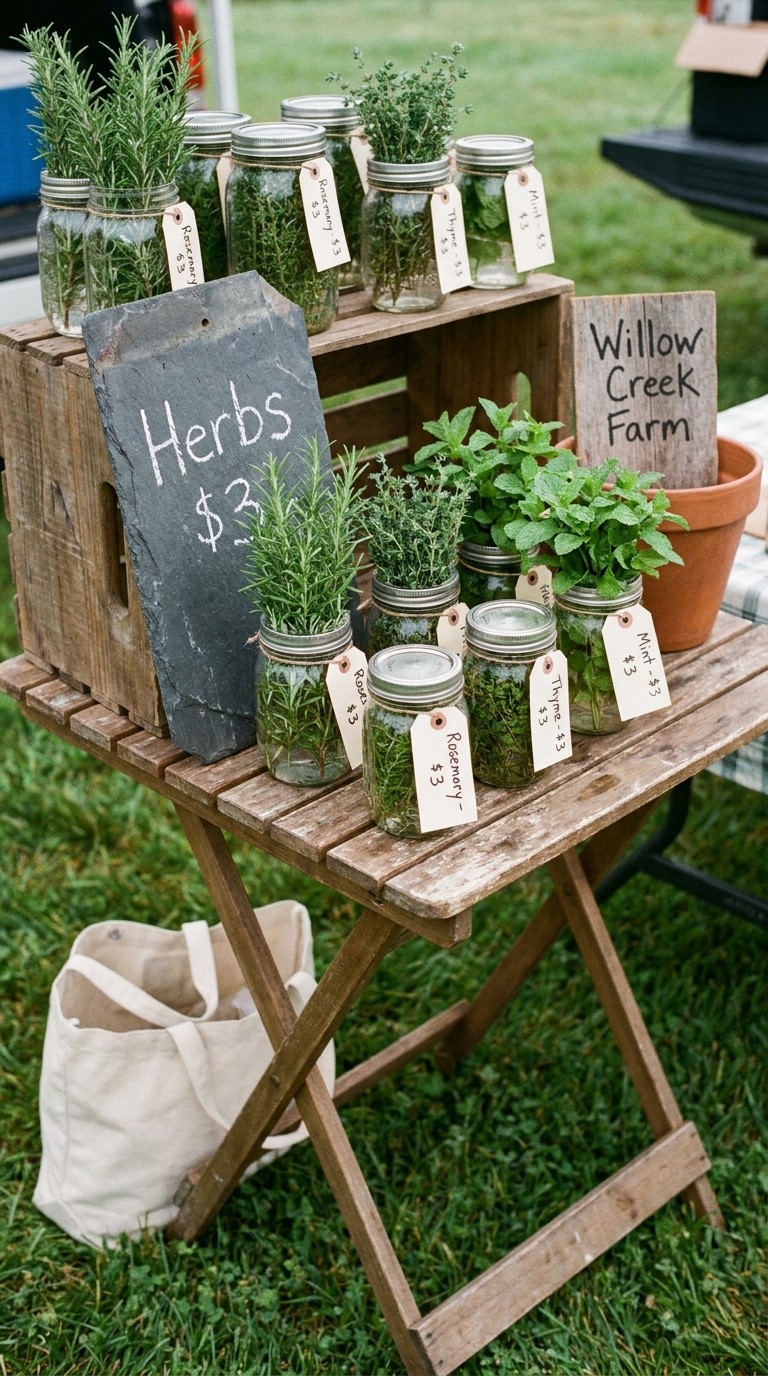
You don’t need to empty your savings account at an art supply store before your first market. Some of the best farmers market sign ideas come from what you already own. That old slate roof tile from the renovation? It’s a chalkboard. The wooden pallets stacked behind your shed? Break them down and sand the boards. Even a scrap of barn wood and a Sharpie will beat a folded piece of printer paper. I once saw a vendor write her prices directly on the rinds of small pumpkins with a black paint pen. It was the only signage she needed.
The real enemy is weather. Paper curls in humidity. Cardboard sags in dew. Ink runs in sun. If you’re selling outside, your signs need to survive the same conditions your plants do. Corrugated plastic, sealed wood and laminated sheets hold up better than anything you print at home and tape to the table. Spend money on protection, not polish. A plain sign that stays legible at noon is worth more than a beautiful one that turns into pulp by ten. I learned this the hard way after a rain shower turned my hand-lettered cardstock into pink mush.
Building Your Own Display: DIY Farmers Market Signs That Look Professional
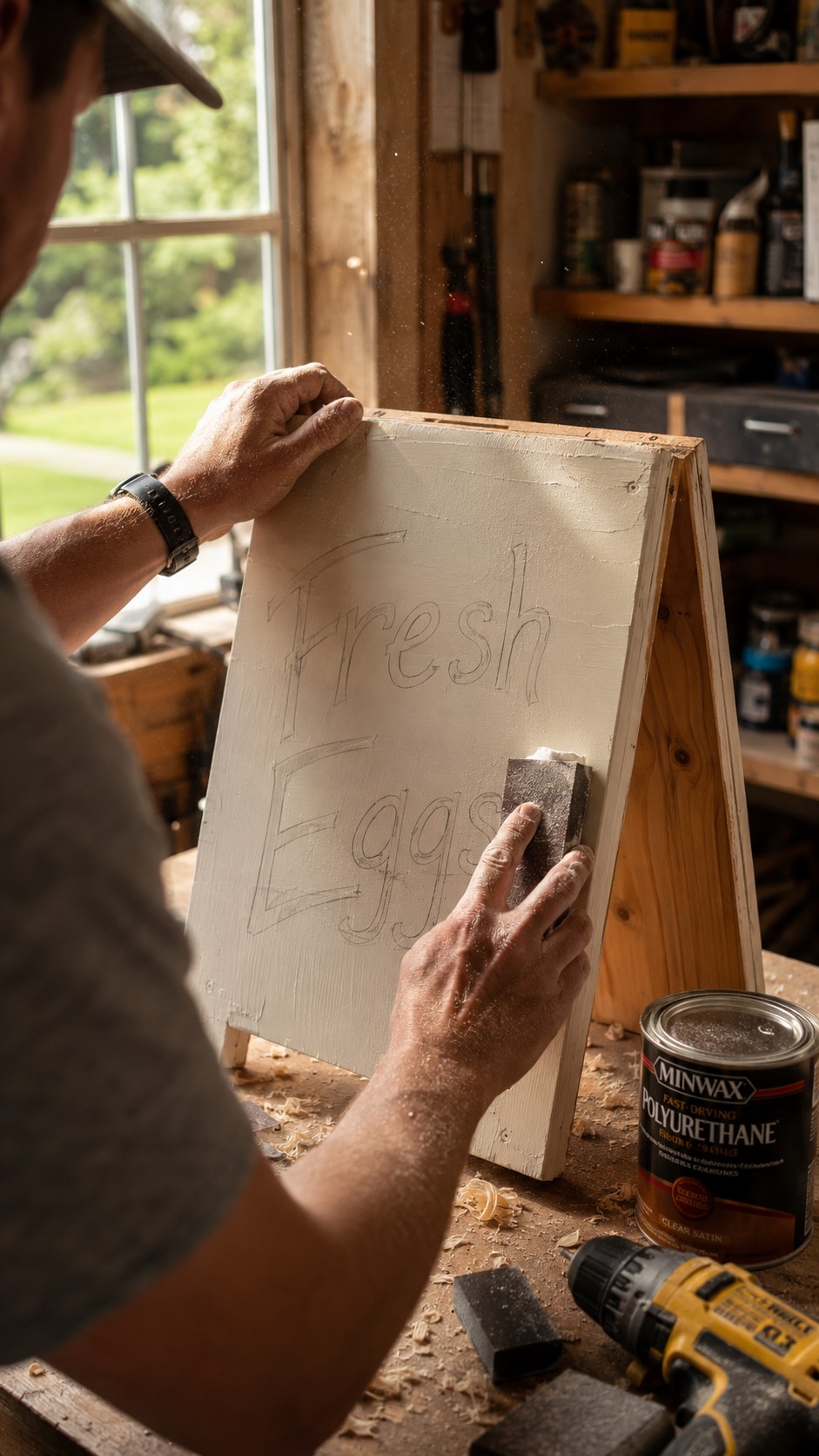
You don’t need a woodworking shop to build decent DIY farmers market signs. A handsaw, sandpaper and a drill are enough for most projects. Start with a simple A-frame. Cut two boards to two feet tall, hinge them at the top and paint them with exterior latex. You now have a sandwich board that folds flat and fits in the trunk. If you want to get fancy, add a small shelf at the bottom for potted herbs. It gives the sign weight and shows off your product at the same time. My neighbor built one from old picket fence pieces and stained it with coffee. It looks like it belongs in a Williams Sonoma catalog and it cost him four dollars in hardware.
Weatherproofing is where most home projects fail. Wood rots. Paint peels. Chalk washes off. If you want handmade market signs that last all season, seal every surface. Use exterior paint or polyurethane on wood. For chalkboard surfaces, use a clear acrylic spray instead of real chalk. Use paint pens or chalk markers. They look like chalk from three feet away, but they don’t smudge when a customer brushes against them or when the wind picks up. A little extra time with a spray can on Sunday saves you from rewriting signs in the parking lot at six on Saturday morning.
What Goes Where: Farmers Market Booth Signs and Smart Layout Tips
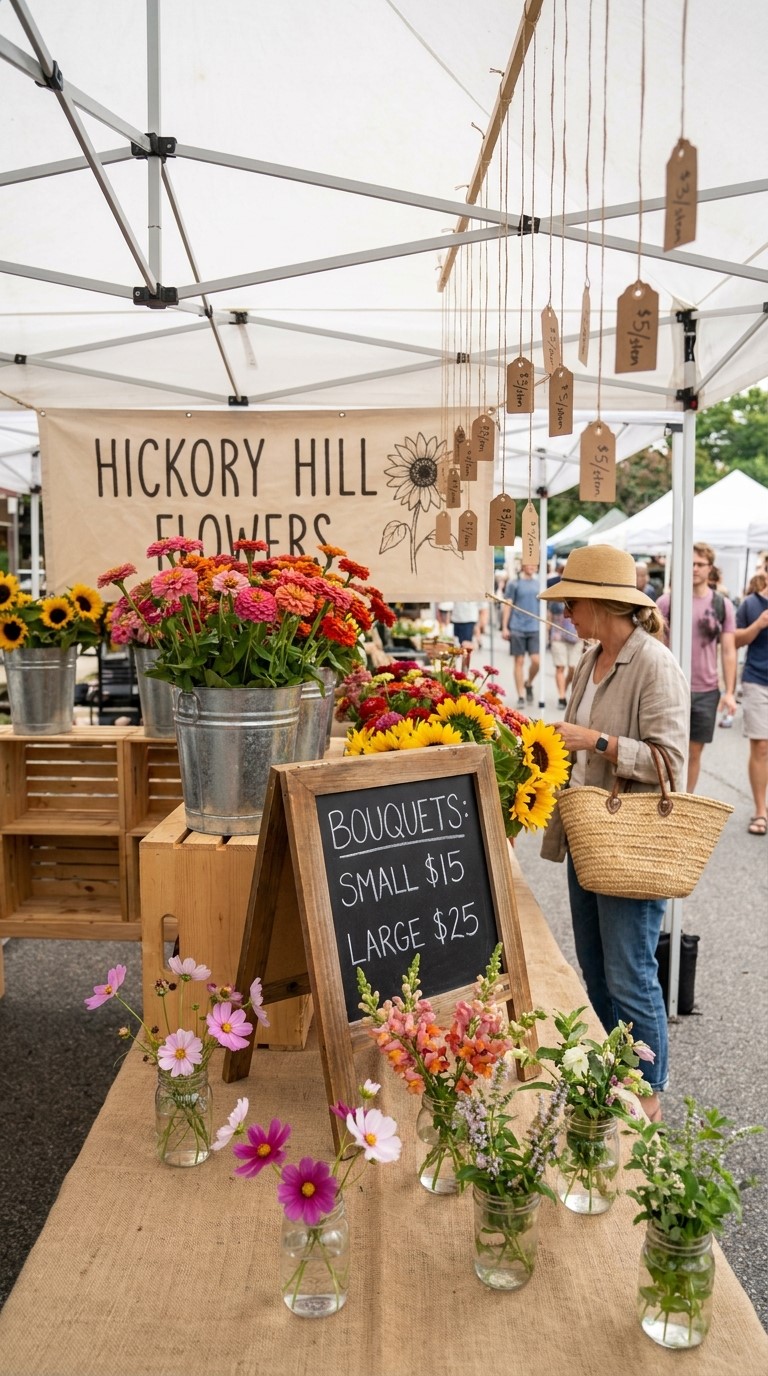
Think of your booth like a garden path. You want people to enter, look around and stay awhile. Your farmers market booth signs should guide that movement. The tallest sign goes at the back or center, where it’s visible above heads. This is your banner or farm name. Then work downward. Price signs sit at eye level, right next to the product. Small tags or cards go at hand level, where people pick things up. If customers have to bend or hunt, they will keep walking.
Eye level isn’t as obvious as it sounds. For adults, it’s about five feet from the ground. But many market shoppers are pushing strollers or wheeling carts. They aren’t looking down at your table. They’re looking forward. Put your best farmers market sign ideas on vertical stands, not flat on the table. A clipboard on an easel, a sign mounted on a tomato stake or a chalkboard propped in a bucket of sand will catch eyes that a lying-flat sign never will. One vendor I know hangs her price tags from the tent frame with twine at varying heights. It looks like a mobile and shoppers stop to read every piece.
The Charm of Hand-Lettering: Farmers Market Chalkboard Signs with Personality
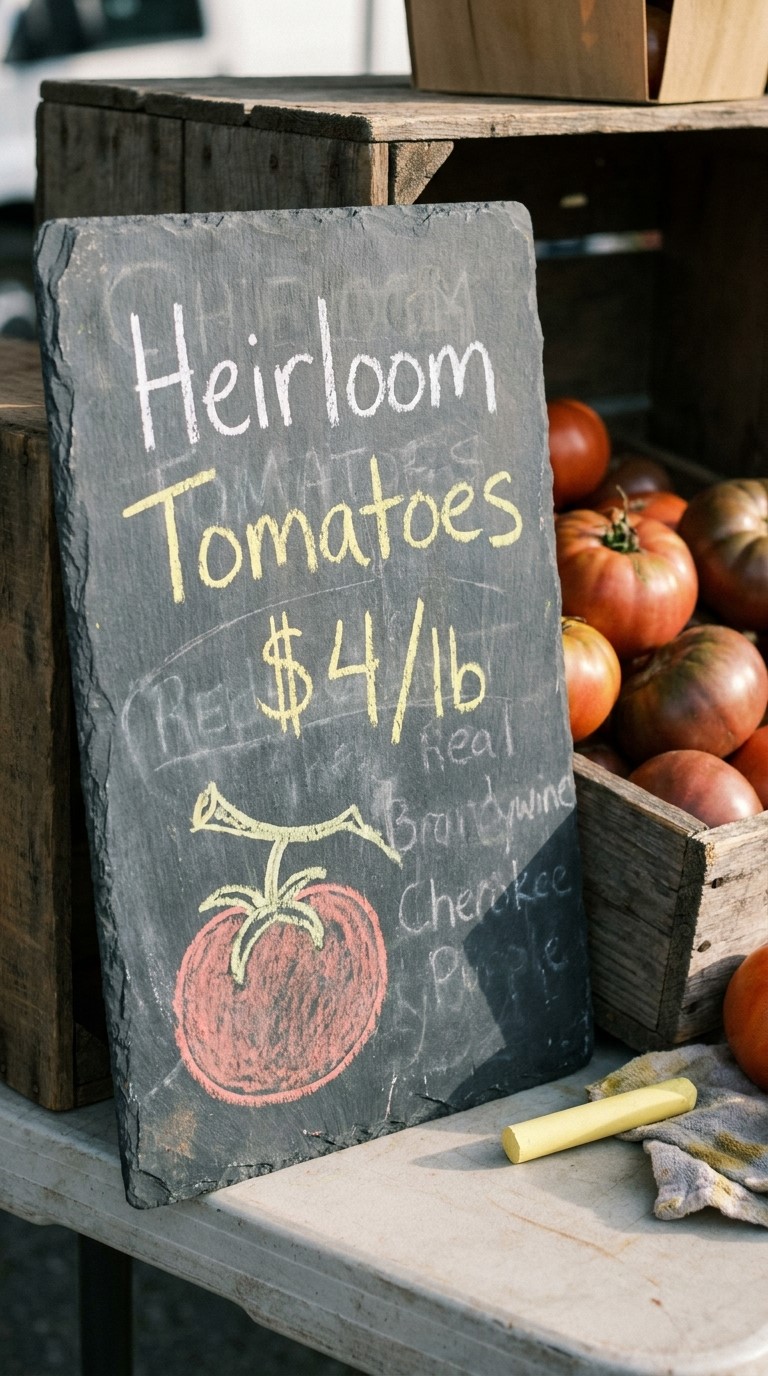
There’s a reason every bakery and coffee shop on earth uses chalkboard signs. They feel human. They feel temporary, which makes them feel honest. Farmers market chalkboard signs tell shoppers that your prices change with the season, that your inventory is small and that a real person is standing behind the table. A printed sign says warehouse. A chalkboard says kitchen.
You don’t need perfect cursive. Block letters are fine. Keep the message short. “Heirloom Tomatoes $4/lb” is better than a paragraph about soil composition. If you want to add a small drawing, draw it. A lopsided tomato is more charming than a perfect clip-art tomato. Use white or yellow chalk marker for the main text and save colored markers for prices or arrows. The contrast helps tired eyes. Write in all caps if your lowercase wobbles. No one cares about calligraphy at seven in the morning. They care about whether the peppers are hot.
One advantage of chalk is that you can change it. If you sell out of basil by ten, erase it. If you decide to drop the price on bruised peaches at two, write a new sign. That flexibility is something printed signs can’t match. Just bring a rag and a small spray bottle of water. A clean board looks more professional than one with ghost letters peeking through. I keep a piece of flannel in my cash box for quick touch-ups between customers.
Pricing Made Clear: How to Create Farmers Market Price Signs That Sell
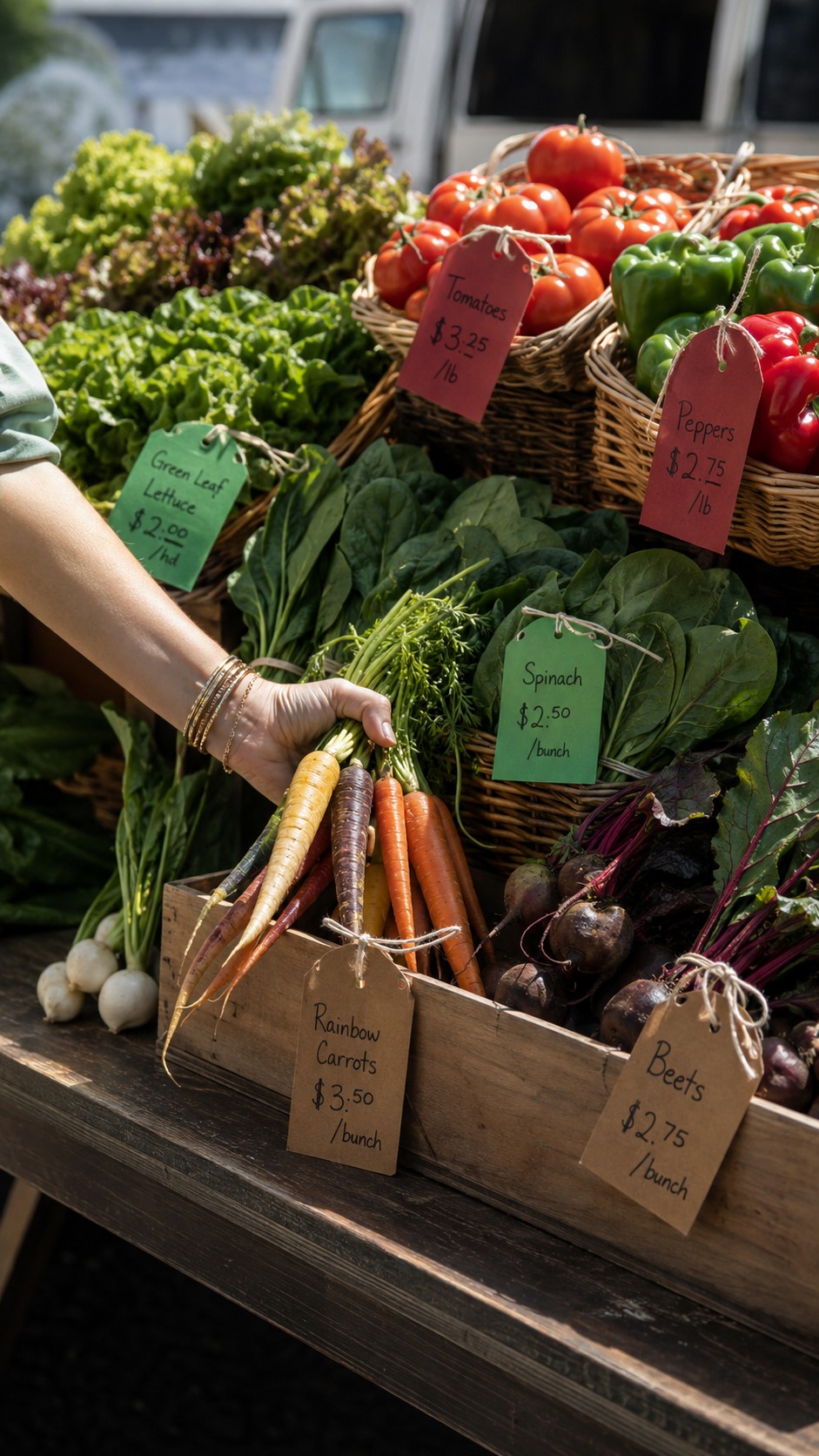
Nothing kills a sale faster than a shopper having to ask how much something costs. Some people are too shy. Some people assume that if the price isn’t shown, it’s too high. Farmers market price signs should be attached to the product, not floating on a separate sheet at the end of the table. If you’re selling bunches of carrots, the price belongs on the bunch or in the bin, not on a master list that requires reading glasses. Tape a tag to the basket handle. Clip a card to the edge of the crate. Make the connection obvious.
Color-coding speeds things up. Red tags for tomatoes. Green for greens. Brown for roots. You don’t need a system that would satisfy a librarian. You just need something that lets a shopper scan your table and find what they want without parsing text. Grouping helps too. Put all your five-dollar items in one zone and your three-dollar items in another. The signs do the selling while you bag the last customer’s order. One flower vendor I know uses vintage silverware tied with ribbon as price markers. A fork means five dollars, a spoon means three. It is silly and it works.
Bringing the Garden Aesthetic: Rustic Farmers Market Signs from Natural Materials
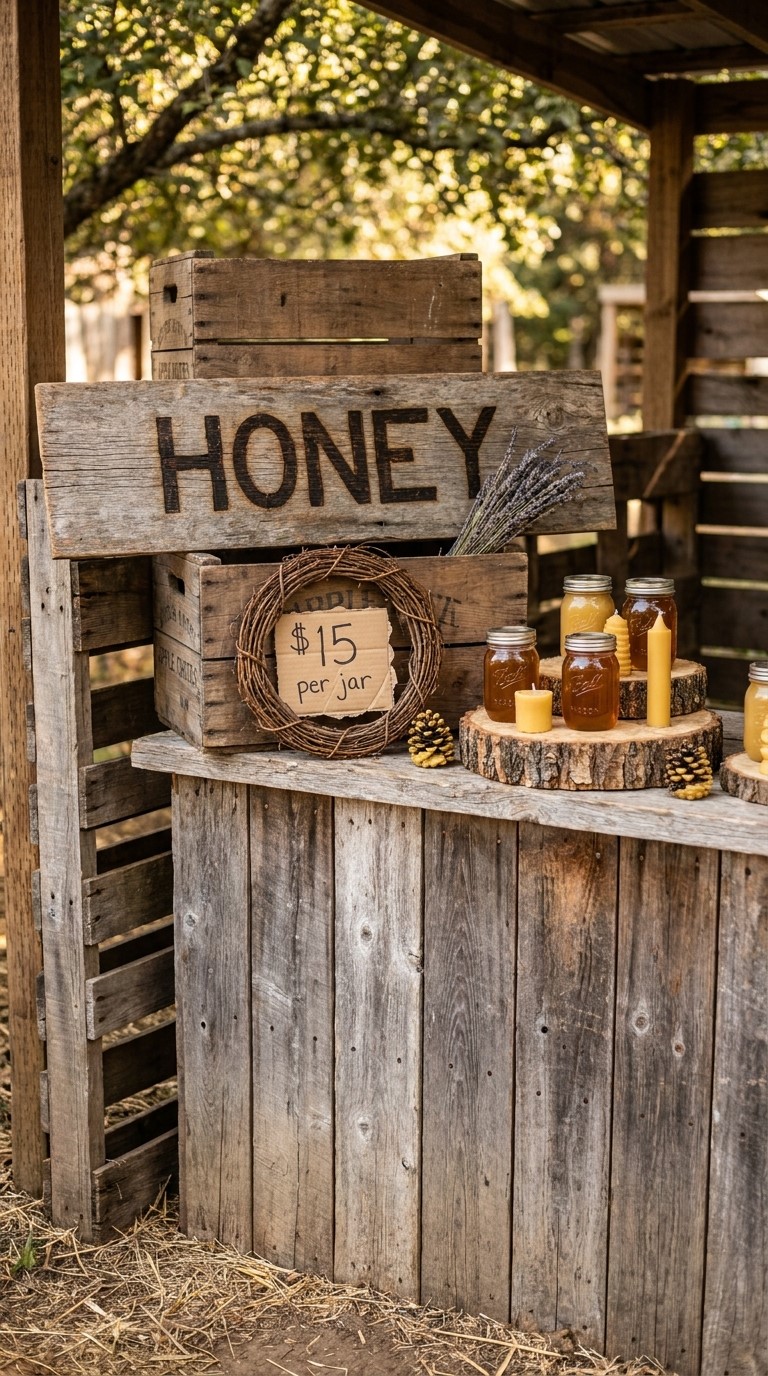
If you’re selling something you grew, your booth should look like it came from the same place. Rustic farmers market signs made from reclaimed wood, old fence posts or driftwood fit the story. They tell shoppers that you aren’t running a factory. You’re a gardener who had a good year and brought the extras to town. The signs should smell like your shed, not like a strip mall.
Working with salvaged wood means accepting imperfection. Knots, nail holes and weathered gray patina are features, not flaws. Sand enough to avoid splinters, but don’t plane the character away. Stain or seal the wood so it doesn’t bleed sap onto your tablecloth, then paint or burn your text right into the surface. A wood-burning tool costs about twenty dollars and turns a scrap board into something that looks like it came from a mountain general store. If you don’t trust your freehand, print your text on paper, tape it to the wood and trace over it with a ballpoint pen to leave an indent. Then follow the lines with the burner.
You can also bring the garden to the sign. A small grapevine wreath around a price tag, a sprig of lavender tucked into a clip or a mason jar of wildflowers next to your farm name softens the edges. These touches shouldn’t block the text. They should frame it. Last season I tucked a few stems of dried oat grass behind my main sign. Three people asked if I was selling the grass. I wasn’t, but I started bringing extra bunches the next week.
Beyond the Table: Farmers Market Banner Ideas and Vertical Displays
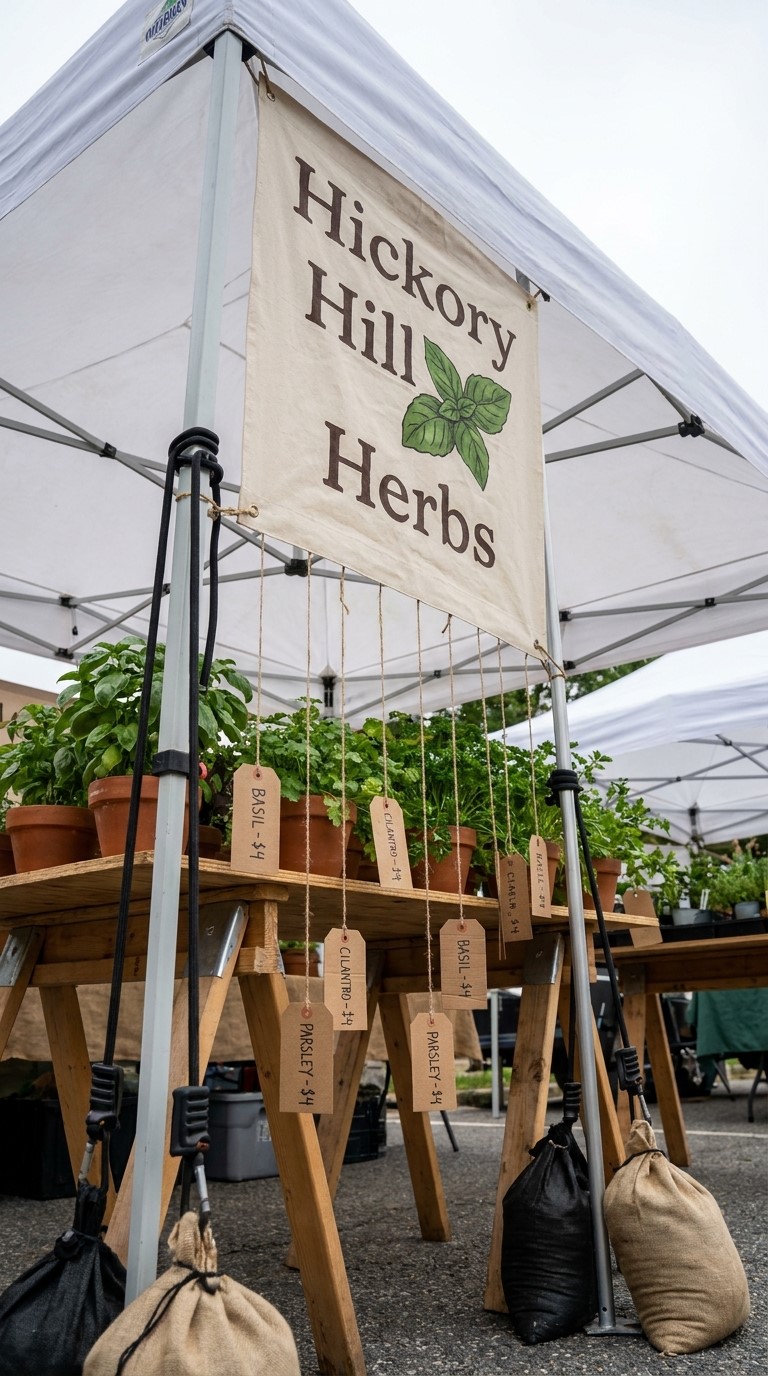
A table sign is only useful to people who are already at your table. A banner pulls people in from the aisle. Farmers market banner ideas don’t need to be complicated. Your farm name, a simple graphic and maybe one product line are enough. “Hickory Hill Herbs” with a drawing of a basil leaf will do more than a banner that lists every vegetable you brought today. Too much text becomes wallpaper. No one reads wallpaper.
Size depends on your tent. A ten-by-ten canopy can handle a two-foot banner across the front. Anything larger looks like a billboard and anything smaller disappears. Hang it at the front edge of the tent, not against the back wall. You want it visible to people approaching from the main walkway, not to the vendor behind you. I made the mistake of hanging my first banner inside the tent where it blocked the morning sun. It also blocked every customer who couldn’t figure out if I was selling vegetables or running a puppet show.
Wind is the enemy of vertical displays. Use bungee cords, sandbags or water weights to secure banner stands. If your market is on pavement, invest in a canopy with weighted feet. A banner that flaps over and wraps around its pole every five minutes looks amateur. It also blocks your own view of customers. You want to see them coming. A good vendor greets people before they reach the table.
Tying It All Together: Farmers Market Display Signs and a Cohesive Look
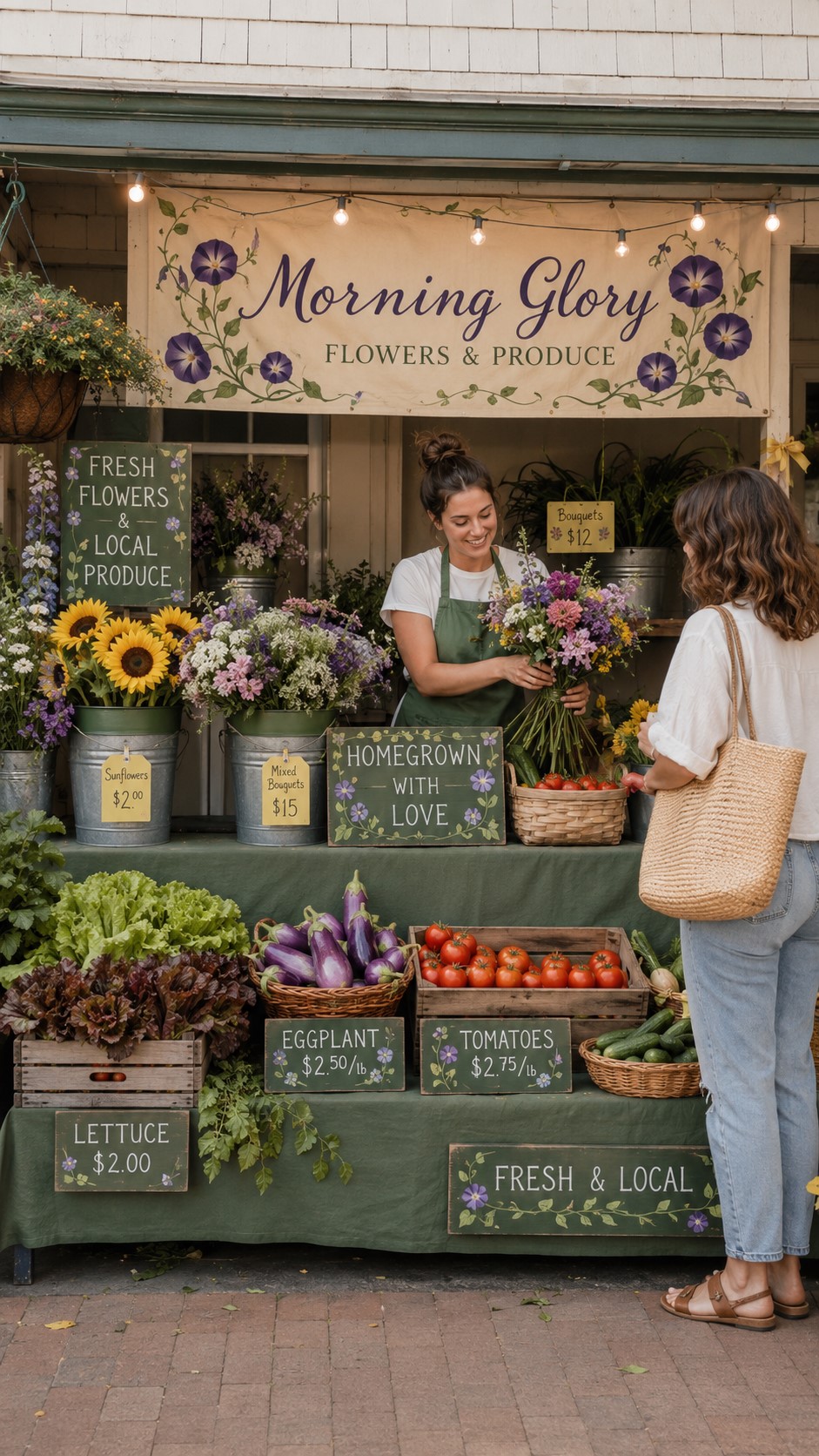
A booth that looks thrown together reads as careless. You don’t need a brand consultant. You just need a color palette. Look at your garden. What colors repeat? The deep green of tomato vines? The pale yellow of squash blossoms? The purple of morning glories? Pick two or three and use them on every sign, every tag and every bucket. Cohesive farmers market display signs make a small table look like a deliberate shop instead of a yard sale. Mismatched signs make people think you showed up by accident.
Before you leave the house, line up every sign on the kitchen floor. Read them from five feet away. If you can’t make out the text, neither can a shopper with coffee in one hand and a dog leash in the other. Check for spelling. “Tomatoe” is charming in a folk art way, but it also makes people wonder if you know what you’re doing. Replace anything that looks tired. A faded sign suggests faded produce. If the corner of your chalkboard is cracked, fix it or turn it around. Details matter when you’re asking strangers to buy food.
Ready for the Saturday Crowd
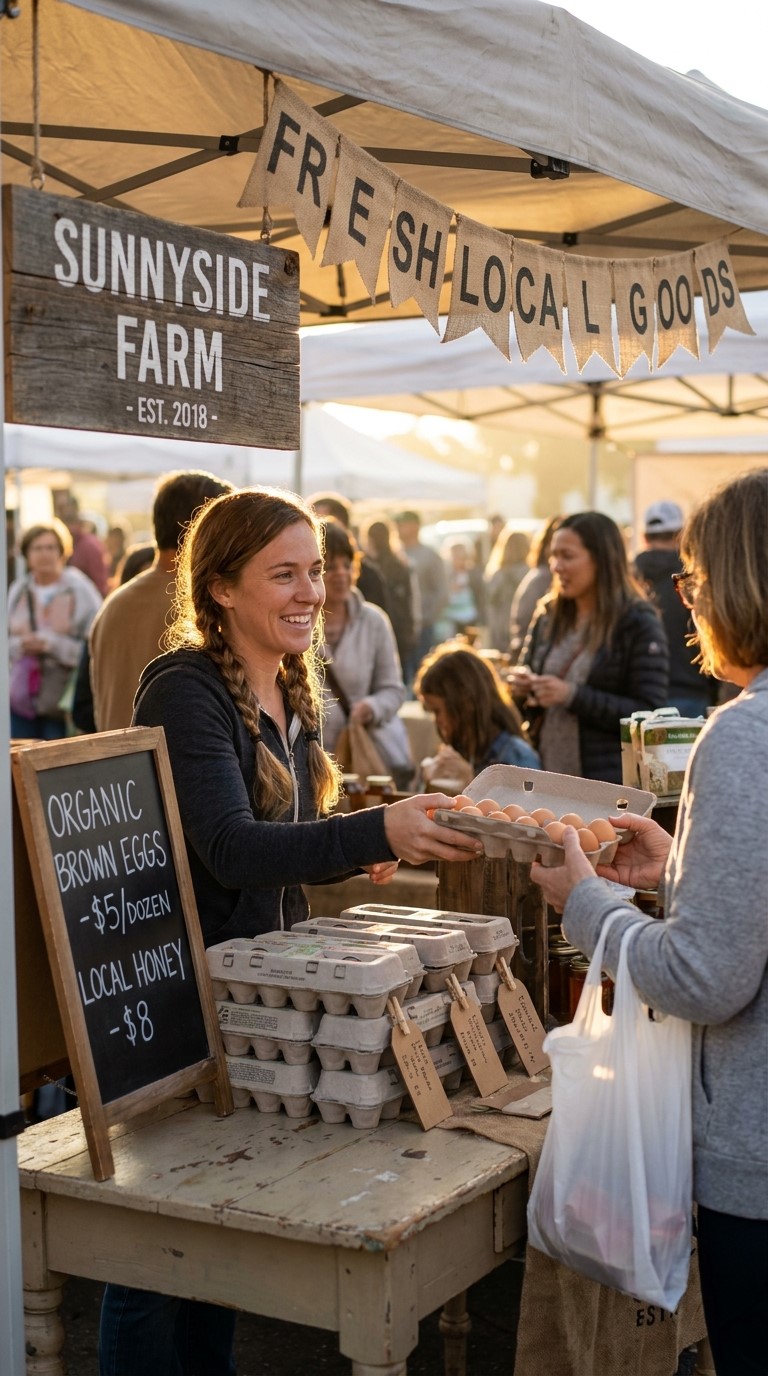
The first time I set up at a market, I brought a hand-painted sign that read “Fresh Eggs” and a table wobbling on uneven grass. I sold three dozen eggs in four hours and spent most of the time explaining that they came from my backyard. The next week I added a chalkboard with prices, a photo of my hens and a small wooden sign that said “Ask About the Rhode Island Reds.” I sold out by nine-thirty. The difference wasn’t the eggs. It was the story.
Good farmers market signage doesn’t need to be expensive. It needs to be clear, honest and sturdy enough to survive a morning in the sun. Build it from what you have. Write it like you talk. And make sure it tells the story of where those tomatoes came from before the customer even asks. Your garden did the hard work. The signs just need to get the credit. Pack them on Friday night. Load them before the eggs. And when you set up in the dark at five-thirty the next morning, you’ll be glad you did.
