
Simple Front Yard Landscaping on a Budget: Big Curb Appeal for Under $1000
The Saturday you notice the real estate agent eyeing your neighbor’s house, your own front yard suddenly looks like a crime scene. Patchy grass. A walkway that’s more crack than concrete. One sad shrub that hasn’t been happy since the Obama administration.
You don’t have $5,000 for a landscaper. You don’t have a truck for bulk materials. What you have is a weekend, a credit card with $400 left on it, and a growing suspicion that your house is the ugly one on the block.
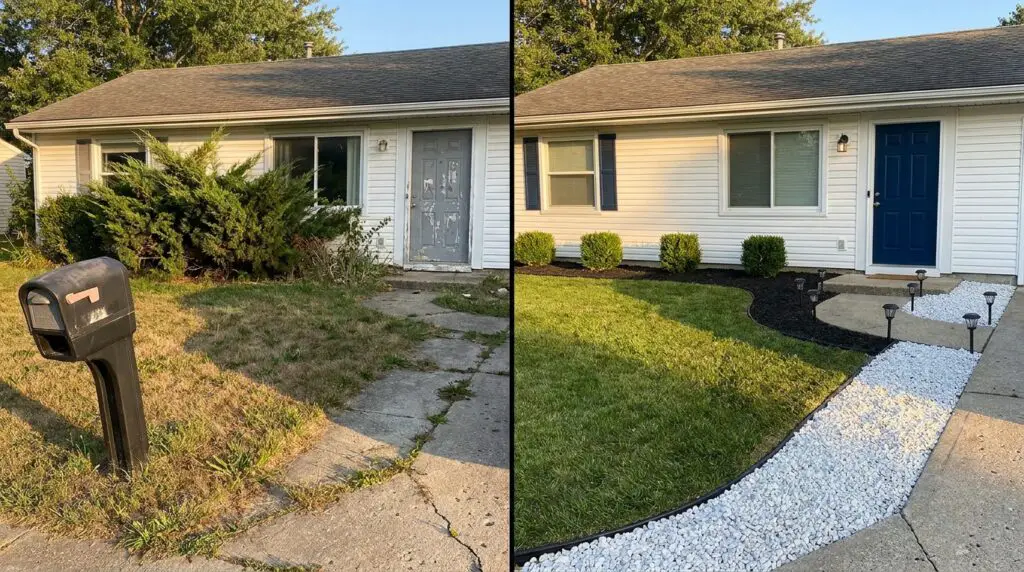
Two Saturdays later, the agent leaves a card in your door. Here’s how that happens without a contractor, a loan, or a breakdown.
Front Yard Low-Cost Curb Appeal – Where Your Money Works Hardest
People waste money on the wrong stuff first. They buy a fancy bench or a birdbath when the front door looks like it survived a hurricane. Low-cost curb appeal starts with a simple rule: fix what people touch or see within five seconds of arriving.
First Impressions Start at the Street
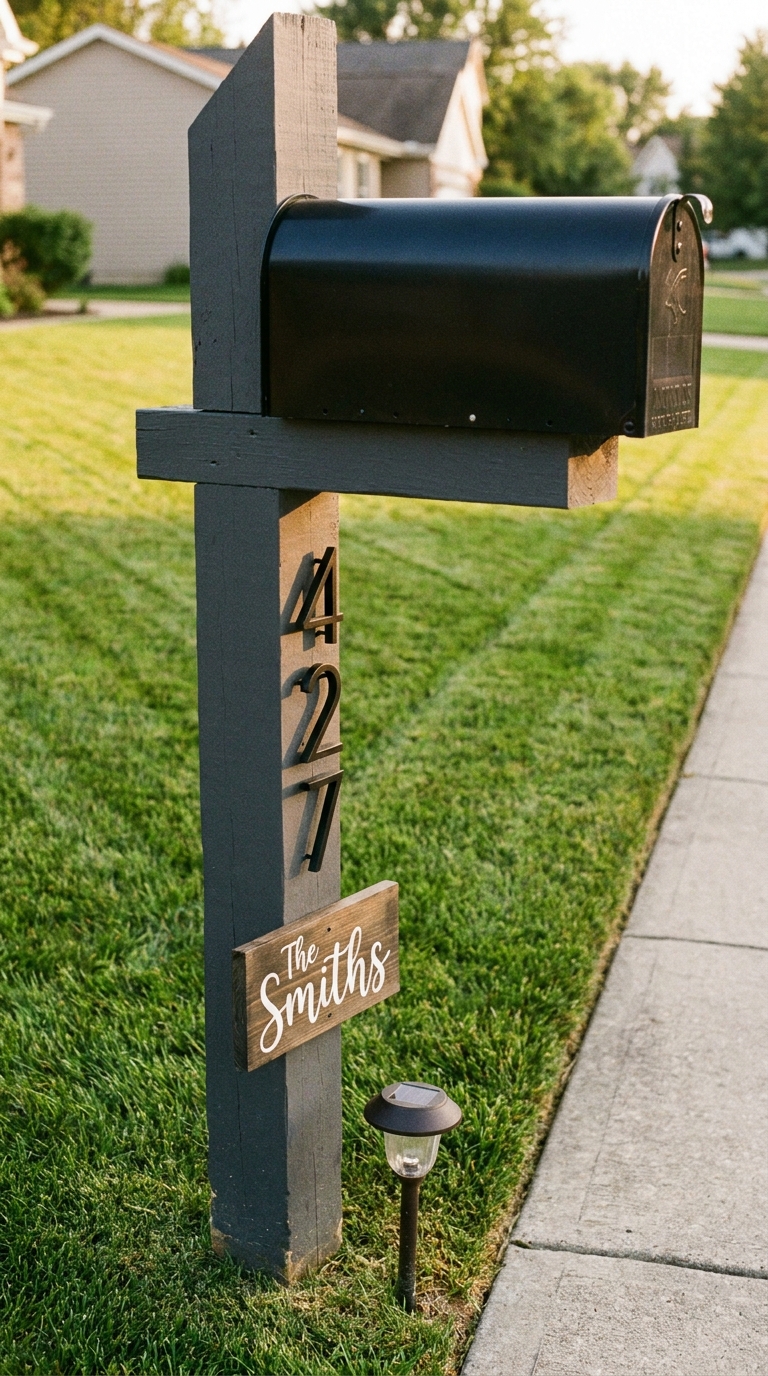
Stand across the road. What hits you first? For most houses, it’s the mailbox, the driveway edge, and the house number. You can replace house numbers for $12 at a hardware store. Black metal. No cursive fonts. Paint a rusty mailbox with spray paint meant for metal. That’s $8. Clean the oil stains off the driveway with a cheap degreaser and a stiff broom. Another $10.
These fixes sound too small to matter. They’re not. They tell a story before someone even reaches the porch. The story is: someone cares here.
The 5-Foot Rule – What Visitors See First
Once a person hits the walkway, their eyes go to three things: the door color, the porch floor, and the condition of the first few steps. You can paint a door for $45. Choose a color that doesn’t match the siding. Deep blue. Charcoal. A green that looks like a forest after rain. Not beige. Never beige.
Scrub the porch with bleach and water. Rent a pressure washer for $40 for four hours if the grime is thick. Or buy a $6 scrub brush and use your arms. The before and after photos alone are worth the blisters.
Cheap Front Yard Ideas for Curb Appeal That Actually Boost Property Value
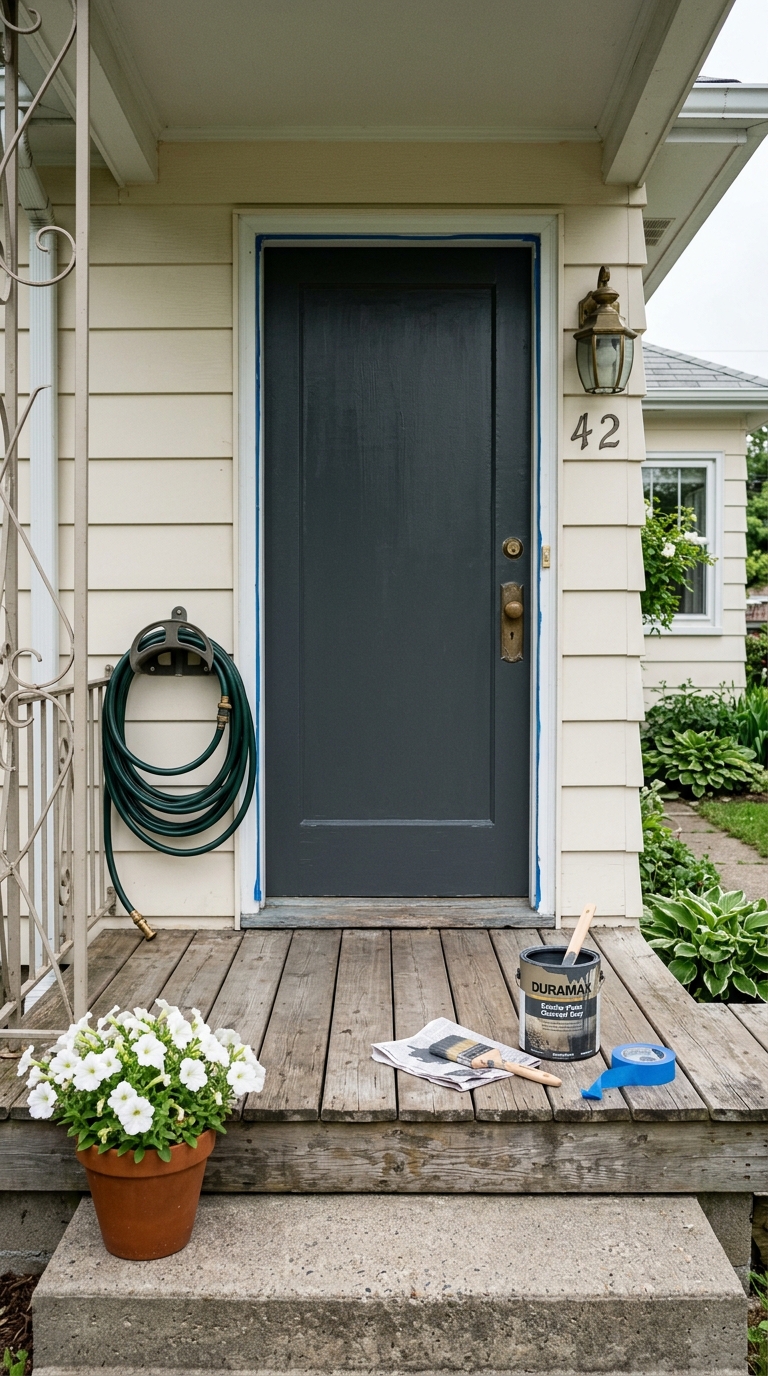
Realtors have a boring secret. The cheapest changes often add the most value. A new front door costs thousands. A fresh coat of paint on the old one costs $50 and delivers 80 percent of the same visual punch.
Paint Your Front Door a High-Contrast Color – Under $50
Buy a quart of exterior paint in a satin or semi-gloss finish. You won’t use the whole thing. Tape off the glass or panels. Sand lightly. Paint two thin coats. That’s a Saturday morning.
Do not paint it red unless your house is white or gray. Red on brick looks like a fast-food restaurant. Do not paint it yellow unless you want people to think a baby’s nursery escaped onto the street.
Swap a Single Light Fixture or House Number Set – Under $40
Thrift stores and ReStores (Habitat for Humanity’s home surplus shops) sell used light fixtures for $10 or less. Spray paint them matte black. That’s another $8. Do the same with old house numbers. Remove the cheap brass ones the builder installed. Replace with something clean and readable from the street.
Numbers should be large enough to see from a moving car. If emergency services can’t find your house, curb appeal is the least of your problems.
Define the Walkway with DIY Edging – Under $30
A crisp edge between lawn and garden bed is the cheapest magic trick in landscaping. Buy a flat spade or a manual edging tool. Cut a two-inch-deep V-shaped trench along the grass side of your beds. Pull the grass out by hand. No chemicals. No plastic edging from a roll. Just a clean line.
This takes two hours. It looks like you paid someone $300. I’ve done it on three houses. Neighbors always ask who I hired.
Simple Front Yard Makeover Under $1000 – Weekend-by-Weekend Plan
You cannot fix everything in one day. You will burn out and hate your yard. Spread the work across four weekends. Each one costs under $125. Each one delivers a visible win.
Weekend 1 – Clean, Mulch, and Define
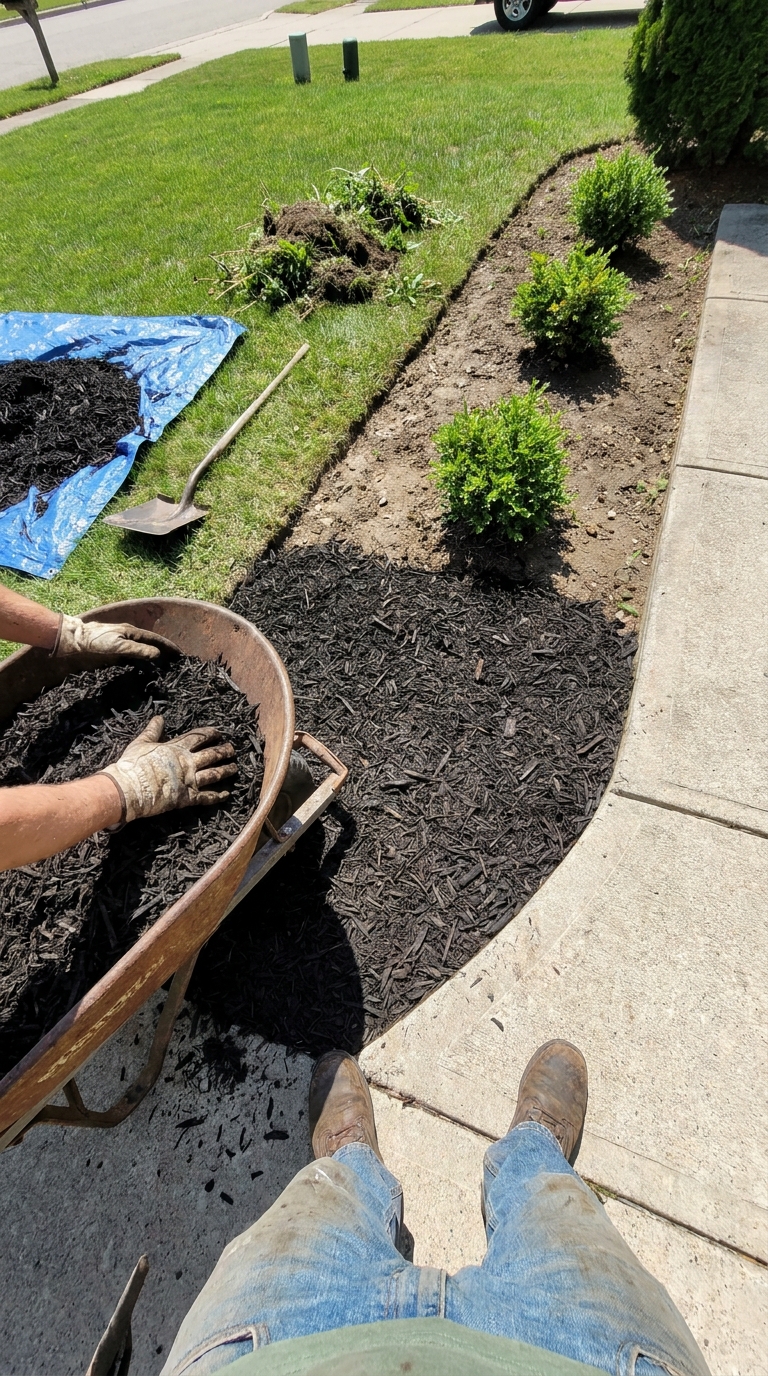
Pull every weed. Not most of them. Every single one. Trim back any branch that touches the house or hangs below four feet over the walkway. Rake the lawn. Then buy mulch in bulk from a landscape supply yard. Bagged mulch from a big-box store costs three times as much. A cubic yard of shredded hardwood costs about $35. You need two yards for an average front yard.
Spread it two inches deep. Not three. Not one. Two. Wet it down so it settles. Stand back. You just erased months of neglect.
Weekend 2 – Add Three High-Impact Plants
Skip annuals. They die in October. Buy three small evergreens or dwarf shrubs. Boxwoods. Dwarf holly. A small Japanese holly. Each costs $15 to $25 at a garden center. Look for the sad rack of half-price plants in the back. Those are fine. They just need water.
Plant them in a triangle near the corner of the house or along the walkway. Not in a straight line. Straight lines look like a cemetery.
Weekend 3 – DIY Walkway or Stepping Stones
Concrete pavers cost $2 to $4 each. Buy twelve. Dig shallow holes where people naturally cut the corner of the lawn to reach the mailbox or the driveway. Set each paver so its top sits level with the grass. No mortar. No leveling sand unless the ground is really uneven.
You just built a path for $50. It stops mud from being tracked inside. It also tells people where to walk, which keeps them off your new plants.
Weekend 4 – Lighting and Finishing Touches Under $60
Solar path lights cost $3 to $5 each at a discount store. Buy eight. Put them on both sides of the walkway, not down the middle. Middle placement looks like an airport runway. Place one light pointed up at a tree or the house number.
Do not buy the blue-white LEDs. They make your yard look like a hospital. Buy warm white or amber.
Budget Front Yard Landscaping DIY – No Pro, No Problem
Contractors charge for two things. Skill, which is fair. And fear, which is not. Most landscaping is digging, placing, and watering. You can do all three.
The “Hide and Highlight” Rule
Look at your yard from the street. Pick one thing to highlight. A nice tree. A curved bed. A big rock. Then pick two things to hide. The electrical box. The AC unit. The trash cans. A cheap lattice screen or a fast-growing grass like miscanthus hides ugly stuff for $40. A coat of dark paint on the electrical box makes it vanish from ten feet away.
Use Gravel Instead of Concrete – $200 vs. $2,000
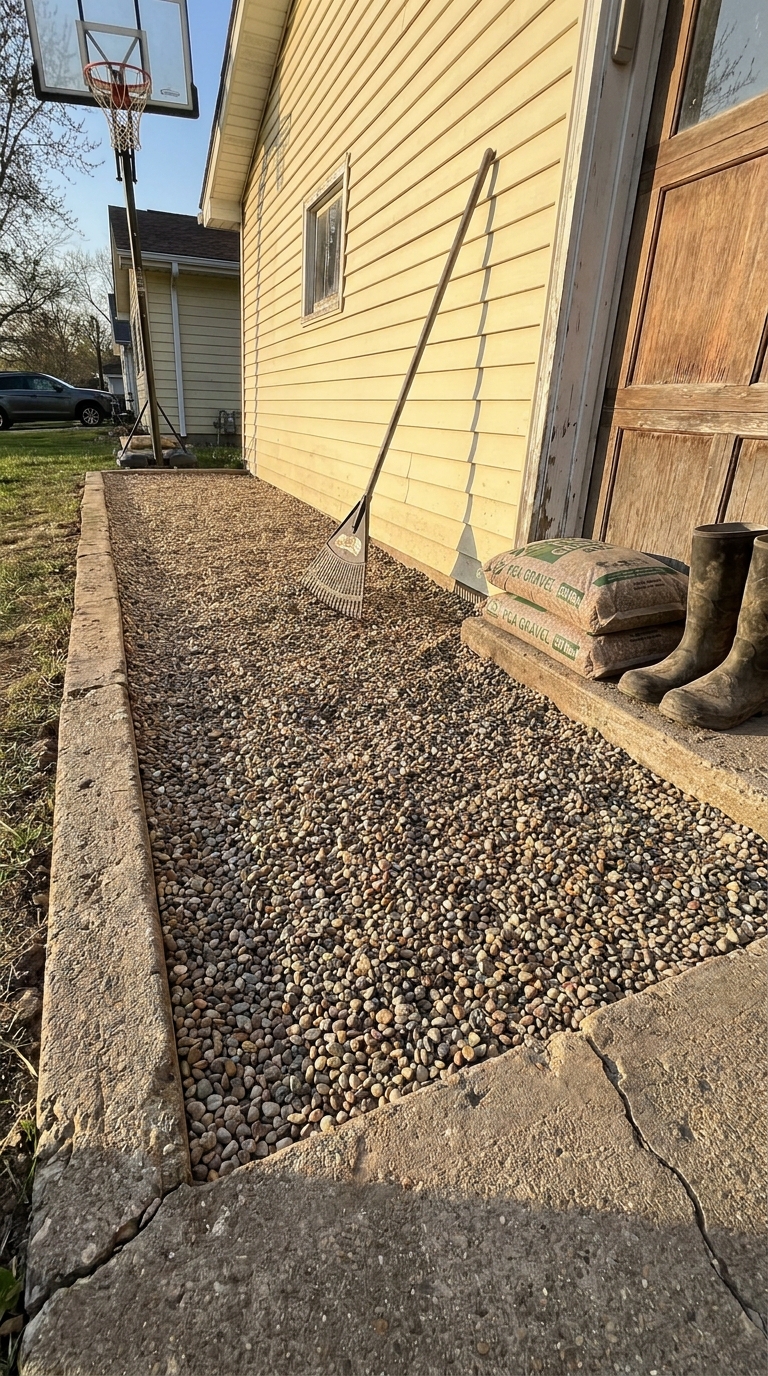
Concrete is permanent, expensive, and cracks. Gravel is cheap, drains water, and you can move it with a shovel. A ton of pea gravel costs about $50. That covers 100 square feet two inches deep. Lay down landscape fabric first. Otherwise the gravel sinks into the mud within a year.
Use gravel to widen a narrow driveway apron or replace a patch of lawn nobody walks on. Crunching footsteps sound better than mowing anyway.
Divide and Conquer – Free Plants from Your Own Yard
Perennials like hostas, daylilies, and black-eyed Susans get crowded after three years. Dig up a clump. Cut it into four pieces with a sharp spade. Replant each piece. Water heavily for two weeks.
You just made four plants from one. Cost: zero. Neighbors will think you have a secret nursery in the backyard.
Affordable Front Yard Upgrades Under $1,000
Some yards need more than a refresh. If your walkway is crumbling or your house sits behind a wall of overgrown arborvitae, $500 won’t cut it. But $900 might.
Small Front Walkway Replacement – DIY Flagstone or Stamped Concrete Skin
Remove the old cracked concrete. Rent an electric jackhammer for $80 a day. It’s easier than it sounds. Lay flagstone pieces on a two-inch sand bed. Fill the gaps with gravel or ground cover like creeping thyme. Total cost for a 20-foot path: $300 to $500.
Or use a concrete resurfacer. It’s a thick goo that rolls over old concrete and stamps in a pattern. One $120 bucket covers 100 square feet. The results look like new stone from six feet away.
One Small Tree or Large Shrub – Instant Maturity
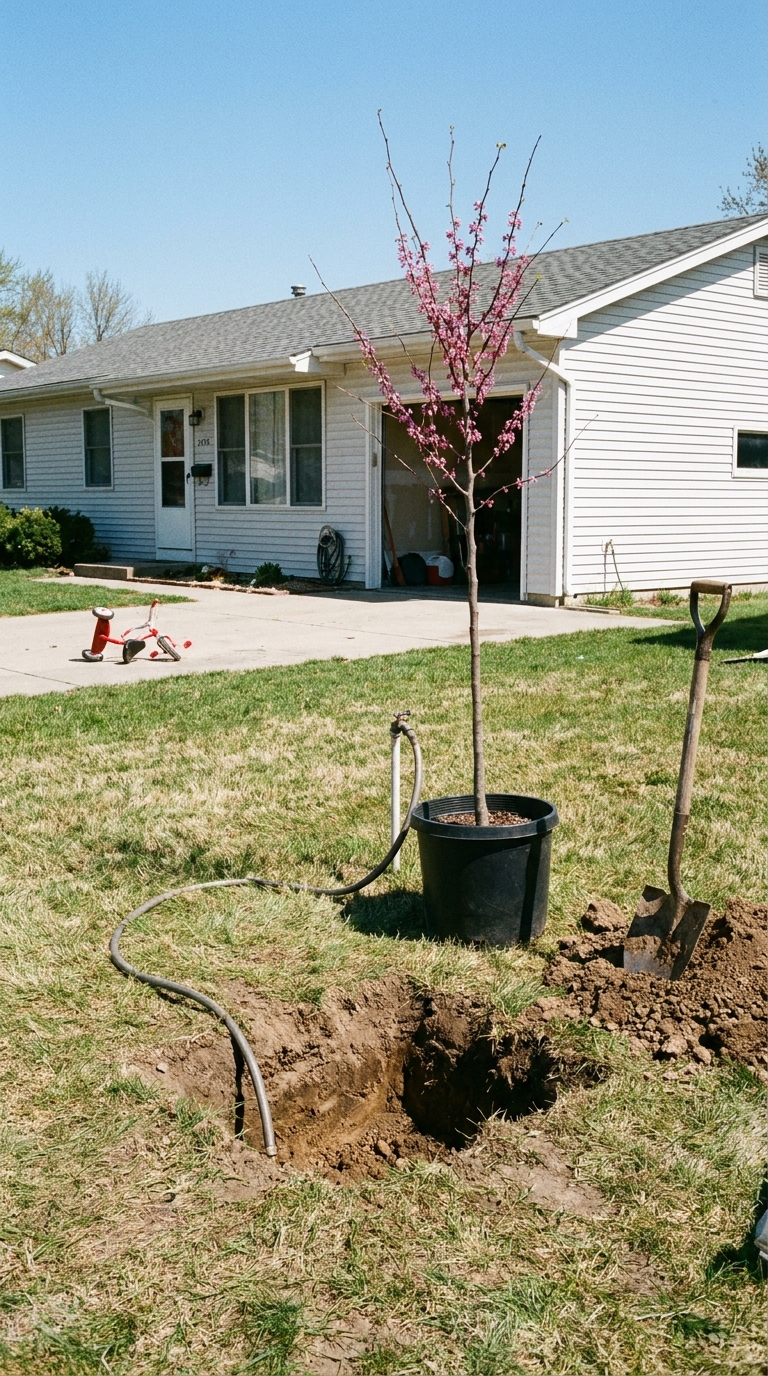
A house with a young tree looks established. A house with no tree looks like a rental. Buy a six-foot dogwood, redbud, or Japanese maple from an online nursery or a big-box store in early spring. Prices drop 40 percent in April. Plant it twenty feet from the house. Not four feet. People plant trees too close to foundations constantly. Don’t be those people.
Paint the Porch Floor and Railing – Under $150
Porch paint with sand in it costs $40 a gallon. One gallon does a 10×10 porch. Clean the concrete. Fill cracks with caulk. Roll the paint on. While it dries, paint the railing a contrasting color. White railings with a gray floor. Black railings with a wood-tone floor.
This takes a full day. It changes the entire face of the house. Cost per hour of enjoyment: about fourteen cents.
Small Front Yard on a Budget – Tiny Space, Maximum Punch
Tiny yards have one advantage. You don’t need thirty plants. You need three good ones.
Vertical Interest – Trellis or Wall-Mounted Planter Under $80
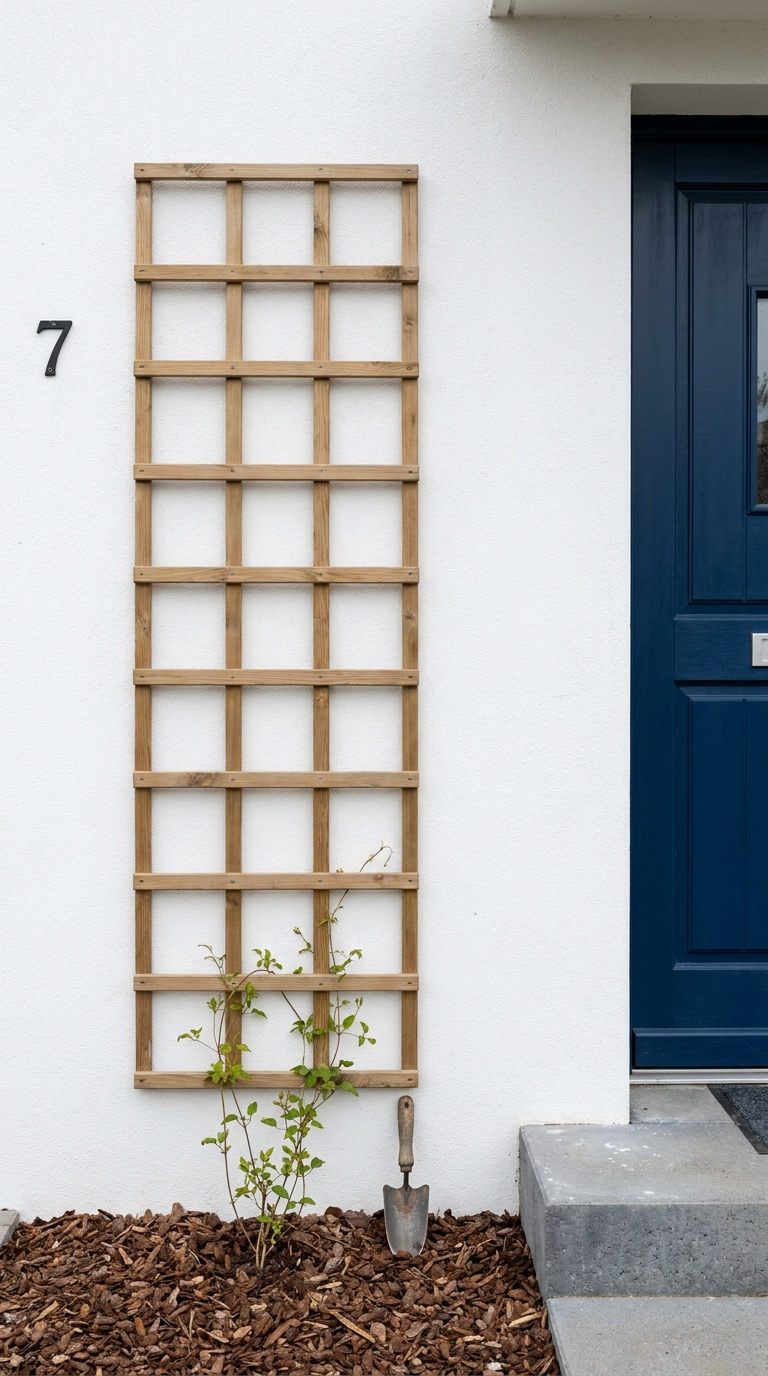
A six-foot wooden trellis costs $35. Attach it to the wall next to the door. Plant a climbing hydrangea or a clematis. In two years, it covers the wall in green. No lawn space lost. No mowing. No guilt.
One Oversized Container – Instant Focal Point
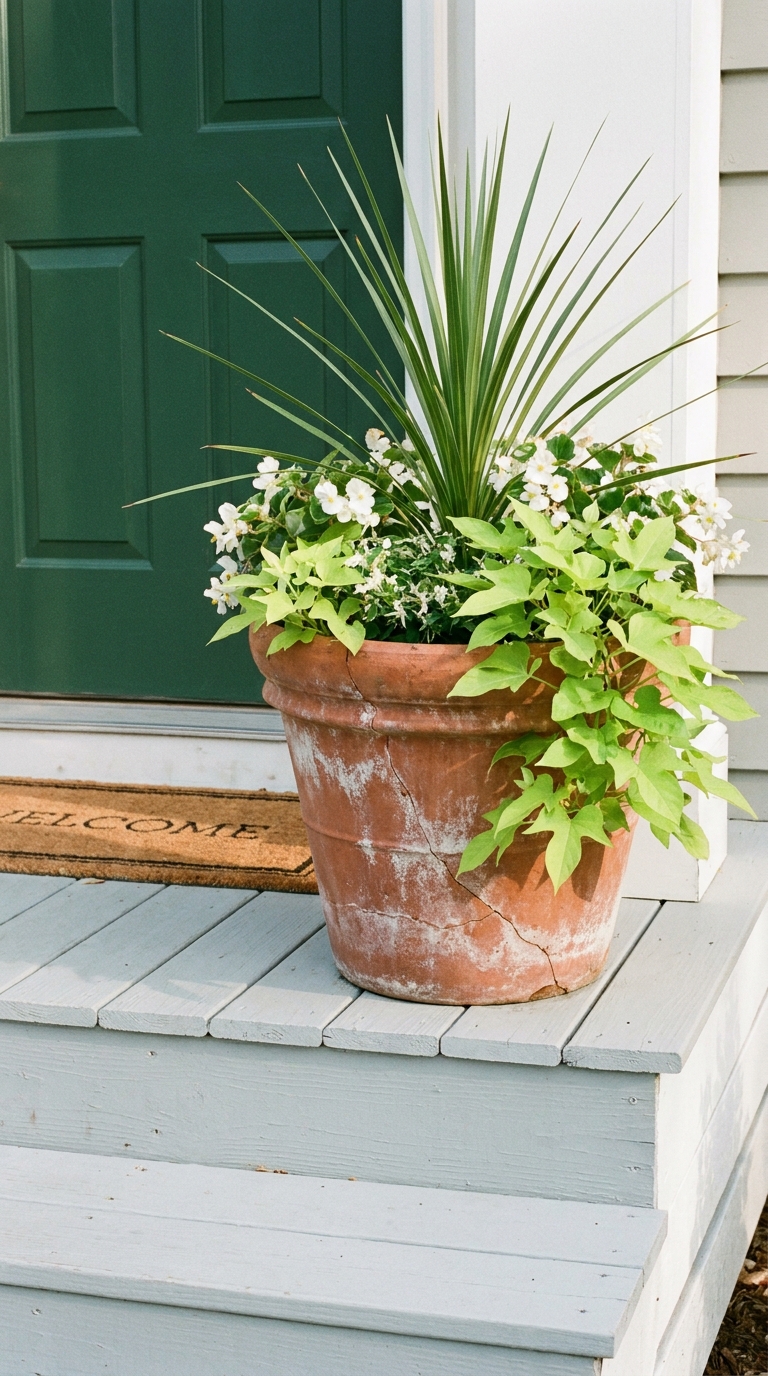
Buy the biggest terra cotta pot you can carry. Not a set of small ones. One giant pot. Fill it with a thriller (a tall grass or a spiky dracaena), a spiller (trailing ivy or sweet potato vine), and a filler (white begonias or purple petunias).
Set it on the porch steps, not hidden in a corner. A single bold container beats a dozen scattered pots every time.
Lose the Lawn – Low-Cost Groundcover Swap
Small lawns are a pain to mow. Replace a 100-square-foot patch with creeping thyme or microclover. Both cost about $30 for a tray of plugs. Both stay under four inches tall. Both flower. Both smell good when you step on them.
You never mow that spot again. That’s hours of your life back.
No-Pro Landscaping Front Yard – Tools and Tricks That Save Thousands
The biggest lie in home improvement is that you need expensive tools. You don’t. You need two good tools and a little nerve.
The Cardboard and Mulch Method (No Tilling)
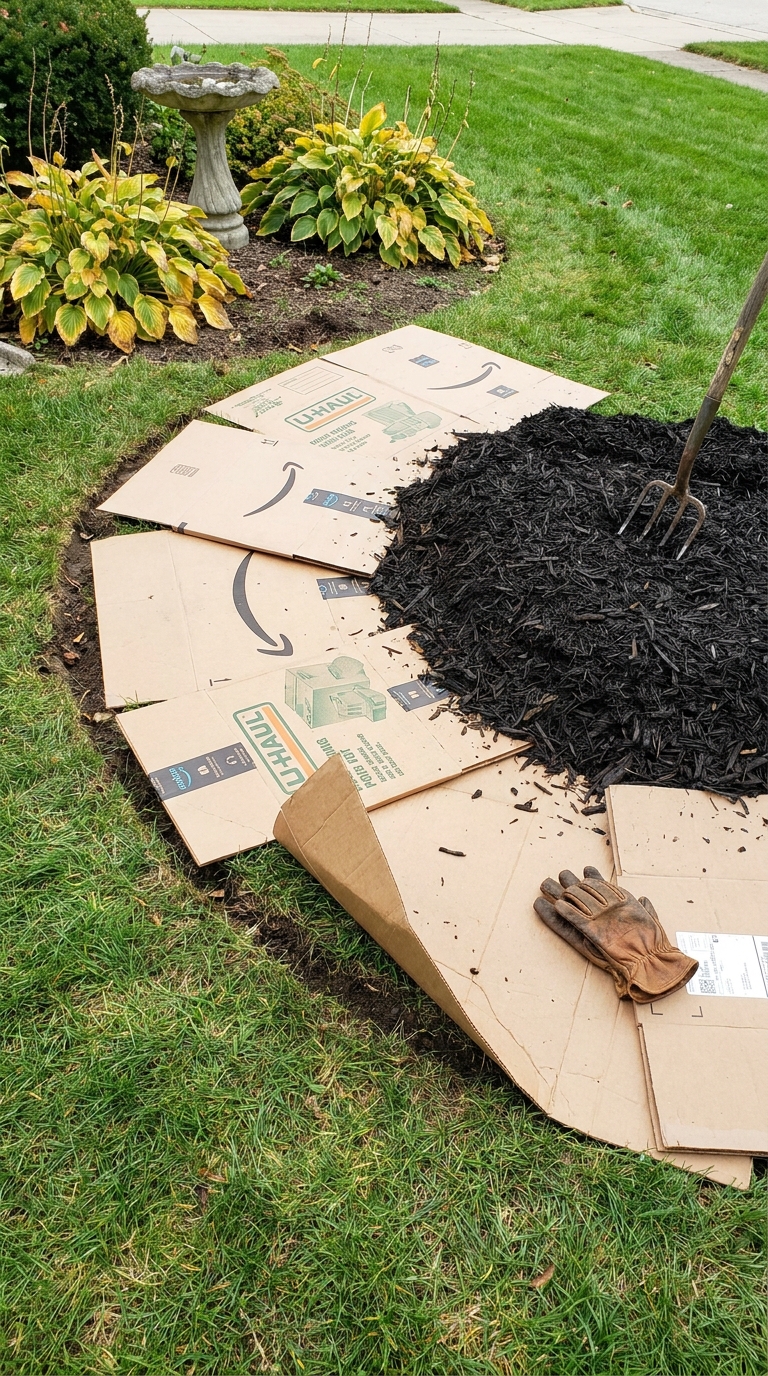
Kill grass without chemicals. Lay cardboard boxes flat over the grass you want to remove. Overlap the edges by six inches. Wet the cardboard thoroughly. Put four inches of mulch on top. Walk away.
In three months, the grass is dead. The cardboard rots. Worms love it. You have a new garden bed without digging a single shovelful of sod.
Use a String Trimmer as an Edger – Pro Look Free
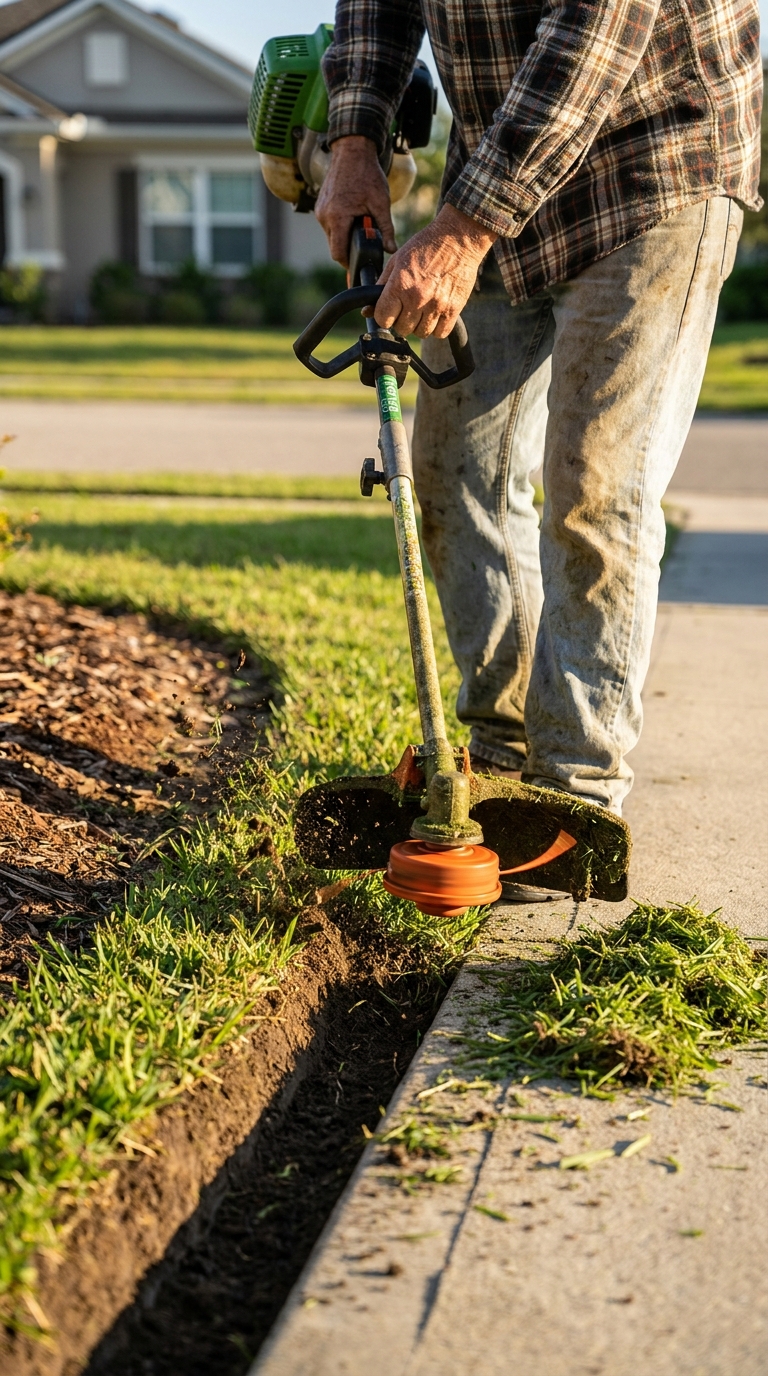
Flip a string trimmer upside down. Hold it so the string spins vertically, like a pizza cutter. Walk along the edge of the lawn. The string cuts a clean trench. Practice on a hidden spot first. You’ll figure it out in five minutes.
Pros charge $75 to edge a lawn. You just did it for free while listening to a podcast.
Rent Don’t Buy – Big Tools Under $30/Day
A tiller costs $400 to buy. Renting one costs $28 for four hours. An auger for planting trees is $35 a day. A plate compactor for walkways is $45. Rent on Friday afternoon. Return Monday morning. Pay for one day.
Do not buy tools you will use once. Your garage is not a museum of bad decisions.
The End of the Driveway
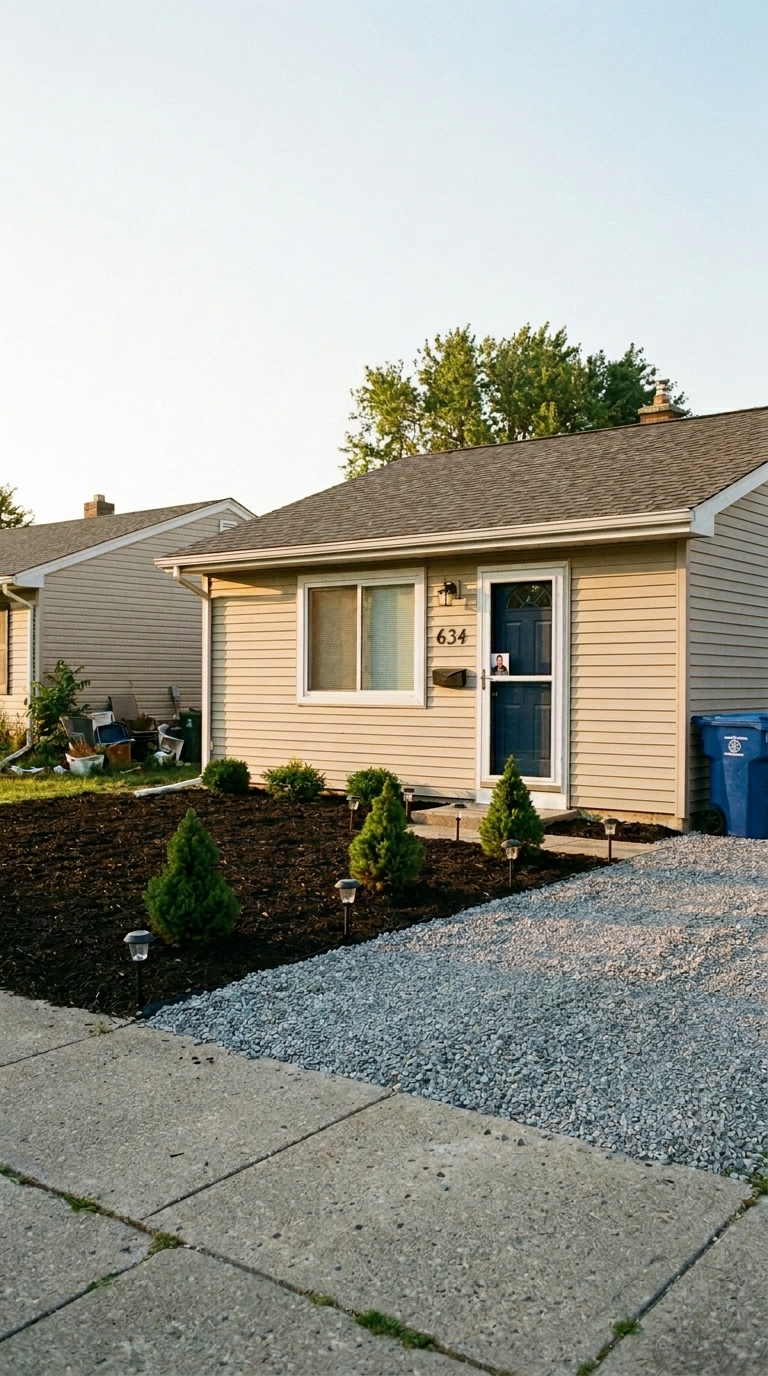
My neighbor painted his front door last spring. Cost him $38. He spent another $60 on mulch and three $12 shrubs. Three weekends. Zero arguments with a contractor.
A month later, a house down the street sold for $15,000 over asking. The realtor mentioned “strong curb appeal throughout the neighborhood” in the listing notes. Coincidence? Maybe. But his house wasn’t the ugly one anymore.
You don’t need a landscape architect. You don’t need a second mortgage. You need a Saturday, a spade, and the willingness to look a little foolish while you figure it out. The agent will leave the card. The neighbors will ask who you hired. And you get to say the best six words in home improvement.
Nobody. I did it myself.
