
1m² Edible Balcony Blueprint: A Food-Focused Plan for Small Spaces
The balcony door slides open. You step out with a bowl in one hand and kitchen scissors in the other. A few lettuce leaves go into the bowl. A sprig of basil follows. Then one ripe tomato, still warm from the sun. In less than a minute, your plain lunch starts to feel like something worth sitting down for.
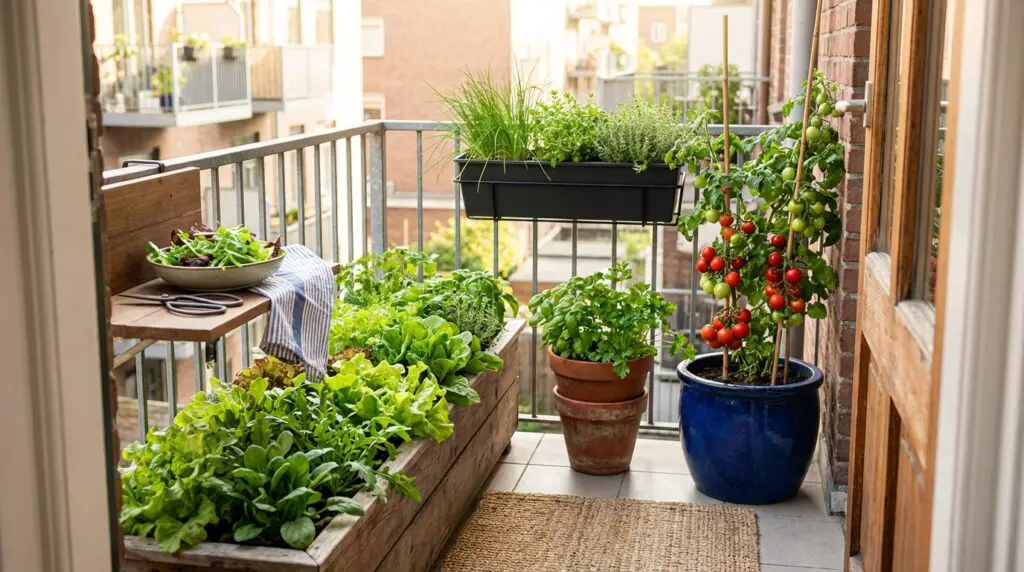
That is the real promise of a tiny edible balcony.
A lot of small outdoor spaces get treated like afterthoughts. They hold a folding chair, a few tired pots, maybe a plant bought on impulse and forgotten by next week. But a balcony can do more than look nice from the living room. Even one square meter can grow food you’ll reach for again and again, as long as the space is planned around real meals instead of wishful thinking.
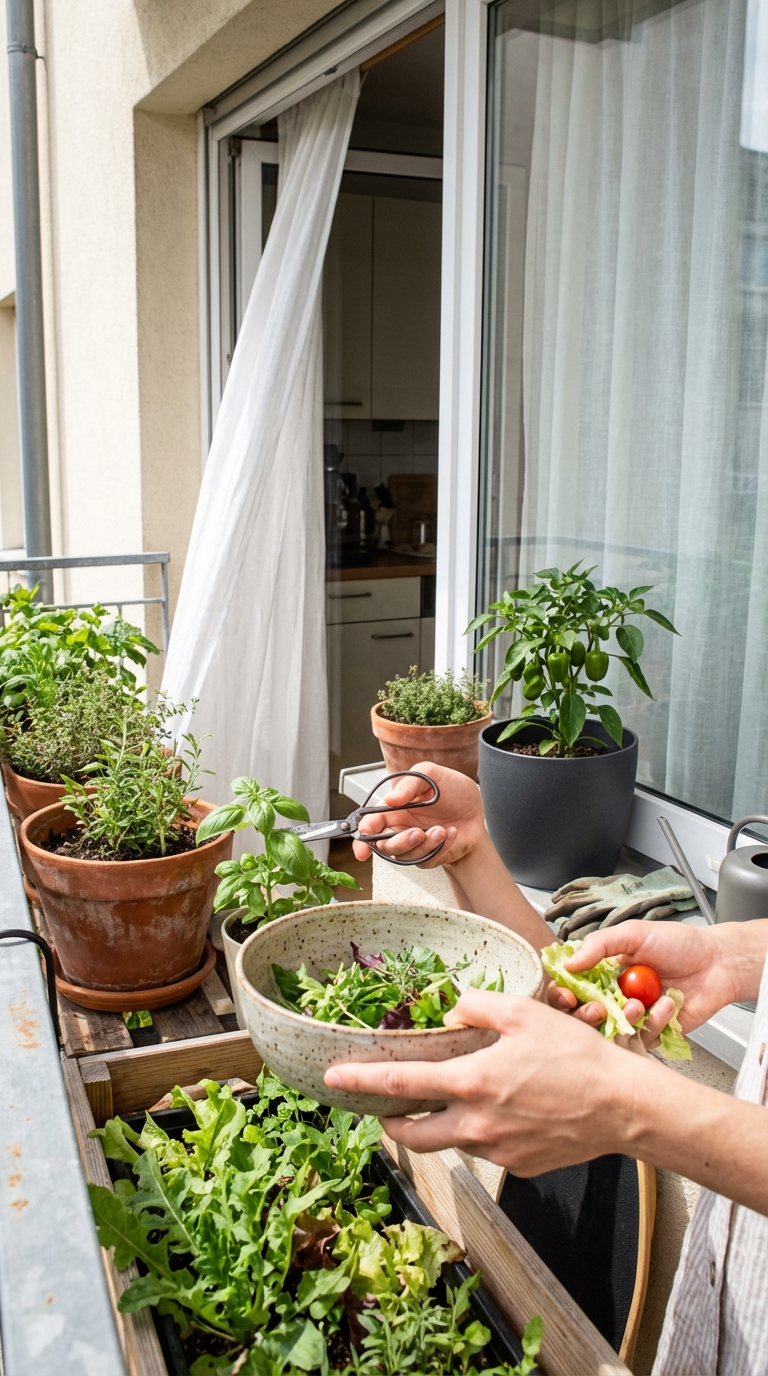
That’s the key. Not trying to grow everything. Not stuffing in every crop you’ve ever liked at the garden center. Just building a small, useful setup around three things that pull their weight: herbs, salad crops, and one hero crop that gives the whole space some substance. Done well, that little patch can supply flavor, freshness, and a satisfying sense that dinner starts closer to home than you thought.
Why a 1m² Edible Balcony Can Work Better Than You Think
Big gardens get a lot of attention, but small edible spaces have their own strengths. They’re easier to manage. Easier to water. Easier to notice when something needs help. And because the growing area is so limited, you’re pushed to make better choices.
That kind of constraint can be useful.
When space is tight, every pot has to earn its place. That sounds harsh, but it actually leads to a better garden. You stop thinking in terms of novelty and start thinking in terms of use. Which plants show up in lunch three times a week? Which leaves can be picked a handful at a time? Which crop gives the biggest reward for the room it takes up?
That is where small-space growing starts to make sense.
A food-focused balcony is not trying to replace the grocery store. It is there to support everyday cooking. A few herbs for pasta sauce. Salad leaves for sandwiches and wraps. A tomato or pepper that adds color and freshness to dinner. Small harvests, yes. But harvests with purpose.
And maybe that’s the part people miss. A tiny edible space does not need to be huge to be useful. It just needs to fit the way you actually eat.
Start with Your Plate, Not the Pots
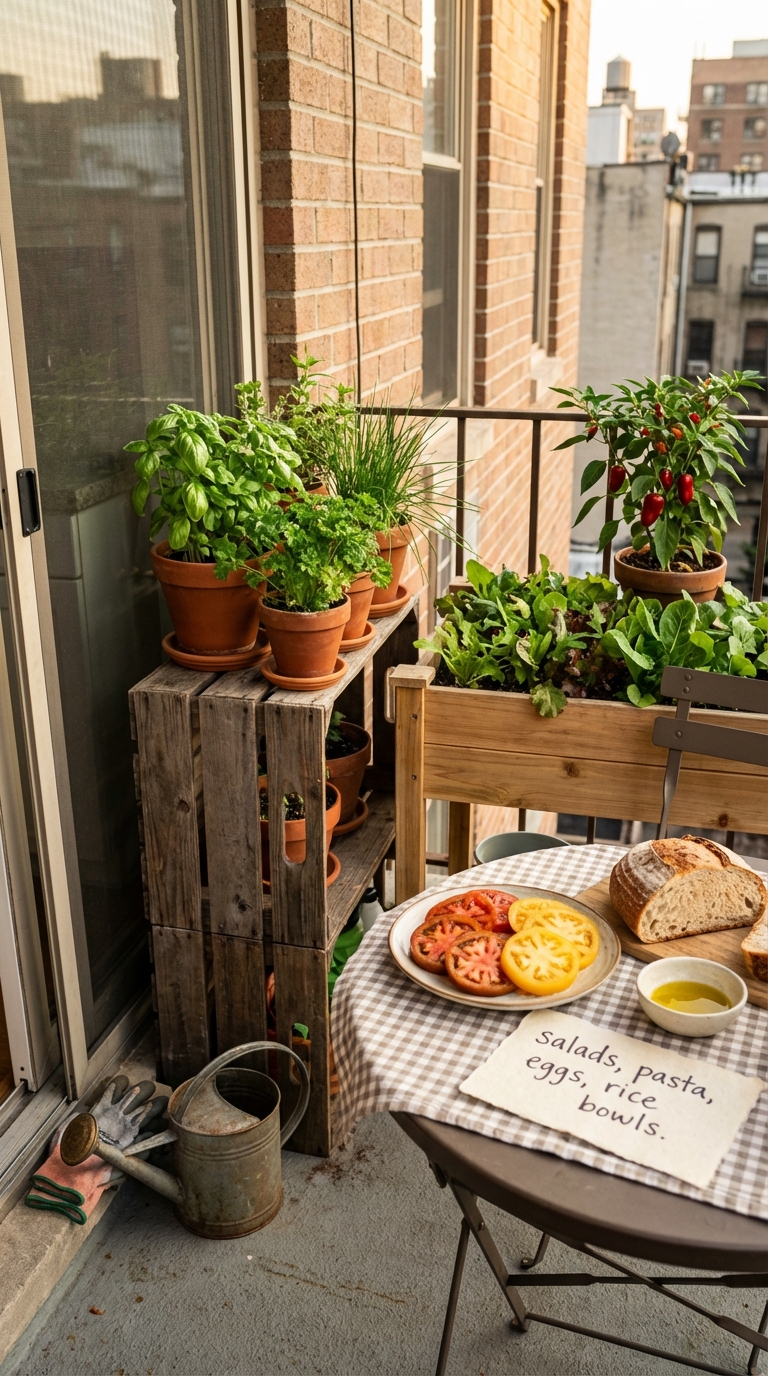
Before you choose containers or buy seedlings, stop and think about your meals.
What do you cook every week? What do you buy over and over? What ends up chopped onto eggs, stirred into rice, or scattered over soup? If you love basil but never touch sage, that matters. If you eat salad four days a week, leafy greens deserve more space than a novelty chili plant you only use once a month.
This is where many small balcony gardens go wrong. People choose crops that sound romantic instead of crops they’ll use. Then the plants grow, the harvest comes, and nobody is quite sure what to do with it.
A better way is to build the plan from your kitchen outward.
If you make sandwiches, salads, pasta, rice bowls, omelets, or simple lunches, a mix of herbs and greens will serve you well. If you want something with more visual impact and a stronger payoff, add one hero crop such as a cherry tomato or compact pepper. That gives the balcony structure and also gives you something to look forward to.
The smartest crop mix for a 1m² space is simple. Grow a few reliable herbs, one generous tray of salad leaves, and one crop that feels like the star. That balance keeps the space practical and also makes it feel like a real garden rather than a row of random pots.
The Core Formula: Herbs, Salad, and One Hero Crop
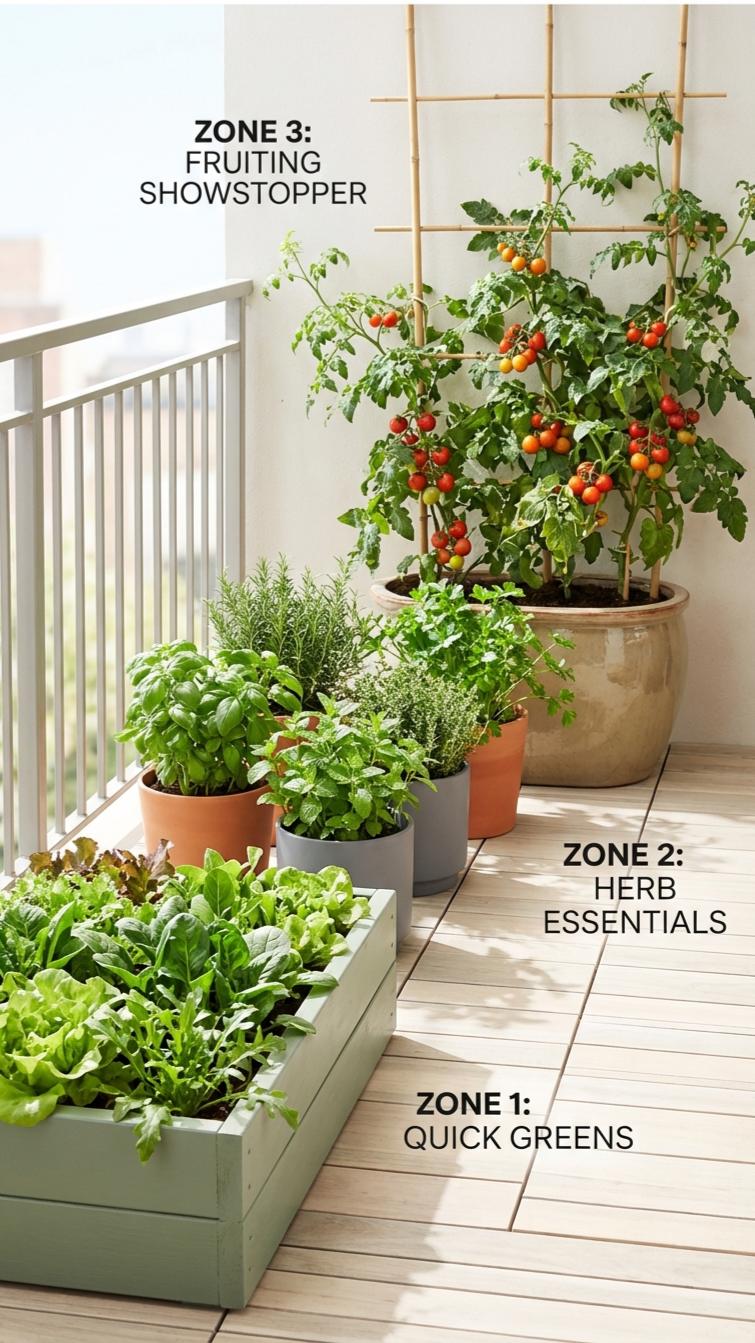
If I were planning a tiny edible balcony from scratch, this is the formula I’d use every time.
Herbs are the steady workers. They don’t need a lot of space, and they give back often. A single pot of basil or parsley can show up in meal after meal. Chives are useful in eggs and salads. Thyme and oregano work well if your balcony gets good sun. Mint is handy too, though it’s best kept in its own pot so it doesn’t take over.
Then come the salad crops. These are some of the best-value plants you can grow in a small space because they can be harvested young and often. Loose leaf lettuce, arugula, baby spinach, and cut-and-come-again salad mixes are all strong choices. You do not need rows and rows. One well-planted trough can keep you in fresh pickings for quite a while if you harvest a little at a time.
Then there’s the hero crop. This is the plant that gives the balcony presence. It might be a cherry tomato, a compact pepper, or a dwarf eggplant if conditions suit it. The point is not variety for its own sake. The point is to choose one crop that brings weight, color, and a sense of payoff without swallowing the whole space.
That combination works because each layer does a different job. Herbs provide frequent flavor. Salad crops provide volume. The hero crop provides excitement. Together, they turn a very small area into something that feels complete.
Choosing the Best Hero Crop
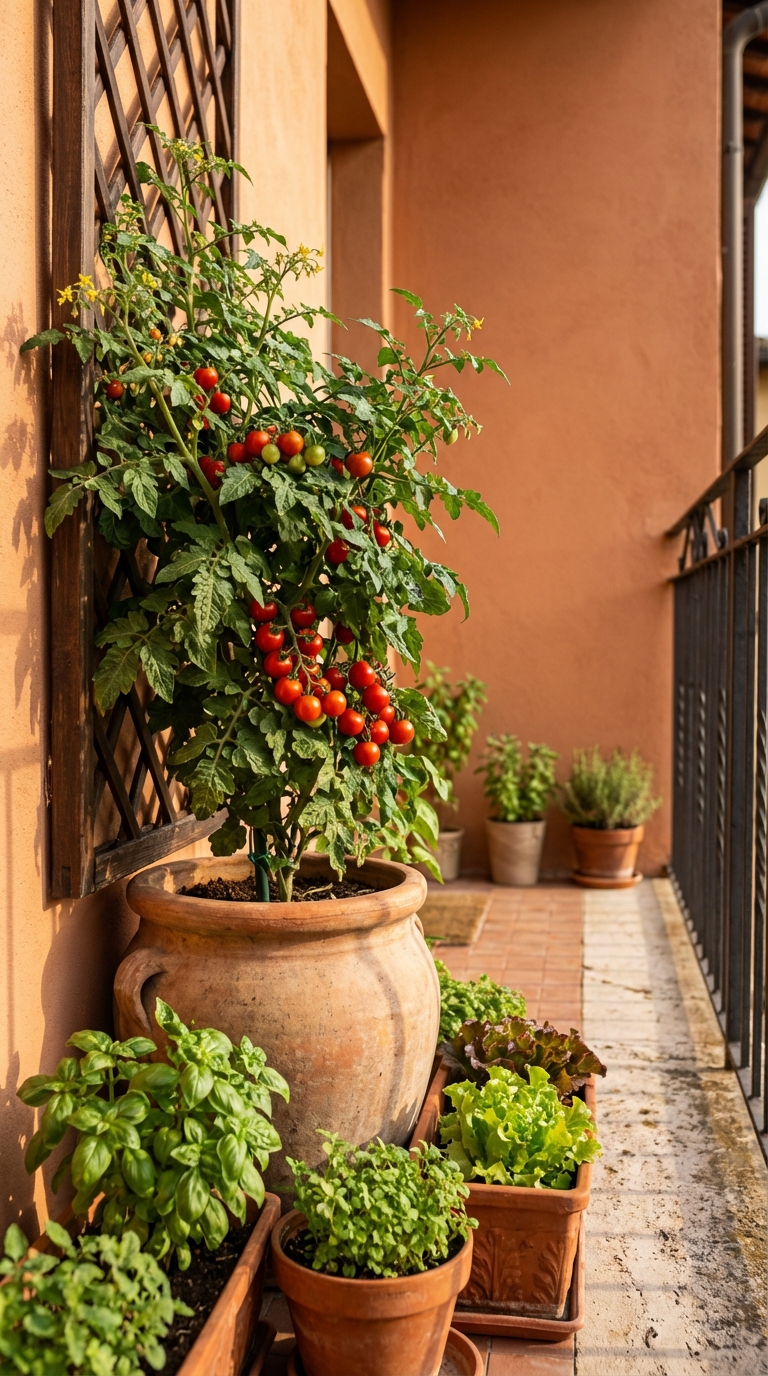
Your hero crop depends on light, climate, and what you like to eat.
Cherry tomatoes are often the first choice, and for good reason. They’re productive, cheerful, and satisfying to pick. One healthy plant can give you a steady stream of fruit through the season. They do need a deep container, support, and regular feeding, so they are not a casual plant. But if your balcony gets strong sun, they’re hard to beat.
Peppers are another excellent option, especially for smaller balconies. Many compact varieties grow well in pots and stay more manageable than tomatoes. Sweet peppers are useful in everyday cooking, and chilies are a good pick if you cook with heat. They still want sun, but they can be a little neater in the overall layout.
Dwarf eggplant or climbing beans may suit some spaces too. Beans can work if you have a railing or trellis and want to grow upward. Dwarf eggplant brings something a little different and can look beautiful in a container. Still, for most people starting out, tomatoes and peppers are the simplest choices because they fit so naturally into real meals.
The main thing is to stop at one. In a space this small, one strong hero crop will always do better than three crowded ones competing for light, water, and root space.
How to Lay Out 1m² So It Still Feels Comfortable
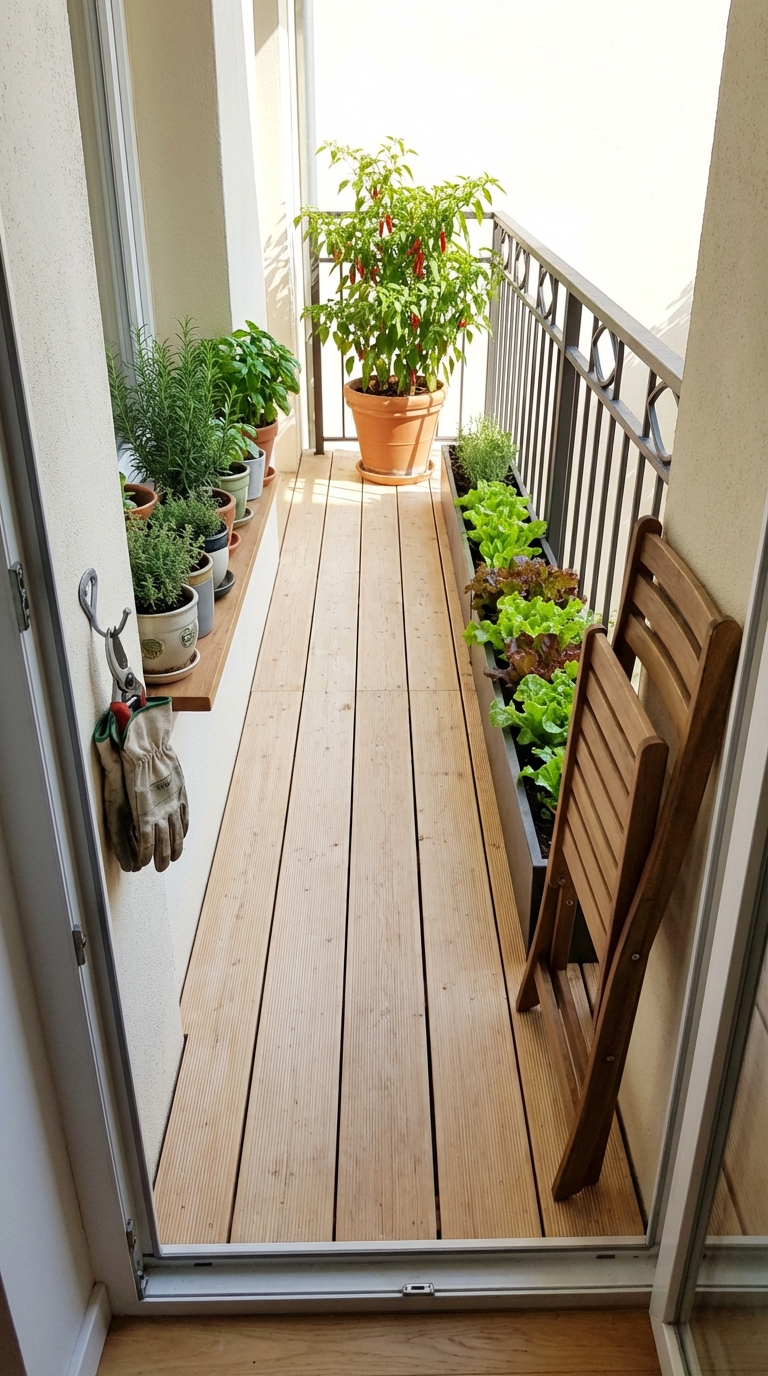
A tiny balcony needs to work as a garden and as part of your home. If the pots make the space awkward to move through, the whole setup becomes annoying fast.
Start with the tallest plant first. The hero crop should go where it gets the best light but does not cast deep shade over everything else. Usually that means placing it at the back or along one side, depending on how the sun hits the balcony. If it needs a stake or small trellis, keep that support neat and close to the plant so the space doesn’t feel cluttered.
Herbs should go where you can reach them with almost no thought. Near the door is perfect. You want to be able to step out, snip what you need, and head back inside. That ease matters. The more convenient herbs are, the more often you’ll use them.
Salad crops do best in low, wide containers. Window-box style planters or shallow troughs often make more sense than a collection of tiny pots. They use space better, they dry out a bit less quickly, and they’re easier to harvest from.
If you have a railing, that can be useful too. Railing planters are a good place for herbs or leafy greens, as long as weight and safety are considered. Vertical elements can help, but only if they do not make watering and harvesting a hassle. In a very small setup, simple is almost always better.
Containers, Soil, and the Basics That Matter Most
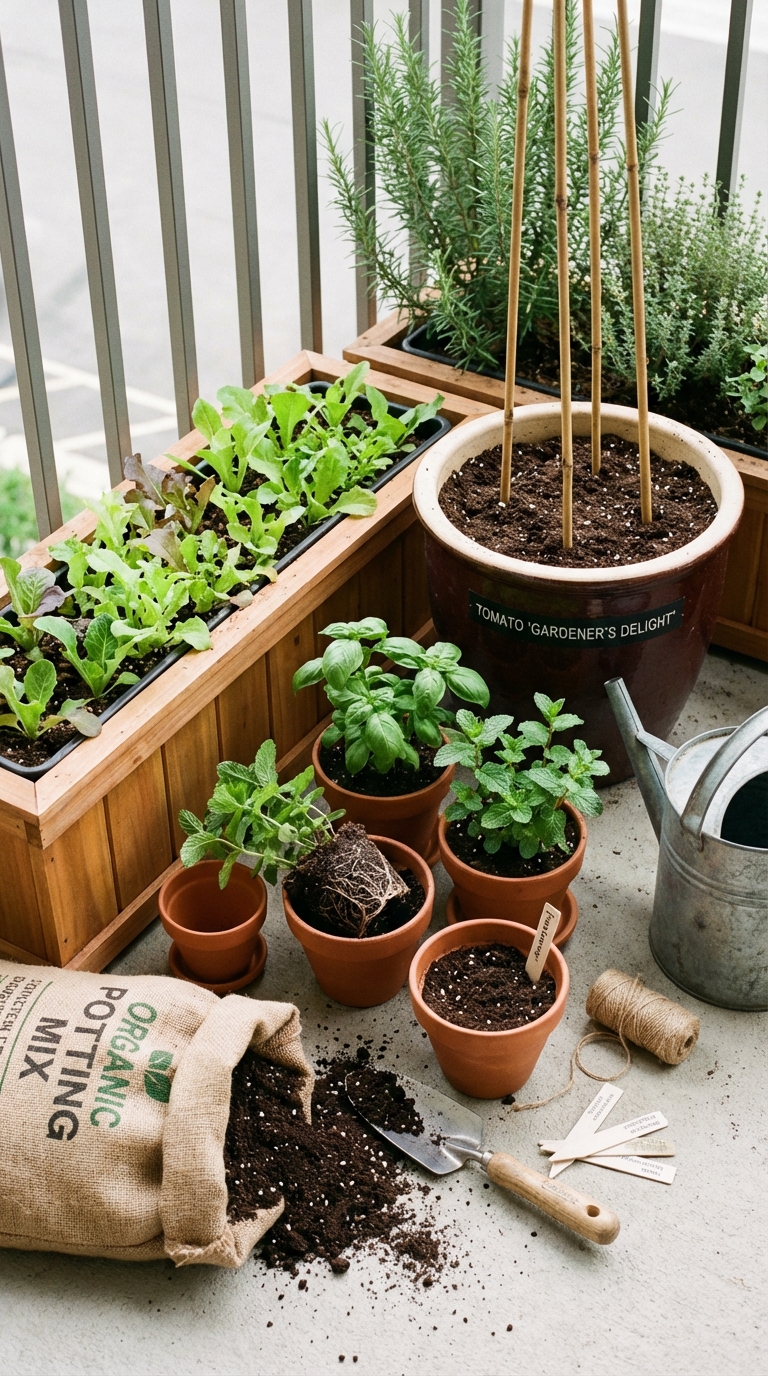
Containers can make or break a small edible garden.
For the hero crop, choose a pot that gives the roots room to spread. Tomatoes, peppers, and eggplants all do better in containers that are deeper and wider than people first assume. Cramped roots lead to stressed plants, and stressed plants do not produce the way you want them to.
For salad greens, use a trough or rectangular planter with enough width for a dense sowing. These crops do not need the deepest pots, but they do need space across the surface. Herbs can go in medium individual pots or shared planters, depending on the varieties you choose.
Good drainage matters, of course, but so does the growing mix. Container plants depend on the soil you give them. A decent potting mix that holds moisture while still draining well is worth paying for. Thin, poor mix dries too fast, compacts easily, and leaves plants struggling.
And then there’s feeding. Fruiting crops such as tomatoes and peppers are heavier feeders than herbs and lettuce. They need regular nutrients if you want them to keep producing. Herbs and greens still benefit from feeding, but they usually ask for less. Treating all container plants the same is one of the fastest ways to end up with uneven results.
A simple stake, cage, or slim trellis can also save space by keeping growth upright. This is especially important with tomatoes. Once stems start sprawling, a small balcony can feel crowded overnight.
What If Your Balcony Doesn’t Get Full Sun?
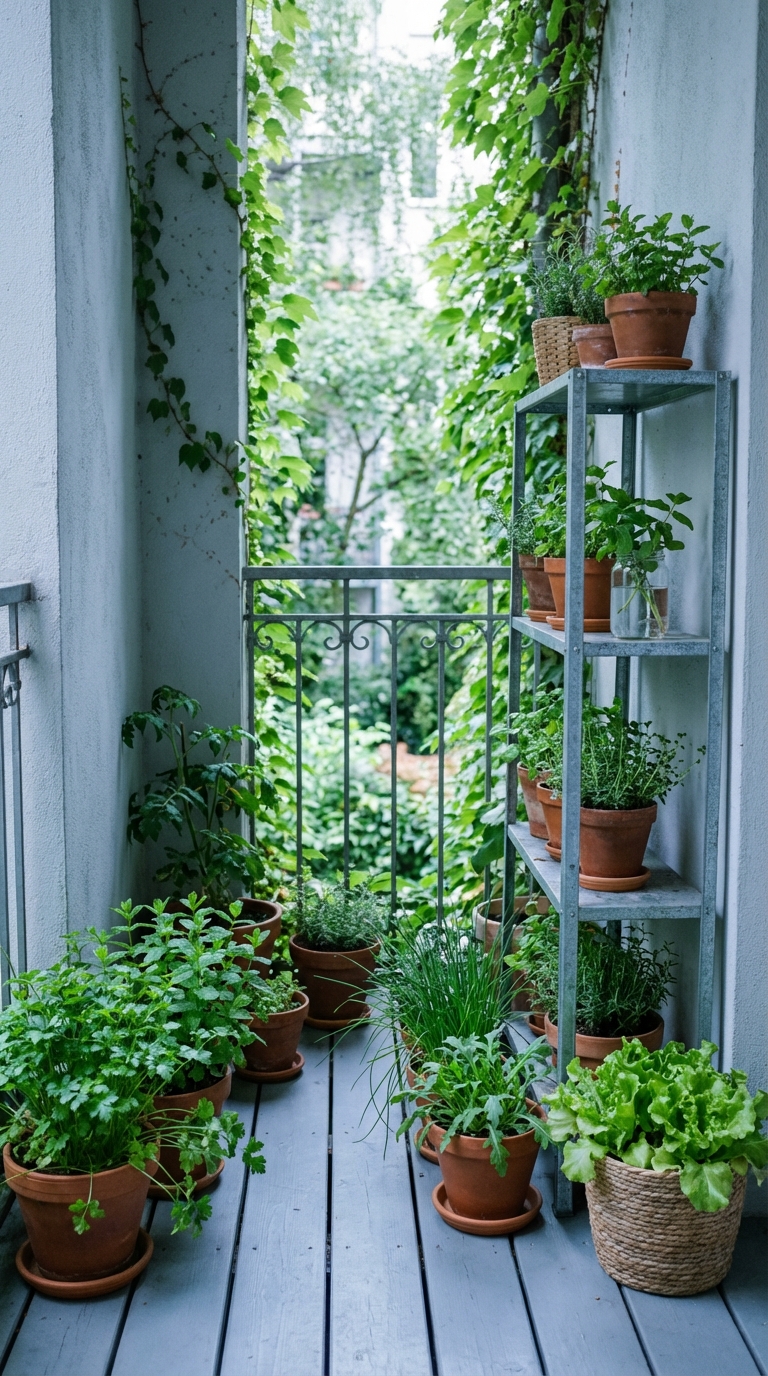
This is the question that stops a lot of people before they start.
Yes, fruiting crops like tomatoes and peppers want good sun. If your balcony gets strong light for much of the day, you’re in great shape. Basil, thyme, and oregano will likely be happy too.
But not every balcony is sunny, and that does not mean the space is useless.
If your light is partial, lean harder into leafy greens and forgiving herbs. Parsley, chives, mint, lettuce, arugula, and some baby leaf mixes can still do well with less sun than tomatoes demand. You may not get the same big, showy harvests from fruiting plants, but you can still build a very useful edible setup.
The trick is not to force the wrong plan onto the wrong balcony. If the space is bright but not blazing, shift the balance. Grow more herbs and salad, and let the hero crop play a smaller role or skip it for a season while you learn the light. That is not settling. That is simply growing what the space can support.
A Sample 1m² Planting Plan
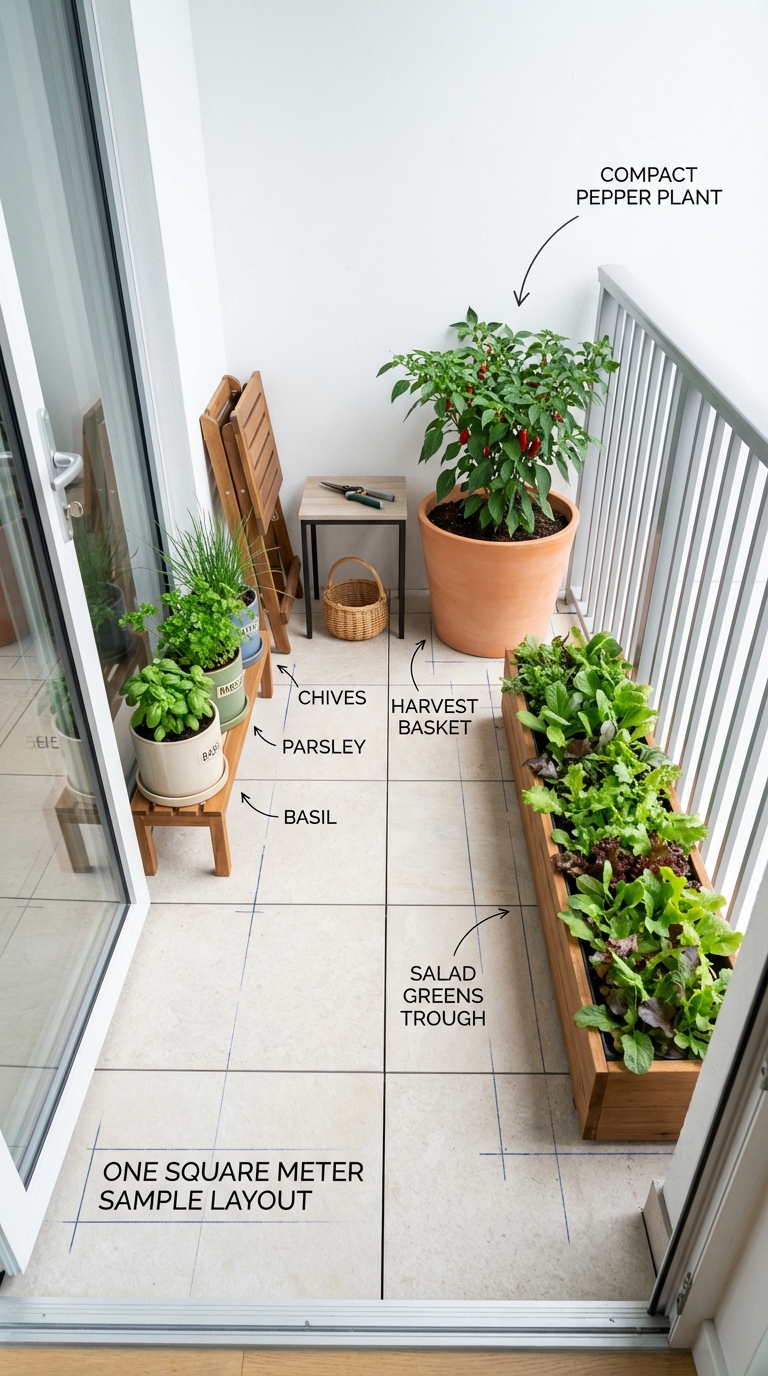
Here’s one simple setup that works well for many small balconies.
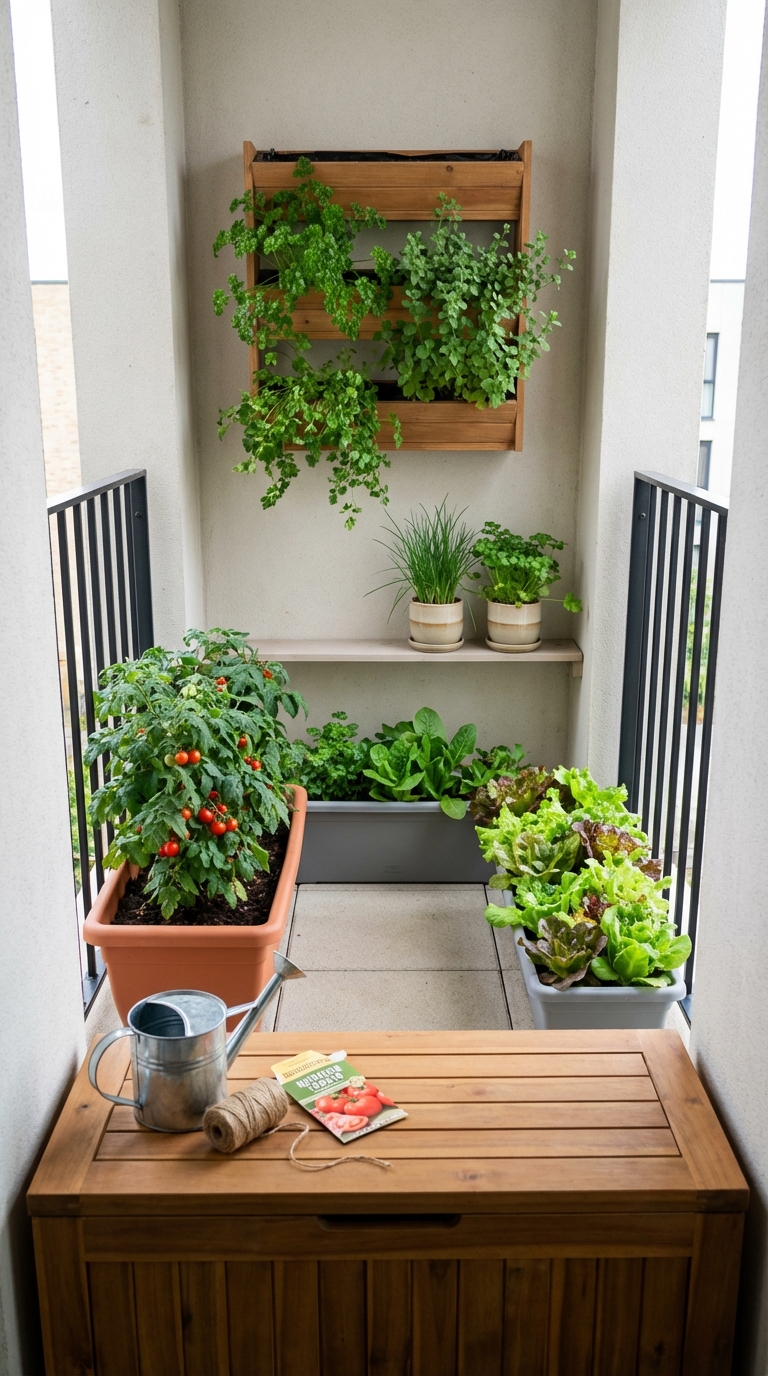
Place one deep pot in the sunniest back corner with a cherry tomato or compact pepper. Add a stake or small support right away so you are not wrestling with it later.
Along the front edge or railing, place one long trough filled with loose leaf lettuce, arugula, and a small patch of baby spinach. Sow thickly enough for frequent picking, but not so thick that airflow disappears.
Then add two or three herb pots near the door. Basil and parsley are a strong pair for many kitchens. If you cook with eggs or potatoes often, add chives. If your space is hot and sunny, thyme or oregano may fit nicely too.
That is enough. Really. You do not need to squeeze in twelve more crops to make it count.
This layout gives you leaves for lunch, herbs for flavor, and one crop that feels like the main event. It also keeps the balcony manageable. Watering is simple. Harvesting is easy. The space still looks clean and usable.
How to Keep the Harvest Coming
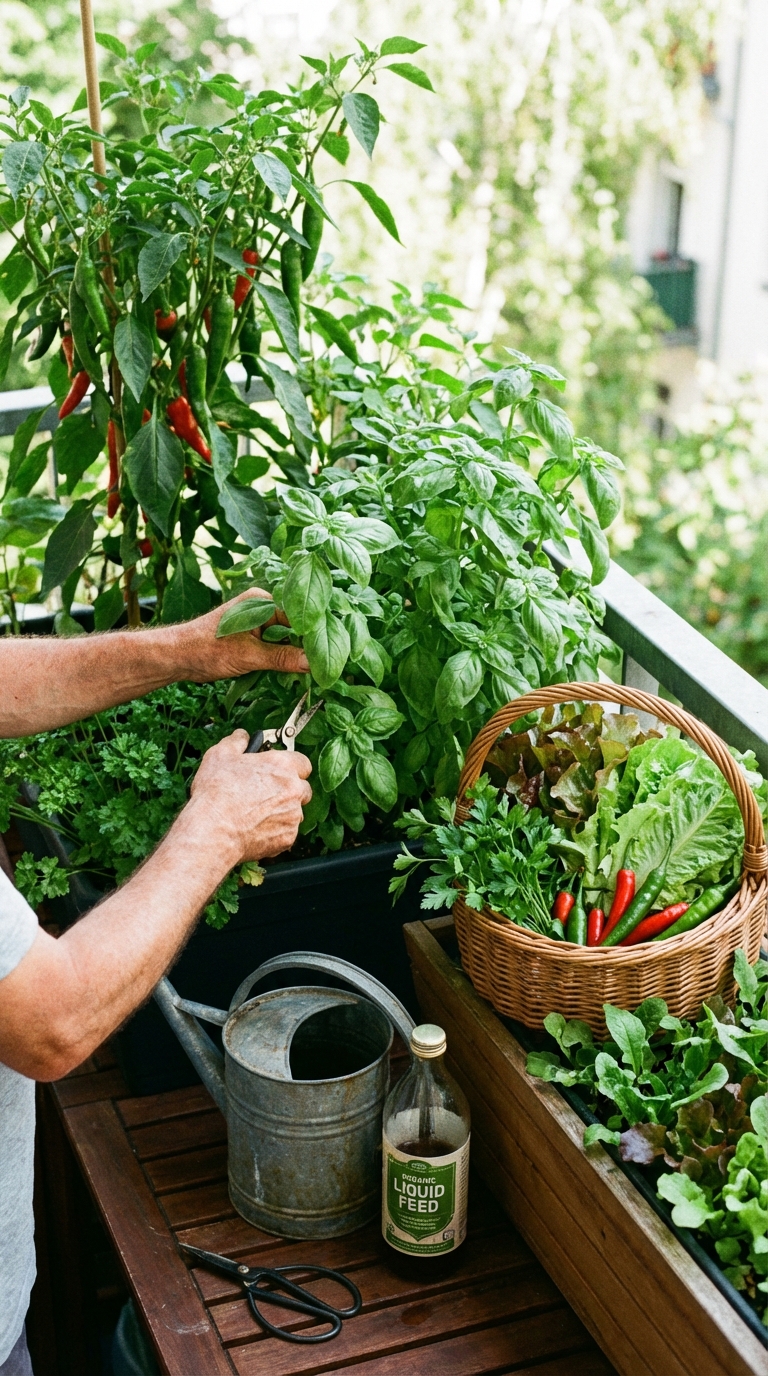
A tiny balcony garden stays productive when it becomes part of your routine.
Check water often, especially in warm weather. Containers dry out faster than garden beds, and small balconies can heat up quickly. A quick morning look is often enough to catch problems before plants start sulking.
Harvest herbs often. Pinching basil, snipping chives, and cutting parsley on a regular basis encourages fresh growth. The same goes for salad greens. Pick outer leaves, leave the center to regrow, and sow a little more seed now and then so the supply keeps moving.
Feed the hero crop on a regular schedule. Tomatoes and peppers in pots use up nutrients faster than people expect. If the plant starts looking tired, pale, or slow to flower, it may be hungry.
And keep an eye on crowding. Plants that start small can fill out quickly. If leaves are pressing into each other and airflow is poor, prune lightly or adjust containers before the space turns into a tangle.
The Small Mistakes That Waste the Most Space
The biggest mistake is trying to grow too much. It comes from enthusiasm, which is lovely, but it usually ends in crowded pots and disappointing harvests. One tomato, a trough of greens, and a few herbs will usually outperform a messy collection of oversized ambitions.
Another common problem is using pots that are too small. A hungry fruiting plant in a cramped container is always fighting an uphill battle. The plant may survive, but it will not thrive.
And then there is the habit of treating every crop the same. Lettuce is not a tomato. Mint is not basil. Peppers are not parsley. Once you understand that each plant has slightly different needs, the whole balcony starts to make more sense.
A Balcony That Earns Its Keep
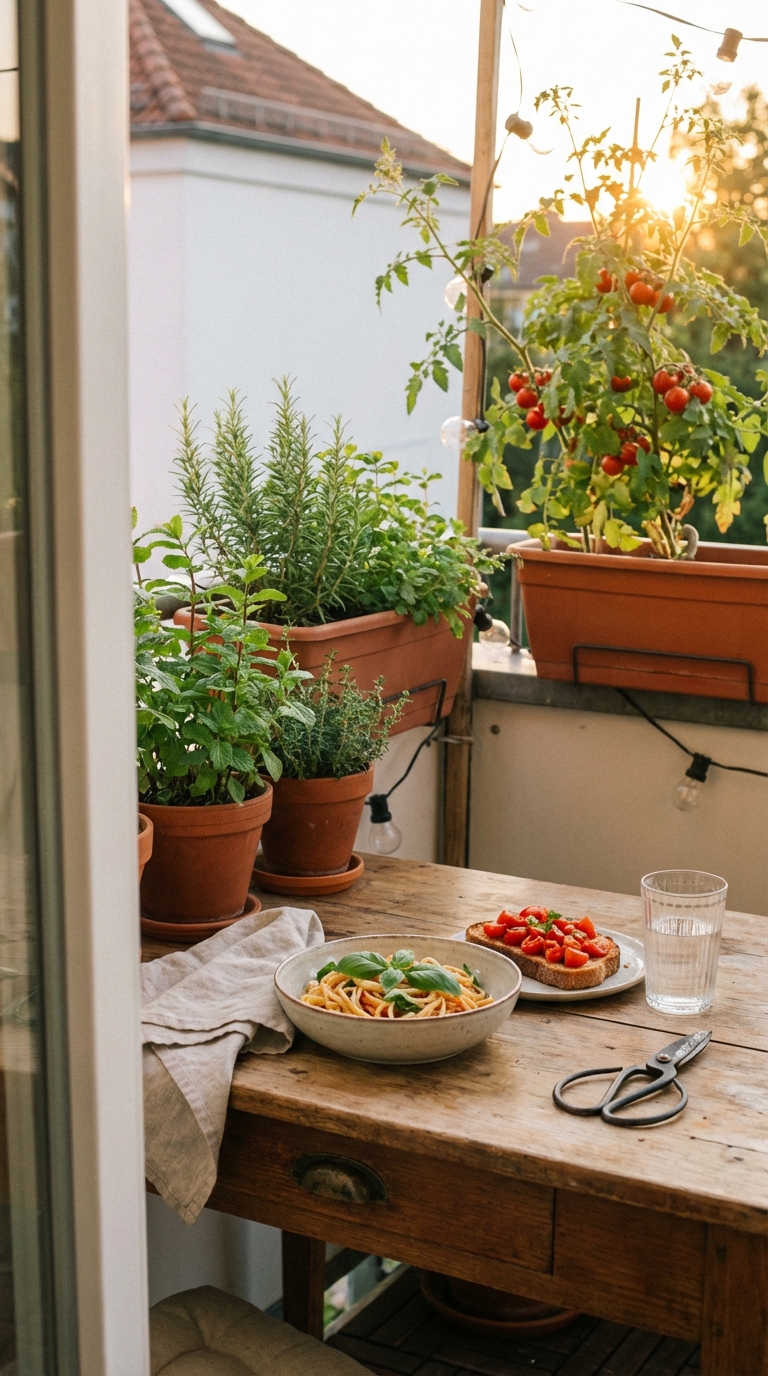
There is something satisfying about a space that contributes to daily life. Not in a grand way. Not in a self-sufficient fantasy. Just in the quiet, useful way that matters most.
A small edible balcony can give you a handful of leaves when the fridge looks bare. It can give you herbs that lift a simple dinner. It can make a sandwich taste fresher, a bowl of pasta feel brighter, or a weekend lunch feel a little less thrown together.
That’s what makes this kind of garden so appealing. It is not about showing off. It is about use. About stepping outside and finding something you can bring straight back to the table.
And for a home and garden magazine reader, that feels like the sweet spot. Beauty matters, of course. So does atmosphere. But beauty that feeds you, even a little, is hard to beat.
A Better Way to Use a Small Balcony
A 1m² balcony will never be a farm, and it does not need to be. What it can be is useful, fresh, and surprisingly generous when planned with care. Start with what you like to eat. Choose herbs you reach for often, greens you’ll actually finish, and one hero crop that brings the whole space to life.
Keep the layout simple. Give each plant enough room. Let the balcony support your meals instead of competing with them.
Because once that first handful of leaves lands in your bowl, the space starts to feel different. Less like spare square footage. More like part of the kitchen.