
7 Harmless Arizona Critters That Send People Running Because They Look Venomous
Arizona is home to some truly dangerous animals, so it makes sense that people get jumpy when something creepy crawls across the patio. The funny thing is that many of the scariest-looking creatures in the desert can’t hurt you at all.
Some of them even help keep real pests under control. Learning to tell the difference can save you a lot of screaming and save these misunderstood animals from a shovel.
1. Gopher Snake
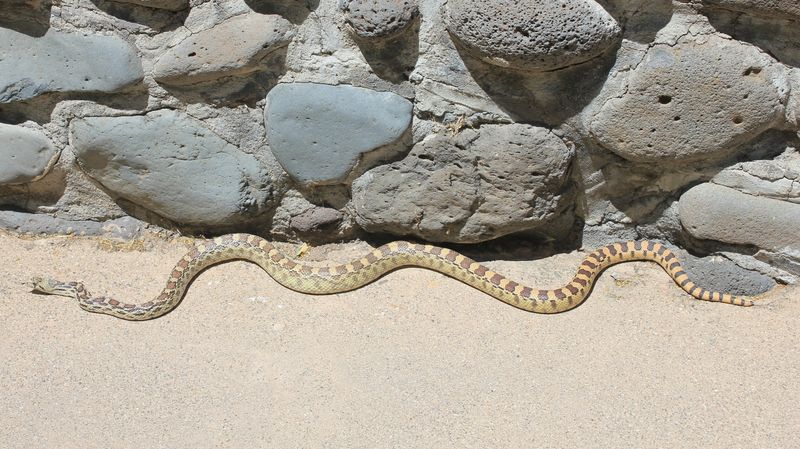
Picture a hiker freezing on a trail near Tucson as a thick, blotchy snake rears up, hisses loudly, and shakes its tail in the dry leaves. That rattling sound sure seems convincing.
Yet the performer here is a gopher snake, one of the best actors in the desert.
Gopher snakes copy rattlesnakes on purpose. They flatten their heads into a triangle shape, puff up their bodies, and buzz their tails against brush to fake a rattle.
Look closer, though, and you will notice a skinny pointed tail with no rattle at all, plus round pupils instead of cat-like slits.
These snakes are nonvenomous and actually a huge help to people. They eat mice, rats, and gophers that chew up gardens and spread disease.
Fun fact: rattlesnakes tend to avoid areas where gopher snakes are busy hunting, since both compete for the same food.
2. Sonoran Mountain Kingsnake
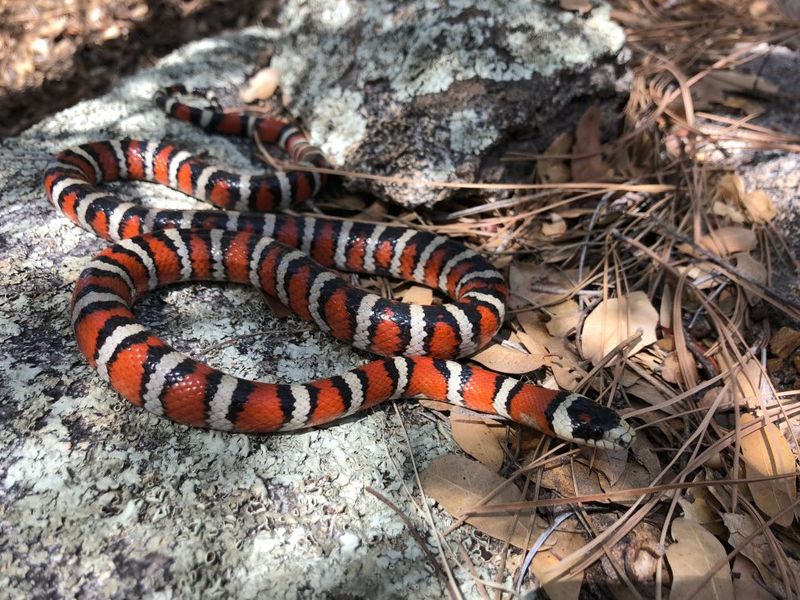
Red touches yellow, kills a fellow. Plenty of kids learn that rhyme to spot the venomous coral snake, but the Sonoran mountain kingsnake keeps tripping people up anyway.
Wrapped in bold bands of red, black, and white, this snake looks like it was painted by someone who loves warning signs. It lives in the pine and oak forests of Arizona’s higher mountains, where it hunts lizards, birds, and sometimes other snakes.
Its colors trick predators into thinking it carries the same deadly punch as the Arizona coral snake.
In reality, it has no venom and would rather slip under a log than bother anyone. Kingsnakes are so calm that many reptile keepers consider them a favorite.
If you spot one on a mountain hike, count yourself lucky and enjoy the show.
3. Desert Hairy Scorpion
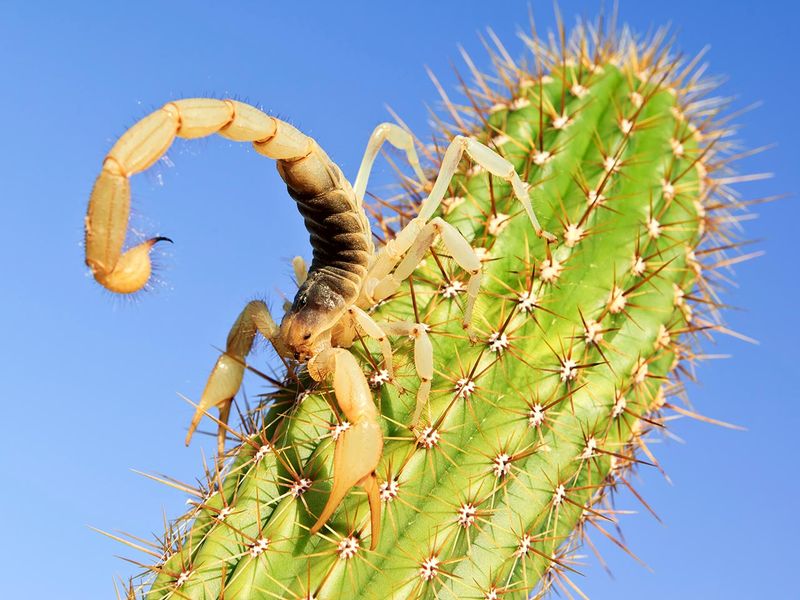
At up to five and a half inches long, the desert hairy scorpion is the biggest scorpion in North America. Seeing one scuttle across a garage floor feels like a scene from a monster movie.
Here is the twist. Size doesn’t equal danger in the scorpion world.
The tiny Arizona bark scorpion is the one with strong venom, while this giant has a sting that feels more like a bee sting for most healthy people.
Desert hairy scorpions are covered in little brown hairs that help them sense vibrations from prey. They dig burrows in sandy soil and come out at night to eat crickets and other insects.
Shine a UV flashlight on one and it glows a bright blue-green, which is honestly pretty cool to see.
4. Tarantula Hawk Wasp
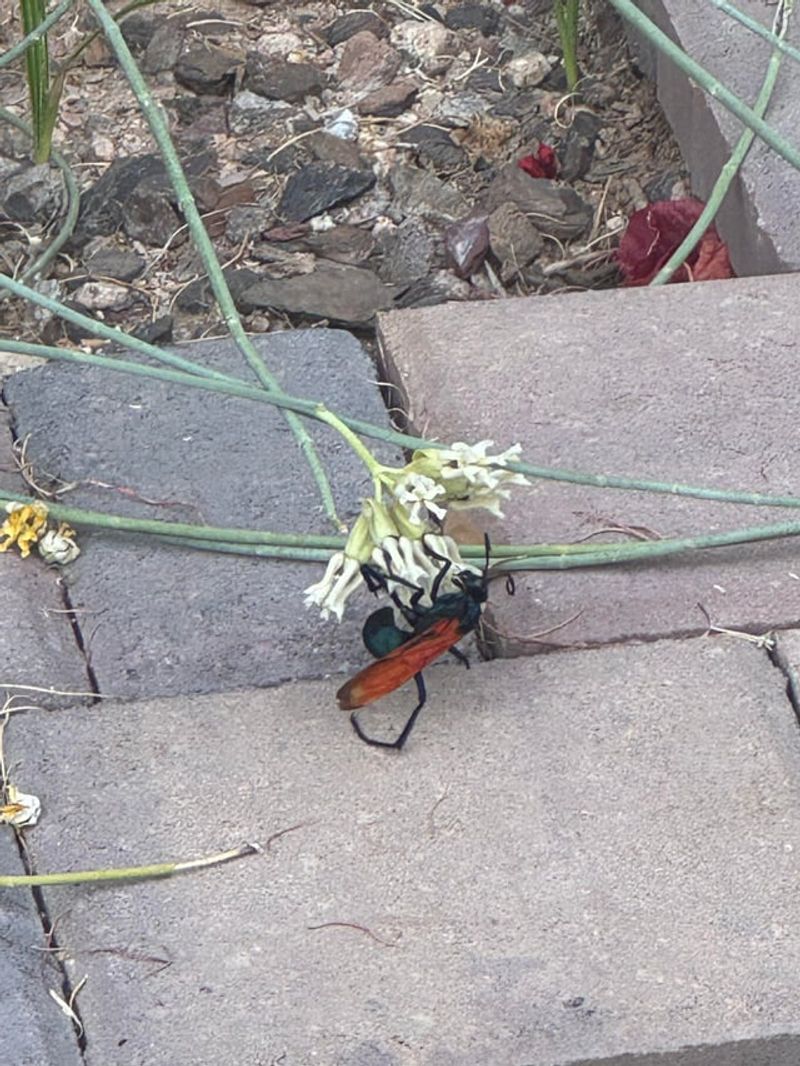
Let’s be honest about this one. The tarantula hawk does have one of the most painful stings in the insect world, so why is it on a harmless list?
Because it almost never uses that sting on people. These huge wasps, with shiny blue-black bodies and glowing orange wings, are surprisingly laid back.
Adults spend most of their time sipping nectar from flowers like milkweed and mesquite blossoms.
Their scary reputation comes from how they raise their young. A female hunts down a tarantula, paralyzes it, and drags it to a burrow as food for her baby.
As long as you don’t grab or step on one barefoot, a tarantula hawk will happily ignore you. It is also Arizona’s neighbor New Mexico’s state insect.
5. Arizona Blonde Tarantula
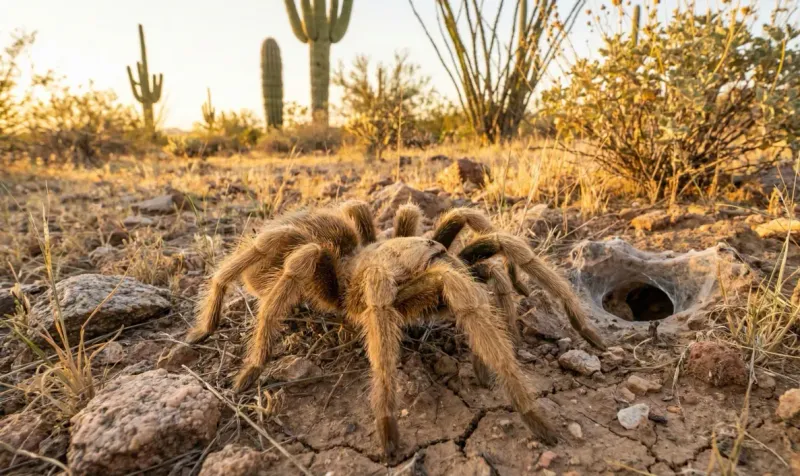
Every summer during monsoon season, drivers in places like Cave Creek and Sedona slow down to let fuzzy, palm-sized spiders cross the road. Those eight-legged travelers are male Arizona blonde tarantulas searching for mates.
Most people assume a spider this big must be deadly. Not true.
Their venom is weaker than a bee’s, and they rarely bite at all. When bothered, they usually just back away or flick tiny itchy hairs from their belly.
Females are real homebodies and can live 25 years or more in the same burrow. Males live much shorter lives, which is part of why they wander so boldly.
Watching one stroll across the sand is a little like watching a slow, fuzzy teddy bear on a mission.
6. Giant Desert Centipede
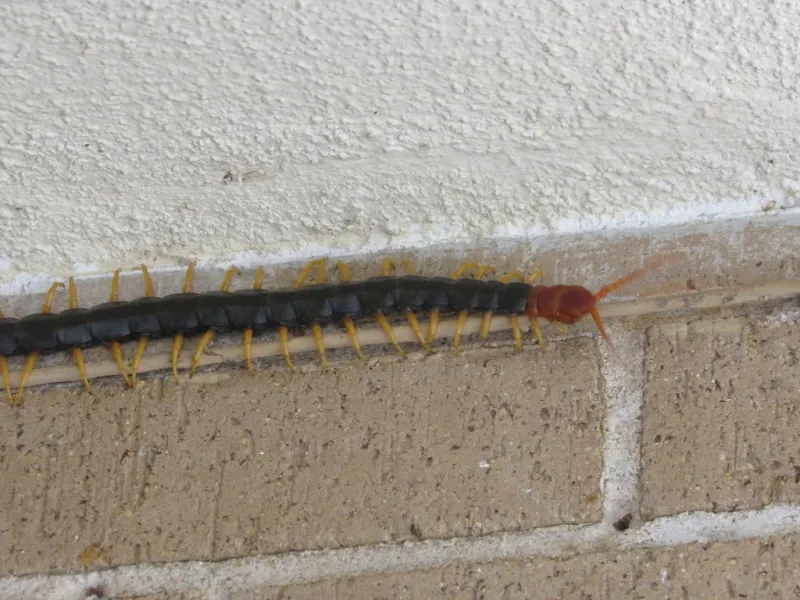
Few things make a person jump onto a chair faster than an eight-inch centipede wiggling out from under a flowerpot. With its bright orange body, black head, and dozens of legs, the giant desert centipede looks like trouble.
Okay, this one can bite, and it will sting a lot. But for healthy adults, the venom is not life-threatening.
Think painful and swollen, not a hospital emergency, unless someone has an allergy.
The best part? These hunters gobble up cockroaches, crickets, and even small scorpions.
Simply leave them alone and use gloves when moving rocks or yard debris. Fun fact: those bright colors are a warning sign to birds and lizards, a trick scientists call aposematism.
7. Vinegaroon
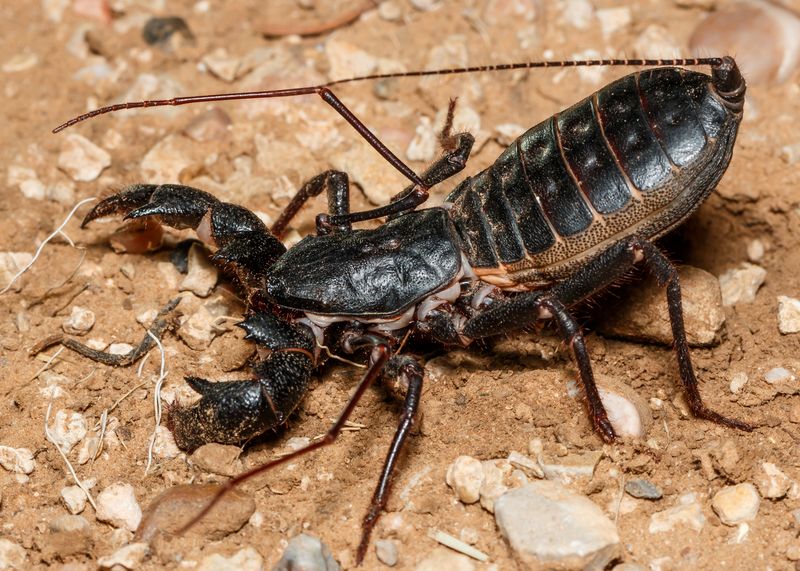
Imagine a scorpion’s spooky cousin with giant claws and a long whip for a tail. Meet the vinegaroon, also called the whip scorpion.
Despite looking like something from a science fiction film, the vinegaroon has no venom and no stinger. Its secret weapon is smell.
When threatened, it sprays a mist of acetic acid from its tail, which smells just like vinegar and gives the critter its name.
Vinegaroons are night hunters that crush insects and millipedes with their strong pincers. They are slow, shy, and even kept as pets by some bug lovers.
Next time you smell salad dressing in the desert after dark, a vinegaroon might be nearby.