
What Those Late-Night Coyote Howls Near Your Michigan Home Are Really Telling You
You are settling in for the night when a wild, wavering howl drifts through the dark. It is easy to wonder what it means and whether something is close to your door.
Fall is a busy time in the coyote year, so the sounds can feel extra common. Here is what a howl can tell you, what it cannot, and what to do if you ever see a coyote.
Fall can bring young coyotes out of den areas
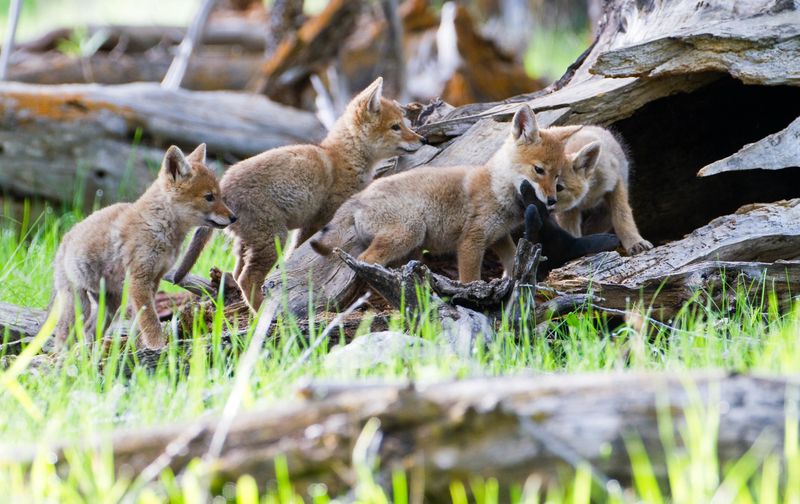
Michigan’s coyote year follows a steady calendar. According to Michigan DNR’s coyote profile, pups are born in spring and live with the adults in the home range through spring and summer.
By fall, the young coyotes leave their den sites.
That move is called dispersal. Young animals head out to find space of their own, and Michigan DNR notes that they may be more visible at this time of year.
So around mid-November, you may be a little more likely to spot a coyote crossing a field, a road, or a backyard edge.
Here is the catch. Knowing the season does not let you pin a particular howl on a particular animal.
A call from the woods behind your house might come from a young coyote on the move, but it might just as easily come from an adult that has lived in the area for years. Nothing in the sound itself reveals the caller’s age or whether anyone is passing through.
It also helps to keep the calendar straight. November is not the mating season.
Michigan DNR places the usual breeding period in January through March, and the pups that result arrive in spring. Fall is about young coyotes striking out, not about courtship.
Think of the season as background, not a decoder. It explains why coyote sightings can pick up as the leaves drop, without turning any one howl into a message about who is out there tonight.
A howl on a November night is simply one more sign that coyotes share the neighborhood with you, as they do all year.
A howl communicates, but it does not give a translation
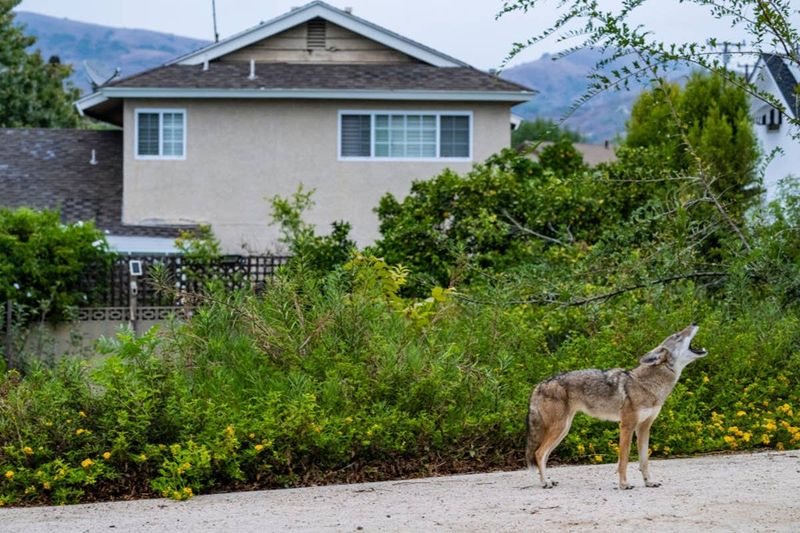
Coyotes talk to each other, and howls and yips are a big part of that conversation. As Penn State wildlife researchers explain, these calls can help family members keep in contact.
They can also signal that a coyote is present or announce a territory to neighbors.
Picture a family spread out across a wooded area at night. A howl can work like a phone call across the distance, letting others know where someone is.
It can also tell outsiders that the area is already in use.
Those are general jobs that calls can do, though. They are not a dictionary.
When a single howl reaches your window, nobody can say which purpose is behind it, because the sound does not come with a label.
It also helps to know that coyotes do not save their voices for autumn. They call in every season, so hearing one in November does not mean something special is going on.
A summer night and a fall night can sound much the same.
So what can you fairly conclude? A coyote, or several, is out there and talking.
That is about it. The call does not tell you how close the animal is, how old it is, what it wants, or whether it is headed your way.
Treating a howl as simple evidence of presence, rather than a secret message, keeps your imagination from running ahead of the facts.
A chorus cannot give you a reliable headcount

Ever heard a burst of yips and wails and thought, there must be a dozen out there? Your ears may be fooling you.
Coyote voices overlap, bounce off trees, and rise and fall in ways that make a few animals sound like many.
Researchers tested this idea. In a 2017 playback study, 427 people in southern Texas listened to recorded coyote calls and guessed how many animals were making them.
Participants usually overestimated the number.
That is a useful warning for anyone standing on a porch at midnight. If trained ears and curious volunteers tended to guess too high, a quick count from your yard is unlikely to be right either.
There is a limit to what the study tells us, too. It took place in southern Texas, using recordings.
It does not give a precise number for any Michigan neighborhood, and it cannot say how many coyotes are behind tonight’s chorus near your home.
The takeaway is practical. A loud, layered chorus does not prove a large pack is nearby.
It may be two or three animals, or a few more, and you cannot tell which from the sound. Try letting go of the counting game and enjoy the mystery of the music instead.
The moon and a kill are not written into the sound

Two popular stories follow coyote howls around: they howl at the full moon, and they howl after making a kill. Neither one holds up as a rule you can read from the sound.
Start with the moon. In a Saskatchewan study from 1996, researchers found that group howling was negatively related to increasing moonlight, while lone howling showed no relationship.
In other words, brighter nights did not bring more chorus howling there. That is one study in one place, so it is not a law for every coyote call everywhere.
Still, as the Massachusetts Division of Fisheries and Wildlife notes in its own look at this question, coyotes are not howling at the moon.
Now the kill idea. Howls are communication, the kind of calling that keeps family members in touch or signals presence.
Nothing about the sound shows that an animal has eaten or hunted. Nobody listening from a house can tell a feeding howl from any other howl.
If you want a clue about what is really going on, look at what you can actually observe. Is it a clear night or a cloudy one?
Did you see an animal, or only hear it? Those facts are better than a legend.
The moon makes a fine backdrop for a howl, and it is easy to see why people link them. The link just is not in the sound.
Hearing a howl is not the same as an encounter
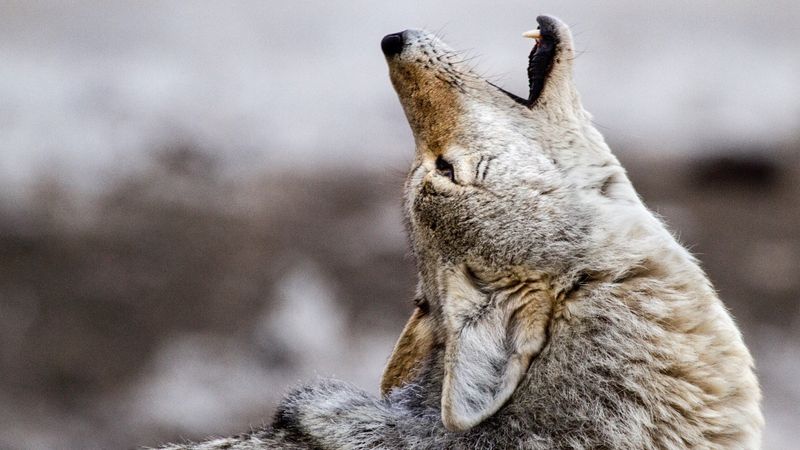
Sound travels farther than most people expect, especially on still autumn nights. A howl that seems to come from just beyond the fence may be far off in a woodlot or a field.
Distance is very hard to judge in the dark.
That is why a howl on its own is not a sign of danger. It does not show that a coyote is heading for your house, and it does not mean one is about to walk into your yard.
Hearing a coyote and meeting one are two very different things.
Coyotes live across Michigan, including in and around towns, as Michigan DNR’s coyote guidance makes clear. Having them nearby is normal, and most of the time they go about their business without bothering anyone.
That said, it would be too much to call coyotes harmless. They are wild animals, and small pets in particular deserve some care.
The point is to match your response to what is actually happening.
If all you have is a sound, you can listen, maybe step outside to look around, and carry on. Save the practical steps for a real sighting, when you can see an animal and judge how close it is and what it is doing.
The next section covers exactly what to do then.
If you see a coyote, give it space
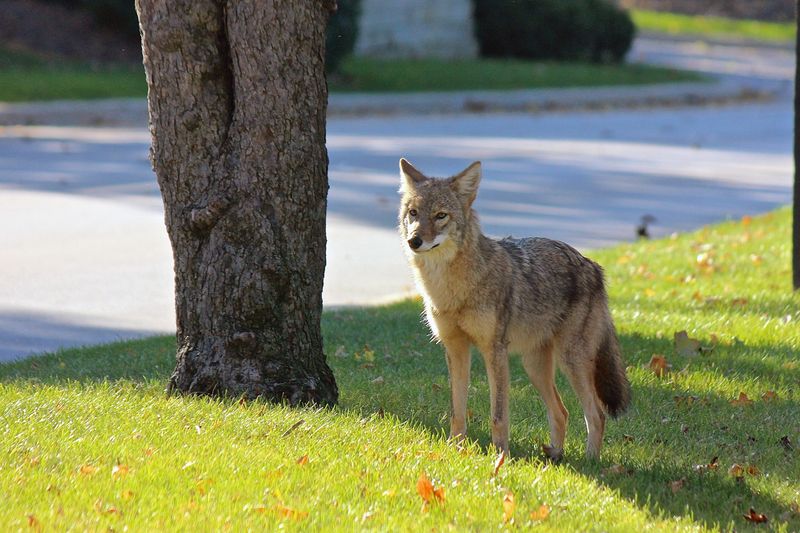
Seeing a coyote calls for a calm plan. Michigan DNR’s advice starts with distance: keep well back, and never try to feed or tame one.
Food is what turns a wary wild animal into a bold one.
Take away anything that might draw coyotes in. Michigan DNR recommends removing accessible food, which can mean pet food left outside, open trash, fallen fruit, or bird seed on the ground.
Small pets should stay indoors, or be leashed and accompanied when they go out.
If a coyote comes toward you, the steps are simple. DNR guidance for living with coyotes says to make yourself look large, make loud noises, and walk away while facing the animal.
Do not run, since running can make things worse.
Watch the animal’s behavior, too. If a coyote shows aggression such as snapping, growling, or snarling, report it to the DNR RAP Line at 800-292-7800.
A howl across the dark is just a voice. A coyote that you can see in your yard is the moment to act.