
How Low to Mow a Michigan Lawn Before Winter: No More Than One Notch Below Your Usual Height
Your mower is about to do its last job of the year, and the setting you pick matters. Many Michigan homeowners wonder if they should chop the grass short before snow arrives.
Michigan State University Extension gives a calmer answer than a single magic number. Here is how to make the final cut work for your own lawn.
Keep the final cut no more than one notch lower
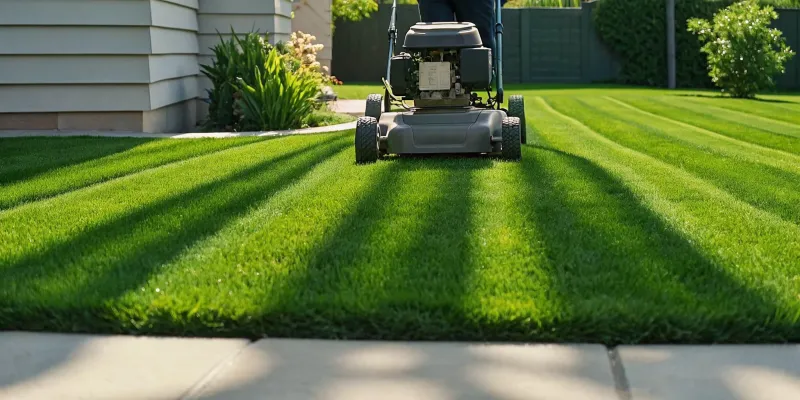
Michigan State University Extension gives a clear, modest rule in its fall yard and garden cleanup tips. When the lawn stops growing, lower the mower by no more than one notch for the final cut.
On most mowers, one notch is about ½ inch.
Notice the wording: no more than one notch. That is a ceiling, not a requirement.
The goal is a small step down from the height you have been using all season, not a dramatic haircut.
Here is an example. Say your lawn is normally kept at 3 inches.
One notch lower would land it around 2½ inches for the last pass. That number is only an illustration for a lawn kept at 3 inches.
It is not a statewide target, and it does not apply if your usual height is different.
If your lawn is kept at 3½ inches, a one-notch drop would finish near 3 inches. If your mowing height is already on the lower side for your grass, you might skip the reduction and simply keep your normal setting.
Nothing in the guidance says every lawn must be cut lower before winter.
Think of the final cut as a gentle tidy-up. You are trimming the lawn so it heads into the cold season neat, without cutting so low that the grass is stressed.
The next sections cover how grass type, timing, and conditions shape that decision.
The right height depends on the lawn
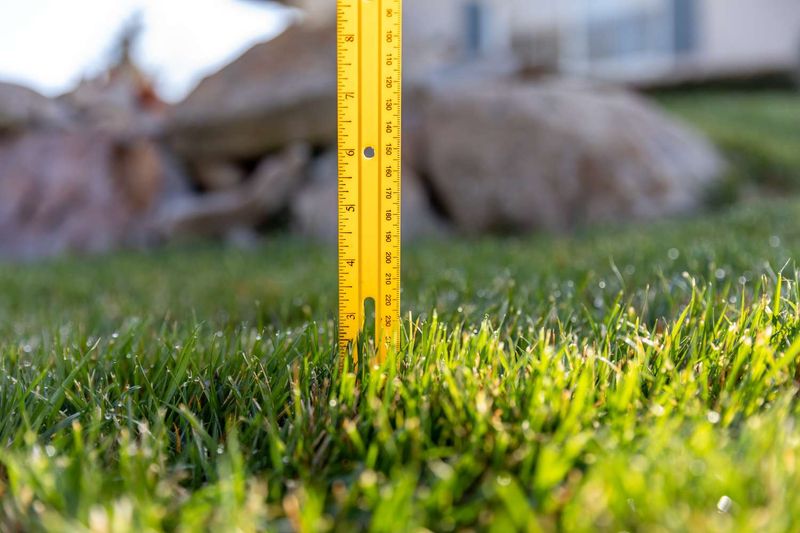
Ask five Michigan neighbors how tall their grass should be and you may hear five answers. That is because the best mowing height changes with the type of grass and how the yard is used.
A play space for kids and dogs may do best with a different height than a quiet front yard.
Michigan’s environment agency, EGLE, offers general guidance in its lawn maintenance best practices guide. It suggests mowing at a minimum of 3 inches, with up to 4 inches where lawn use allows.
It also lists different preferred heights for common cool-season grasses, and it says suitable heights vary by grass type and use. The guide also advises never removing more than one-third of the blade in a single mowing.
That is a different kind of advice from MSU’s. EGLE describes a general season-long height.
MSU describes a small relative change for the final cut. One tells you where to live most of the year, and the other tells you how far to step down at the end.
Purdue Extension points the same direction. Its turf mowing publication gives mowing ranges by species rather than one number for all lawns.
One more practical point: do not trust the lever setting as an exact measurement. Mower decks, wheel sizes, and lawn surfaces all change the real cut.
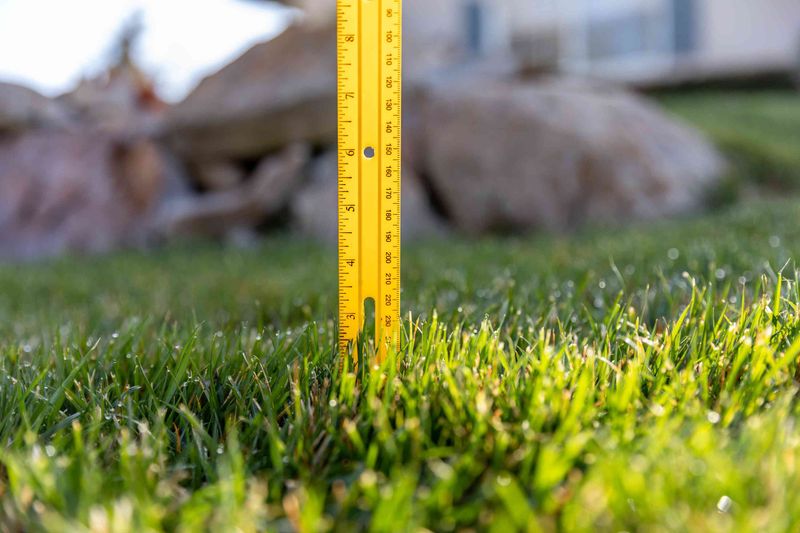
If you want a precise number, set the mower, cut a small test strip, and measure the grass with a ruler.
Let grass growth, not the calendar, set the timing
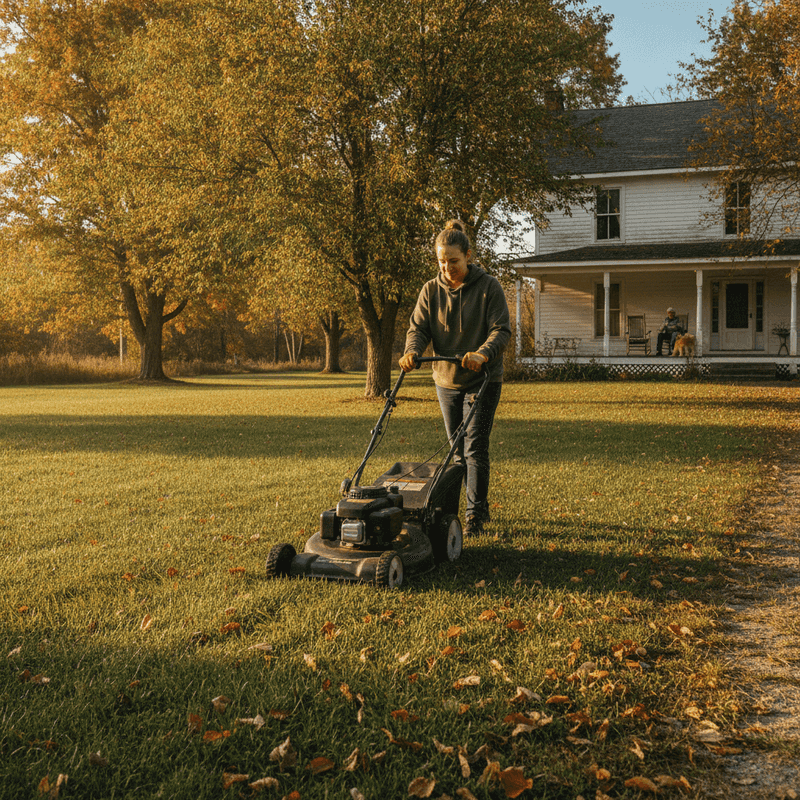
Nobody in Michigan can give you a single date when mowing season ends. A warm fall in the southern Lower Peninsula can keep grass growing well into November, while a cold snap up north may stop it much earlier.
Your lawn knows before the calendar does.
Keep mowing as long as the grass is growing. MSU’s Lawn*A*Syst fall lawn care assessment lists mowing until growth stops as the recommended practice.
The end of active growth is the cue for your last pass.
A simple check helps. If you mowed a week or two ago and the lawn still looks about the same height, growth has probably slowed or stopped.
If you are still seeing a fresh, shaggy look after a week, the grass is still moving and another regular mow makes sense.
MSU’s fall guidance ties the final cut to this growth stop, not to a fixed day. So there is no statewide deadline to chase, and some lawns may not need a distinct final mow at all if growth tapers off gradually and the height already looks right.
Treat your last few mows as a rhythm set by the weather. Once the grass quits growing, that is when to decide whether a one-notch step down is worth making.
Extension advice differs on fall mowing height
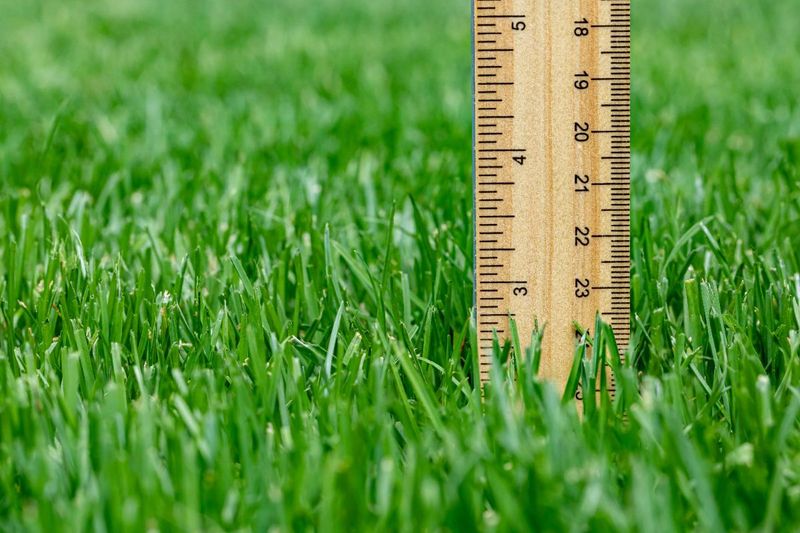
If you read more than one university guide, you may notice they do not match word for word. That is normal, and it is worth knowing about before you set your mower.
MSU recommends a modest final reduction in its fall cleanup guidance: no more than one notch lower once growth stops. For Michigan lawns, that is the local starting point.
The University of Minnesota takes a somewhat different path. In its fall lawn care Q and A, the general advice is to maintain your fall mowing height.
It adds that lawns kept taller than 3 inches can be brought down to 3 inches before winter.
These are not identical rules. One suggests a small step down, while the other mostly says stay the course, with a possible trim for taller lawns.
Neither is a universal law for every yard.
What they share is more useful than what separates them. Both keep changes modest, and neither asks you to cut grass very short.
If your lawn is already at a healthy height for its grass type, leaving it near that setting fits comfortably within both approaches.
Since you live in Michigan, lean on MSU’s guidance first, and use the Minnesota advice as a reminder that a small change, or none, can be perfectly reasonable.
A shorter cut does not guarantee protection from winter problems
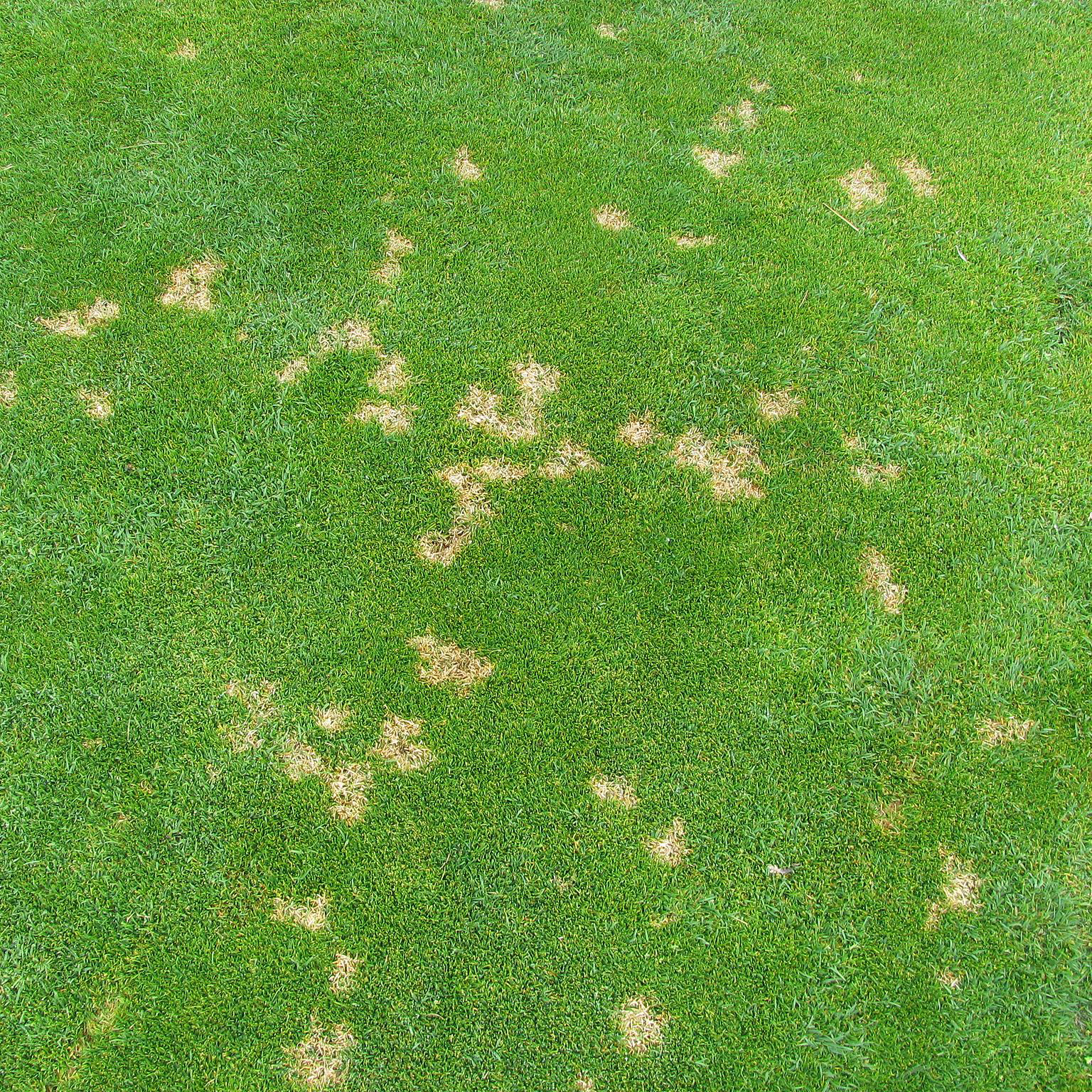
It is tempting to think that scalping the lawn will head off every winter headache. It will not.
MSU’s advice is a small reduction, and cutting much lower than that can do more harm than good.
Snow mold is a good example. Penn State notes that pink snow mold can be severe on close-cut turf in particular settings, and also on lush, heavily fertilized turf.
So shorter is not simply safer. The link between mowing height and snow mold is not a tidy rule you can lean on.
Minnesota Extension adds a related caution in its fall lawn care Q and A: cutting too short can stress grass, and in many cases normal fall height is the better choice.
Voles are another worry. MSU’s fall guidance says a modestly lower final cut can help with vole problems, and Penn State’s vole guide describes regular mowing as one habitat-management measure.
That is not a promise. A short cut will not eliminate voles or the damage they cause.
The takeaway is practical. Keep the final cut modest, and think of it as one small piece of lawn care rather than a shield against snow mold or critters.
If you have had trouble in past winters, pay attention to other factors such as heavy fertilizing late in the season and leaf cover.
Account for leaves and wet ground
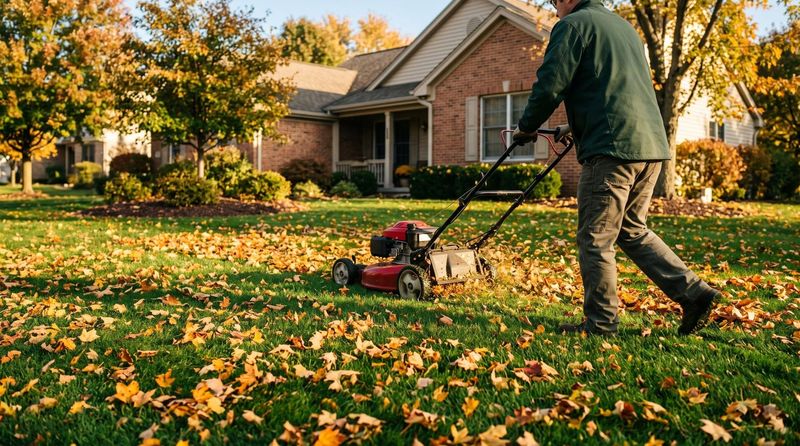
Fallen leaves can smother grass if they pile up. Deal with heavy leaf cover rather than leaving a thick mat across the lawn through winter.
MSU’s fall cleanup tips suggest mulching leaves with a sharp mower blade. Do not mow leaves when they are wet, and do not let them build up more than 3 to 4 inches deep before mowing.
Waiting for a dry day makes the job easier and gives a finer chop.
Soil conditions matter just as much as leaves. In its guidance on turf and lawn care in wet, cool weather, MSU Extension warns that mower traffic can compact soil or physically damage turf when the ground is wet.
Turning is especially hard on the grass.
If the ground is soggy, delay mowing when you can. A squishy footstep, standing water, or ruts behind the wheels are good signs to wait.
A few more days will not hurt a lawn that has stopped growing.
When you do get a dry window, plan wide, gentle turns and mow in an easy pattern. That keeps wheel stress low and helps you finish the leaves and the last cut in a single pass.
Use a conditional rule for the final pass
Here is the rule in plain form. Wait until the grass stops growing.
If you make a reduction, drop no more than one notch below your usual setting, and hold off if the ground is too wet, as MSU’s fall guidance suggests for the final cut.
The 2½ inch figure belongs only to the example of a lawn normally cut at 3 inches. Your number depends on your own usual height.
Some years the best final cut is the one you skip, and the lawn will thank you for the rest.