
Brown Recluse Spiders Can Shelter in Illinois Garages: Here’s How to Handle Stored Items Safely
A box that has sat in your garage for a few years can make a quiet hiding spot for a spider. Brown recluses are one of the few spiders in Illinois with venom that can harm people, though bites are uncommon.
Knowing where they hide and how to check for them can help you stay calm and careful. This guide shows how to look before you reach, and what to do if you think you were bitten.
Brown recluses can shelter in garages—but a cold-weather influx isn’t established
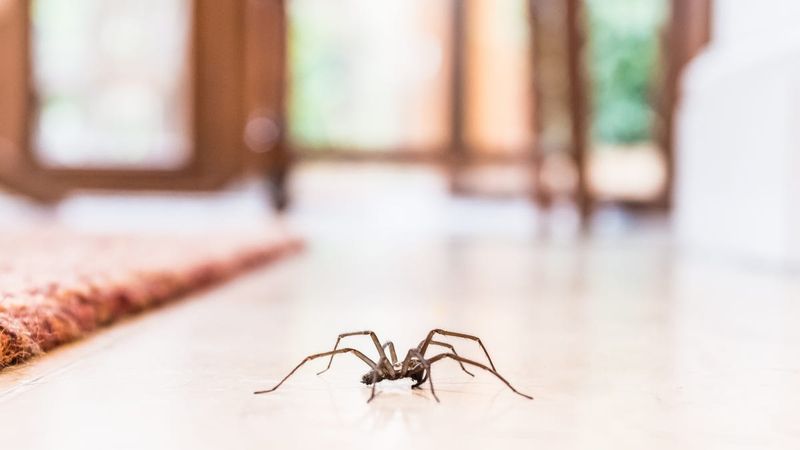
Garages and stored goods are listed as possible hiding places in Illinois Department of Public Health guidance. That is different from saying the spiders are streaming into garages right now because the weather is turning cold.
The sources reviewed do not show a current, cold-triggered move indoors.
You may have read that fall brings spiders inside. Outdoor females do lay egg sacs in fall, according to the Illinois Department of Natural Resources, but laying eggs outside does not prove the spiders are moving into buildings.
A museum arachnologist also says the familiar fall-invasion story is often a misconception for house spiders in general. That source is not about brown recluses specifically, so it cannot settle every local pattern.
Where you live in Illinois matters. The DNR says the spider may be found in the southern two-thirds of the state, while the health department describes its established range as reaching southern Illinois and says finds outside that area are rare.
A study of Illinois and Iowa records found very few in the northern part of the region.
So the practical message is simple. Brown recluses can shelter in garages, but they are not equally common everywhere in Illinois, and a surprise find far from the usual range deserves careful thought rather than alarm.
A quiet garage can offer the shelter they prefer
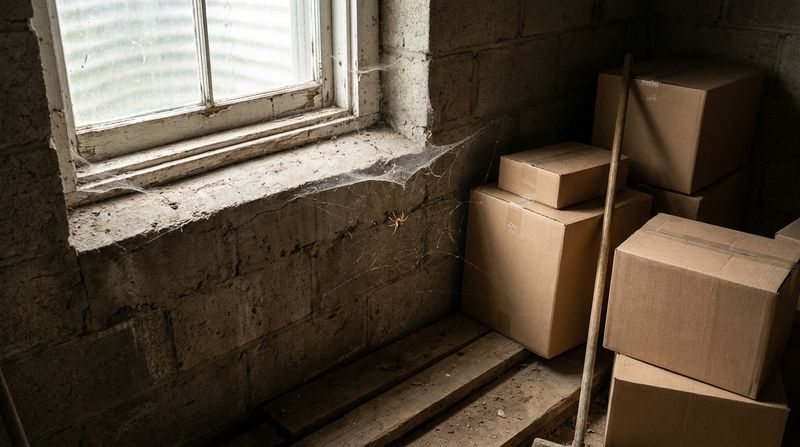
Brown recluses like secluded, undisturbed places. Illinois public health guidance lists garages, basements, attics, wall voids, furniture, cardboard boxes and stored goods as spots where they may shelter.
A garage with long-untouched clutter offers many of these features at once.
Their habits make them easy to miss. They are nocturnal, so a spider may rest out of sight all day and move around only after dark.
You can handle a box many times without seeing one tucked in a fold of cardboard or fabric.
Sheltering is not the same as being brought in. According to state guidance on brown recluse and black widow spiders, spiders can ride inside boxes or furniture.
A used dresser or a box of items from a relative’s house could carry one into a home far from where the species usually lives.
That difference matters when you interpret a find. One spider that arrived in a box does not mean a local population is growing.
It does mean that secondhand furniture and moved storage deserve a careful look before they come inside.
A calm approach works best. Think of your garage as a place with plenty of hiding spots, not as a place under siege, and let that guide how you handle what is stored there.
The violin is a clue, not a reliable verdict
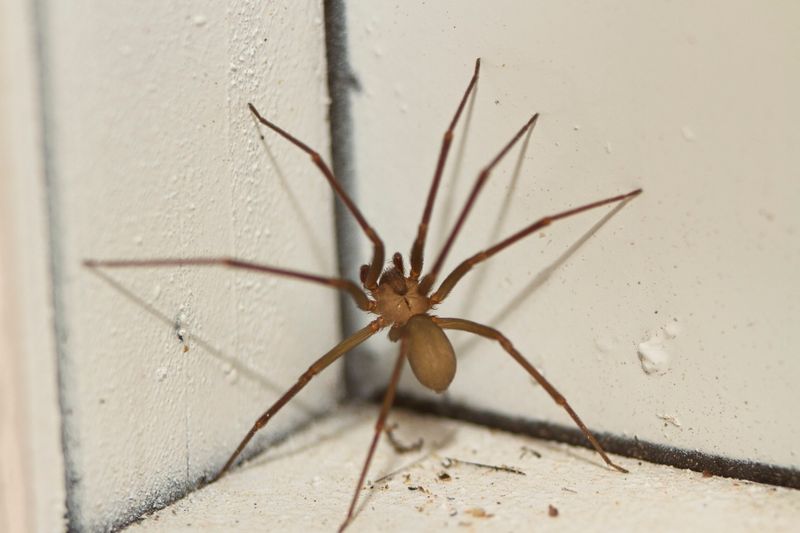
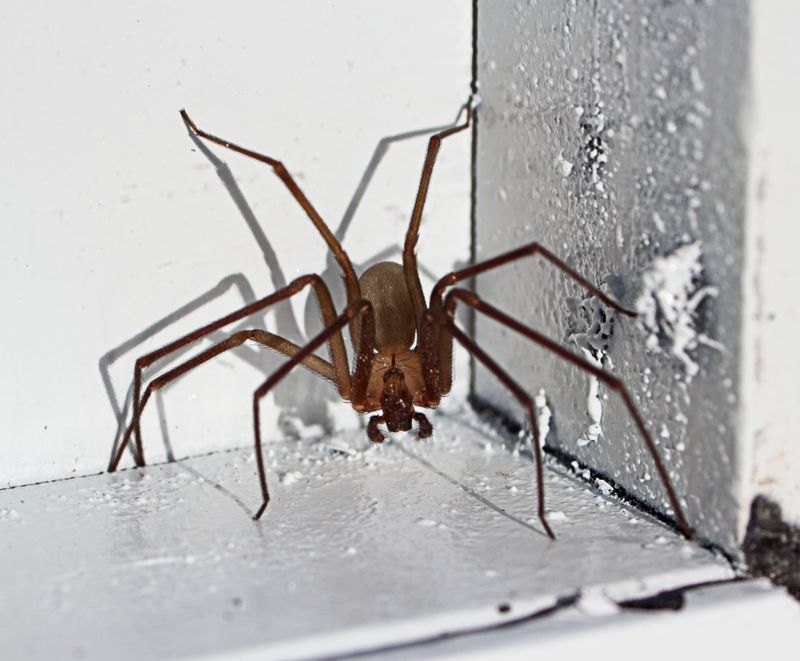
A brown recluse is light brown, with a darker violin-shaped mark on the front body section, behind the eyes. The neck of the violin points toward the abdomen.
Illinois health officials include this mark in their description.
The trouble is that the mark alone cannot confirm anything. According to University of California, Riverside, markings on other spiders can be mistaken for a violin.
The mark can also be faint or missing on young spiders, so a spider without a clear violin could still be a recluse.
Other features help. Adults have six eyes arranged in three pairs, rather than the eight eyes most spiders have.
The legs are a single color with no bands or stripes, and the body is not covered in spines. The University of California integrated pest management program notes that eye arrangement is more telling than the violin, but close inspection or an expert may be needed.
That is where safety comes in. Do not pick up a suspected spider, and do not lean in close to count its eyes.
A spider that feels threatened may bite, and you gain nothing from the risk.
Treat the violin as a reason to look more carefully from a distance. If you want a firm answer, a photo taken from a safe distance and shared with a local extension office or pest expert is a better route than guessing.
Check stored items without reaching in
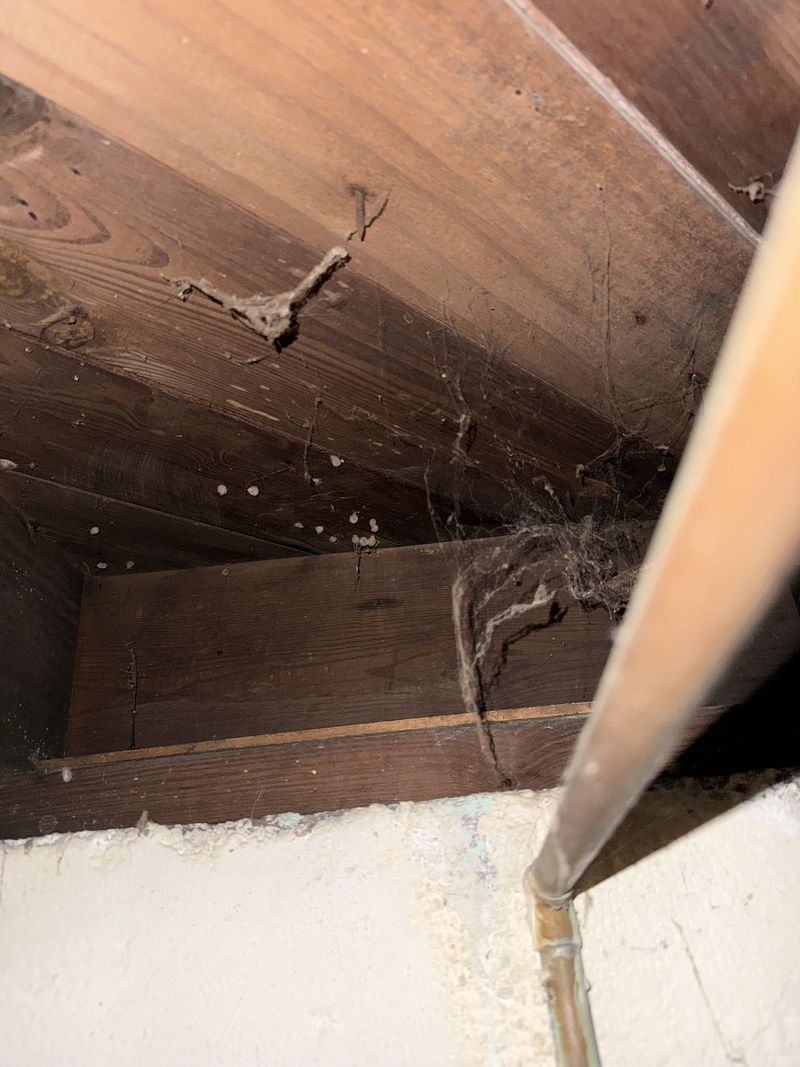
A simple routine lowers your chances of an unpleasant surprise. The Tazewell County Health Department advises wearing gloves when working in garages and shaking out seldom-used clothing, boots, blankets and towels before use.
Used furniture should be inspected before it comes into the house.
Try it in practice. Open a box with the flaps lifted by a gloved hand, look inside with a flashlight, and only then start unpacking.
Skip the habit of sliding a bare hand into a dark corner or the bottom of a stack.
Shake boots upside down and give blankets a good snap outdoors. Pull larger items away from walls slowly, since spiders favor tight, undisturbed spots.
If you do see a spider you suspect is a recluse, step back. Take a photo from a safe distance and ask for help with identification, such as through a local extension office or pest professional, as University of California, Riverside suggests.
The same integrated pest management guidance notes that close inspection may be needed, which is a job for an expert rather than a homeowner.
Reduce hiding places and monitor activity
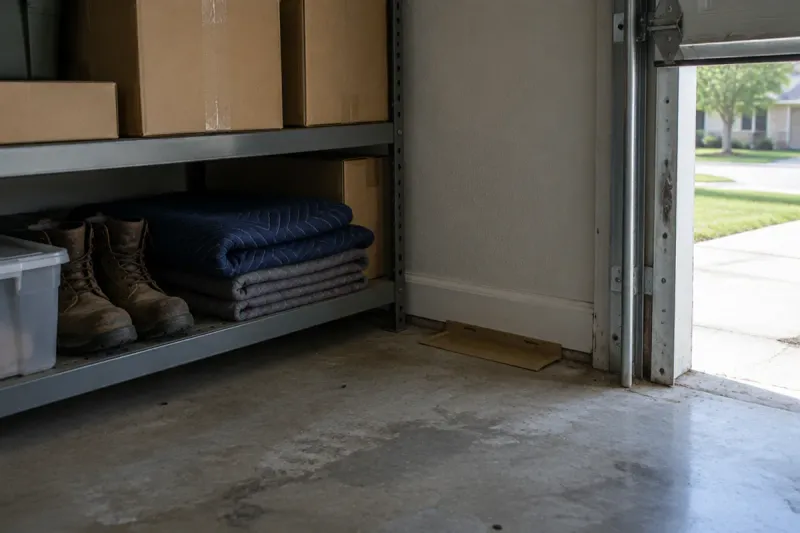
Fewer hiding places means fewer chances for a spider to settle in. Illinois Department of Public Health guidance recommends clearing clutter and sealing cracks and crevices.
It also suggests replacing long-stored goods, or sealing them, in tight-fitting plastic containers.
Cardboard is easy for a spider to slip into and out of. A lidded plastic bin with a snug fit removes that option.
Label the bins so you do not have to dig through them later.
Sticky traps can help you see what is active. The state guidance suggests placing them along walls and near likely travel routes.
Check them regularly, and keep them out of reach of children and pets.
A trap catching a spider is not proof of a recluse, so photograph or save the catch for an expert to identify. A few catches may also tell you the problem is small, while many might call for professional help.
One more point is worth stating plainly. Spraying baseboards alone is not adequate control for an established infestation.
Cleanup, sealing and monitoring do more than a quick spray, and a licensed pest professional can step in if you find repeated activity.
A suspected bite needs advice, not a visual diagnosis

If you think a spider bit you, start with the basics. Wash the area with soap and water, then call Poison Control at 1-800-222-1222 or use webPOISONCONTROL.
Poison Control offers guidance on the signs to watch for and ways to lower risk.
Resist the urge to name the cause from how a sore looks. A skin lesion cannot reliably be identified as a recluse bite by appearance alone.
The CDC Yellow Book notes that many alleged spider bites turn out to be other conditions, including bacterial infections.
That is why medical advice matters more than guessing. See a clinician if the area gets worse, spreads or becomes more painful.
Seek care promptly if you develop symptoms beyond the skin, such as fever, chills, vomiting or feeling generally unwell.
Keep the scale in mind. Illinois guidance says bites are uncommon and that severe tissue damage likely occurs in fewer than 10% of cases.
Serious outcomes are possible, but they are not the usual result.
If you saw the spider and can safely capture a photo, share it with the medical team or poison specialist. Do not handle the spider to get one.
Check the box before you reach inside
Brown recluses can shelter among stored belongings, yet the sources do not support a current statewide move into garages because of cold weather. Gloves and a good shake of seldom-used items, as the Tazewell County Health Department suggests, cover most of what you need.
Treat a violin shape as a hint, then get a reliable identification from a photo rather than a close look.
A garage full of boxes is mostly a quiet place, and a few seconds of care keeps it that way.