
What Floodwater May Leave Behind in Alabama Vegetable Beds and How to Assess It
After a big storm, a garden bed can look fine once the water drains away. Still, some floods carry things you cannot see, like germs or chemicals from places far upstream.
Whether that matters for your beds depends on where the water came from and what it touched. Here is how to size up the risk and decide what to toss, test, and replant.
Start with where the water came from

Picture two gardens after the same rainy week. In one, a puddle sat in a low spot and slowly soaked in.
In the other, a creek climbed over its bank and rolled across the beds. Those are not the same situation, and food safety guidance treats them differently.
In its flood guidance, the FDA defines floodwater as water that flows or overflows onto a field from outside the grower’s control. Alabama Extension adds that ordinary standing water is not automatically floodwater under that definition.
Rain that pooled in your own bed is a lower-concern event than a river or runoff channel that spilled in.
If outside water did reach your beds, ask where it traveled first. Did it cross pastures or livestock pens, where animal waste can wash in?
Did it pass a septic system, a sewer overflow, or a ditch that takes street runoff? Was there a factory, a mine, a fuel tank, or a pesticide storage area upstream?
Each of those paths points to a different possible hazard. Alabama Extension advises weighing these plausible sources case by case rather than assuming the worst or the best.
The size of the storm alone does not tell you much. A dramatic flood across open fields may carry less concern than a modest overflow from a polluted ditch.
Write down what you know about the water’s source and route, because every later decision in this article builds on that note.
Flooding can create different kinds of problems
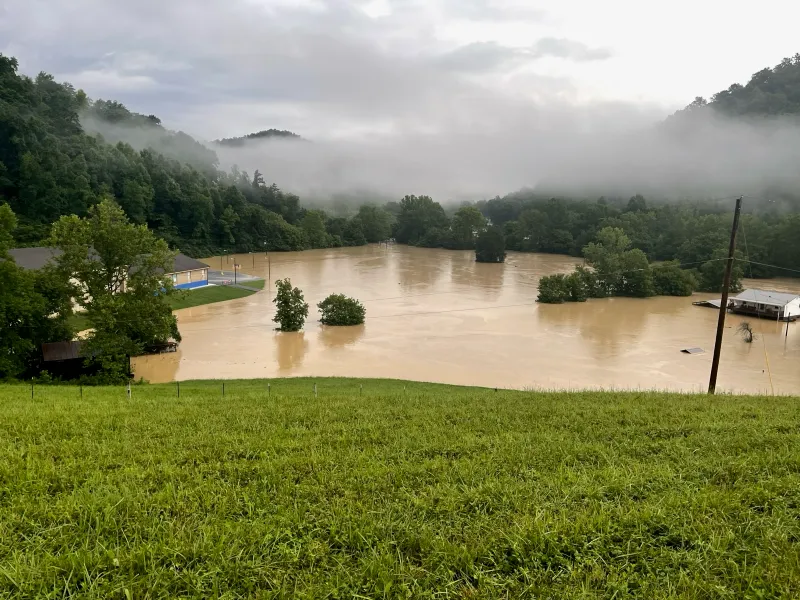
Floodwater can cause three broad kinds of trouble, and a single bed rarely has all of them. Sorting them apart keeps you from worrying about the wrong thing.
The first is biological. Floodwater can carry sewage, animal waste, and disease-causing germs, known as pathogens.
FDA guidance lists these among possible contaminants, along with chemicals and heavy metals.
The second is chemical. Fuel, pesticides, industrial waste, or metals such as lead or arsenic can ride along if the water crossed the wrong ground.
This is a possibility tied to specific sources, not a given. Most home gardens will not see it, but a bed near a spill or old industrial site deserves a closer look.
The third is physical. Strong flows can strip topsoil, wash away nutrients, bury beds under silt, or pack the soil down.
Alabama Extension notes that nutrient and topsoil loss are real problems for plant growth.
Keep that third category separate in your mind. Thin soil or pale, hungry plants mean a productivity problem, not proof that food is unsafe.
Likewise, clear-looking soil does not prove the absence of germs or chemicals, since neither can be spotted by eye. The honest answer is that contaminants may be invisible, and that is exactly why the water’s history matters more than how the bed looks.
Discard crops whose edible portions touched floodwater
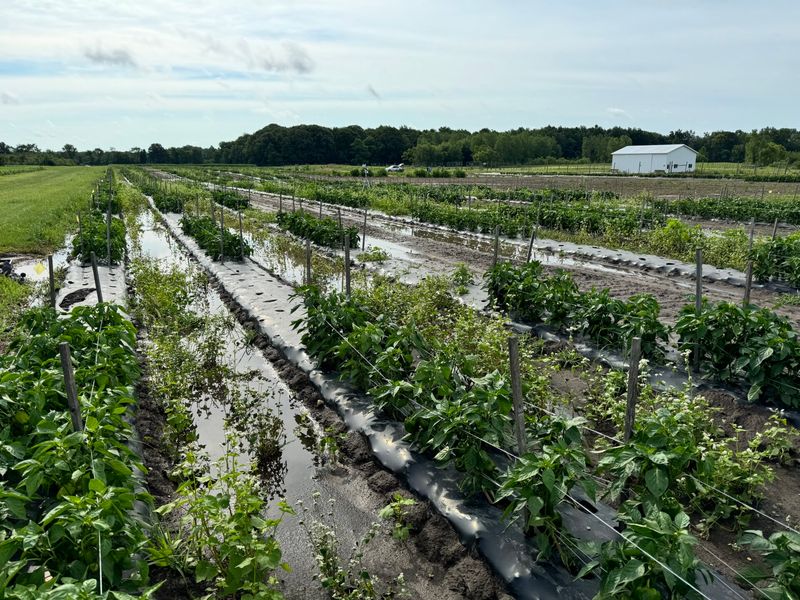
Here is the clearest rule in the whole topic. If floodwater touched the part of a plant you would eat, do not eat it.
FDA guidance says such crops should not enter the human food supply, so do not share or sell them either.
That includes leafy greens, tomatoes, beans, and strawberries sitting low to the ground. It also covers underground crops like carrots, potatoes, and beets, and produce with thick skins, such as squash and melons.
Washing, peeling, or cooking is not a reliable way to make flood-contact produce safe.
Plants that were fully above the waterline are a different story. If the water never reached the fruit or leaves you plan to pick, the direct-contact concern does not apply in the same way.
Look at water lines on stakes, cages, and fences to judge how high it rose.
You may wonder if germs can climb up through roots into the fruit. Alabama Extension says human pathogens are unlikely to move up through roots into fruits or other plant parts.
That is a narrow point, though. Produce can still pick up contamination from direct water contact, soil splash, handling, and equipment.
So a tomato hanging a foot above the water but splashed with mud during cleanup is not automatically in the clear. When in doubt about a specific plant, compost it away from the garden or bag it and let it go.
Waiting may reduce biological risk, but it is not an all-clear
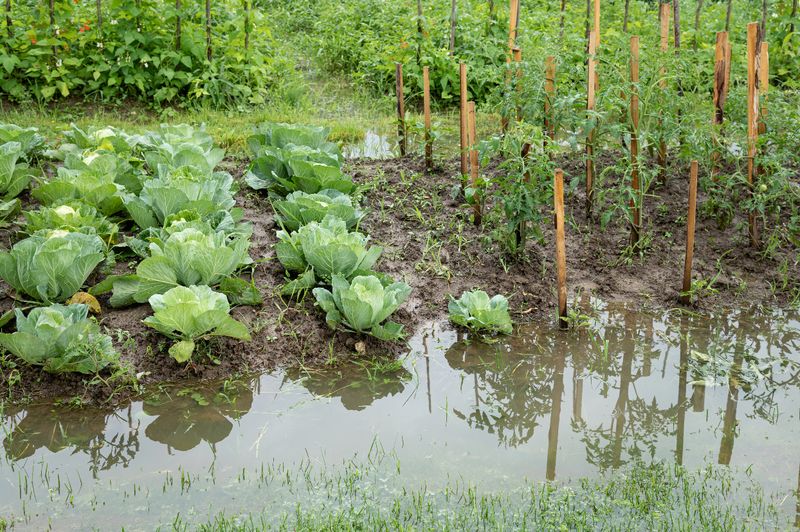
Time helps with some hazards, but it does not settle every question. The FDA says it has not established a generally safe waiting period before planting in flooded soil.
State, industry, and university specialists commonly suggest 30 to 60 days, soil testing, or both.
Alabama Extension describes that 30 to 60 day window as a general way to lower the chance that pathogens last into the growing season. Think of it as a rough guide, not a guarantee.
Why not a firm number? Persistence varies.
Soil type, temperature, weather, the flood’s source, and the crop all play a part. Drying and sunshine can help reduce some germs, but they do not wipe out every one.
A field study in New York after Hurricane Irene shows the range. Researchers found Salmonella in some soil and surface-water samples 21 and 44 days after flooding.
That does not mean every flooded bed stays contaminated for weeks. It shows that survival differs from place to place.
Two more limits are worth knowing. Waiting does nothing to confirm that suspected chemical or heavy-metal contamination has gone away, since those can remain after germs decline.
And soil sampling for microbes cannot guarantee that produce is safe, because contamination can be patchy.
A sensible approach is to wait at least the commonly cited interval, keep the bed clear of crops while it dries, and think harder about the source of the water. Heavy sewage exposure calls for more caution than a brief overflow of clean-looking runoff.
Investigate suspected chemicals with targeted testing
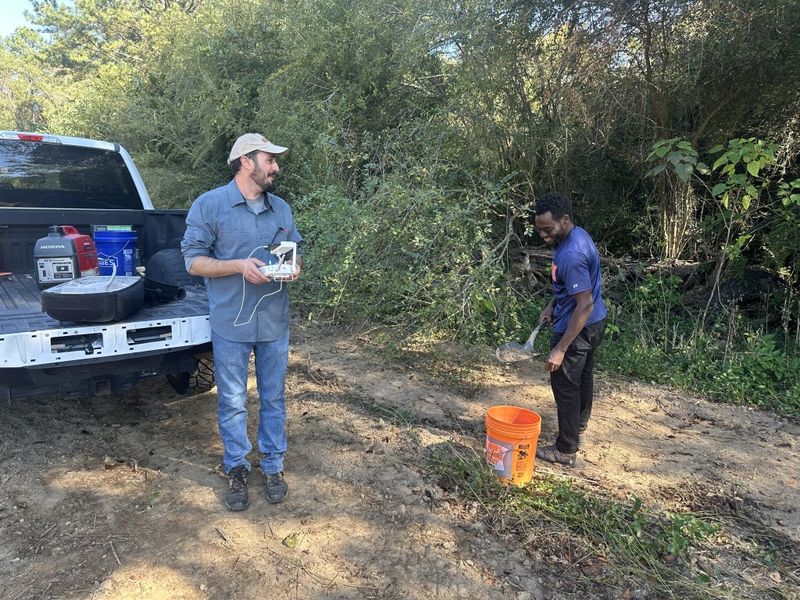
If the water may have crossed something toxic, a hunch deserves a real answer. Think of a nearby industrial release, mine waste, a fuel or pesticide spill, or a ditch that drains an old dump.
In those cases, call your county Extension office or local health department and describe what happened.
Ask which contaminant is the likely culprit, then ask about a test for that specific substance. Alabama Extension flood guidance encourages this kind of case-based approach instead of blanket testing after every storm.
A routine garden soil test checks things like pH and nutrients. It is not necessarily built to screen for the contaminant you are worried about.
For metals, Auburn offers specialized heavy-metal soil testing through its lab, which is a better match when metals are the concern.
Lead is a common worry, so it helps to know what EPA’s material covers. EPA gardening advice and its lead in soil page are general guidance for lead-contaminated soil, not a post-flood standard.
They recommend testing where lead is a concern and note that soil left on produce is a key exposure route.
Be careful about reading results. One sample from one corner cannot certify an entire bed or every crop.
Take samples from several spots as the lab directs, and ask the experts how to interpret what comes back.
Let the bed dry before working the soil
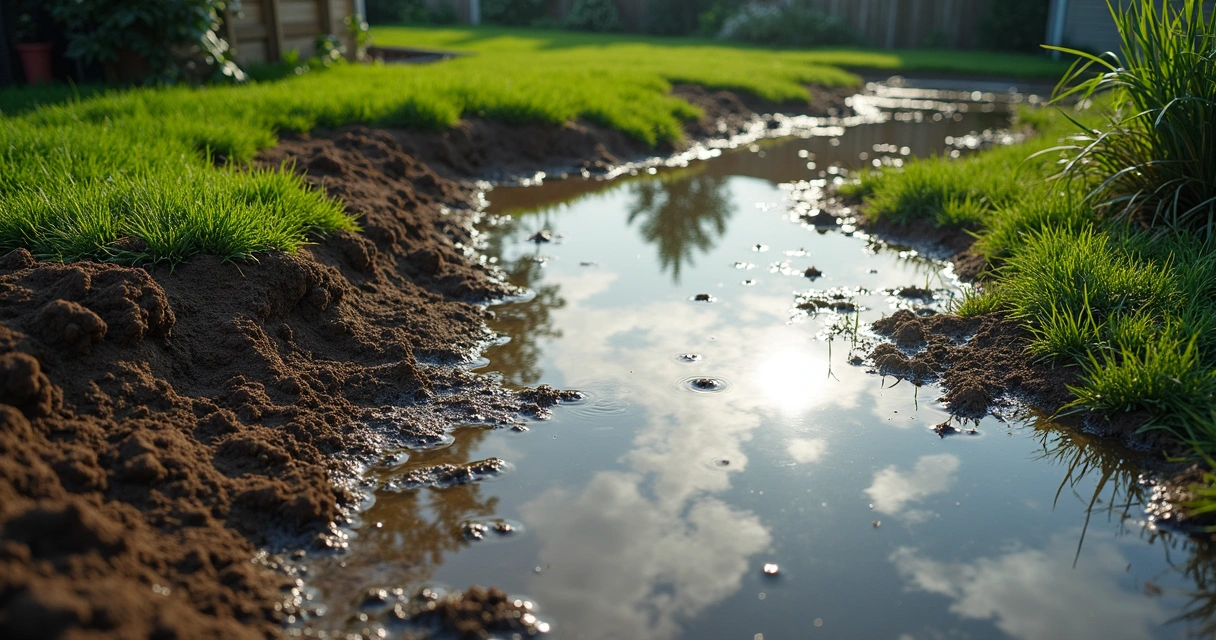
Patience pays off in the first days after the water goes down. Let it recede fully and give the soil time to dry enough to work.
A handful squeezed in your fist should crumble, not form a slick, sticky ball.
Skip tilling and cultivating while the ground is very wet. Alabama Extension warns that working saturated soil can damage its structure, leaving clods and compaction that last through the season.
Flooding may also have carried off topsoil and nutrients. That is a separate recovery job.
Once the bed is workable, you can add compost, rebuild low spots, and check fertility with a regular soil test. Thin or hungry soil is a growing problem, not evidence that the food will be unsafe.
Now think about how you move germs around. FDA guidance advises cleaning and sanitizing equipment used in flooded areas before using it elsewhere.
That includes shovels, hoes, wheelbarrows, and buckets.
Scrub muddy boots before you walk into beds that stayed dry. Wash your hands with soap and clean water after working in the flooded area, and again before you eat or touch your face.
Doing the work in an order that goes from unaffected beds to flooded ones, not the reverse, is a simple habit that keeps trouble from spreading.
Choose next steps from the exposure, not the storm alone
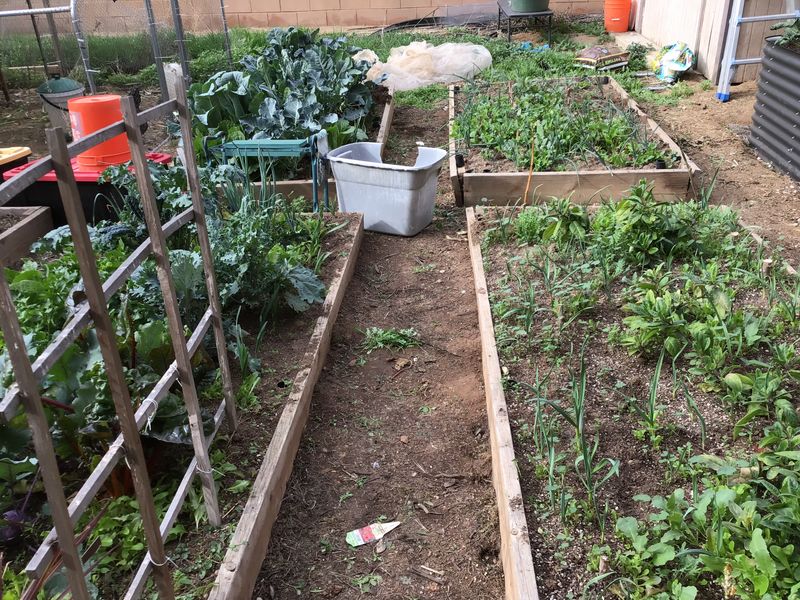
Three questions can guide your plan. Did outside floodwater actually reach the bed?
Did it touch anything you would eat? And did its route cross something that suggests a specific chemical hazard?
If the answers point to exposure, discard the crops the water touched, as FDA guidance advises. Then allow reasonable time and seek Alabama Extension advice before replanting.
Where pollution is plausible, pursue targeted testing.
A flood is a reason to look closely, not a verdict. Your next harvest rides on what the water carried, not on the weather report.