
The Art of the Invite: How to Design a Bird Feeder Garden That Delights Both Feathered Friends and Your Soul
There’s a quiet magic that happens the moment a goldfinch lands on a sun-drenched perch, its wings catching the light like liquid sunshine as it dips its beak into a feast you’ve thoughtfully provided. This isn’t just birdwatching, it’s an invitation. An invitation to slow down, to witness nature’s daily ballet right outside your window, and to transform your backyard into a living sanctuary where beauty meets purpose.
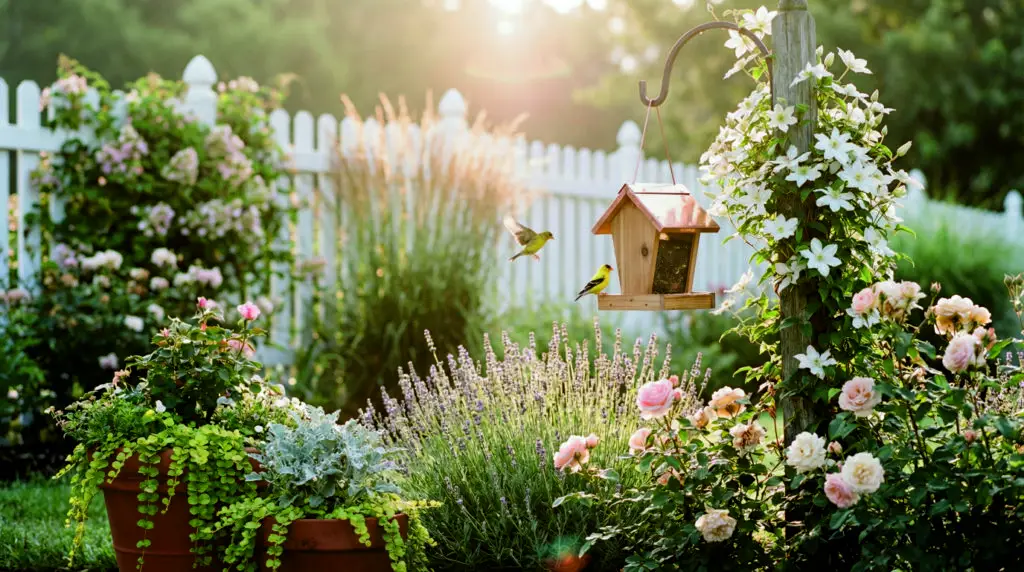
But here’s the secret most gardeners miss: the right bird feeder isn’t just a functional object, it’s the heart of an ecosystem you design with intention. Get the details right, type, placement, aesthetics, and you won’t just attract birds; you’ll cultivate moments of wonder that turn ordinary afternoons into soul-nourishing rituals. Imagine sipping your morning coffee as a flash of crimson, a cardinal, pauses at your feeder, or watching chickadees perform their cheerful acrobatics between bites. This is the gift of a thoughtfully designed bird feeding garden: not merely decoration, but daily connection.
More Than a Meal: Creating Connection
So many of us hang a basic feeder, fill it with seed, and wonder why our garden remains quiet while our neighbor’s yard teems with life. The truth is, successful bird feeding isn’t about the feeder alone—it’s about designing an experience.
Birds are discerning guests. They seek safety first, nourishment second, and comfort always. When we approach bird feeding as garden designers rather than just suppliers of seed, everything changes. We stop seeing feeders as utilitarian objects and start viewing them as sculptural elements in a living landscape. We consider how morning light falls across a cedar hopper, how the gentle sway of a tube feeder complements ornamental grasses, and how the cheerful chatter of finches becomes the soundtrack to our evening relaxation. This shift in perspective transforms frustration into fascination. No more battling squirrels with increasing desperation or cleaning up scattered seed with resentment.
Instead, you’ll find yourself lingering by the window longer, noticing which birds arrive at dawn versus dusk, and feeling a genuine sense of stewardship for these wild visitors who’ve chosen your garden as their dining room. Let’s explore how to craft that invitation so beautifully that birds can’t resist accepting.
Choosing Your Cast: Matching Feeders to the Birds You Wish to Welcome
The Myth of One-Size-Fits-All
Walk into any garden center, and you’ll see rows of feeders promising to attract “all birds.” In reality, different species have distinct dining preferences shaped by beak shape, feeding behavior, and natural habitat. A ground-feeding dove feels vulnerable on an exposed tube feeder, while a nimble chickadee might struggle with a platform feeder dominated by larger birds. The joyful secret? You get to curate your avian audience. Dream of watching goldfinches in their brilliant yellow summer plumage? Choose a specialized nyjer feeder. Hope to see the stately silhouette of a cardinal against winter snow? A hopper feeder with a wide perch awaits. This intentional matching transforms random visits into reliable relationships with your favorite species.
Platform and Tray Feeders: The Social Diners
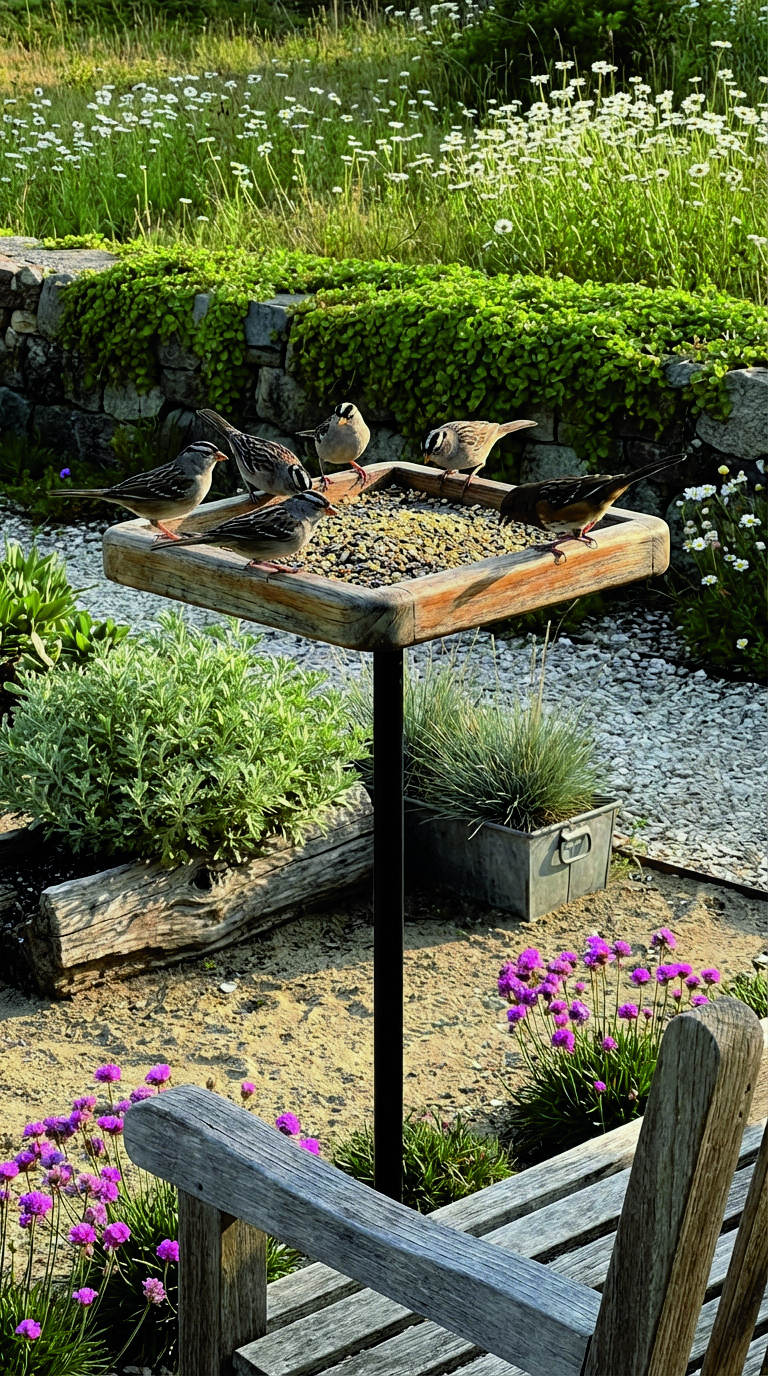
Platform feeders, essentially open trays elevated on poles or hung from branches, create bustling community hubs. They’re perfect for ground-feeding species like juncos, towhees, and mourning doves who naturally forage on the earth. Sparrows and grosbeaks also appreciate their spacious design. The open layout allows birds to spot predators easily, making them feel secure.
However, this generosity comes with considerations: platform feeders expose seed to rain and snow, requiring more frequent refilling and cleaning. They also welcome less-desirable guests like starlings in large numbers. For best results, choose a platform with drainage holes and a slight roof overhang to protect seed during light showers. Position it where you can enjoy the lively social dynamics—these feeders often host the most animated bird interactions in the garden.
Tube Feeders: The Acrobats’ Playground
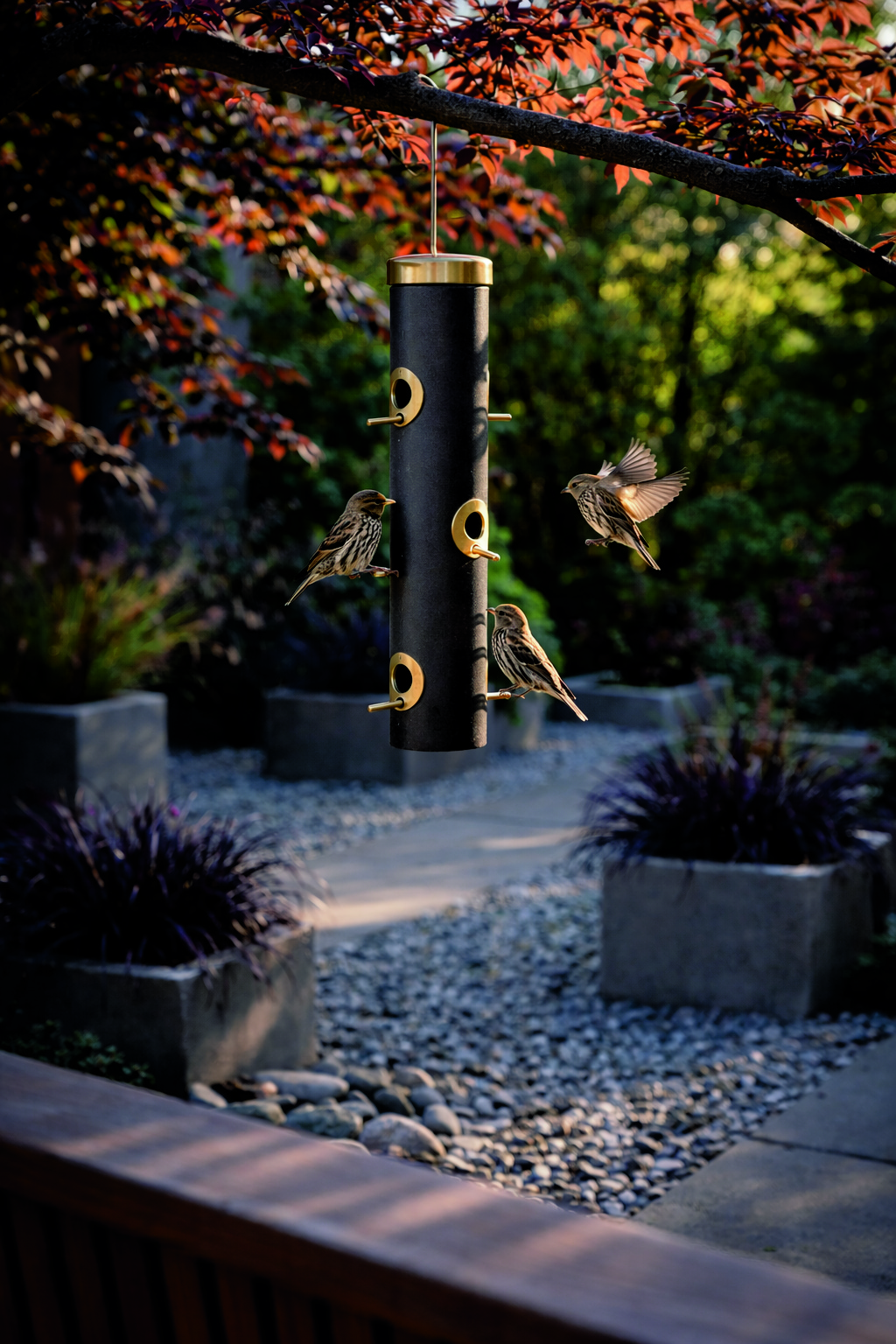
Sleek and cylindrical, tube feeders suspended from branches or shepherd’s hooks become stages for nature’s most delightful acrobats. Finches, chickadees, titmice, and nuthatches excel at clinging to these feeders, often hanging upside down with cheerful determination. Their enclosed design keeps seed remarkably dry and fresh, while small feeding ports naturally limit access to larger, more aggressive birds.
Many tube feeders come specialized for particular seeds, nyjer tubes feature tiny ports perfect for finch beaks, while larger sunflower seed tubes accommodate a broader range of species. Look for models with metal feeding ports (rather than plastic) to resist squirrel damage, and consider weight-sensitive perches that close access when heavier birds or squirrels land. Positioned against a backdrop of evergreen foliage, a tube feeder becomes both functional sculpture and wildlife theater.
Hopper Feeders: The All-Weather Hosts
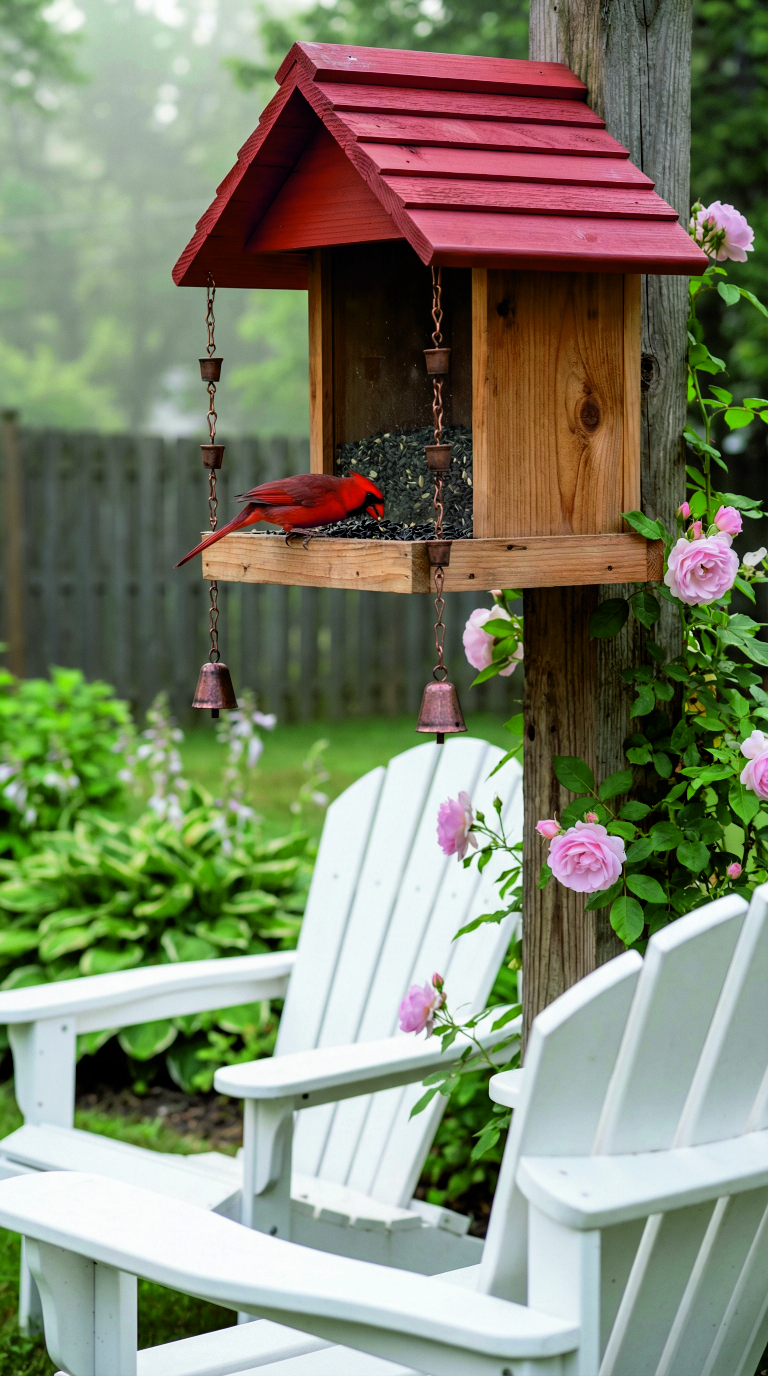
Resembling miniature houses with slanted roofs and seed reservoirs that gravity-feed onto trays below, hopper feeders blend old-world charm with practical generosity. Cardinals, blue jays, grosbeaks, and woodpeckers appreciate their sturdy perches and ample space. The protective roof keeps seed dry through most weather conditions, making these feeders reliable year-round providers. Their substantial presence works beautifully as garden focal points, imagine a cedar hopper feeder nestled among hydrangeas or positioned where its silhouette frames a garden path.
Some hopper designs incorporate suet cages below the seed chamber, creating dual-purpose feeding stations that attract an even wider variety of birds. While squirrels may find these feeders particularly tempting, strategic placement combined with a quality baffle usually maintains the peace.
Suet Feeders: The Energy Boosters
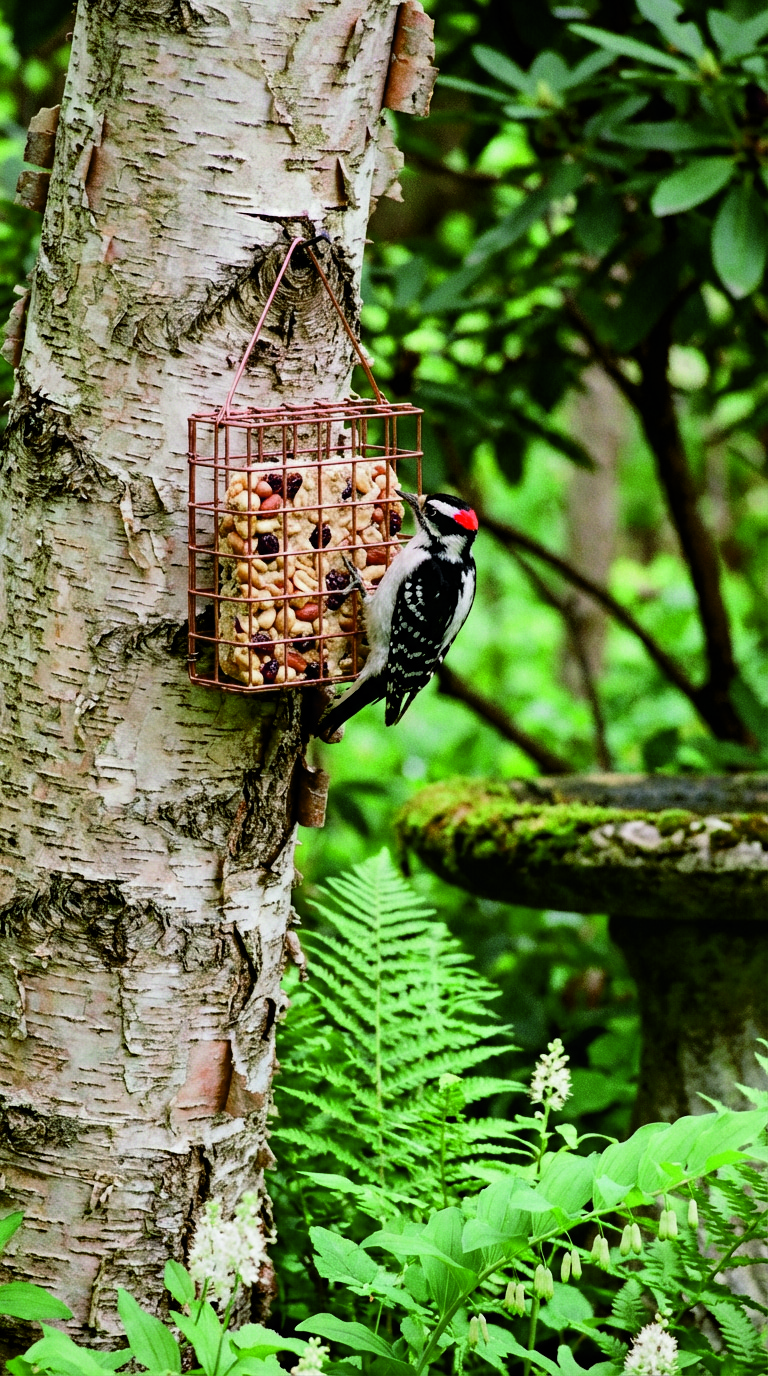
Often overlooked beyond winter months, suet feeders offer concentrated energy that birds crave year-round. These simple wire cages hold dense blocks of rendered fat mixed with seeds, nuts, or fruit, nature’s equivalent of an energy bar. Woodpeckers, nuthatches, wrens, and chickadees visit regularly, especially during nesting season when adults need extra calories to feed hungry chicks.
Modern suet feeders often feature tail props that allow woodpeckers to feed in their characteristic upright posture. Position these feeders on tree trunks or sturdy posts where clinging birds feel most natural. Even in summer, suet provides essential fat during cool mornings or unexpected rainstorms. Just ensure you’re using “no-melt” suet formulations when temperatures rise above seventy degrees to prevent messy drips.
The Aesthetics of Abundance: Where Function Meets Garden Beauty
Feeders as Living Sculpture
Your bird feeder shouldn’t clash with your garden’s personality, it should enhance it. Think of each feeder as living sculpture that changes with the seasons: dusted with snow in winter, framed by blooming lilacs in spring, or silhouetted against fiery maple leaves in autumn. A well-chosen feeder becomes an intentional design element rather than an afterthought.
For cottage gardens overflowing with peonies and delphiniums, a weathered cedar hopper with copper accents echoes the romantic abundance. In modern landscapes featuring clean lines and ornamental grasses, a minimalist feeder crafted from powder-coated steel in charcoal or sage green complements the aesthetic without competing for attention. Even the humble tube feeder transforms when crafted from reclaimed barn wood or wrapped in hand-forged copper that develops a beautiful patina over time.
The Gentle Power of Color and Material
While bright red feeders dominate store shelves (marketed to attract hummingbirds), most seed-eating birds actually prefer neutral tones that help them feel camouflaged and safe. Soft greens, weathered grays, and natural wood tones allow birds to focus on feeding rather than constantly scanning for predators. That said, subtle color can enhance your garden’s palette, a robin’s-egg blue hopper nestled among hostas creates a moment of quiet delight for you, the gardener.
Material choices matter beyond aesthetics: cedar and redwood naturally resist rot without chemical treatments, while copper develops a protective patina that actually discourages algae growth. Avoid pressure-treated woods near feeding surfaces, and remember that rough-textured perches provide better grip than smooth metal or plastic, small details that make birds feel welcome.
Weaving Feeders into Garden Architecture
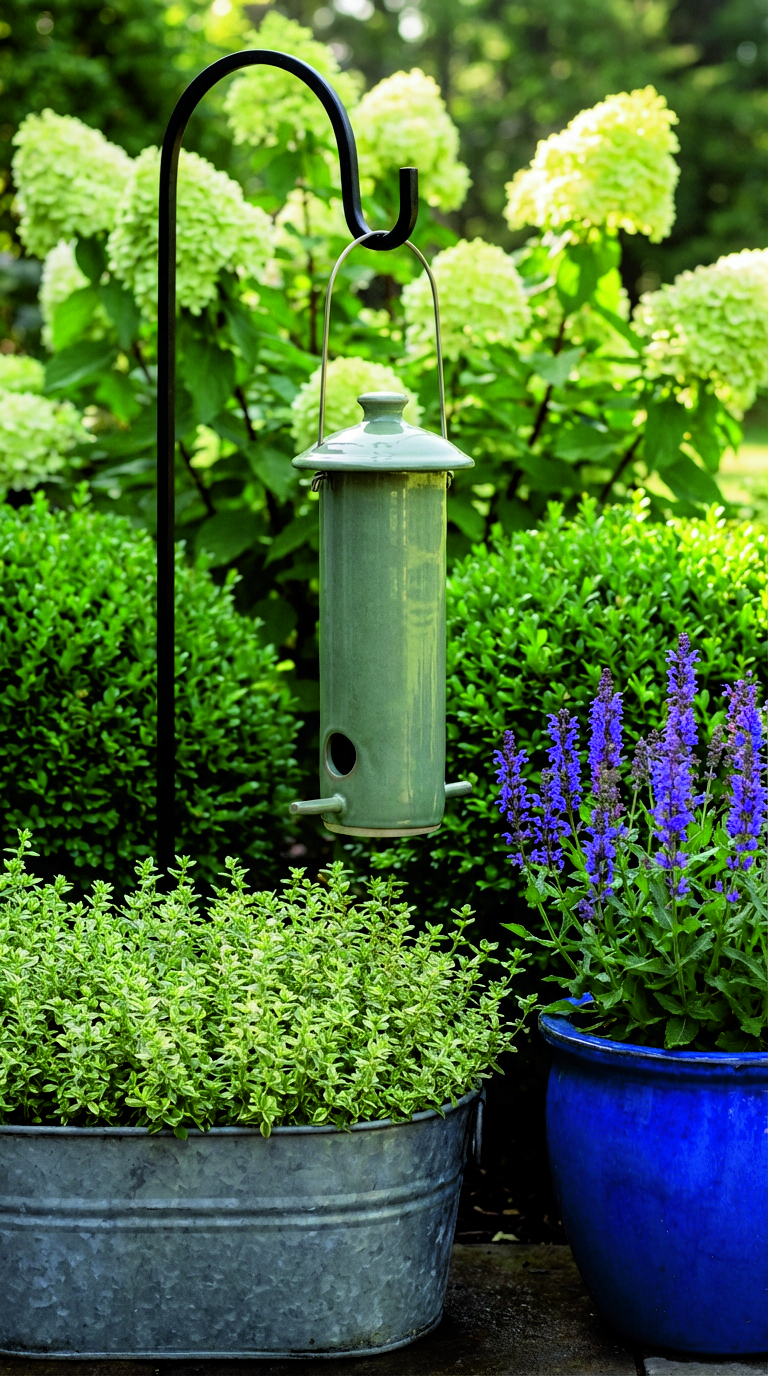
The most enchanting bird feeding gardens integrate feeders seamlessly into existing features. Suspend a delicate tube feeder from the curved arm of a vintage-style shepherd’s hook positioned beside a garden bench, creating an instant viewing station. Mount a hopper feeder on a post wrapped in climbing clematis, so blossoms frame feeding birds in early summer.
Position platform feeders near low shrubs like dwarf boxwood or lavender, providing both shelter for birds and visual harmony for your eye. Some gardeners artfully repurpose vintage items as decorative elements around feeders, a collection of mismatched teacups arranged on a nearby shelf, or a weathered window frame positioned behind a feeding station to create depth and interest. The key is integration: your feeder garden should feel like it grew naturally from your landscape, not like equipment installed for a purpose.
The Golden Triangle: Strategic Placement for Safety, Viewing, and Harmony
The Safety Equation: Shelter Without Danger
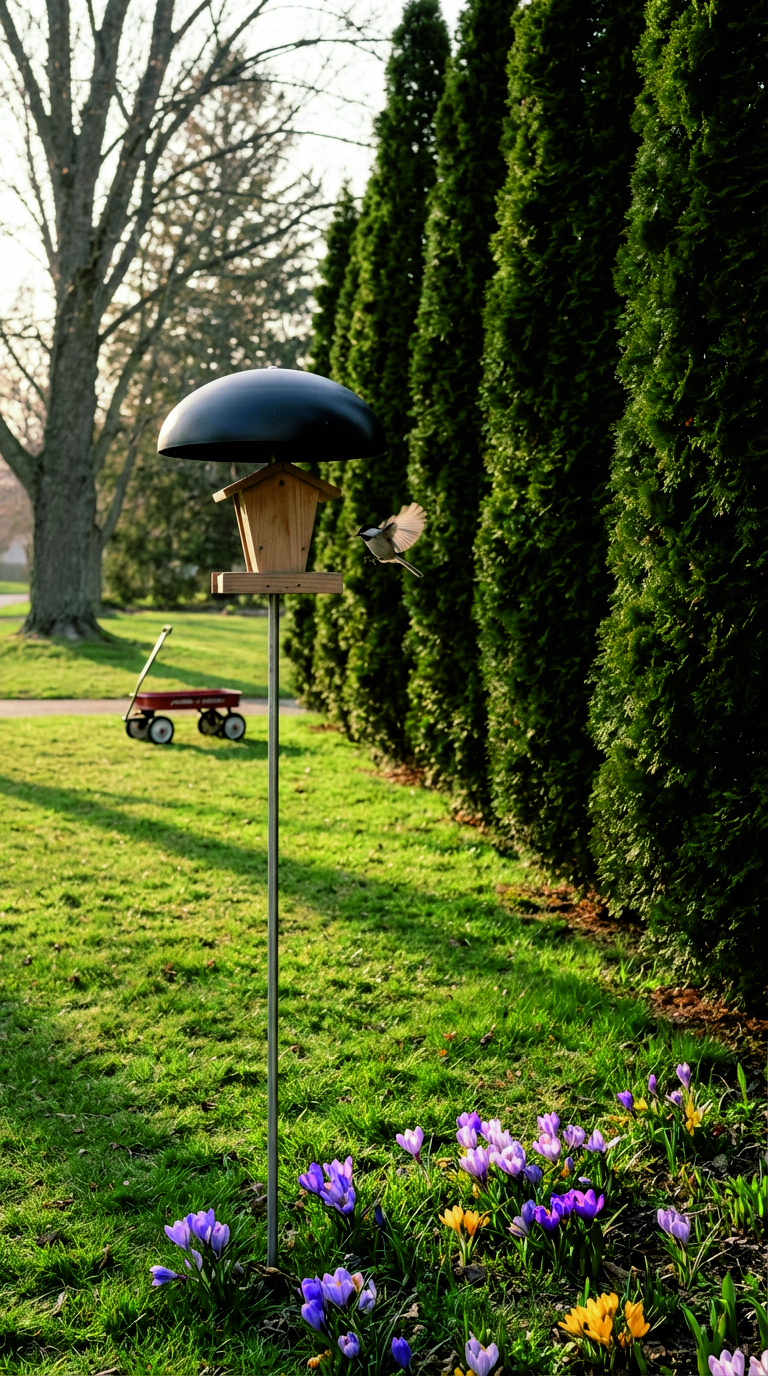
Birds face a constant tension between visibility and vulnerability. Place a feeder too close to dense shrubbery, and cats can ambush visitors. Position it too far from cover, and birds feel exposed to hawks and other predators. The sweet spot? Ten to fifteen feet from protective cover, close enough for birds to dart to safety when threatened, but far enough to prevent ambushes. This “golden distance” applies whether your cover is a flowering dogwood, a cluster of ornamental grasses, or a brush pile tucked discreetly at your property line.
For ground-feeding birds using platform feeders, position these slightly closer to cover, perhaps eight feet away, since these species naturally feed near protective vegetation. Remember that safety extends vertically too: avoid placing feeders directly beneath dense evergreen branches where sharp-shinned hawks might perch, waiting to strike.
The Window Collision Conundrum
Few gardeners realize that the greatest danger to backyard birds isn’t cats or hawks, it’s our windows. When feeders sit between fifteen and thirty feet from windows, birds gain enough momentum during flight to suffer fatal injuries upon impact. The solution lies in two strategic zones: place feeders either very close to windows (within three feet) so birds can’t build dangerous speed, or far away (more than thirty feet) with ample space to maneuver. For close-window viewing, a small suction-cup feeder works beautifully.
For primary feeding stations, position them beyond thirty feet with a clear flight path. During migration seasons, apply temporary window decals or UV-reflective tape to break up reflections, birds perceive glass as open sky when it mirrors trees and sky.
Creating Flow in Your Feeding Landscape
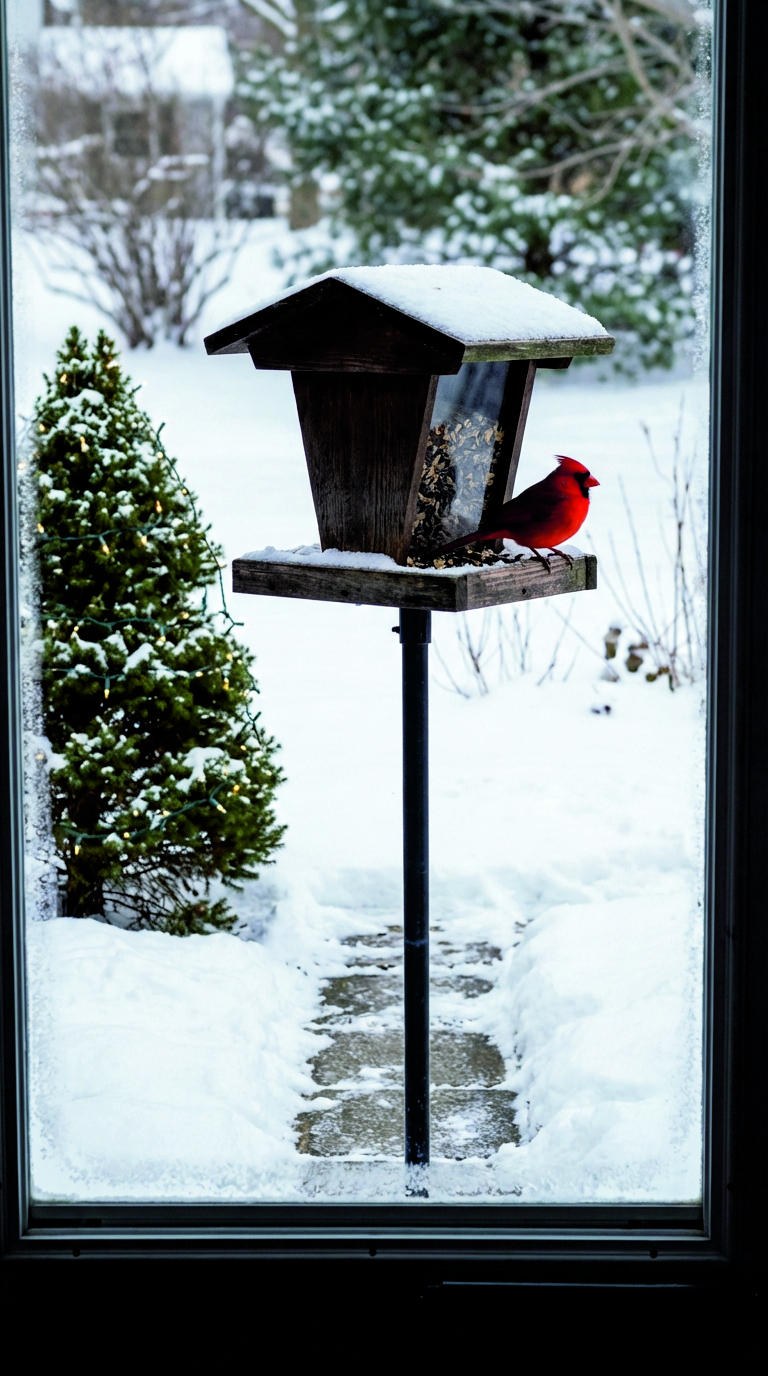
Just as we design garden paths to guide human movement, thoughtful feeder placement creates natural flow for birds. Avoid clustering all feeders in one crowded corner. Instead, distribute feeding stations throughout your landscape to reduce territorial conflicts and accommodate different species’ comfort zones. Position a tube feeder near your kitchen window for morning coffee viewing, a hopper feeder beside your patio for afternoon enjoyment, and a platform feeder at the garden’s edge where ground-feeders feel secure.
This distribution also minimizes seed waste, when birds aren’t competing aggressively, they feed more efficiently. Consider seasonal sun patterns too: a feeder bathed in harsh afternoon sun during July may become a shaded sanctuary in January as the sun’s angle shifts. Your garden is a dynamic stage, design your feeding stations to shine in every season.
The Symphony of Stations: Designing Multi-Feeder Ecosystems
Why One Feeder Limits Your Garden’s Potential
A single feeder creates competition, stress, and missed opportunities. Dominant species like grackles or starlings may monopolize the resource, while shyer birds like finches or nuthatches wait patiently on sideline, or leave entirely. By designing a feeding station with multiple complementary feeders, you create ecological niches that welcome diverse species simultaneously.
Imagine this scene: goldfinches cling to a nyjer tube feeder while chickadees flit between a nearby suet cage, a cardinal perches regally on a hopper feeder’s roof, and juncos scratch gently beneath a platform feeder for fallen seeds. This layered approach transforms your garden into a thriving avian community rather than a contested dining hall.
The Three-Tier Approach to Feeding Harmony
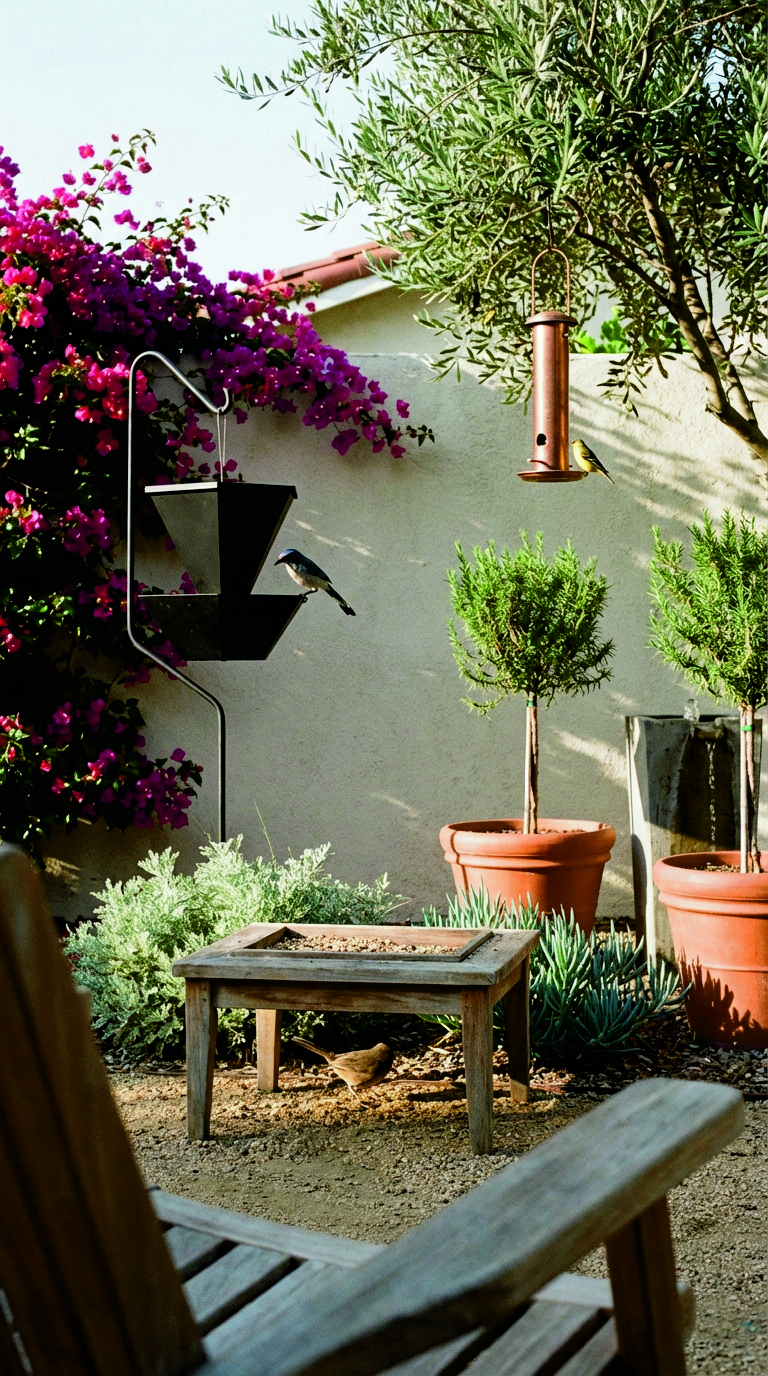
Create vertical diversity by offering feeding opportunities at different heights. Mount tube feeders at eye level or slightly higher (five to six feet) where agile birds feel comfortable. Position hopper feeders at similar heights but with more substantial perches for larger species. Then, embrace the ground layer with a platform feeder or simply allow some seed to fall naturally beneath elevated feeders, many birds, including towhees and sparrows, prefer foraging at earth level.
This tiered system reduces conflict because birds naturally occupy different “dining rooms” within the same garden. Space each feeder six to eight feet apart to prevent dominant birds from controlling multiple stations, but keep them within visual range so birds feel part of a safe community.
The Essential Companion: Water
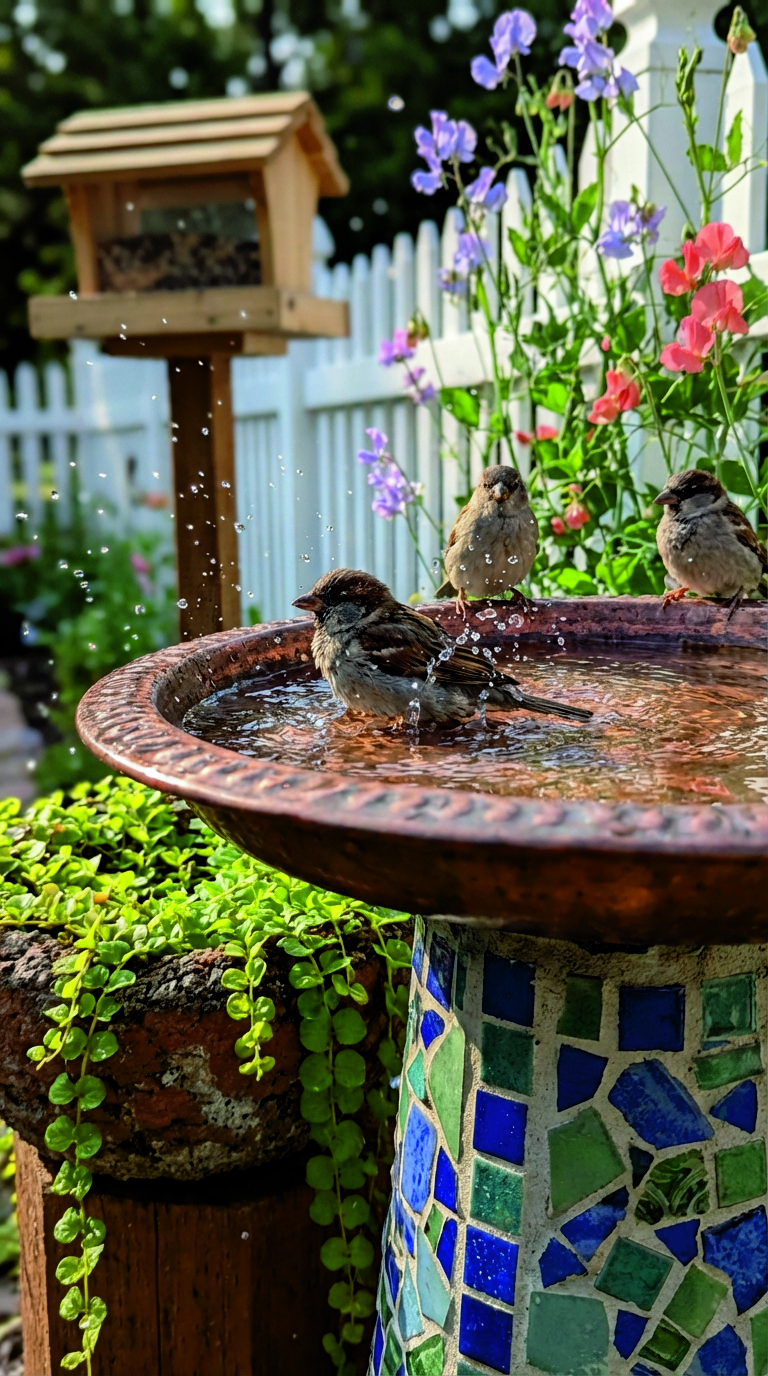
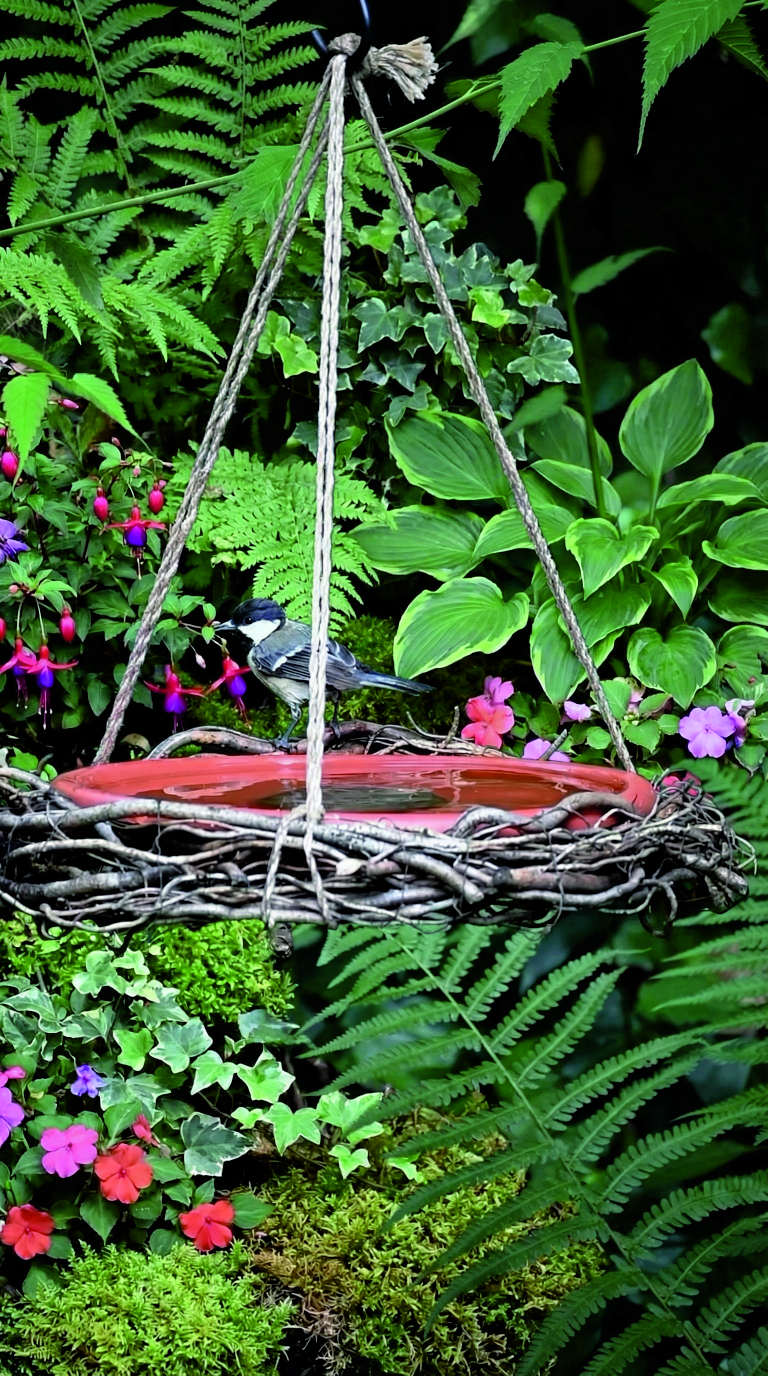
No feeding station feels truly complete without the gentle invitation of water. Birds need fresh water for drinking and bathing year-round, especially in winter when natural sources freeze and in summer when dehydration threatens.
Position a birdbath or shallow water feature within fifteen feet of your feeders, but not directly underneath where seed debris might contaminate the water. A gently sloping basin with rough texture for secure footing works best. In colder months, consider a simple heater to keep water liquid, a lifesaving resource when temperatures drop. The sight of a sparrow splashing joyfully after a meal at your feeder creates one of gardening’s most heartwarming moments, a reminder that you’re nurturing life in its fullest expression.
Perches with Purpose: The Overlooked Element of Bird Comfort
The Language of Perches
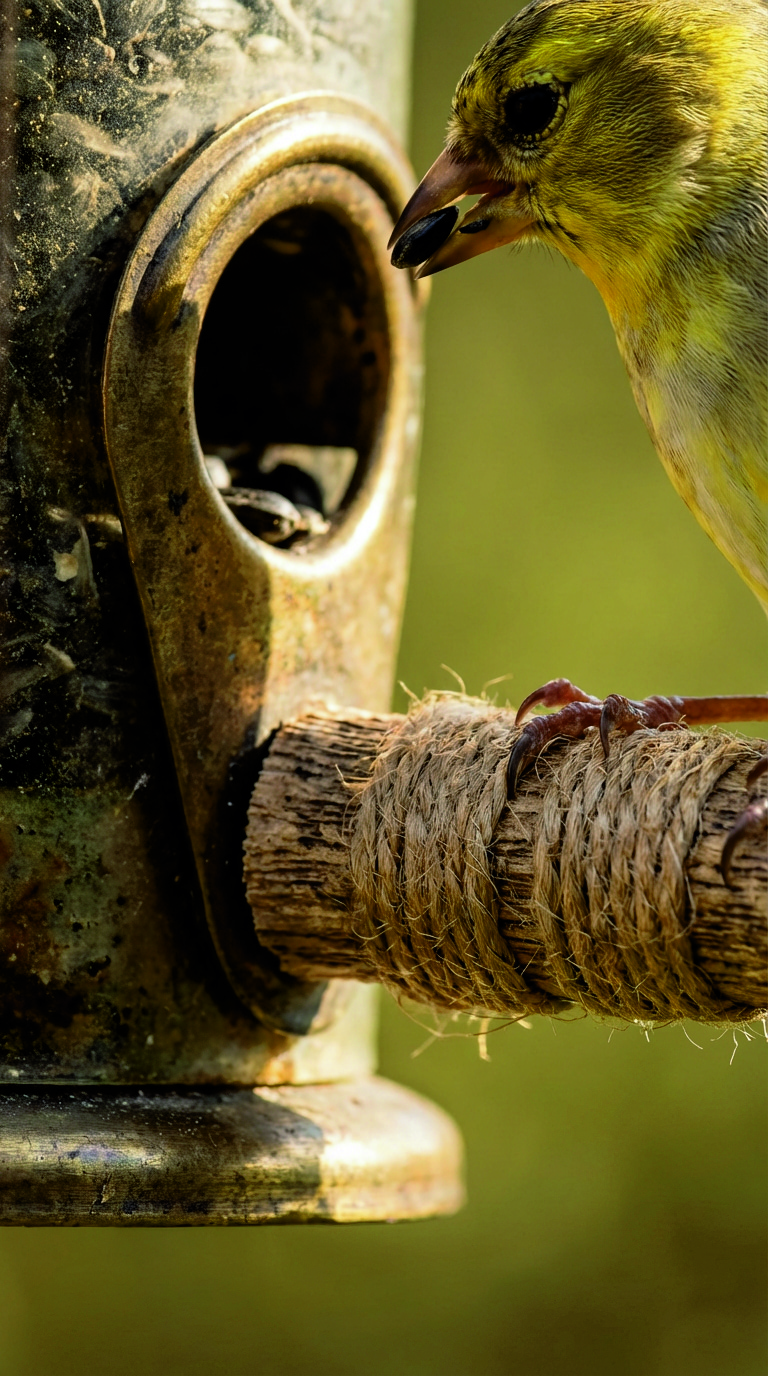
That slender rod extending from your feeder does more than hold birds, it communicates welcome or discomfort through its diameter, texture, and placement. Goldfinches and siskins prefer perches no thicker than a pencil, while cardinals and jays need sturdier branches-like supports nearly an inch in diameter. Perches that are too wide force small birds to feed awkwardly; perches too narrow won’t support larger species.
Texture matters equally: rough-sawn wood or wrapped rope provides secure footing even in rain, while smooth metal becomes treacherously slippery. Some feeders cleverly eliminate perches entirely beneath certain ports, allowing only clinging birds like chickadees and nuthatches to access seed, naturally excluding larger, more aggressive species without mechanical deterrents.
Strategic Perch Positioning
The direction a perch faces influences how long birds stay and how comfortable they feel. Perches positioned on the sheltered side of a feeder, away from prevailing winds, allow birds to feed without battling gusts. Perches offering clear sightlines to surrounding areas let birds monitor for danger while eating, reducing their stress and encouraging longer visits. Some hopper feeders feature wraparound perches that let birds choose their preferred orientation based on weather and safety conditions.
When selecting or positioning feeders, observe which perches birds actually use versus which remain empty, birds will teach you their preferences if you watch closely. This attention to detail transforms feeding from a hurried, nervous activity into a relaxed ritual your avian guests return to again and again.
Gentle Stewardship: Low-Effort Maintenance for a Healthy Habitat
The Cleaning Rhythm That Protects Your Guests
Moldy seed and accumulated droppings spread disease, a reality no bird lover wants to enable. Yet cleaning needn’t be burdensome when approached rhythmically. Adopt this simple guideline: clean feeders every two weeks during warm, humid months when bacteria multiply quickly; extend to monthly cleaning during cold, dry weather. Disassemble feeders when possible, scrub with a solution of one part white vinegar to nine parts water (gentler than bleach and equally effective), rinse thoroughly, and air-dry completely before refilling.
Keep a dedicated bucket and brush near your gardening tools so cleaning becomes as routine as deadheading flowers. Remember that fresh, dry seed in a clean feeder attracts more birds than overflowing abundance in a neglected one, quality always trumps quantity in the avian world.
Embracing the Squirrel Dance
Let’s acknowledge the truth: squirrels are brilliant, persistent creatures who consider our feeders personal buffets. Rather than waging exhausting war, adopt a philosophy of graceful coexistence. Install a quality baffle, a smooth dome or cylinder positioned below hanging feeders or above pole-mounted ones, to redirect most squirrel efforts.
Place feeders at least ten feet from launch points like fences or tree branches. And consider dedicating one small feeder specifically for squirrels, filled with corn or peanuts positioned away from bird feeders, a strategic sacrifice that often preserves peace elsewhere. Some gardeners even come to appreciate squirrels’ acrobatic antics as part of the garden’s living tapestry. After all, a garden that feeds many creatures is a garden truly alive.
Your Garden as a Living Canvas
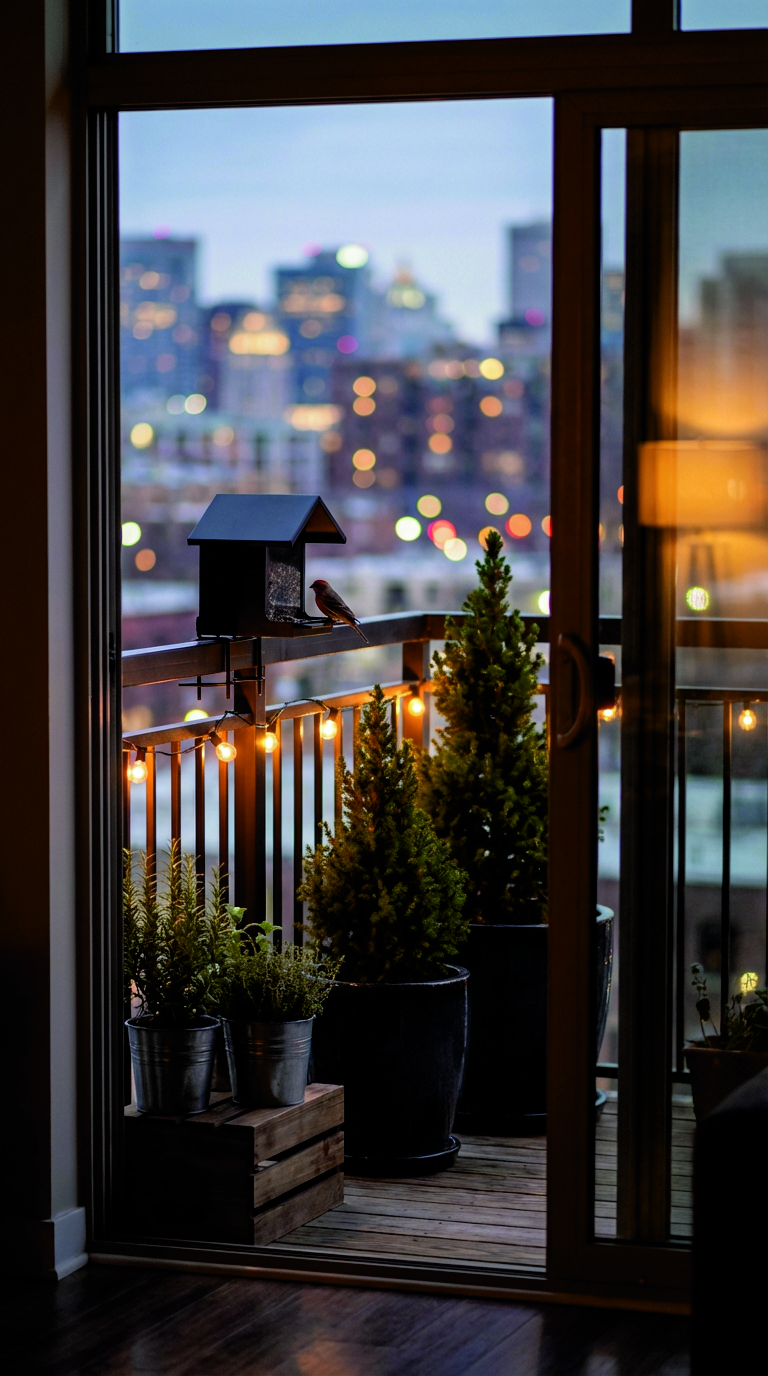
As evening settles and the last chickadee departs your feeder, something remarkable remains: not just empty seed shells, but a sense of connection woven into the fabric of your day. You’ve done more than hang a feeder, you’ve extended hospitality to wild creatures who repay you with color, song, and daily reminders of life’s resilience. Your garden has become more than a collection of plants; it’s a living room where nature gathers, a sanctuary where you witness small miracles between sips of tea or pages of a book. Start simply, a single well-chosen feeder placed with intention near a window you love. Watch who visits. Notice what they prefer.
Let your feeding garden evolve as naturally as your flowerbeds, season by season. And on those quiet mornings when a cardinal’s crimson flash stops you mid-step, or when finches chatter like old friends at breakfast, you’ll understand: you haven’t just fed the birds. You’ve invited wonder home. And in doing so, you’ve discovered that the most beautiful gardens aren’t those with perfect petals, but those humming with life, generosity, and the gentle art of invitation.