
Harvest vs Bounty vs Farm: Which AeroGarden Is Right for You?
So, you’re standing in your kitchen, eyeing that empty corner by the window. You can practically taste the fresh basil you’d sprinkle on Friday night pizzas, the crisp lettuce for your lunch salads, maybe even a few cherry tomatoes for snacking. But here’s the question that’s probably keeping you up at night (or at least mildly distracting you during work meetings): Which AeroGarden do you actually need?
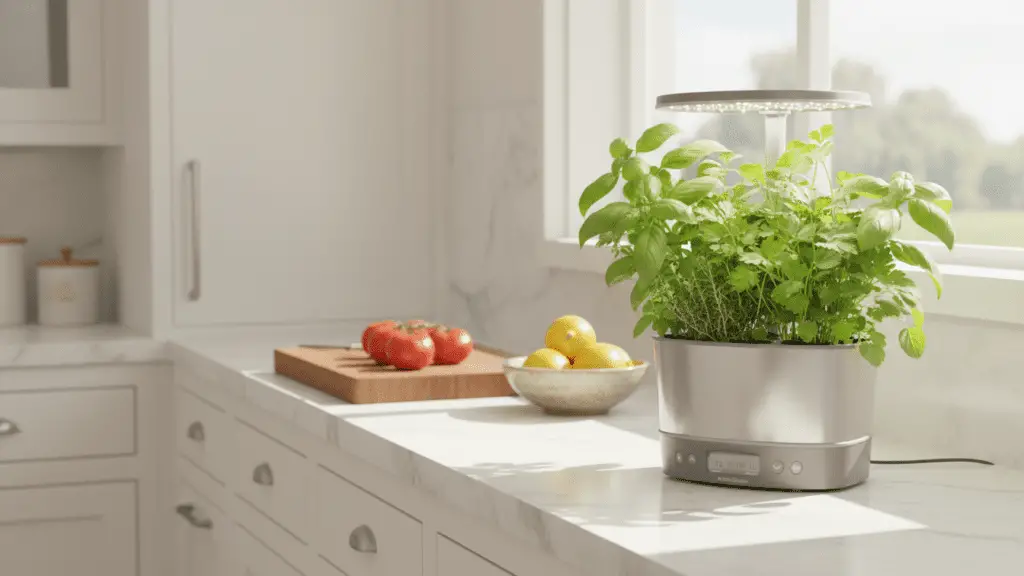
Trust me, I’ve been there. That paralysis of choice when you’re staring at three different models, each promising to turn your black thumb into something resembling green. The thing is, choosing the right AeroGarden isn’t just about picking the shiniest gadget—it’s about matching a system to your actual life. Your counter space, your cooking habits, how much patience you have for pruning plants at 7 AM before coffee. Get it wrong, and you’ve got a very expensive nightlight. Get it right, and you’re harvesting salad greens in February while your neighbors are still buying wilted romaine from the store.
So let’s cut through the marketing and figure out what you actually need. By the time we’re done here, you’ll know exactly which model deserves that prime real estate in your home.
The Quick Comparison: What You’re Really Getting
Before we dive into the weeds (or should I say, the basil?), here’s the straight talk on what each model brings to the table:
| Feature | Harvest | Bounty | Farm |
|---|---|---|---|
| Pod Capacity | 6 plants | 9 plants | 12-24 plants |
| Max Height | 12″ (18″ on XL) | 24″ | 24″-36″ depending on model |
| Light Power | 20W LED | 30-50W LED | 60W per 12-pod section |
| Water Tank | ~0.7 gallons | ~1.1 gallons | 2+ gallons per side |
| Best Real Estate | Countertop corner | Dedicated counter space | Floor space (it’s furniture-sized) |
| Who It’s For | The cautious beginner | The enthusiastic home cook | The serious indoor farmer |
Look, I know tables like this can feel a bit sterile. But think of this as your cheat sheet—the thing you’ll screenshot and stare at while standing in the store aisle, trying to remember why you thought growing your own peppers was a good idea. (Spoiler: it is a good idea, but maybe not in a Harvest.)
The Harvest: Your Gateway Drug to Hydroponics
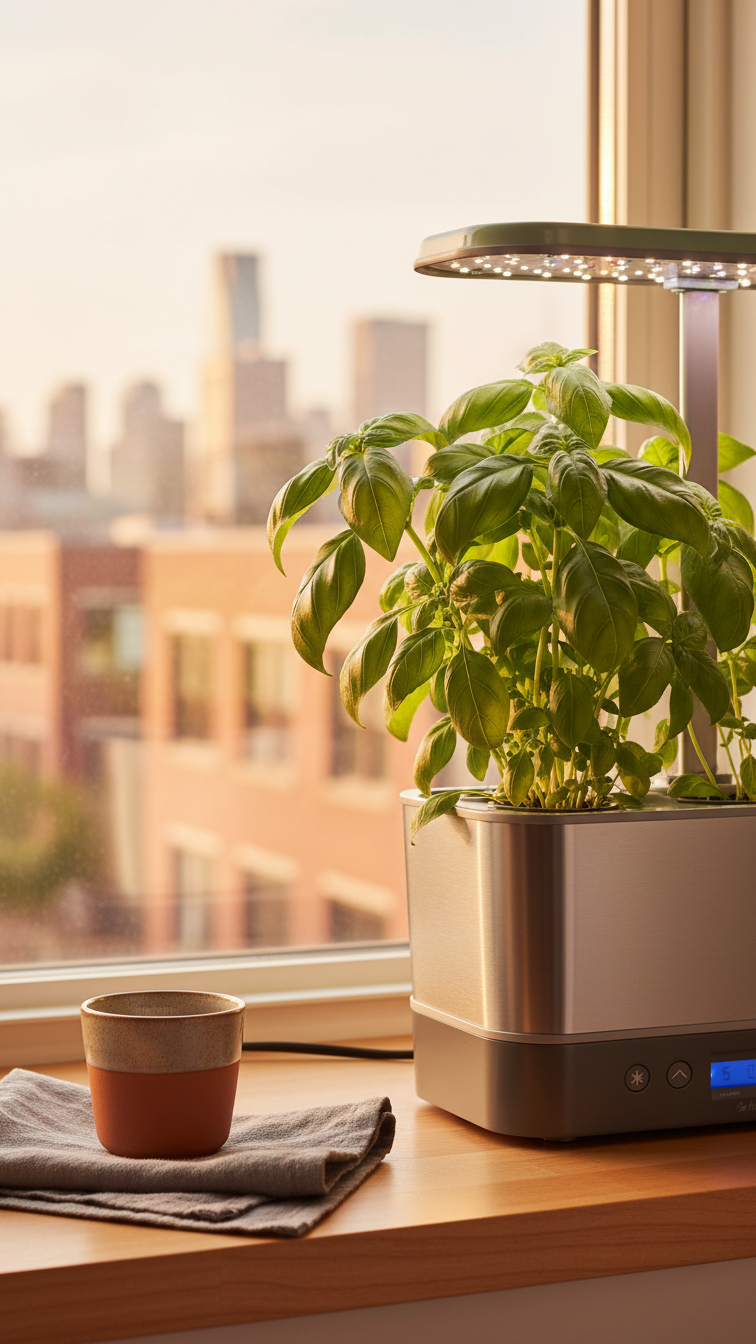
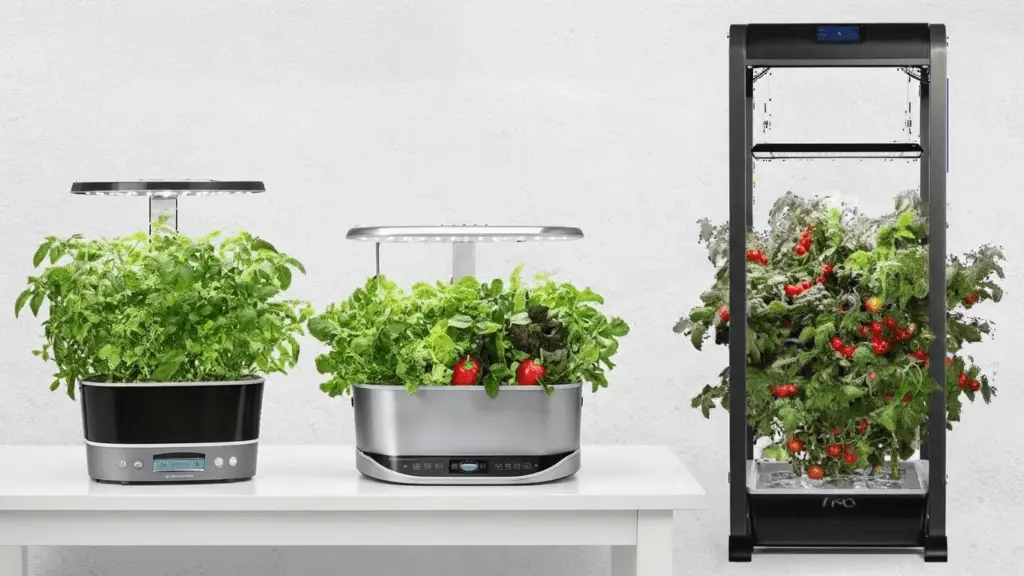
Here’s what nobody tells you about the AeroGarden Harvest: it’s basically the Honda Civic of indoor gardens. Reliable, affordable, and it’ll get you where you need to go without making a huge fuss about it. With six pods and about a foot of growing height, this is the model that fits in that weird space between your coffee maker and the wall.
What It Actually Does Well
The Harvest excels at what I call “set it and forget it” herbs. Basil? Absolutely. Mint that grows so fast you’ll be making mojitos just to keep up? Perfect. Parsley, dill, cilantro, thyme—all those little green things you buy at the store for $4, use twice, then watch turn to slime in your fridge crisper? Yeah, those thrive here.
I’ve had my Harvest running for three years now, and I can tell you from experience that the 20W light is precisely calibrated for leafy growth. The plants grow about five times faster than they would in soil, which means you’re cutting fresh herbs for dinner roughly 4-5 weeks after planting. That’s faster than my sourdough starter wakes up most days.
The footprint is another win. We’re talking about something the size of a small toaster oven. It’ll fit on a desk, a narrow kitchen counter, that windowsill you’ve been wondering what to do with. And at under $100 during sales (I’ve seen them as low as $70), it’s not a financial commitment that’ll keep you up at night.
The Reality Check
But here’s where I need to be honest with you: the Harvest has limits. Hard limits. That 12″ of grow height? It’s not a suggestion—it’s a ceiling. I tried growing cherry tomatoes in mine once, and let me tell you, watching that plant collide with the LED panel was like seeing a teenager hit their growth spurt too fast. You can prune, you can train, you can whisper encouraging words to it every morning, but physics is physics. Peppers? Same story. The Harvest “doesn’t really have enough height for peppers,” as one frustrated reviewer put it, and they’re right.
The smaller water reservoir means you’re refilling every few days once plants mature, and that 20W light, while perfect for greens, just doesn’t pack enough punch for fruiting plants. You’ll get tomatoes, but they’ll be more of a garnish than a harvest. Think of the Harvest like a really enthusiastic apartment balcony—it can do a lot, but it’s not a farm.
Who Should Actually Buy This
You should grab a Harvest if:
- You’ve never grown anything before and the phrase “nutrient solution” makes you nervous
- You primarily cook with herbs and occasionally want some salad greens
- Your available space could best be described as “I might be able to fit a large cat there, but that’s about it”
- You’re the kind of person who likes to test the waters before diving in headfirst
It’s the “dip your toe in hydroponics” model, and honestly? That’s not a bad thing. Some of my friends have been running their Harvests for years, perfectly content with endless basil and the occasional head of lettuce. Not everyone needs to grow enough tomatoes to can their own sauce.
The Bounty: The Sweet Spot That Makes You Feel Like a Real Gardener
Okay, now we’re talking. The Bounty is where things get interesting. With nine pods and up to 24″ of grow height, this is the model that makes you feel like you’ve graduated from “person who grows basil” to “person who grows things.” The jump from Harvest to Bounty isn’t just about more pods—it’s about more possibilities.
The Performance Upgrade
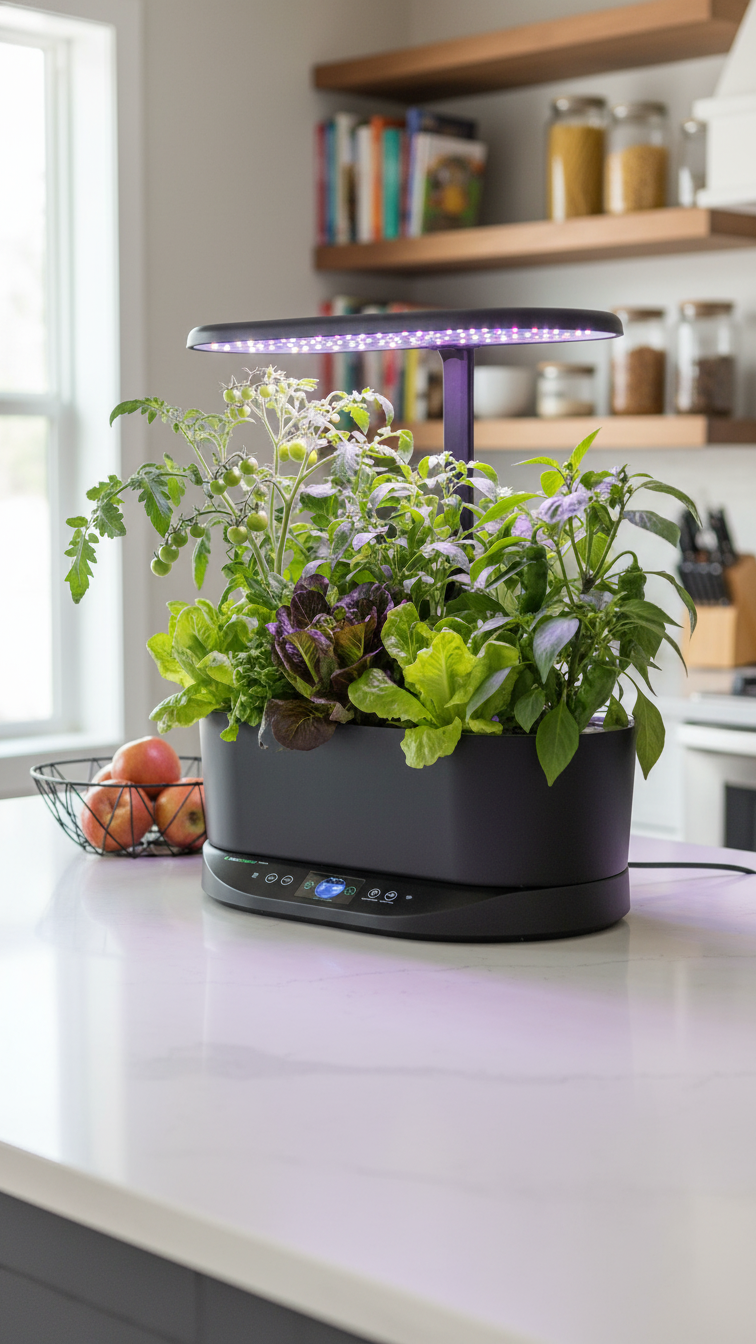
That 30-50W LED (depending on whether you get the Basic or Elite) is a game-changer. It’s literally twice as powerful as the Harvest’s light, which means your plants don’t just grow—they thrive. I’ve seen cherry tomatoes in Bounties that would make a Italian grandmother weep with joy. Peppers actually produce peppers, not just sad little flowers that drop off because the plant doesn’t have enough energy to fruit.
The larger water reservoir (about 1.1 gallons) means you’re not constantly refilling. When my friend Sarah went on vacation for a week, her Bounty’s Vacation Mode slowed down growth just enough that she came home to alive plants instead of a tiny herb graveyard. That’s the kind of feature that doesn’t seem important until you really need it.
And let’s talk about the smart features. The touchscreen, the Wi-Fi connectivity, the app that sends you passive-aggressive notifications about adding plant food—it’s all designed to make you a better gardener without making you think too hard about it. One reviewer mentioned the app notifications are “pretty good” for reminding you about water levels, which might sound like faint praise, but when you’ve killed your third succulent this year, “pretty good” is a revelation.
The Space Question
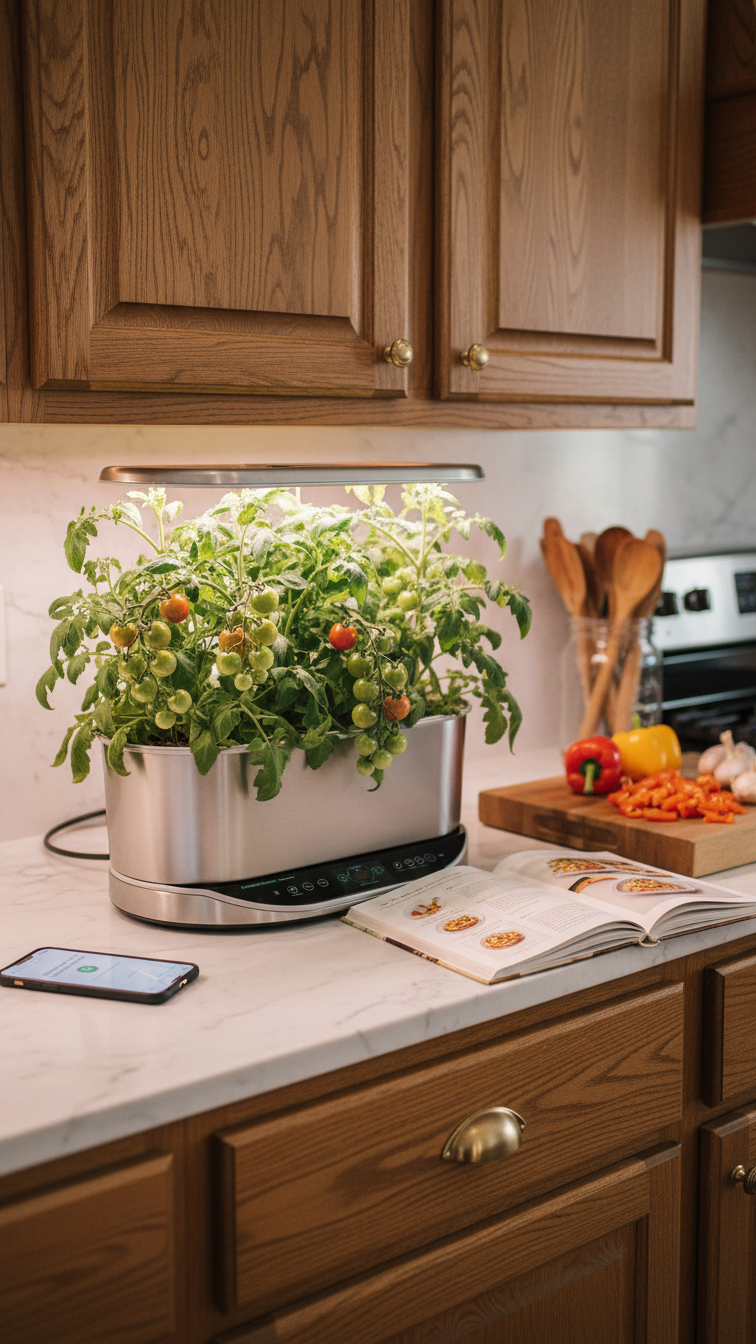
Here’s the thing: the Bounty is still countertop-friendly, but it’s demanding countertop real estate. It’s taller, wider, and when that light is fully extended, you need about two feet of vertical clearance. I tried to put mine under a kitchen cabinet once. Spoiler: it didn’t fit, and I had to rearrange my entire coffee station to accommodate it. It’s the price you pay for growing actual vegetables indoors.
The nine-pod capacity is interesting because it’s enough to let you experiment. You can dedicate three pods to herbs, three to lettuce, and three to something ambitious like cherry tomatoes. That’s a mixed harvest that’ll actually impact your cooking, not just garnish it.
The Cleaning Thing Nobody Talks About
Okay, can we be real for a second? The Bounty’s larger bowl is a pain to clean when you’re between plantings. One reviewer called it “difficult to take apart,” and they’re not wrong. When you’ve got nine root systems tangled together like some kind of plant orgy, separating them requires patience and probably some choice words. It’s not a deal-breaker, but it’s the kind of maintenance that makes you appreciate why some people just keep buying new pods instead of starting from seed.
Who Should Actually Buy This
The Bounty is for you if:
- You cook regularly and want more than just herbs
- You’ve got enough counter space to dedicate to a “garden zone”
- You’re willing to spend $200-$300 (or snag a Basic on sale for around $150)
- You want the satisfaction of growing cherry tomatoes in February because you’re a wizard, apparently
- You’re ready for slightly more involvement than “add water when the light blinks”
It’s the “I’m serious about this hobby but not ready to devote an entire room to it” model. And honestly? For most people, this is probably the right answer. It’s that sweet spot where capacity meets convenience without completely taking over your life.
The Farm: When You’re Ready to Commit to Indoor Farming
Now we enter the big leagues. The Farm series (12 or 24 pods, sometimes more depending on the model) is less of a kitchen appliance and more of a piece of furniture that happens to grow food. These units are floor-standing, require multiple gallons of water, and have lights powerful enough to make you consider sunscreen.
The “Go Big or Go Home” Approach
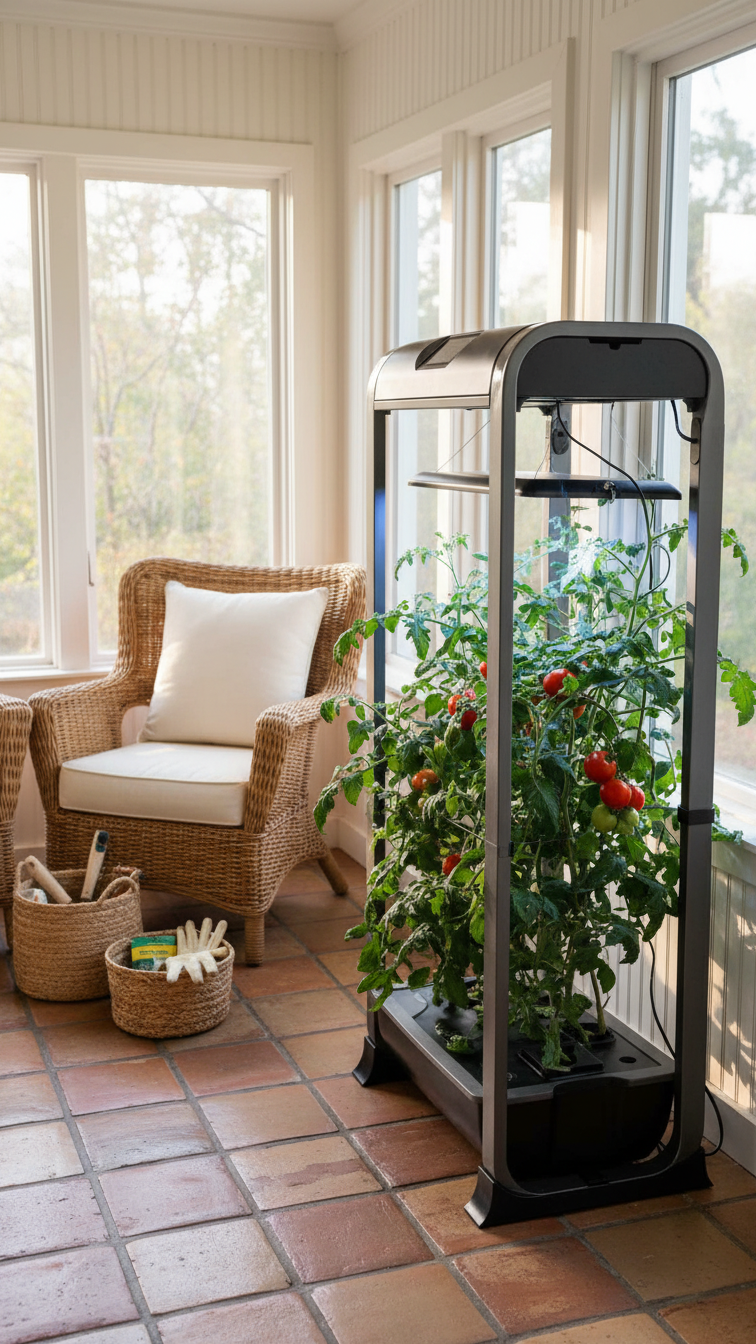
With 60W LED panels per 12-pod section and up to 36″ of grow height on XL models, the Farm can grow anything. Full-size tomatoes. Bell peppers that actually look like bell peppers. Cucumbers that’ll make you wonder why you ever bought that rubbery supermarket stuff. One reviewer grew enough basil, cilantro, and mint in a Farm 12XL to generate $150 in weekly farmers market sales. That’s not a hobby—that’s a side hustle.
The modular design is clever. You can stack two units vertically with a stacking kit, essentially creating a wall of produce. Some people dedicate an entire side to salad greens and the other to fruiting plants. It’s like having a mini greenhouse in your living room, if your living room has industrial-strength LED panels and smells faintly of nutrients and optimism.
The Reality of Farm Ownership
But—and this is a big but—these systems demand commitment. The water reservoir holds multiple gallons, which means when it’s time to do a deep clean between plantings, you’re dealing with a significant project. The units weigh a ton when full, so you better love where you put it the first time. And with 12-24 plants growing simultaneously, you’re spending real time pruning, harvesting, and managing what can quickly become a jungle if you neglect it for a week.
One user review mentioned the Farm “dominates the space,” and that’s accurate. This isn’t something you tuck into a corner. It’s a statement piece that says “I have prioritized growing my own food over having a normal-looking living room.” I mean that as a compliment, by the way.
The cost is another consideration. At $400-$700 depending on model and sales, this is a serious investment. But when you calculate what you’d spend on organic produce over a year, especially if you’re growing things like heirloom tomatoes that cost $6/pound, it starts to make financial sense. Plus, there’s the intangible value of knowing exactly where your food came from and what went into growing it.
Who Should Actually Buy This
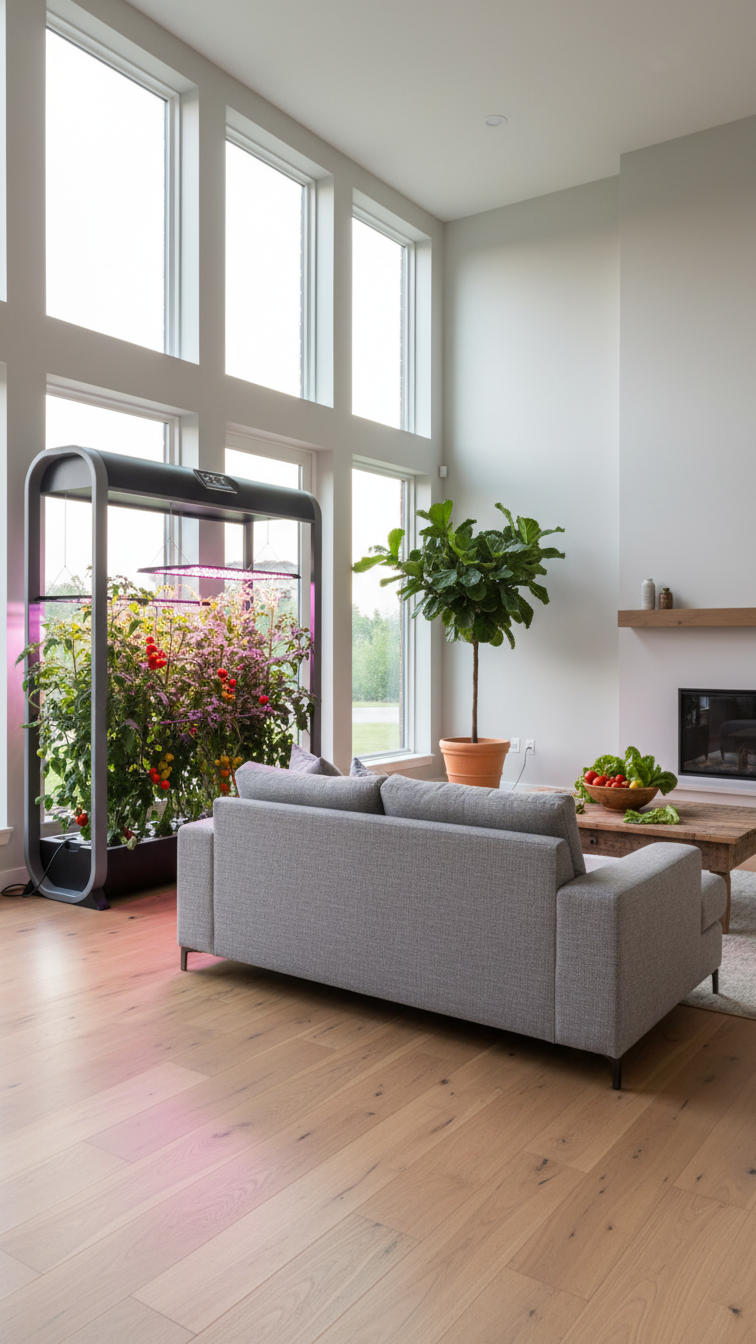
The Farm is your match if:
- You’ve got the space—a dedicated corner, a basement area, a sunroom that needs purpose
- You cook with fresh produce daily and want a significant portion of it homegrown
- You’re ready to treat indoor gardening like a part-time job (a fun one, but still)
- You’ve either outgrown a Bounty or know from the start that you want maximum output
- You’re the kind of person who gets excited about calculating nutrient ppm and light schedules
It’s not for beginners, and that’s okay. AeroGarden knows this—they even say on their site that the Farm is for “serious enthusiasts.” Starting with a Farm would be like learning to drive in a Ferrari. Possible? Sure. Smart? Probably not.
What to Actually Grow in Each Model (Beyond the Marketing Hype)
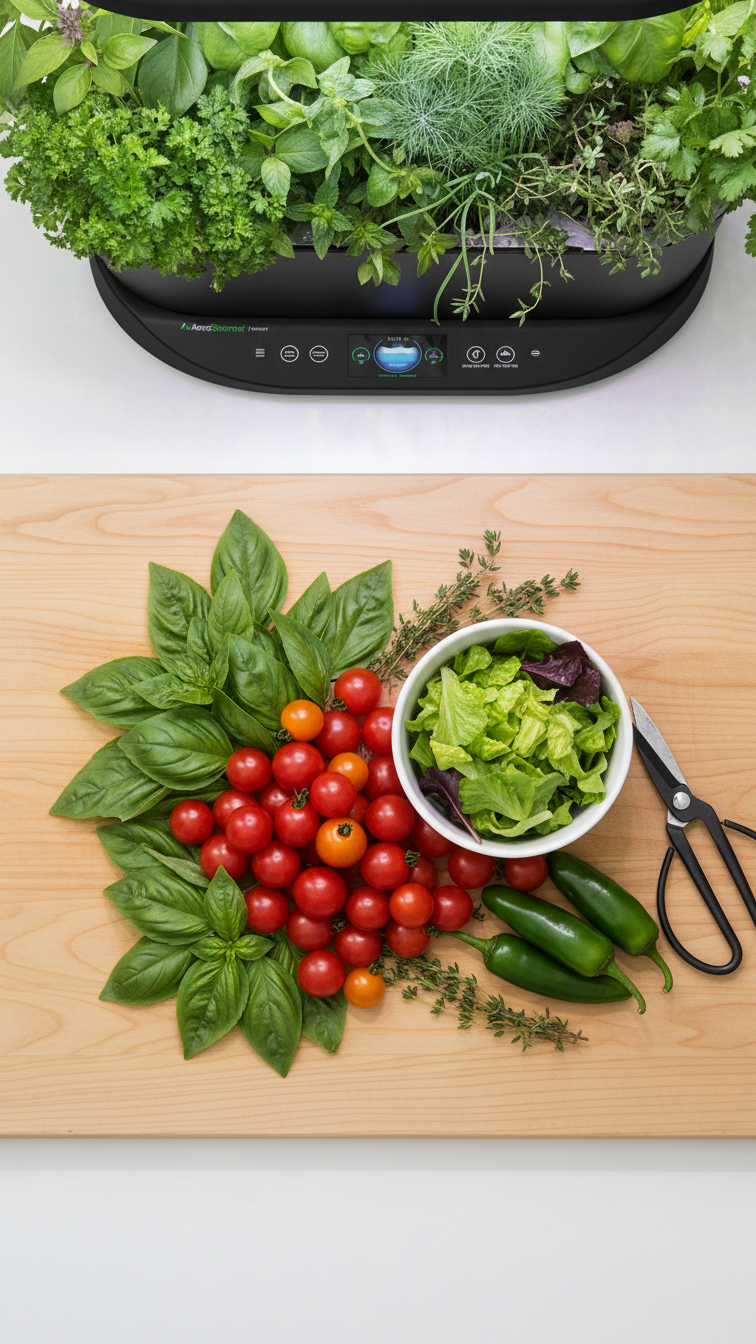
Let’s get specific, because “herbs and vegetables” is about as helpful as a recipe that says “cook until done.”
In the Harvest: Keep It Simple, Keep It Leafy
Absolutely plant these:
- Basil (any variety—Genovese, Thai, lemon)
- Mint (it’ll take over if you let it, but that’s a good problem to have)
- Parsley and cilantro (cut-and-come-again heroes)
- Lettuce mixes (harvest outer leaves and they’ll keep producing)
- Arugula and spinach (fast-growing, satisfying)
- Dill (grows like a weed, which is perfect)
Maybe try these if you’re feeling ambitious:
- Cherry tomatoes (dwarf varieties only, and be prepared to prune like your life depends on it)
- Chives and green onions (low-maintenance winners)
Don’t even think about it:
- Anything that naturally grows over a foot tall
- Peppers (they’ll grow, but they’ll be sad)
- Cucumbers (just… no)
In the Bounty: Expand Your Horizons
Everything the Harvest can grow, plus:
- Cherry tomatoes (actually productive varieties like Red Robin or Tiny Tim)
- Peppers (jalapeños, habaneros, mini bell peppers—stuff that stays under 2 feet)
- Eggplant (those slim Asian varieties are perfect)
- Beans and peas (with some creative trellising)
- Kale and chard (they get big, and the Bounty gives them room)
- Cucumbers (compact bush varieties, with support)
The key here is mixing heights. Plant your taller stuff in back, shorter herbs in front. It’s like theater seating, but everyone gets fed.
In the Farm: Go Nuts (Within Reason)
The world is your oyster:
- Full-size tomatoes (indeterminate varieties that’ll grow to 3 feet if you let them)
- Bell peppers (proper big ones)
- Cucumbers that vine and climb
- Strawberries (yes, really)
- Broccoli or cauliflower (one per pod, but you’ll get actual heads)
- Continuous herb production (imagine having 6 basil plants at different stages)
What to avoid:
- Root vegetables (no room for carrots or potatoes to develop)
- Huge vining plants like pumpkins (they’ll take over and then some)
- Corn (wrong tool for the job entirely)
Matching the Model to Your Actual Life
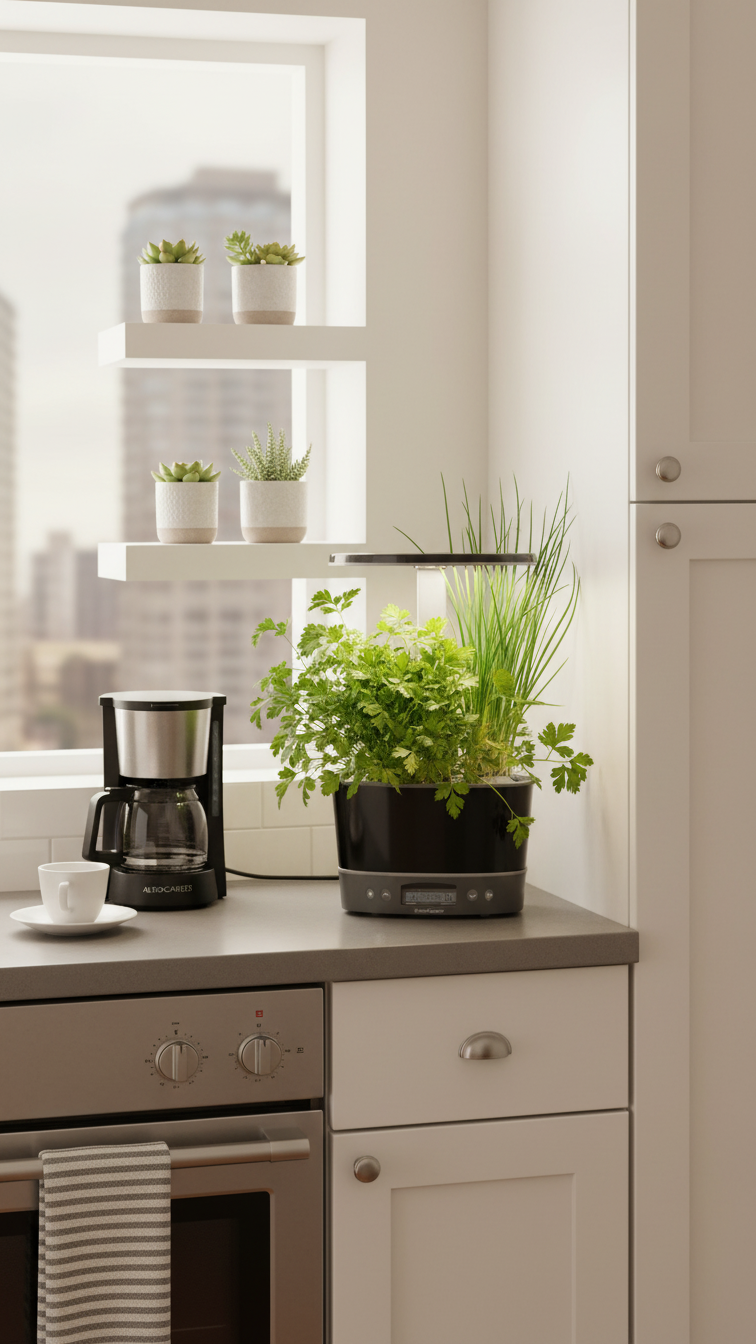
Here’s where we cut through the “which is best” nonsense and talk about fit. Because the best AeroGarden is the one you’ll actually use.
You Should Get the Harvest If…
Your kitchen is what real estate agents generously call “cozy.” You cook at home a few nights a week and get genuinely excited about snipping fresh basil onto pasta. You’re not trying to feed a family of four from your countertop—you just want to elevate your cooking with fresh ingredients that didn’t travel 2,000 miles to reach your plate. Maybe you’re in an apartment with one window that faces a brick wall. The Harvest is your friend. It’s low-effort, high-reward, and won’t make your landlord question your life choices.
You Should Get the Bounty If…
You’re that person who brings homemade salsa to parties and wants to say “the cilantro? Grew it myself.” You’ve got enough counter space that you can dedicate a couple of square feet to a growing operation. Maybe you meal prep on Sundays and would love to grab fresh lettuce that hasn’t been recalled for E. coli. You’re willing to spend a bit more for the flexibility to grow actual vegetables, not just garnish. The Bounty is that perfect middle ground where you’re still a “normal person with a garden gadget” but you’re also producing food that matters.
You Should Get the Farm If…
If you’re dedicated to indoor garden ideas and you’re not afraid of a little assembly. You cook daily, you value organic produce, and you’ve maybe calculated the ROI on growing your own salad greens vs. buying them. You’ve got the space—a spare room corner, a basement area, maybe you’re that person who turned the formal dining room into a grow room because who actually uses a formal dining room? The Farm is for when growing food shifts from hobby to lifestyle. It’s for the person who gets a little thrill from calculating nutrient costs and harvest yields.
Making It Look Good (Because We’re All Posting to Instagram)

Let’s be honest—a big part of the AeroGarden appeal is that they look cool. Here’s how to make each model work aesthetically:
Harvest: This is your stealth garden. Tuck it between the coffee maker and the knife block. The slim profile means it doesn’t scream “I have a science experiment on my counter.” I know someone who has two—one for herbs, one for lettuce—and they look like modern art pieces with their clean lines and glowing lights. The stainless steel Elite versions especially blend into contemporary kitchens.
Bounty: This one wants to be seen. It’s got presence. Place it where you can show it off—a kitchen island, a dedicated plant shelf, that weird counter space between the dining area and kitchen. The taller profile with the extended light arm creates a nice vertical element. Some people wrap the base with a decorative plant stand to make it look more intentional. It’s functional sculpture.
Farm: Own it. This isn’t blending in; it’s a statement. Position it like you would a bookshelf—with intention. Many Farm owners build entire “green walls” with multiple units. The warm LED glow actually makes for great ambient lighting in the evening. I’ve seen setups where the Farm becomes a room divider or the focal point of a home office. It’s utilitarian chic, like having a commercial kitchen appliance in your home.
Your First 90 Days: Real Talk on Getting Started
Starting an AeroGarden feels like bringing home a new pet—exciting, slightly terrifying, and you’re convinced you’re going to kill it within a week. Here’s how not to do that:
Week 1-2: The Waiting Game
Plant your pods, fill the water, add nutrients, and… wait. Germination is when most beginners panic. “Is it working? Should I see something? Did I kill them?” Relax. Herbs emerge in 7-10 days. Tomatoes can take up to 14. The Harvest has indicator lights that remind you to add water and food. The Bounty and Farm will ping your phone. Trust the system.
Week 3-6: The Excitement Phase
Everything’s growing! This is where you become obsessed. You’ll check on them three times a day. You’ll take photos. You’ll text your friends pictures of your 2-inch basil seedlings like they’re your newborn child. This enthusiasm is good—channel it into learning. Notice how the light moves, how plants lean, how quickly some grow versus others.
Week 7+: The Reality Check
Now you’re harvesting. With herbs in a Harvest, you can start trimming lightly after about 4 weeks. In a Bounty, you might be picking your first cherry tomatoes around week 8-10. This is also when you realize pruning isn’t optional. Basil gets leggy. Tomatoes get bushy. You become a plant barber. It’s weirdly satisfying.
Pro Tips From Someone Who’s Made Every Mistake:
- Start with herbs. They’re forgiving, fast, and you’ll use them. Basil and mint are basically unstoppable.
- Get a “Grow Anything” kit if you want to try less common plants. The pre-seeded pods are convenient but pricey. You can absolutely use your own seeds.
- Prune aggressively. I mean it. Every week, take scissors to anything getting tall or bushy. Your plants will branch out and produce more. It’s counterintuitive but works.
- Keep a journal. Sounds nerdy, but noting what you planted when and how it performed is invaluable. “Oh, the Thai basil in pod 3 germinated faster than the Genovese in pod 1.” That kind of intel makes you better.
- Don’t be afraid to experiment. Try a weird pepper variety. Plant flowers just for fun. The beauty of these systems is that a failed experiment costs you maybe $3 in pods and three weeks, not an entire growing season.
The Final Word: Ignore the Hype, Trust Your Gut
Here’s what it comes down to: the best AeroGarden isn’t the one with the most pods or the fanciest app. It’s the one you’ll actually use and enjoy. I’ve seen people with Harvests who harvest fresh herbs every single day and are perfectly content. I’ve seen people with Farms who got overwhelmed by the maintenance and now it’s a very expensive coat rack.
Bigger isn’t better if it means you’ll be intimidated by the scale. Smaller isn’t limiting if it perfectly serves your needs. The Harvest might be “entry-level,” but there’s no shame in staying entry-level if that’s where you’re happiest. The Farm might be “professional grade,” but if you’re not ready to commit to basically a part-time job tending to 24 plants, you’re setting yourself up for frustration.
Start where you are. Start small if you’re unsure. The beautiful thing about AeroGardens is that they teach you as you go. That Harvest will teach you the rhythm of hydroponic gardening—the weekly nutrient addition, the pruning, the sheer magic of watching seeds become food. Then, if you catch the bug (and you probably will), you can add a Bounty. Or upgrade to a Farm. Or suddenly find yourself researching DIY Kratky systems at 2 AM because you’ve realized you want to grow even more.
The AeroGarden ecosystem is designed for this progression. They want you to start with a Harvest and end up with a wall of Farms. It’s good business, sure, but it’s also good gardening. Each model builds on the skills the previous one taught you.
So here’s my honest advice: If you’re reading this and thinking “I just want fresh basil without spending $5 every week,” get the Harvest. If you’re thinking “I want to supplement my grocery shopping with actual produce I grew,” get the Bounty. And if you’re thinking “I want to fundamentally change how my family gets fresh food,” well… you already know you want the Farm.
Whichever you choose, remember this: you’re not just buying a gadget. You’re buying a new way of interacting with your food. A thing that’ll have you checking plant growth before you’ve checked your email. A reason to get excited about Tuesday because that’s nutrient day. A tiny corner of your home that produces something real and alive.
And if you end up like me, with a Harvest for herbs, a Bounty for tomatoes, and serious plans for a Farm next year… well, welcome to the club. We meet on the gardening subreddits and proudly post photos of our harvests. You’re going to fit right in.
Now go forth and grow. Your future self—the one eating fresh pesto in January—will thank you.