
High-Yield Micro Veg Garden: How to Grow More Food Per Square Metre Without the Mess
You’re standing in a tiny patch of outdoor space, seed packets in hand, trying to do the math. A few greens here. Beans there. Maybe a tomato, maybe herbs, maybe one more planter if you squeeze it in. And suddenly the whole thing starts to look less like a smart food garden and more like a crowded corner that got out of hand.
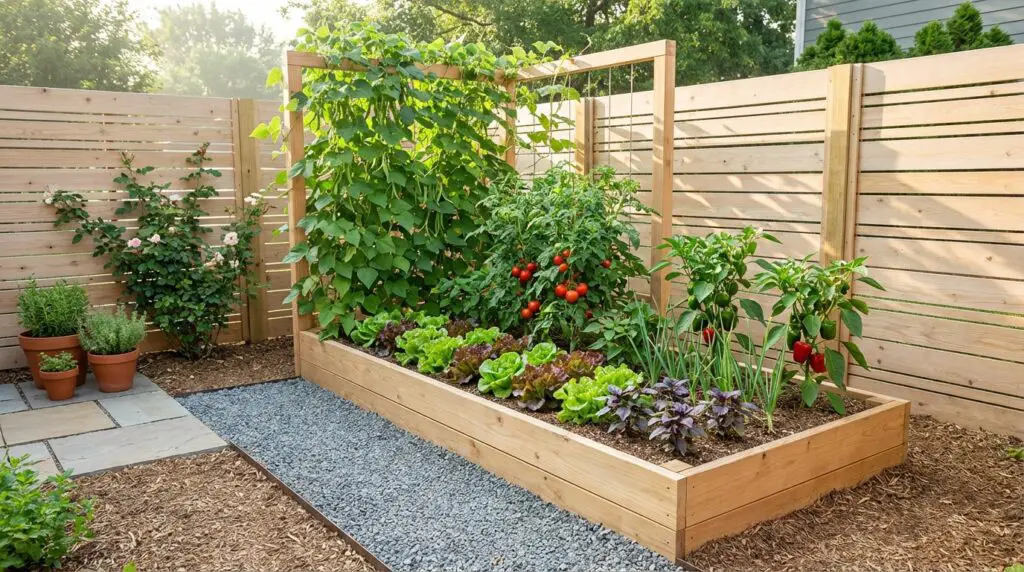
That’s the trap with small edible spaces. We want them to produce a lot, but we also want them to feel calm, clean, and worth looking at. The good news is you do not need a large plot to grow a surprising amount of food. You just need a better plan. A high-yield micro veg garden works because it treats every square metre like useful growing space while still respecting shape, rhythm, and order. It is productive, yes, but it also looks tidy enough to suit a minimalist eye.
Why a high-yield vegetable garden works so well in a small space vegetable garden
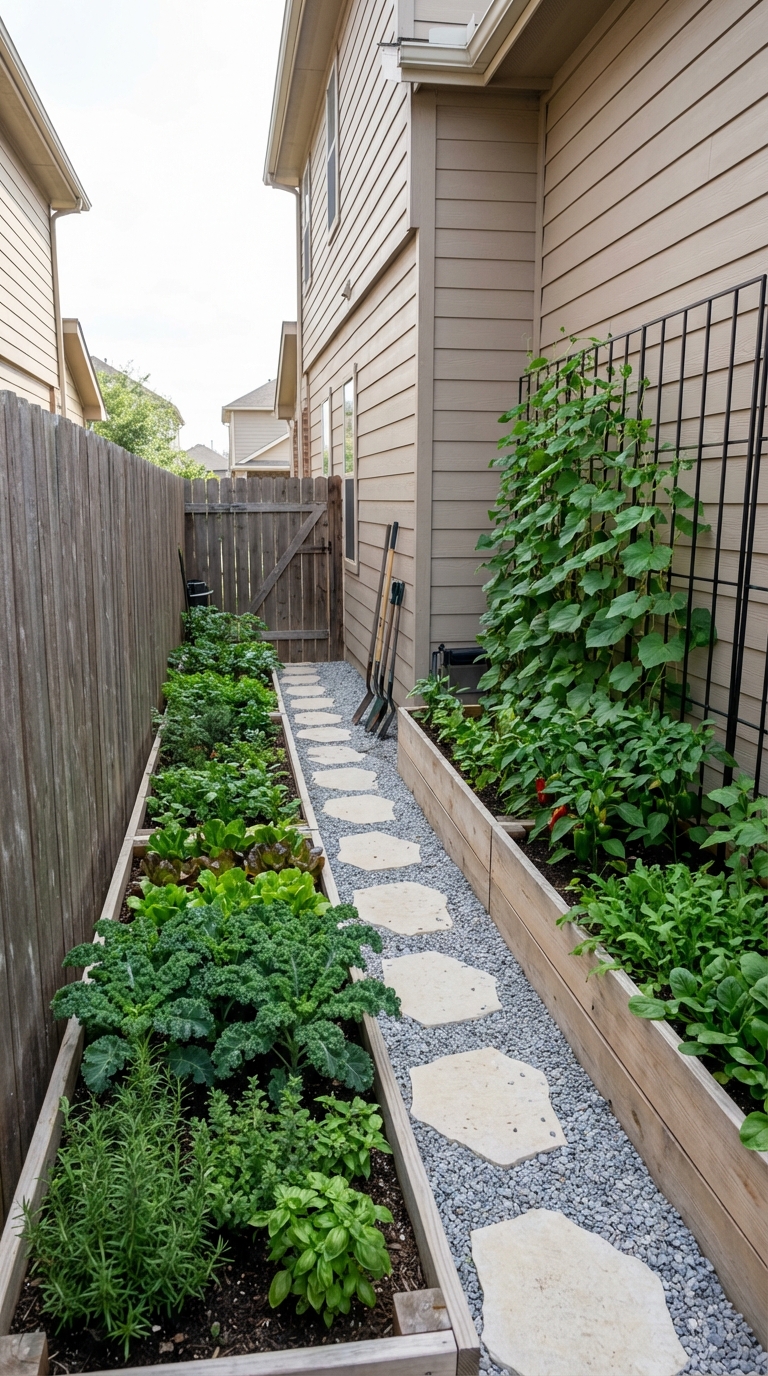
A high-yield vegetable garden is not about stuffing in as many plants as possible. That usually leads to weak airflow, awkward harvesting, and a space that feels cluttered by midseason. What you want instead is output. More leaves to cut, more beans to pick, more herbs to snip, more food from the same footprint.
That is where a small space vegetable garden can actually shine. A compact area is easier to study, easier to manage, and easier to improve. You notice where the sun falls. You see which crops are worth the room. You learn fast which areas dry out, which containers need support, and which plants earn a second round.
There is also something refreshing about limits. In a large garden, it is easy to waste space. In a micro veg setup, every crop needs a reason to be there. That kind of editing leads to better harvests and a cleaner look. The layout feels sharper. The planting feels more deliberate. And the whole garden becomes easier to live with.
How a small space vegetable garden layout shapes a high-yield vegetable garden
The layout of a small space vegetable garden does more than control how it looks. It decides how well the garden works. When the structure is right, the space feels open even when it is working hard.
Choosing a square foot garden layout for a high-yield vegetable garden
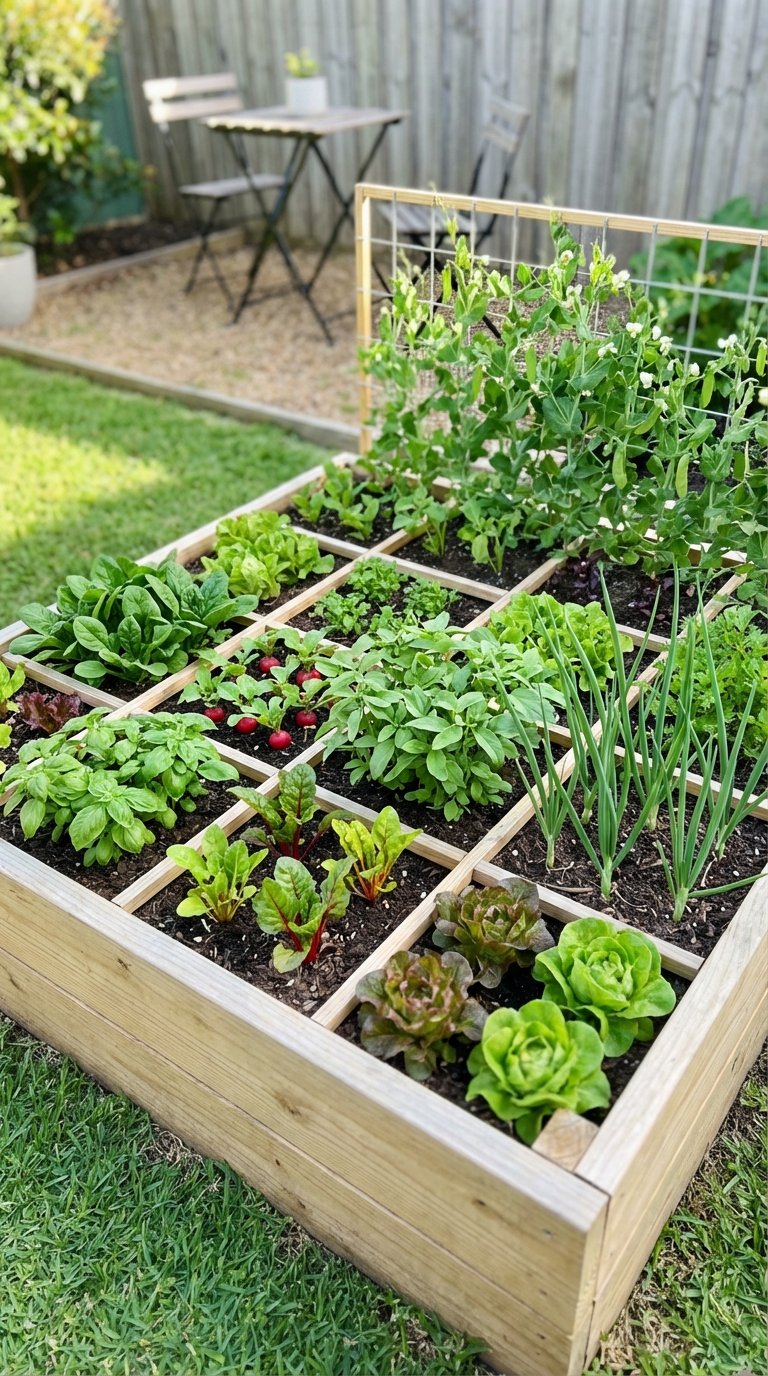
A square foot garden layout makes a lot of sense for a high-yield vegetable garden because it breaks the space into clear, useful units. Each square has a job. One may hold salad greens. Another may support climbing beans. Another may carry herbs that get picked several times a week.
This kind of order helps in two ways. First, it keeps planting from turning messy. Second, it makes crop planning much easier. You can rotate crops, replant empty squares, and spot gaps before they become wasted space. For a gardener who likes neatness, the grid itself brings calm.
Using a raised bed vegetable garden layout to keep a tidy vegetable garden layout
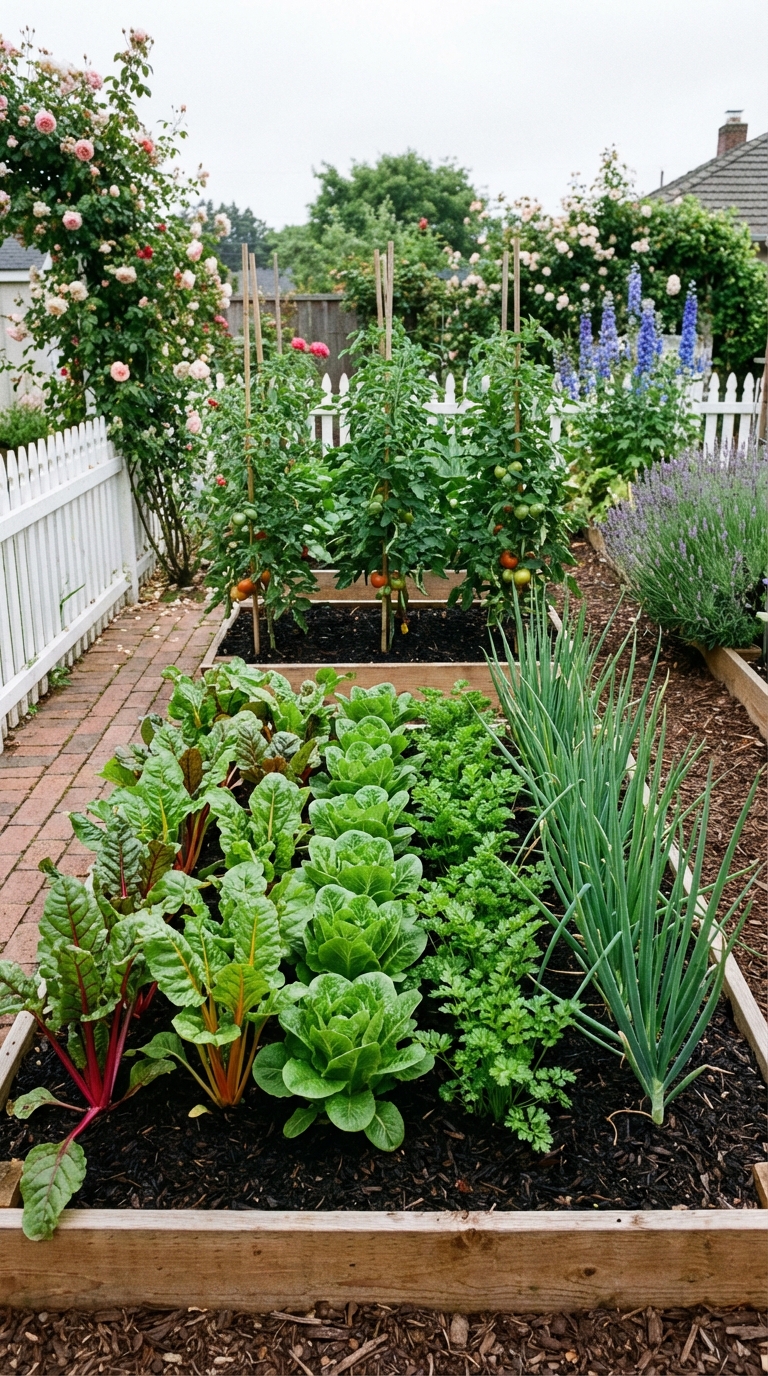
A raised bed vegetable garden layout is another strong choice, especially if you want clean lines and easy access. One compact raised bed can hold more food than people expect, provided the crop mix is smart. It also gives the space a clear boundary, which matters more than most people think.
Boundaries stop a garden from looking scattered. They tell the eye where the planting begins and ends. In a tidy vegetable garden layout, that matters. A crisp bed edge, a narrow path, and one repeated material can make a productive garden feel polished instead of busy.
Building a small space vegetable garden around zones
Even a tiny edible space benefits from zones. That sounds formal, but it is simple. Put tall or climbing crops in one area. Keep fast-pick crops near the front. Group herbs together. Reserve one section for crops you will replant through the season.
Once you do that, the space starts to feel easier. You are not hunting for basil under bean leaves or stepping around random pots to reach a patch of lettuce. The garden begins to work with you.
Best high yield vegetables for small spaces in a minimalist vegetable garden
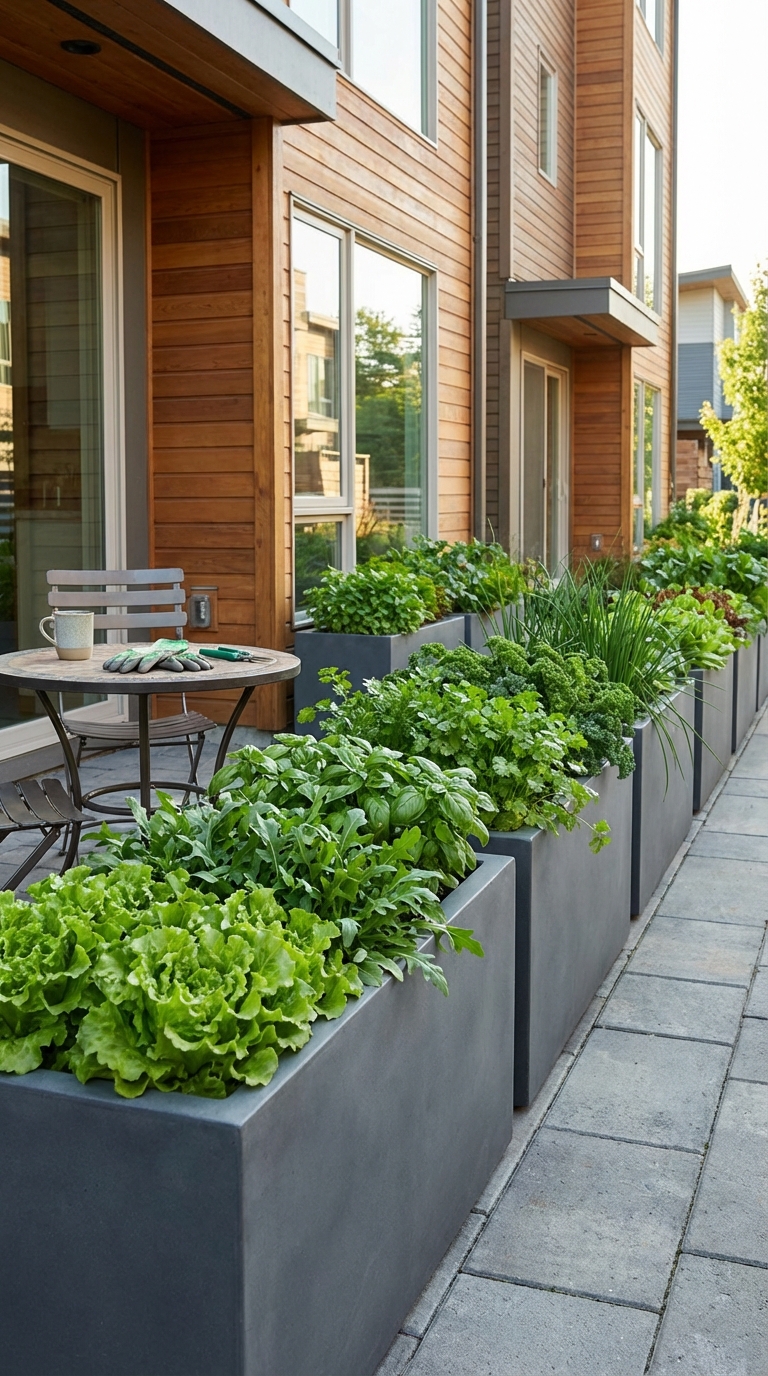
Not every crop belongs in a high-yield micro veg garden. Some take up room for a long time and give little back. Others just keep producing. In a minimalist vegetable garden, the most useful crops are the ones that stay compact, grow upward, or let you harvest again and again.
High yield vegetables for small spaces that keep giving
Cut-and-come-again crops are gold in a small space. Loose-leaf lettuce, arugula, mustard greens, mizuna, spinach in cool weather, and many herbs can be harvested in rounds. You do not wait months for one big result. You pick a little, then come back again.
That steady rhythm fits a high-yield vegetable garden perfectly. The space keeps working. It does not peak once and go quiet. And visually, these crops tend to look soft and full rather than bulky and unruly.
Compact vegetable varieties for a small space vegetable garden
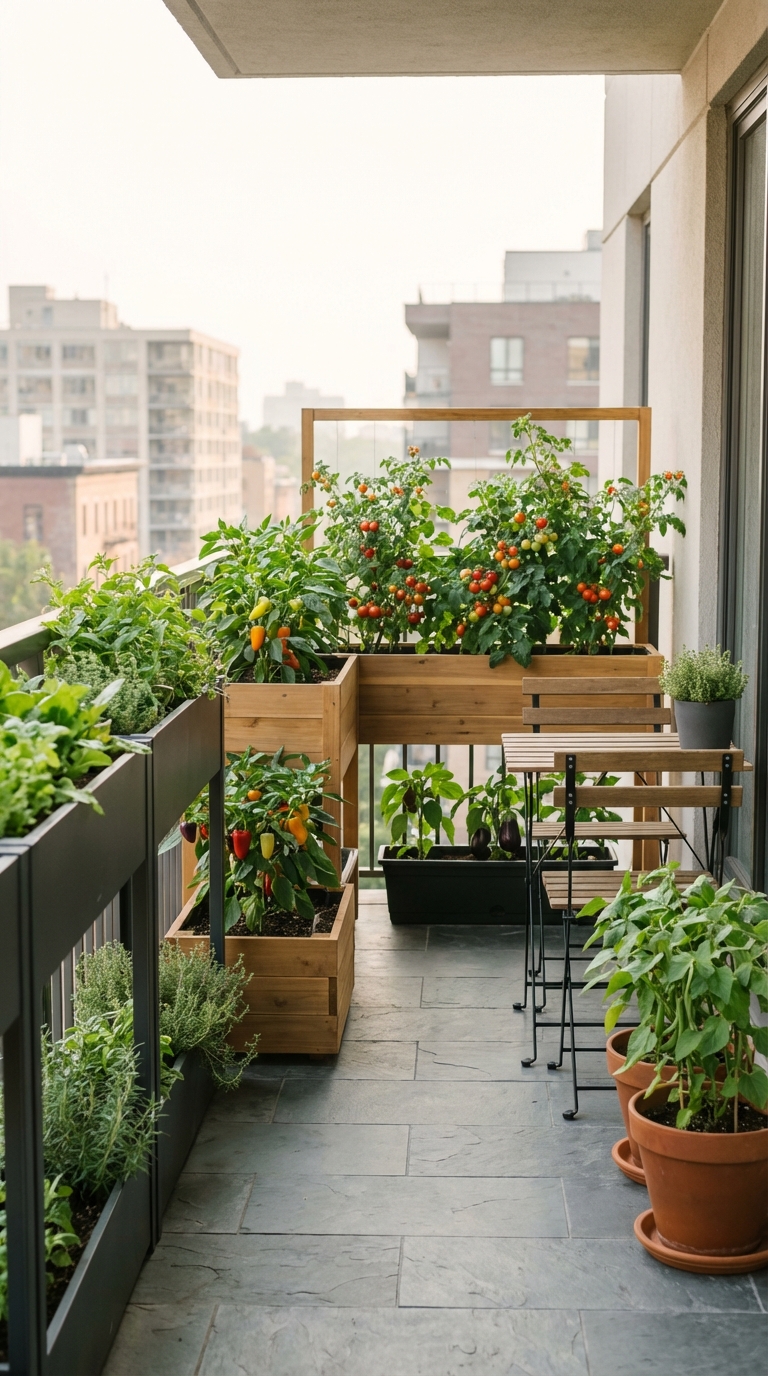
Compact varieties are worth seeking out. Dwarf beans, patio peppers, small-fruited tomatoes, bunching onions, baby chard, and compact kale varieties often make more sense than large sprawling crops. They are easier to place, easier to support, and less likely to swallow the whole bed.
This is one of the most useful shifts a gardener can make. Instead of asking, “Can I fit this plant in?” ask, “Does this plant suit the space?” That question leads to a cleaner crop list and a better harvest.
Vertical vegetable garden crops for more harvest per square metre
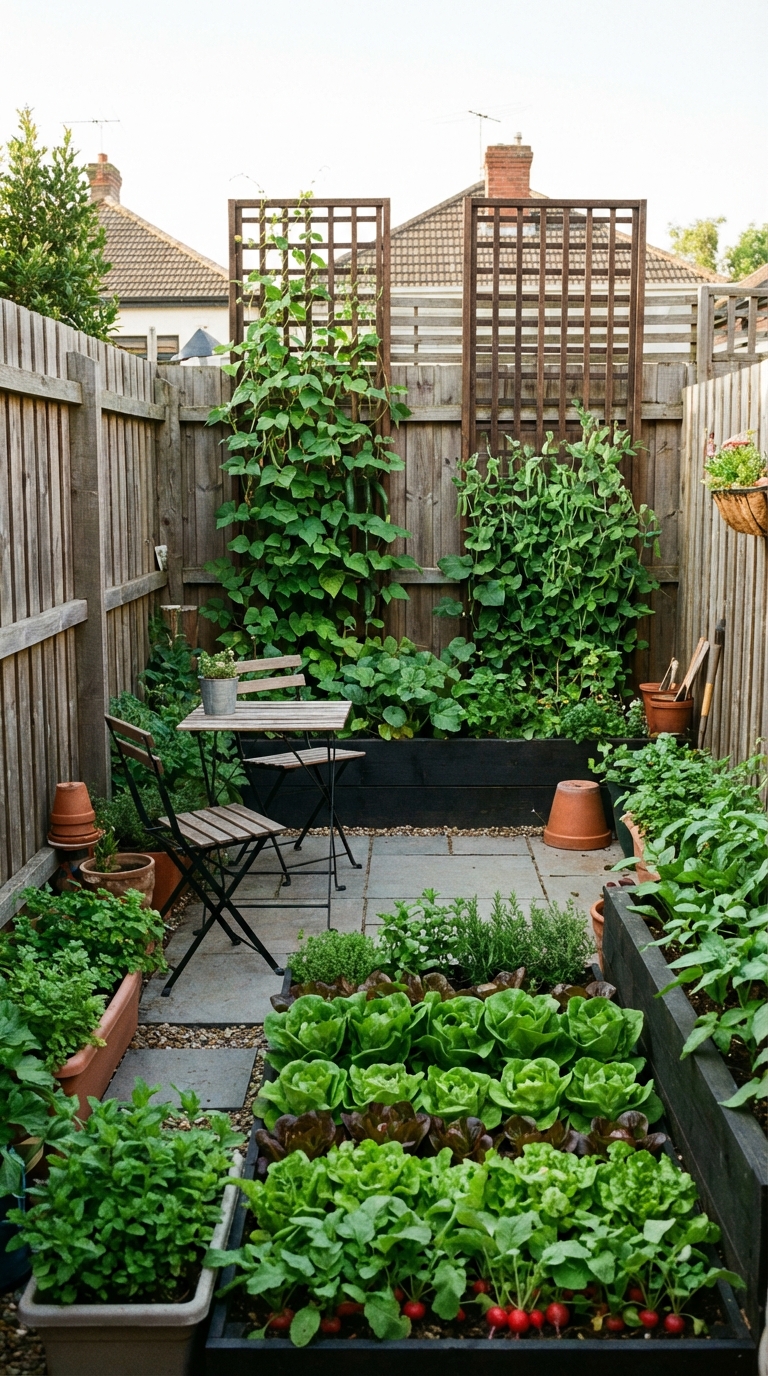
A vertical vegetable garden gives you extra growing room without taking more floor space. Climbing beans, peas, cucumbers, and trained tomatoes are classic choices. A narrow trellis at the back of a bed or against a wall can change the whole math of a small garden.
The trick is to keep the supports simple. One support style repeated across the space looks much better than a mix of cages, stakes, and bits of string. A vertical system should lift the garden, not make it feel tangled.
How to build a crop plan for a high-yield vegetable garden without visual clutter
A crop plan is what turns a hopeful planting into a working system. Without one, even a good-looking garden can become patchy, overgrown, or strangely unproductive.
Creating a tidy vegetable garden layout with fewer crop types
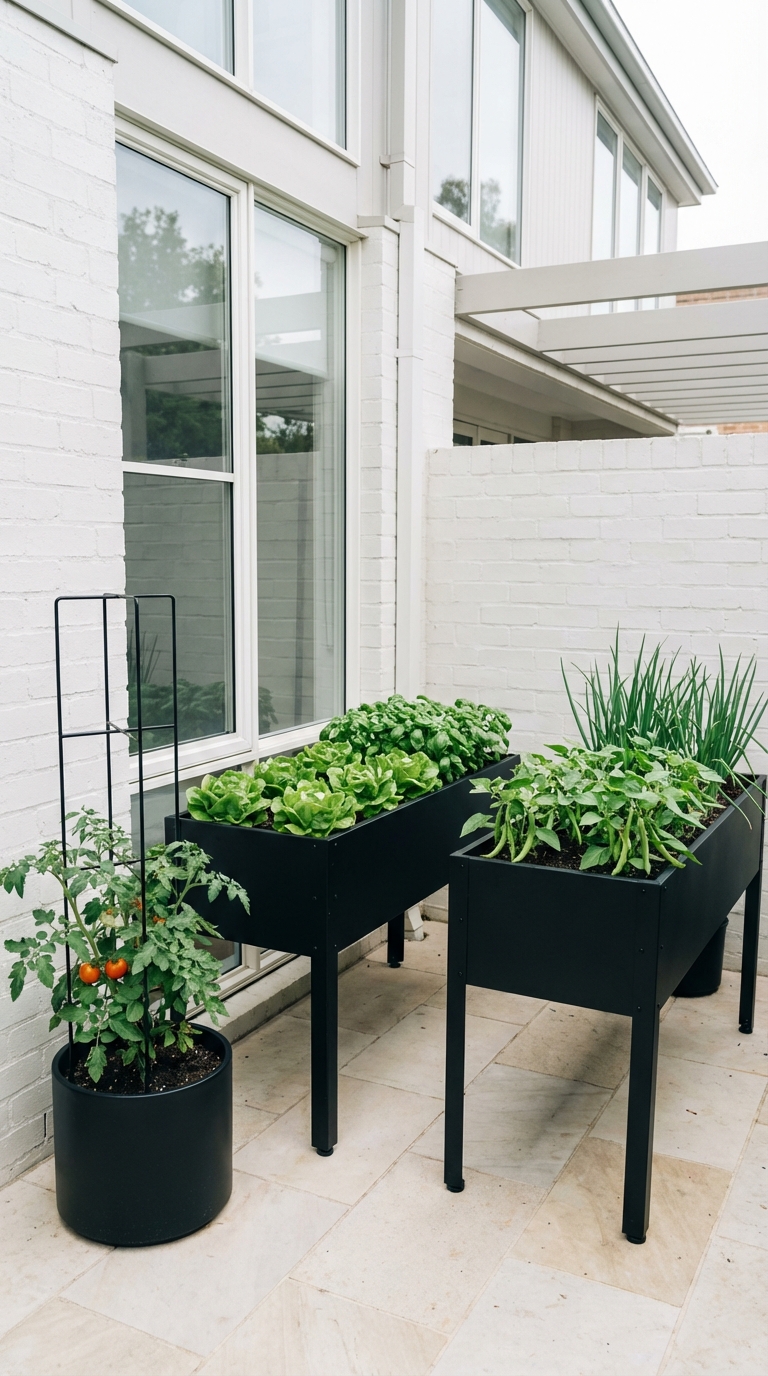
There is a real temptation to grow a little of everything. But in a high-yield vegetable garden, that can backfire. Too many crop types create visual noise and make replanting harder. It is often better to grow fewer things, but grow them well.
For example, a small bed with two lettuce types, one bean variety, one compact tomato, basil, and spring onions will often outperform a bed packed with ten unrelated crops. It will also look better. Repetition brings calm. Repetition also makes maintenance easier.
Grouping high yield vegetables by harvest rhythm
One smart way to plan a small space vegetable garden is to group crops by how they are harvested. Put quick-pick crops together. Place repeat-harvest herbs where you can reach them fast. Keep slower fruiting crops toward the back or center where they can stay put.
This creates a natural order. The garden starts to feel logical. And because you are not disturbing one crop every time you harvest another, the whole bed stays neater.
Using succession planting vegetables in a square foot garden
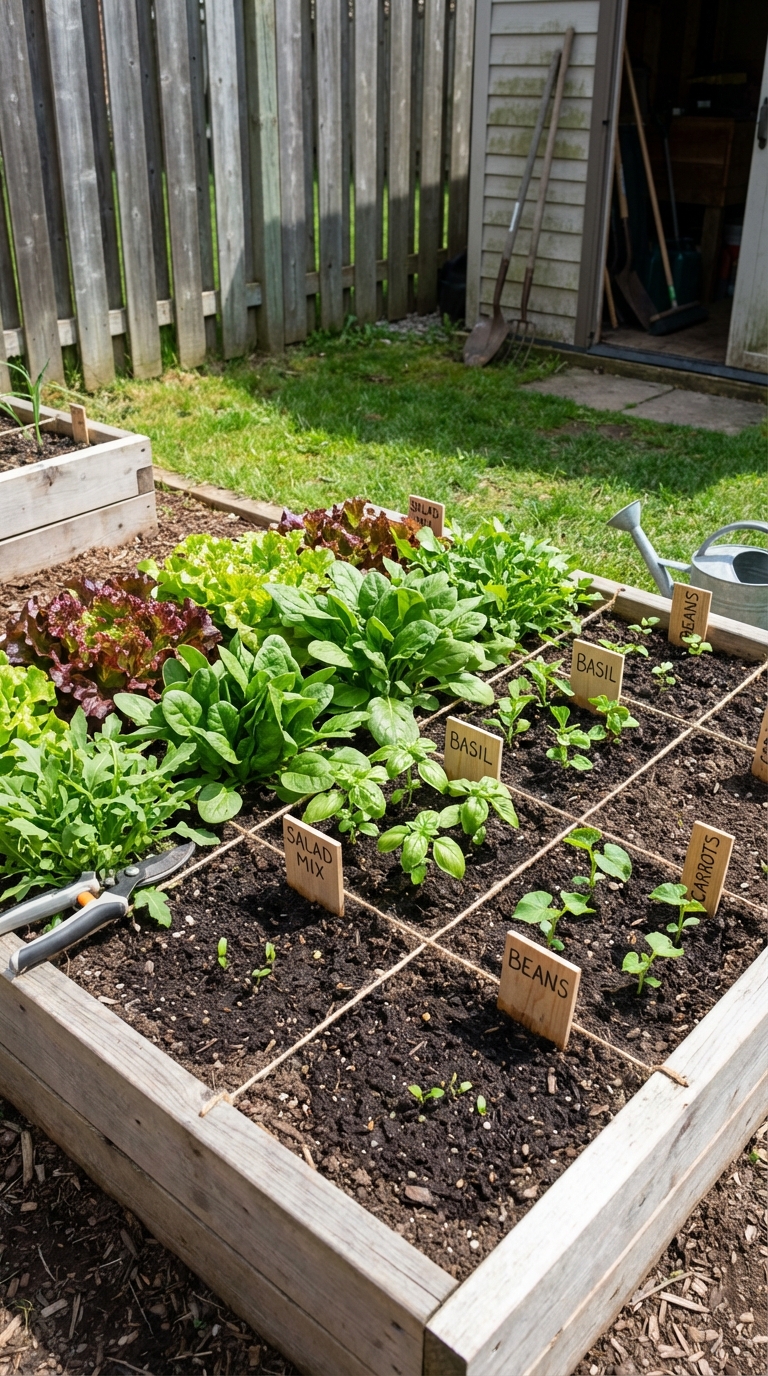
Succession planting vegetables is one of the most useful skills for a small garden. It means the space does not sit empty after one crop finishes. As soon as one section clears, another crop is ready to take its place.
A square foot garden makes this easy to track. One square finishes radishes. In go salad greens. A patch of baby spinach bolts in warm weather. Replace it with basil or bush beans. This is how a small garden keeps producing long after an unplanned one starts to fade.
Vertical vegetable garden ideas that suit a minimalist vegetable garden
A vertical vegetable garden can look elegant or chaotic. The difference usually comes down to restraint. In a minimalist vegetable garden, supports should feel like part of the design, not an afterthought.
Choosing simple vertical vegetable garden supports
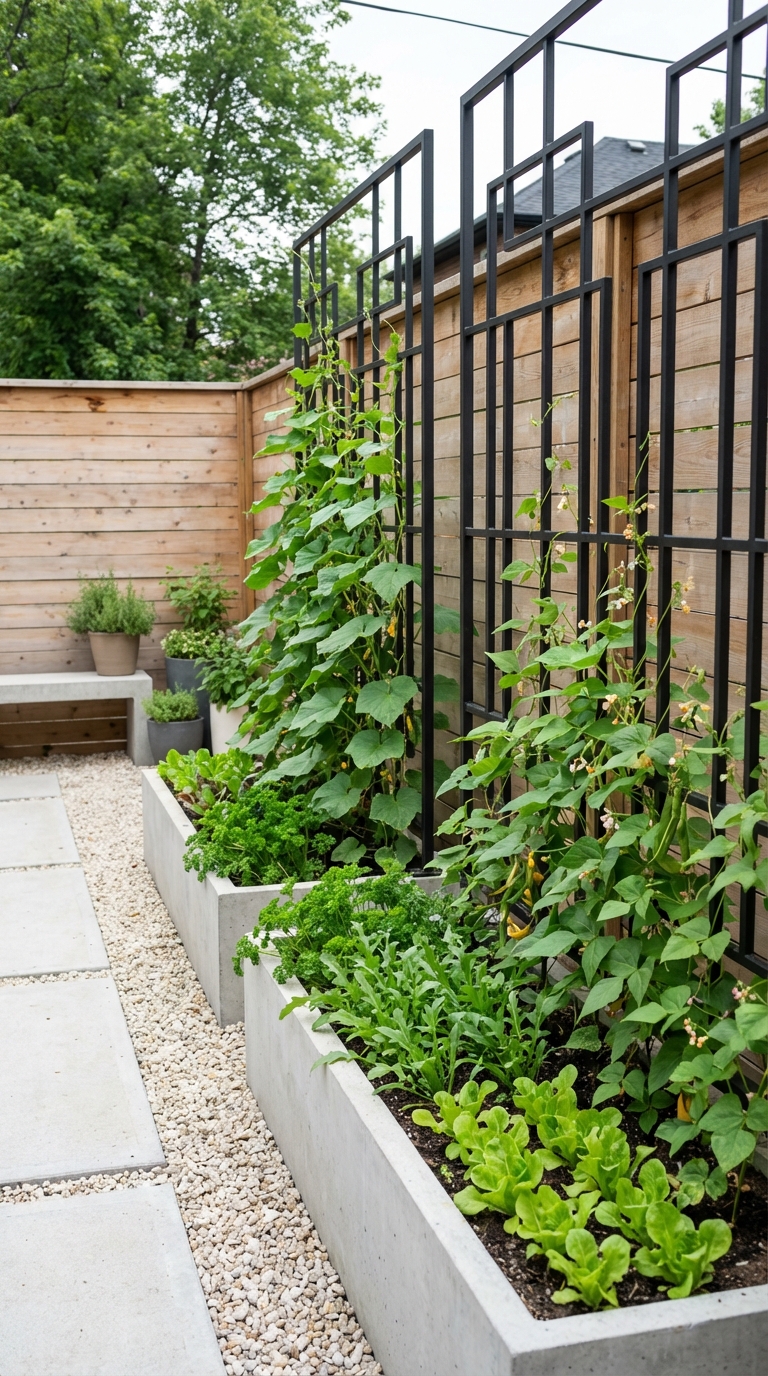
Go for one clean support style where possible. Slim timber trellises, dark metal grids, or taut lines fixed in a neat row tend to look calm. They also help frame the space. When every plant has a different stake or cage, the eye has nowhere to rest.
This matters in a small space. The garden is seen all at once. Every element counts.
Placing a vertical vegetable garden to keep a tidy vegetable garden layout
Put taller crops at the back of a bed, along a wall, or on one side where they will not cast too much shade. That keeps the space readable. Lower crops stay visible, paths stay clearer, and harvesting becomes less awkward.
It also helps the garden feel balanced. Taller lines create a backdrop. Lower crops fill the front. The shape feels planned instead of crowded.
Best climbing crops for a high-yield vegetable garden
Beans are one of the best climbing crops for a high-yield vegetable garden. They crop well, use little ground space, and bring strong vertical structure. Cucumbers can also perform beautifully in a small setup if trained well. Peas work best in the cooler part of the season. Small tomatoes can earn their place too, though they need careful pruning and support.
The main idea is simple. If a plant can grow up instead of out, it deserves a close look.
Succession planting vegetables for a small space vegetable garden that keeps producing
A small space vegetable garden can feel generous when it is replanted at the right time. That is the power of succession planting. It stretches the value of every bed, box, or container.
Planning succession planting vegetables for continuous harvest
Think in sequences, not single crops. Start with quick spring greens. Follow with basil or beans. Tuck in more lettuce where gaps open up. When one crop slows, another should be ready.
This sounds like a lot, but it soon becomes second nature. You do not need a complicated chart pinned to the wall. A few notes in a garden notebook are enough. The point is to notice openings and use them.
Matching fast crops and slow crops in a raised bed vegetable garden layout
Fast crops help fill the time around slower ones. Radishes, baby salad leaves, and spring onions can be harvested before larger crops need the room. That means the bed earns more over the season without ever looking stuffed.
This is one of the quiet secrets behind a high-yield vegetable garden. The garden is not simply full. It is layered through time.
Keeping a small space vegetable garden looking neat during replanting
Replanting can make a garden look scrappy if you leave old stems, empty pots, or patchy bare soil sitting around. A quick reset helps. Pull finished crops cleanly. Top up mulch if needed. Reset supports. Replant with confidence.
Those small habits keep a tidy vegetable garden layout from slipping halfway through the season. And honestly, that is often the point where many edible spaces start to lose their charm.
Minimalist vegetable garden design ideas for a tidy vegetable garden layout
A productive garden does not need decorative clutter to feel beautiful. In fact, the plants themselves usually do enough.
Using a restrained palette in a minimalist vegetable garden
Matching containers, one edging material, and one or two support finishes go a long way. A restrained palette makes different crops feel connected. The garden looks calmer, even when it is full of food.
This is especially helpful in tiny outdoor areas like patios, side yards, balconies, or compact back gardens where the edible space sits close to seating or the house.
Letting a tidy vegetable garden layout breathe
Not every inch needs visual filling. A narrow path, a strip of mulch, or a clean edge around a raised bed gives the whole space breathing room. That breathing room makes the planting look better.
People often think high yield means crammed. It does not. A high-yield vegetable garden can still have clarity.
Repetition and rhythm in a small space vegetable garden
Repeat shapes where you can. Two matching planters. A line of herbs. A row of greens. A repeated support. Rhythm is what makes a small space feel settled.
And in a gardening magazine sense, this is where function and beauty really meet. The same choices that make the space easier to manage also make it more pleasing to look at.
A sample high-yield vegetable garden plan for one square metre
Let’s make this practical. Picture one square metre or one compact raised bed in full sun.
A square foot garden crop plan for high yield vegetables for small spaces
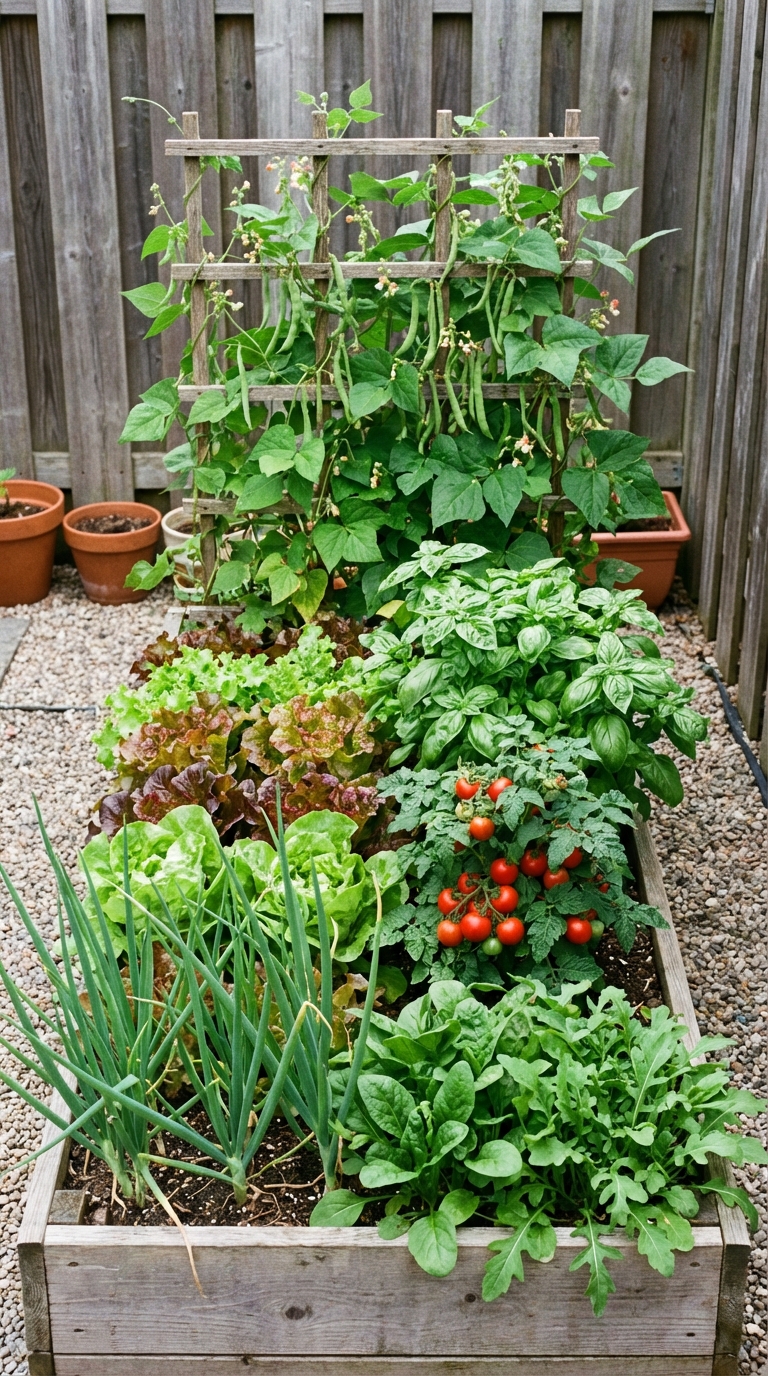
At the back, place a slim trellis with climbing beans. In the middle, grow one compact tomato and a block of loose-leaf lettuce. At the front, tuck in basil, spring onions, and cut-and-come-again salad greens.
That mix works because it balances height, repeat harvest, and steady use. You are not waiting on one crop to justify the whole bed.
A succession planting vegetables plan for a small space vegetable garden
Start the season with salad greens, radishes, and herbs. As quick crops finish, replace them with basil, bush beans, or more lettuces. When one patch tires, refresh it with another fast crop rather than letting it sit open.
Over time, one bed starts to behave like several gardens in one.
A tidy vegetable garden layout that stays manageable
Keep the supports matched. Keep the crop list short. Harvest often. Remove spent growth before it lingers too long. That is what keeps the bed attractive while it works hard.
A micro veg garden does not need to be fussy. It just needs rhythm.
A small high-yield vegetable garden can be both beautiful and hardworking
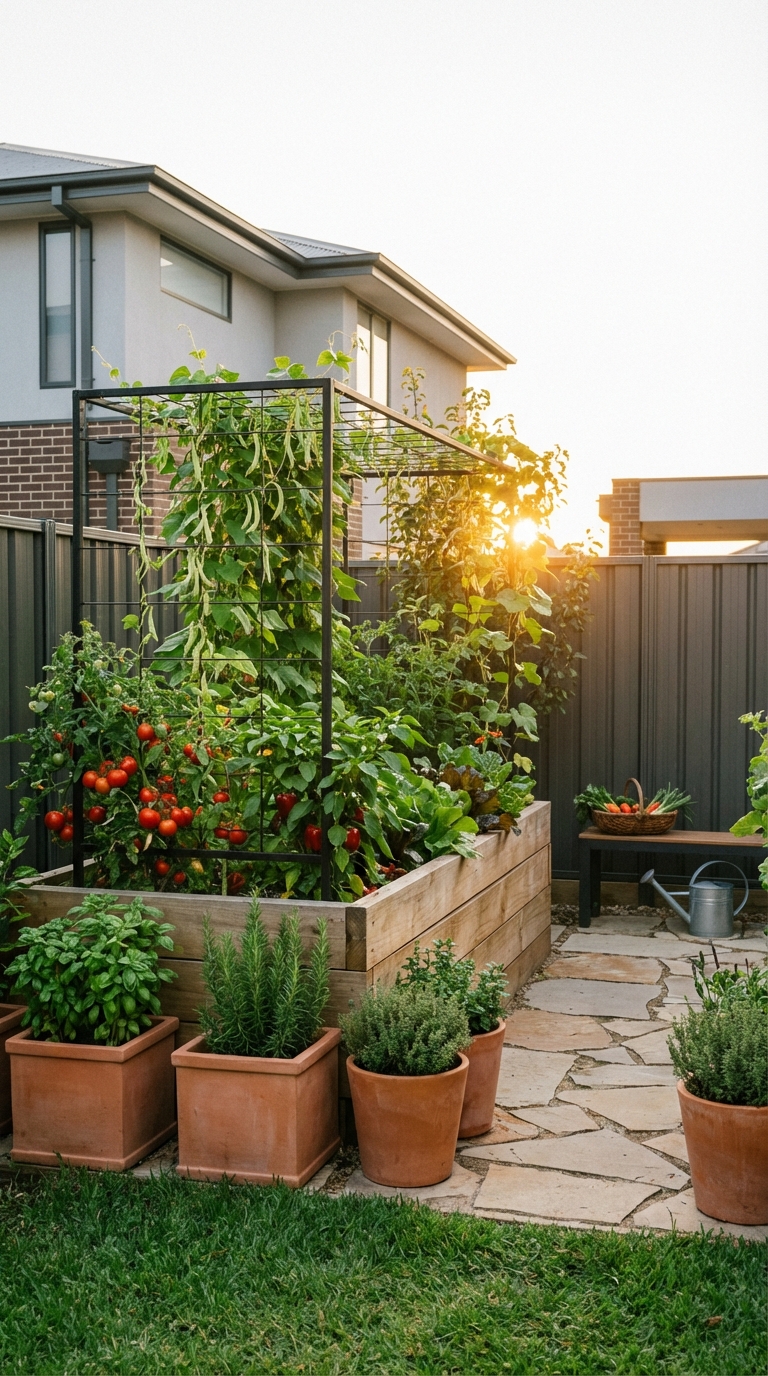
The best small edible gardens do not feel like a compromise. They do not feel like a few plants squeezed into leftover space. They feel considered, useful, and full of life.
That is the real appeal of a high-yield micro veg garden. It gives you more food from less room, but it also respects the look of the space. With the right small space vegetable garden layout, a strong crop plan, smart vertical growing, and steady succession planting, even one square metre can carry real weight.
So start small. Choose crops that earn their place. Repeat what works. Let the structure do some of the visual heavy lifting. And let the garden prove something we often forget. A tidy space can still be a very generous one.