
Ideal Potted Plant Arrangements for Shady Patios
Creating a lush, vibrant garden on a shaded patio can be incredibly rewarding. While many flowering plants bask in the sun, there are numerous shade-loving varieties that can turn your shaded space into a green oasis. The key to success lies in selecting the right plants that thrive without direct sunlight and combining them and displaying them in ways that enhance their natural beauty. Here are five potted plant arrangements that will flourish in the shade, adding color and texture to your patio.
#1. Ferns and Hostas Combo
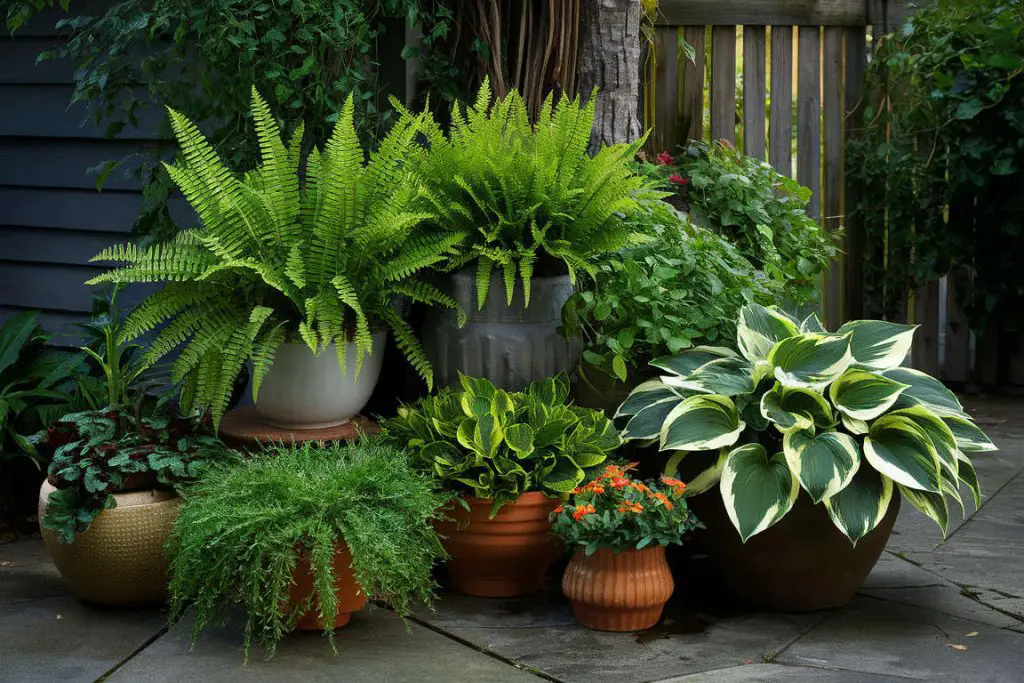
- Plants: Maidenhair Fern, Japanese Painted Fern, Hosta ‘Patriot’
- Description: Ferns and hostas are classic choices for shade gardens. The delicate, lacy fronds of maidenhair and Japanese painted ferns contrast beautifully with the bold, variegated leaves of Hosta ‘Patriot.’ This combination provides a lush, layered look that thrives in low light.
#2. Begonias and Impatiens Mix
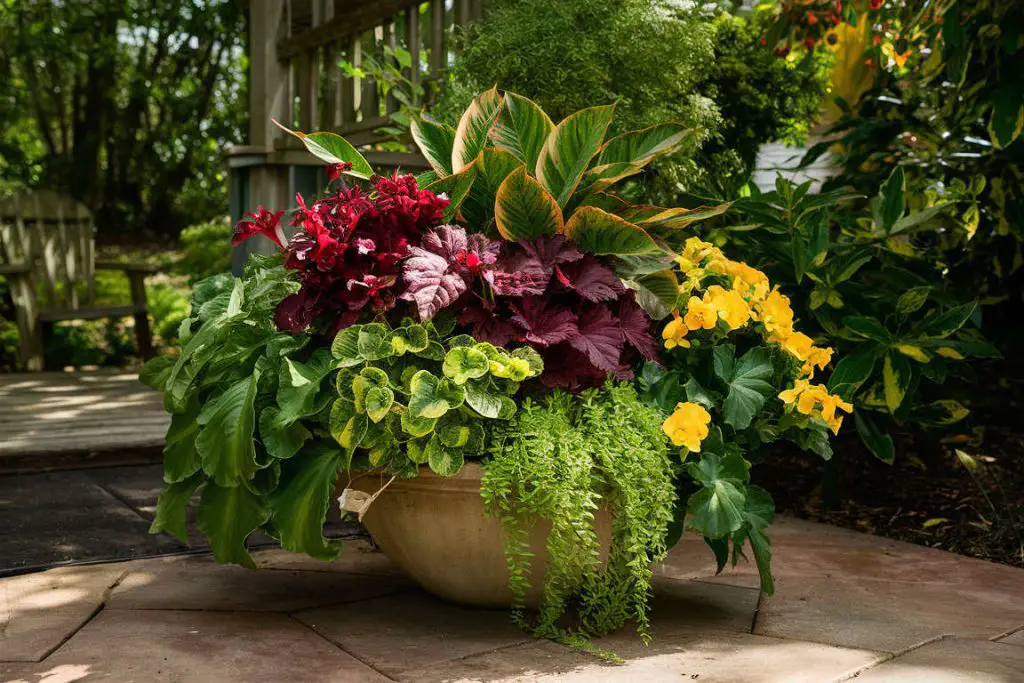
- Plants: Rex Begonia, Wax Begonia, New Guinea Impatiens
- Description: For a burst of color, pair the vibrant foliage of Rex begonias with the continuous blooms of wax begonias and New Guinea impatiens. This arrangement offers a lively mix of leaf textures and bright flowers that brighten up shady corners.
#3. Caladiums and Heuchera Pairing
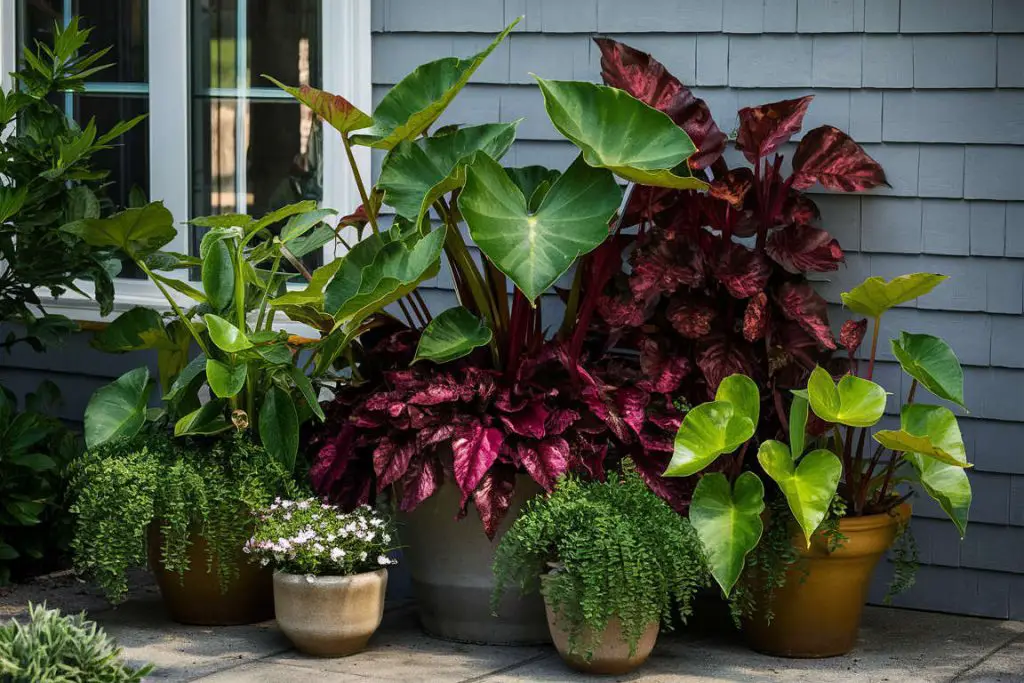
- Plants: Caladium ‘Red Flash,’ Heuchera ‘Plum Pudding’
- Description: Caladiums are renowned for their striking, heart-shaped leaves, which come in a variety of colors. When paired with the rich, dark foliage of Heuchera ‘Plum Pudding,’ they create a dramatic and eye-catching display perfect for shaded areas.
#4. Astilbe and Tiarella Grouping
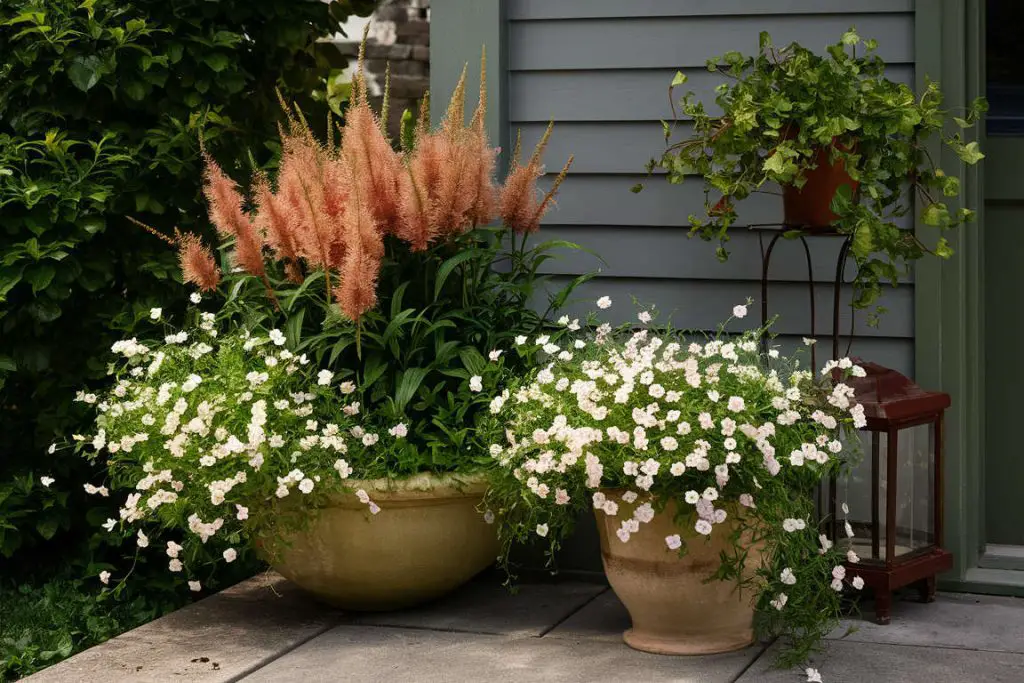
- Plants: Astilbe ‘Fanal,’ Tiarella ‘Sugar and Spice’
- Description: Astilbe’s feathery plumes and Tiarella’s delicate, star-shaped flowers make an elegant combination. Both plants thrive in shade and add soft, airy textures to your potted arrangements. Their blooms provide a lovely contrast to their lush green foliage.
#5. Coleus and Torenia Blend
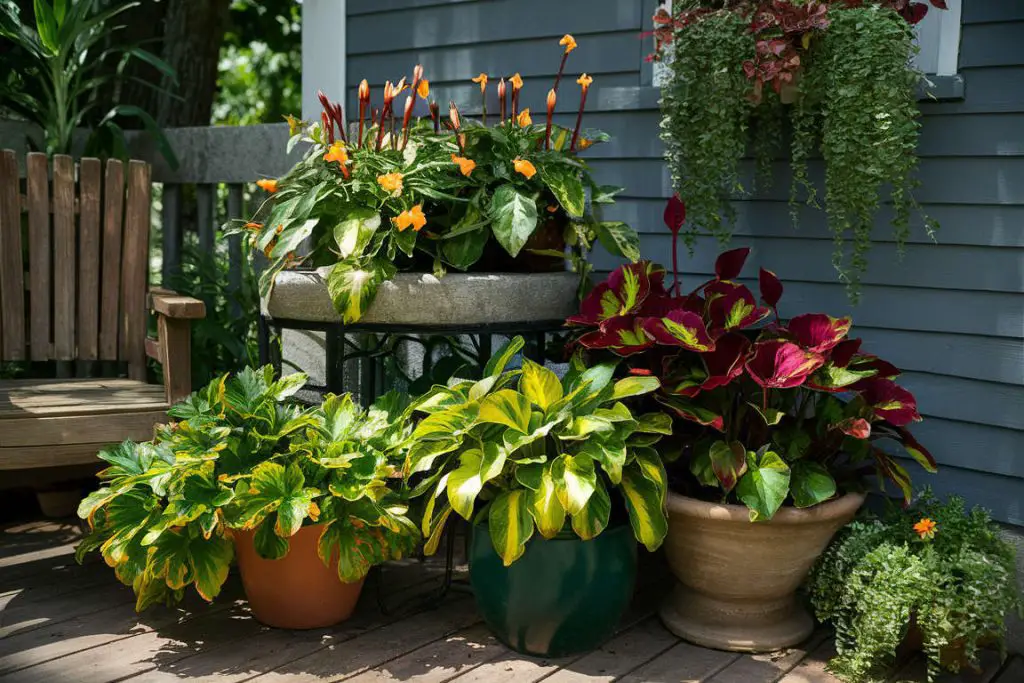
- Plants: Coleus ‘Kong Rose,’ Torenia ‘Summer Wave’
- Description: Coleus is celebrated for its vibrant, multicolored leaves, which can add a splash of color to any shady spot. When combined with the cheerful, trumpet-shaped flowers of Torenia, also known as the wishbone flower, this arrangement becomes a focal point of any shaded patio.
How to Build a Shady Patio Display That Feels Full, Not Crowded
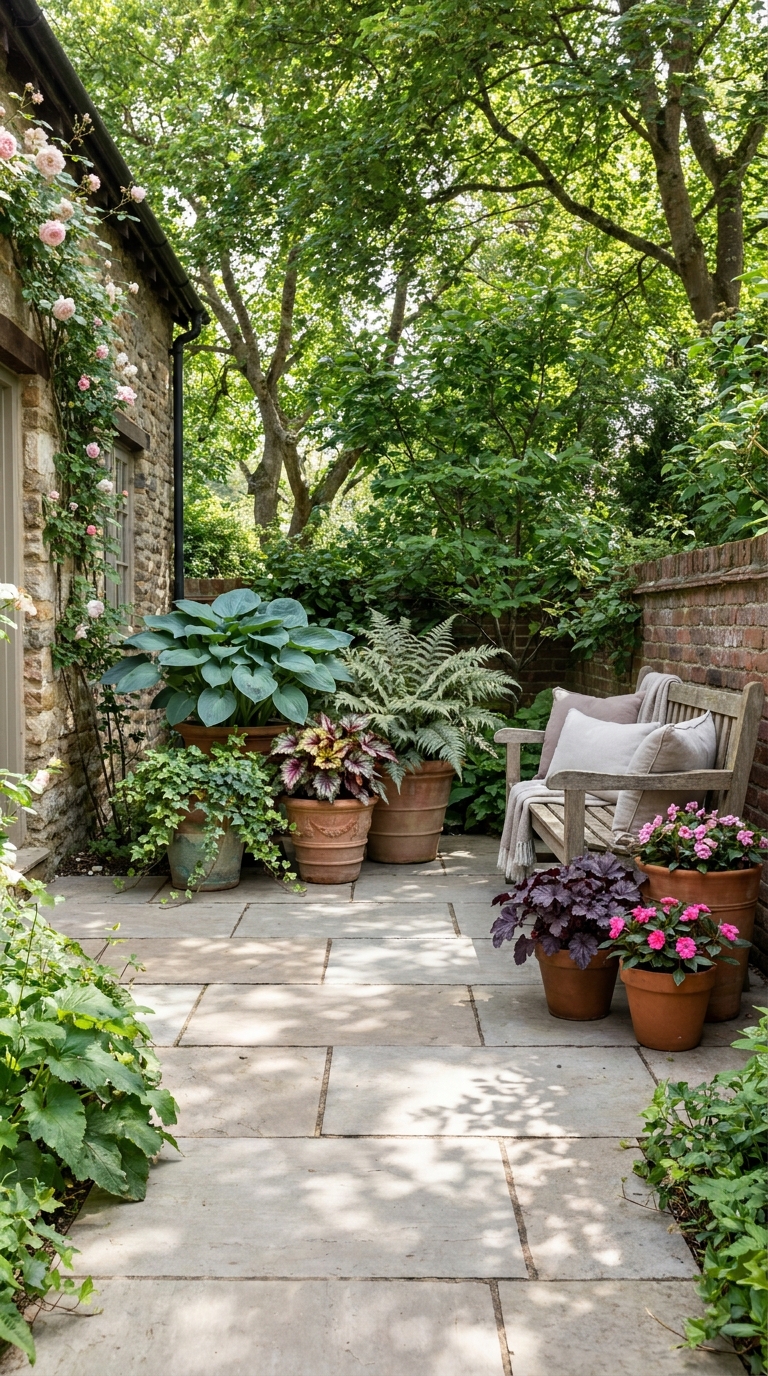
A shaded patio can fill up faster than you expect. One fern beside the chair looks charming. Three pots by the wall feel lush. But once you add begonias, hostas, caladiums, and a few trailing plants, the space can start to feel more cluttered than calming.
The trick is to think of your patio as a small outdoor room. You want plants to frame the space, soften hard edges, and draw the eye around the area without blocking the places where people walk, sit, or open doors. Instead of spreading pots evenly around the patio, create one or two stronger groupings. This gives the display more shape and keeps the rest of the floor open.
Start with your biggest or boldest plant as the anchor. This might be a large hosta, a tall fern, or a striking caladium. Place it toward the back of the grouping or in the corner where it can create height. Then add medium plants around it, such as begonias, heuchera, or astilbe. Finish with smaller pots or trailing plants near the front. That simple layering makes the arrangement feel designed, even if the plants themselves are easygoing.
If your patio is very small, choose one main plant moment rather than several scattered ones. A single well-styled corner can often make a shaded patio feel greener than pots lined along every wall.
Use Tiered Plant Stands to Add Height to Shady Patio Pots
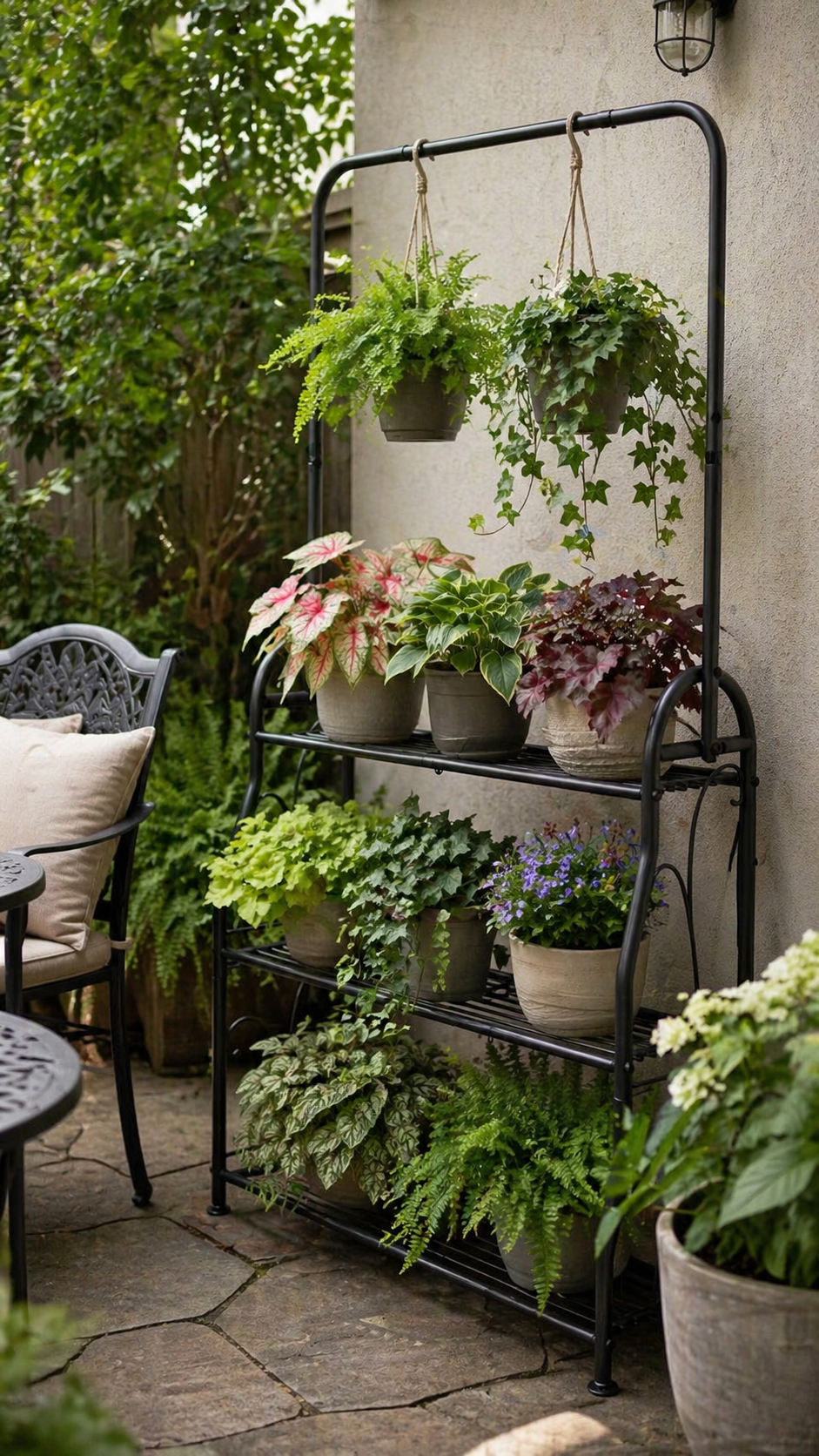
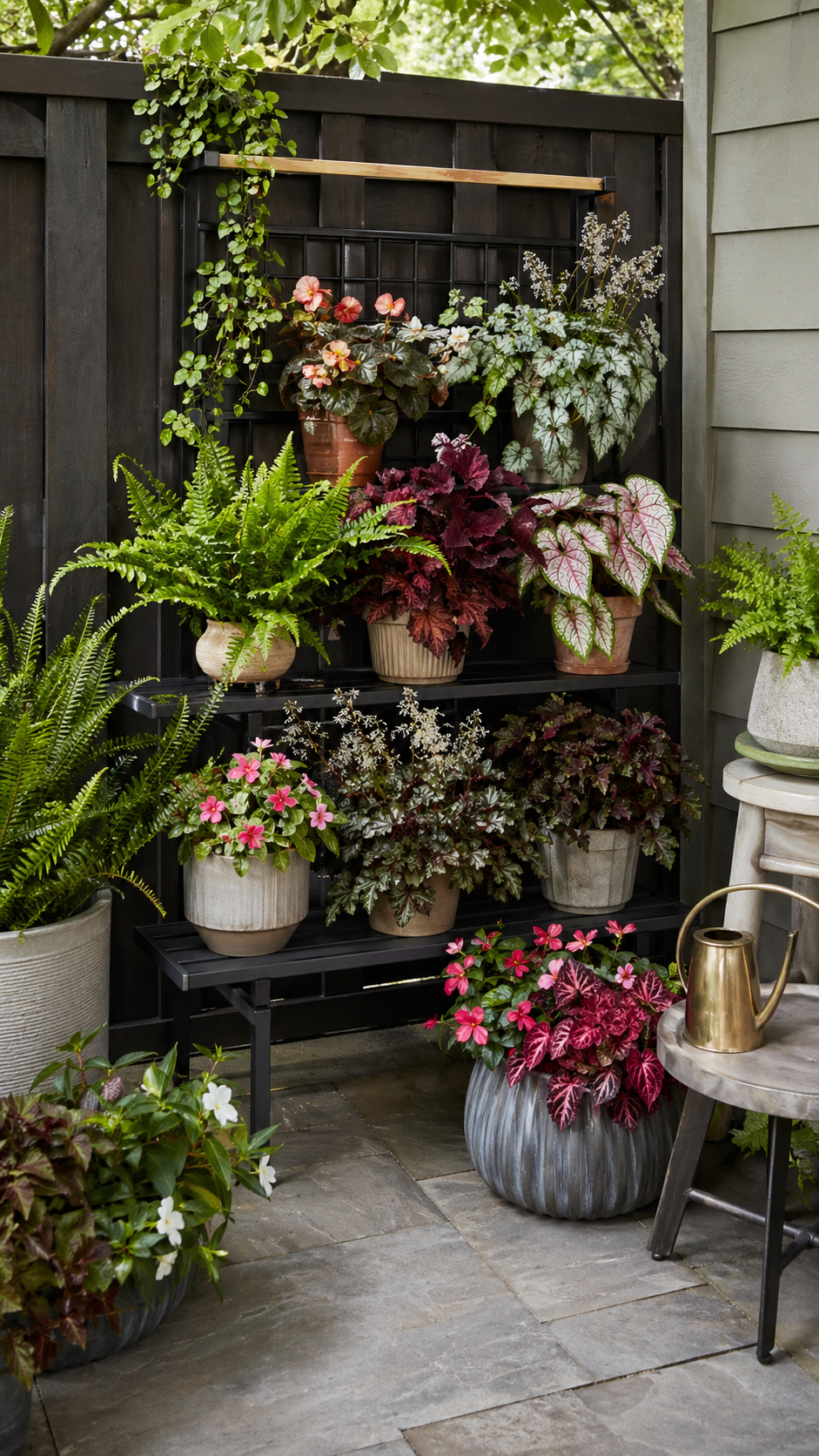
Tiered plant stands are one of the easiest ways to make a shaded patio feel fuller without taking over the floor. They work especially well in compact spaces because they let you build upward, not outward. Instead of placing every pot on the ground, you can lift some plants to eye level, tuck others underneath, and create a layered display that feels lush but still easy to move around.
This is especially helpful in shade, where plants often rely more on foliage than flowers. A flat row of green pots can blend together, but a tiered stand gives each plant its own moment. Ferns can soften the lower shelves, caladiums and coleus can bring color to the middle, and trailing plants like torenia, ivy, or small ferns can spill gently from the upper levels.
A tiered plant stand also helps with light. Even shade-loving plants usually need some brightness, whether that comes from filtered sunlight, reflected light, or open shade. Raising pots can help certain plants reach brighter spots while still keeping the overall arrangement in a shaded area.
For a covered patio, look for a sturdy stand made from powder-coated metal, treated wood, resin, or another material that can handle damp conditions. If the patio is narrow, a ladder-style stand or corner plant stand may work better than a wide shelving unit. On a deeper patio, a three-tier stand can sit beside a chair, against a wall, or near a back door to create a compact garden feature.
When styling a tiered plant stand, avoid filling every shelf with the same size pot. Use larger, heavier containers on the bottom, medium pots in the middle, and lighter trailing plants or smaller foliage plants toward the top. This keeps the stand balanced and makes the whole display easier to read.
Best Plants to Use on Tiered Plant Stands in the Shade
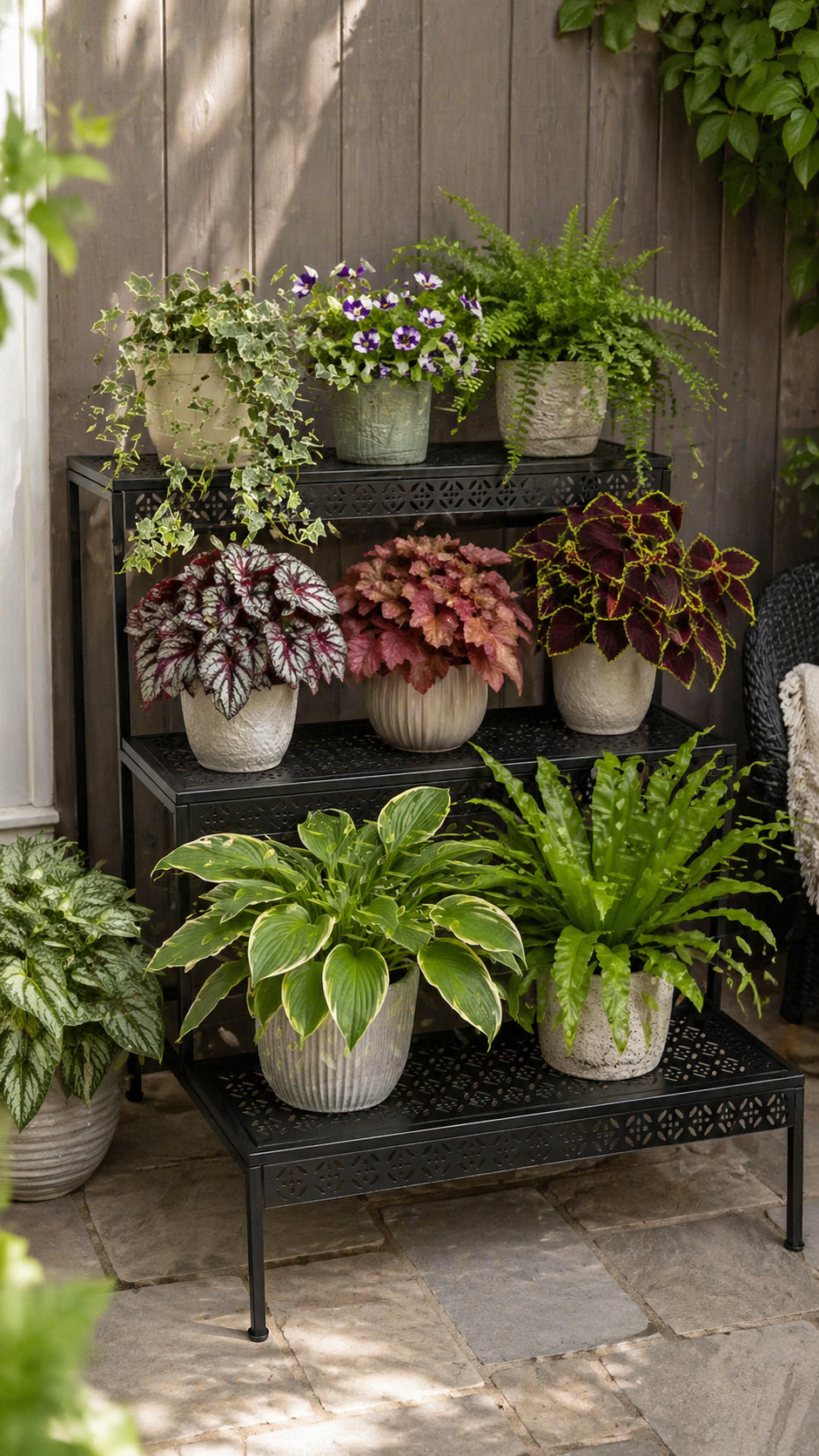
Not every shade plant behaves the same way on a tiered stand. Some need room to spread. Others look best when lifted. A good tiered display mixes leaf size, color, height, and habit so the stand looks full without turning into a wall of leaves.
Ferns are excellent for the lower and middle shelves because their soft fronds create movement. Japanese painted fern, maidenhair fern, and bird’s nest fern can all bring texture to a shaded stand. Hostas also work well on the lower levels, especially smaller varieties that will not overwhelm the shelf.
For the middle tiers, choose plants with strong color or pattern. Rex begonias, caladiums, heuchera, and coleus are useful here because their leaves show up well in lower light. These plants can add burgundy, silver, lime, pink, cream, or deep purple tones without relying only on blooms.
Upper shelves are a good place for smaller pots and trailing plants. Torenia, ivy, creeping Jenny in bright shade, and small trailing begonias can soften the edges of the stand. If the stand is near a seating area, you can also tuck in herbs that tolerate some shade, such as parsley, mint, or chives.
The key is to match the plant to the shelf. Big leafy plants need room. Fine-textured plants need contrast. Trailing plants need an edge to spill over. Once each plant has a reason for being where it is, the stand starts to feel like a proper display rather than a storage rack for extra pots.
Choose Containers That Make Shade Plants Look Better
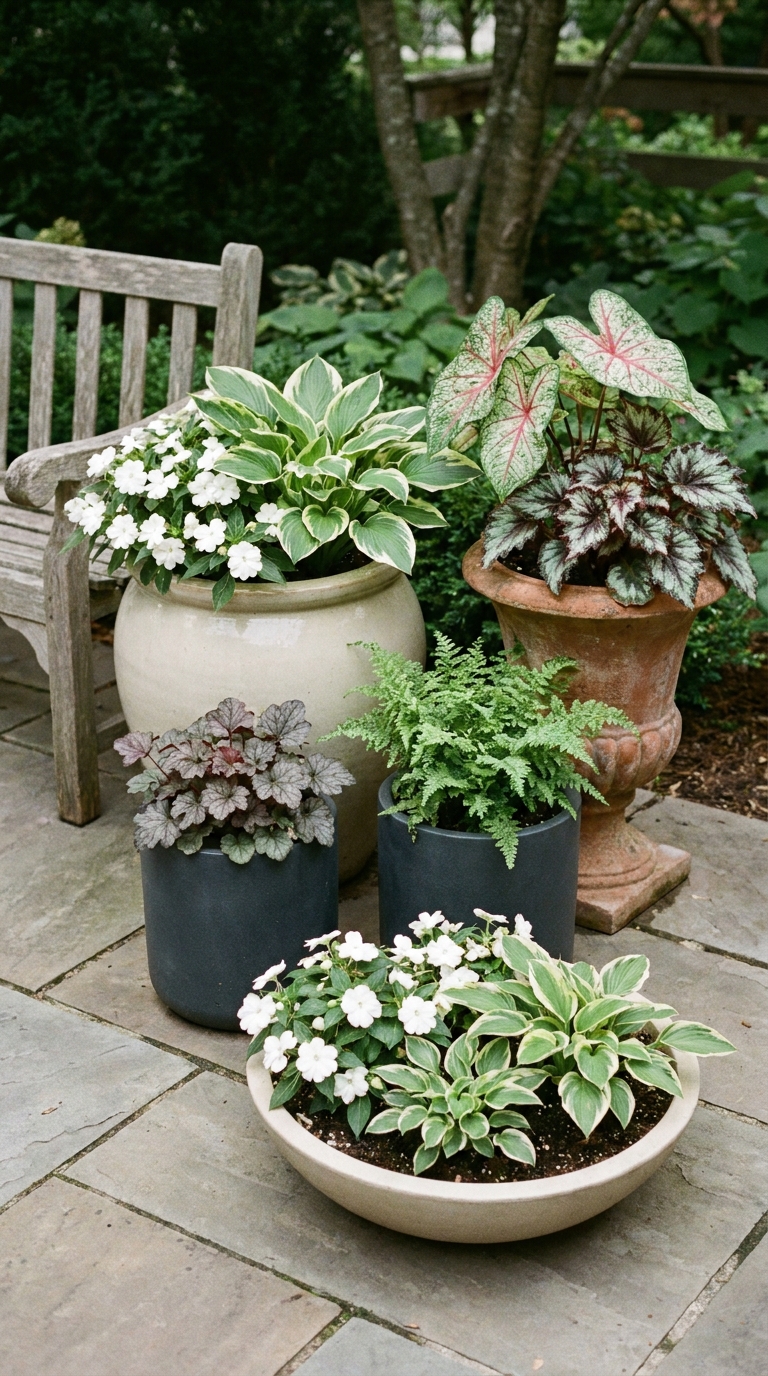
The container matters almost as much as the plant. In a shady patio, where the light is softer, pot color and shape can change the whole mood of the space. Dark containers can feel elegant and grounded, but too many of them may disappear into deep shade. Pale pots can brighten a dim corner, especially when paired with variegated hostas, white impatiens, silver ferns, or pastel begonias.
If your plants already have bold foliage, keep the pots simple. Caladiums, coleus, rex begonias, and heuchera bring enough color on their own, so plain ceramic, stone-look, terracotta, or matte containers usually work best. If the plants are mostly green, you can use more decorative pots to add interest.
Varying pot height also helps. A tall planter can lift a fern or hosta closer to eye level. A wide bowl works well for a mixed arrangement with begonias, impatiens, and trailing plants. Smaller pots are useful for filling gaps on shelves, steps, or plant stands.
Try not to use too many unrelated pot styles in one small patio. A mix of every color and finish can make the space feel busy. Instead, choose two or three finishes and repeat them. For example, you might use terracotta with cream pots, matte black with pale stone, or glazed green with weathered gray. Repetition makes different plants feel connected, which is important when you are working with several potted arrangements in one compact area.
Arrange Shady Patio Pots Around How You Actually Use the Space
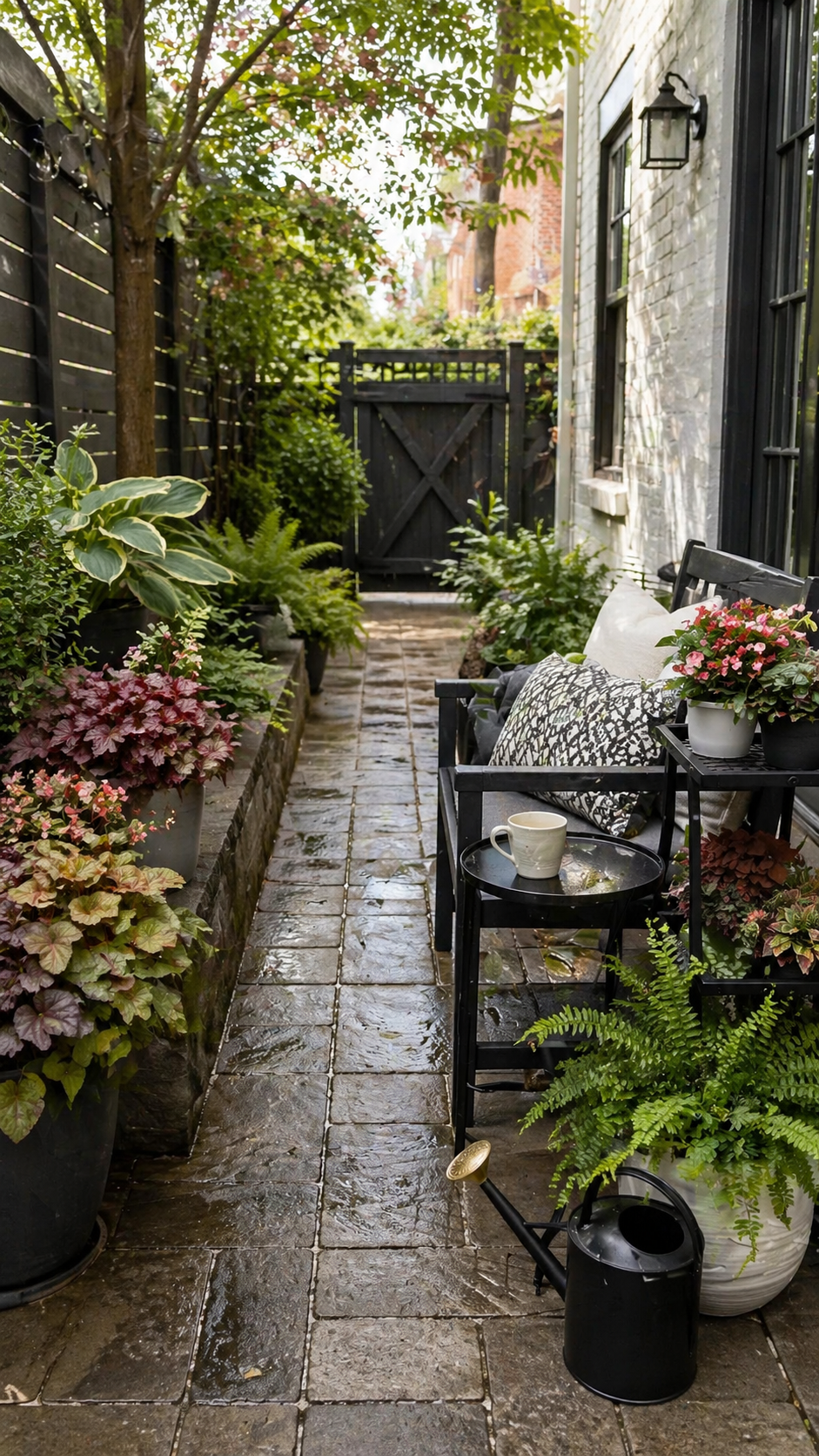
A shaded patio should look beautiful, but it also has to work. Before placing pots, think about how you use the area. Where do you sit? Which door swings open? Where do you carry groceries, watering cans, or garden tools? Which corner gets the nicest view from inside the house?
Once you know the main traffic paths, keep them clear. Pots should soften the space, not trip you up. Place larger arrangements along walls, railings, or corners. Use smaller pots on tables, steps, tiered stands, or shelves where they add detail without taking up walking room.
If the patio has a chair or bench, group plants nearby to make the seating area feel tucked in and peaceful. A fern behind the chair, a pot of begonias beside it, and a tiered plant stand along the wall can create a garden-like feeling without surrounding the seat on every side.
For patios viewed from indoors, treat the main plant grouping like a focal point. Place the most attractive combination where you can see it through a window or glass door. That way, the shady patio adds beauty even when you are inside.
The best arrangement is not always the fullest one. Sometimes a clear walkway, a well-placed chair, and one strong plant grouping feel more inviting than every corner filled with pots.
Add Seasonal Interest to Shady Patio Containers
A shaded patio does not have to look the same all year. You can keep the main structure in place and refresh smaller plants as the seasons change. This is a simple way to keep the space feeling alive without starting over each time.
In spring, focus on fresh foliage and soft color. Ferns, tiarella, small hostas, and pale begonias can make the patio feel bright again after cooler months. Spring is also a good time to clean containers, refresh potting mix, and check whether any plants need dividing or repotting.
In summer, bring in stronger color. Impatiens, begonias, caladiums, coleus, and torenia are good choices for brightening shaded patios. This is the season when foliage plants can carry the whole display, especially if flowers are limited by the lack of sun.
In fall, lean into richer foliage. Heuchera, dark coleus, ferns, and warm-toned containers can help the patio feel cozy. You can also remove tired annuals and keep the stronger foliage plants in place for as long as they look good.
You do not need to change every pot. Swapping just a few front-facing plants, refreshing one tiered stand, or changing the containers near the door can make the whole patio feel new.
Common Styling Mistakes to Avoid With Shady Patio Pots
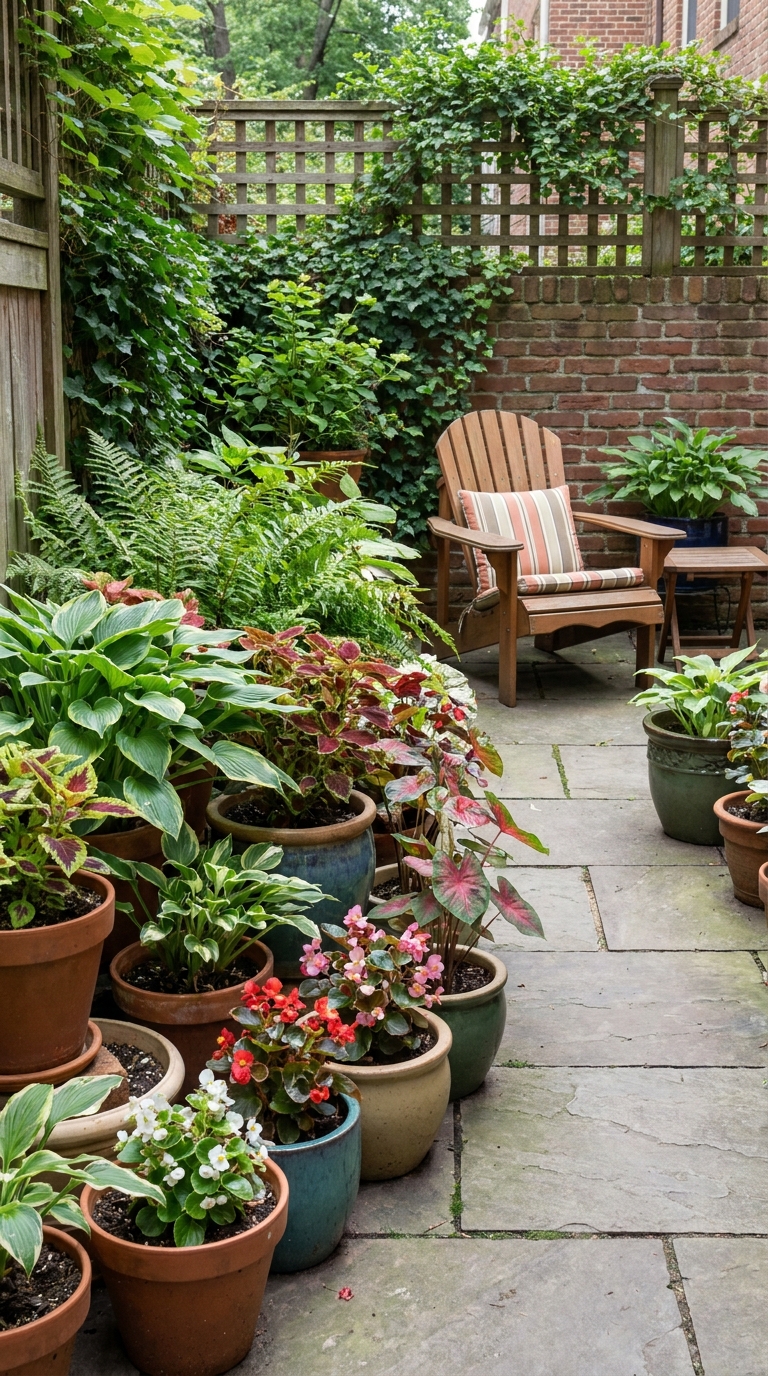
The most common mistake with shady patio pots is choosing plants only for flowers. Flowers are lovely, but in shade, foliage often does the harder work. Leaves bring shape, color, texture, and contrast even when the plant is not blooming. A patio filled with ferns, hostas, heuchera, caladiums, and coleus can still feel vibrant because the leaves carry the display.
Another mistake is crowding too many plants into one container or one small corner. Shade can hold moisture longer, and crowded plants may struggle with airflow. This can lead to mildew, weak growth, or pest problems. Give each plant enough room to expand, especially larger hostas, ferns, and caladiums.
It is also easy to place shade plants in areas that are too dark. Many shade-loving plants still need bright indirect light or filtered sun. If a corner feels gloomy even in the middle of the day, use it for a chair, lantern, or decorative feature instead of forcing plants to grow there.
Finally, avoid treating every pot as a separate decoration. A shaded patio looks better when the containers relate to one another. Repeat a few colors, use a mix of heights, and group plants with similar moisture needs. The result will feel calmer, easier to maintain, and more like a finished outdoor space.
Ensuring your shade-loving potted plant arrangements thrive involves more than just selecting the right plants. Here are additional tips to help your plants flourish in shaded conditions:
Tips for Thriving Shade-Loving Potted Plants
Creating a vibrant garden in a shaded area might seem challenging, but with the right approach, it can be just as lush and colorful as a sunlit space. Shady patios offer a cool, serene retreat and, with carefully selected plants and proper care, can become a thriving oasis. Understanding the unique needs of shade-loving plants is key to ensuring they flourish in less sunlight. From choosing the right containers and soil to mastering watering and maintenance techniques, here are essential tips to help your potted plant arrangements thrive in the shade.
Choosing the Right Containers
- Drainage: Ensure your pots have good drainage holes to prevent waterlogging, which can cause root rot.
- Size: Use appropriately sized containers to accommodate root growth. Larger pots retain moisture longer, which is beneficial in shaded areas.
- Material: Consider using materials that retain moisture, such as ceramic or plastic pots, especially in dry climates.
Soil Selection
- Well-Draining Soil: Use a high-quality potting mix designed for container gardening. Adding perlite or vermiculite can improve drainage.
- Nutrient-Rich: Incorporate organic matter, like compost, to provide necessary nutrients and enhance soil structure.
Watering Practices
- Consistent Moisture: Shade-loving plants often prefer consistently moist soil, but avoid waterlogging. Check soil moisture regularly and water when the top inch feels dry.
- Watering Schedule: Watering in the early morning helps reduce evaporation and allows plants to absorb moisture before the heat of the day.
Fertilization
- Balanced Fertilizer: Use a balanced, slow-release fertilizer to provide steady nutrients. Liquid fertilizers can also be applied during the growing season for an extra boost.
- Frequency: Follow the recommended feeding schedule for each plant type, typically every 4-6 weeks during the growing season.
Light Requirements
- Indirect Light: Even shade-loving plants need some light. Place pots where they receive dappled sunlight or bright, indirect light.
- Avoid Deep Shade: Completely dark areas may not support healthy growth. Aim for areas with filtered light or partial shade.
Temperature and Humidity
- Cooler Temperatures: Many shade-loving plants prefer cooler conditions. Avoid placing them in areas that get excessively warm.
- Humidity Levels: Shade areas can be more humid, which benefits many shade-loving plants. Mist the plants occasionally if the air is dry.
Regular Maintenance
- Pruning: Regularly prune dead or yellowing leaves to encourage new growth and maintain plant health.
- Pest Control: Check for pests such as aphids, slugs, and snails, which can be more prevalent in shaded, moist conditions. Use appropriate organic or chemical treatments as needed.
- Cleaning: Keep the leaves clean by wiping off dust and debris, which can block light and air circulation.
Final Thoughts
Transforming a shaded patio into a thriving garden is entirely achievable with thoughtful planning and care. By selecting the right shade-loving plants and combining them in visually appealing arrangements, you can create a lush, inviting space.
Remember to choose appropriate containers, use nutrient-rich soil, and maintain consistent watering practices. Regular fertilization, proper lighting, and vigilant maintenance are also crucial for healthy growth. With these tips, your shady patio can become a green sanctuary, offering beauty and tranquility throughout the year. Enjoy the process and the vibrant results of your shaded garden.
