
Japanese Maple Trees: Best Varieties and How to Use Them in Japanese Gardens and Residential Landscaping
A dull yard can change in a single afternoon. One Japanese maple goes into the ground, and suddenly the whole space feels calmer, richer, and far more pulled together. The lawn looks less flat. The planting beds look less random. Even the view from the window gets better.
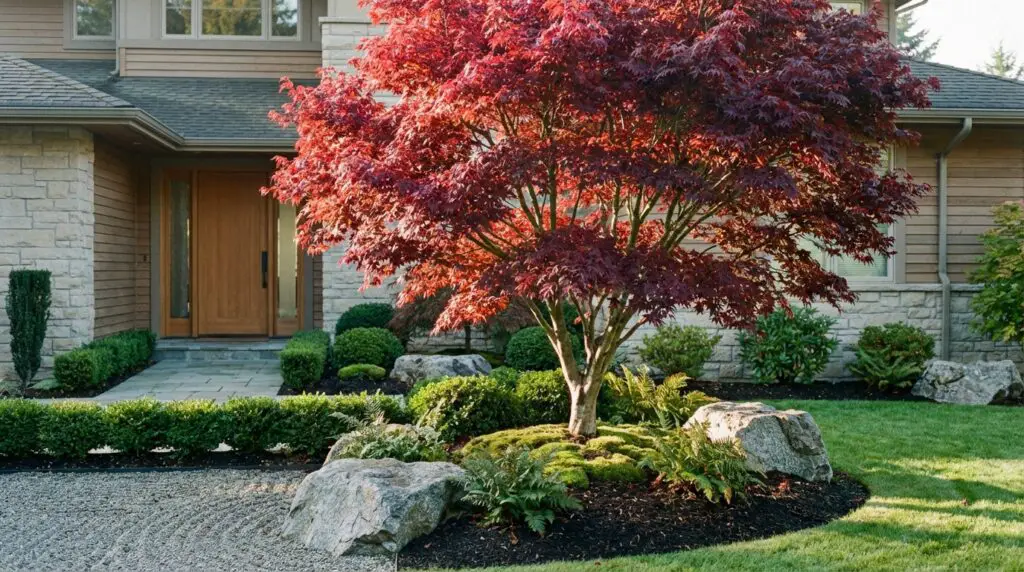
That is what makes Japanese maple trees so useful in garden design. They bring color, shape, texture, and a sense of structure without feeling stiff. Some have deep red leaves that hold attention from spring into fall. Some have soft, cascading branches that look beautiful near rocks, gravel, or a low wall. Some stay compact enough for a small city garden, while others earn their keep as a front yard focal point.
The beauty of Japanese maple trees is that they work in more than one style of garden. They feel right at home in Japanese gardens, where balance, texture, and quiet contrast matter. But they also work beautifully in residential landscaping, where they can lift an entry, soften a foundation bed, or give a patio border a finished look. Once you know which varieties suit which role, it gets much easier to choose one that will really work in your space.
Japanese Maple Trees in Garden Design: Why Japanese Maple Trees Matter So Much
Japanese Maple Trees Bring Shape, Color, and Texture
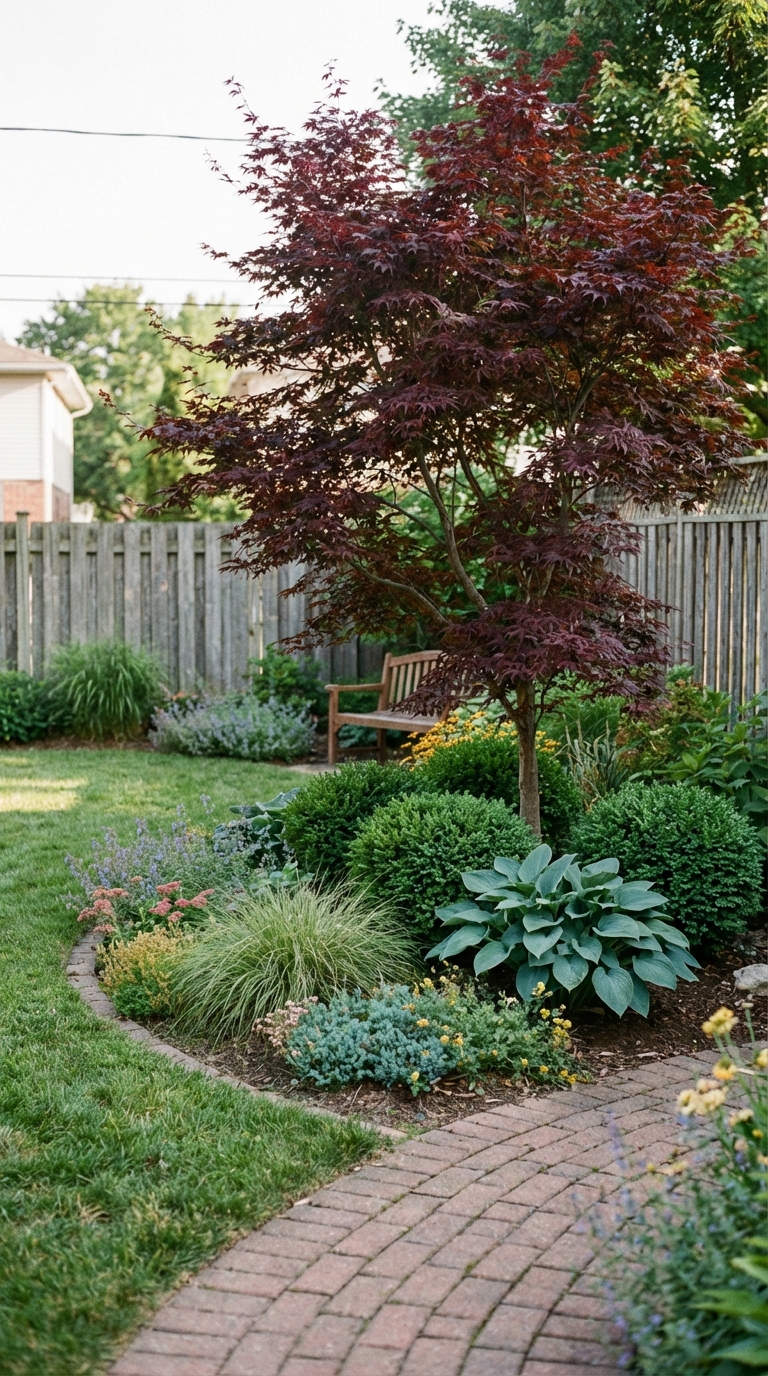
A lot of plants can bring color. Fewer bring shape in a way that changes the whole feel of a garden. Japanese maple trees do both. Their leaf shape is fine and delicate, which gives them a lighter look than many other small trees. Their branching can be elegant and sculptural, especially in winter when the leaves are gone and the framework of the tree takes over.
That balance of texture and form is part of the reason gardeners love them so much. An upright Japanese maple can give a border height and structure. A weeping laceleaf type can soften stone and spill over the edge of a raised bed. Even when a garden is simple, a Japanese maple can make it feel layered.
Japanese Maple Trees Suit Japanese Gardens and Residential Landscaping
One of the best things about Japanese maple trees is how flexible they are. In Japanese gardens, they bring grace and movement. They work with gravel, stone, mossy groundcovers, clipped evergreens, and winding paths. They add color without feeling loud, which matters in a space that is meant to feel restful.
In residential landscaping, they have a different but equally useful role. They can anchor a front yard, soften the corner of a house, frame a path, or act as a small specimen tree near a patio. They are especially handy in gardens where space is limited and every plant has to earn its place.
Japanese Maple Varieties: How to Choose the Right Japanese Maple Trees
Japanese Maple Varieties Should Be Chosen by Size First
It is easy to fall for leaf color first. A deep burgundy tree or a bright coral bark variety can grab you right away. But the better place to start is with mature size. A tree that grows much wider or taller than expected can quickly become awkward near a path, window, or foundation.
Think about the role the tree will play. Do you need a strong upright focal point in the front yard? Do you want something compact for a side bed? Are you hoping for a weeping form near stone or gravel? Once you answer that, you can narrow down the right Japanese maple varieties much faster.
Japanese Maple Trees Need the Right Form for the Right Spot
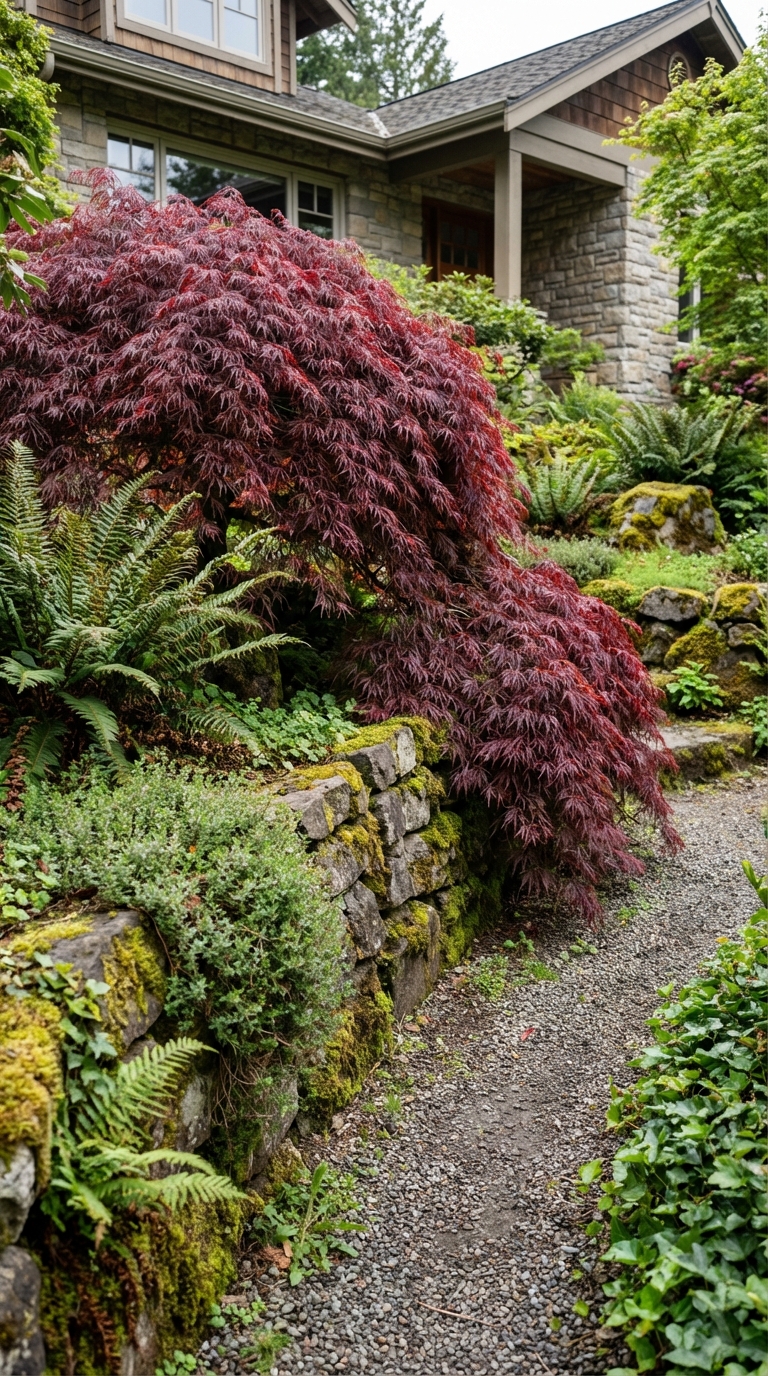
Japanese maple trees generally fall into a few broad shape categories. Upright forms work well where you want height and structure. They are often the best choice for front yards and mixed borders. Mounded or broad forms can soften planting beds and work well in layered landscaping. Weeping forms are perfect where you want movement and softness, especially near rocks, walls, slopes, or a pond edge.
That form matters just as much as color. A beautiful variety in the wrong shape can feel out of place. The goal is to match the habit of the tree to the mood and scale of the garden.
Japanese Maple Trees Also Need the Right Light
Most Japanese maple trees do best where they get some protection from harsh afternoon sun, especially in warmer areas. Morning sun with light shade later in the day often suits them well. Shelter from strong wind helps too, since delicate leaves can dry out or scorch.
This does not mean they are difficult. It just means placement matters. A thoughtful spot will help the tree look better and stay healthier over time.
Best Japanese Maple Varieties for Japanese Maple Landscaping
Bloodgood Japanese Maple for Bold Japanese Maple Landscaping
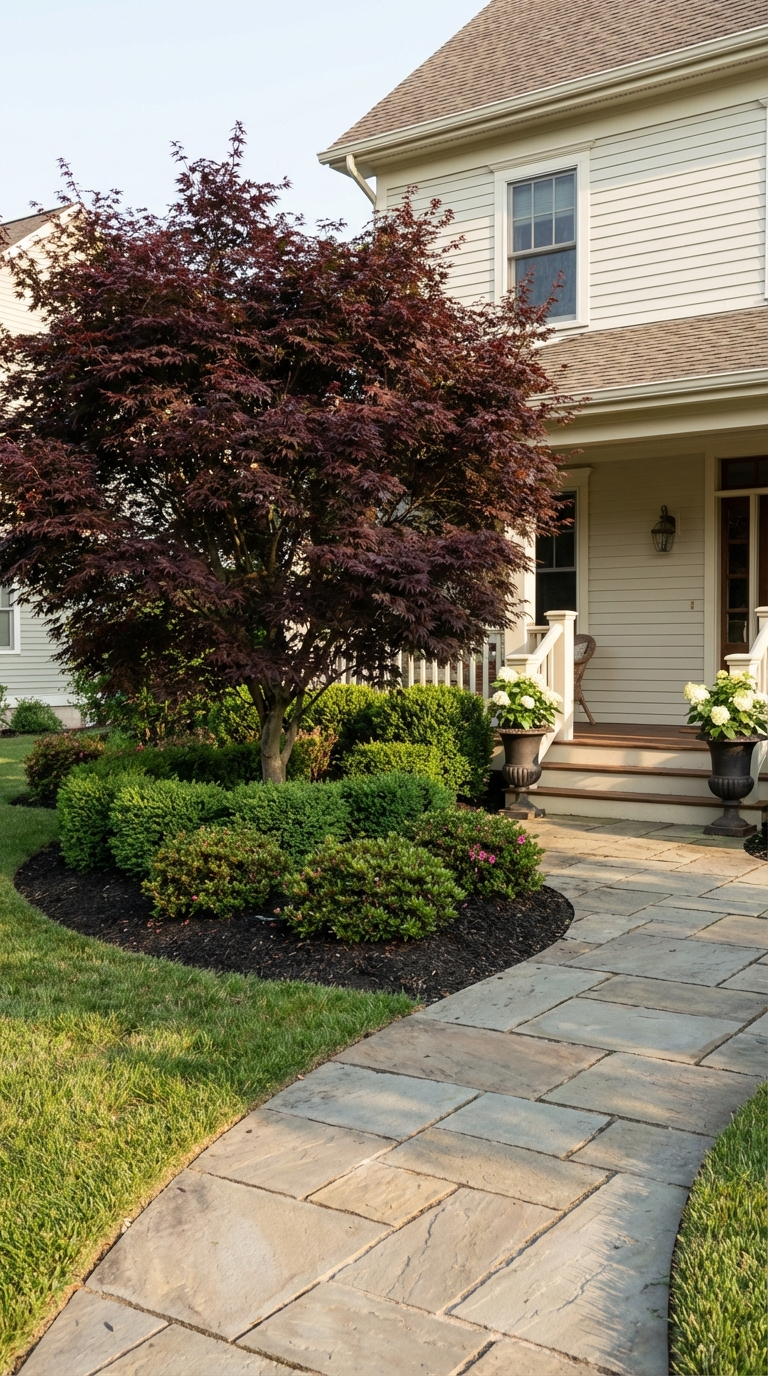
If you want a classic red Japanese maple, Bloodgood is often the first name that comes up, and for good reason. It has rich burgundy leaves, a strong upright shape, and enough presence to act as a focal point in a front yard or border. It is one of the easiest varieties to picture in residential landscaping because it has that clear, balanced tree form people tend to want.
Bloodgood works especially well where the garden needs a solid anchor. It pairs nicely with green shrubs, pale gravel, and simple groundcovers. If you want one tree that can do a lot of visual work, this is a strong contender.
Emperor Japanese Maple for Japanese Maple Front Yard Color
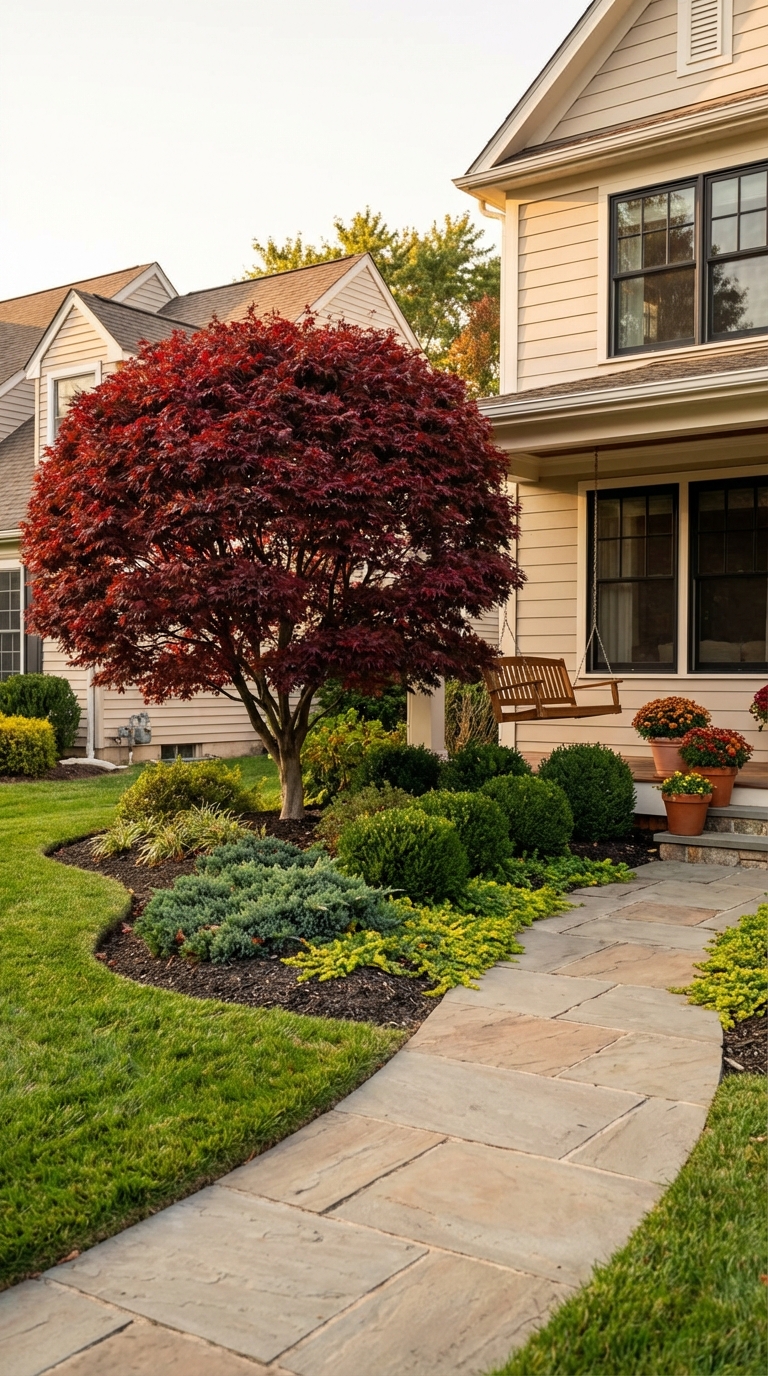
Emperor is often compared with Bloodgood, and the two do share a similar deep red look. But Emperor tends to leaf out a bit later, which can be helpful in places where late spring frosts are a concern. It also brings a full, rich canopy that looks beautiful near an entry or along a front walk.
In a front yard, Emperor has enough substance to stand on its own without overwhelming the space. It suits homes where you want color and structure, but still want the planting to feel relaxed.
Sango-kaku Japanese Maple for Year-Round Japanese Maple Trees Interest
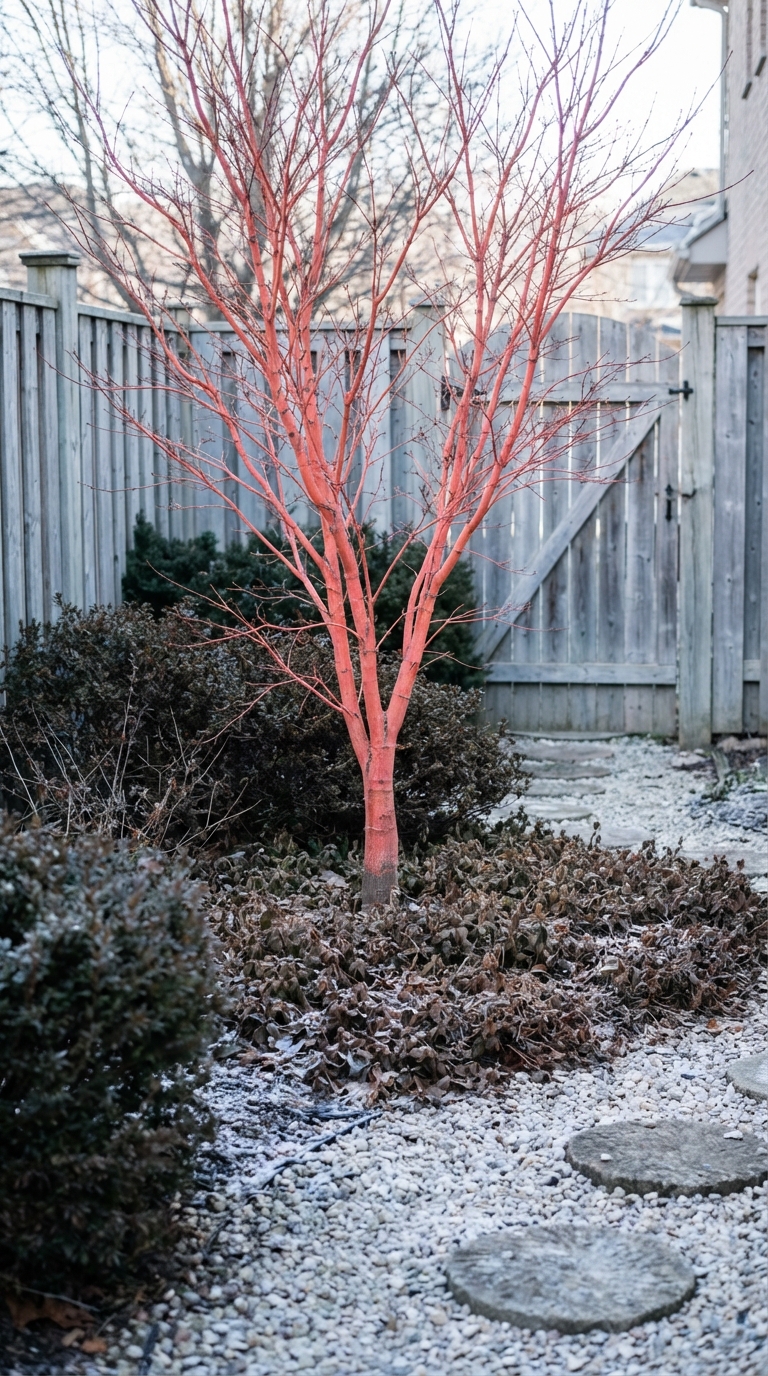
Sango-kaku, often called coral bark maple, offers something a little different. Its leaves are fresh green through the growing season and turn golden tones in fall, but the real show starts in winter when the branches glow with coral-red color.
That winter bark gives it value beyond the usual growing season. In a Japanese garden or a quiet residential bed, Sango-kaku can brighten the cold months when many other plants fade into the background. It is especially lovely near evergreens, stone, or pale walls that help the bark stand out.
Crimson Queen Japanese Maple for Weeping Japanese Maple Landscaping
Crimson Queen is one of the best-known weeping laceleaf Japanese maple varieties. Its finely cut leaves and graceful cascading shape make it a natural fit near rocks, gravel, and low retaining walls. It has a softer presence than an upright form, which makes it ideal for gardens that need a gentler touch.
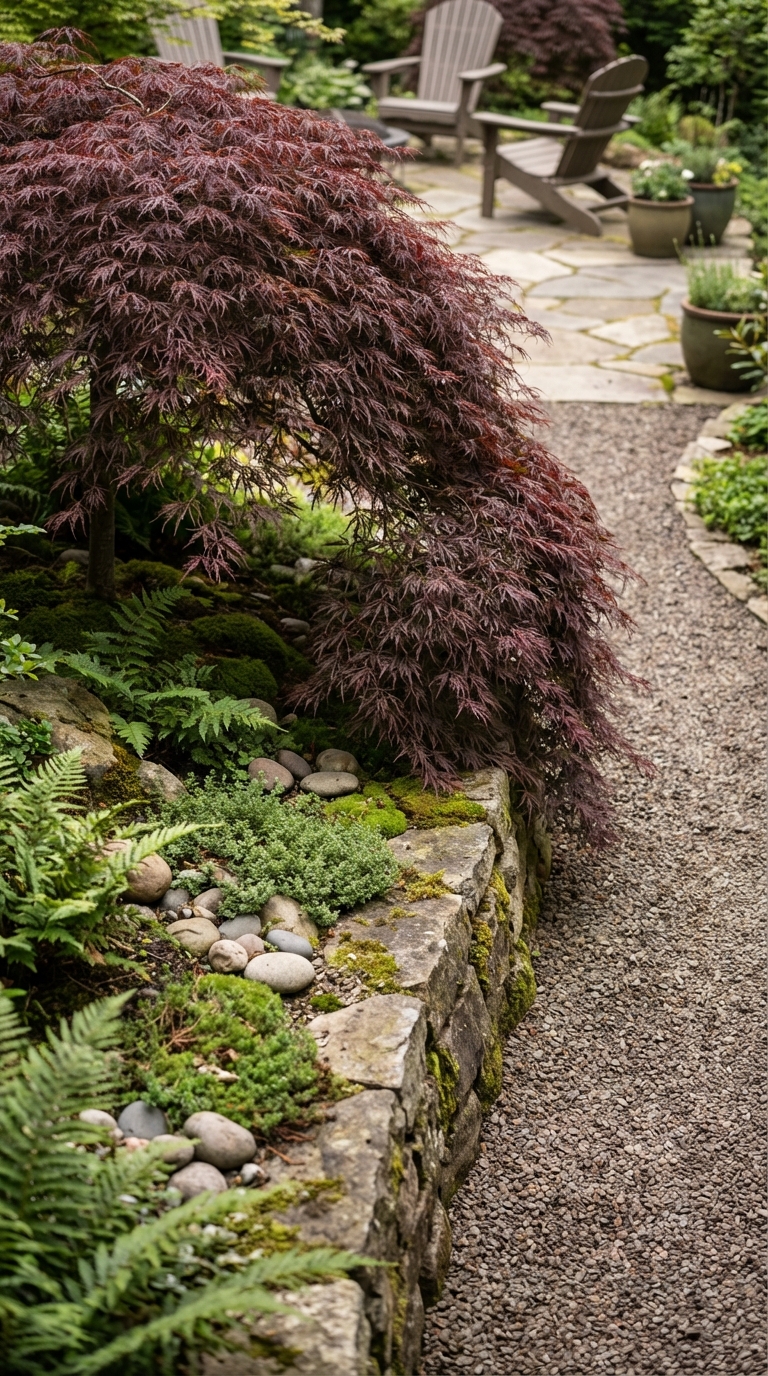
This is the sort of tree that can turn an ordinary corner into something memorable. It does not need much around it. In fact, it often looks best when given room to spread and show off its form.
Tamukeyama Japanese Maple for Japanese Gardens and Soft Residential Landscaping
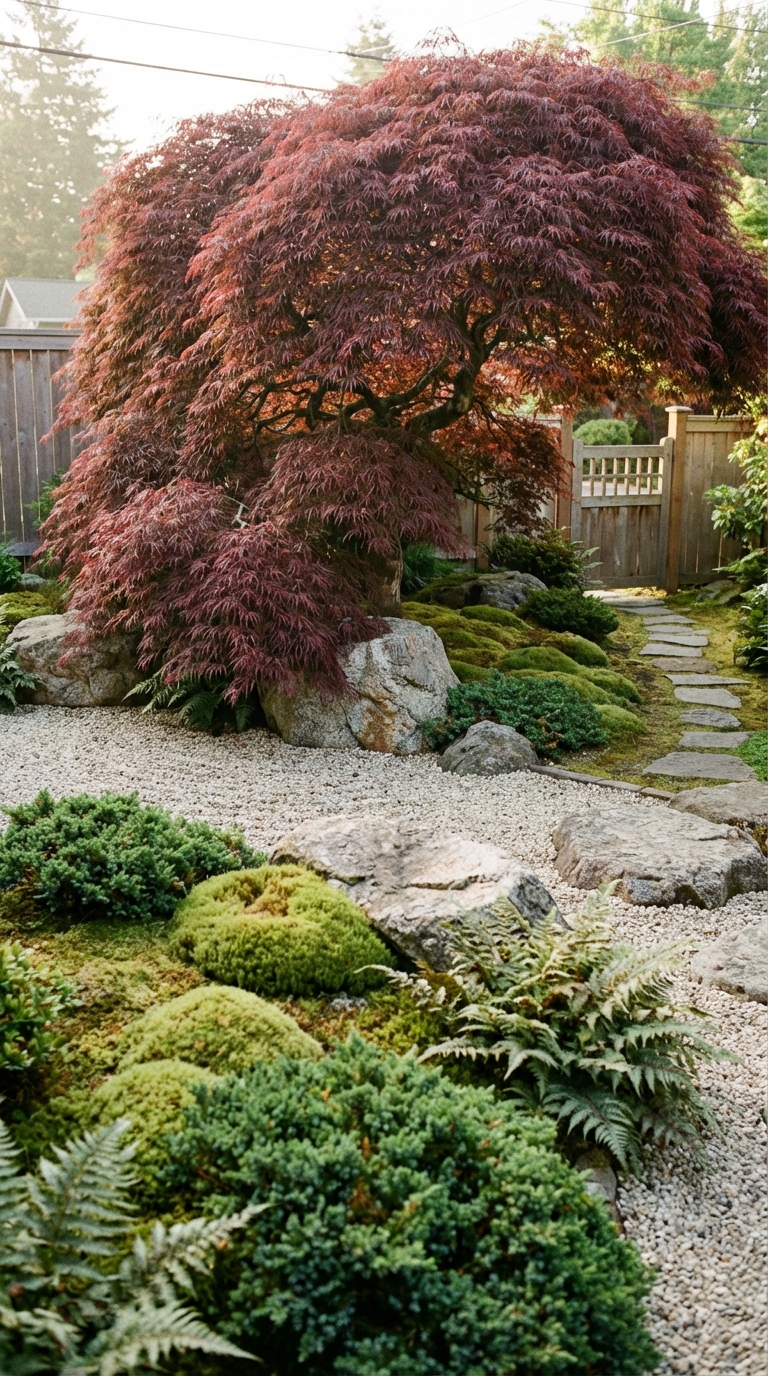
Tamukeyama is another weeping laceleaf type, loved for its rich color and broad, flowing shape. It fits beautifully into Japanese gardens because it feels both graceful and grounded. But it also works in everyday residential landscaping, especially where a garden bed needs movement and a focal point without too much height.
Near boulders, gravel mulch, or dark green shrubs, Tamukeyama feels settled and refined. It is a good choice if you want a red laceleaf tree with a classic, established feel.
Waterfall Japanese Maple for Green Japanese Maple Garden Ideas
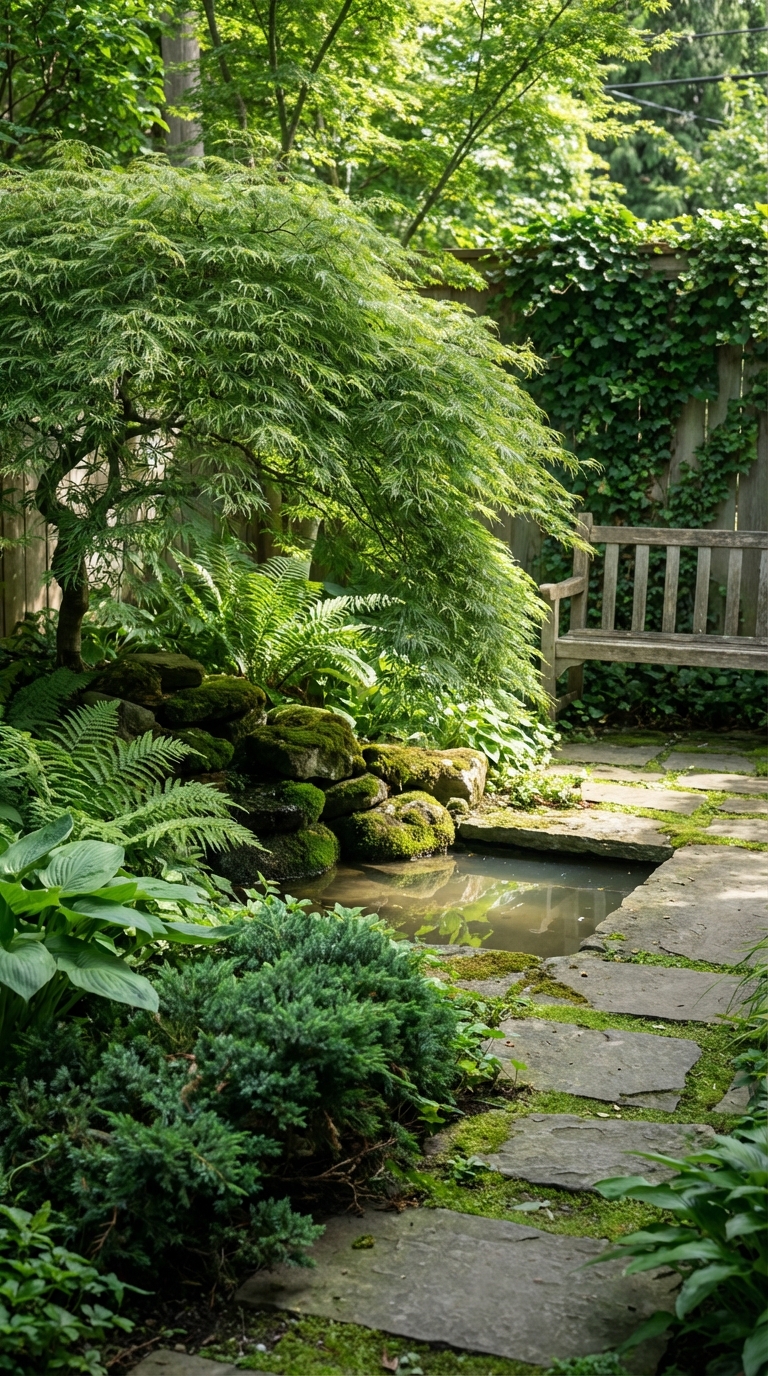
Not every Japanese maple has to be red. Waterfall is a green laceleaf variety with a cascading shape that brings a cooler, softer look. It is perfect for gardeners who want texture and movement but prefer a quieter color palette.
In Japanese gardens, Waterfall works beautifully with mossy textures, ferns, stone, and water features. In residential landscaping, it can soften hard edges and add depth to a planting bed without stealing the whole show.
Japanese Maple Trees in Japanese Gardens: How to Use Japanese Maple Trees Well
Japanese Maple Trees Should Act as a Quiet Focal Point
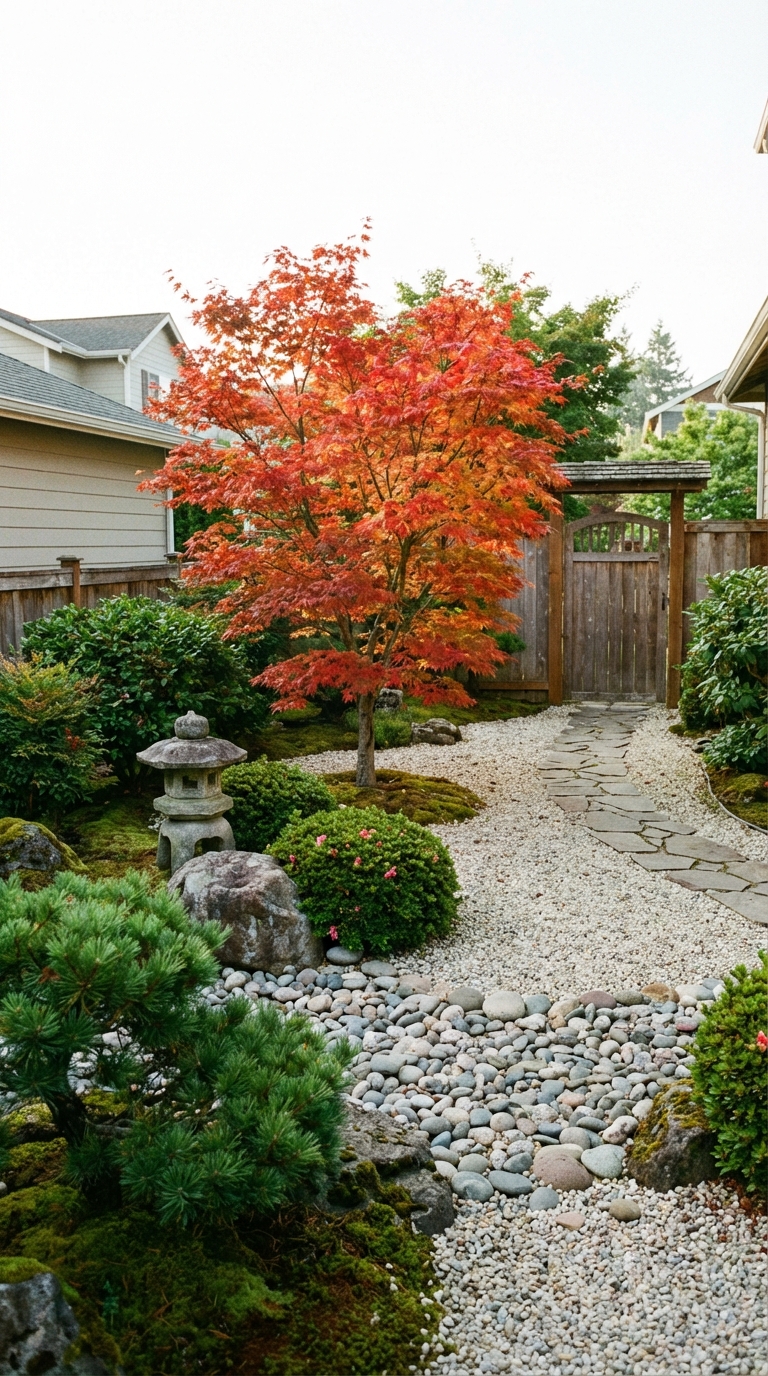
In Japanese gardens, one of the biggest mistakes is trying to make every plant the star. Japanese maple trees are often most effective when they are allowed to stand out in a calm way. That means giving them breathing room and choosing surrounding materials that support rather than compete.
A Japanese maple near gravel, a stone lantern, or a curved path can have tremendous impact without needing a crowded planting scheme. The point is not to fill every inch. The point is to create balance.
Japanese Maple Trees Pair Beautifully with Rocks, Gravel, and Moss
Fine foliage looks wonderful against rough stone. That contrast is one of the reasons Japanese maple trees fit so naturally into Japanese garden design. A laceleaf form can spill over a rock and soften its hard edge. An upright tree can rise behind a gravel bed and create a layered scene.
Moss, low groundcovers, and simple clipped shrubs also work well nearby. They help the trunk and canopy stand out while keeping the overall look peaceful.
Japanese Maple Trees Look Better with Simplicity
It is tempting to keep adding plants, ornaments, and decorative touches, especially in a themed garden. But Japanese maple trees usually look better when the planting palette stays simple. A few strong elements, used well, will always beat a crowded mix that pulls the eye in too many directions.
A Japanese garden built around one maple, a handful of shrubs, stone, and open space can feel far more powerful than one stuffed with too many ideas.
Japanese Maple Landscaping: How to Use Japanese Maple Trees in Residential Gardens
Japanese Maple Front Yard Planting Can Transform the Whole House
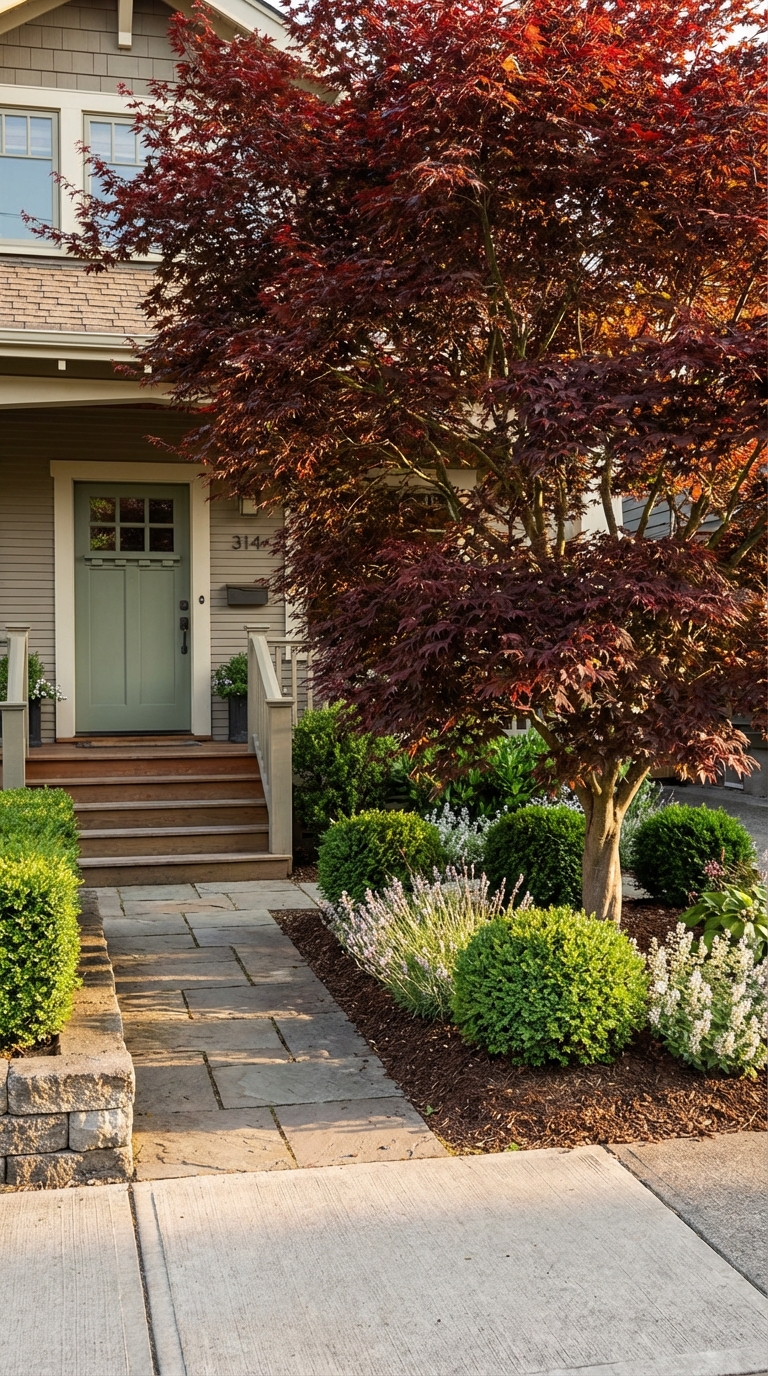
Japanese maple trees are excellent front yard plants because they bring beauty without taking over. An upright variety near the lawn edge, front walk, or entry can give the house a stronger sense of place. It helps the garden feel designed rather than accidental.
This works especially well in homes where the front planting is otherwise flat or shrub-heavy. One tree with a clear shape can break that up and make the entire frontage feel more welcoming.
Japanese Maple Trees Improve Foundation Planting
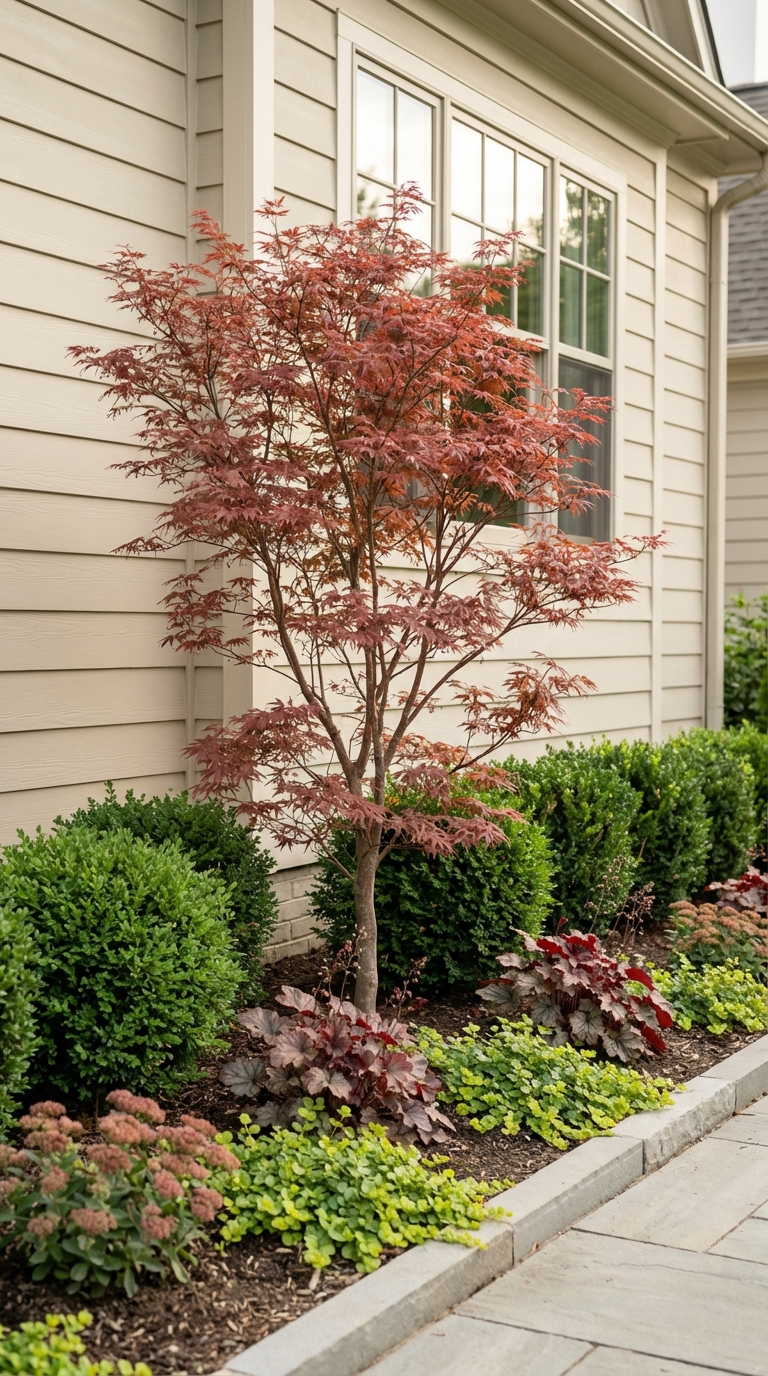
Foundation planting can easily become a row of same-height shrubs. It does the job, but it often looks dull. A Japanese maple changes that. It adds height, softness, and a focal point that draws the eye upward and outward.
A tree placed near a corner of the house or offset from the center can help the whole bed feel more balanced. And because many Japanese maple trees are modest in size, they suit residential spaces better than many larger ornamental trees.
Japanese Maple Landscaping Works Best in Layers
Japanese maple landscaping becomes much stronger when the tree is part of a layered composition. Think of the maple as the main structure, then build around it with supporting plants. Evergreen shrubs can provide winter strength. Groundcovers can keep the base neat. Ferns, hostas, or low mounding perennials can add contrast in leaf shape.
The goal is not to bury the tree. It is to frame it. Good companions should make the Japanese maple look even better.
Japanese Maple Trees in Containers Bring Style to Small Spaces
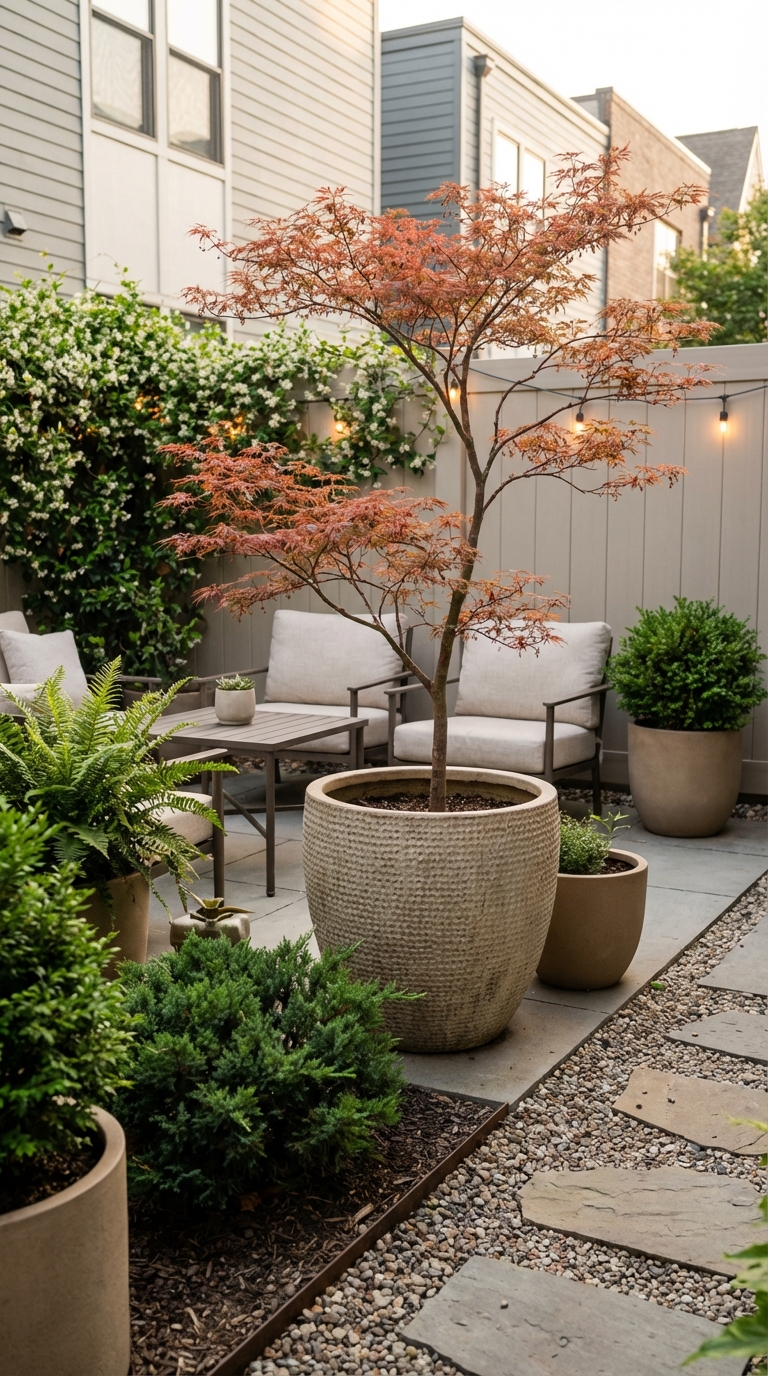
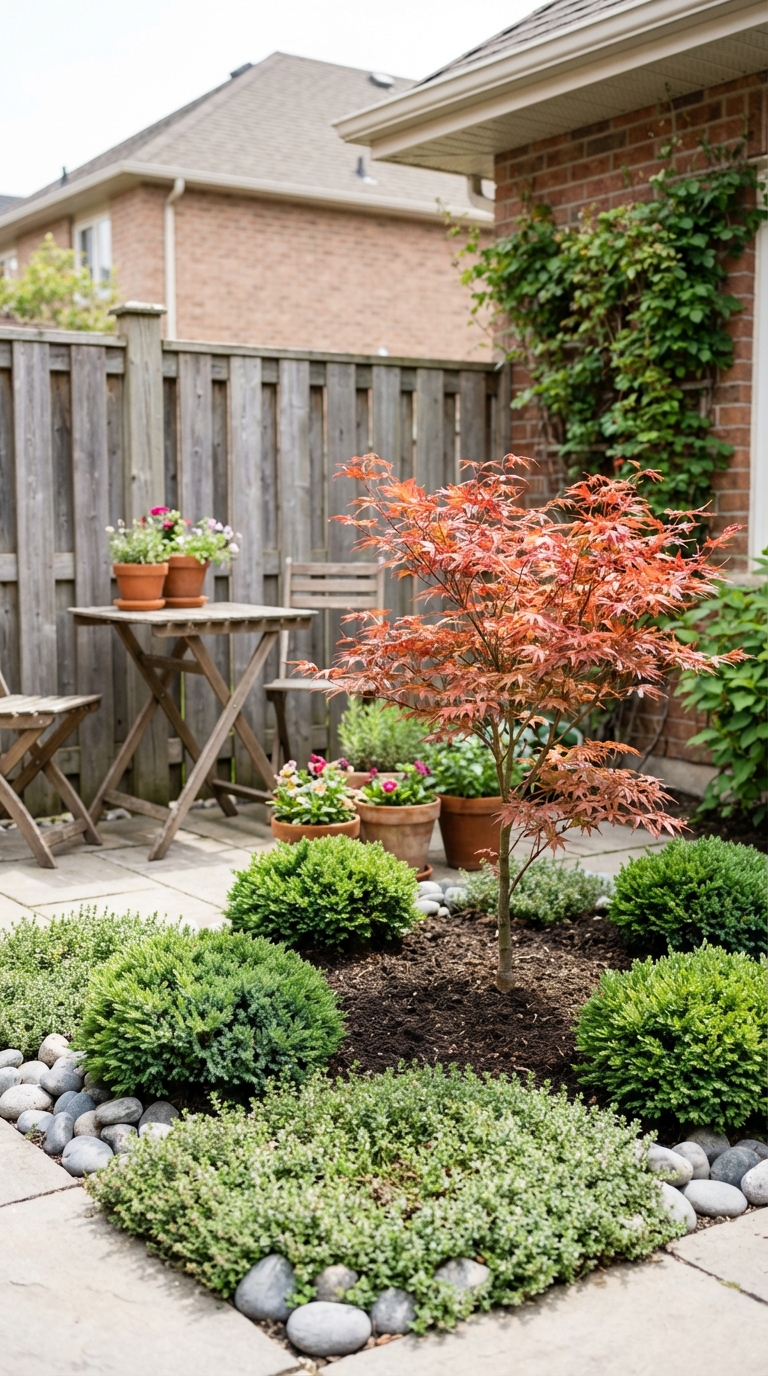
If you do not have room to plant in the ground, some dwarf or slow-growing Japanese maple trees can do very well in a large container. This makes them a smart option for patios, courtyards, and townhouse gardens where planting space is limited.
A potted Japanese maple brings height and elegance to a paved area. It can soften a terrace, mark an entry, or create a focal point in a seating area. The container matters too. A simple pot in a muted tone usually works best and lets the tree stay the main attraction.
Japanese Maple Companion Plants: What to Plant with Japanese Maple Trees
Japanese Maple Companion Plants Should Add Contrast
The best Japanese maple companion plants usually contrast with the tree rather than copy it. Broad leaves can make the fine maple foliage stand out. Dark green evergreens can highlight red leaves. Low groundcovers can show off the trunk and branch structure.
Hostas, ferns, heucheras, small conifers, and simple evergreen shrubs often pair well. In Japanese gardens, mossy textures and restrained planting choices tend to look especially good.
Japanese Maple Trees Need Space from Aggressive Neighbors
One thing to avoid is crowding a Japanese maple with large, fast-growing plants that will compete for space and attention. Big coarse shrubs, dense thickets of ornamental grass, or too many bright flowering plants nearby can make the scene feel busy.
Japanese maple trees have a quiet elegance. They do not need noisy company. A little restraint goes a long way.
Japanese Maple Trees: A Last Word on Choosing the Best Variety
Japanese maple trees have a rare gift. They can make a garden feel settled, layered, and special without requiring a huge amount of space. That is true whether you are building a Japanese-style garden with stone and gravel, or shaping a front yard bed that needs a focal point with real character.
The key is choosing the right variety for the job. Start with size and form. Think about how the tree will be viewed and what role it needs to play. Then build the rest of the space around it in a way that lets its color, texture, and structure shine.
Get that part right, and a Japanese maple will not just decorate the garden. It will define it.