
Modern Courtyard Garden Layouts That Feel Effortless
A courtyard can look “finished” and still feel a bit flat, like a nice floor with nowhere to land. Give it a layout that works, and the same space turns into a place you’ll actually use, morning coffee, late lunches, quiet evenings, all without stuffing every corner with décor.
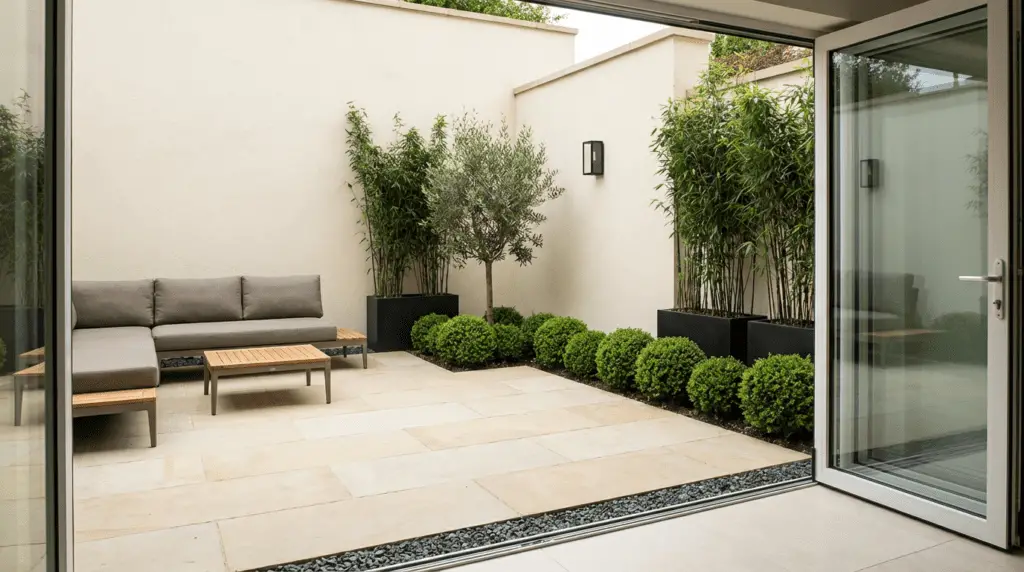
Modern courtyard garden planning is less about size, more about structure. A thoughtful courtyard garden design can make a compact patio feel open, and a larger enclosed yard feel calm rather than scattered. Start with the layout, then let plants and details support the plan.
What a “modern courtyard garden” looks like in real life
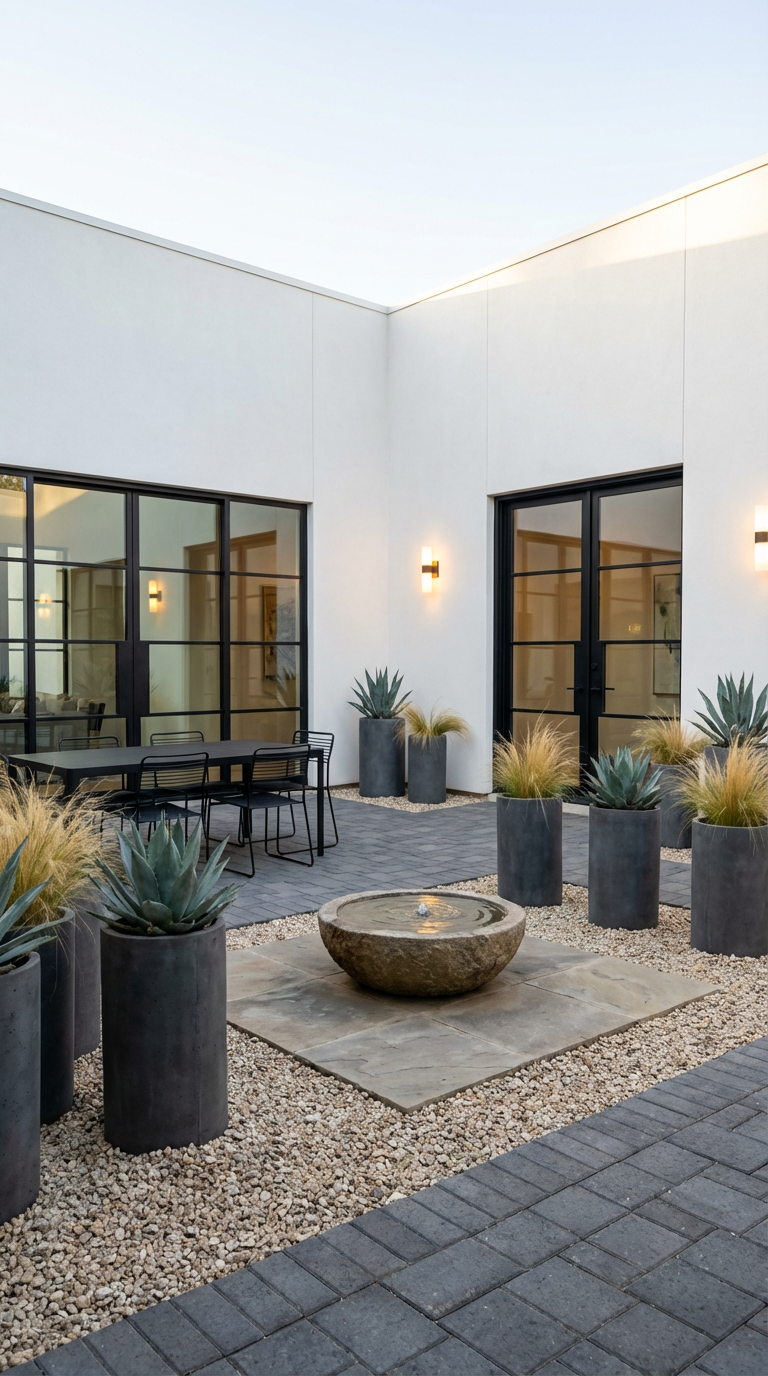
Modern garden design in a courtyard usually relies on three things, clear lines, repeated forms, and breathing room. Think fewer materials, larger shapes, and a limited palette that still feels lush.
Courtyard design also leans into what courtyards already have, enclosure. Walls, fences, and boundaries give you privacy, shelter, and a strong backdrop for foliage, lighting, and furniture. That’s why contemporary courtyards often feel like outdoor rooms, not leftover space.
Start with the bones, not the plants
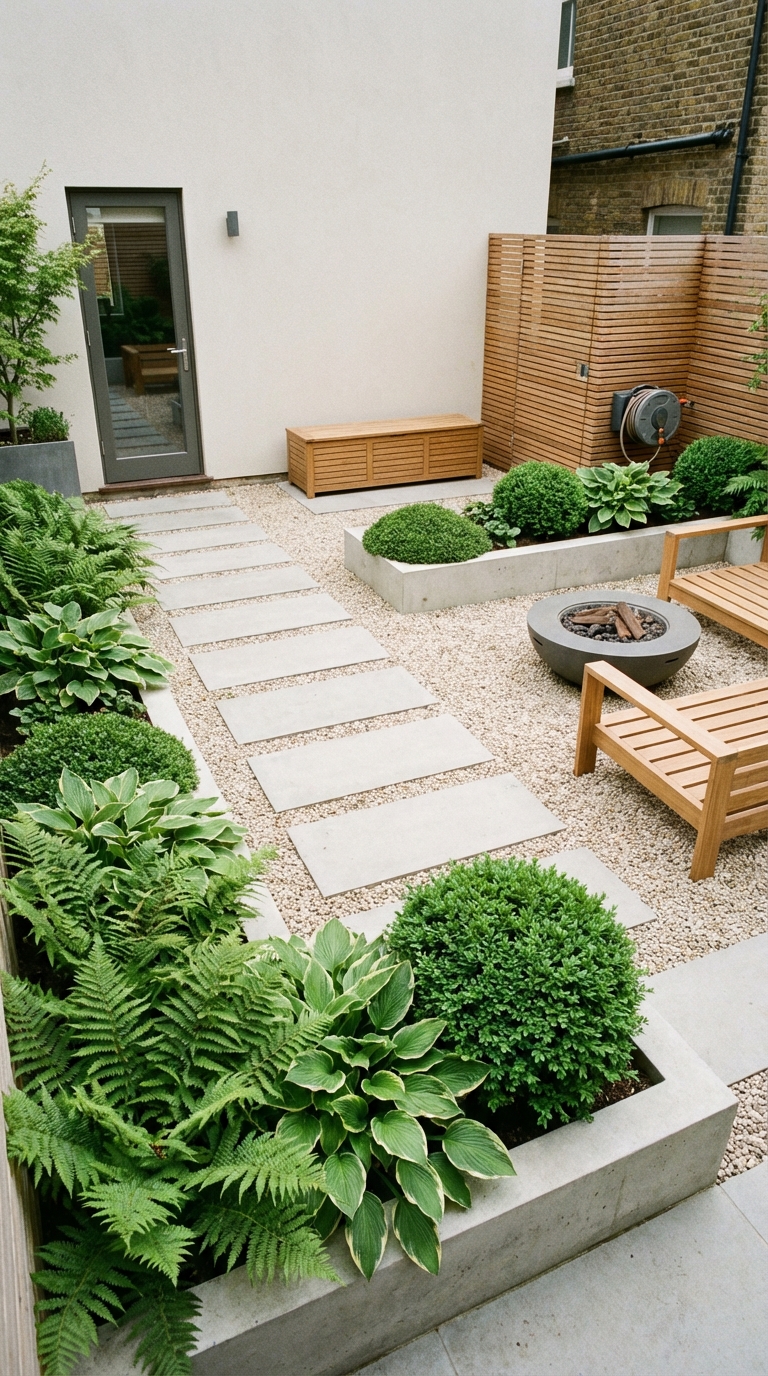
Before you pick a single pot, treat your courtyard garden like a floor plan.
- Measure the footprint, note door swings, windows, and drains
- Track sun and shade, even for one day, morning, noon, late afternoon
- Mark anything fixed, taps, aircon units, utility covers, steps
- Decide your “use list,” dining, lounging, play space, storage, grilling
A layout that matches how you live beats a pretty sketch that ignores real movement. Even a rough drawing on paper helps you spot pinch points and wasted areas.
The modern courtyard mindset, choose one main story
Most courtyards struggle because they try to do five things at once. Give yours one lead role, then let everything else play support.
Pick your main story:
- Outdoor dining that feels like a small terrace restaurant
- Lounge-first comfort, reading chair, sofa set, side tables
- Green-focused planting, layered foliage, quiet paths
- Minimal gallery look, sculptural pots, clean paving, subtle greens
Once you choose the hero, decisions get easier, furniture scale, planting depth, and where the eye should land.
The five zones that make a courtyard feel “designed”
Courtyard gardens feel larger, and calmer, when they’re divided into zones. Size matters less than clarity.
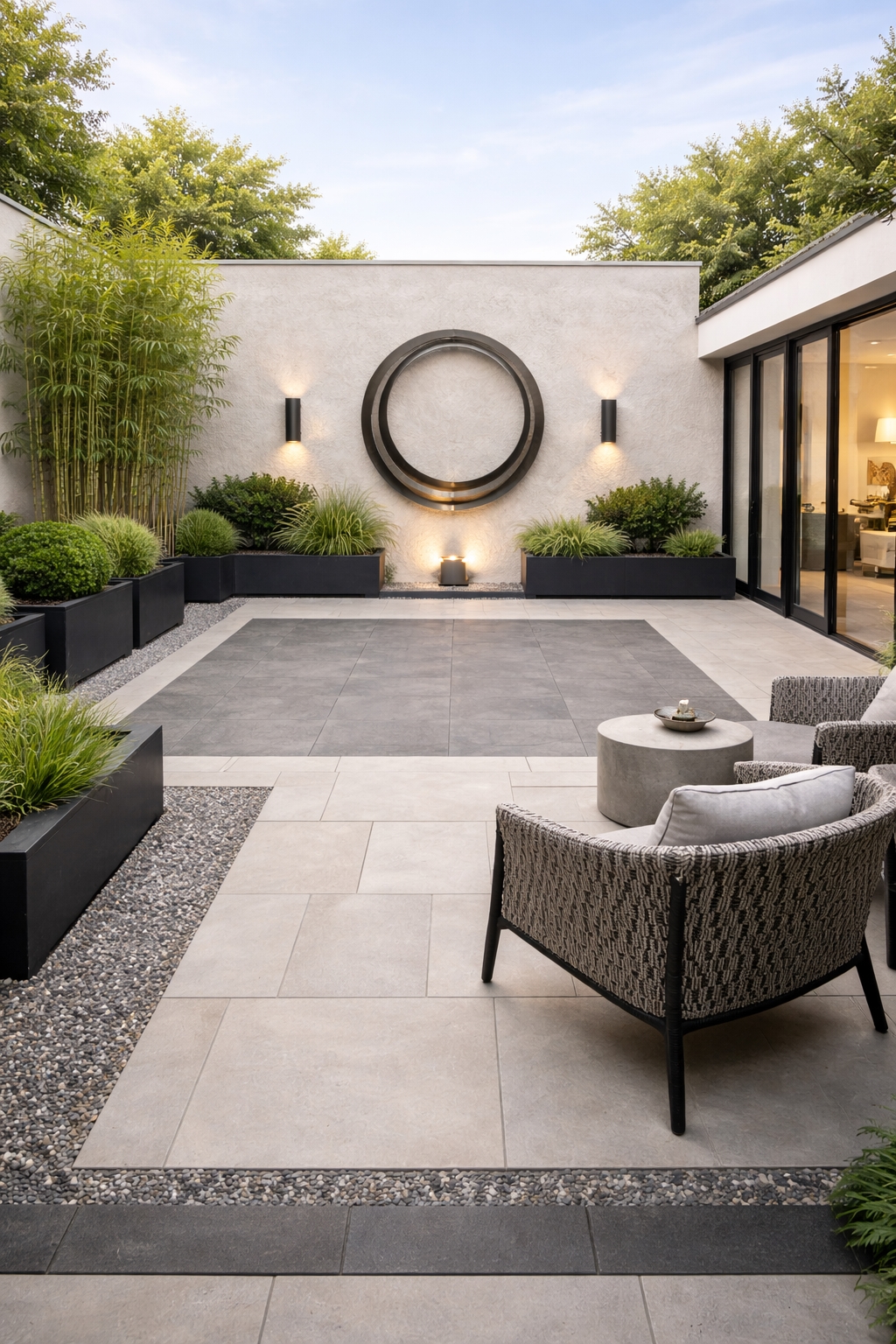
1) Arrival and threshold
Give the entry a cue that you’ve “arrived.” A change in paving, a narrow runner of gravel, or two matching planters can frame the transition. If the courtyard is seen from inside the house, let that first view feel intentional.
2) A clear route
Every courtyard needs a clean path, even if it’s informal. Keep one primary line of travel, door to seating, door to storage, door to gate. Avoid zig-zags created by scattered pots.
3) A destination
A destination is the moment you walk toward, a dining pad, a lounge corner, a bench under a tree. One strong destination beats three half-finished seating spots.
4) Planting structure
Planting works best as a “frame,” along edges, in repeated planters, or in one generous bed. Random clusters tend to make small gardens feel busy, and big courtyards feel messy.
5) A focal point
Give the eye a target, a feature wall, a specimen plant, a water bowl, a simple sculpture. Place it where you’ll see it from indoors, and from the main seat.
Seven courtyard layout patterns you can copy
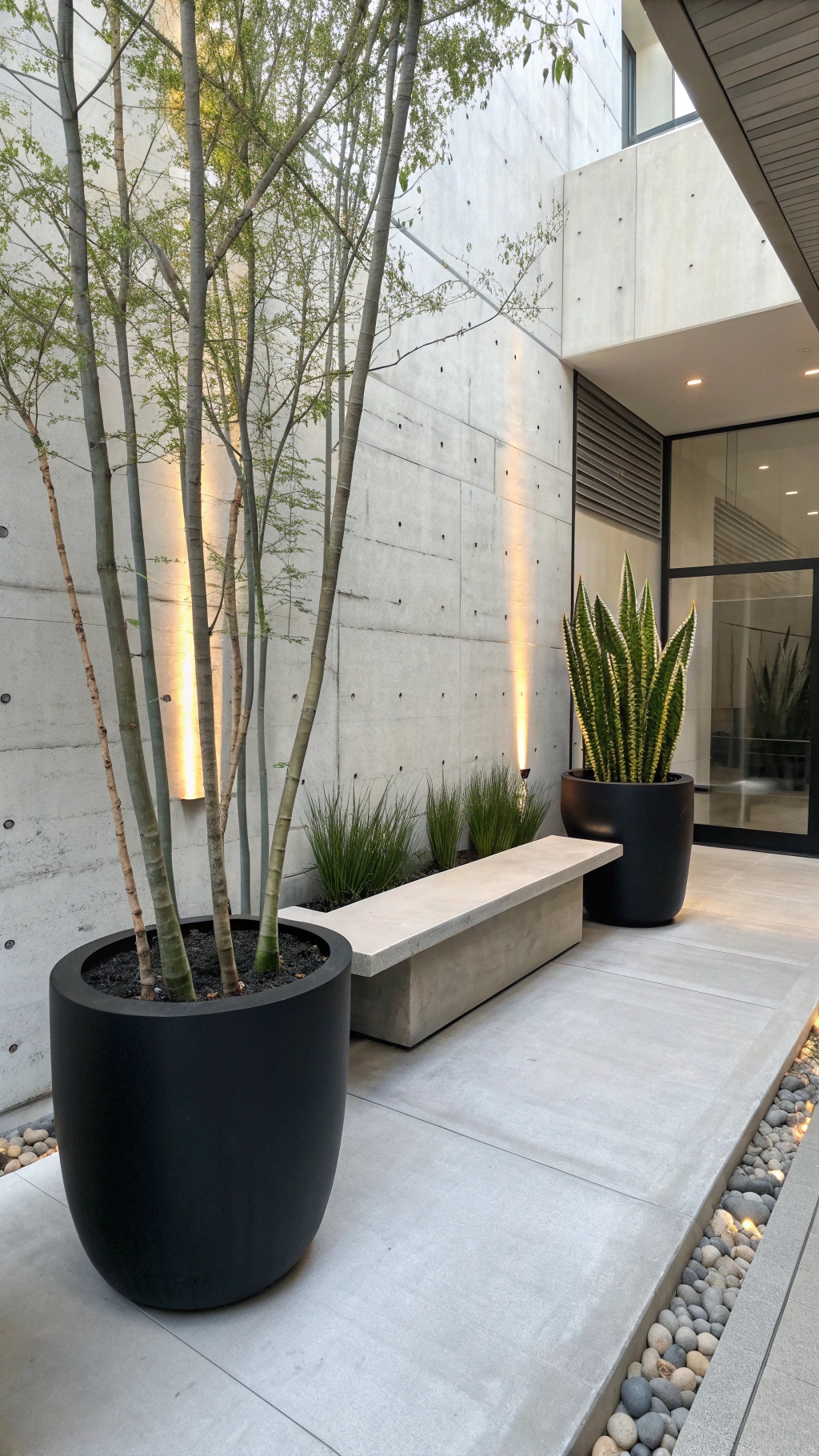
A modern courtyard garden layout becomes simpler when you start from a pattern. Each of these works for a small courtyard garden, and scales up for larger courtyard gardens too.
1) The perimeter frame
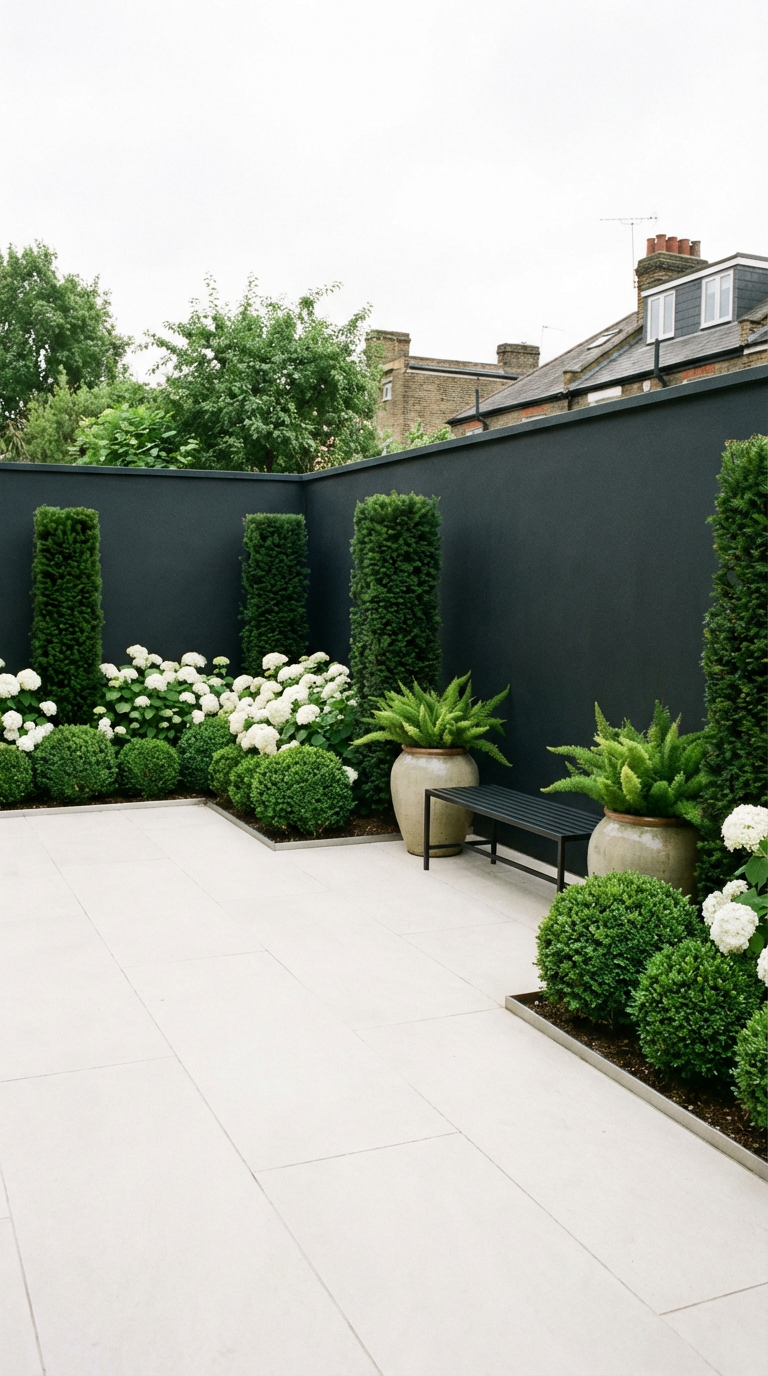
Planting sits along the boundary, the center stays open. Use a continuous bed, or a repeated run of planters, then keep the middle clear for movement and furniture.
Why it works: edges hold the greenery, the center reads as space, not clutter. Pair it with large-format garden paving for a quiet, modern base.
2) The split courtyard, lounge plus dining
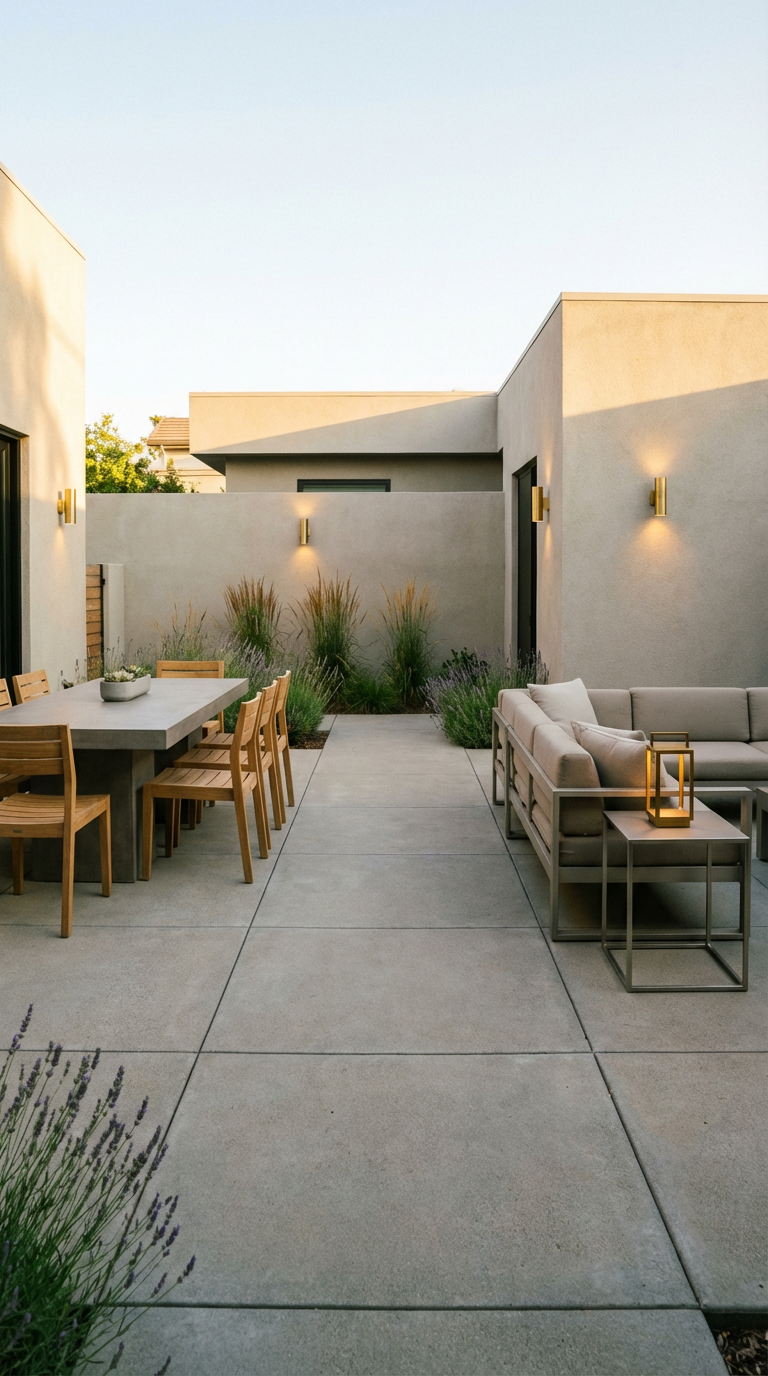
Divide the courtyard into two rectangles, one for lounging, one for dining, connected by a straight path. Keep surfaces consistent so the split feels purposeful, not chopped up.
Why it works: two zones give variety, and the path prevents furniture from feeling scattered. A slim planting strip between zones can soften the split.
3) The outdoor room
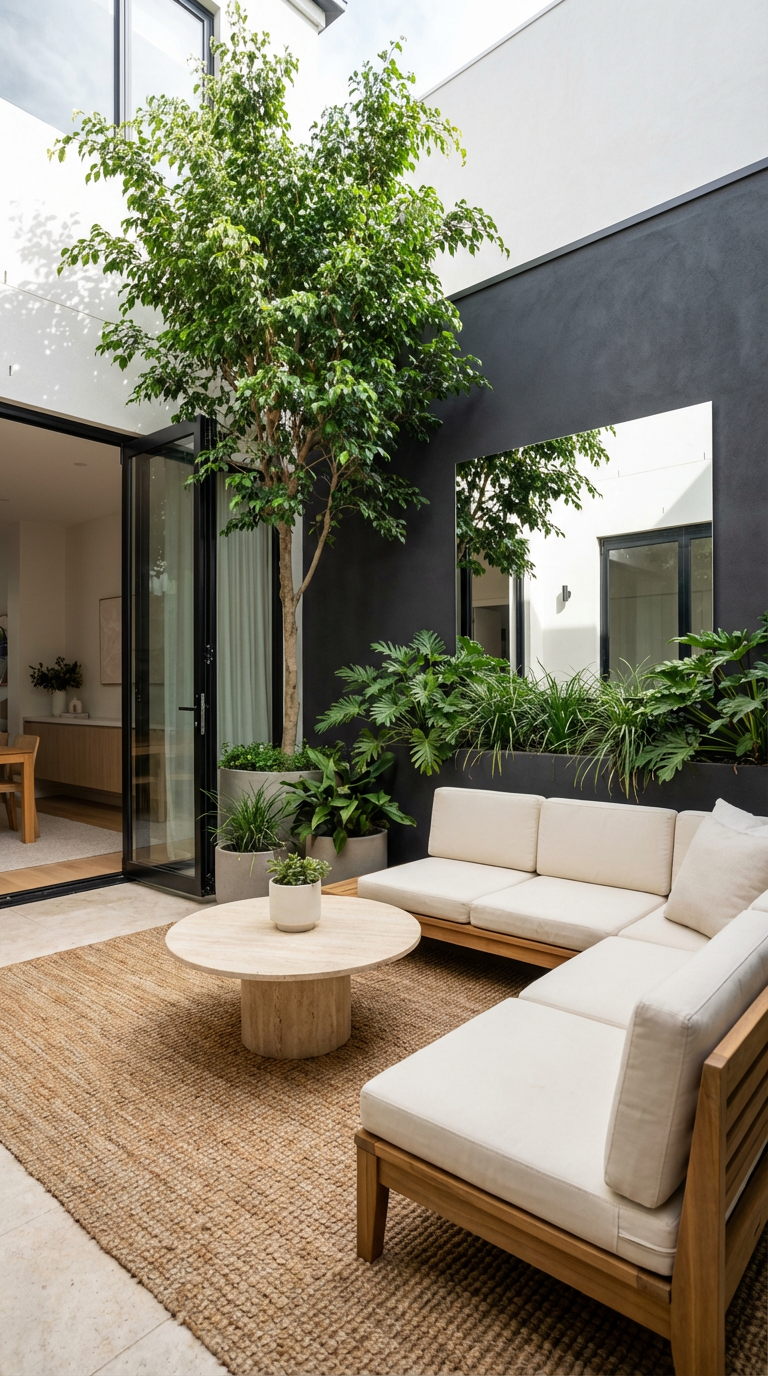
Treat the courtyard like a patio interior, add a “rug” area in the paving, group furniture tightly, and anchor the far side with a wall feature. It suits a courtyard house setup where you look out through doors or glazing.
Why it works: the room concept creates instant cohesion, especially for lifestyle spaces built around hosting.
4) The diagonal sightline
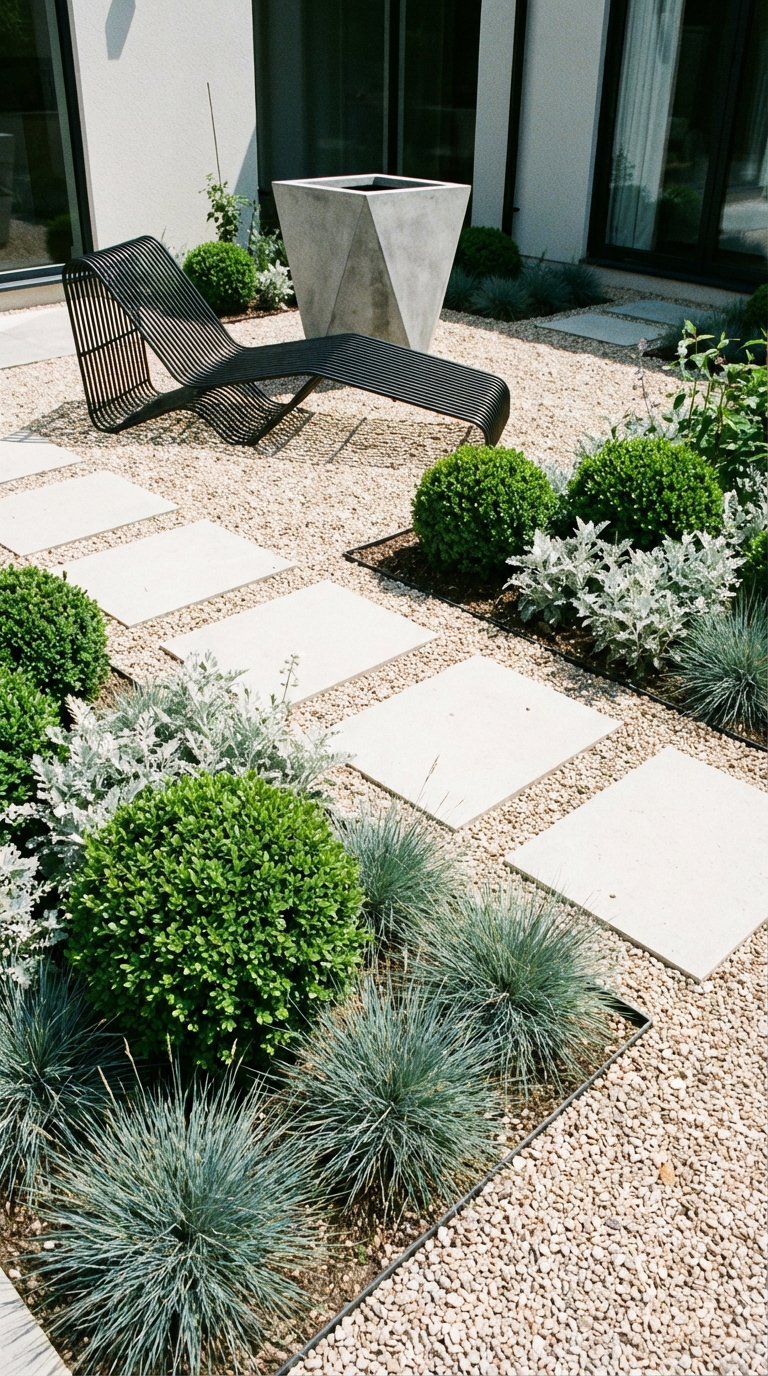
Run a subtle diagonal, stepping stones in gravel, an angled planting bed, or a diagonal bench. Keep the angle gentle, not dramatic.
Why it works: diagonals stretch perspective, a classic trick for small gardens, and still interesting in larger footprints.
5) The courtyard gallery
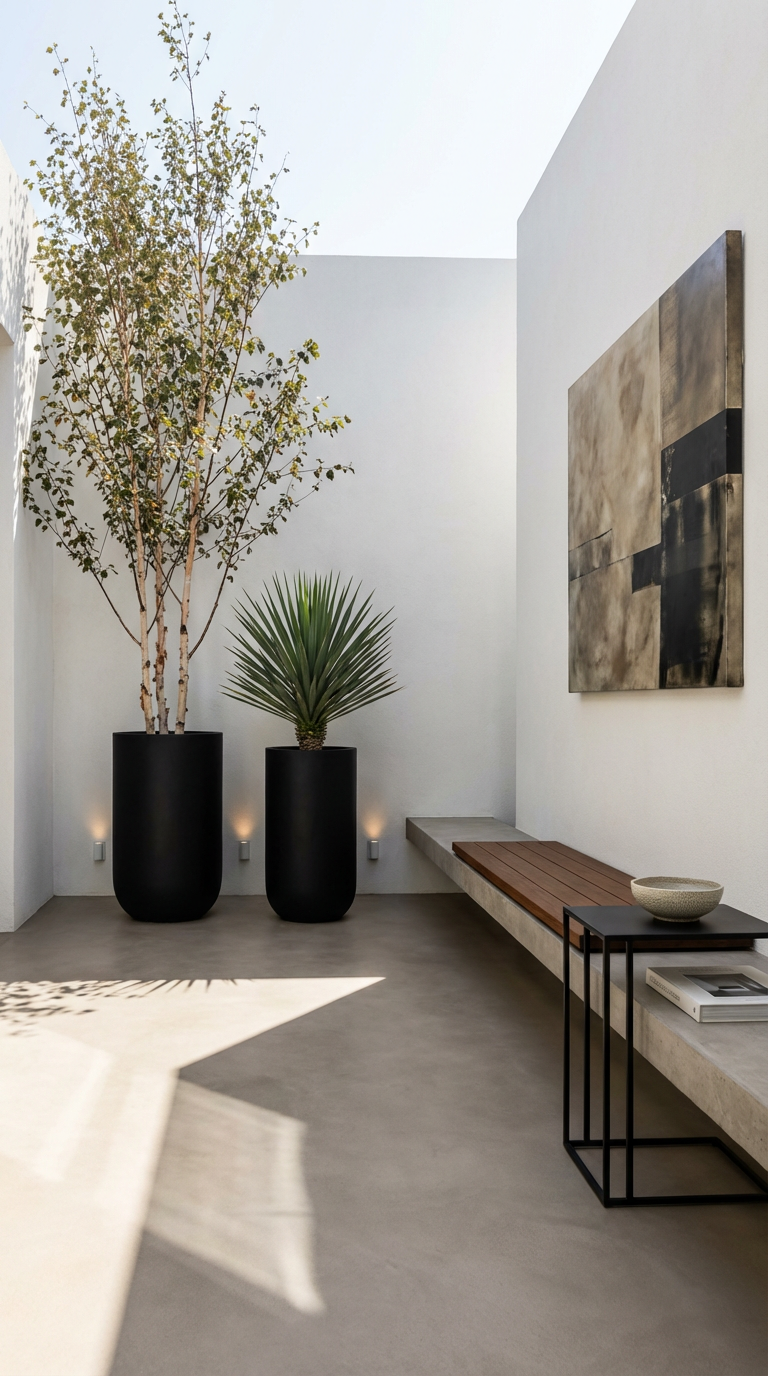
Use minimal planting, then let a few bold elements do the work, tall pots, a single tree, wall art, and lighting. Choose one or two plant textures, then repeat them.
Why it works: contemporary courtyards often feel curated, and a restrained layout makes every object look deliberate.
6) The gravel field
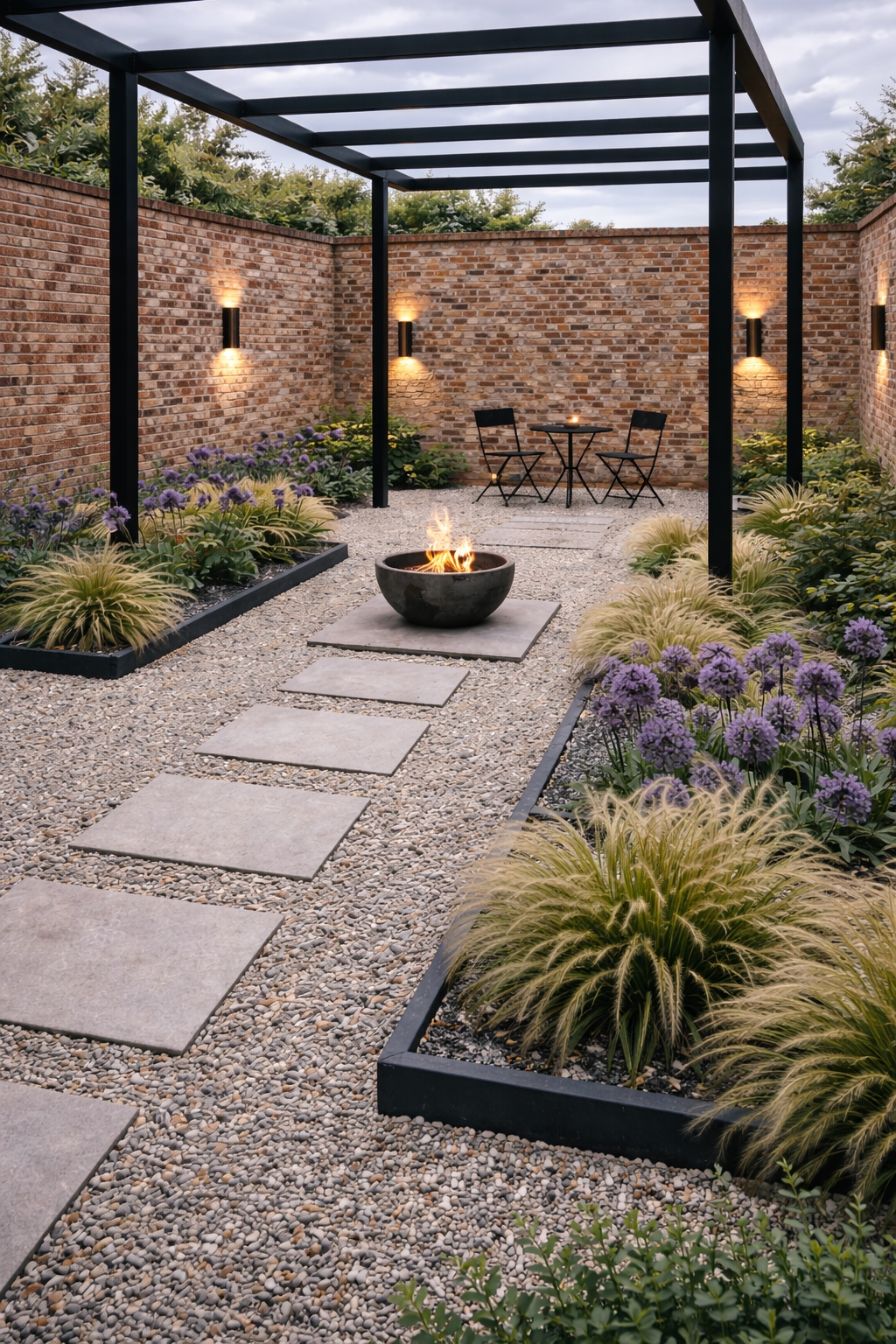
Lay a gravel garden base, add stepping pads, then plant grasses, evergreens, or structural shrubs in repeated groups. Keep the “plant islands” large enough to read as shapes.
Why it works: gravel is flexible, visually calm, and easy to refresh. It also helps courtyards feel airy, especially in tight spaces.
7) The green wall courtyard
Let vertical garden design carry the greenery, then keep the floor quiet, simple paving, a narrow bench, and a few planters for depth.
Why it works: walls hold foliage without stealing floor area, and the layout stays clean even with abundant planting.
Make circulation feel generous, even if the courtyard isn’t
A courtyard can be compact, yet still feel easy to move through. Aim for a clear route that doesn’t force you to sidestep planters.
- Keep the main passage comfortably wide, especially near doors
- Avoid placing pots at corners where people naturally turn
- Group planters together rather than scattering them
- Let furniture sit inside its zone, not half in the path
If you want a modern look, favor fewer, larger planters over many small ones. Repetition reads as design, variety often reads as clutter.
A modern planting approach that suits courtyards
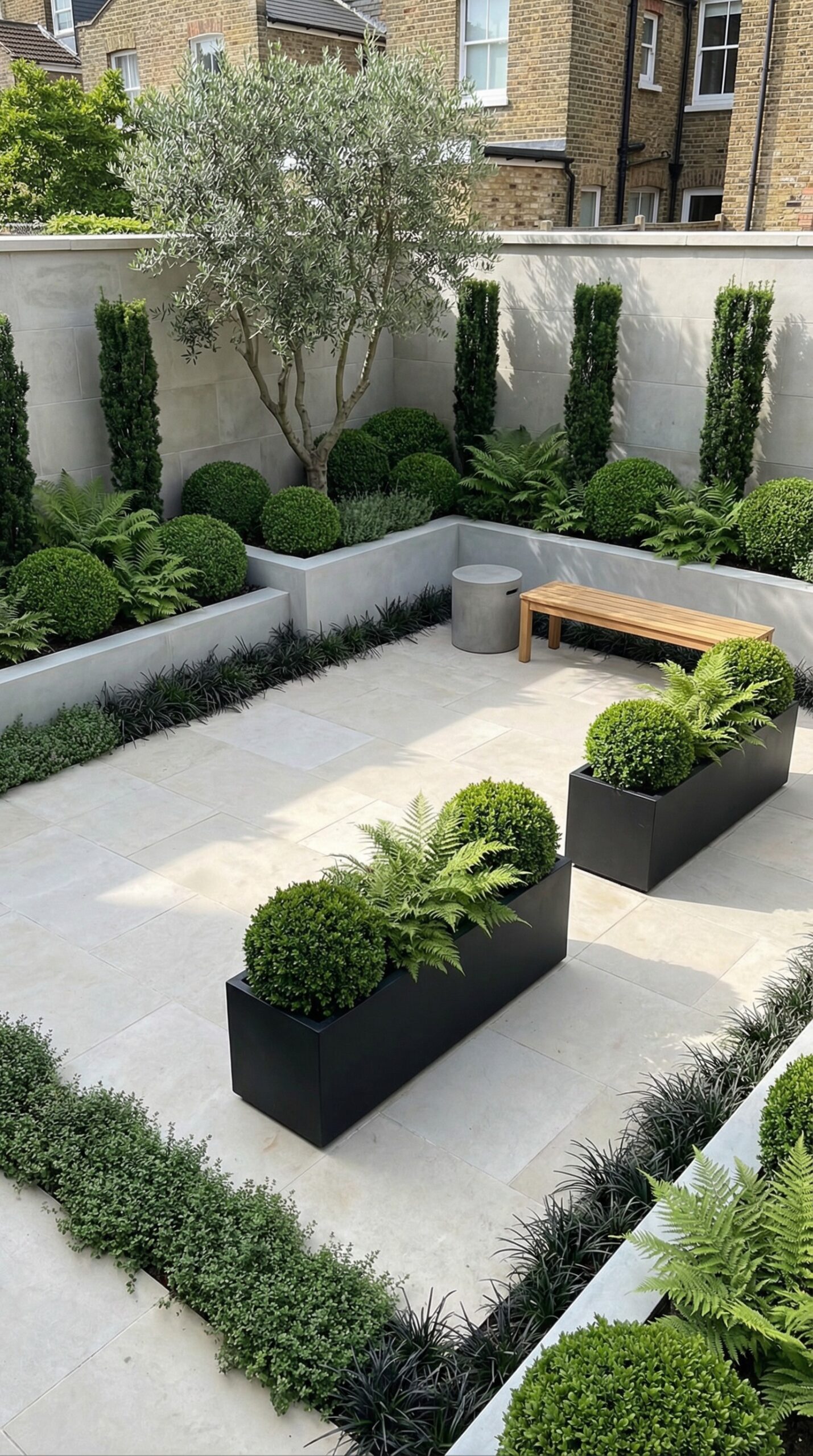
Courtyard planting succeeds when it supports the layout, not when it competes with it. Think in layers, then repeat the shapes.
Use a simple height ladder
- Ground layer: low, tidy plants that soften edges
- Mid layer: shrubs, grasses, clumps of foliage
- Tall layer: slender trees, columnar plants, tall screens
One tall element often does more than five medium ones. Let that tall piece sit near the focal point, or behind seating, so the courtyard feels sheltered.
Repeat forms for calm
Pick two or three dominant forms, mounds, upright shapes, airy textures, then repeat them across the courtyard. Repetition helps the eye rest, which is the hidden magic behind modern garden design.
Plan for courtyard microclimates
Courtyards can be surprisingly complex. Walls hold warmth, corners trap shade, and paving can reflect heat.
- A shade garden corner can be perfect for foliage-heavy planting
- Sunny paving edges may need tougher, heat-tolerant choices
- Sheltered spots can hold humidity, helpful for lush looks
If a wall blocks sun, lean into it, layered foliage can look more modern than struggling sun-lovers in deep shade.
Materials that make a courtyard layout read cleanly
Courtyard design lives or dies on the ground plane. Your surface is the stage, everything else sits on top.
Choose fewer surfaces, use them boldly
A modern courtyard usually looks best with one main paving choice, then one accent material. Large slabs, smooth concrete, or stone can all work, as long as the palette stays tight.
A gravel garden surface can also feel modern, especially paired with crisp edging and simple stepping pads. Keep gravel contained with a clean border, and avoid mixing several gravel colors.
Let edges do the hard work
Crisp edging makes planting feel intentional. Raised planters, metal strips, stone borders, or rendered walls can all create that clean line. Straight edges suit a modern look, gentle curves can work too, keep them few and confident.
Think about the terrace effect
A garden terrace feel comes from level changes, strong borders, and clear zones. Even without steps, you can mimic that structure using a raised planter edge or a change in surface texture under the dining zone.
Walls, privacy, and vertical space
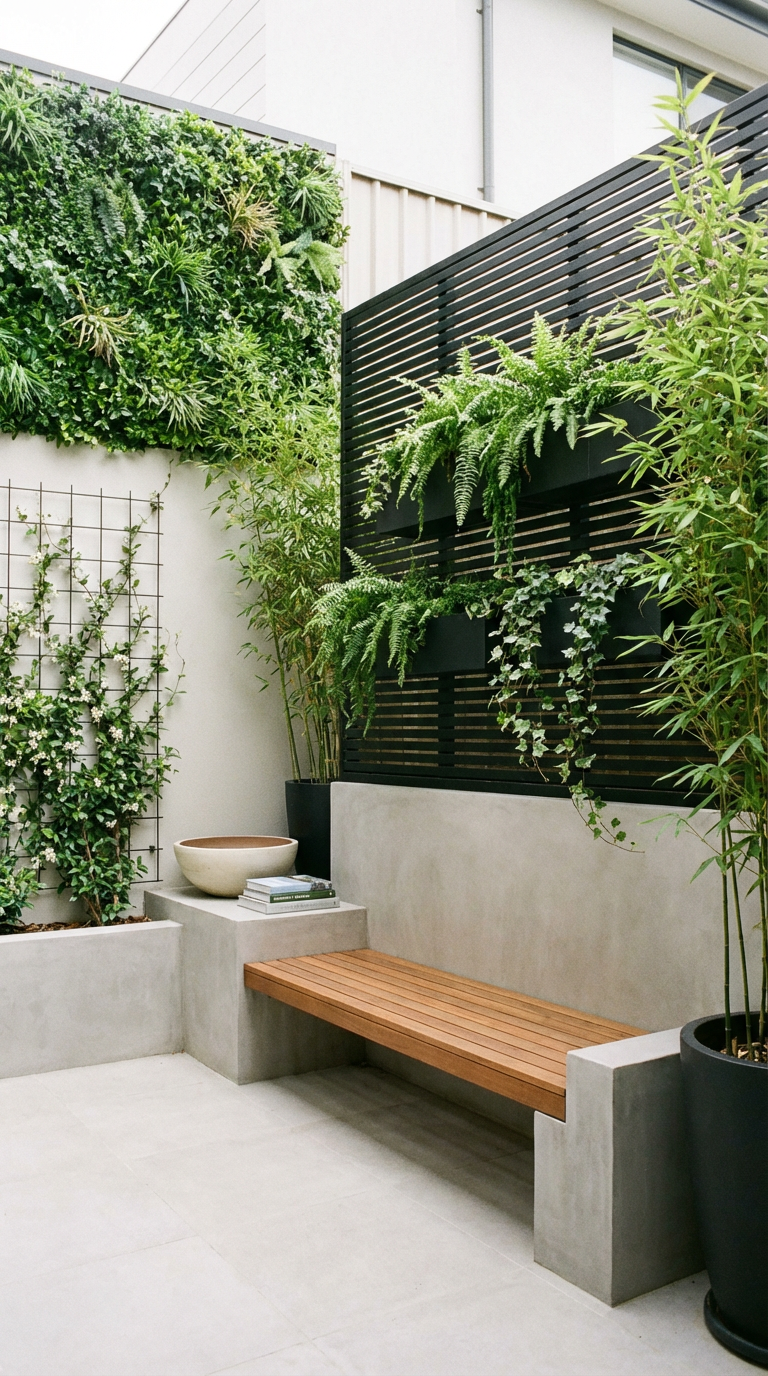
Courtyards already have enclosure, so use it like a design tool. A walled garden backdrop can turn ordinary planting into something that feels styled.
Build a privacy plan
Decide where privacy matters most, dining seat, lounge chair, window line. Use screens, slats, and planting to block views in targeted spots, rather than boxing in the whole courtyard.
Treat the wall as a feature
Paint, cladding, or textured render can make a wall feel intentional. A single feature wall, paired with calm surfaces, creates a focal point without adding objects.
Add vertical layers
Vertical garden design can be simple, a trellis grid with climbers, a row of wall-mounted planters, or a planted screen. Keep the vertical element aligned with your layout, behind seating, along the main view line, or framing the focal point.
Lighting that turns the courtyard into an evening room
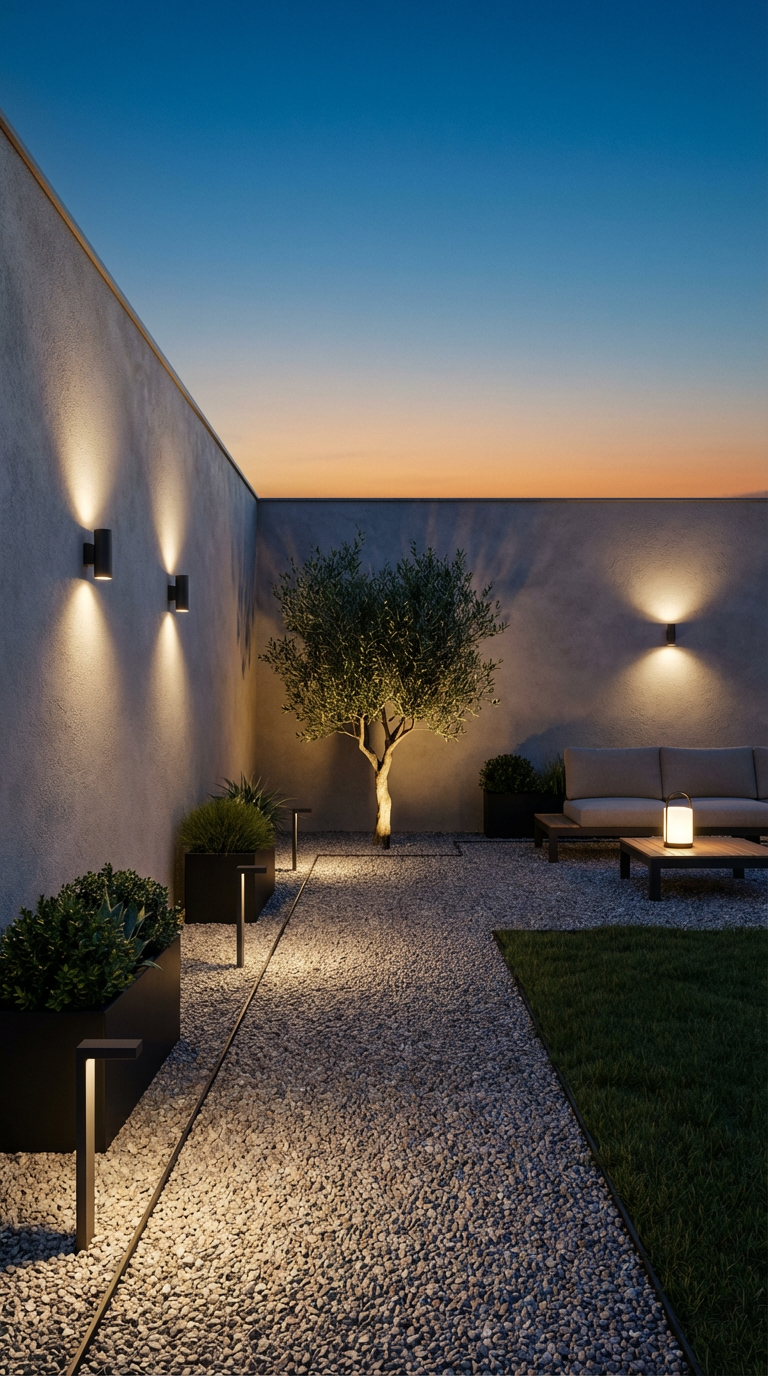
Lifestyle courtyards shine after dark, literally. Lighting also helps the layout make sense at night, guiding movement, highlighting features, and softening walls.
Use layers, not one bright source
- Path lighting: low, subtle markers along the route
- Wall wash: gentle light that lifts flat boundaries
- Feature light: a narrow beam on a tree, pot, or sculpture
- Table glow: lanterns or warm portable lights near seating
Avoid placing lights where they shine into the house or into seated eyes. Aim beams across textures, up foliage, or down onto paths.
A modern courtyard garden often looks best with fewer lights, placed thoughtfully, rather than a row of identical spikes everywhere.
Furniture layout that feels intentional, not showroom-stiff
Courtyards can feel awkward if furniture floats without context. Anchor furniture to the layout, and choose scale that matches the zone.
Create a tight conversation group
Pull seating closer than you think. Outdoor rooms feel welcoming when chairs aren’t stranded at the edges. A small side table between seats can do more for comfort than another decorative pot.
Match furniture to your “main story”
If dining is the hero, give it the best location, near the kitchen door, under shade, with clear circulation. If lounging is the focus, place it where the view is best, facing the focal point or feature wall.
Keep the base calm
A single outdoor rug, or a defined paving “pad,” helps furniture sit in place visually. That’s where patio interior styling ideas translate beautifully outdoors.
Common layout mistakes that make courtyards feel busy
A courtyard can be stylish, yet still feel unsettled. These are the patterns that often cause that feeling.
- Too many materials underfoot, the eye never rests
- Too many small planters, nothing reads as structure
- Furniture pushed to walls, leaving a dead center zone
- No focal point, so the view feels unfinished
- Narrow routes blocked by pots or chairs
- Planting with no repetition, every corner competing
Fixing one of these can change the whole space. A courtyard garden layout improves fast once you simplify and repeat.
Layout ideas by courtyard shape
Courtyards rarely arrive as perfect squares. Match the plan to the shape, and you’ll get a cleaner result with less effort.
Narrow courtyard
Treat it like a corridor with purpose. Keep the path straight, then place one destination zone at the end, a bench, a small dining set, or a feature plant. Use slim planting bands along one side, not both, to avoid crowding.
Square courtyard
Squares love symmetry, or a bold center. Try a central focal point with perimeter planting, or split it into two rectangles for lounge and dining. Keep furniture grouped, and avoid tiny items scattered at the edges.
L-shaped courtyard
Make two rooms. One arm becomes dining, the other becomes lounge, or one arm becomes planting-heavy while the other stays open. Use one continuous surface so it still reads as one courtyard garden, not two unrelated patios.
Larger enclosed courtyard
More space tempts extra features. Resist adding “bits,” instead, scale up the same principles. Increase planting bed depth, use larger planters, widen routes, and add a third zone only if it has a clear role, like a fire bowl seat, a small herb wall, or a quiet reading corner.
A quick planning checklist before you buy anything
Use this as a final pass before you spend money, and your courtyard design will feel far more coherent.
- Main purpose chosen, dining, lounge, green-focused, or minimal
- One clear route mapped, door to destination, gate to storage
- Zones defined, arrival, path, destination, planting structure, focal point
- Surface palette limited, one main paving, one accent material
- Planting plan based on repetition, with a simple height ladder
- Privacy and wall strategy decided, screens, climbers, or feature wall
- Lighting layered for paths, walls, and one feature highlight
- Storage planned, so clutter doesn’t steal the modern look
Where to begin, if you want results quickly
Start with the move that changes how the courtyard feels from the house. For many people, that’s a focal point, a feature wall, a statement pot, or a small tree placed on the main sightline. Next, define the destination seating zone, then commit to a single surface approach for the rest.
A modern courtyard garden doesn’t need endless accessories to feel finished. A clear courtyard garden design, strong lines underfoot, repeated planting forms, and a layout that fits daily life can turn even an ordinary patio garden into a space you’ll want to step into, season after season.