
Pallet Patio, Big Payoff: Build an Outdoor Room From Simple Wood
A yard, a balcony, even a plain concrete pad can feel unfinished until there’s a “place” to land, somewhere to sit, set down a drink, and linger after dinner. A pallet patio delivers that feeling fast, because the bones of the build already exist within each pallet’s grid. With a smart layout, a stable base, plus a weather-ready finish, pallets can support a platform, a sofa, and a compact dining corner that reads like a planned outdoor room.
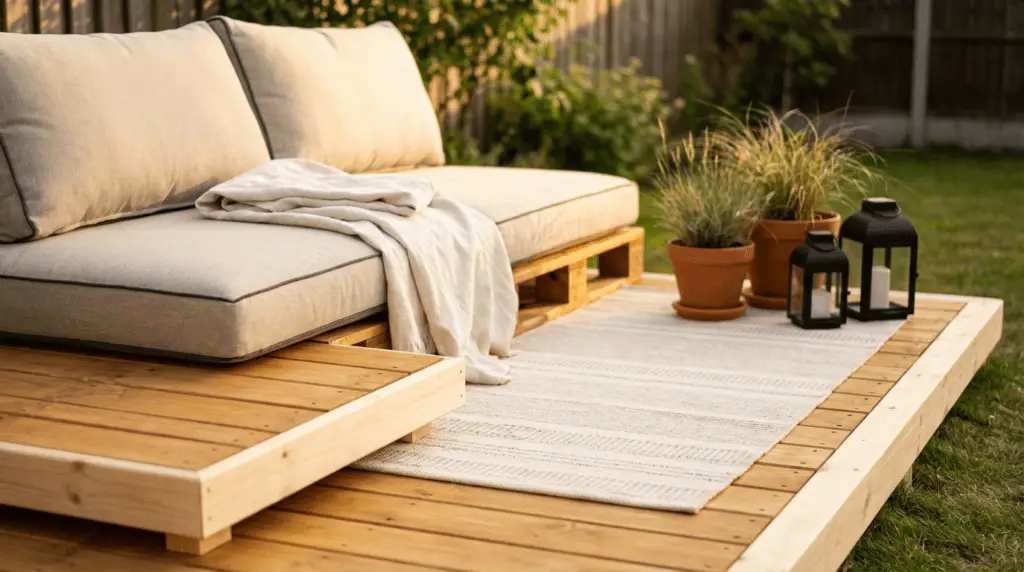
What a pallet patio can look like
Pallet builds work best when the design stays clear, modular, and repeatable. Think in rectangles, measure twice, then let the space guide the choices. Three common formats cover most homes and budgets, and each can be scaled up or down without changing the core method.
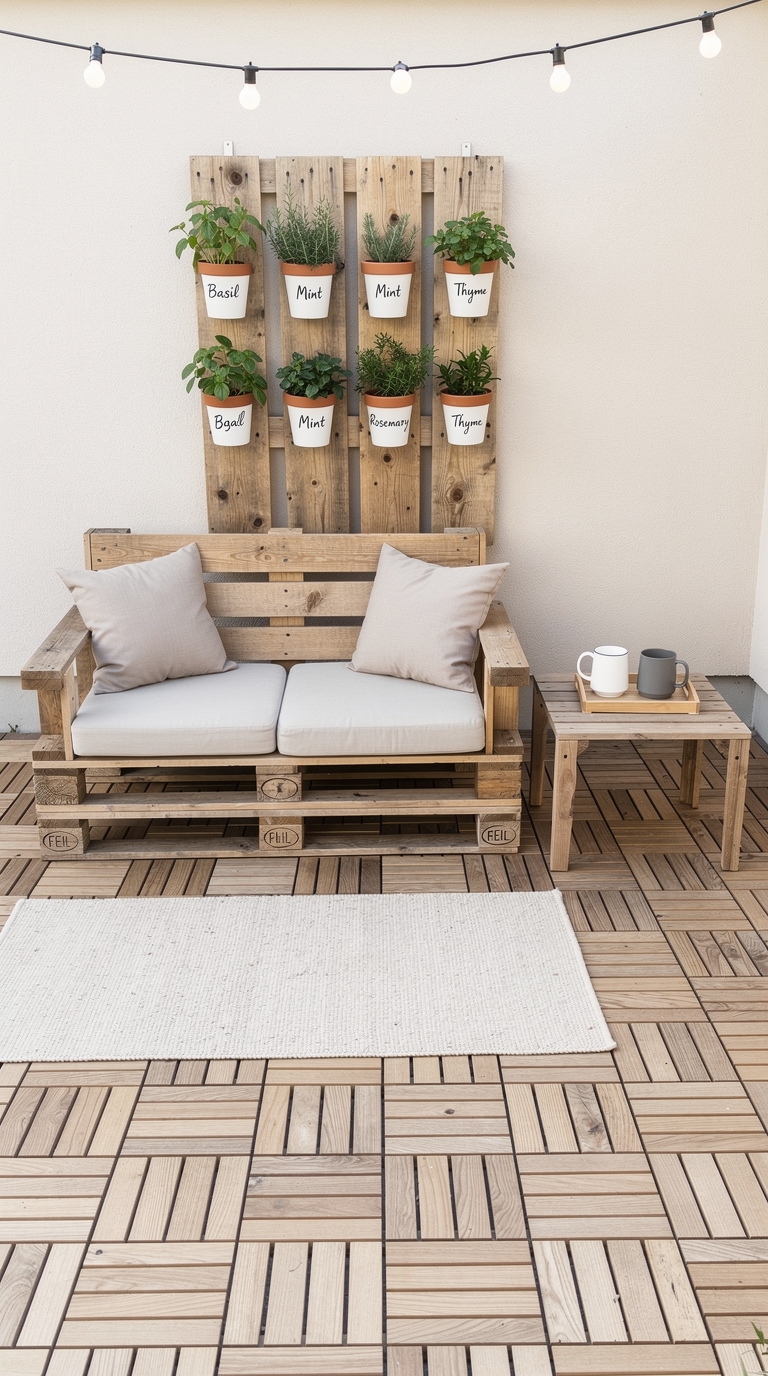
- Pallet platform patio: pallets sit on leveling points, then get tied together to form a low “floor.”
- Pallet deck patio: a simple frame supports pallets or pallet boards, giving a firmer, more deck-like feel.
- Pallet seating zone: pallets become the furniture, while the “floor” stays as gravel, pavers, or existing concrete.
Pallets, but make them safe
Not every pallet belongs in a leisure space, and the quickest upgrade you can make is choosing the right wood. Many pallets used in shipping carry a treatment stamp, often showing a country code plus a treatment method. Heat-treated pallets are commonly marked HT, while pallets marked MB indicate methyl bromide fumigation, a treatment worth avoiding for home projects. Pallets without clear markings can still be usable, yet caution makes sense, especially for seating where skin contact is constant.
A practical selection checklist keeps the hunt simple:
- Skip anything with oily stains, chemical smells, or unknown spills.
- Choose dry wood with crisp edges, no soft rot, and minimal cracking.
- Aim for consistent size so leveling and joining stay predictable.
- Favor clean sourcing such as local warehouses, building suppliers, or businesses that can tell you what the pallets carried.
Cleaning also matters. Brush off grit, wash with mild soap and water, rinse thoroughly, then let the wood dry fully before sanding or sealing. Moisture trapped under a finish is a shortcut to peeling later.
Plan the patio like a small outdoor room
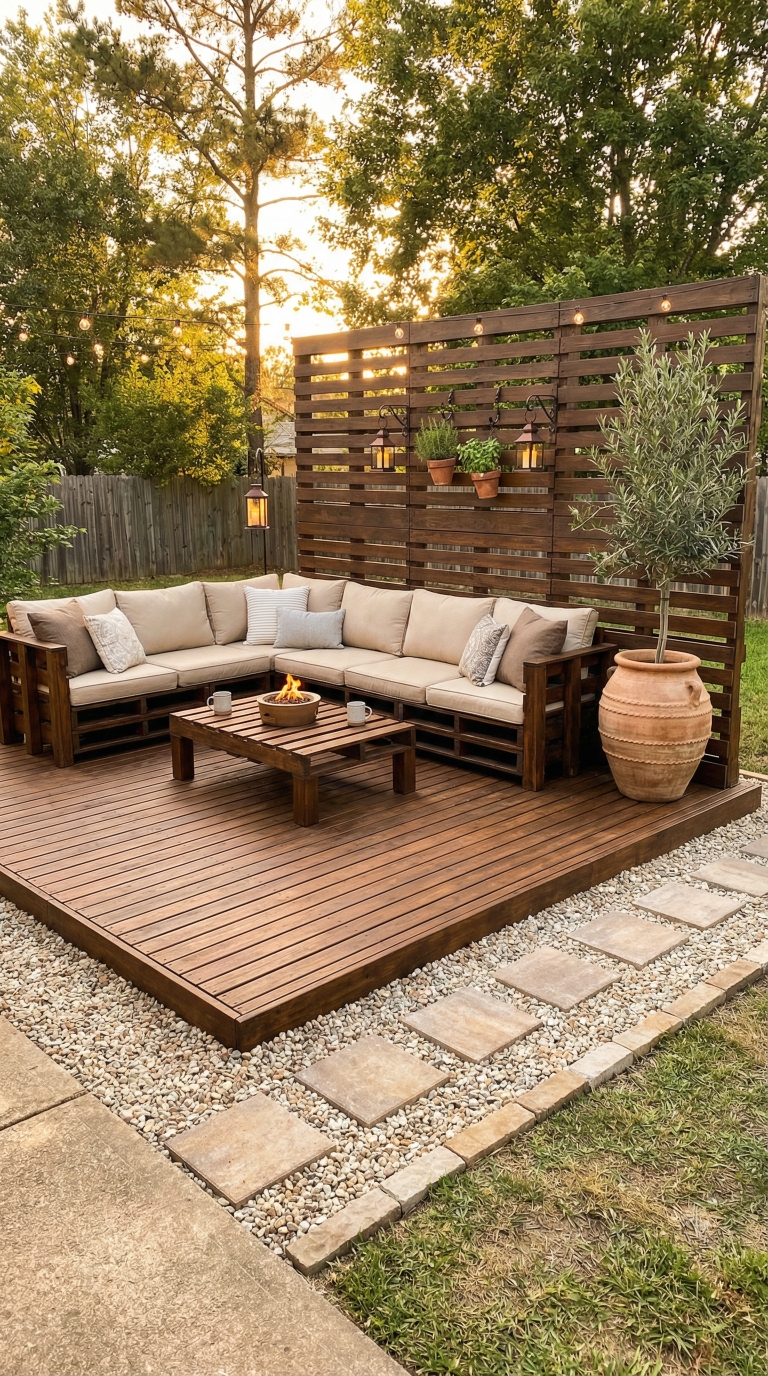
A pallet patio feels polished when it follows the same logic as an indoor layout, circulation first, furniture second, and styling last. Start by measuring the usable footprint, then sketch a simple plan on paper. Mark the door path, where feet naturally travel, and keep that route clear.
A few layout rules tend to work in most yards:
- Keep a “carry lane.” Leave enough width to walk with a tray.
- Anchor one focal point. A sofa wall, a table, or a plant screen works well.
- Add a border. Gravel, pavers, or a slim timber edge can define the zone.
- Design for edges. Plan a step, a corner, or a gentle ramp, so the platform never feels like a trip hazard.
Small spaces benefit from a tighter footprint. A 1.8 m × 2.4 m platform can hold a loveseat, a side table, and a plant corner, while still leaving room to move.
Tools and materials, kept realistic
Pallet projects can stay approachable when the tool list stays short. A basic build usually needs a tape measure, a level, a drill/driver, exterior screws, a saw for trimming boards, and sanding tools. Add a mallet, a pry bar, and a handful of shims for leveling, especially if the ground has a gentle slope.
For materials, plan on:
- pallets in matched sizes
- pavers or deck blocks for support points
- gravel for drainage where needed
- weed-control fabric for ground contact zones
- exterior screws, plus metal joining plates if desired
- stain, paint, or exterior wood sealer
Cushions and textiles come later, after the structure feels stable.
Ground prep, the part that decides whether it wobbles
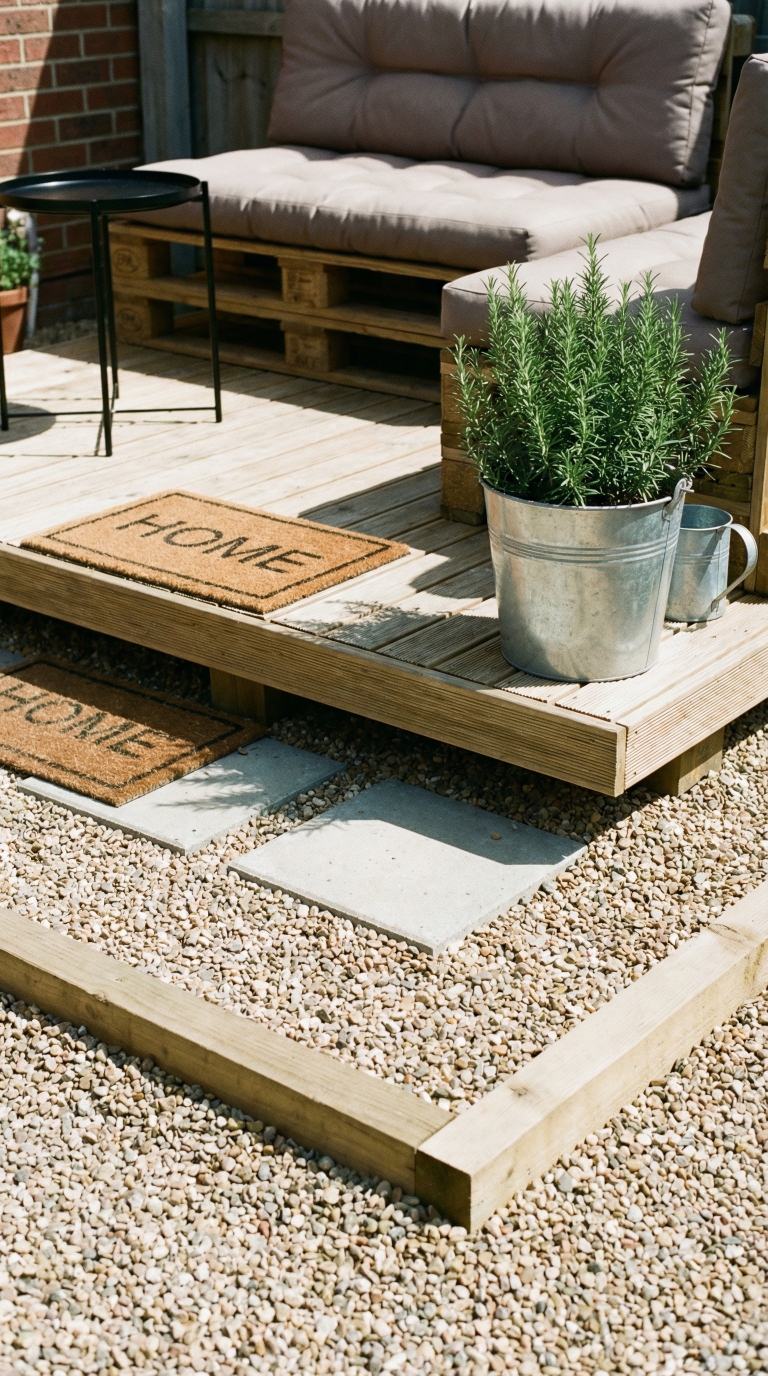
A beautiful pallet platform can still feel wrong if the base shifts after rain. Ground prep is where comfort starts, because a firm surface keeps furniture legs from rocking and boards from rubbing. Leveling also helps finishes last, since water drains away instead of pooling under the wood.
For a ground build, a reliable approach looks like this:
- Mark the footprint with string or spray paint.
- Remove sod and roots to a shallow depth.
- Add a compacted layer of crushed gravel or road base.
- Lay weed-control fabric if weeds are a problem where you live.
- Set pavers at each pallet corner and along midpoints, then level each one.
Pavers do more than level, they lift wood off damp soil. Even a small air gap reduces rot risk and makes cleaning easier.
Build option A: the straightforward pallet platform patio
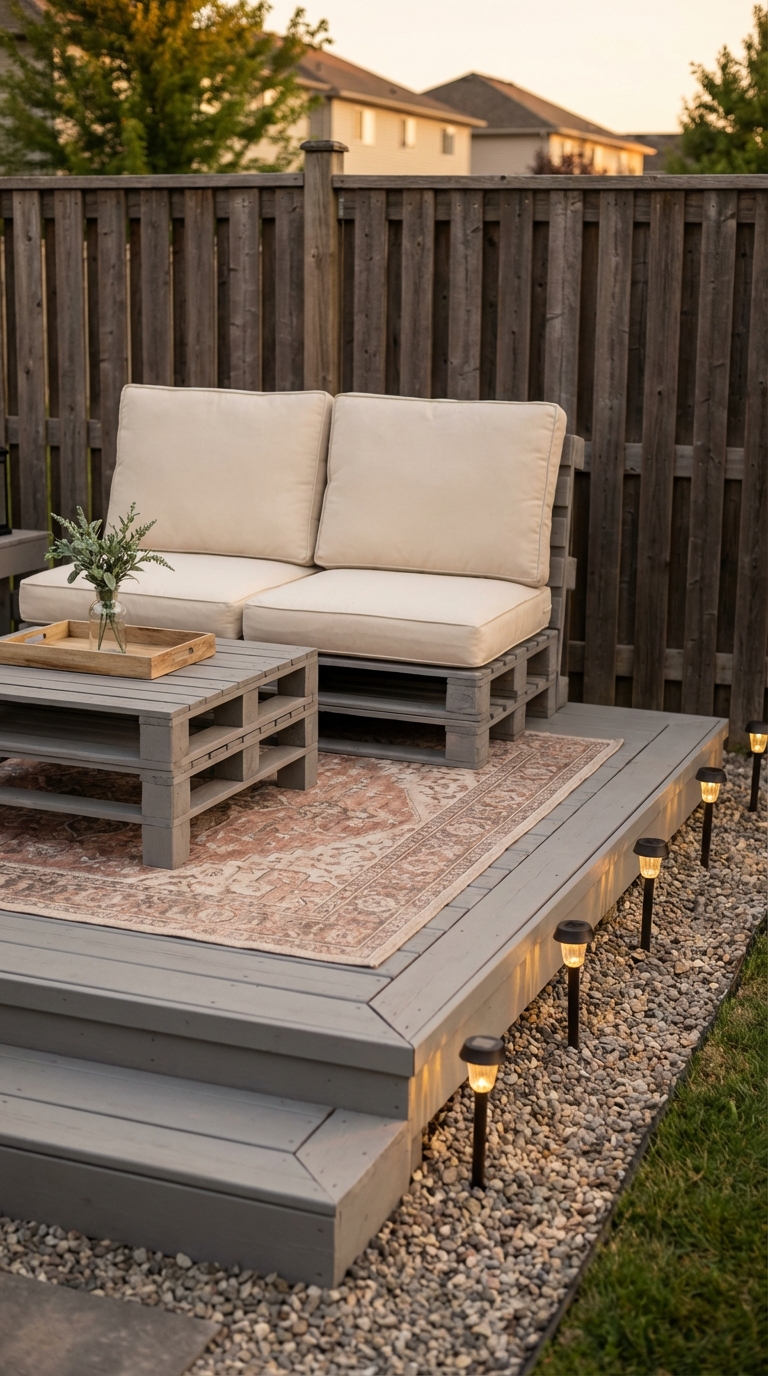
A pallet platform patio suits renters, small yards, and anyone who wants a quick transformation. The goal is a low “floor” that feels unified, not a row of separate pallets. Leveling and joining create that single surface.
Step 1: Dry-fit the pallets. Arrange them within your planned shape, flip or rotate until the top boards align in a pleasing pattern.
Step 2: Level the supports. Place a paver under each corner, add mid-supports for longer spans, then adjust with gravel or paver sand until the tops sit level with one another.
Step 3: Join pallets together. Use exterior screws through stringers where possible, or add metal plates across seams. Aim for several connection points per joint, spreading fasteners so the structure acts as one.
Step 4: Cap rough edges. Add a perimeter board, or reface edges with reclaimed pallet boards. A clean border changes the entire look, because the eye reads it as “built,” not “stacked.”
Step 5: Add a safer step. A single pallet trimmed down can become a step, or a short run of deck boards can form a landing. Keep step depth generous, and sand the front edge smooth.
Build option B: a sturdier pallet deck patio with a simple frame
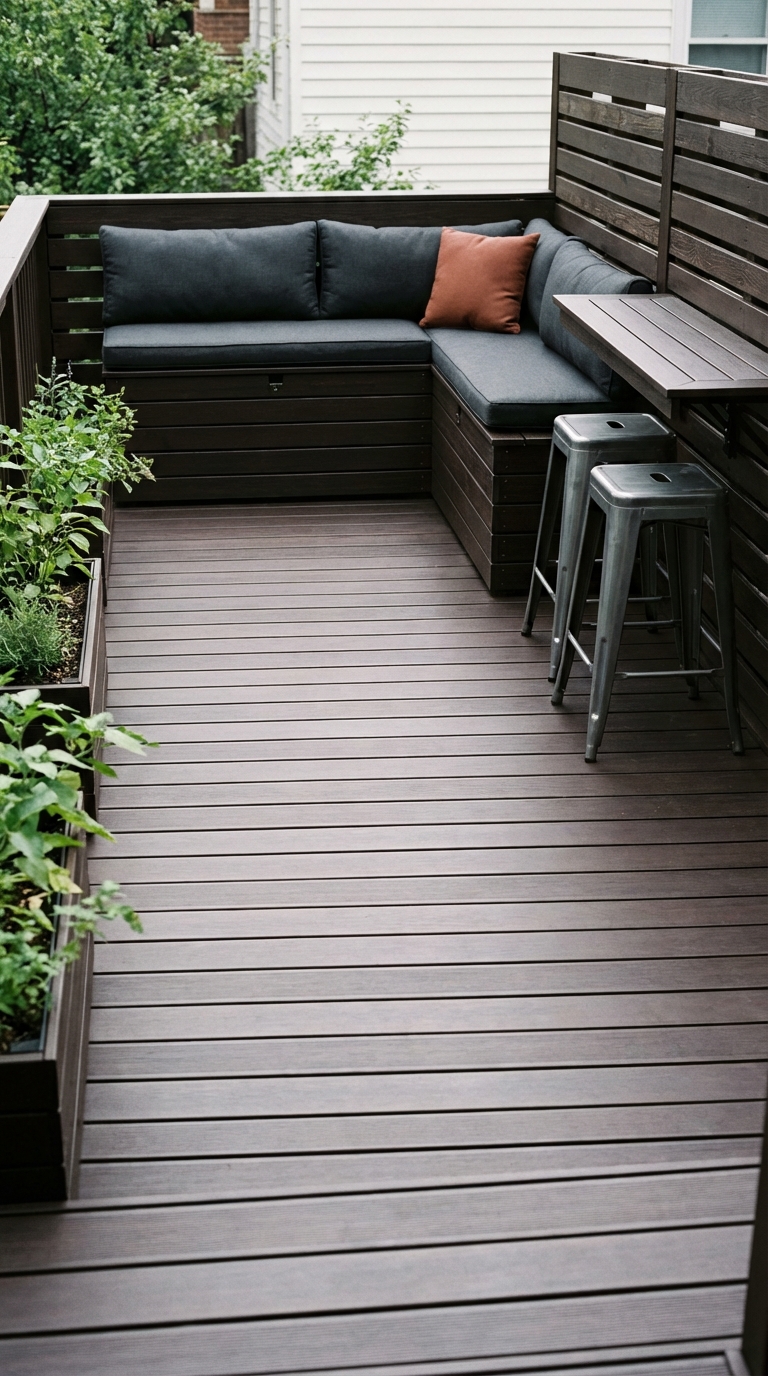
A framed version suits larger footprints, heavier furniture, and households that use the outdoor space daily. The frame spreads weight across more points, and it gives a place to secure boards neatly.
A basic frame uses treated lumber or naturally durable wood, laid out like a shallow deck. Keep support points closer together than you think you need, because pallet boards can vary in thickness.
A practical build flow:
- Level the supports first. Deck blocks or pavers can work, set them in a grid.
- Assemble a rectangular frame. Square the corners, then add cross braces.
- Secure the frame to supports. Fasten with hardware suited to outdoor use.
- Lay pallets or decking boards. Pallets can act as modules, or you can deck the frame with pallet boards for a smoother surface.
- Finish the perimeter. A fascia board hides the structure, and it keeps the look crisp.
A framed deck also makes it easier to plan an integrated bench, a storage lid, or a clean step down to the lawn.
Seating that feels inviting, not makeshift
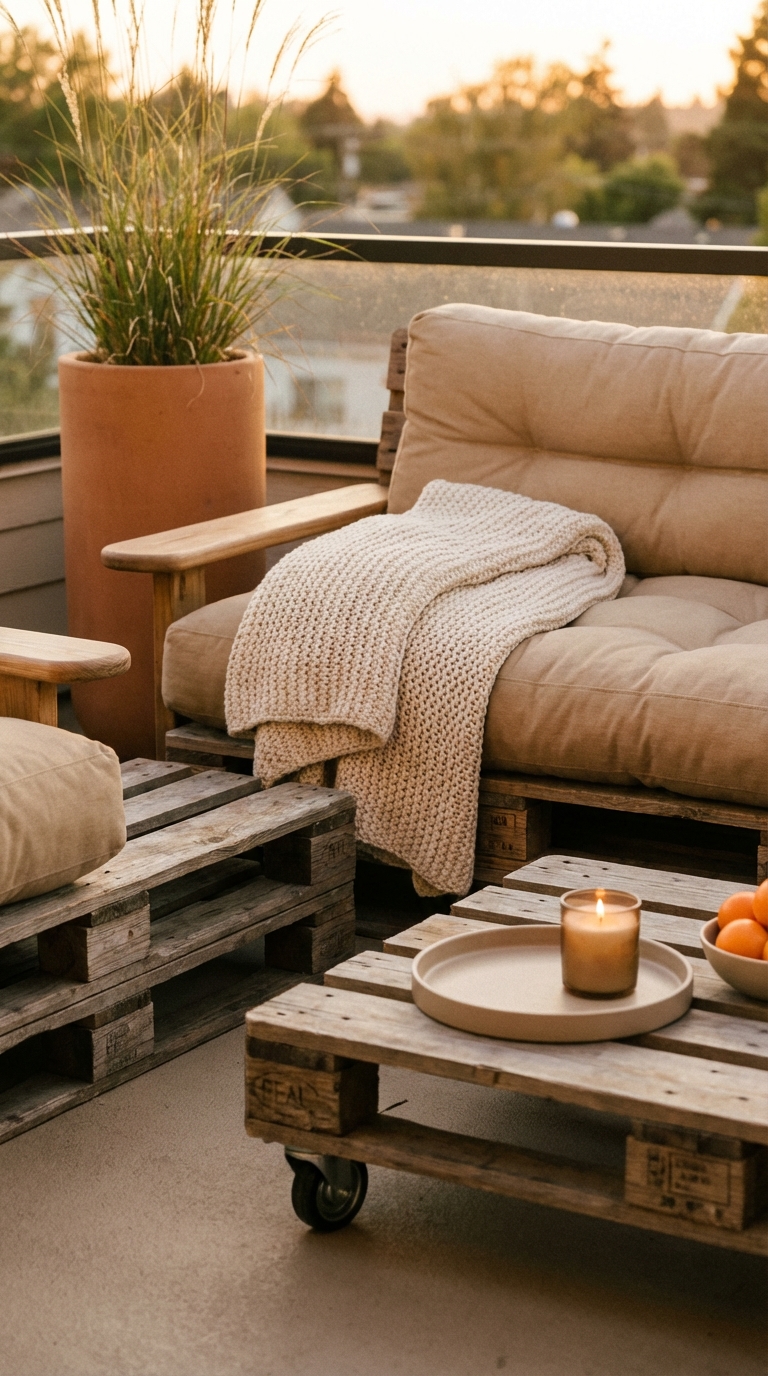
Outdoor comfort comes down to seat depth, back support, and cushion thickness. Pallets excel at modular seating, because the height often lands near a low lounge profile. A simple pallet sofa uses two pallets stacked for the base, then one pallet cut down for the backrest.
Guidelines that improve comfort fast:
- Seat height: aim for about 40–45 cm from floor to cushion top, adjusting with pallet height and cushion thickness.
- Seat depth: 55–65 cm works well for lounging.
- Back angle: a slight recline feels better than a vertical back, add spacer blocks behind the backrest.
Corner seating can be created by forming an L shape, then bridging the inside corner with a small platform or a cut pallet section. Add wide armrest planks, then round the edges so the touch points feel smooth.
Tables, serving ledges, and small-space dining
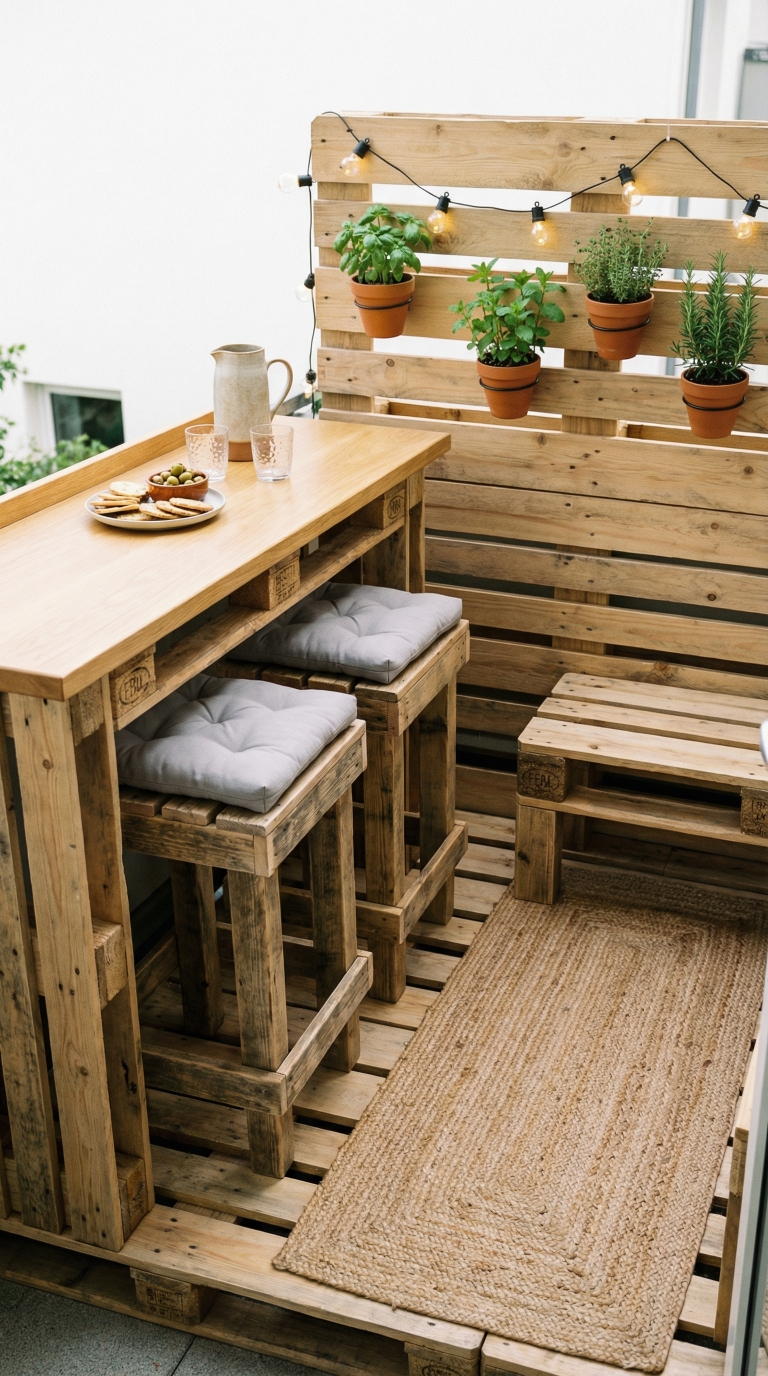
A pallet patio often needs one “hard” surface for mugs, plates, and books. A coffee table can be as simple as a single pallet on casters, topped with a sanded board layer. For a cleaner look, add a thin top made from pallet slats laid tightly, then seal it well.
For dining, keep the footprint compact. A bar-height ledge fixed to a pallet screen works well on narrow patios, and it doubles as a buffet zone during gatherings. Pair it with slim stools, then add outdoor cushions to soften the seating.
A side table can also act as a visual pause between sofa sections. Small pieces help the patio feel designed, because the layout gains rhythm and balance.
Planting and privacy, using pallets as structure
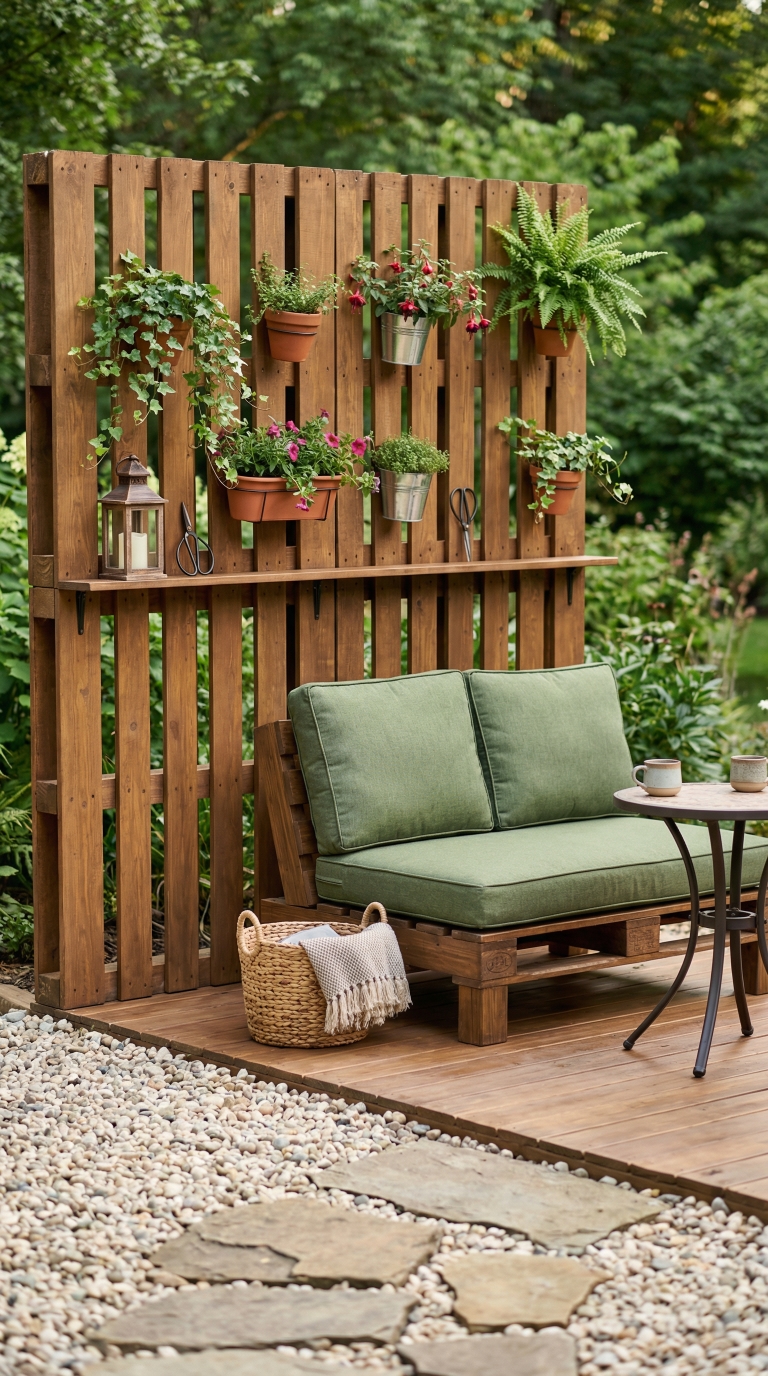
Greenery changes pallet wood instantly, adding softness and color that reads as garden style rather than construction material. A pallet can become a vertical planter, a climbing frame, or a low planter edge around the platform.
A few plant-friendly ideas:
- A pallet screen with hooks for small pots, lanterns, or herb containers.
- A climbing panel with wire or twine for jasmine, pothos, or seasonal vines, chosen for your climate.
- A planter border built from pallet boards, lined with landscape fabric, then filled with soil for compact shrubs or grasses.
Privacy screens work best when they stop the eye without blocking airflow. Leave small gaps, and avoid solid walls that catch wind like a sail.
Sanding, sealing, and finishing for outdoor life
Pallet wood has character, yet splinters and rough patches can ruin the experience. Sand the surfaces people touch, then focus on edges, corners, and seat fronts. A random-orbit sander speeds things up, while hand sanding helps on corners and inside gaps.
Finishes fall into a few practical categories:
- Exterior stain: adds color, highlights grain, and can be refreshed without stripping.
- Exterior paint: hides mismatched wood, gives a modern look, and can seal the surface well.
- Clear exterior sealer: keeps a more natural look, yet often needs more frequent upkeep.
Apply finish after the wood is clean and fully dry. Cover end grain well, because cut ends absorb moisture faster. Plan on a light maintenance coat as seasons change, especially in rainy climates.
Slip resistance, edges, and small safety upgrades
A pallet patio should feel relaxed, and small safety choices help that. Add grip under rugs, choose outdoor mats that dry quickly, and keep drainage paths open. For steps, apply a textured strip or a non-slip paint additive where feet land.
Edges deserve attention. A perimeter frame board reduces toe catches, and it makes the platform look intentional. Round over sharp corners on seating and tables. Use exterior-grade screws, then sink them slightly below the surface, so bare feet never meet a sharp head.
Styling the space so it looks like a finished patio
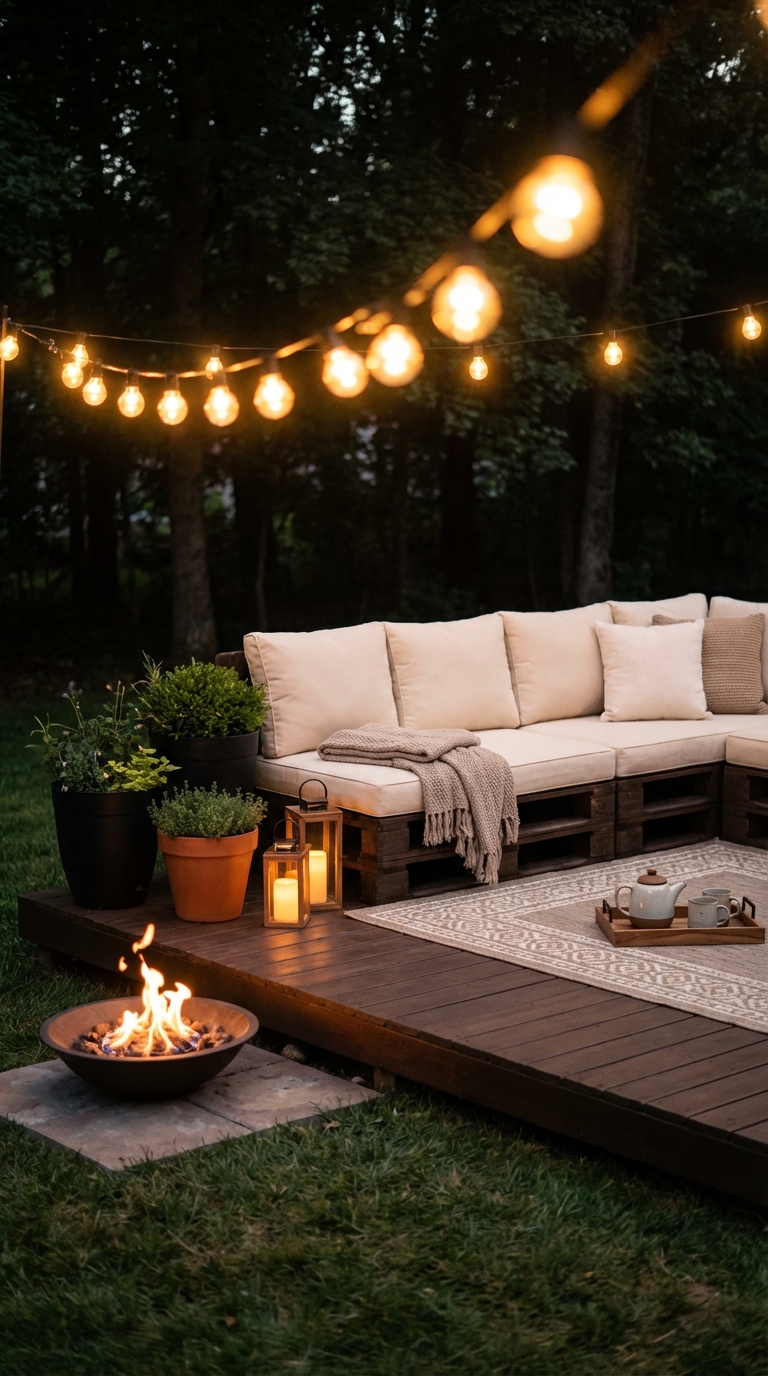
Styling tends to click once the build feels steady. Start with an outdoor rug to define the zone, then layer cushions in two or three coordinating colors. Add a throw for evening comfort, and keep textiles washable.
Lighting creates mood and practicality at once:
- a string of warm lights overhead
- solar lanterns along the edge
- a small table lamp rated for outdoor use in a covered spot
Accessories can stay simple. A tray on the coffee table, a planter trio, and one tall element such as a trellis panel or a potted tree create height variation without clutter.
Budget notes, and where to spend a little more
Pallet patios can be cost-friendly, yet a few upgrades pay off. Spend on stability first, support points, screws, and base prep. Put money into cushions next, since comfort drives use. Finish products matter too, because they extend the life of the wood.
Savings often come from smart sourcing. Many patios look better with fewer pallets plus better finishing, rather than an oversized build with rough edges. A smaller platform with a clean border can feel more polished than a giant surface that shifts underfoot.
Seasonal care and simple maintenance
Outdoor wood benefits from routine, and the routine can stay light. Sweep debris off regularly, especially after storms. Check fasteners every few months, tightening anything that has loosened as wood expands and contracts.
After a rainy season, inspect the underside. Airflow matters, so keep leaves from packing under the platform. Wash the surface with mild soap, hose off any residue, then let it dry. Recoat worn areas before the wood turns rough, because early touch-ups prevent larger repairs.
A pallet patio that grows with you
A pallet patio rarely stays “done” in one weekend, and that’s part of the charm. Start with a stable base plus one seating zone, then add a table, a screen, or a planter wall as the space earns its keep. Over time, the patio can become a hub for morning coffee, after-school chats, and slow weekends outdoors, all built from simple wood, careful planning, plus protection suited to rain and sun.