
Patio Decorating Ideas That Turn a Plain Slab Into an Outdoor Room
A patio doesn’t need a full makeover to feel finished, it needs a plan that makes the space feel inviting at noon, and still welcoming after sunset. The fastest transformations usually come from a handful of layers, a clear seating zone, a grounded “floor” with a rug, soft textiles for comfort, lighting that flatters faces, and plants that add height and life. Put those pieces together with intention, and even a small patio starts to read like a room you actually want to use.
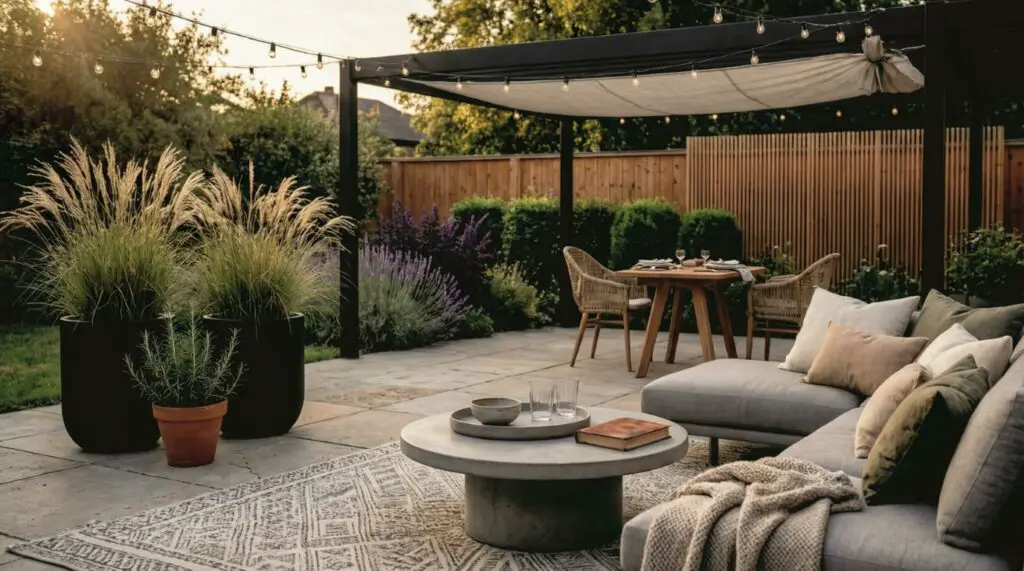
Start with a quick patio audit, size, sun, and how you’ll use it
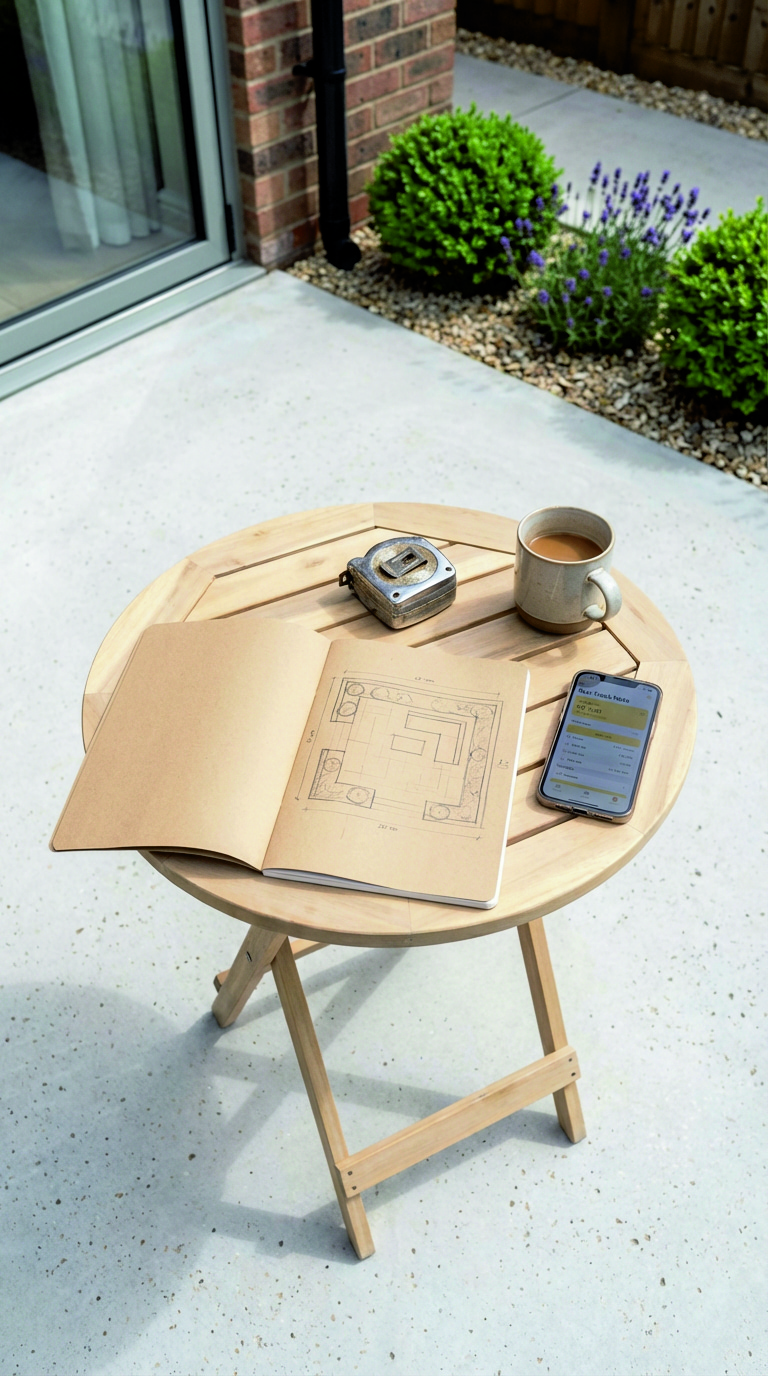
Grab a tape measure, a notepad, and five minutes of honesty. Note the patio’s length and width, where doors swing, and the natural walking path from the house to the yard. Mark anything permanent, a hose bib, grill line, railing posts, or a column. A simple sketch helps you avoid buying a chair that blocks the only clear route to the steps.
Spend one day noticing sun and wind. Morning sun might be perfect for coffee, while late-afternoon glare can make a lounge seat unusable without shade. Decide the patio’s main job, lounging, dining, or a mix. When the “job” is clear, every decor choice becomes easier, and the space stops feeling like random outdoor furniture parked on concrete.
Quick check before you shop
- One main zone beats three cramped ones
- Leave a clear path from door to seating
- Plan for at least one surface to set down a drink
Pick a style lane, then build a simple color plan
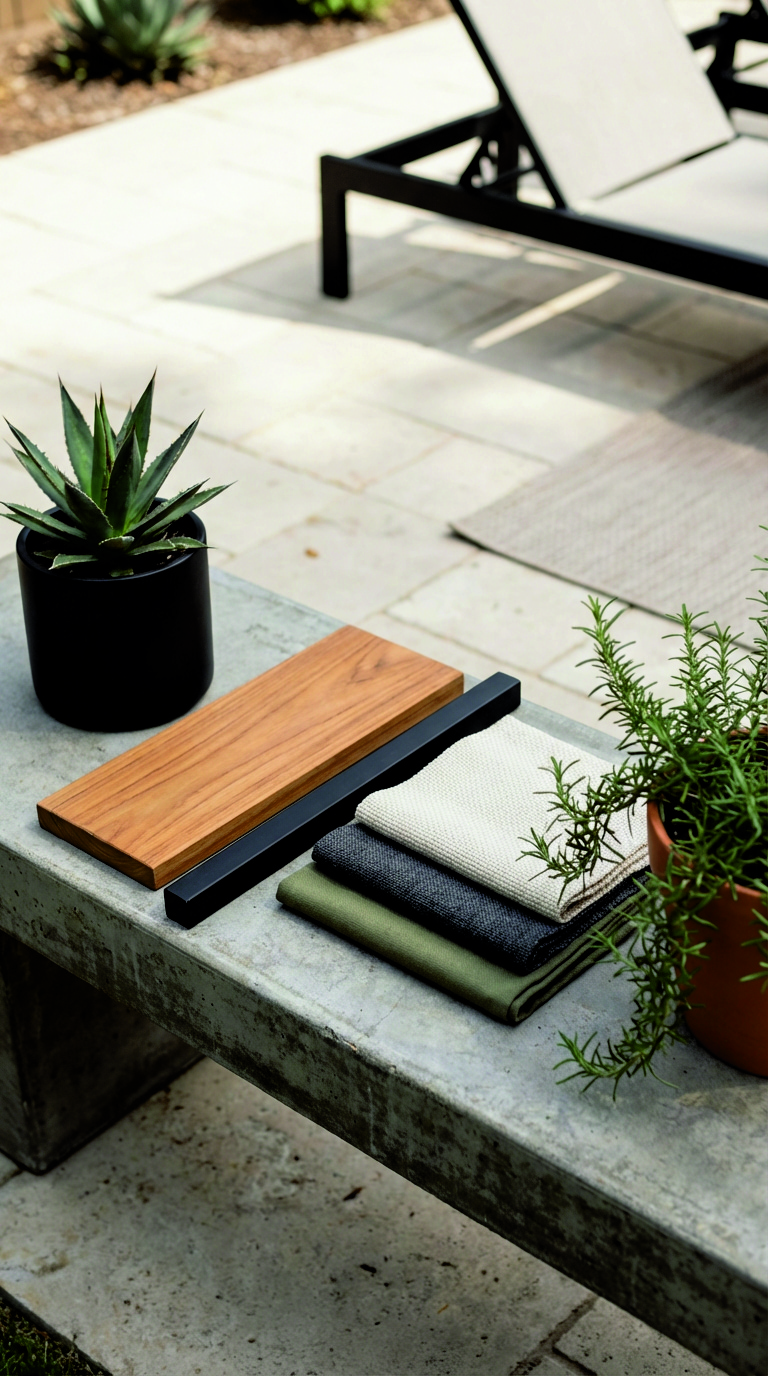
A patio looks cohesive when it repeats a few elements on purpose. Choose one style direction, modern, relaxed boho, coastal, farmhouse, or minimal, then set a color plan you can repeat across textiles and planters. Aim for two neutrals (often warm white, charcoal, tan, or soft gray), one accent color, and one natural finish (wood, black metal, stone, or woven fiber).
Modern patios usually look best with fewer patterns, crisp shapes, and a restrained palette. Boho patios can handle more pattern, more texture, and more collected pieces, yet still look pulled together when one or two colors repeat. If you feel stuck, start with the hard items first, furniture frames and large planters, then add smaller color through pillows, rugs, and lanterns.
An easy formula
- Furniture: neutral frame
- Rug: pattern or texture
- Pillows: 2 solids + 1 print
- Planters: one finish repeated
Zone the patio like an “outdoor living room”
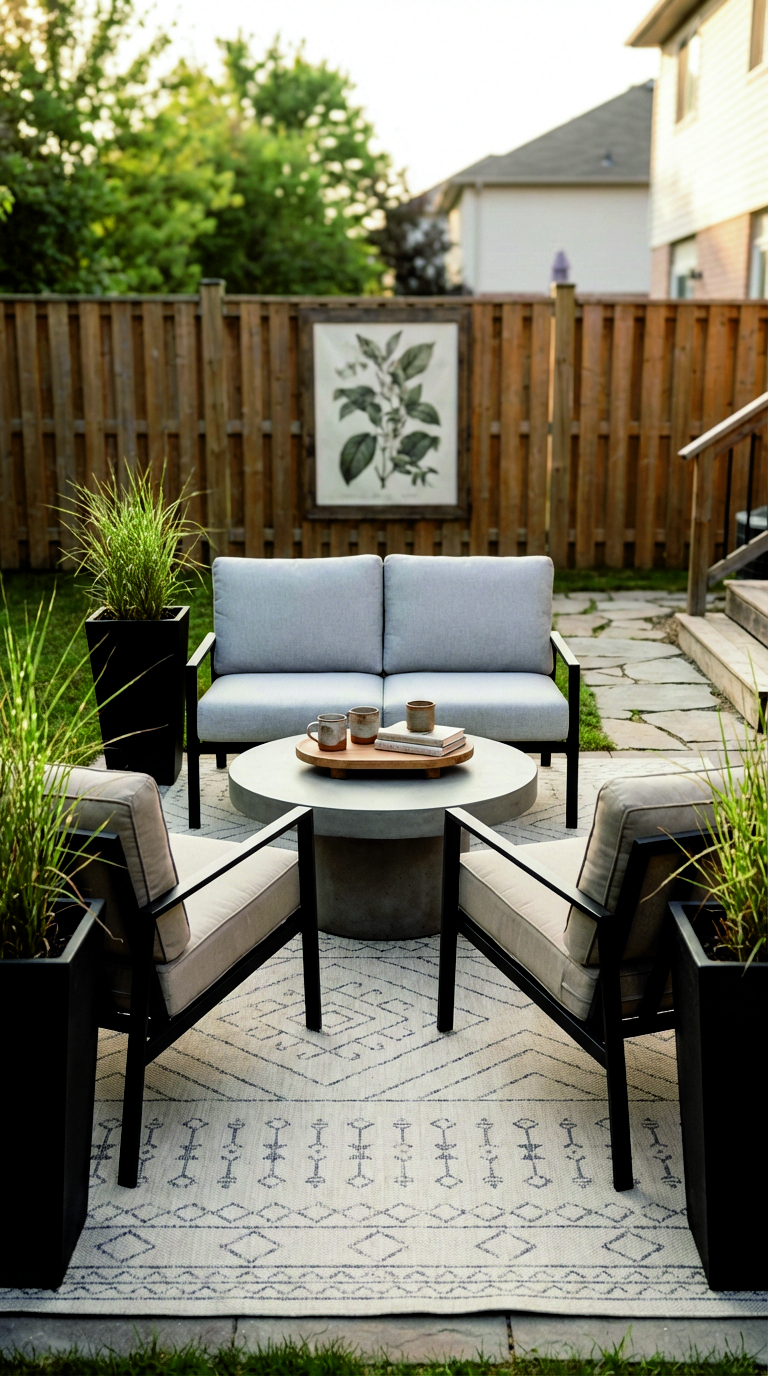
Treat the patio as a series of mini-rooms, even if you only have space for one. Start with your biggest piece, a sofa, loveseat, or dining table. Place it where conversation feels natural, and where the view from inside looks intentional. If the patio opens straight from a back door, angle seating slightly so it feels like a destination, not a hallway.
Create boundaries with simple tools: a rug under seating, a pair of tall planters at the edge, or a slim console table behind a sofa. A focal point helps the zone feel complete, think of a fire bowl, a low coffee table with a tray, a wall feature, or a planter cluster. Once the main zone is settled, add flexible seating like stools or lightweight chairs that can move for guests.
Comfort rule that matters
- Every seat should have a nearby surface, even a small side table
Anchor the setup with an outdoor rug
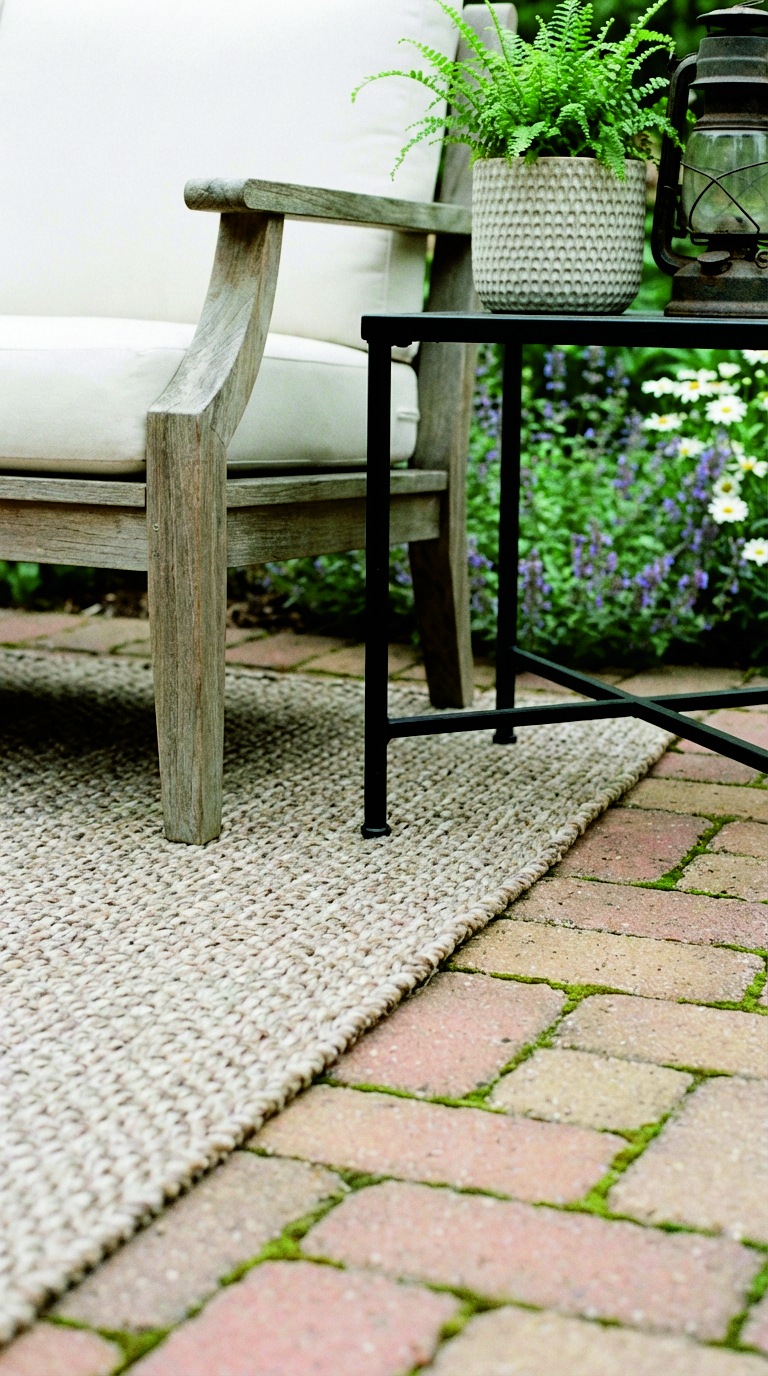
A rug is the fastest “room-maker” outdoors. It frames your seating area, hides stains and cracks, and makes a basic furniture set look styled. Choose a size that matches the furniture footprint, not the patio footprint. A rug that’s too small can make everything look like it’s floating.
For lounge seating, aim to fit at least the front legs of the sofa and chairs on the rug. In a dining zone, the rug should extend far enough that chairs stay on the rug when pulled out. Flatweave styles are easier for sliding chairs, while thicker weaves feel cozy under bare feet in a lounge area.
Rug placement tips
- Lounge zone: front legs on the rug
- Dining zone: allow chair pull-back space
- Keep edges clear of main walk paths
Seating that invites people to stay
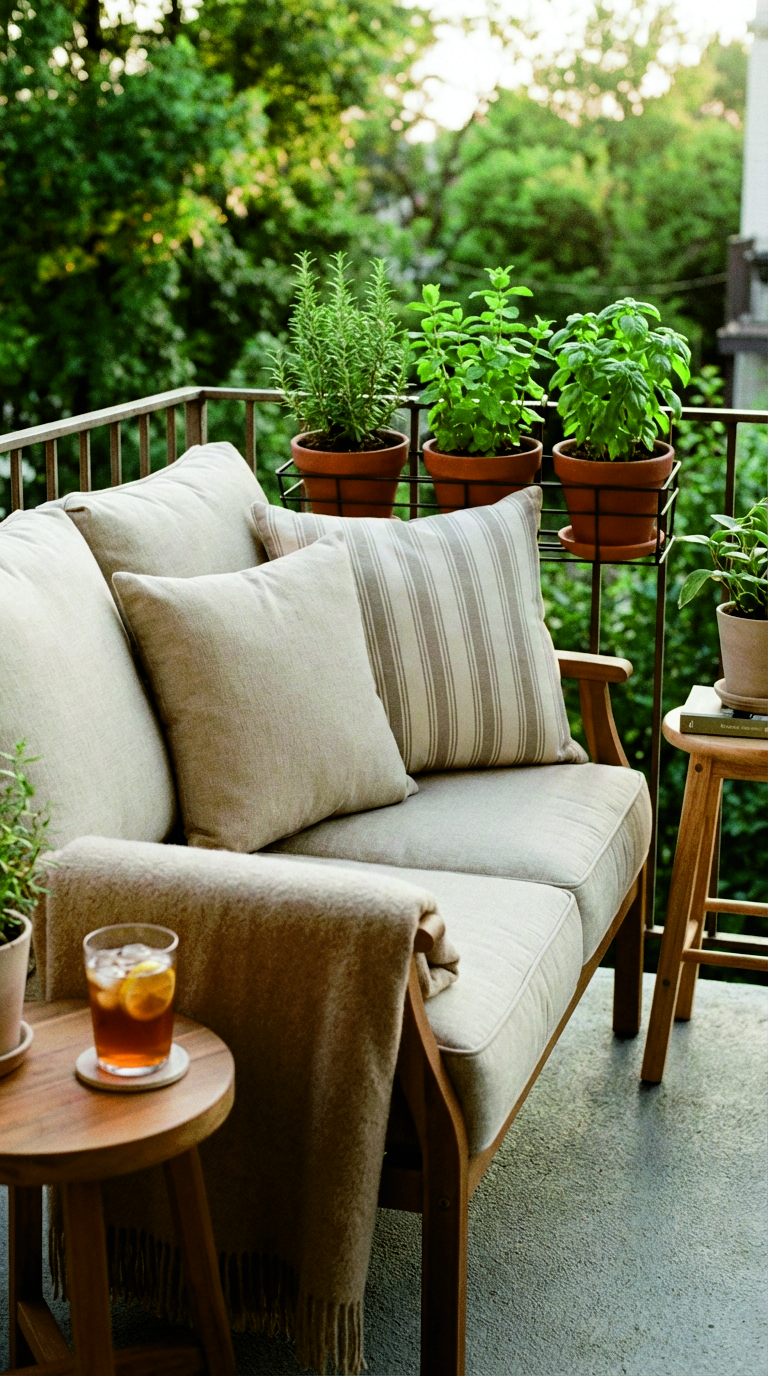
Seating feels “expensive” when it looks comfortable. Start with one anchor piece sized for your patio, then add smaller seats that can shift around. A loveseat plus two chairs often works better than a bulky sectional in tighter spaces. If you love the sectional look, choose a compact modular set that can be reconfigured.
Add a landing spot for each seat, a side table, a small stool, or a narrow console. Comfort upgrades matter more than matching sets. Outdoor seat pads, lumbar pillows, and one throw for evening use turn a stiff chair into a spot where someone lingers. Keep the look tidy by repeating one pillow color across the set, then adding a single patterned cushion for personality.
Low-effort upgrades
- Chair pads with ties to prevent slipping
- One oversized pillow per corner seat
- A tray on the coffee table to corral small items
Lighting that flatters, overhead glow plus layered lanterns
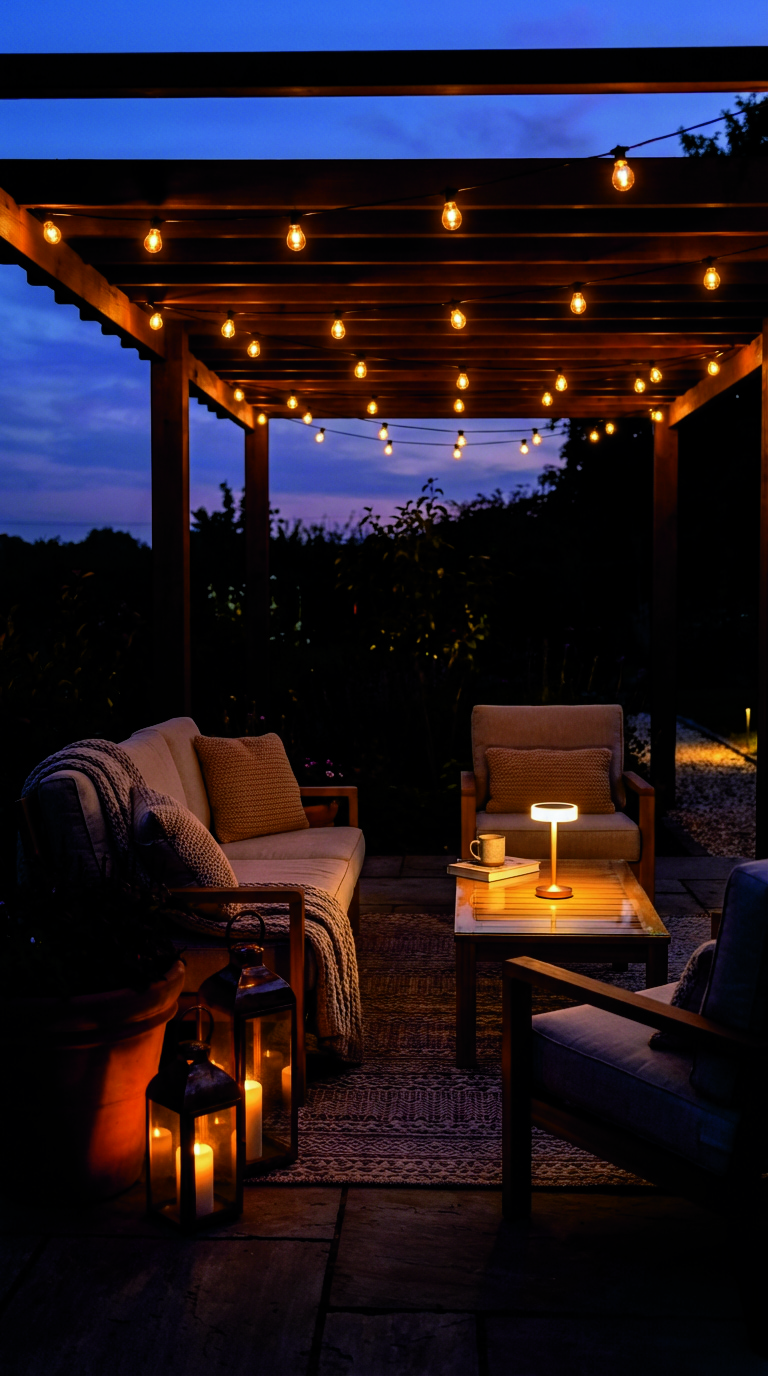
Good outdoor lighting is less about brightness, more about mood and visibility. Use three layers for a balanced look: overhead ambiance, mid-level glow, and a low layer to guide steps. Overhead can be string lights, a pendant on a covered patio, or a line of café lights under a pergola. Mid-level can be lanterns or rechargeable table lamps. Low lighting can be solar stakes near planters or subtle path lights.
String lights work best when they feel deliberate. Run them in clean lines, and anchor them to sturdy points. Avoid placing bulbs directly in your eye line while seated. Candle-style lanterns (real or LED) add warmth on tables and steps, and they make casual dinners feel special without a lot of effort.
Lighting checklist
- Warm-toned bulbs for a softer look
- Keep cords and stakes out of walkways
- Put task light near the grill or serving surface
Textiles that upgrade the patio, pillows, throws, and outdoor curtains
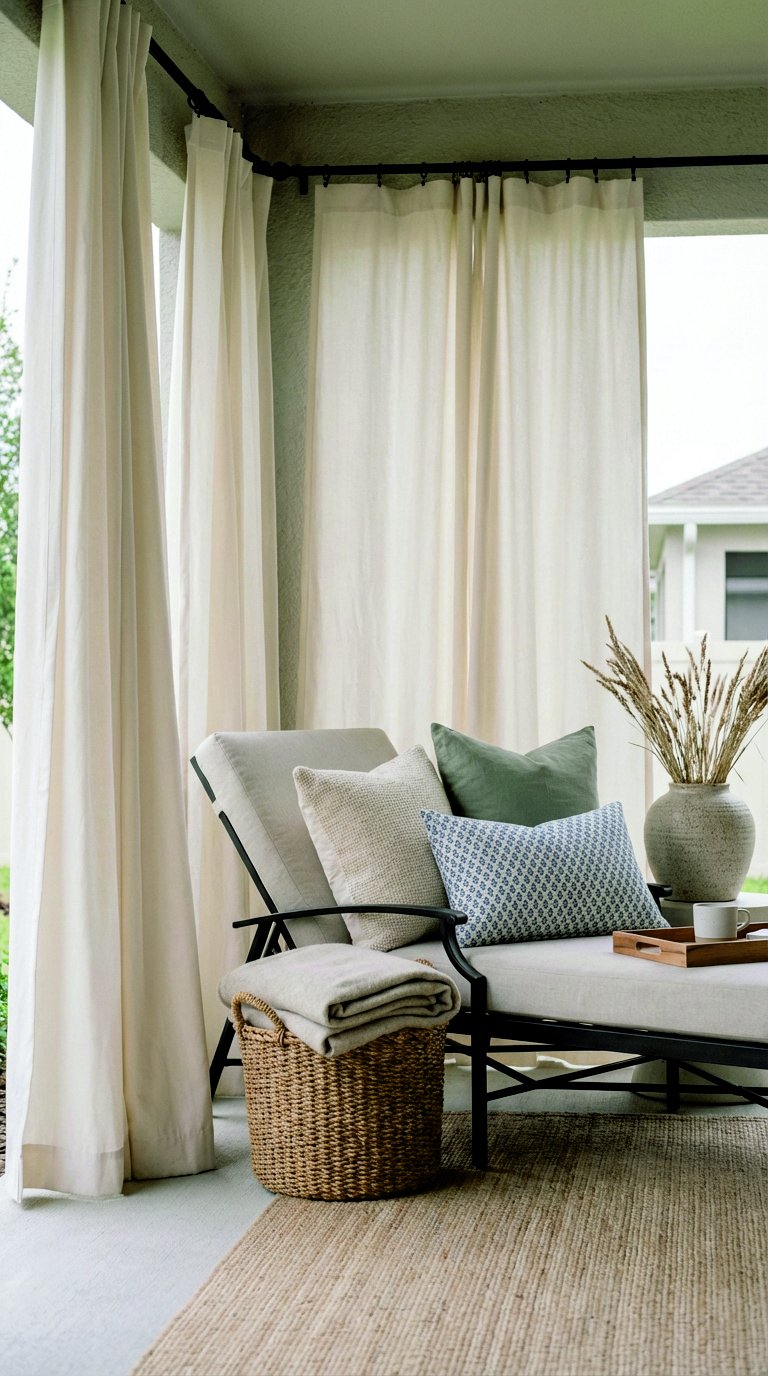
Textiles soften hard patio surfaces and make seating feel inviting. Choose outdoor-rated fabrics that resist fading and dry quickly. If you get frequent rain, prioritize removable covers and easy storage. A small deck box, a bench with hidden storage, or sturdy bins can keep pillows fresh during storms.
Pillows do a lot of design work. Use them to repeat your accent color, and to add pattern without repainting anything. Throws earn their keep for evening gatherings, especially in breezy locations. On covered patios, outdoor curtain panels can add softness and privacy. Keep them simple, neutral panels usually look timeless, and they work with nearly any style.
A tidy textile plan
- 2–3 pillow colors total
- One pattern, one solid, one texture
- Store soft goods when bad weather hits
Planters as decor, height, grouping, and greenery that frames the space
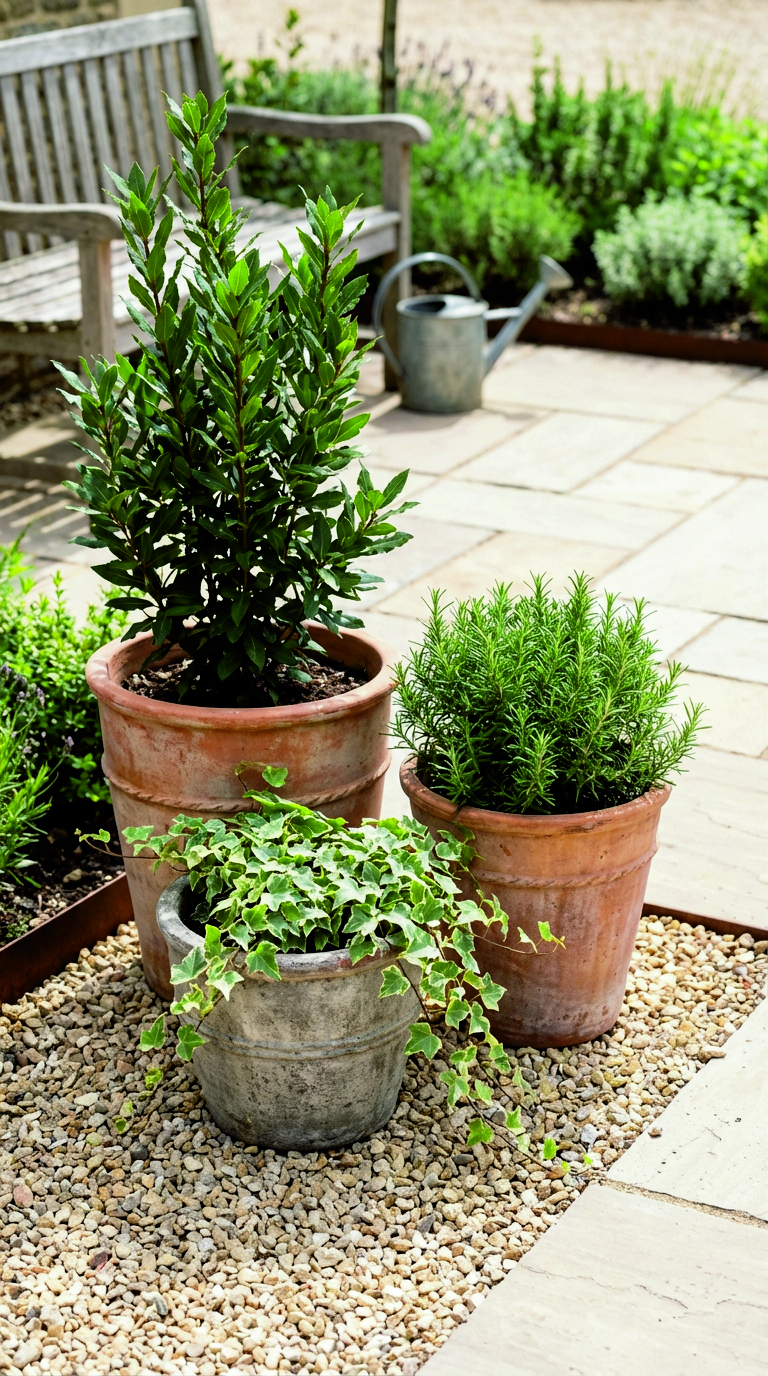
Plants make patios feel alive, and planters can act like decor. Use a “high–medium–low” mix to create depth. Tall plants in corners add enclosure. Medium planters beside seating soften edges. Low bowls or trailing plants can sit near steps or on side tables.
Group containers in odd numbers for a natural, balanced look. Repeating one planter finish, matte black, terracotta, or a warm stone tone, keeps the display from looking cluttered. In small spaces, think vertical: a trellis with vines, a narrow plant stand, or wall-mounted pockets can add greenery without stealing floor space.
Easy planter styling
- Pair one tall pot with two smaller ones
- Repeat one pot material for cohesion
- Use trailing plants to soften hard lines
Creating shade, umbrellas, pergolas, and sails
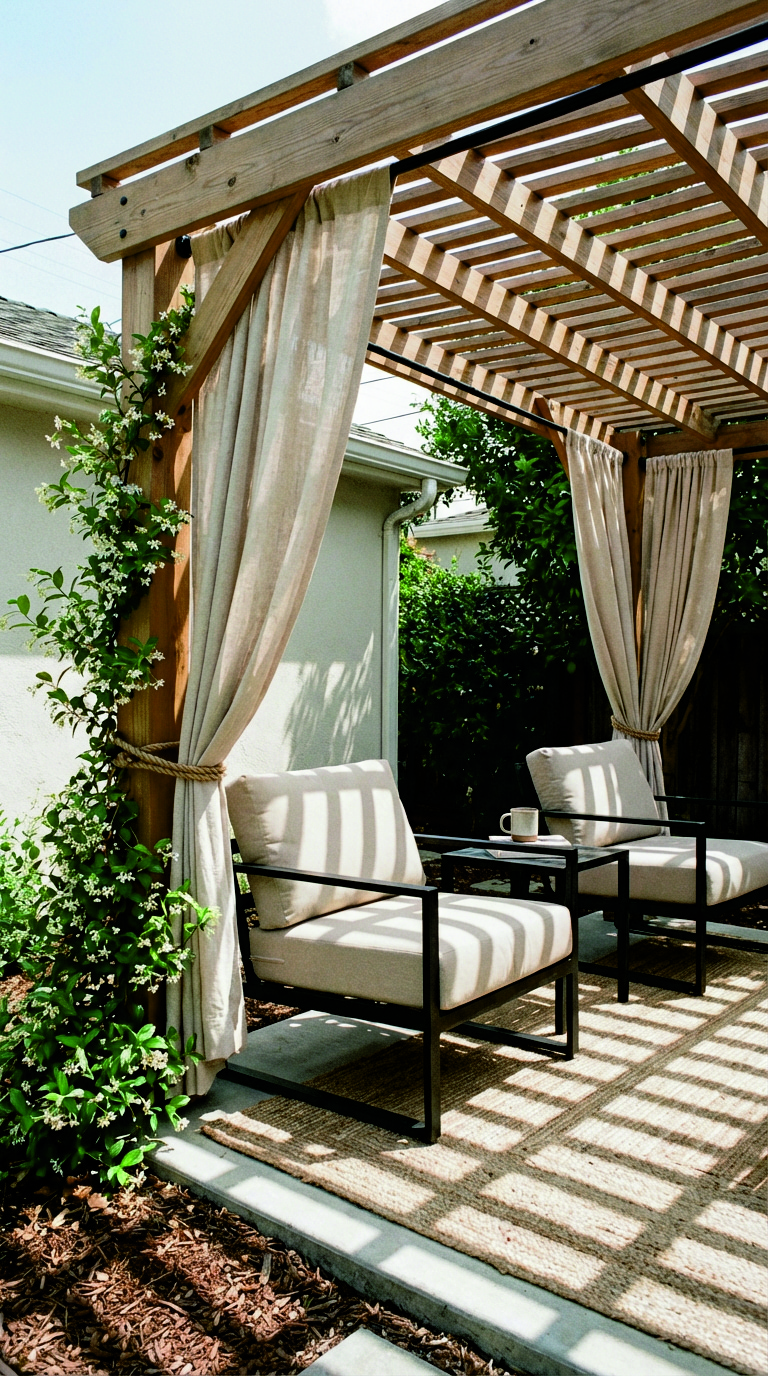
Shade affects how often you’ll use the patio, and it shapes the look of the space. For flexible coverage, a tilt umbrella works well for shifting sun. A cantilever umbrella frees up table space, yet it can feel oversized on small patios, so scale matters. Shade sails create a modern look and can cover wide areas, but they need solid mounting points and thoughtful angles for rain runoff.
Pergolas bring structure, and they define a patio zone in a way furniture alone can’t. Even a small pergola creates a ceiling line that helps the patio feel like an outdoor room. Add a simple fabric panel, climbing plants, or slatted shade for comfort. If your patio is uncovered and windy, choose shade options with stable bases and secure anchors.
Shade choices by need
- Flexible: tilt umbrella
- Defined “room”: pergola
- Wide coverage: shade sail
Privacy screens that don’t feel heavy
Privacy makes patios feel relaxing, especially in close neighborhoods or apartment settings. The goal is screening without blocking all light and airflow. Freestanding screens are renter-friendly, and they can move with the sun or the season. Slatted panels, lattice, or woven screens look lighter than solid walls.
Layer privacy for a more natural effect. Combine a screen with tall planters, then add a lantern or a small wall light to make the corner feel styled. Curtains on a covered patio can soften a hard edge, and they add a breezy look with minimal effort. If you’re using greenery for privacy, choose plants that suit your sun exposure, and place them where they’ll actually block sightlines when seated.
Small-space privacy moves
- Tall planters along the edge
- A narrow trellis with vines
- One movable screen panel for targeted coverage
Dining zone styling that supports easy entertaining
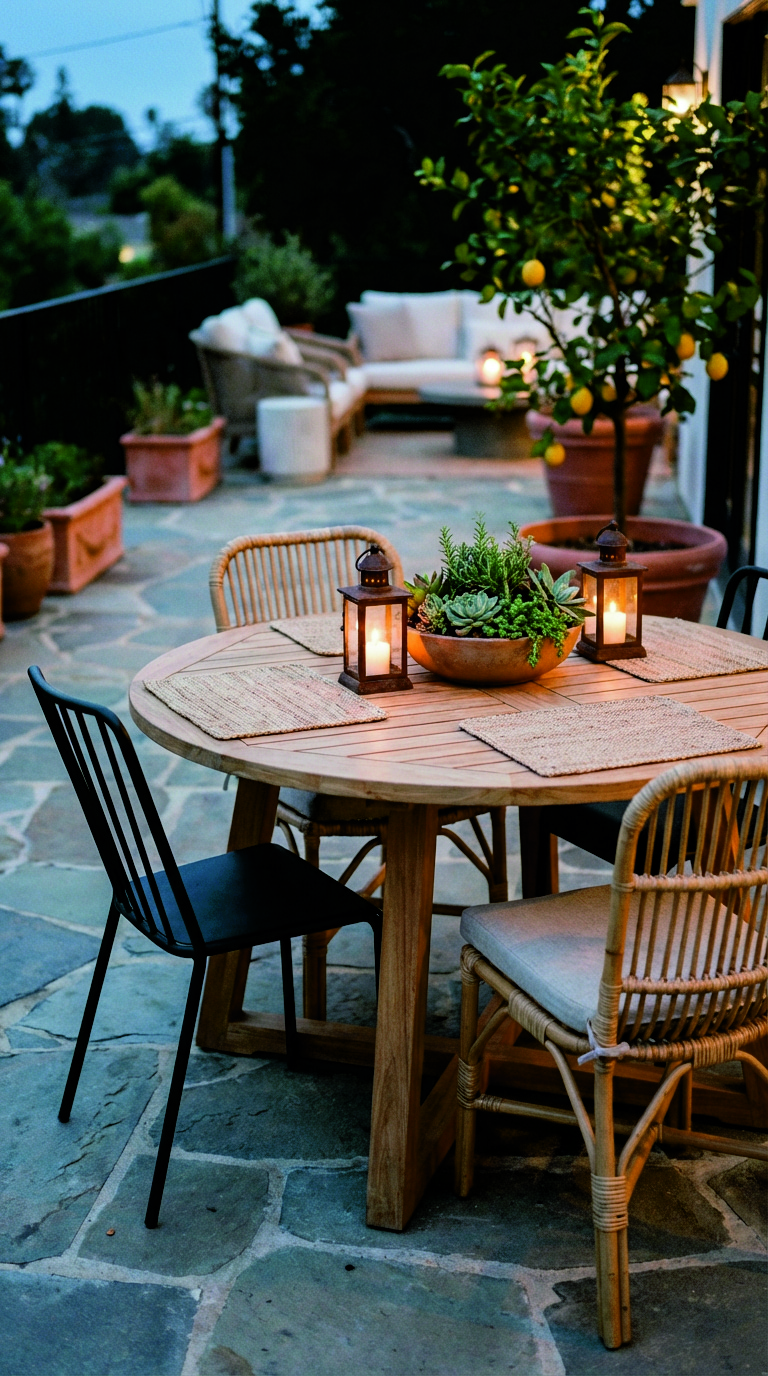
Outdoor dining feels effortless when the layout supports serving and movement. Leave enough clearance to slide chairs back without bumping a wall or planter. Round tables often work better in tight patios, since they soften corners and improve flow. If you host occasionally, consider a small table plus a folding side table that appears when needed.
Style the dining zone with simple layers: a durable runner or placemats, a centerpiece that won’t blow away, and lighting that makes faces look warm. Keep a serving surface nearby, a console, bar cart, or even a small shelf. One well-placed lantern can carry the whole setup from daylight to dinner without changing anything else.
Table styling that lasts outdoors
- Low centerpiece for conversation
- Weighted items for windy areas
- Light source within reach of the table
Fire pits and focal features, the gathering-point effect
A fire feature can turn a patio into the place everyone drifts toward after dinner. Scale matters more than style. Choose a size that fits your seating circle while keeping safe clearance. Arrange seating to encourage conversation, chairs facing one another, not all lined up in a row. Add a small table for snacks, or use stools that can serve as both seating and surfaces.
If a fire pit isn’t possible, build a focal point another way. A water bowl, a sculptural planter, a wall feature, or a statement lantern cluster can do the same job visually. The key is giving the eye a destination so the patio feels designed, not accidental.
Focal point ideas
- Fire bowl centered in a seating circle
- Large planter as a “corner anchor”
- Wall decor on a blank fence section
Budget-first patio decorating, spend where it shows
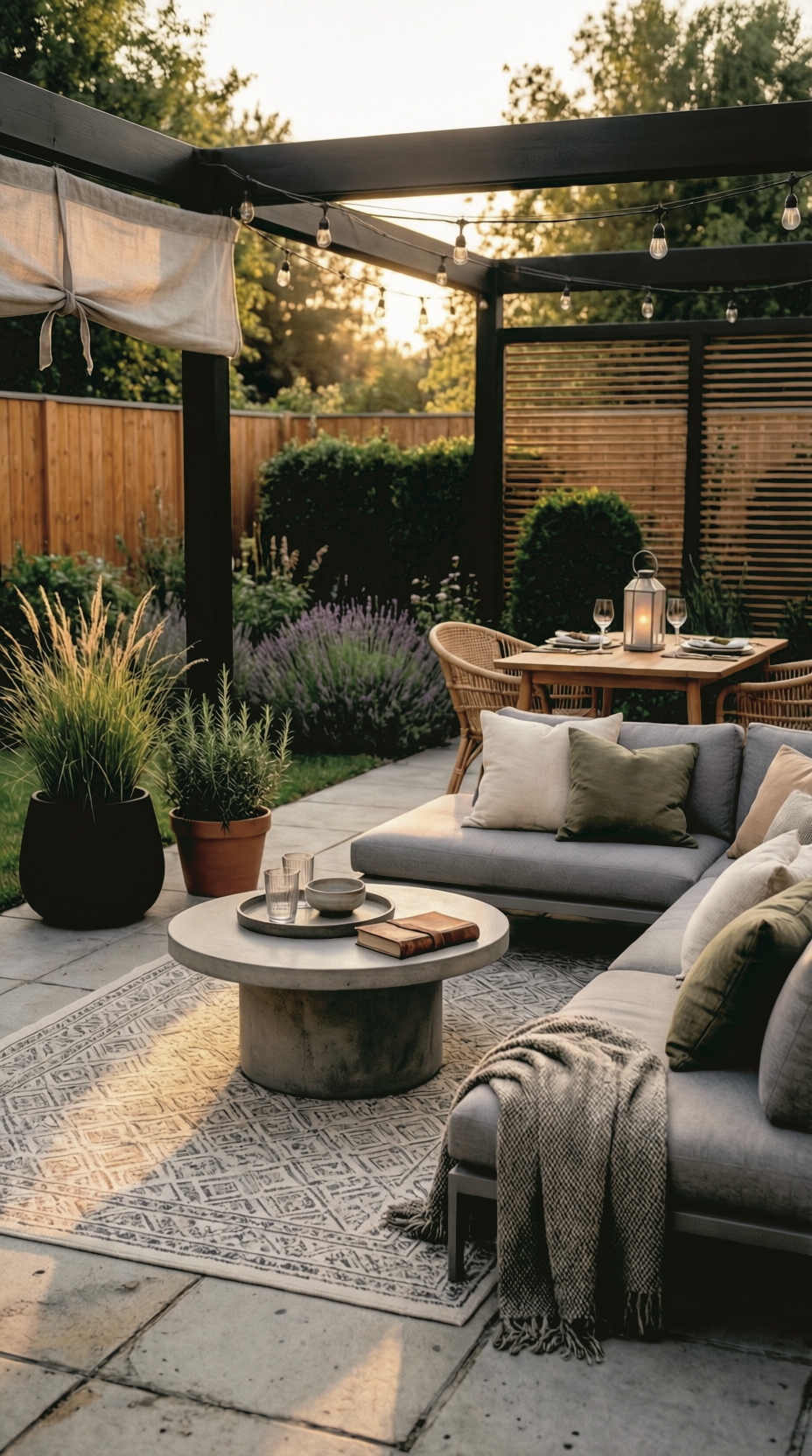
A budget patio can look polished when spending is focused on high-impact pieces. Start with lighting, then textiles, then greenery. Those three categories change the mood fast, and they’re easier to update later than furniture. If your furniture frame is solid, new cushions and a rug can make it feel brand new.
Thrifted items often shine outdoors. A small side table can become a plant stand. A vintage stool can serve as a drink perch. Paint is another high-return upgrade, especially on planters, a bench, or a small bistro set. Keep the palette limited so mixed sources still look intentional.
Big impact, modest cost
- Rug + pillows as the “style layer”
- Rechargeable lamps for evening glow
- Matching planters to unify mixed furniture
Mini makeovers for small patios, balconies, and narrow runs
Small spaces look best when every item earns its place. Choose furniture with visual lightness, slim legs, open bases, and fewer bulky arms. Foldable dining sets work well for balconies. Stackable chairs can disappear when you want floor space back. In narrow patios, run seating along one side, and keep the opposite side clear as a walkway.
Go vertical for decor. Hang string lights high to draw the eye upward. Use wall planters, a trellis, or a narrow shelf for herbs. Mirrors designed for outdoor use can bounce light and make a tight corner feel larger, but place them where they won’t reflect harsh sun into seating. Finish with one strong focal point, a rug, a planter cluster, or a lantern group, then stop before it feels crowded.
Small-space styling rules
- One main pattern, not five
- Fewer, larger planters instead of many tiny pots
- Keep at least one open “breathing” area
Closing: Keep the layout steady, refresh by season
A patio that feels finished usually has a stable layout and a few easy swap-ins. Keep your main furniture placement consistent, then refresh the look with textiles, lighting accents, and plants as the season changes. In spring, add fresh planters and a lighter pillow palette. In summer, prioritize shade and evening lighting. In cooler months, bring out throws and warm-toned lanterns.
Once the patio is zoned, layered, and comfortable, updates become simple, and the space stays ready for real life, quick coffees, quiet reading, and dinners that stretch past sunset.