
Patio Privacy That Feels Intentional: Screens, Planting, and Simple Builds That Block Views Without Boxing You In
A patio can look perfectly styled, yet still feel exposed, once you notice a single direct sightline from next door. Privacy fixes work best when they feel like part of the design, not a defensive wall, and that usually means combining one sturdy element with softer layers that keep light and airflow moving.
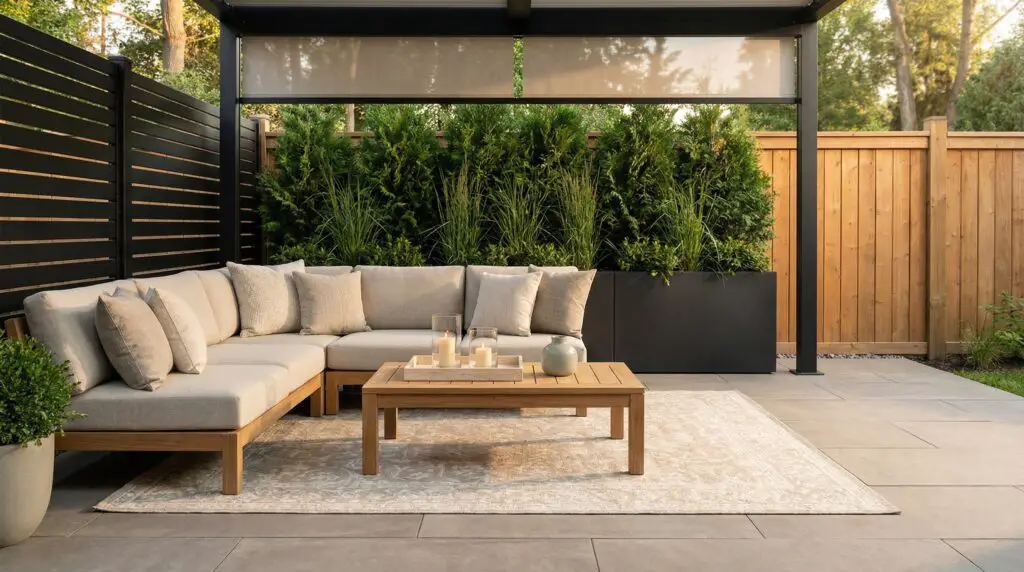
Start by thinking about how you actually use the space, morning coffee in one chair, dinner at the table, a quiet corner after sunset. Stand in each spot, look outward at eye level, then look upward toward second-story windows or raised decks. That quick scan tells you where coverage matters, how tall it needs to be, and whether you need something solid, something flexible, or a mix of both.
The ideas below move from fast upgrades to longer-term solutions, with options for renters, small patios, and wide-open yards.
Start with a “privacy plan” you can see in 10 minutes
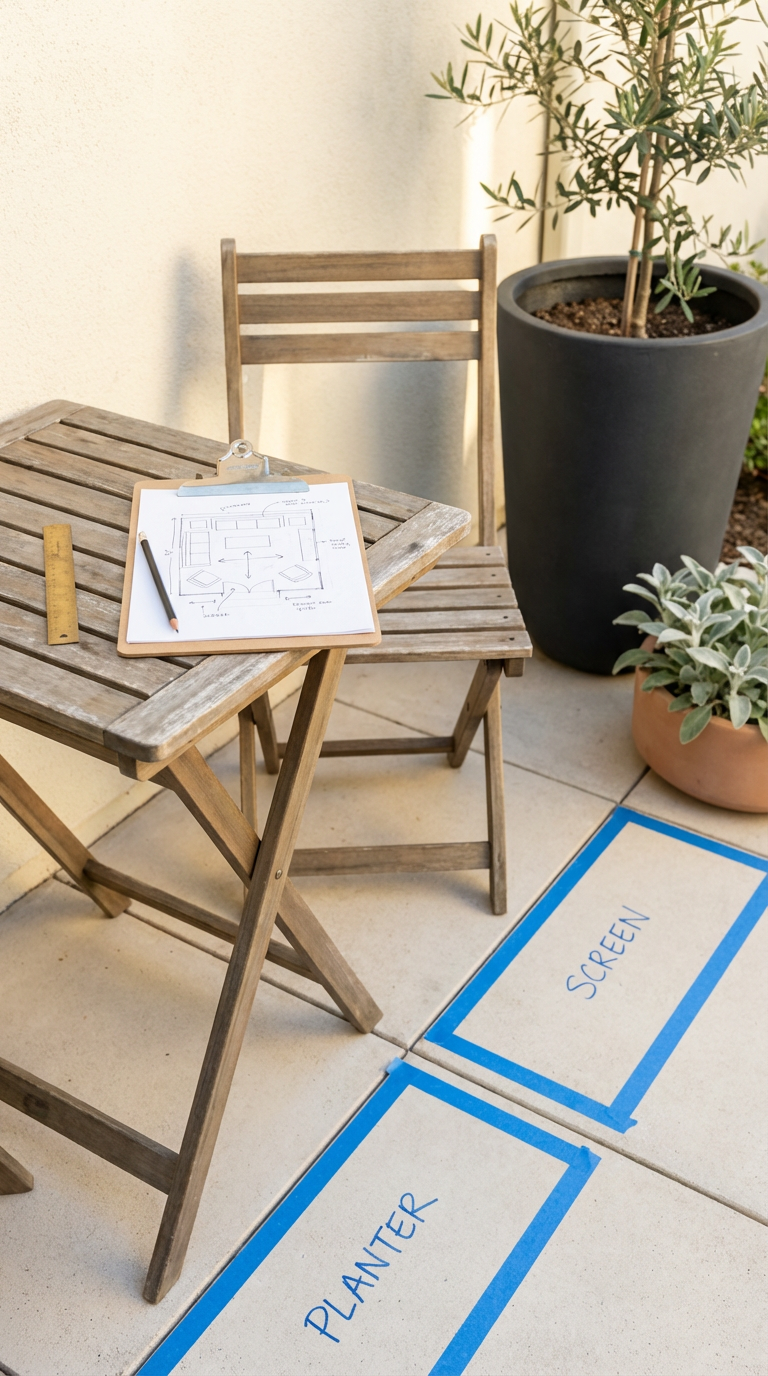
Walk your patio with a notebook, or mark notes on your phone.
- Sightlines: seated height, standing height, and anything above fence level
- Comfort factors: wind, hot afternoon sun, street noise, lighting at night
- Rules and realities: property lines, HOA guidelines, and how permanent a project can be
- Your best “privacy zone”: dining area, lounge seats, grill area, or all three
Aim to block the view where it starts, rather than building a tall boundary everywhere. A single well-placed panel near the seating area often solves what a full perimeter fence never quite fixes.
Patio privacy ideas that change the mood fast
Small shifts can make a patio feel calmer right away, even before you build anything.
Use height in the right place. Tall planters, a narrow trellis, or one panel beside the main chair breaks the “straight line” view into your space.
Work with corners. A corner lounge naturally needs less screening, because two sides are already defined. Adding one extra vertical element can turn it into a simple outdoor room.
Add a soft overhead edge. A pergola slat, shade sail, or outdoor curtain rod can reduce the feeling of being watched from above, while keeping the patio bright.
Keep flexibility in mind. If the sun shifts, guests move, or you host often, portable solutions earn their keep.
Patio privacy screen: choose the right type for your space
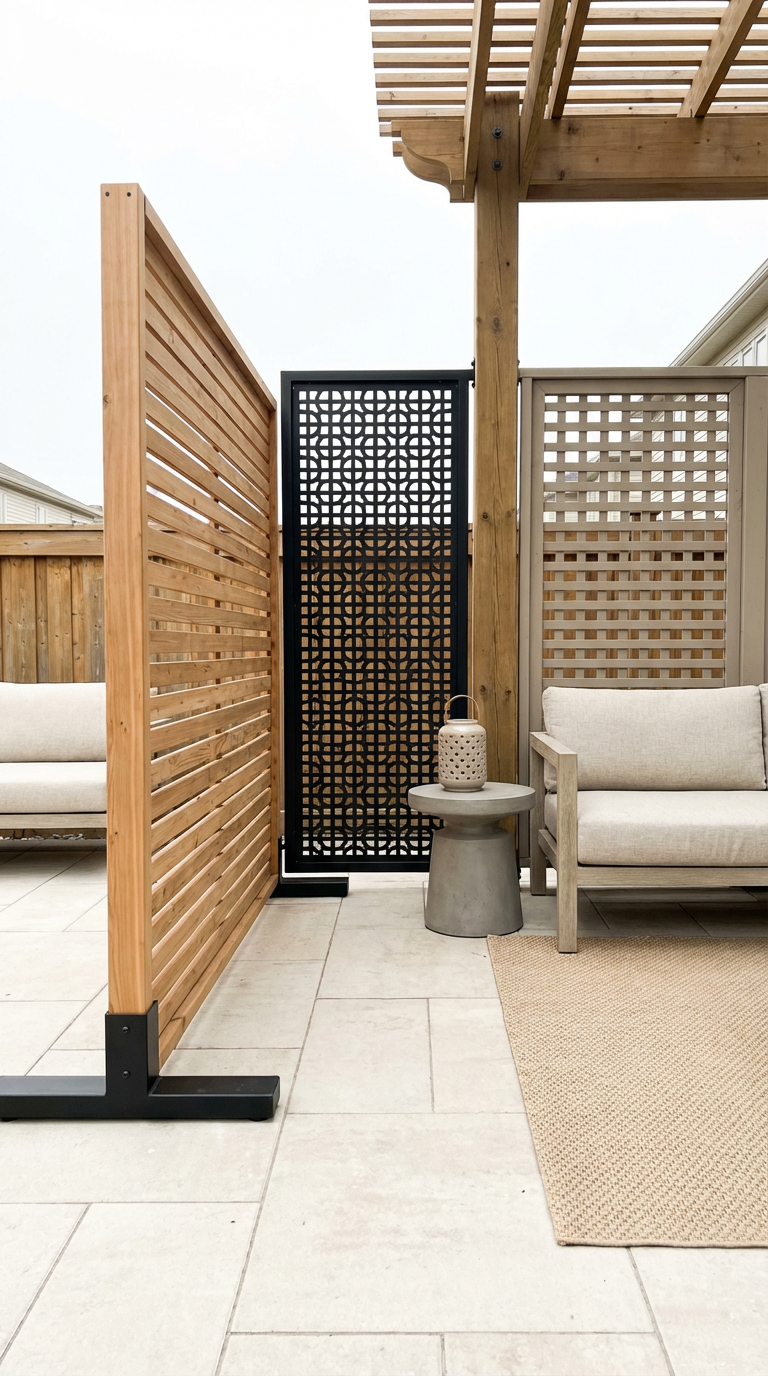
A patio privacy screen is often the cleanest starting point, because it gives immediate coverage, and you can size it to the exact problem spot.
Freestanding screens
Freestanding panels work well on patios where you can’t attach to a structure, or where you want to move pieces with the season.
- Best for: renters, small patios, temporary zones
- Look for: wide bases, heavier frames, and materials that handle wind
Attached screens
Mounted panels feel more “built-in,” and handle breezier sites better.
- Best for: patios beside a house wall, decks with posts, pergola sides
- Look for: exterior-grade fasteners, sealed end grain on wood, rust-resistant hardware
Lattice-based builds
Lattice screens sit in the sweet spot between open and private, especially once you layer plants or outdoor fabric.
Design tip: set your screen where it blocks the most direct view, rather than centering it on the patio. Off-center placement often looks more intentional, because it follows function.
Patio privacy screen ideas that look like décor
A screen can be more than a block, it can be a backdrop.
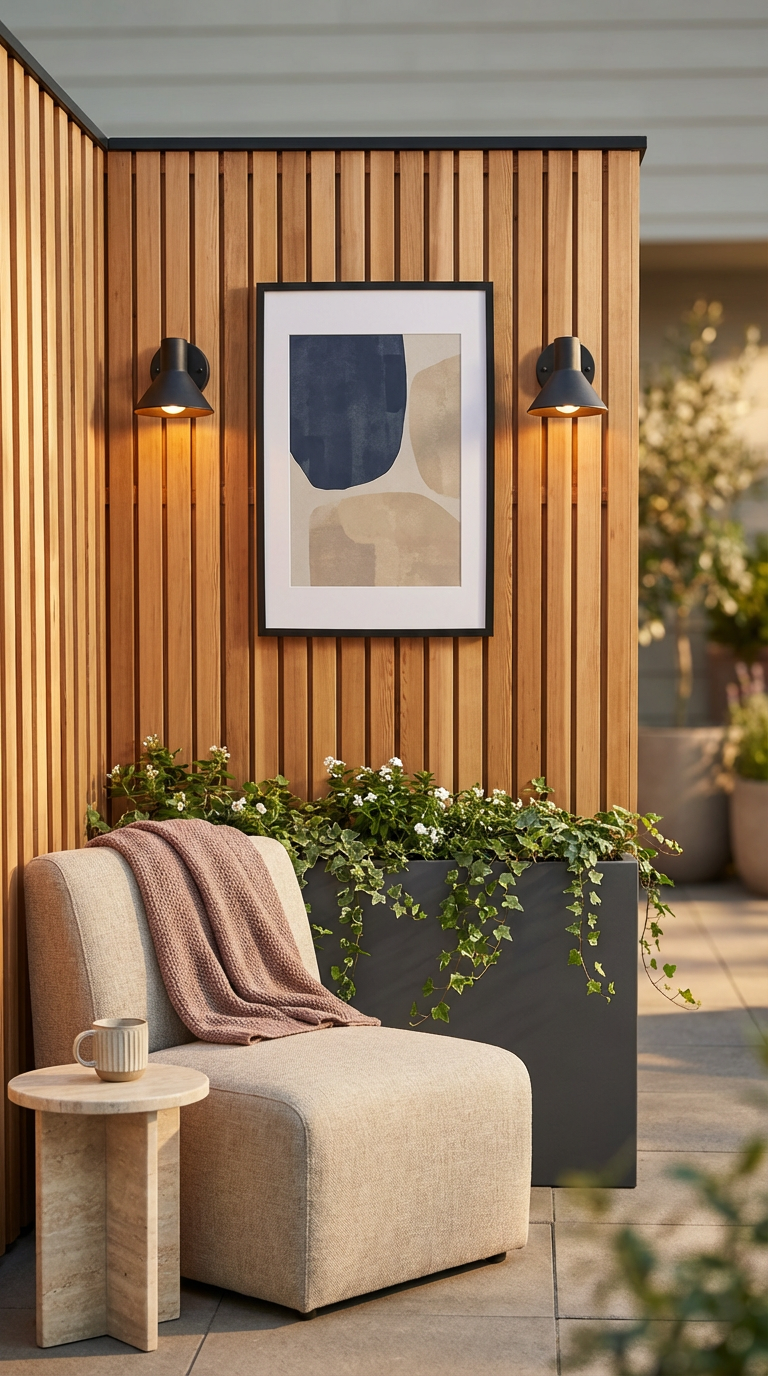
Treat it like a feature wall. Add one slim planter at the base, a lantern pair, or a single outdoor art piece. Keep the styling spare, so the screen reads calm rather than busy.
Play with opacity. Slatted panels, woven textures, and cutout metal designs give privacy while still letting light pass through. That balance matters on smaller patios where tall solid walls can feel heavy.
Build a “two-panel corner.” Two shorter screens meeting at an angle can hide sightlines better than one long panel, while also defining a lounge zone.
Add climbing support carefully. Vines can be beautiful, yet they add weight and wind drag. Choose a sturdy frame, then keep plant growth trimmed so hardware stays secure.
Patio privacy wall: when you want a solid, permanent edge
A patio privacy wall makes sense when the issue is close neighbors, street exposure, or constant activity nearby. Done well, it can look architectural rather than defensive.
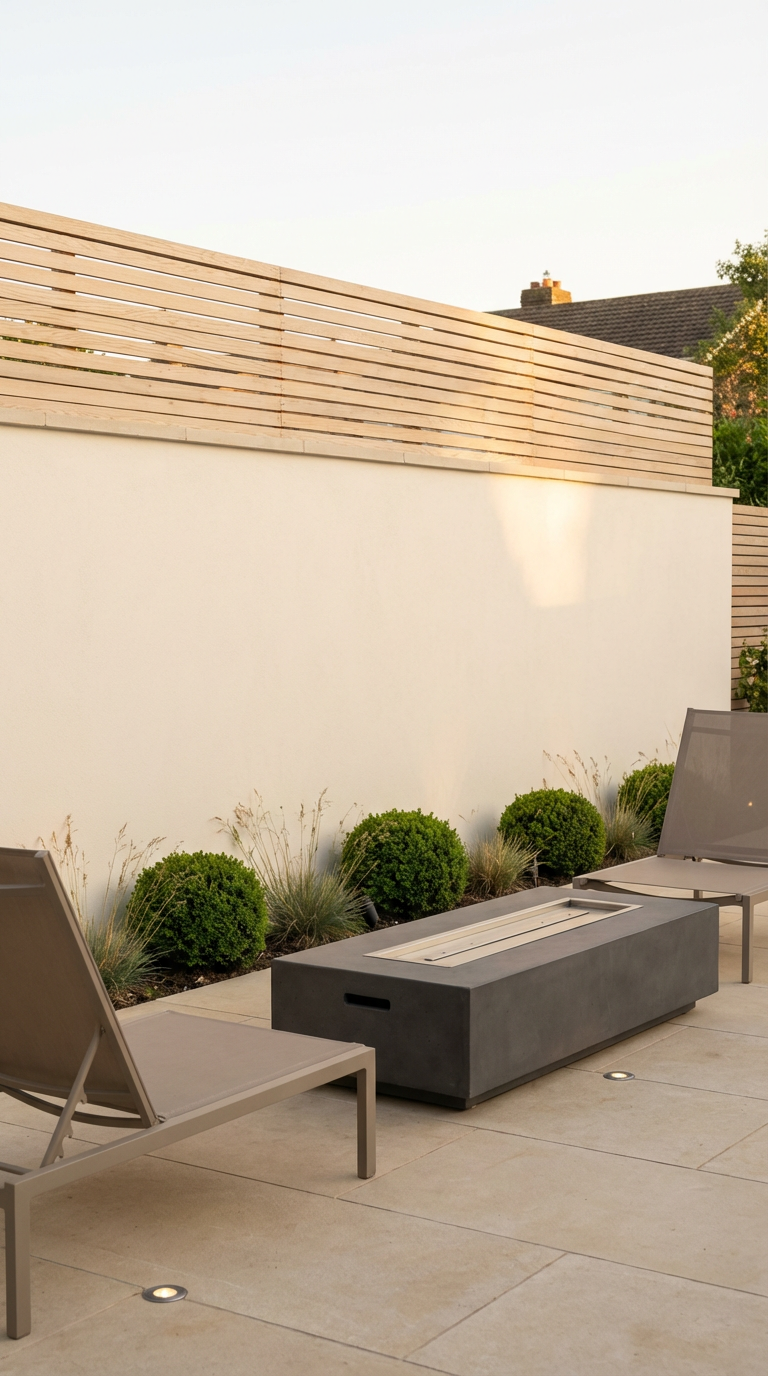
Low wall + lighter top works beautifully. A half wall can block seated views, then a slatted or trellis section above keeps the patio airy.
Material options that feel home-friendly:
- stucco-look panels for a clean backdrop
- timber wall sections for warmth
- gabion-style stone cages for texture and mass
- brick or masonry for classic permanence
Walls also change airflow, so consider wind patterns before going fully solid. A patio that needs cooling breezes may do better with partial coverage and planting layers.
Patio privacy fence: boundary coverage without making the patio feel boxed in
Sometimes the boundary itself needs attention, especially on patios that sit right on a property line.
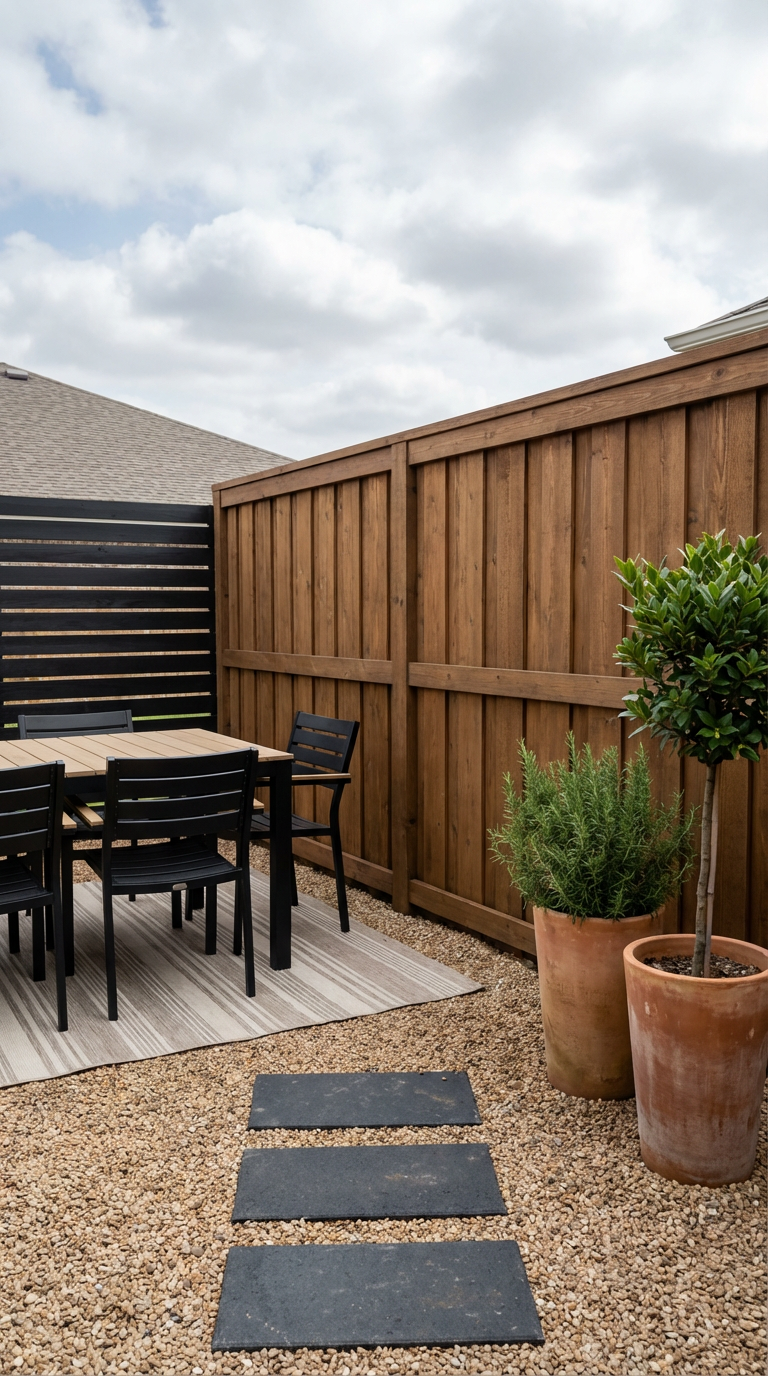
Choose a fence style that matches the view problem.
- Board-on-board or tight vertical slats give stronger coverage
- Horizontal slats feel modern, yet spacing needs to be tight enough for true privacy
- Mixed-height panels can block key angles while keeping sky views open
Fence only what you need. Many patios feel more open when fencing focuses on the seating zone, rather than enclosing the entire yard edge.
Local rules for fence height and placement vary widely, so confirm what applies to your address before committing to a tall build.
Patio privacy ideas cheap: budget moves that still look finished
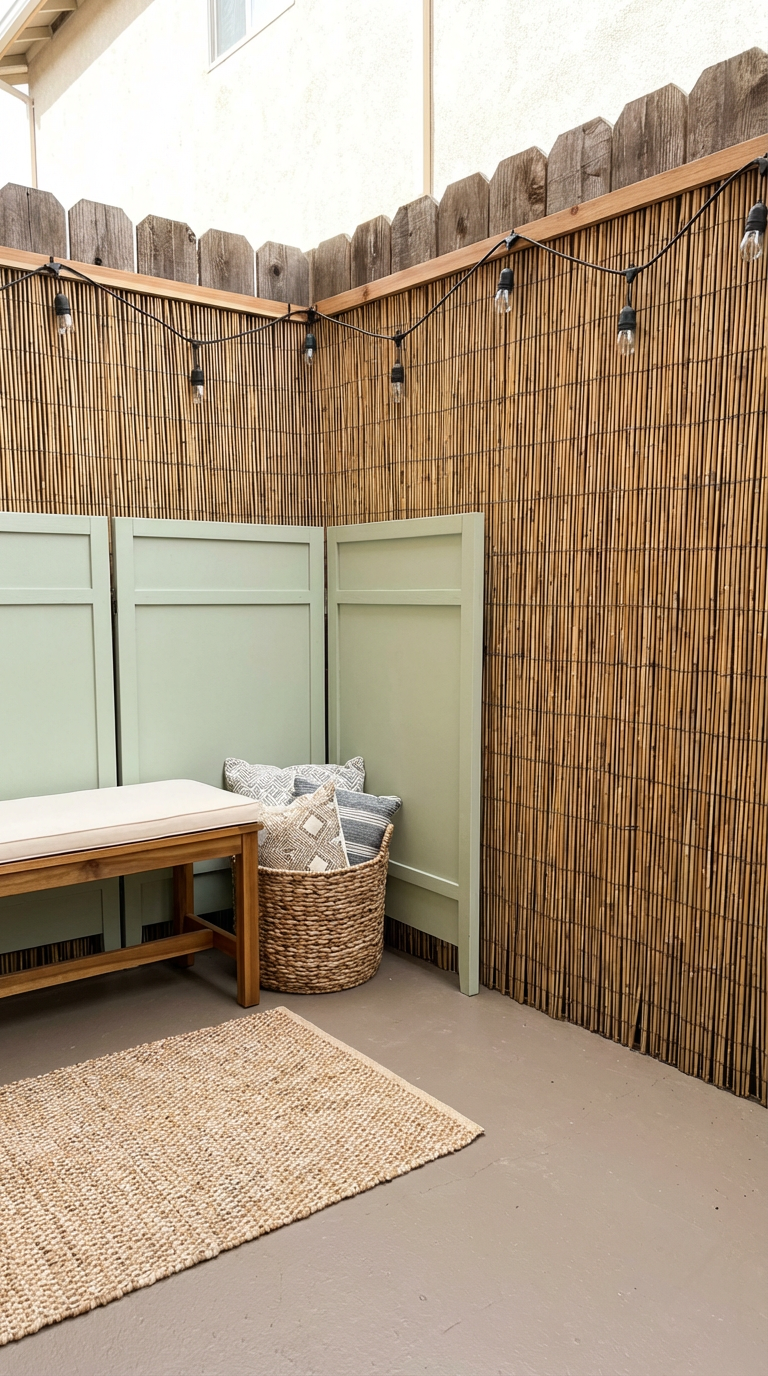
A lower budget doesn’t have to mean a temporary look. The trick is spending where durability matters, then keeping the design simple.
Start small, cover the “hot spot.” Block the most direct view first, often the line between a neighbor’s window and your main chair.
Smart lower-cost options:
- reed, willow, or bamboo rolls mounted to an existing fence
- outdoor curtains on a cable line under a porch roof
- a simple lattice frame stained one color
- painted plywood panels with slim battens for a modern grid look
Where to spend anyway:
- exterior-rated screws and brackets
- post anchors or weighted bases
- UV-resistant fabric for curtains and shade panels
A basic DIY lattice screen build is a good template for cost control, because it relies on straightforward cuts and standard materials.
Patio privacy ideas with plants: the softer layer that makes everything feel calmer
Plants do two jobs at once, they block views, and they change how a space feels. Even a simple screen looks better once greenery softens the edges.
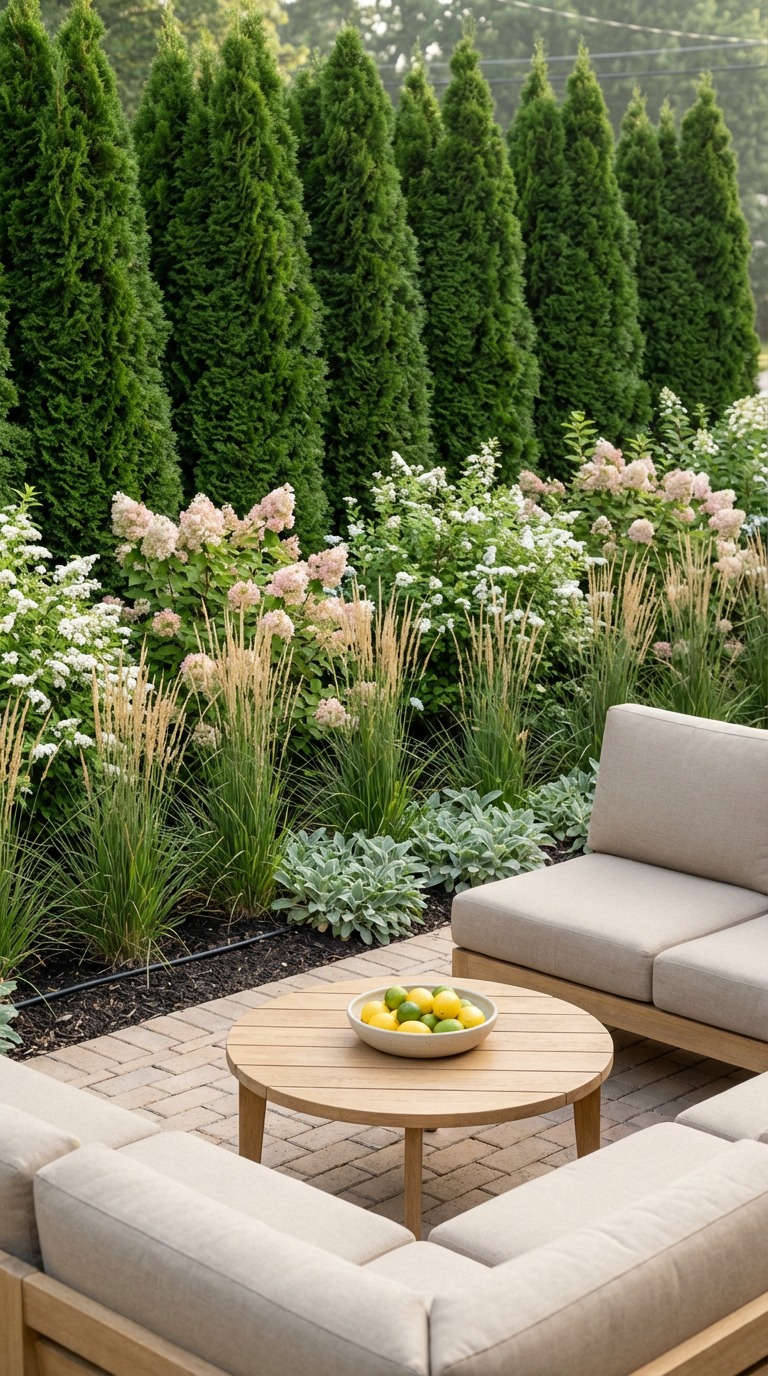
Think in layers, like a landscape designer would.
- tall backdrop layer to block higher sightlines
- mid-layer shrubs for density at eye level
- lower layer of grasses or groundcovers to finish the base
Pick plants for your real conditions. Sun, shade, wind, salt air, and reflected heat from paving matter more than the label photo at the nursery.
For living screens, spacing based on a plant’s mature width helps the hedge fill in without crowding itself into stress and thinning later. Penn State Extension
Keep variety in the mix. A blend of species can look more natural, and it reduces the risk of losing the whole screen to one pest or disease cycle.
Patio privacy bushes: shrubs that screen without constant pruning
Shrubs are the backbone of many privacy plans, because they hold form, provide density, and look good year-round when you choose evergreens.

A quick shrub checklist:
- mature height and width that suits your patio scale
- evergreen vs deciduous, based on winter privacy needs
- tolerance for your sun and soil conditions
- growth rate that matches your patience level
Formal hedge or relaxed screen? A clipped hedge reads crisp and tailored, while a looser shrub line looks softer. Your maintenance style should decide that, not only the look.
Pruning approach matters, too. Many home-garden hedge guides recommend shaping so the top stays slightly narrower than the base, which helps light reach lower branches and keeps plants fuller over time. University of Maryland Extension
Patio privacy bamboo: warm texture, fast coverage, and a clear caution
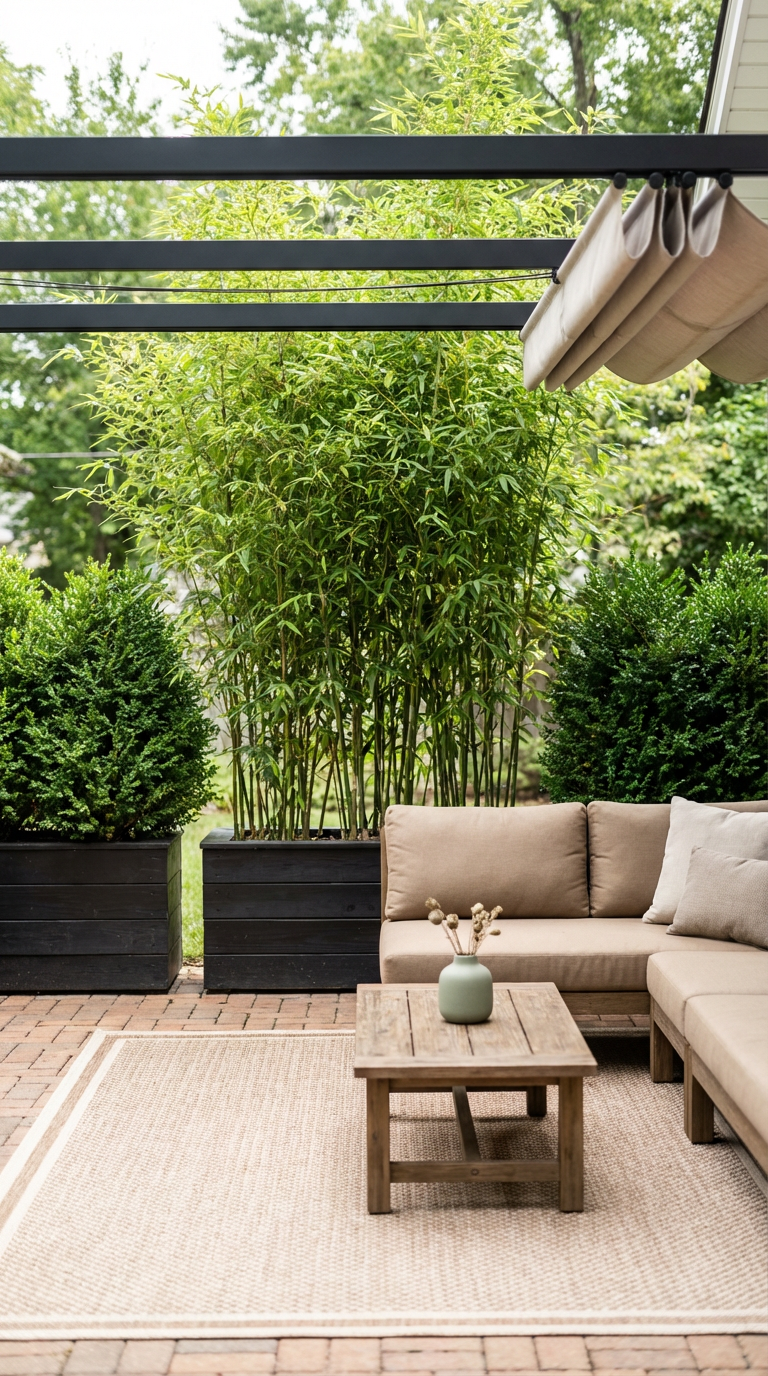
“Bamboo” shows up in patio privacy plans in two very different ways, as a building material, and as a living plant.
Bamboo as a material
Rolled bamboo screening and bamboo-look panels bring a natural texture that suits modern, coastal, boho, and classic patios. Mounted to a fence or framed into panels, bamboo reads like a design choice rather than a quick fix.
- Works well with: black metal furniture, pale cushions, terracotta pots
- Looks best when: edges are finished with a slim frame, so it doesn’t look like a temporary wrap
Bamboo as a plant
Planting bamboo for screening needs careful local research, because some types spread aggressively. In regions where invasive bamboo is a known issue, alternatives like clumping grasses, dense shrubs, or vine-covered trellises can give a similar effect without the same long-term risk.
Patio privacy blinds: flexible coverage for pergolas, porches, and balcony edges
Patio privacy blinds shine when you want adjustability, open in the morning, lowered at lunch, raised again for evening light.
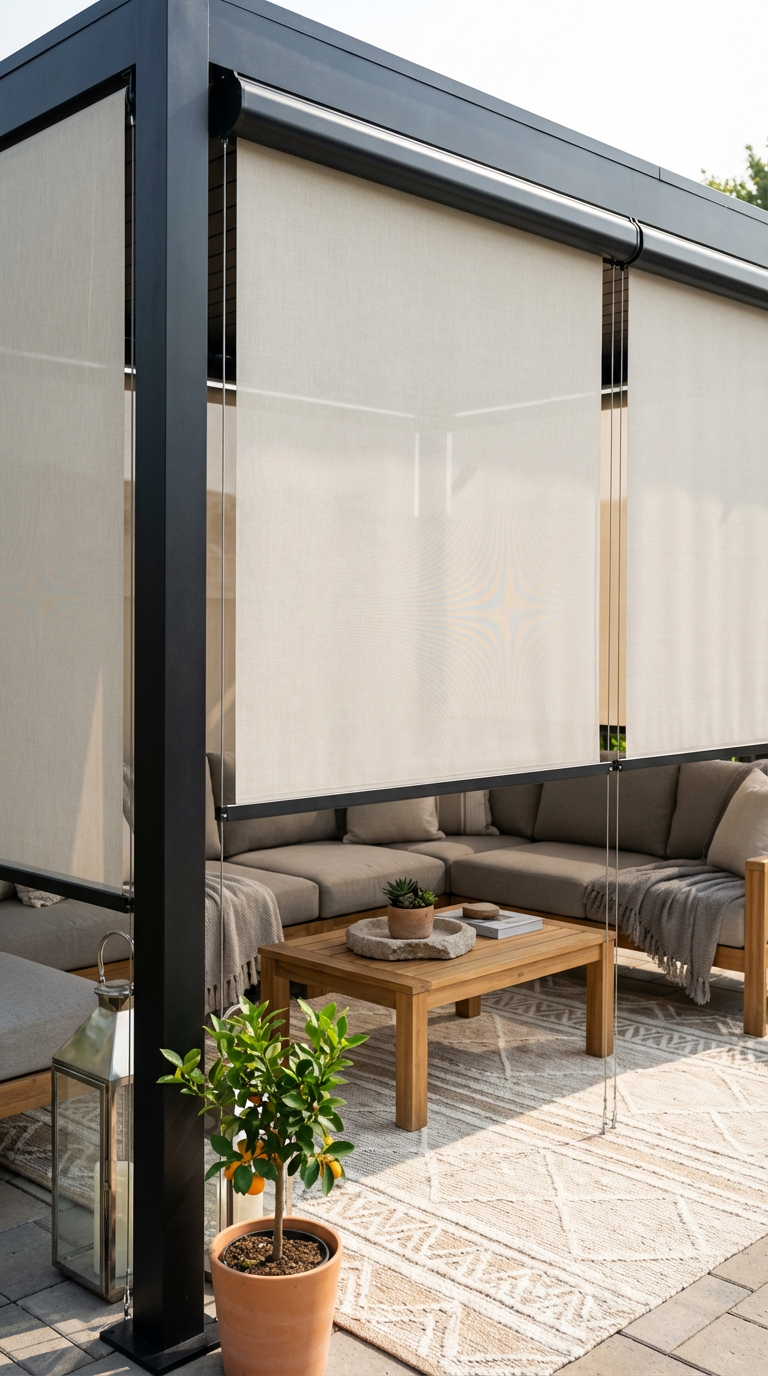
Where they work best:
- pergola sides
- covered patios with beams for mounting
- balcony edges where you want privacy without closing the space
What makes outdoor blinds feel “right”:
- outdoor-rated fabric designed for UV exposure
- a clean bottom bar that hangs straight
- wind management such as guide cables, tie-downs, or track systems
Shade and blind guides often point to side cables or tie-downs as a practical way to keep roller shades stable in moderate wind.
Style-wise, blinds look most integrated when the fabric tone relates to your cushions or rug, rather than introducing a new bold color.
Patio privacy bench: seating that does double duty
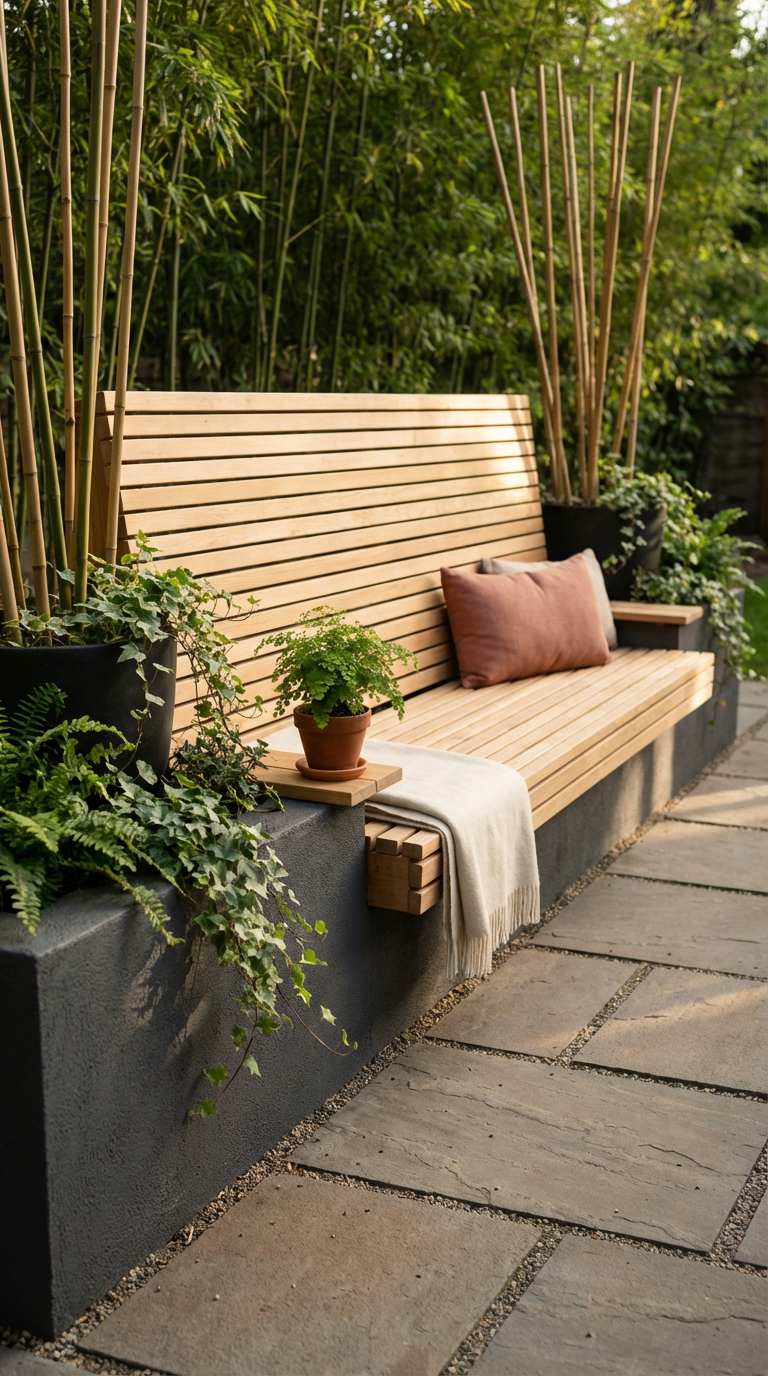
A patio privacy bench can solve two needs at once, extra seating and a built-in visual block.
Bench + tall back
A bench with a slatted back, or a panel behind it, blocks seated sightlines while feeling like furniture, not fencing.
- Best for: small patios where every piece must earn its space
- Looks best with: a long cushion, one side table, and one tall planter to anchor the corner
Bench + planter wall
Set a bench in front of a long planter, then plant for density behind it. Evergreen shrubs, upright grasses, or a mixed planting row can create a soft green “wall” at a comfortable scale.
Bench placement that works
Place the bench perpendicular to the most intrusive view, and you often need less height to get the same privacy effect. Positioning solves problems that added inches rarely fix.
Patio privacy barrier: privacy that also helps with wind, sun, and noise
Privacy often overlaps with comfort. A good barrier can reduce glare, soften breezes, and make conversations feel less exposed.
Layer for better results.
- a low solid element can block wind at seating level
- a semi-open layer above keeps airflow moving
- plants soften the look, and they reduce the harshness of reflective surfaces
True sound blocking needs mass, yet even partial barriers help by reducing the feeling of being “on display,” and they can interrupt the direct path of noise from a nearby walkway or street.
If your patio gets punishing afternoon sun, treat privacy and shade as one project. A blind, curtain, or slatted screen can do both without darkening the whole space.
Pulling it together: 4 layouts that work in real patios
1) The small patio corner
- one screen panel on the exposed side
- tall planter in the corner
- compact chair, side table, and lantern
2) The dining zone near neighbors
- two short screens forming an L behind chairs
- a narrow planting strip with shrubs for density
- soft lighting on the screen side
3) The open yard patio
- a partial fence section behind the seating area
- shrubs behind it for height and year-round fill
- a lighter trellis or slat panel to keep the view open upward
4) The covered patio or pergola
- outdoor blinds for flexible privacy
- curtain panels for evenings
- container planting for softness at ground level
Finishing touches that make privacy look built-in
A patio feels more polished when privacy elements repeat the same few cues.
Repeat materials. Match stains, metals, and textures so screens and fences feel like part of the home’s palette.
Light the privacy layer. A warm downlight aimed at a screen, or a soft glow near planting, turns the “block” into a feature after dark.
Keep circulation clear. Leave enough walkway room so screens don’t create pinch points. Guests should move easily from seating to door to grill.
Maintain with a light schedule. Tighten brackets once a season, wash outdoor fabrics, and prune shrubs so air can move through the planting instead of pushing against it.
A simple way to choose your next step
Privacy projects go smoothly when they follow a clear sequence: solve the sightline, then refine the look.
Pick one structural element first, a patio privacy screen, a fence segment, a wall section, or patio privacy blinds. Add plants second, so the space feels softer and more finished. Finish with comfort details, seating, lighting, and one or two décor pieces that make the patio feel welcoming.
A calmer patio rarely comes from one big change, it comes from a few well-chosen layers that let you relax outdoors, without feeling on display.