
She Shed Styling for a Garden Retreat Vibe
A plain backyard shed can become your favorite “outdoor room,” the kind of place that makes you step outside even on days you feel busy. A well-styled she shed feels calm, bright, and practical, it holds what you need, while still leaving space to breathe.
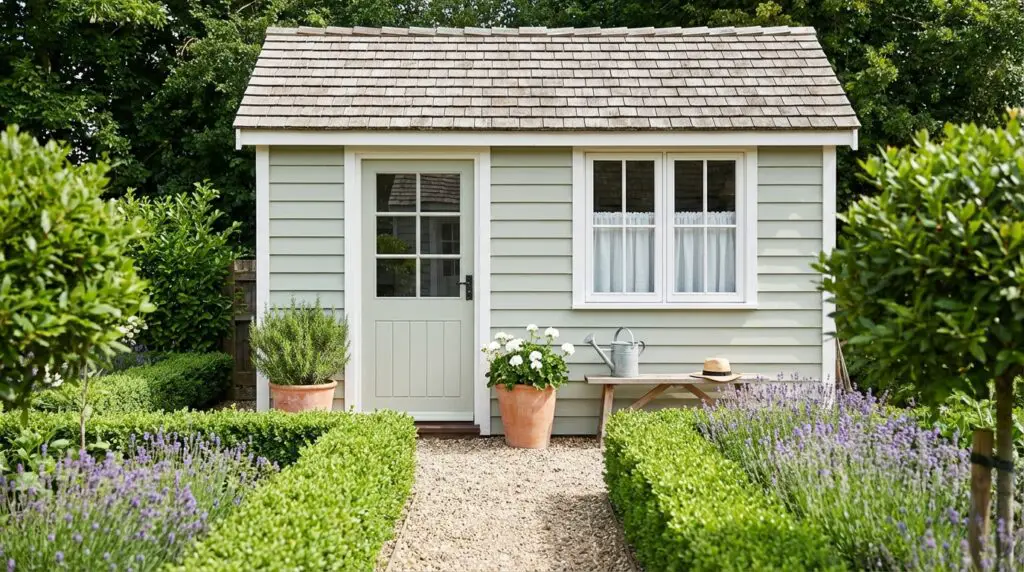
Think of it as a small garden retreat with a door, a roof, and a purpose. Once the basics are handled, comfort and beauty follow fast, and the result often looks even better in photos than it does in your head.
Start with one clear purpose
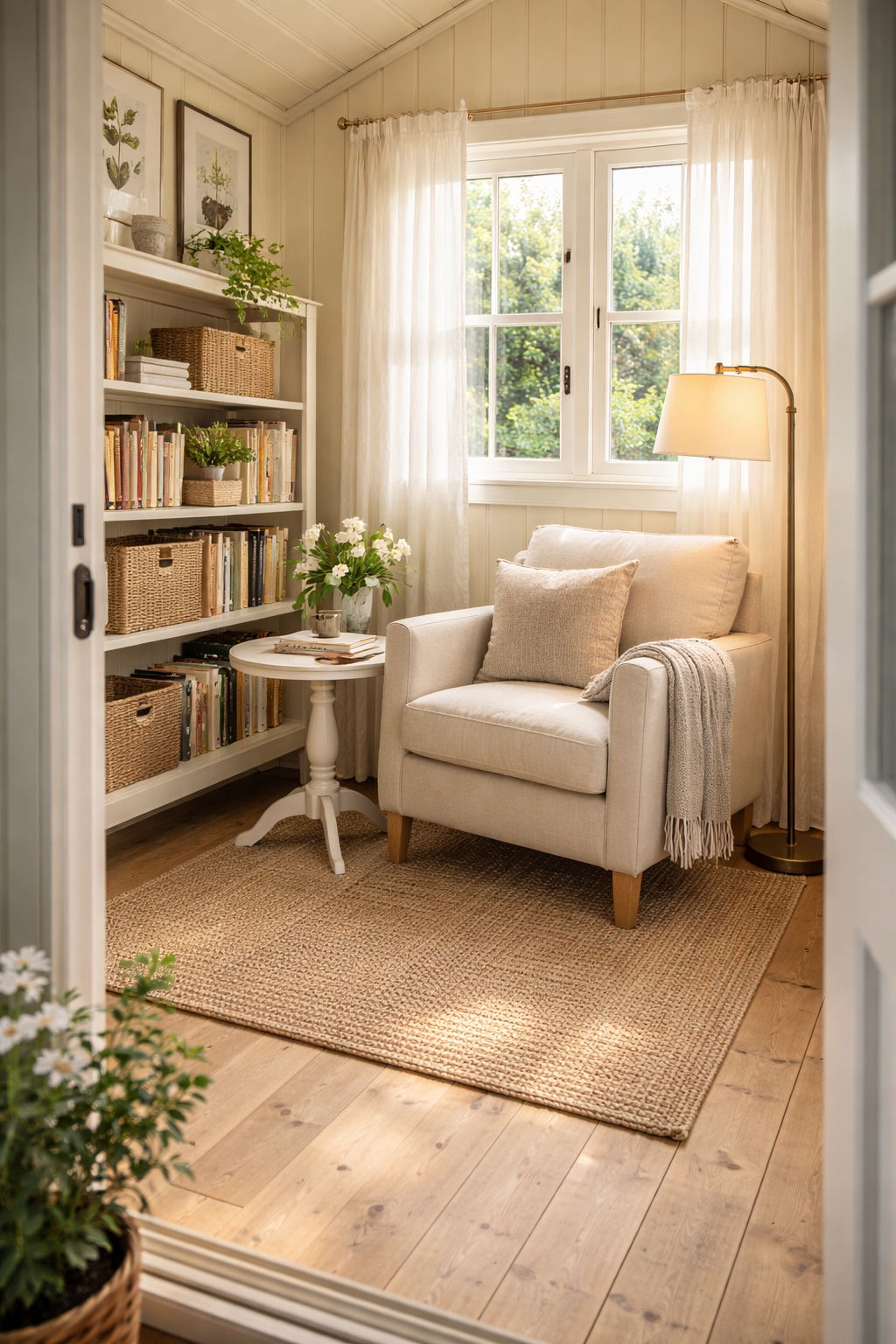
Before paint swatches or pillows, pick the reason you’re building the space. A cozy she shed feels effortless only when the room has a job, and that job shapes every choice that comes after.
Choose one main use, then add a small “supporting role.” A reading nook can still hold pruning tools, a craft shed can still host a quiet tea break, a mini office can still include a potting corner near the window.
Write a one-sentence goal and keep it visible while you plan: “A bright she shed for weekend crafting and weekday decompression,” or “A garden shed makeover that creates a calm backyard retreat with tidy storage.” Simple words, clear direction.
Make comfort the foundation: light, airflow, and dryness
A shed can look charming and still feel unpleasant if it’s dim, stuffy, or damp. Handle these three early, styling becomes easier because the room already feels inviting.
Let daylight do the heavy lifting
If you have windows, clean them, then keep treatments light. Sheer curtains, café curtains, or a simple roller shade can provide privacy without turning the shed into a cave.
If the shed has no windows, consider adding a glazed door panel or a small window high on the wall. Even one light source changes the mood, and it helps your décor read as intentional instead of improvised.
Give stale air an exit
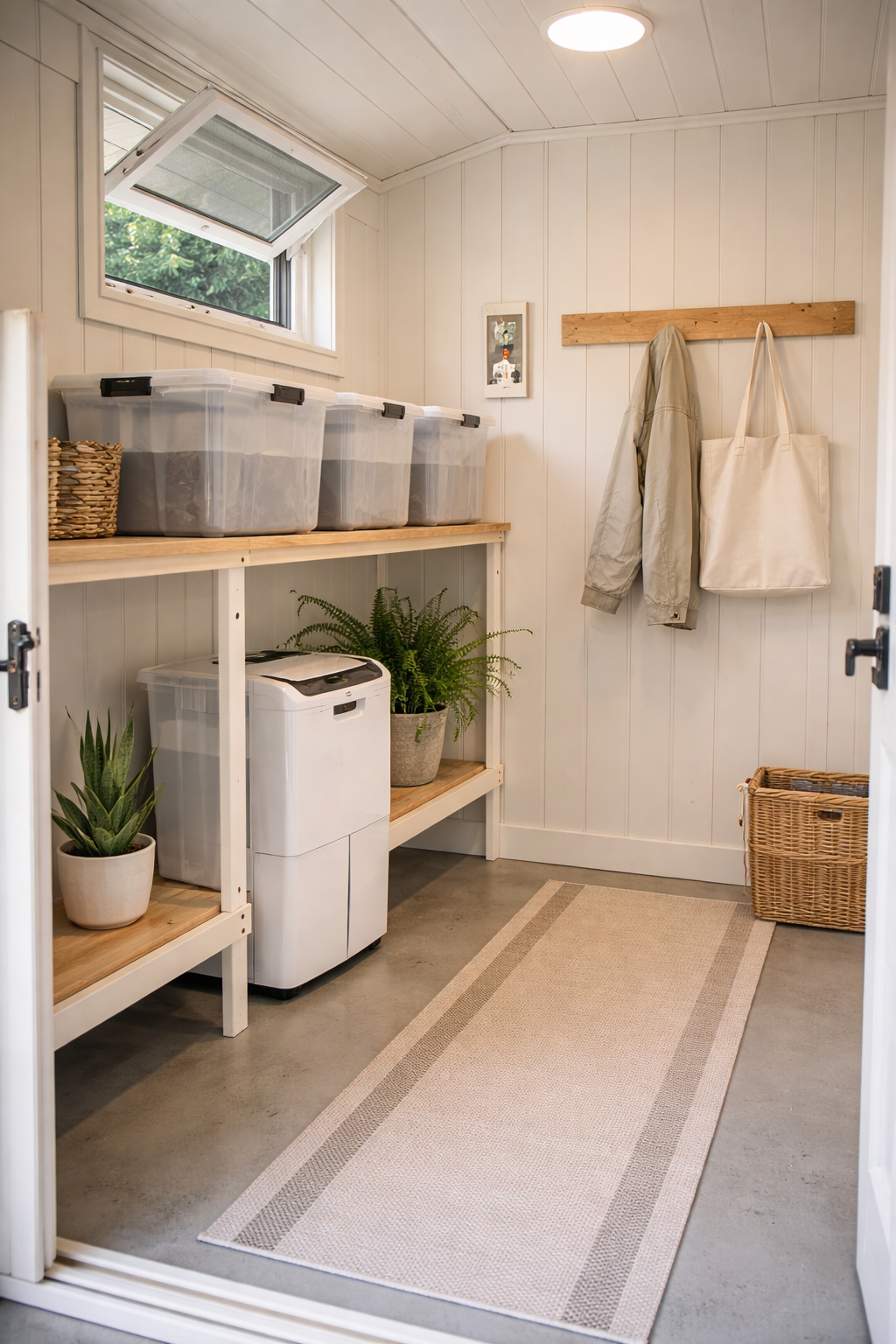
Air movement matters in small spaces. Openable windows, vents, or a small fan can reduce that “closed-up” smell, and it helps fabrics, paper, and wood stay happier over time.
If you plan to spend hours inside, aim for cross-ventilation, meaning air can enter from one side and leave from another. A comfortable backyard studio almost always has a plan for airflow.
Keep moisture from quietly ruining your work
Many sheds sit close to the ground, so damp can creep in from below, then collect on cooler surfaces. Start outside, make sure water runs away from the shed, not toward it.
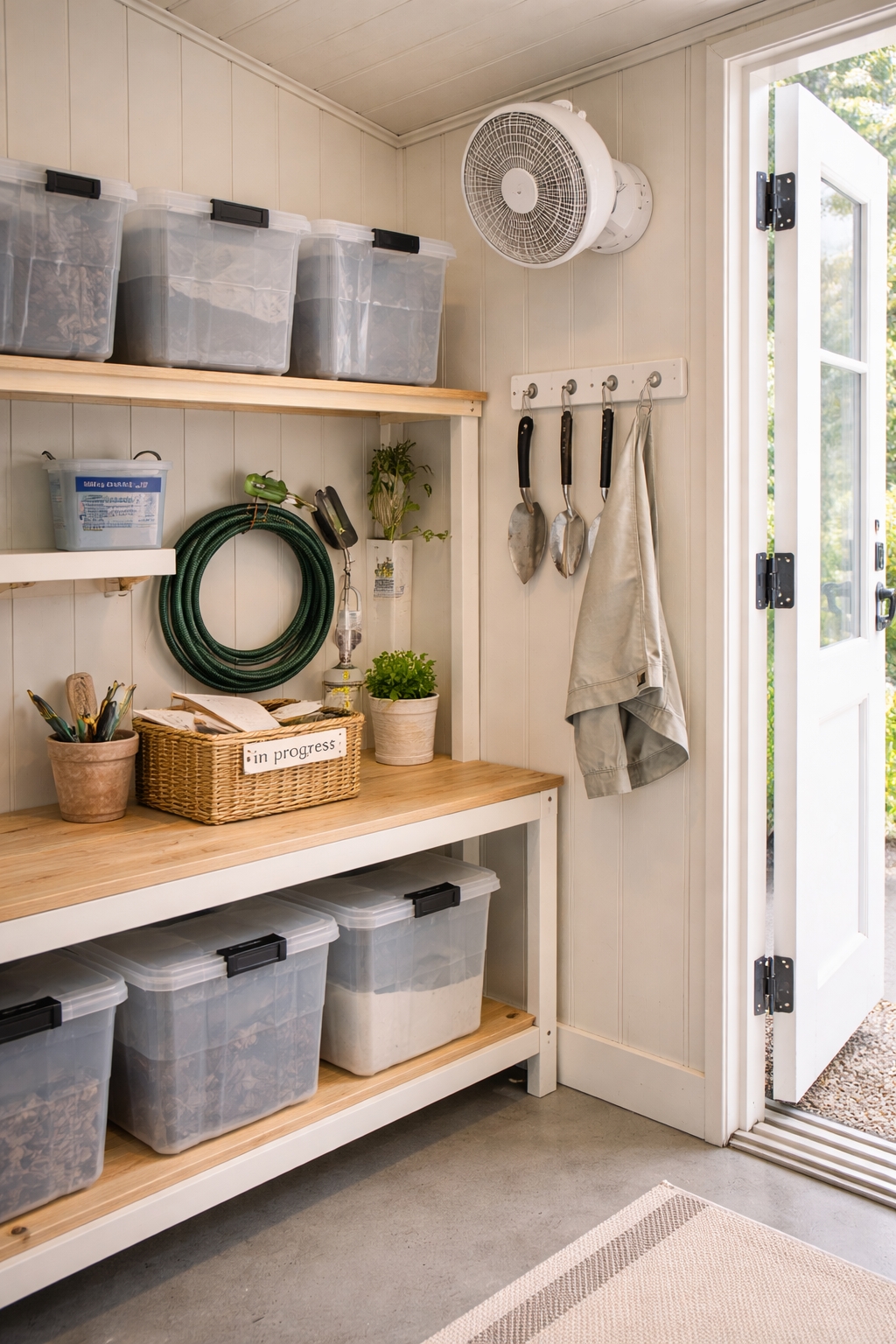
Inside, avoid storing fabric or books directly against exterior walls, and skip cardboard boxes if your climate swings between humid days and cool nights. Lidded plastic bins, baskets with liners, and raised shelves protect your supplies while still looking attractive.
Plan a layout that stays tidy
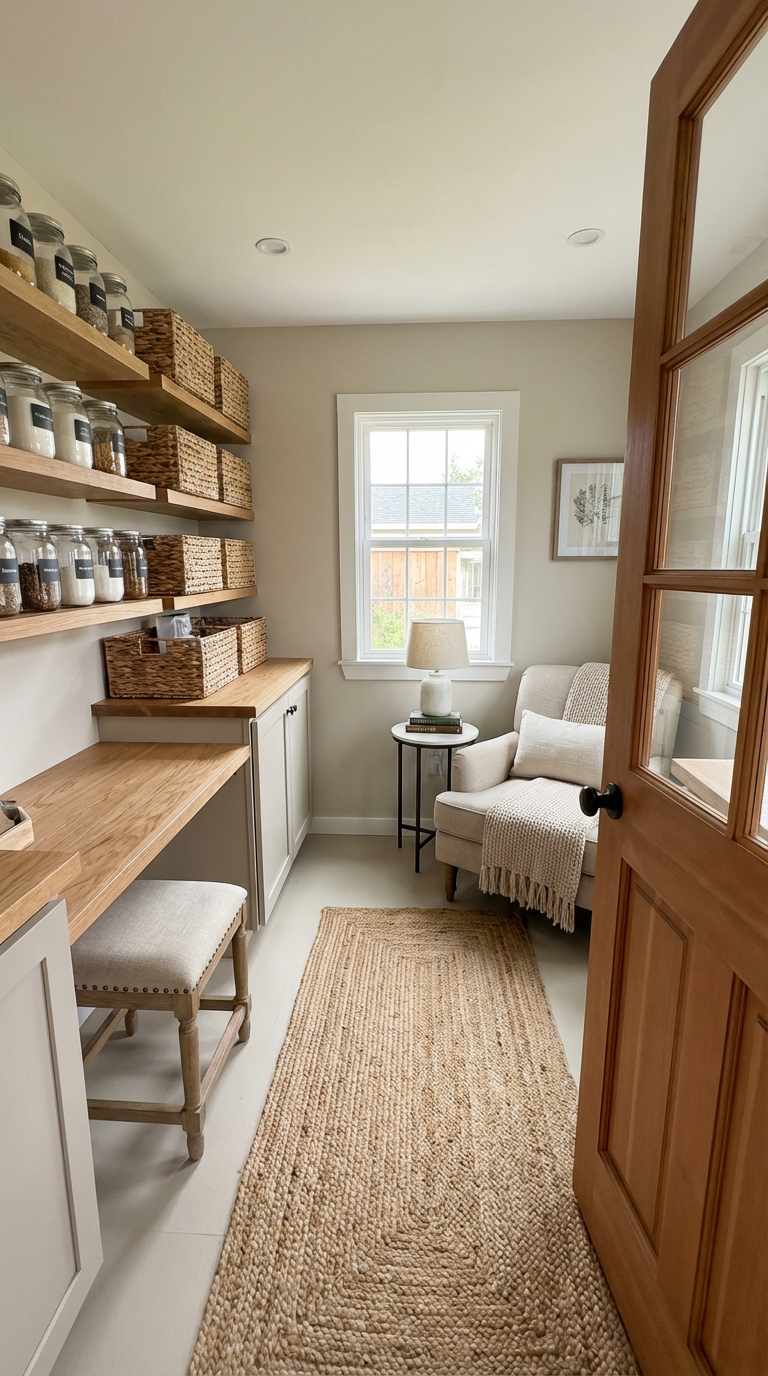
A retreat can’t feel restful if you’re stepping around clutter. Layout is your silent helper, it guides where items live, and it decides whether the room feels open.
Use the “two-zone” approach
Two zones work in almost every shed interior:
- Comfort zone: chair or loveseat, side table, lamp, rug
- Function zone: work surface, storage wall, supplies
Even in a tiny shed, separating these zones helps your brain switch modes. One side invites you to sit, the other side invites you to do.
Leave a clear path
A clear walkway from the door to your seat prevents the room from feeling like storage. Keep the center open where possible, then push storage upward with shelves, wall rails, and hooks.
If your shed is narrow, use slim furniture. A deep sofa might be comfortable, yet it can swallow the floor and make everything else feel cramped.
Choose a style that matches the garden
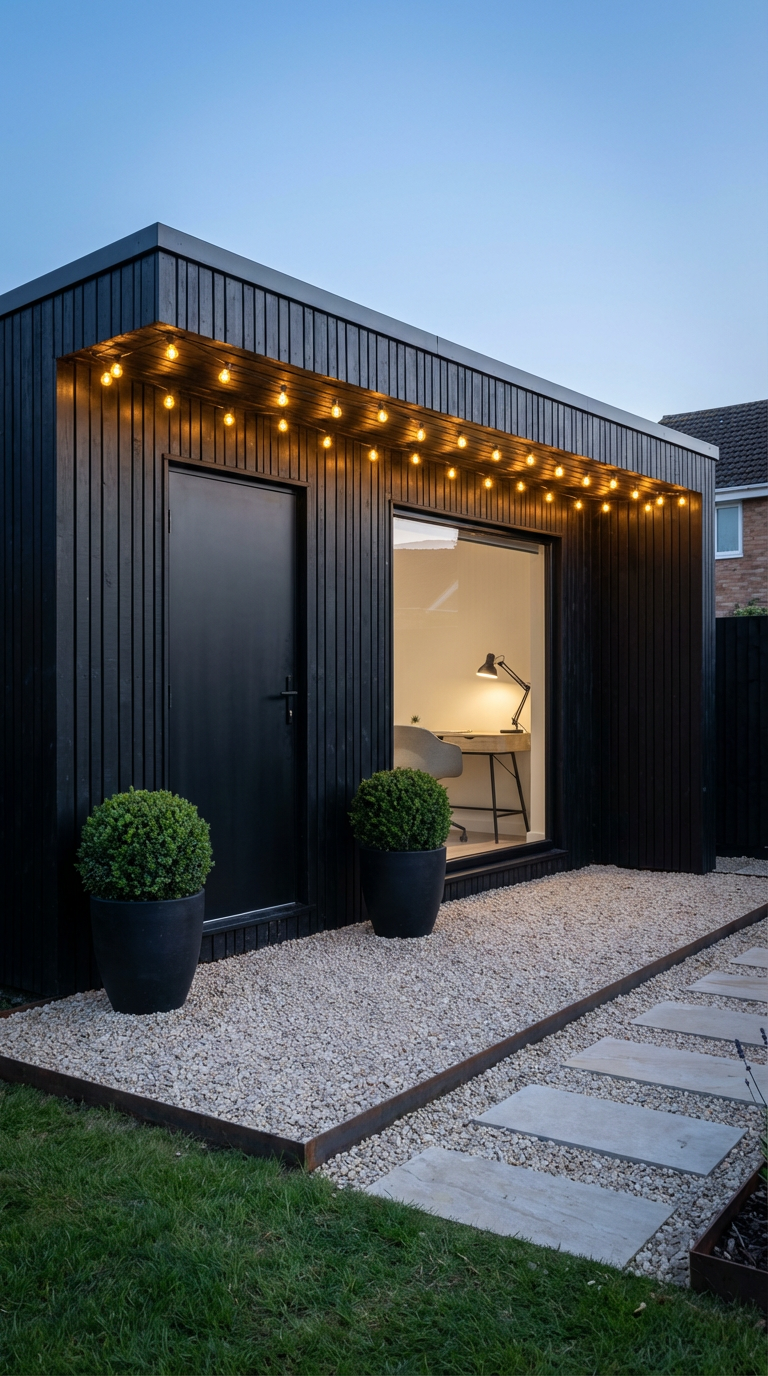
A she shed feels most natural when its style echoes the yard outside. Matching doesn’t mean “same,” it means the transition feels smooth when you step through the door.
Cottage-soft and plant-forward
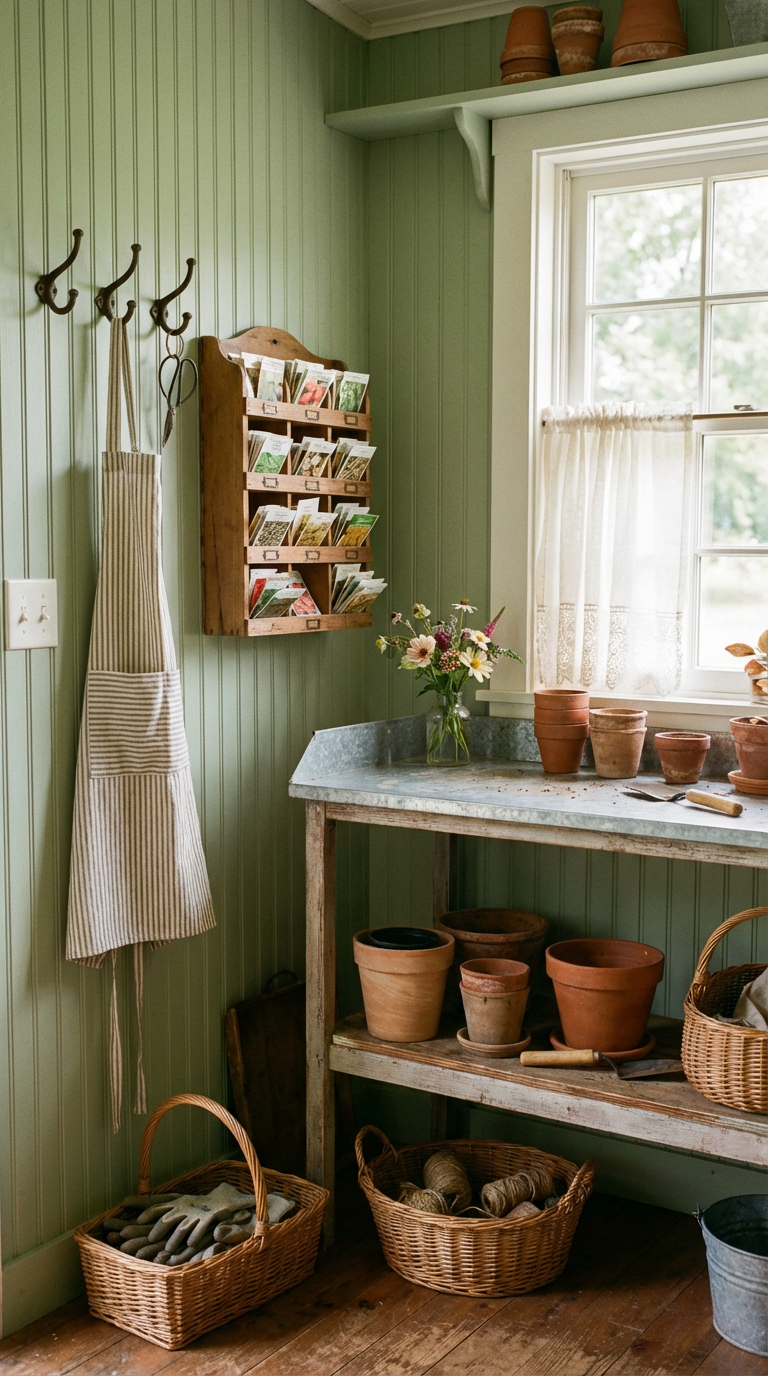
Soft neutrals, pale greens, warm whites, and vintage-style hooks suit a flower-filled garden. Add a few woven baskets, a thrifted stool, and a floral cushion, then keep the rest calm so the details don’t crowd each other.
Clean and modern, with warm texture
If your garden leans modern, try pale woods, black hardware, and simple lines. Texture becomes the cozy factor, think linen curtains, a ribbed ceramic vase, and one chunky knit throw.
Collected and creative, without chaos
For an artsy shed, use a restrained base, then add personality in one place. A bold artwork, an unusual light, or a playful accent can become the focal point, while the rest stays steady.
One “unexpected” detail often makes a small space feel designed, not decorated. Keep it intentional, and the room feels memorable without being busy.
Furniture that earns its space
In a shed, every piece should do something useful, even the pretty ones. Start with the seat, then add the surface, then add storage.
Pick one great seat
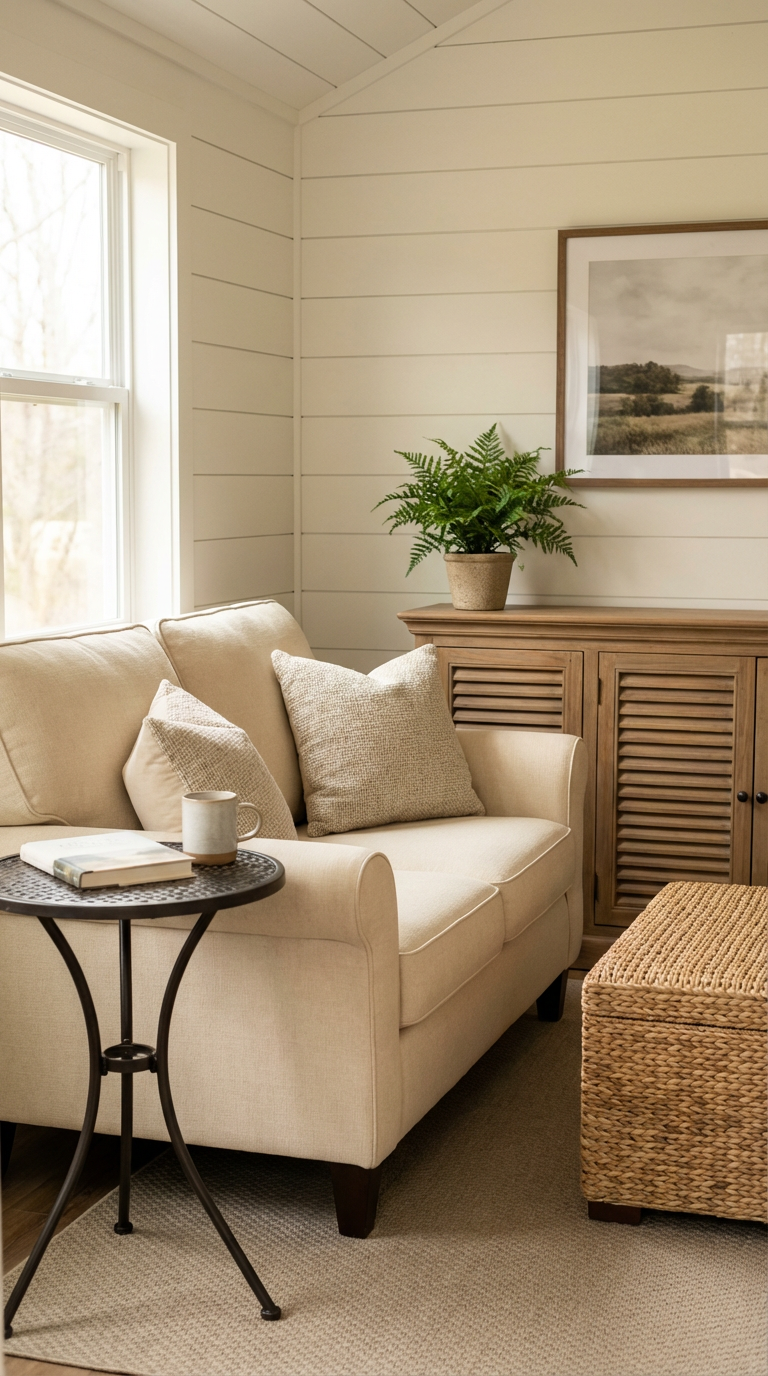
Choose a chair you genuinely want to sit in, not a spare that ended up outside. Add a cushion that can handle temperature swings, and place a small table within reach for a book, tea, or tools.
If you want a loveseat, measure carefully. A compact two-seater can work beautifully, especially if storage stays vertical.
Add a work surface that suits your purpose
For crafts, a sturdy table with a wipeable top matters. For potting, a bench at a comfortable height saves your back. For journaling or laptop work, a narrow desk with a supportive chair prevents you from perching awkwardly.
Fold-down surfaces are useful in tight sheds, they disappear when you want open floor space.
Keep storage visually calm
Closed storage makes a room feel restful. A cabinet with doors can hide the messy reality of glue guns, seed packets, and tangled twine.
Open shelves still belong in a shed interior, yet they work best when styled with a mix of containers and breathing room. Aim for a rhythm, not a wall of small items.
Shed organization that still looks pretty
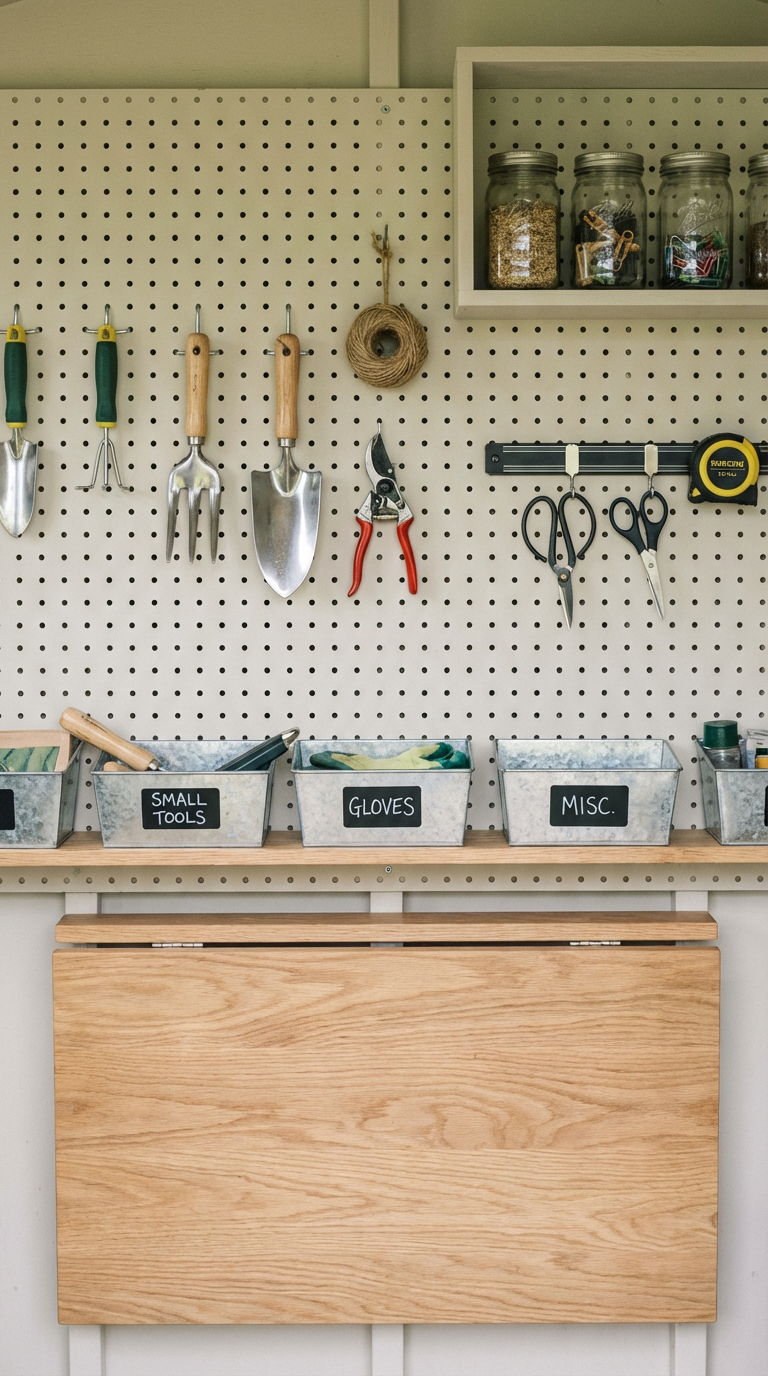
Most of us loves tidy shelves, matching bins, and labeled jars for a reason, they signal ease. Real-life organization should feel just as satisfying, even when nobody is photographing it.
Sort supplies by frequency
Create three categories:
- Daily or weekly: items you reach for often
- Monthly: tools and supplies used in seasons or projects
- Occasional: backup supplies, rarely used equipment
Daily items should live at eye level, occasional items can go higher, heavier items stay low. Your back will thank you.
Use a “container style” that fits your look
- Clear bins for quick visibility
- Lidded baskets for softness
- Glass jars for small items, when sunlight and heat won’t be a problem
- Metal tins for a vintage shed vibe
Labeling can be subtle. Small tags, a simple label maker, or a consistent handwriting style keeps it charming, not clinical.
Build one strong storage wall
A pegboard, rail system, or hook board keeps tools off surfaces. Hang scissors, twine, gloves, and small hand tools so the worktop stays clear, and the shed feels calm the moment you walk in.
Place the “most used” tools in the center of the board, then place less-used items at the edges. Organization becomes automatic because your hands learn the map.
Lighting that turns a shed into a retreat
Lighting is the line between “outbuilding” and “room.” A good plan uses layers, and each layer has a role.
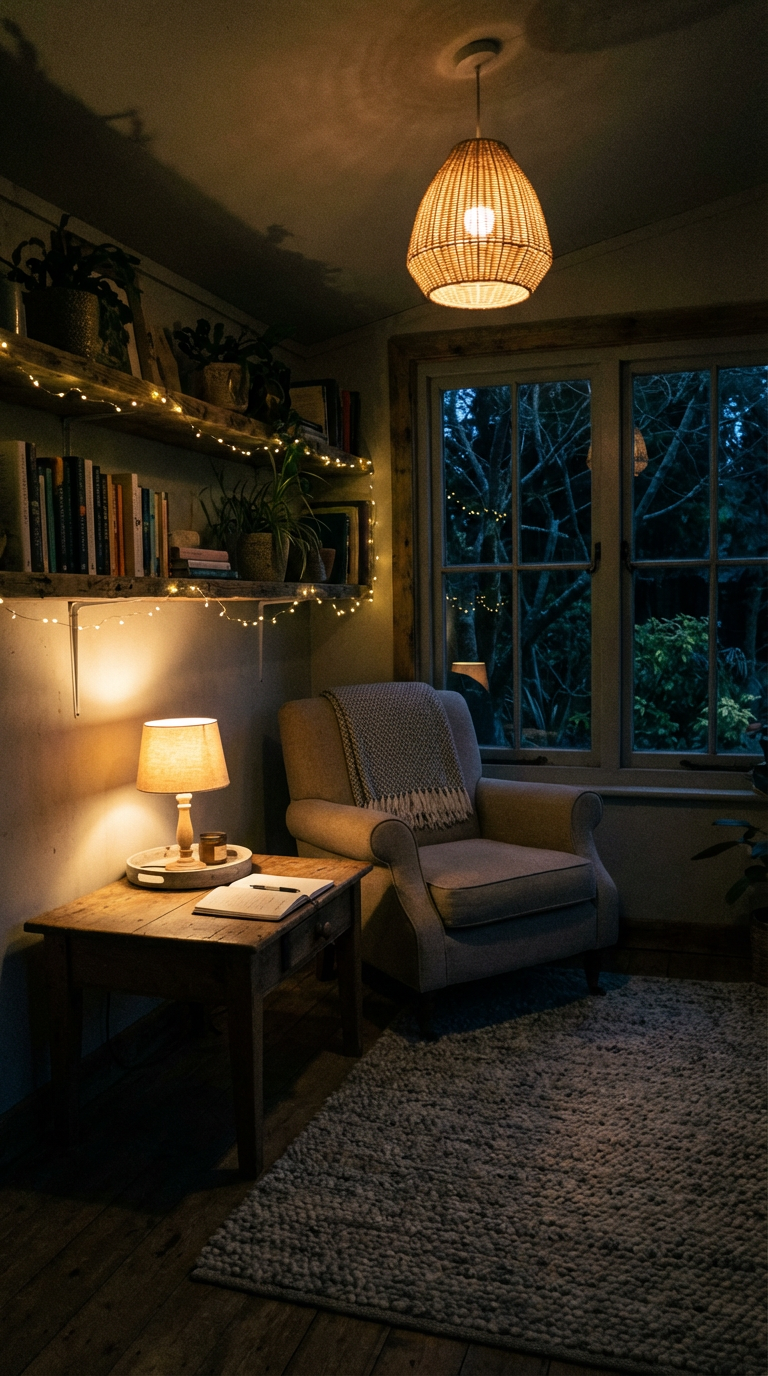
Layer your light
- Overhead: general illumination for moving around safely
- Task: focused light for crafting, potting, or writing
- Accent: soft glow that makes evenings feel warm
A small table lamp instantly changes the mood, and it makes the shed feel like part of the home, not a separate project.
Be smart about power and safety
If you plan permanent electricity, consult a qualified professional and check local rules. Outdoor wiring, moisture exposure, and grounding are not good places to guess.
If you’re staying low-commitment, rechargeable lights, battery lamps, and solar fixtures can cover many needs. Choose warm-toned bulbs for a relaxed feel.
Textiles that make it feel finished
Soft layers create comfort fast, and they help a shed feel welcoming even if the structure is simple.
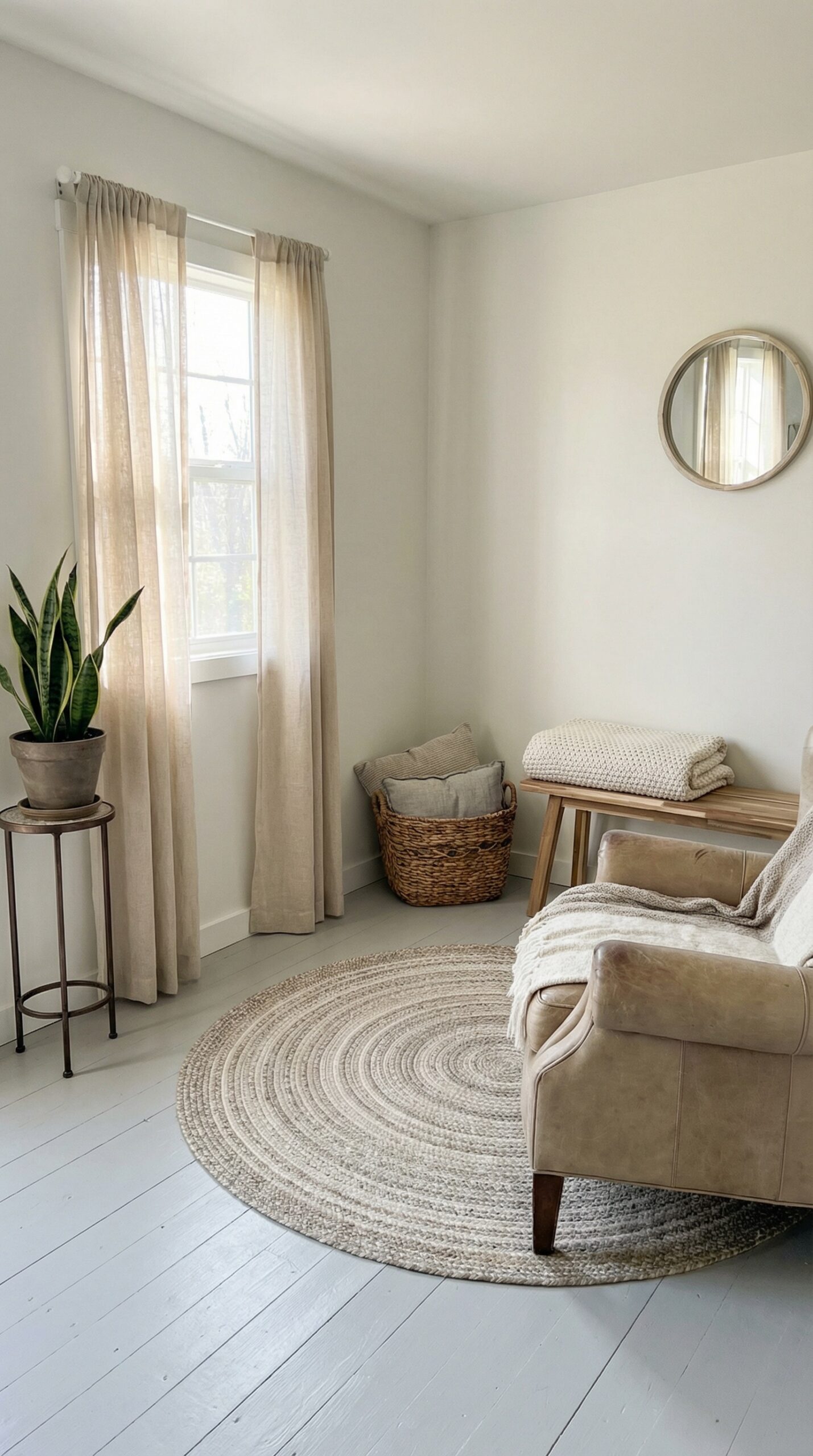
Start with a rug
A rug defines the comfort zone, and it visually separates your retreat from the functional side. Indoor-outdoor rugs work well because they handle humidity better than delicate weaves.
Choose a size that anchors the seat and table, then leave a border of floor visible so the room still feels open.
Add curtains and one throw
Curtains soften hard edges and make the shed feel inhabited. Choose washable fabric, and avoid heavy drapes in humid climates.
One throw is often enough. Too many textiles can trap dust and moisture, while one good layer feels intentional.
Décor details that say “garden retreat”
A she shed doesn’t need much décor, it needs the right décor. Choose pieces that reflect your purpose and your garden.
Bring in botanical cues
A framed plant print, a pressed leaf in a simple frame, or a vase that echoes the garden colors can link inside and outside. Keep the palette restrained, then let one accent stand out.
Style shelves with a simple formula
Try this pattern:
- One stack of books or notebooks
- One container for small items
- One object with height, like a vase or framed photo
- One “breathing space” gap
Shelves feel calmer when every inch isn’t filled. Negative space reads as confidence, and it makes small sheds look larger.
Use scent carefully
Sheds can pick up earthy smells, which can be pleasant, yet musty odors signal moisture. Focus on airflow and dryness first, then add scent gently with dried lavender, cedar blocks, or a mild candle used only when you’re present.
Make the entry and exterior feel welcoming
The outside sets the tone. A shed that looks loved invites you in, even if the inside is still evolving.
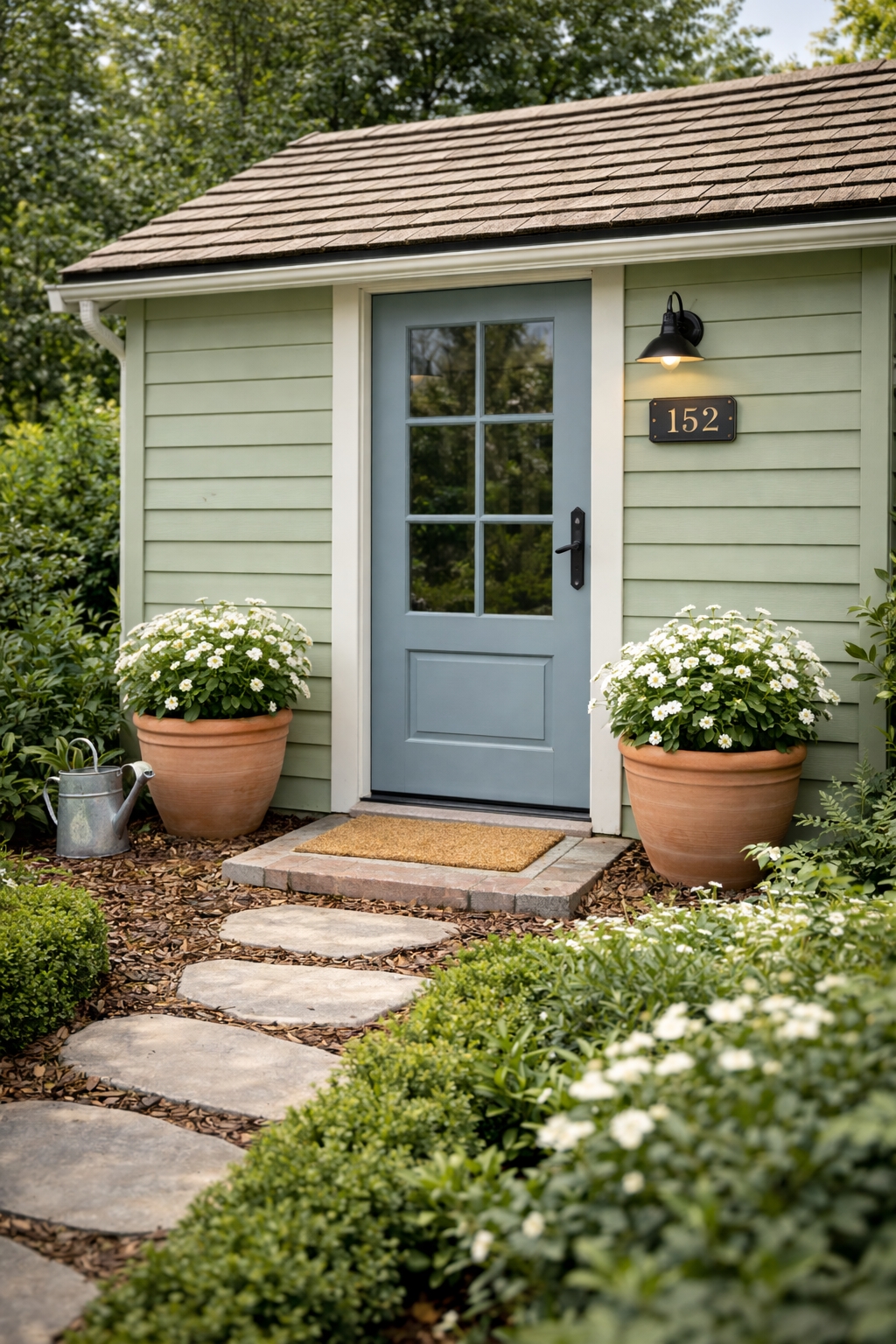
Give the door a moment
A fresh paint color, a new handle, and a clean threshold can transform the whole structure. Consider a small sconce, a simple number plaque, or a hook for a market bag.
Create a clean approach
A path matters, even a short one. Gravel, stepping stones, or brick pavers reduce mud, and they make the shed feel like a destination.
Frame the door with two planters or a pair of pots, then repeat one plant type to keep it cohesive. Repetition reads as “designed,” even with modest materials.
Landscape for calm, not clutter
Plants can soften the shed edges, but leave space for maintenance. Avoid planting too close to the base where airflow is limited.
A narrow bed with low plants in front, and taller plants off to one side, often looks balanced while keeping the structure practical.
Budget-friendly paths to a beautiful she shed
A magazine-worthy shed can start small. Budget choices work best when you spend on comfort first, then on styling.
Weekend refresh
Focus on the fastest wins:
- Deep clean, declutter, and sort supplies
- Paint one wall or the whole interior
- Add a rug, lamp, and one good chair
- Create one storage wall and label containers
- Style a single shelf or corner vignette
A weekend update often gives you the “retreat feeling” immediately, which builds momentum for later upgrades.
Mid-range upgrade
Aim for daily comfort:
- Improve ventilation and seal gaps
- Upgrade flooring with a durable finish
- Add better lighting and more outlets
- Add insulation if you’ll use it year-round
- Replace flimsy shelves with sturdy storage
The shed becomes a true backyard retreat, not just a seasonal hangout.
Full conversion
For a shed that functions like a garden room, plan for:
- Insulation, drywall, and a finished ceiling
- Heating or cooling suited to your climate
- Dedicated electrical work
- Strong moisture control and durable finishes
- Furniture that supports longer stays
At this level, careful planning matters, and professional guidance is often worth it.
Styling tips that still feel natural in real life
Creating a ‘magazine-look’ for your shed doesn’t have to mean staged. A few habits help your shed stay photo-ready while still being practical.
Build one “hero corner”
Pick a corner that looks good from one angle. Place your chair, lamp, small table, and one plant or artwork there. Keep that area tidy, and the shed always feels welcoming even if the work zone is active.
Keep surfaces lightly styled
A tray can hold small tools or a cup of tea, and it makes a surface look purposeful. One bowl, one book stack, one container, then stop.
Choose a calm color story
Two neutrals plus one accent works well. Accent colors can come from cushions, a vase, or a single piece of art, while the rest stays quiet.
Advice section: common she shed problems, solved like a friend would
A shed project rarely goes perfectly from day one. A few simple decisions can prevent most frustrations, and they’re easier than ripping things out later.
“My shed feels damp, what should I do first?”
Start outside, check that rainwater drains away from the shed, not toward it. Inside, improve airflow, then move anything absorbent off the floor and away from exterior walls. Replace cardboard storage with sealed bins, and consider a small moisture absorber if humidity is common where you live.
“How do I make a small shed feel bigger?”
Keep the center pathway open, then push storage up the walls. Use one large rug instead of several small ones, and choose light wall colors that reflect daylight. Mirrors can help too, especially on the wall opposite a window.
“I want it cozy, but I don’t want clutter.”
Choose closed storage for the messy reality, then let décor sit on top of that calm base. Limit small décor items, and repeat materials so the room feels intentional, not busy. One basket style, one wood tone, one metal finish, then add one personal detail that makes you smile.
“Do I really need electricity?”
Electricity helps if you plan to work at night, use power tools, run a dehumidifier, or heat or cool the space. If your shed use is mostly daylight reading or quiet breaks, rechargeable lighting and solar options can cover a lot. For permanent wiring, consult a professional and follow local requirements.
“What’s the easiest way to make it feel like a retreat?”
Start with the seat and the light. A comfortable chair plus a warm lamp changes the mood instantly. Add a rug underfoot, then keep one shelf styled with a few meaningful items.
“How do I keep it looking good after the first week?”
Give every item a home, then make putting things away easy. Hooks by the door, a bin for “in-progress projects,” and a short reset habit at the end of each visit can keep the space calm. Two minutes of reset beats a two-hour clean later.
Final thoughts
A she shed works best when it reflects your real life, not an imaginary one. Begin with purpose, handle light and airflow, then build comfort and storage in a way that stays easy to maintain. Over time, your shed becomes more than a project, it becomes a small ritual, a step outside, a pause among plants, and a space that quietly supports the rest of your home.
If you’re planning more backyard upgrades, use the shed as your anchor. Paths, planting, and lighting around it can shape the whole garden into a place you’ll want to use more often.