
Small Garden Shed Ideas for Tight Yards
A tight yard can feel like a never-ending game of storage Tetris, tools in one corner, pots stacked by the door, a hose looping wherever it fits. A well-planned small shed changes the mood fast, clutter disappears, paths open up, plants get breathing room, and the whole yard looks calmer.
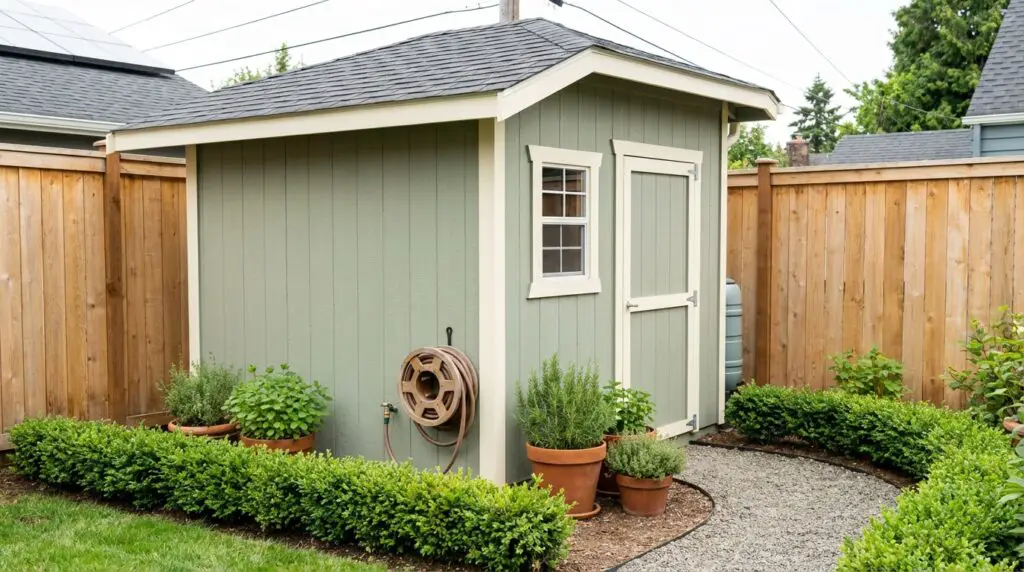
Small spaces reward clear decisions, where the shed sits, how you get inside, what lives on walls, and what stays on the floor. Use the ideas below to match a shed shape to your yard’s awkward spots, then organize it so every inch earns its keep.
Start with the “space math” that saves your weekend
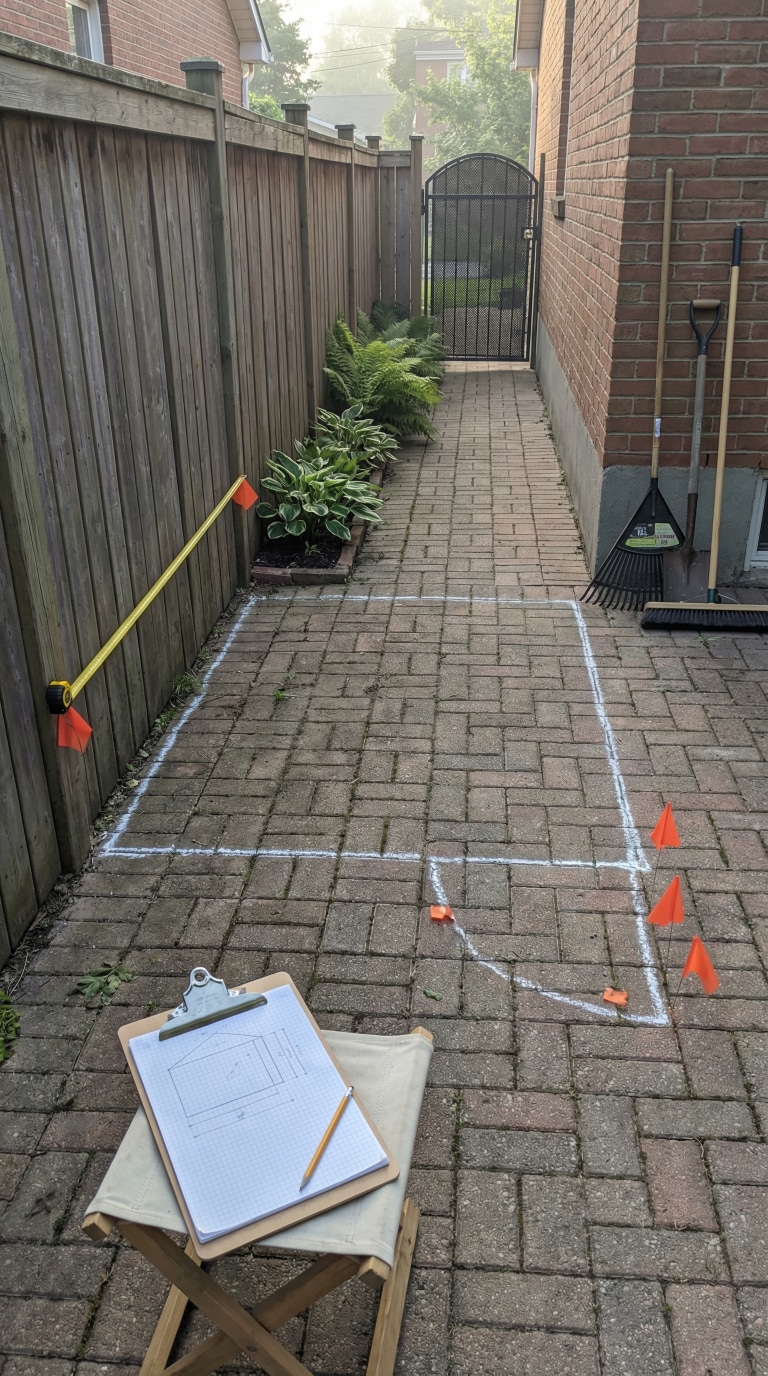
Before looking at styles, grab a tape measure and map the shed zone like you would plan a patio.
- Measure the footprint you can truly spare, not the full lawn size
- Check access points, gate width, tight turns, steps, and low branches
- Mark door clearance, note how far a swinging door would travel
- List the must-store items, mower, bike, bins, long-handled tools, soil bags
- Add future space, a little extra room beats rebuilding next year
A small shed often lands between 20 and 60 square feet, and a compact 6×6 can hold a mower, a bike, and hand tools if the layout is tidy. For many tight yards, shape matters more than raw square footage, a slim footprint can outperform a “bigger” box that blocks circulation.
Placement strategies that keep a small yard feeling open
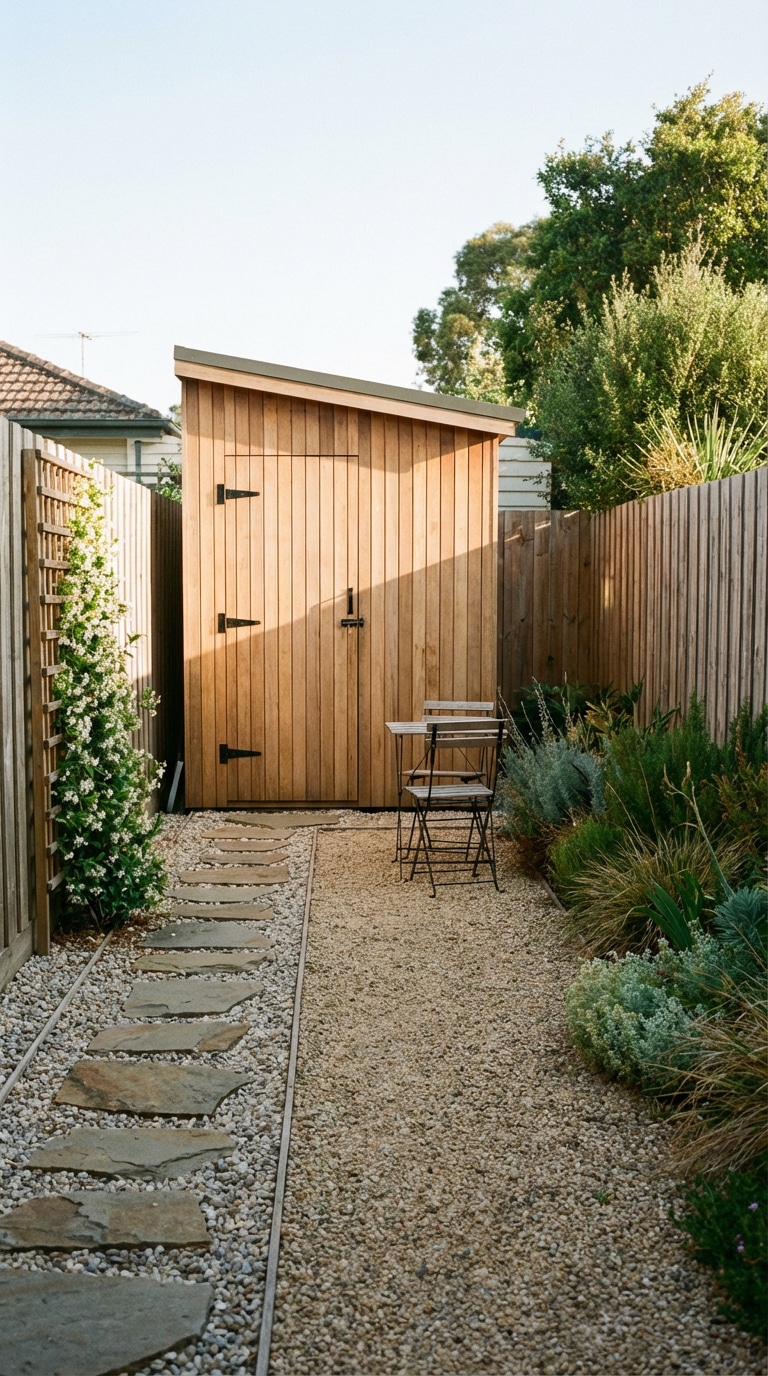
Tuck it into a corner, then reclaim the center
Corner placement leaves a clean central area for planting, seating, or a small patch of lawn. Corners also give you two “back walls” from fences, which helps the shed blend in.
Keep the shed door facing the easiest approach, not the prettiest view. Daily use matters, dragging a mower around a bend gets old quickly.
Use the fence line like a storage lane
Narrow strips beside fences often sit unused, yet those strips can become the perfect shed location. A slim shed along the boundary keeps the main yard intact, and it can visually read as part of the fence rather than a bulky object.
Aim for a tidy approach surface, stepping stones or compacted gravel helps prevent mud at the threshold, and it makes the shed feel intentional.
Watch shade, drainage, and damp zones
Sheds last longer when they sit on a spot that drains well, and damp corners tend to shorten the life of timber. A slightly higher location helps, even a gentle rise reduces puddling near the base.
Ventilation matters too. Stale, humid air invites mildew, rust, and that musty smell that clings to anything stored inside.
Check rules early, then design with confidence
Setbacks, height limits, and permit triggers vary by area. A quick check with local guidance can save a full redesign, especially in narrow side yards where every inch feels negotiated.
The best shed shapes for narrow footprints
1) Narrow sheds for side yards
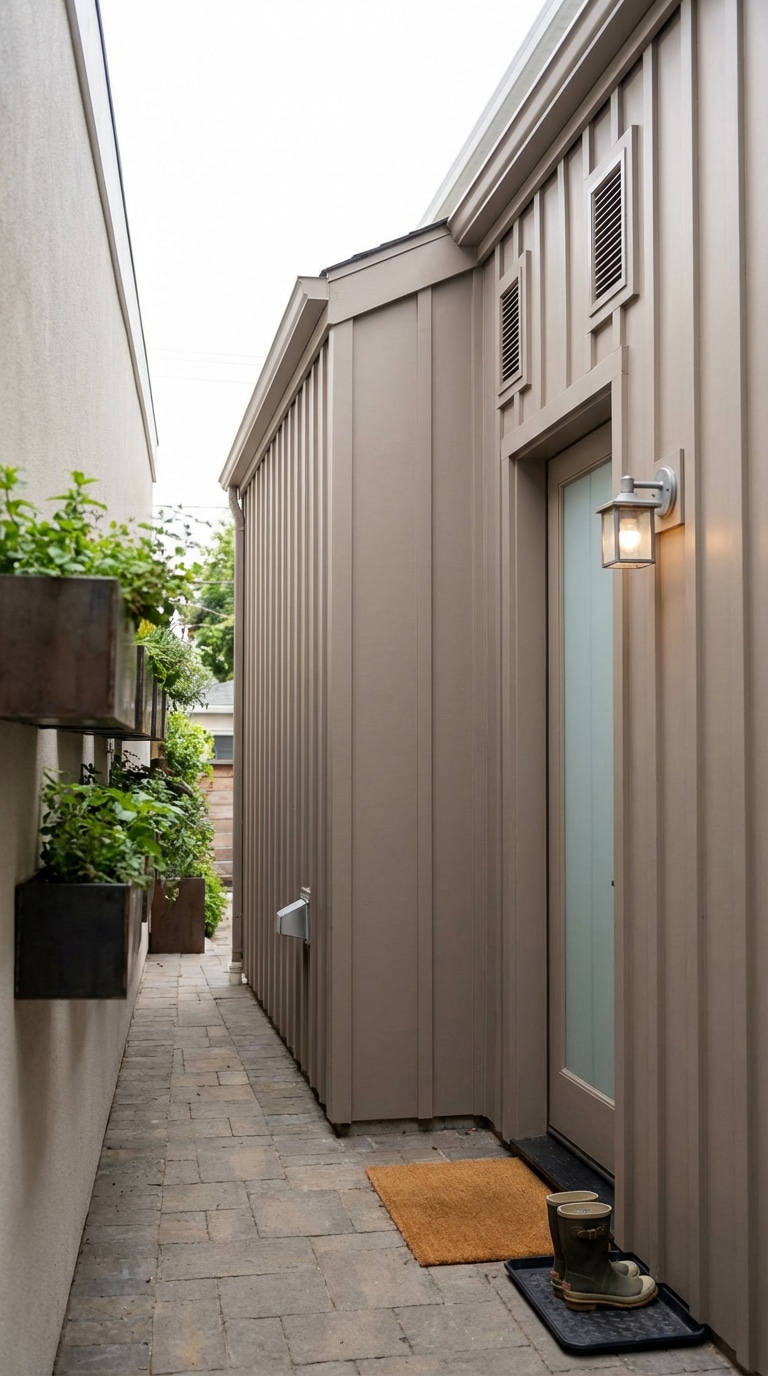
A narrow shed works like a long cabinet outdoors, perfect for rakes, shovels, trimmers, folded chairs, and storage bins.
Why it fits tight yards
- Minimal depth preserves walkway space
- Long walls create room for hooks and rails
- Tall storage keeps the floor clear
Design tips
- Keep shelves shallow, deep shelves swallow aisle width
- Put long tools on the back wall, shorter gear on the door side
- Use a brighter interior color or light paint, it helps visibility in slim spaces
A narrow shed can also double as a “screen,” hiding bins or utilities from view while staying practical.
2) Lean-to sheds, the tight-yard favorite
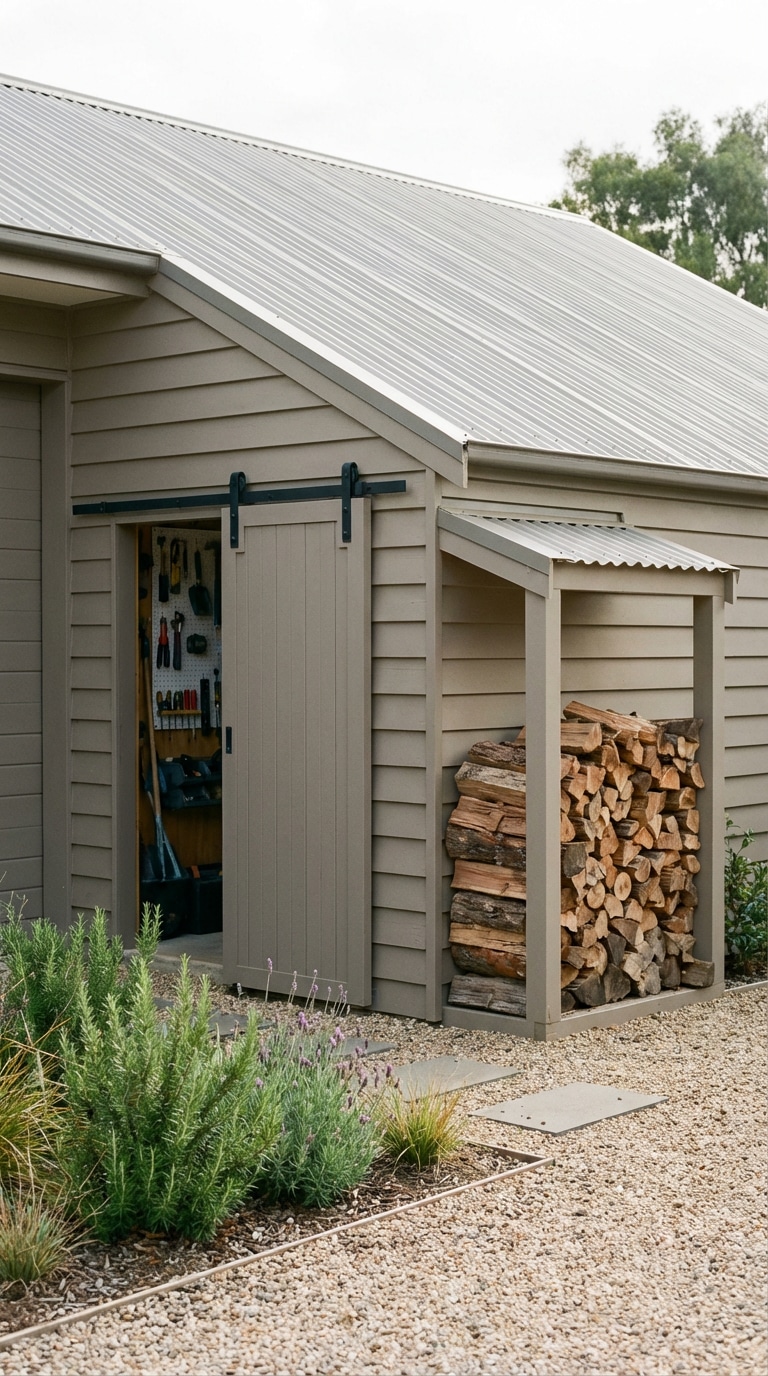
Lean-to sheds hug a wall or fence, with a single-slope roof that keeps height down. A lean-to looks calm in a small yard because it avoids a tall peak and feels like part of the property line.
Where it works best
- Along a house wall, garage wall, or solid fence
- Beside a driveway, where depth is limited
- In side passages that feel too narrow for a full shed
Planning notes
- Protect the wall it sits against, moisture control matters
- Think about roof runoff, direct water away from foundations
- Leave a small gap for airflow if local guidance allows
Lean-to designs shine when paired with smart doors, sliding panels or double doors can make access easier without eating walkway space.
3) Attached-to-house storage sheds
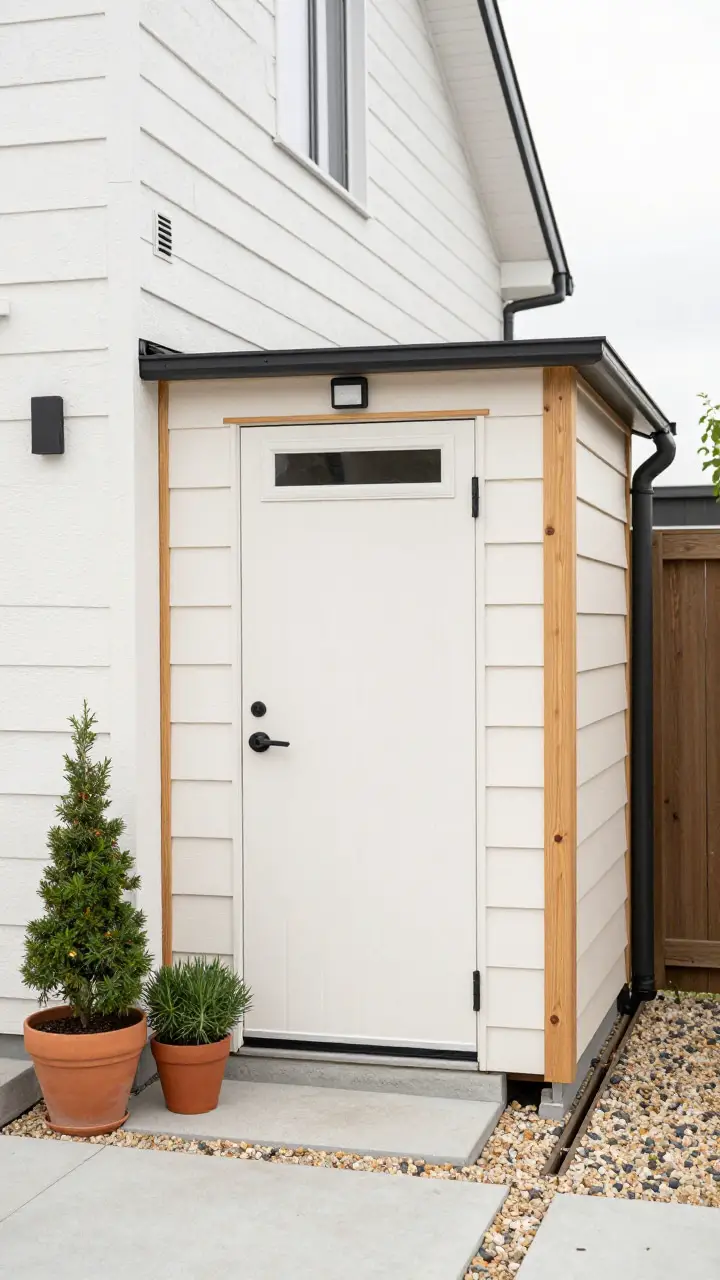
A small attached shed can feel like an outdoor closet, especially useful where the yard is mostly patio and paths. Attachment can reduce wasted space behind the shed and can simplify alignment with existing surfaces.
Practical cautions
- Keep water management in mind, flashing, drip edges, and controlled runoff
- Avoid trapping moisture against siding
- Consider access to utilities, meters, and vents
A compact attachment works best for tools, bins, and seasonal items, less so for wet soil storage unless ventilation is strong.
4) Mini “shed closets” for vertical storage
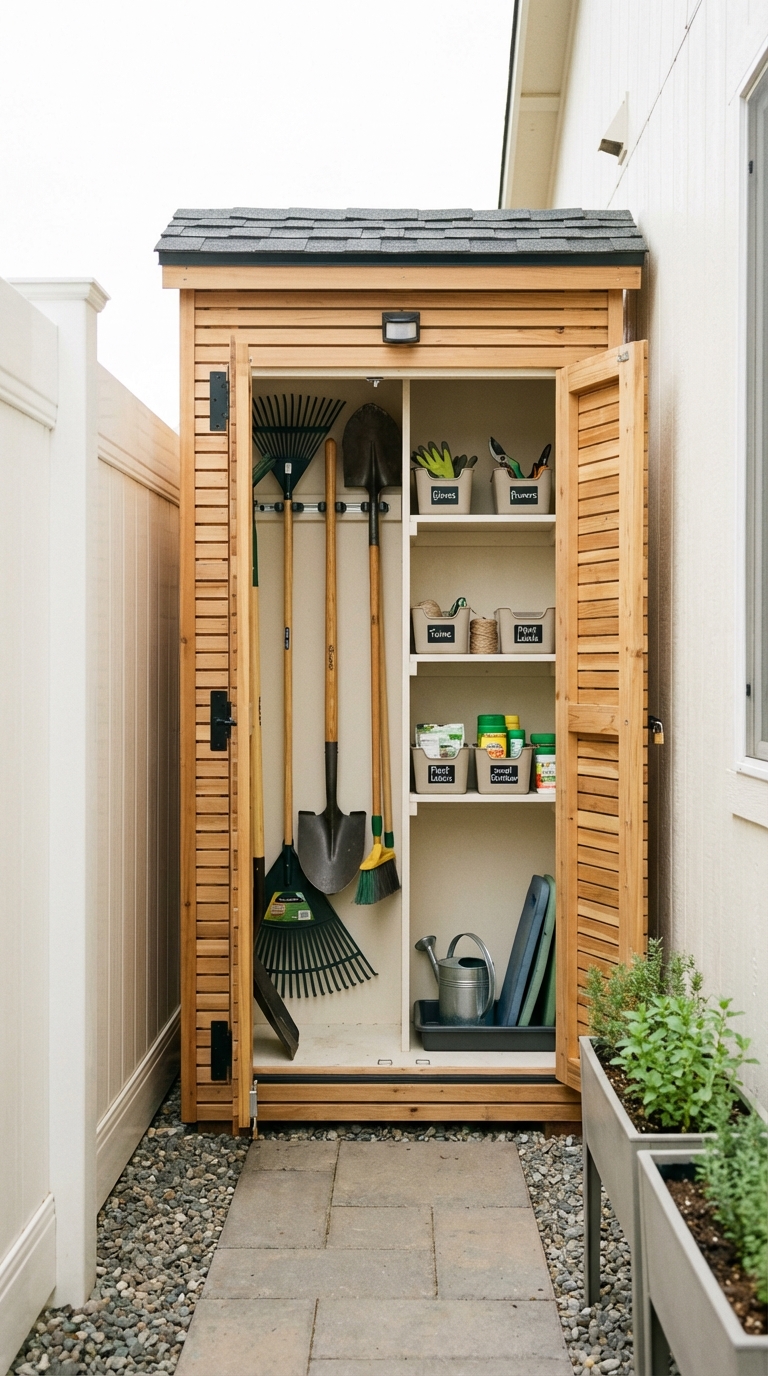
Some tight yards don’t need a walk-in shed at all. A tall, shallow unit with doors can store hand tools, watering cans, and small bags of soil.
Best for
- Balcony-adjacent patios
- Narrow courtyards
- Side yards that only allow a shallow footprint
Pair a mini shed with wall-mounted storage nearby, and the area can function like a tidy garden station.
5) Small potting sheds that stay compact
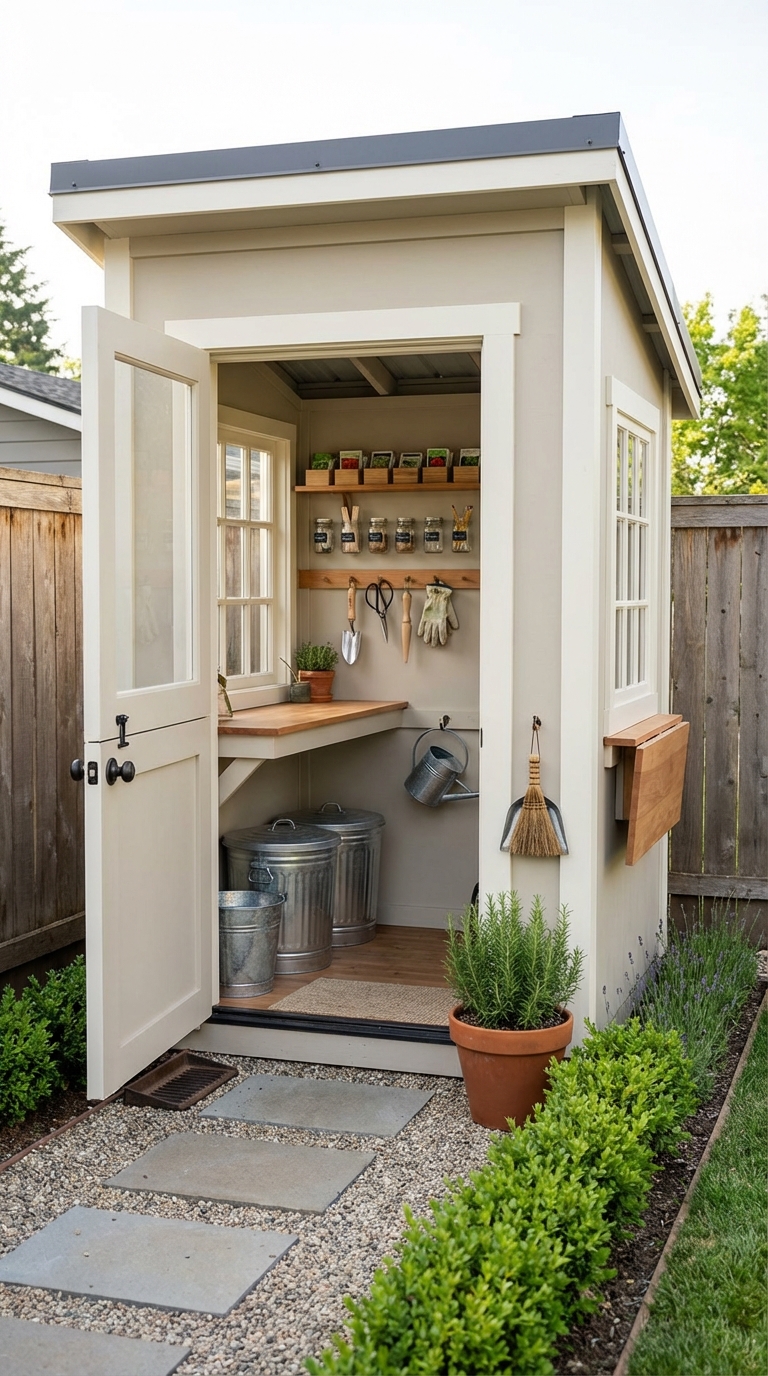
A potting shed in a tight yard should earn its footprint by combining storage with a work surface. Think “micro studio,” not “full garden room.”
Must-haves
- A narrow bench or fold-down counter
- Hooks for hand tools and twine
- A small shelf for pots and labels
- Light, natural if possible, or a simple battery light if not
Even a tiny potting corner can improve routine tasks, repotting becomes cleaner, and supplies stay in one place.
Foundations that don’t steal space, or trap moisture
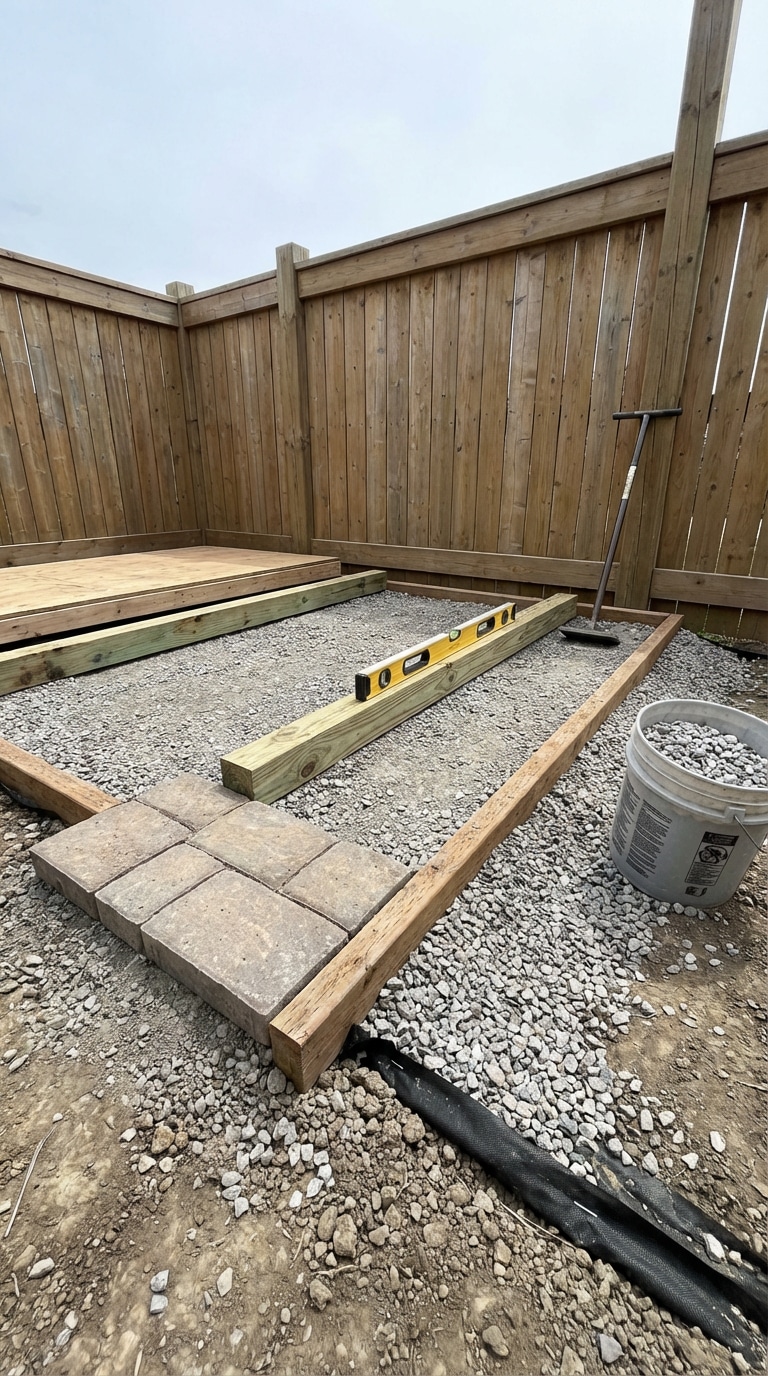
A shed base does more than hold weight, it controls moisture, prevents sagging doors, and keeps the structure square. Tight yards often have drainage challenges, so a smart base is worth the effort.
Gravel pad
Gravel pads drain well and suit small to medium sheds. A compacted gravel base also feels “garden-friendly,” and it can be edged neatly to look finished.
Good for: most small sheds, especially where water tends to sit
Watch for: keeping it level, using proper edging so gravel stays put
Concrete slab
Concrete offers long-term stability and suits heavier equipment storage. Slabs can take up visual space, so keep the perimeter tidy and consider a narrow planting edge to soften it.
Good for: larger sheds, heavy mowers, frequent rolling loads
Watch for: careful leveling, planning for runoff direction
Block-and-timber or skid bases
Blocks with pressure-treated timbers, or skids, can lift the shed off the ground. Elevation helps airflow, reduces rot risk, and can be useful in damp climates.
Good for: slightly uneven ground, moisture-prone areas
Watch for: anchoring, keeping supports stable over time
A simple rule of thumb helps many yards: keep the shed raised enough for airflow under the floor, even a few inches can reduce damp problems.
Door choices that solve clearance problems
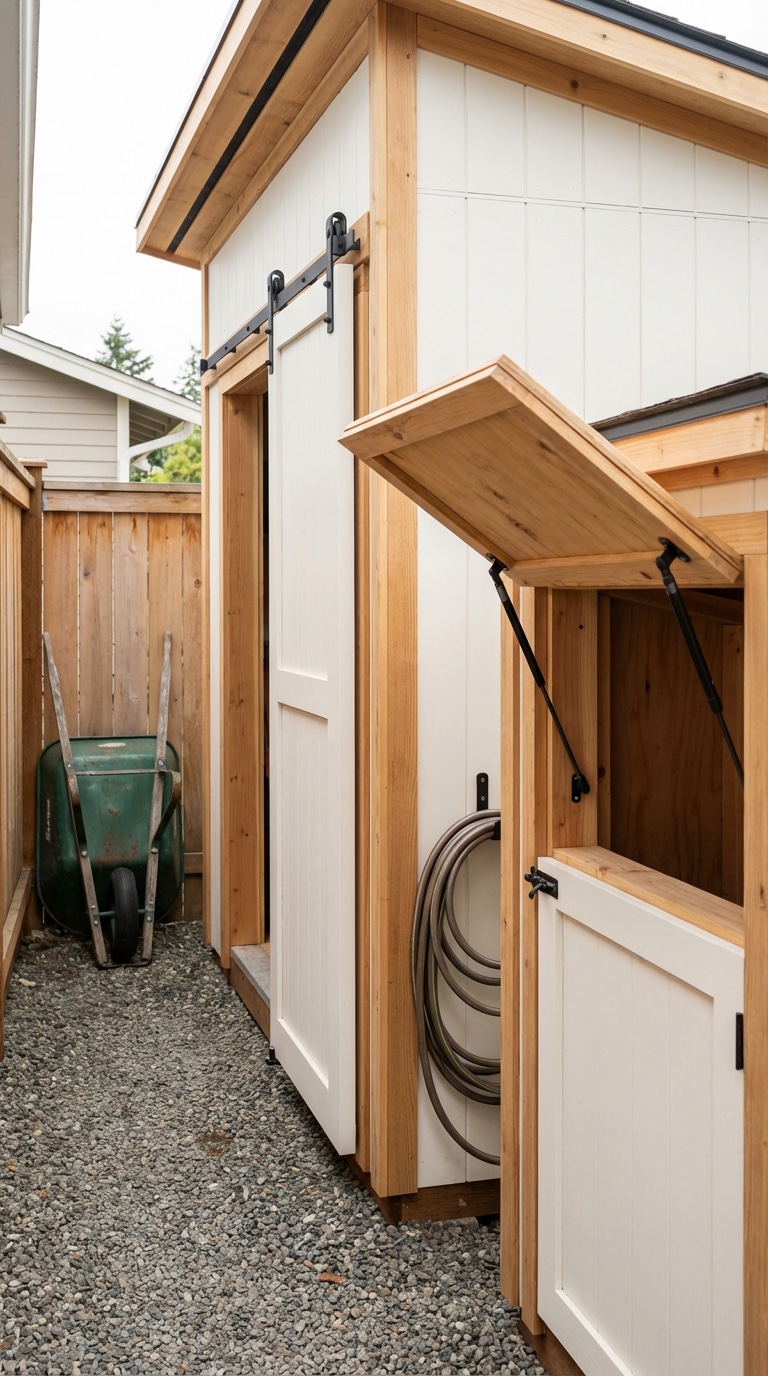
Doors decide how pleasant a shed feels to use. Tight yards often punish the wrong door choice, a swinging door can block a passage, snag a plant, or bang into a fence.
Sliding doors, friendly for narrow clearances
Sliding doors save swing space and can work well for wider openings. A sliding panel also looks clean on narrow sheds, and it keeps the walkway usable.
Where sliding doors shine
- Side yards where a door swing would block passage
- Lean-to sheds with a long front face
- Tool sheds that need a wide opening
Keep the track protected from debris, and plan a threshold that stays clear.
Double hinged doors, best for bulky equipment
Double doors suit mowers, bikes, and wheelbarrows. Tight yards can still use hinged doors if the approach area allows for the swing.
Ways to make hinged doors behave
- Use narrower leaves, one active door and one fixed most days
- Add a simple door stop so wind doesn’t slam them
- Consider an outward swing only if the walkway remains safe
Lift-up access panels, ideal for “shed closets”
A top-hinged panel works for shallow storage units where you grab tools without stepping inside. Weather sealing matters, and gas struts can make opening smoother.
Door choice also affects security, strong hinges, good locks, and a solid frame protect gear that would be expensive to replace.
Interior layout that makes a small shed feel twice as big
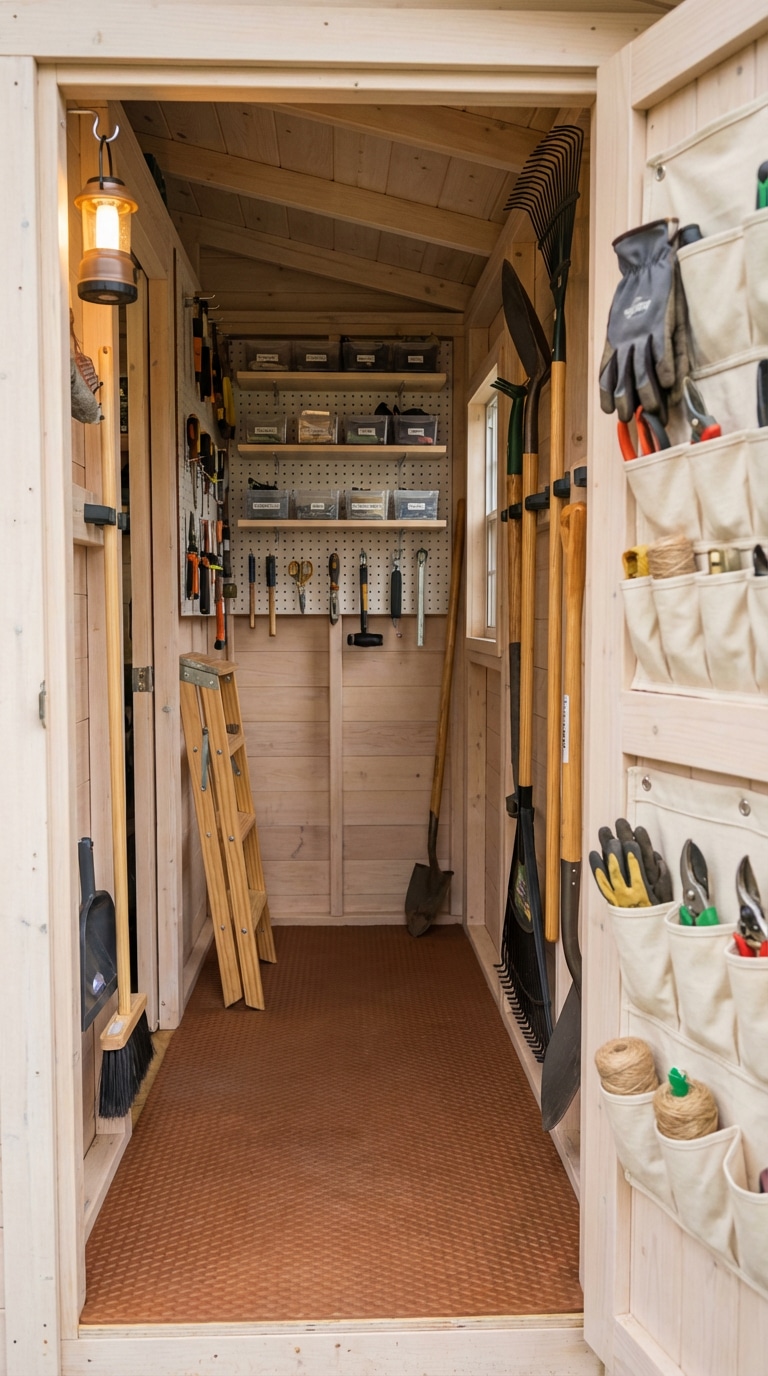
Small sheds fail when the floor becomes the default shelf. A better plan builds storage upward, keeps the center clear, and puts everyday items within easy reach.
Build a clear “middle lane”
Start with an open strip from door to back wall. Store larger equipment along one side, then use the other side for shelves and hooks.
Keep the lane wide enough for the largest item you carry in, usually the mower, a wheelbarrow, or a large storage tote.
Use wall systems, hooks, and rails
Walls can hold far more than many people expect.
- Hooks for long tools, spaced so handles don’t tangle
- A rail system for changing needs over seasons
- Narrow shelves for spray bottles, gloves, and small pots
- A vertical corner rack, ideal for rakes and brooms
Mounting into studs helps strength. If a stud layout feels limiting, a plywood backer panel can provide flexible anchoring points.
Make the back of the door work
Door backs are prime real estate.
- Shallow racks for hand tools
- A slim pocket for plant labels and pens
- Clips for twine, tape, and pruners
- A small bin for gloves and a brush
Keep door storage light, heavy items can strain hinges and make doors sag over time.
Zone the shed like a tiny room
Divide the interior by purpose.
- Fast-grab zone: gloves, shears, watering can
- Tool wall: rakes, shovel, hedge trimmer
- Soil and pots: bags sealed in lidded bins, stacked pots on a shelf
- Seasonal items: holiday lights, cushions, shade cloth, high shelves
Labeling saves time and keeps the shed from sliding back into chaos after one busy weekend.
Small shed style that blends in, not sticks out
A tight yard can’t hide a messy shed, yet a well-finished shed can feel like part of the garden’s design.
Keep the roofline calm
Lower profiles suit small spaces. Lean-to and single-slope roofs often feel less imposing than tall peaks, and they reduce shade on nearby beds.
Choose a simple color plan
Match trim or paint to the house, fence, or decking. Repeating one exterior color helps the shed look “planned,” not dropped into place.
Hardware matters too. A consistent latch style and tidy hinges add polish, even on a basic build.
Add a clean approach
A narrow path, stepping stones, or compact gravel makes the shed feel like a destination, not a dead end. Keep the threshold clear, and add one practical detail, a hook for a hose, a small shelf for a watering can, or a wall-mounted bucket.
Soften edges with planting, without blocking access
A slim planting strip can help, yet plants should never block doors. Choose low growers or tidy grasses, and keep clearance for moving tools in and out.
Micro potting shed setup for small yards
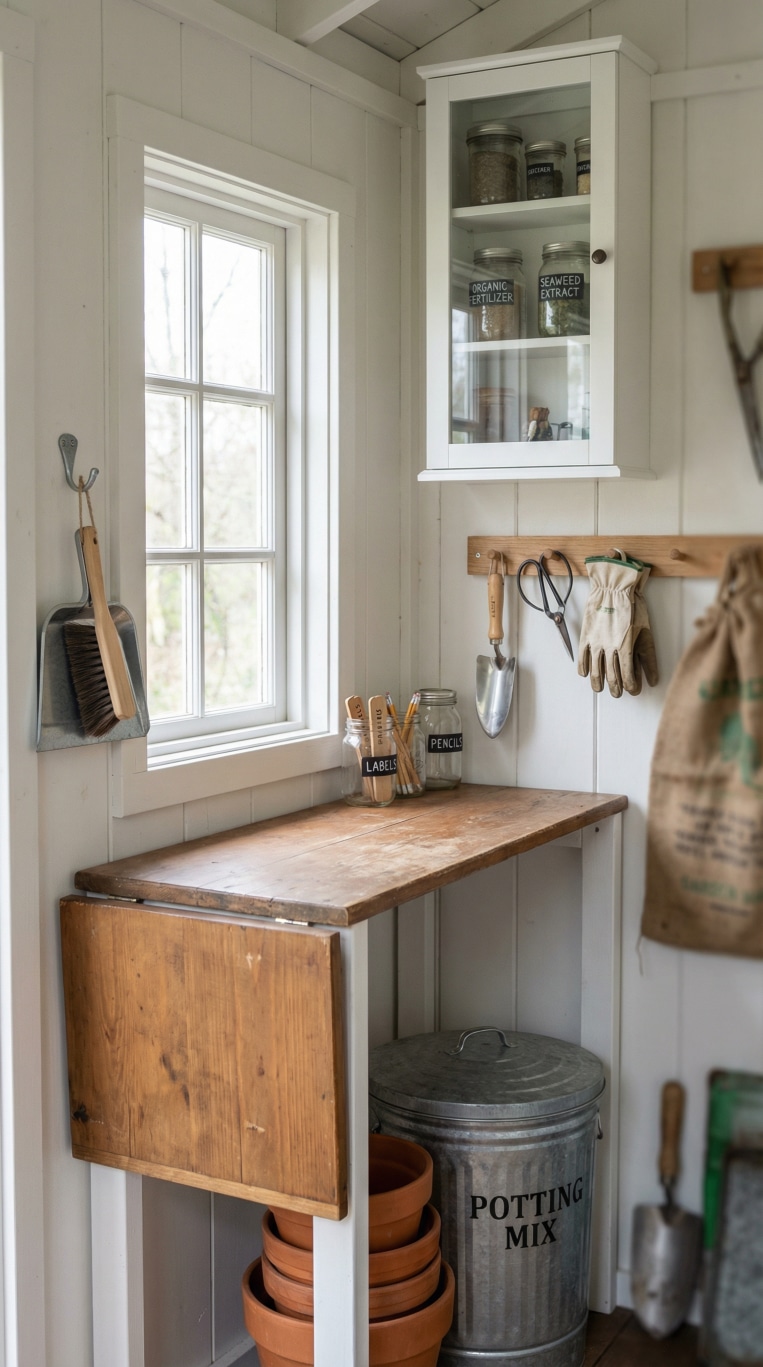
A potting shed can be modest and still useful. Focus on workflow, surface space, tool storage, and easy cleanup.
A narrow bench beats a deep counter
A bench around elbow depth keeps work comfortable without dominating the interior. If floor space is tight, a fold-down surface can give you a temporary station that disappears when not needed.
Store mess-makers thoughtfully
Soil bags and compost attract moisture and pests if left open.
- Use lidded bins for potting mix
- Keep fertilizers sealed and labeled
- Store clay pots off the floor, they chip less
A small broom and dustpan hung near the door make cleanup faster, and the shed stays pleasant to step into.
Light and air keep it usable
A small window, a vent, or a louvered opening can reduce heat buildup and damp. If natural light is limited, a simple battery light or rechargeable lantern makes evening tasks easier.
Budget paths: kit, DIY, or custom
Tight yards can go in three directions, and each can work well when matched to your skills and expectations.
Shed kits
Kits save design time and often include pre-cut components. Many kits still need a solid base and careful assembly, especially in narrow spaces where squareness affects doors.
Best for: predictable sizing, faster builds, consistent look
Watch for: limited customization, delivery access through narrow gates
DIY builds
DIY works well for lean-to sheds and narrow footprints, because you can tailor depth, height, and door placement to your yard’s quirks.
Best for: side-yard builds, odd dimensions, creative door solutions
Watch for: time, tool needs, keeping everything square
Custom builds
Custom makes sense when the yard is extremely tight, or when you need the shed to do double duty, storage plus potting, storage plus bike parking, storage plus bin screening.
Best for: precise fit, higher finish, tricky sites
Watch for: higher cost, scheduling, access for materials
A smart approach combines methods, buy a basic kit, then upgrade doors, paint, and storage to suit your daily routine.
Common small-shed mistakes, and how to avoid them
Tight yards magnify small errors, so a few precautions can spare frustration.
- Wrong location: damp shade and low spots shorten shed life
- Underestimating size: list gear first, then choose a footprint
- Weak base: uneven bases cause sticky doors and warped frames
- Poor ventilation: airflow prevents rust, mold, and musty odors
- No storage plan: hooks and shelves matter as much as square footage
A shed should feel easy to use. If opening the door requires moving three items first, layout needs a reset.
A simple plan that works in almost any tight yard
- Choose a lean-to or narrow footprint that keeps walkways open
- Build a well-draining, level base, raised enough for airflow
- Pick a door style that fits the approach, sliding or double doors for bulky items
- Organize vertically, with a clear center lane and zones by purpose
- Finish the exterior so it reads as part of the garden
Closing thoughts
A small garden shed can do more than hide clutter. Thoughtful placement keeps the yard feeling generous, a smart door choice makes daily use painless, and vertical organization turns a tiny interior into a surprisingly capable storage hub. Once tools and supplies have a home, planting beds look better, patios feel less crowded, and even the smallest yard becomes easier to enjoy, season after season.