
Urban and Vertical Herb Gardening for Small Spaces
Urban life rarely hands you a big backyard, yet it often gives you something just as useful, vertical surfaces, bright corners, railings, and small outdoor areas that sit close to your kitchen. A compact herb garden works because it leans into what you already have, then turns empty height into growing space. In addition, there is no doubt fresh herbs taste better, and they can feel like a small luxury, even if your “garden” is a balcony rail or a sunny wall.
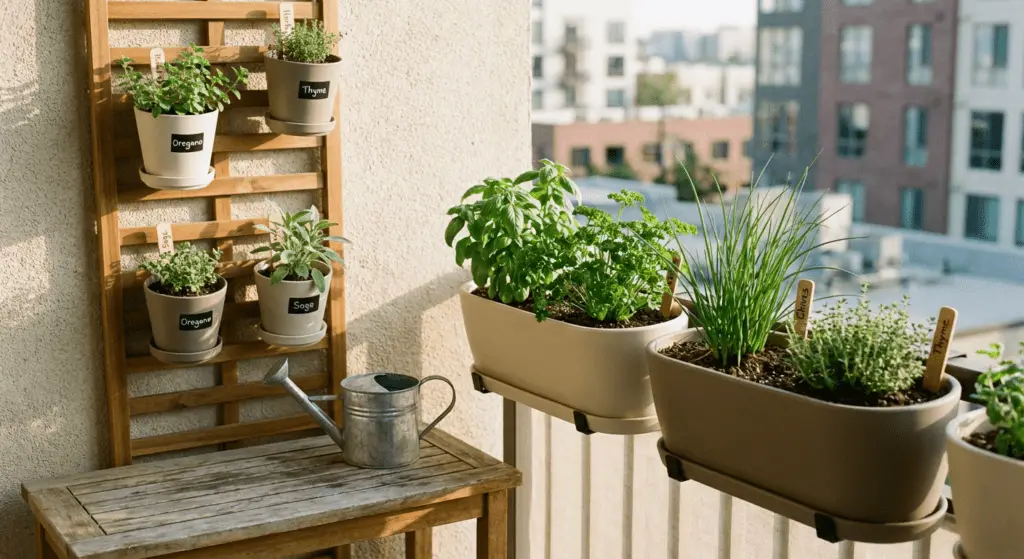
Below, you’ll find ideas for balconies, apartments, tiny patios, narrow side strips, small courtyards, and any “spare patch” that gets decent light. Expect practical setup options, simple layouts you can copy, and care habits that keep herbs healthy without turning your week into a plant-watering marathon.
Vertical herb gardens, start with a fast “space audit”
A great setup starts by noticing what your space already does well. Five minutes of observation can save you money, frustration, and dead basil.
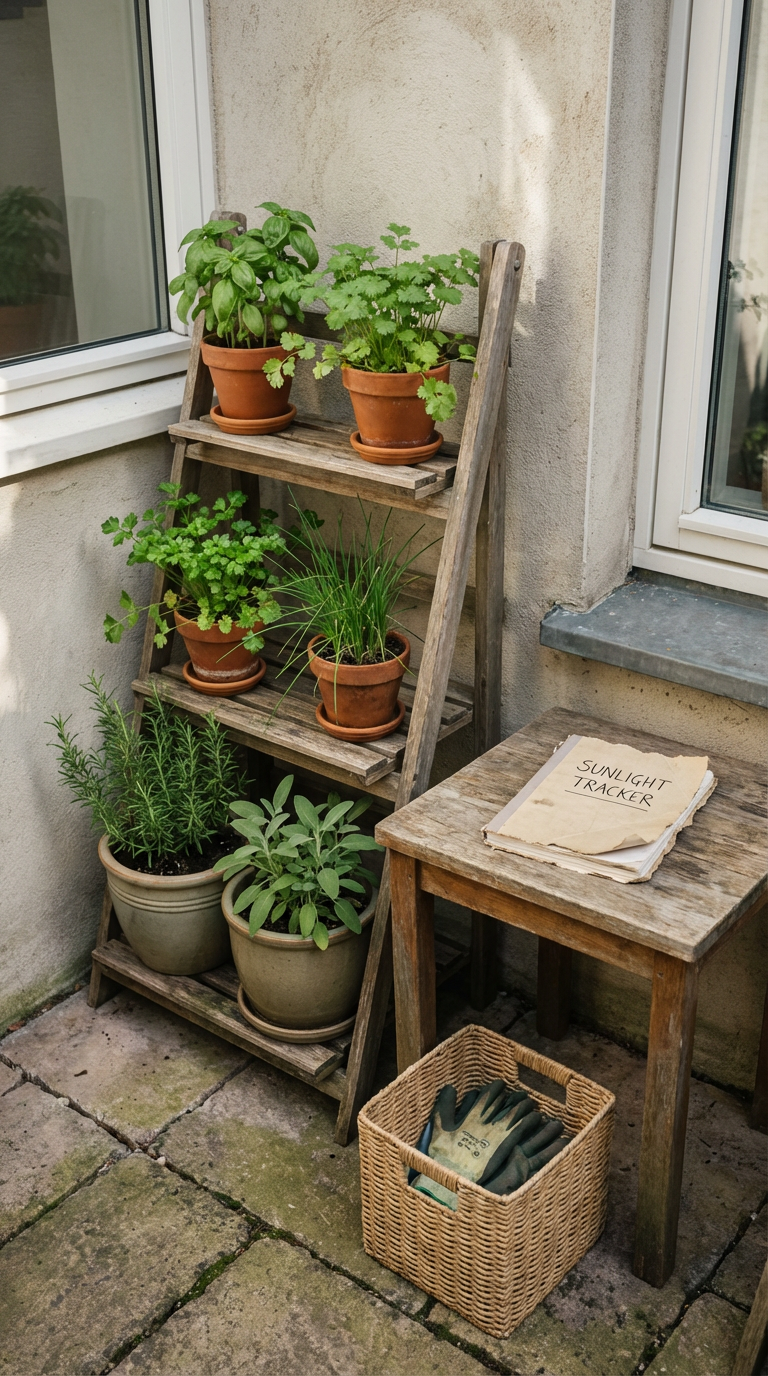
Light, the deal-maker for compact growing
Stand where your herbs will live, then check the light morning, midday, and late afternoon. If you see strong sun for several hours, you can grow almost any common kitchen herb with confidence. If light stays bright but indirect, you can still grow plenty, yet growth may be slower, and harvests smaller.
If your only bright spot sits indoors near a window, the same planning still applies. Treat that ledge like a micro-balcony, because pots dry out, leaves lean toward light, and heat from kitchens can change watering needs.
Wind, heat, and “wall bounce”
Balconies and roof-level spaces can get windy, and wind pulls moisture from leaves and potting mix. Walls can also reflect heat, especially light-colored surfaces under strong sun. Both effects speed up drying, which matters most for small containers and vertical planters.
If gusts hit hard, plan for stability first. Choose heavier bases, secure railing planters, and avoid anything that could tip or fall if bumped.
Water access, make it easy on yourself
If watering feels annoying, it won’t happen consistently. Place your garden where a small watering can or bottle refill feels natural, near the door, near an outdoor tap, or near your kitchen sink if growing at a window.
A compact herb garden thrives on routine, not heroic effort.
Rules and safety
Apartments and condos sometimes restrict what can hang over railings or attach to exterior walls. Even if rules feel flexible, safety stays non-negotiable. Wet potting mix weighs more than people expect, and a dropped planter becomes a real hazard.
Plan so nothing can slide, tip, or swing loose.
Urban vertical gardening, pick your “surface” instead of chasing square footage
Small-space gardening gets simpler once you stop thinking about floor area. Think in surfaces.
1) A wall that gets light
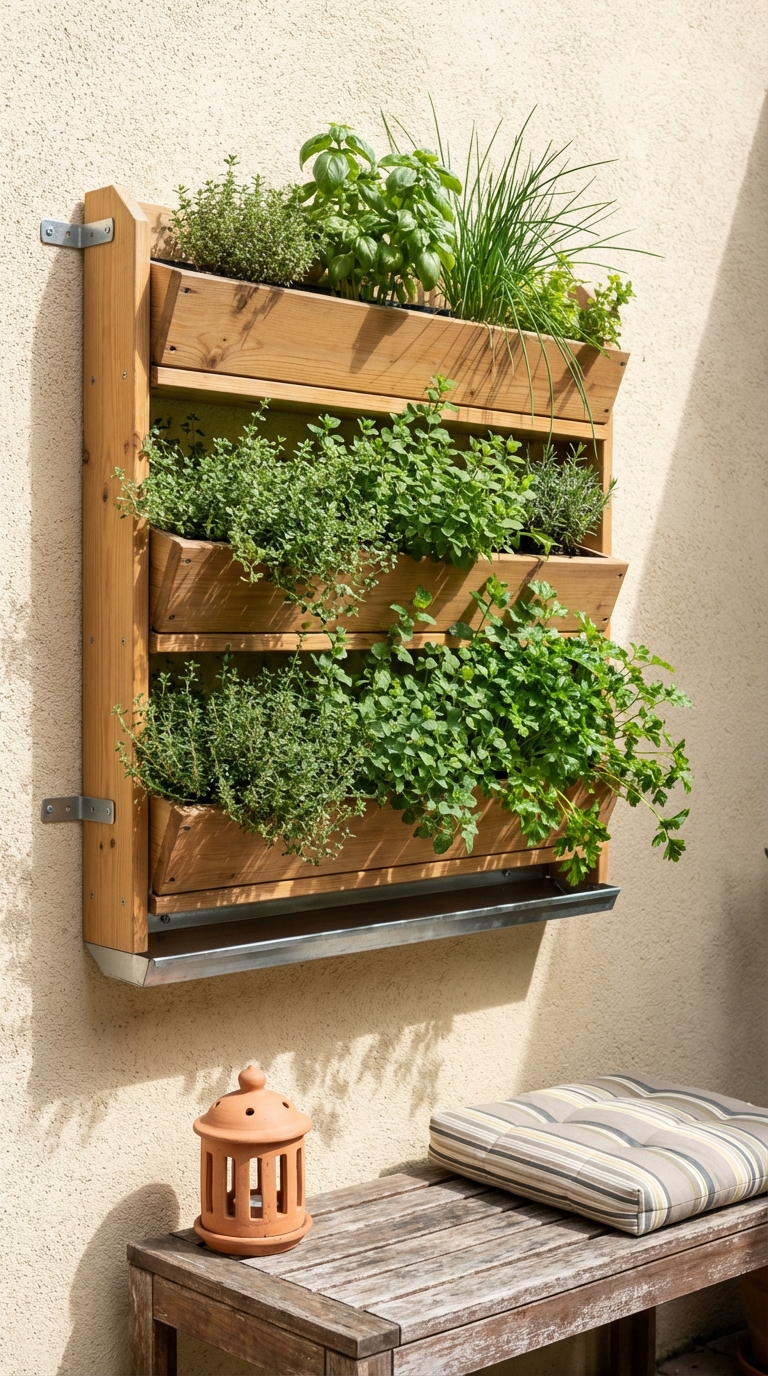
A sunny exterior wall, a fence panel, or a sheltered courtyard wall can host a vertical herb garden that takes almost no ground space. Wall systems also keep herbs visible, which makes harvesting more likely.
If drilling isn’t allowed, look for freestanding frames that lean or stand flush against a wall.
2) A balcony rail
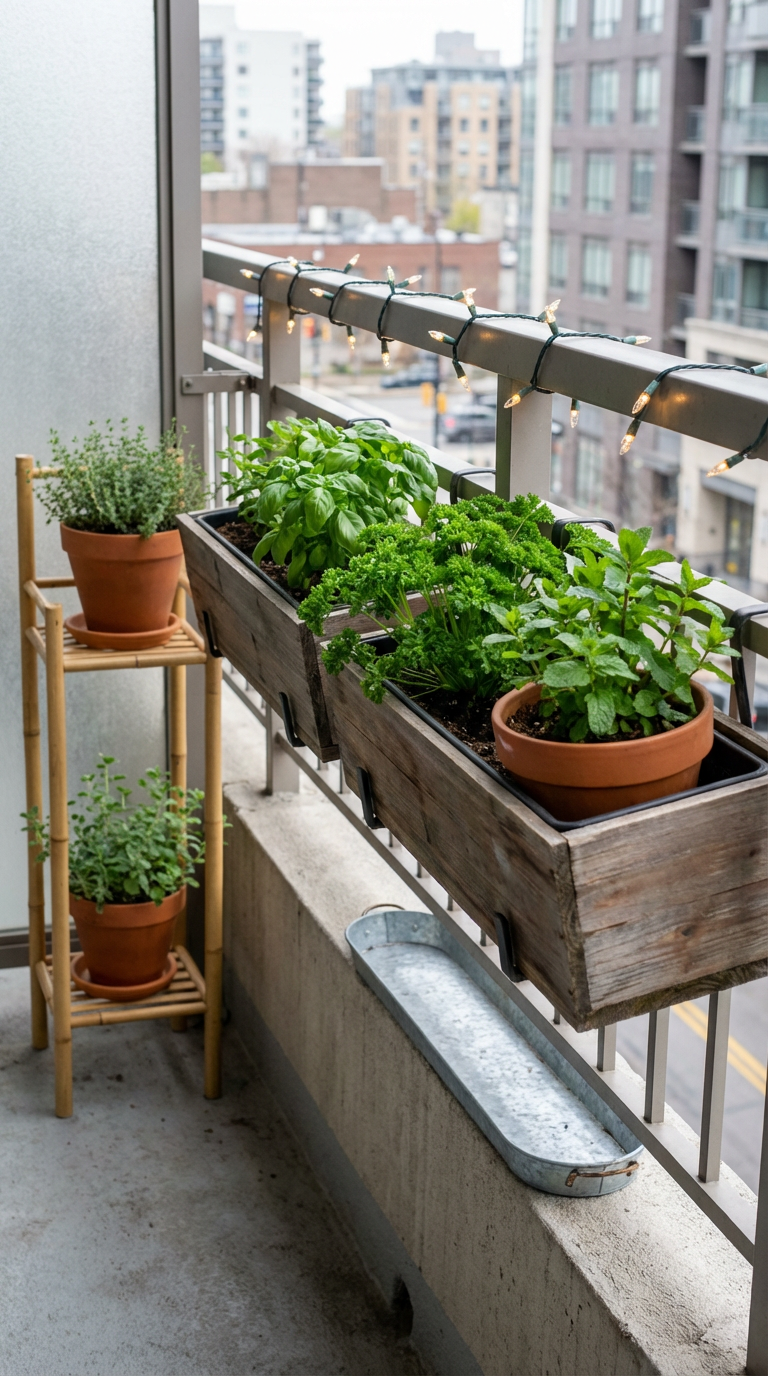
Railing planters shine in tight spaces, because they leave the walking area open. Rail planters also put herbs near eye level, which helps you notice when leaves droop or when pests show up early.
Secure attachments matter here, especially with wind.
3) A corner, a narrow strip, or a micro patio
A single corner can hold a vertical ladder shelf, a tiered stand, or stacked planters. A narrow side strip can support a slim trellis plus pots at the base. A tiny patio can become an herb station with one vertical element and a compact tray of “daily use” herbs by the door.
4) A bright window or indoor nook
A windowsill herb garden won’t hold a jungle, yet it can keep you stocked with small harvests. Indoors, focus on fewer pots, better light, and consistent trimming so plants stay compact and bushy.
Choose a vertical system that matches your life, not just your style
A vertical garden looks dramatic on day one, but ease of watering decides whether it still looks good by week six. Pick a structure that fits your schedule.
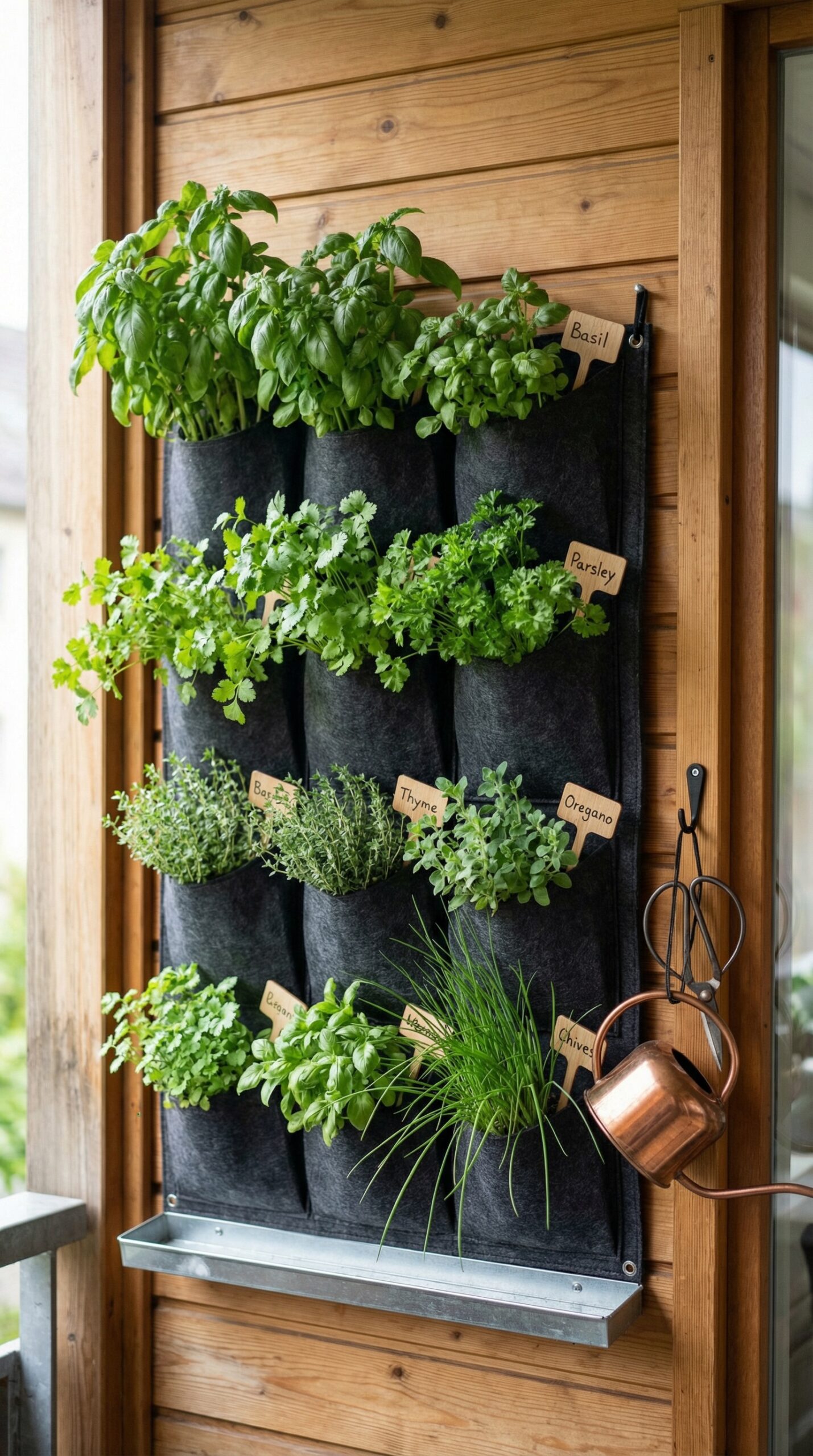
Pocket planters, the “green wall” look
Fabric or felt pocket planters can turn a blank wall into a herb wall fast. They look great, and they’re space-efficient.
Why people love them
- Lots of planting spots in a slim footprint
- Strong visual impact, perfect for small urban spaces
- Easy to swap plants if pockets are roomy
What to watch
- Top pockets can stay wetter, lower pockets can dry out faster, uneven moisture happens
- Soil volume per pocket is often small, which means faster drying
- Drips can be messy without a catch tray or liner
Pocket systems work best if you enjoy frequent check-ins, or if you add a simple watering method that distributes moisture more evenly.
Tiered wall boxes or stacked vertical panels
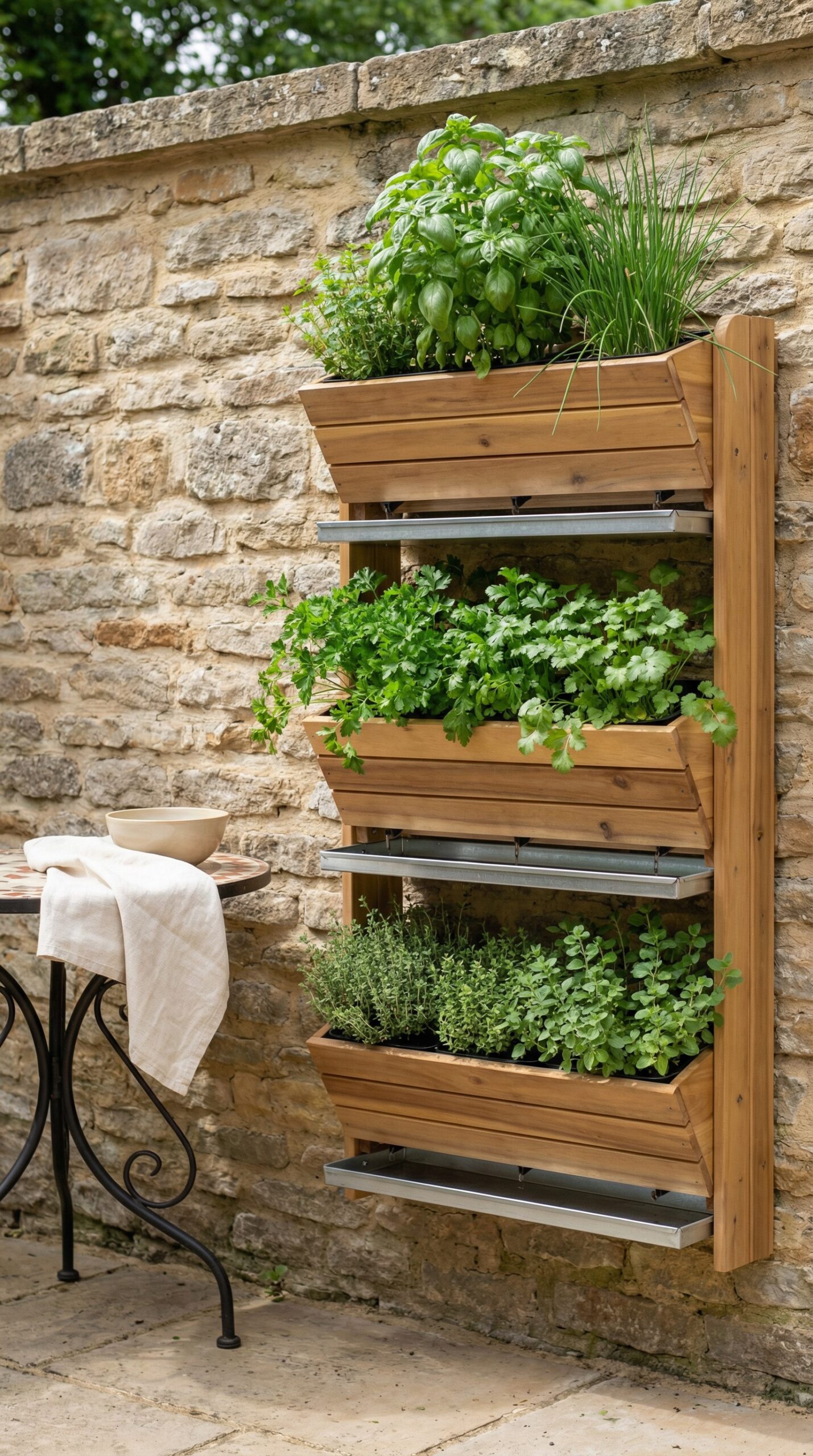
Tiered boxes, wall troughs, or modular vertical panels feel more predictable than pockets. Each planting space holds more mix, and watering can be more consistent.
Why they work
- More soil per plant, less dramatic drying
- Easier to plant longer-living herbs like rosemary or thyme
- Cleaner lines, good for lifestyle-magazine style spaces
What to watch
- Weight adds up fast, especially on walls
- Mounting hardware must match the load
- Deep shade behind tiers can limit growth on lower levels
If you want a “set it and forget it” vibe, tiered systems usually behave better than pockets.
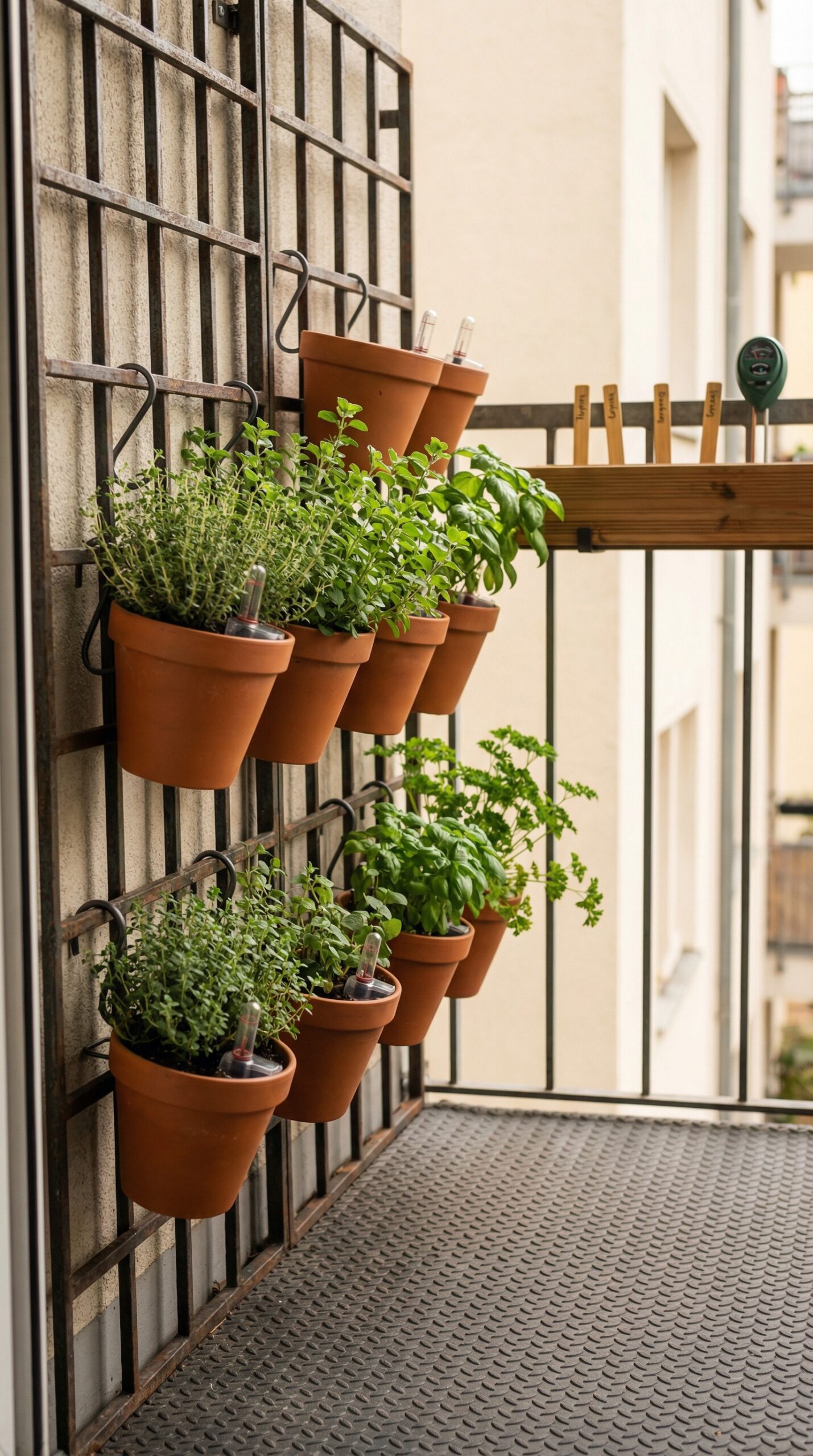
Trellis grid + pots, the flexible option
A simple trellis, wire grid, or slatted screen can act as a vertical backbone. Add hooks, small shelves, or hanging pot holders.
Why it’s a favorite
- Modular, you can expand slowly
- Easy to rearrange with seasons
- Works for herbs plus a few climbers, if you want variety
What to watch
- Pots can swing in wind without good anchors
- Spacing matters, crowded leaves invite mildew
- Watering many individual pots takes a steady routine
Trellis-plus-pots suits renters and anyone who likes changing layouts.
Ladder shelves and slim tiered stands
A leaning ladder shelf or narrow tiered stand turns one square of floor into multiple levels of planting.

Why it’s practical
- No drilling required
- Works on balconies, patios, courtyards
- Keeps herbs reachable and visible
What to watch
- Higher shelves dry faster
- A wide base helps stability
- Sunlight can be uneven from top to bottom
Ladder shelves also look tidy, which matters for lifestyle spaces that share a balcony with seating.
Hanging planters, use them carefully
Hanging planters free up floor space, and they can soften hard balcony lines.
They also dry quickly, and they can drip. If you try them, use liners, drip trays, or a spot where a little water won’t annoy neighbors.
Vertical towers
Vertical towers can hold many plants, yet they demand consistent watering. For kitchen herbs, towers work best outdoors where you can check them often, or indoors only if you have a plan for light and water management.
Balcony herb gardens, containers decide success more than “green thumb”
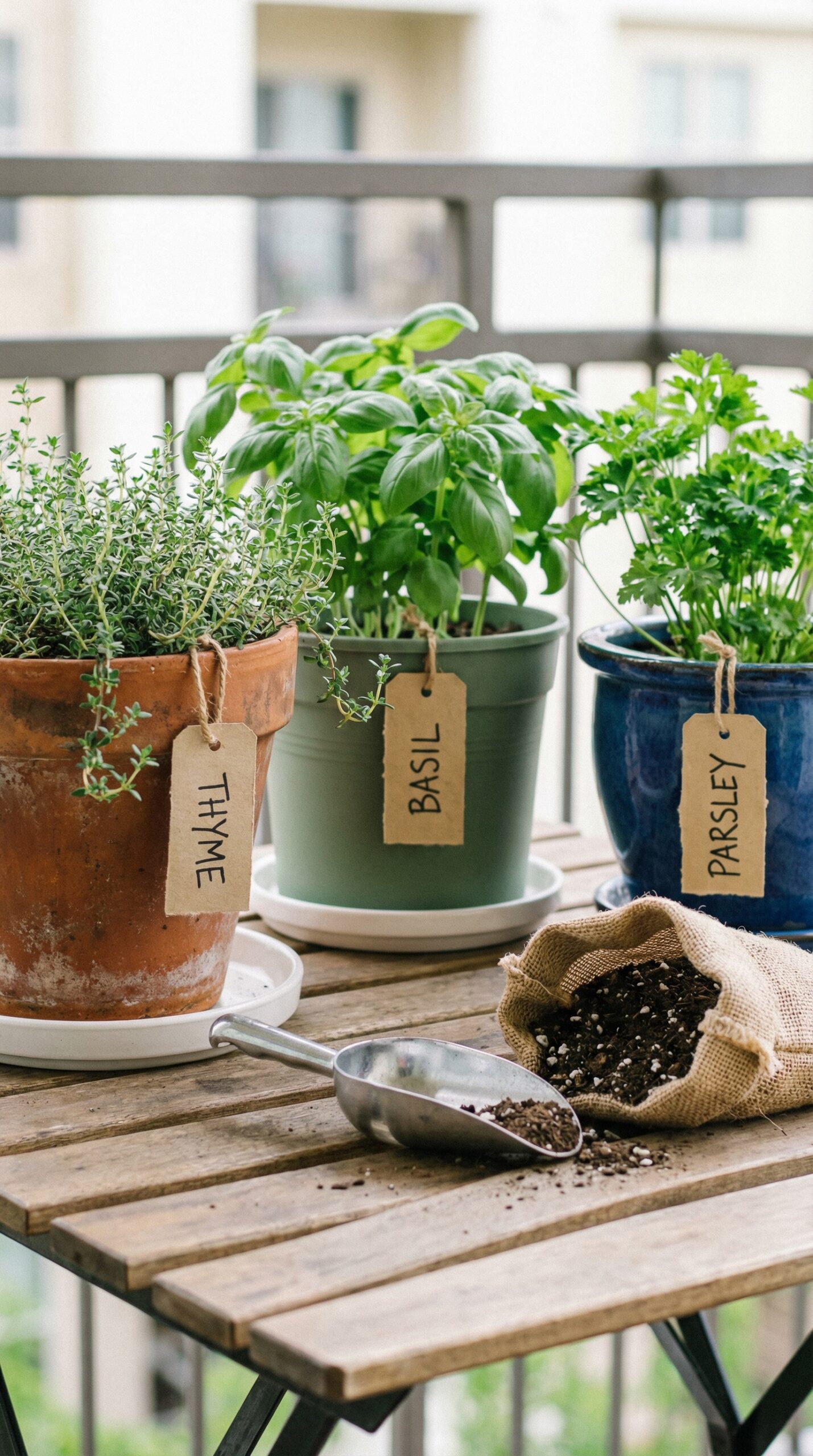
Herbs fail in small urban spaces for predictable reasons, too-small pots, poor drainage, and inconsistent watering. Fix those three, and your success rate jumps.
Pot size, go slightly bigger than you think
Tiny pots look cute, yet they dry fast and swing between soggy and bone-dry. A slightly larger container smooths out those extremes.
If space feels tight, choose fewer pots, then size them up. Your herbs will thank you.
Drainage, non-negotiable
Most culinary herbs hate sitting in water. Pick containers with drainage holes, and use a saucer or drip tray to keep balconies tidy.
If you fall for a decorative pot with no holes, treat it as a cover pot, keep the herb inside a draining nursery pot, then lift it out to water.
Pot material, match it to your climate
- Terracotta breathes and helps avoid soggy roots, yet it dries faster.
- Plastic or resin holds moisture longer, and weighs less for balconies.
- Metal can heat up quickly under strong sun, which stresses roots.
Choose based on your weather, your wind exposure, and how often you realistically water.
Potting mix, skip garden soil
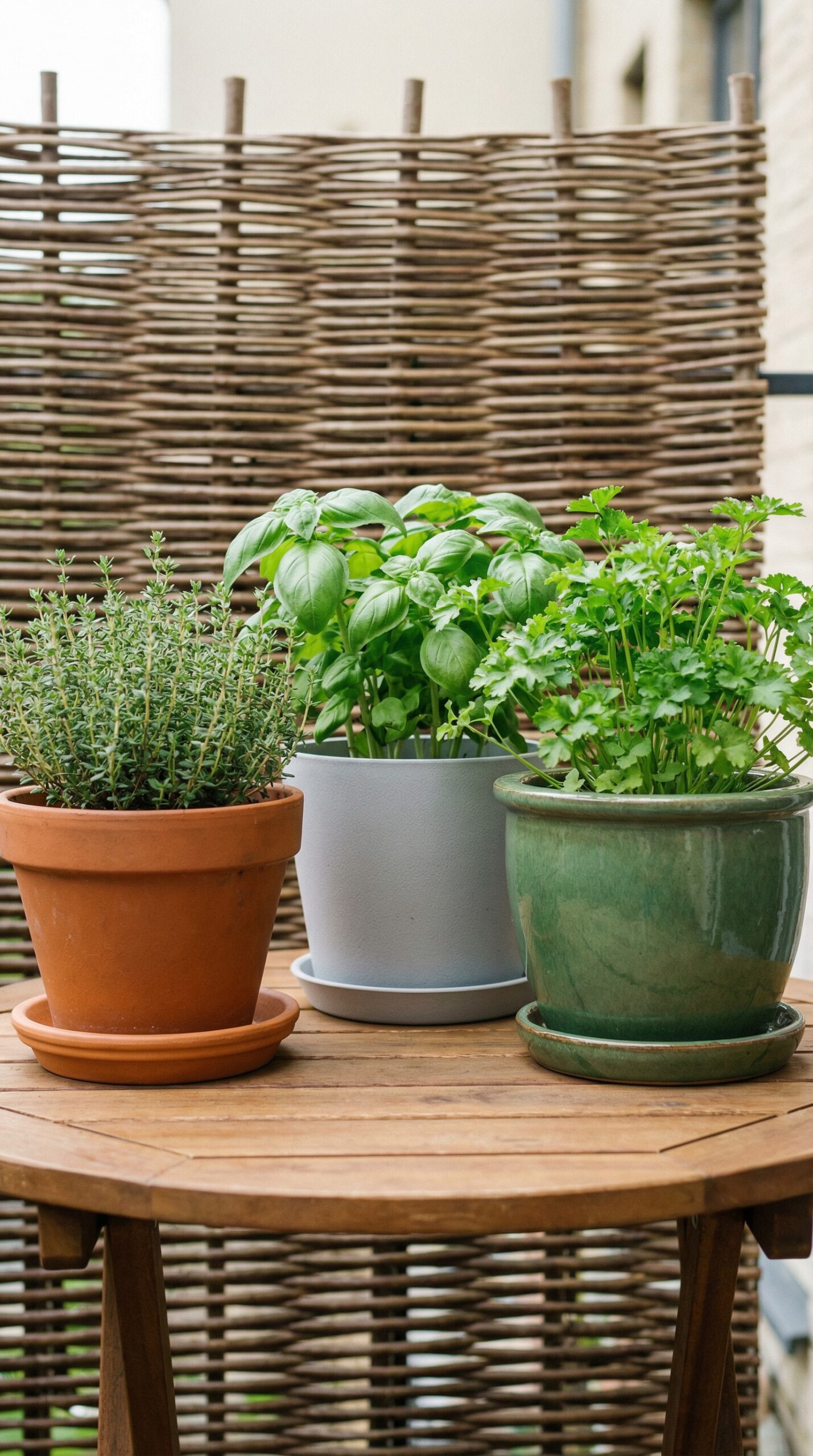
Container herbs need a loose, airy mix that drains well while still holding enough moisture for steady growth. Bagged potting mix made for containers keeps things simple. If you grow Mediterranean-style herbs like rosemary, thyme, or oregano, a sharper-draining mix helps avoid root issues.
Feeding, light and steady wins
Herbs don’t need heavy feeding, yet containers do lose nutrients over time. A gentle, regular feed during active growth keeps leaves coming. Too much fertilizer can push soft growth and weaker flavor, so keep it modest.
Kitchen herbs for compact growing, pick plants that fit your light and your habits
Start with herbs you actually use. A small-space garden stays joyful when every pot earns its place.
Reliable starters for most urban spaces
- Basil: loves warmth and consistent moisture, great for frequent harvesting
- Parsley: steady producer, handles a bit less sun than basil
- Chives: compact, forgiving, easy to clip
- Mint: enthusiastic grower, best kept in its own pot
- Thyme: tough, compact, prefers drier conditions once established
- Oregano: strong grower, happy in pots, good vertical companion
- Rosemary: likes sun and airflow, slow-growing but rewarding
Mix fast growers with slow growers so your garden looks full while long-term herbs settle in.
A simple “grouping” trick for easier care

Group herbs by how they like moisture.
Moisture-loving group
- basil, parsley, cilantro (coriander), chives
Drier, sun-loving group
- rosemary, thyme, oregano, sage
Keeping similar needs together makes watering less confusing, especially on vertical systems where pockets and tiers dry at different rates.
If light is limited
Plenty of herbs will still grow with bright conditions, even if direct sun feels short. Expect slower growth, lighter flavor, and a bigger payoff if you stay on top of trimming to prevent legginess.
Small balcony herb garden ideas, five layouts you can copy
Each layout below fits a common urban situation. Adjust plant choices to match your cooking style.
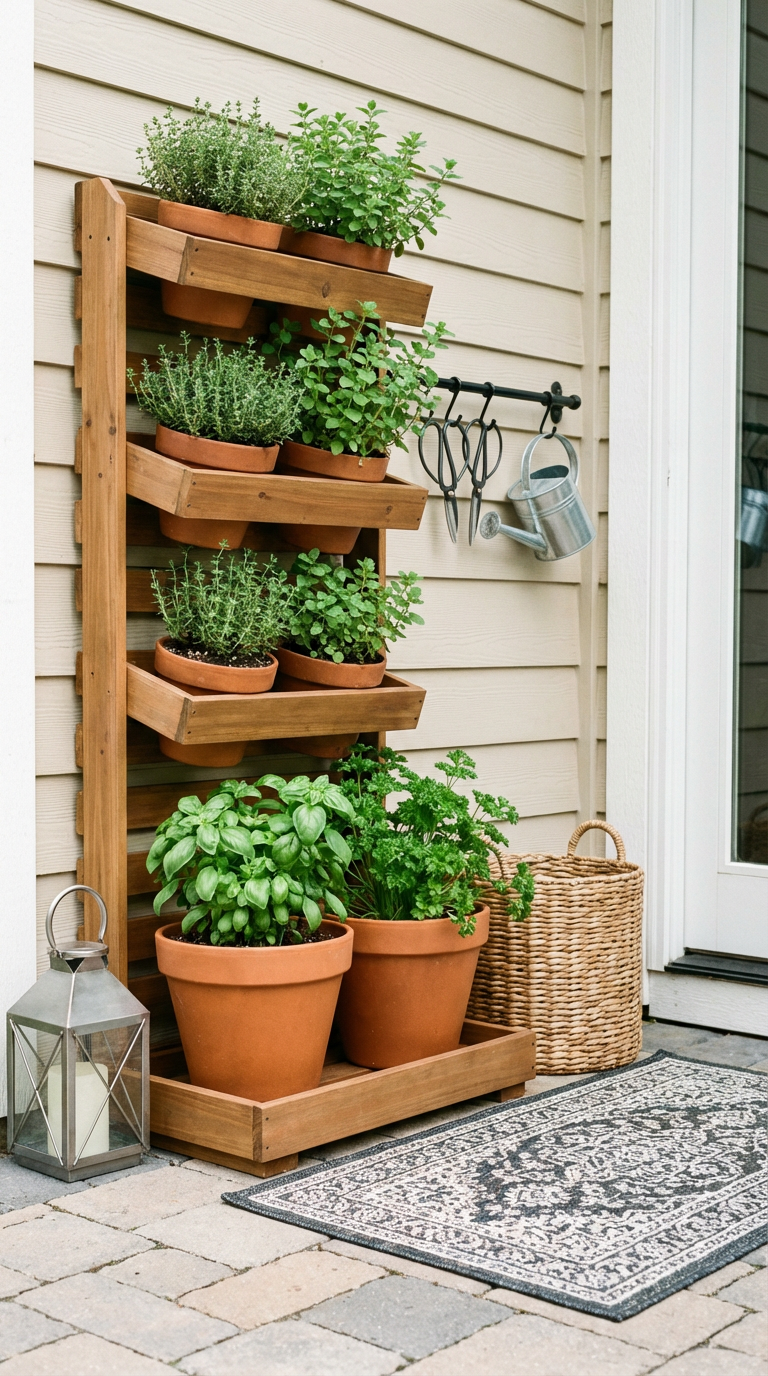
Layout 1, the “railing + wall” combo
Best for: balconies with railings and a nearby wall
- 2–3 railing planters for daily herbs
- 1 vertical panel or tiered wall box for backups and extras
- A drip tray or mat under the wall section to keep things neat
Planting idea: basil and parsley on the rail, thyme and oregano on the wall, chives in a small pot you can move closer to the kitchen door.
Layout 2, the “corner ladder shelf”
Best for: tiny patio corners, narrow balconies, small courtyards
- A ladder shelf with 3–5 tiers
- Heavier pots on the bottom tier for stability
- Small pots up top for fast harvest herbs
Planting idea: rosemary low and stable, oregano mid-level, basil and parsley up top where light hits hardest.
Layout 3, the “micro patio herb station”
Best for: small outdoor areas near the kitchen door
- One vertical trellis grid with 4–6 hanging pots
- A low tray holding two larger pots for moisture stability
- A small hook for snips and a watering bottle
Planting idea: keep your most-used herbs on the tray for easy watering, use hanging pots for extras.
Layout 4, the “windowsill plus one big pot”
Best for: apartments with limited outdoor access
- 2–3 windowsill pots for herbs you clip often
- One larger floor pot near the brightest window for a “main plant”
- A simple reflective surface behind plants if light feels weak
Planting idea: chives and parsley on the sill, basil or rosemary as the larger anchor plant.
Layout 5, the “narrow side strip”
Best for: slim outdoor strips beside a house or along a fence
- A trellis screen fixed securely
- 3–4 medium pots lined at the base
- Optional, one hanging pot at the far end where wind is calmer
Planting idea: thyme and oregano at the base, basil closer to the door for quick picking.
Watering without drama, the habit that keeps everything alive
Small urban gardens fail more from missed watering than from anything else. Vertical planters raise the stakes because soil volume is often smaller.

Use a two-step check
- Touch the top layer of potting mix.
- If it feels dry a couple centimeters down, water.
During hot or windy periods, daily checks matter, even if watering isn’t always daily. Cooler or shaded spots can hold moisture longer.
Water deeply, then let excess drain
A quick splash often wets only the surface. A better approach gives enough water for moisture to move through the root zone, then drain out. Drip trays and saucers catch the overflow, and they keep balconies polite.
Morning watering fits busy schedules
Watering earlier helps plants face midday heat with less stress. If evenings are your only option, aim water at soil level, then avoid soaking foliage if nights stay humid.
Make vertical watering more even
For pockets and stacked systems, water can rush past roots or over-soak the top. Slow watering in small rounds helps. Water once, wait a minute, then water again, letting the mix absorb rather than repel.
Keep herbs compact, harvesting acts like pruning
Compact growing succeeds when plants stay bushy. Harvesting can do that work for you.
The easy harvesting rhythm
- Clip little and often, rather than waiting for one big cut
- Pinch above a leaf joint, so the plant branches
- Remove flower buds early on leafy herbs, especially basil, to keep leaves coming
A small weekly trim keeps herbs tidy, improves airflow, and prevents that lanky “reaching for light” look that happens in tight urban spots.
Heat, rain, and seasonal shifts, small spaces amplify weather
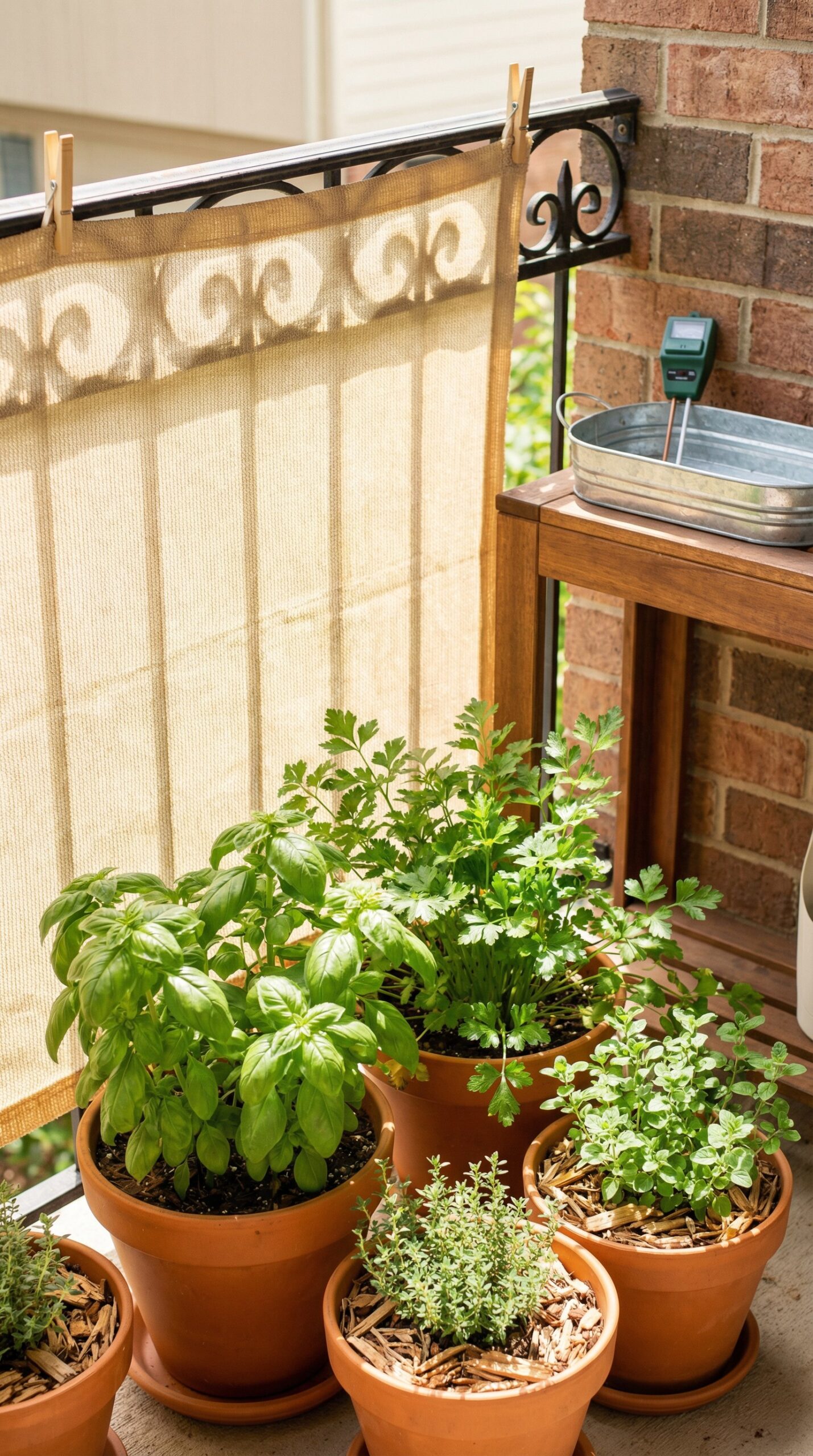
Urban spaces act like microclimates. Concrete, walls, and balcony exposure can push plants harder than a backyard bed.
Hot spells
Move pots a little, even a half meter can change stress levels. Morning sun with light afternoon shade can protect tender herbs. A thin layer of mulch on potting mix can slow evaporation.
Heavy rain
Too much rain can waterlog containers, especially if saucers stay full. Empty trays after storms. Raise pots slightly so drainage holes don’t sit sealed against a flat surface.
Cooler seasons
Hardier herbs can keep going longer outdoors, yet growth slows. If you want winter herbs, a bright indoor spot can act as a “backup nursery,” keeping a few plants alive while outdoor pots rest.
Quick fixes for common problems
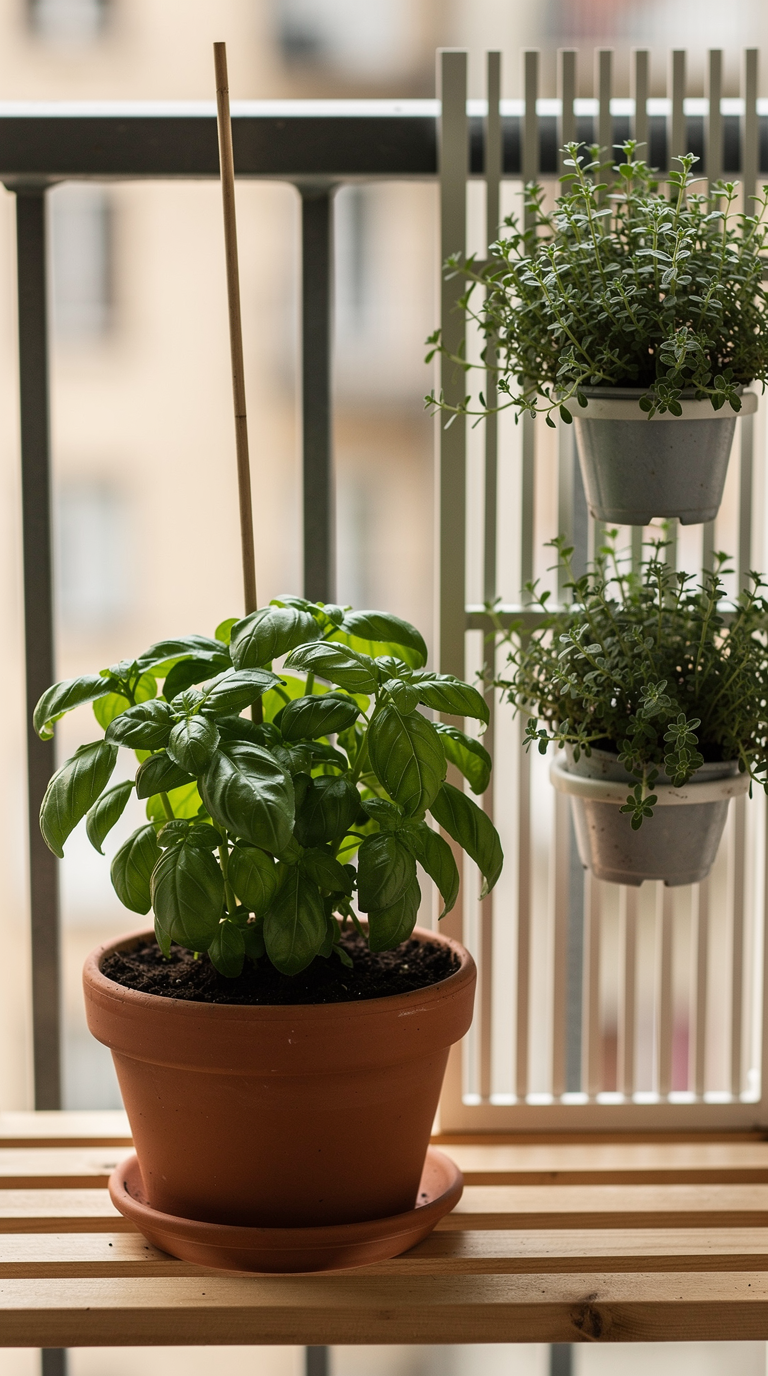
Leaves droop fast, then perk up after watering
Drying is happening too quickly. Increase pot size, add a bit of shade during peak heat, or group pots closer to reduce wind exposure.
Yellow leaves with damp soil
Roots may be sitting too wet. Check drainage holes, empty trays, and avoid watering on a schedule that ignores soil feel.
Herbs look tall and thin
Light is likely low, or plants are crowded. Move the pot to brighter conditions, trim more often, and give each plant more breathing room.
Mint takes over everything
Mint grows with enthusiasm. Give it a dedicated pot, and keep it separate from slower herbs so it doesn’t crowd them out.
Styling tips that still respect plant needs
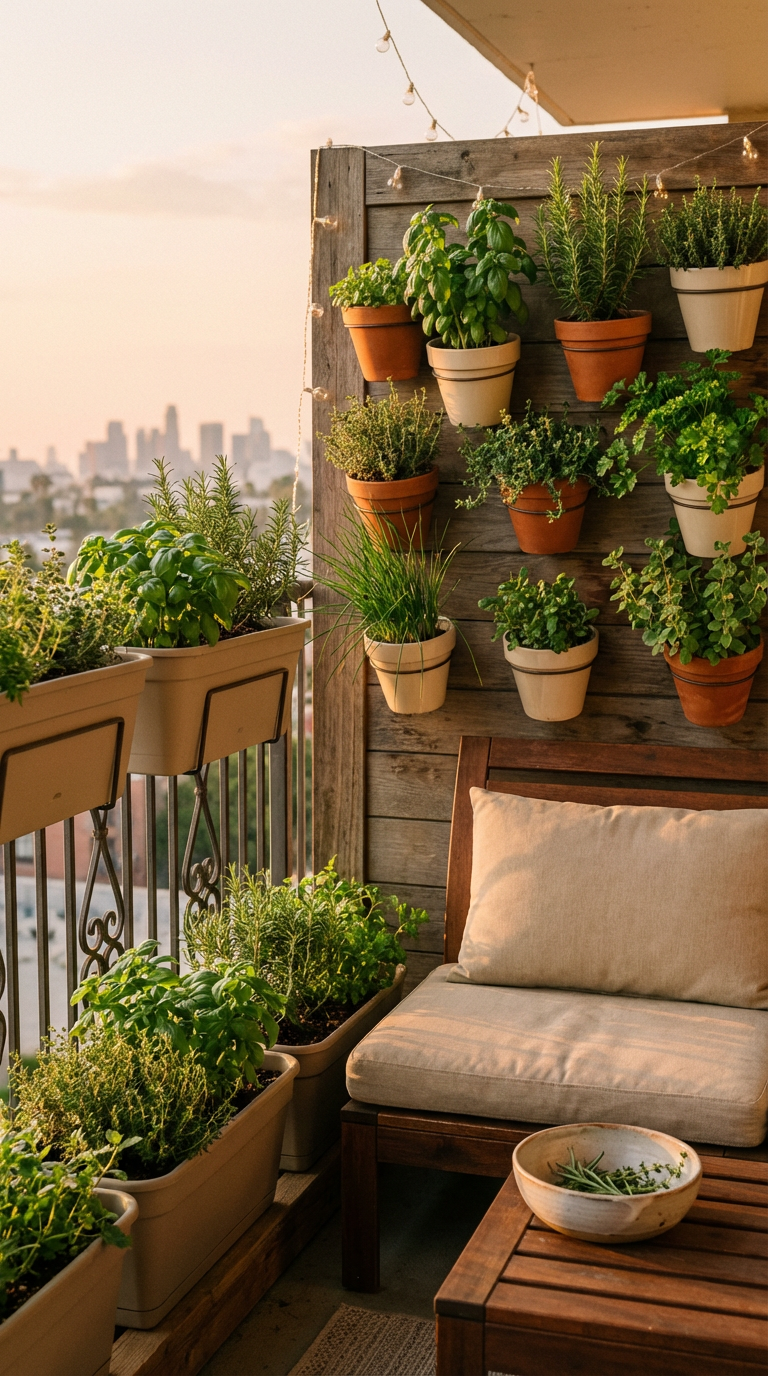
A lifestyle herb garden should look good, yet plants must come first.
- Keep one consistent pot color or material, then add interest through leaf textures.
- Use a simple label system, small stakes, painted stones, or slim tags.
- Hide functional items in plain sight, a small tray for snips, a neat watering bottle, a folded cloth for spills.
- Aim for “reachable beauty,” herbs look best where you’ll actually use them.
Parting thoughts, make it small, make it easy, then let it grow
A compact urban herb garden rarely needs more space, it needs a smarter layout. Use height, choose containers that forgive missed days, and keep herbs close enough that cooking naturally turns into harvesting.
Once your first setup feels stable, expansion becomes simple. Add one more rail planter, slip in a second tier, or trial one new herb per season. Small-space gardening rewards steady tweaks, and every fresh handful of leaves proves the point, even city homes can grow real flavor.