
Asian Lady Beetles Were Deliberately Released in North America for Pest Control, but Where Indiana’s Swarms Came From Is Uncertain
Every fall, orange beetles pile up on sunny walls and windows across Indiana, and many people wonder where they came from. The story is stranger than most expect, because people in North America did bring these beetles in on purpose to eat crop pests.
Whether that history explains the beetles on your siding is a different question. Here is what is known, what is not, and what you can do about them.
Which orange beetle is gathering on the house?
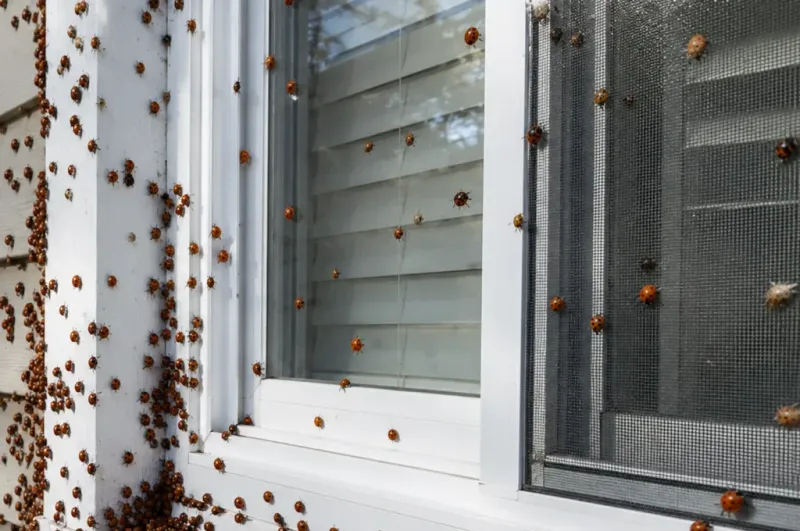
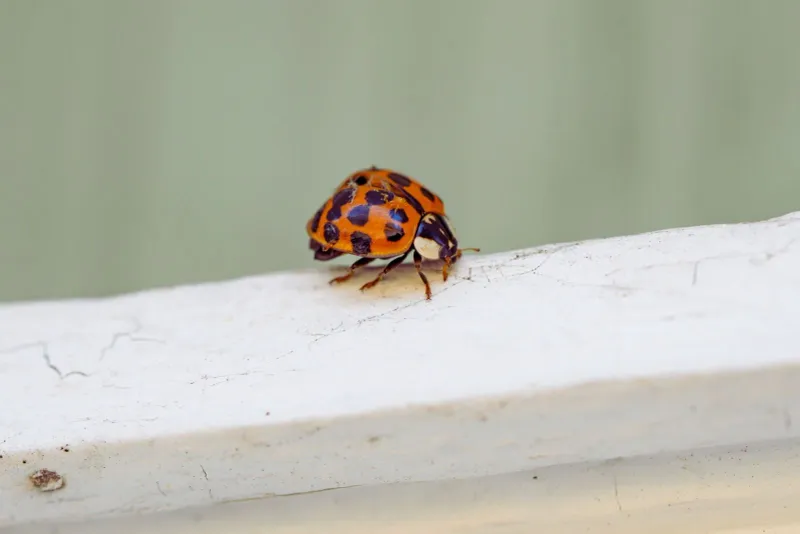
Most of the orange beetles clustering on Indiana homes in autumn are very likely multicolored Asian lady beetles. They look a lot like the ladybugs you may remember from childhood, but their coloring is far less predictable.
Purdue Extension’s Asian lady beetle guide covers how to recognize them and how they behave in Indiana.
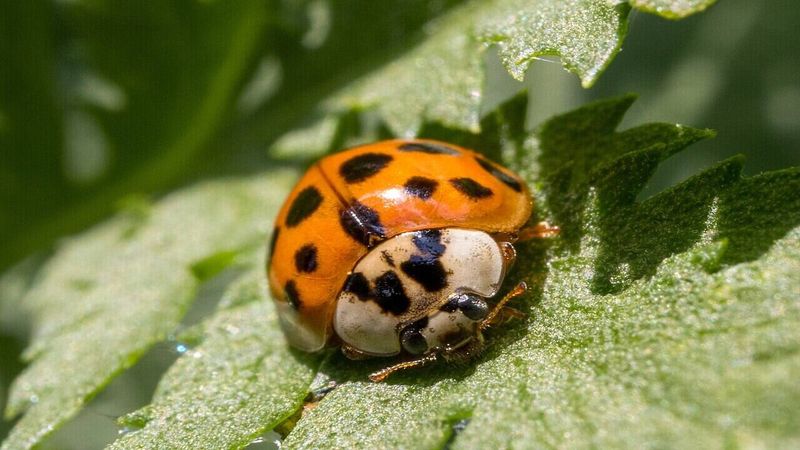
Color is the first thing that varies. An individual beetle can be yellow, orange, or red, and some are a deeper reddish shade.
The spots vary too. Some beetles carry many spots, some carry only a few, and some have almost none.
Because color and spots are unreliable, look at the area just behind the head. There you will often see a black mark shaped like the letter M or W against a pale background.
University of Minnesota Extension lists this mark as a helpful identifying feature.
Do not treat it as a perfect test, though. The M can be faint, broken, or hard to read, especially on a small beetle crawling across a window.
If you can, check several beetles rather than judging by one.
Getting the identification right matters before anything else. Once you know which insect you are dealing with, its history and its habits make a lot more sense.
Why researchers released them in North America
Long before they crowded your windowsills, these beetles were treated as helpers. Agencies and researchers brought multicolored Asian lady beetles to North America and released them as predators.
The idea was simple: let the beetles eat pests so growers could rely less on sprays. A USDA Agricultural Research Service account describes this history of imports and releases.
The beetles were chosen for good reason. Adults and larvae eat aphids and other soft-bodied insects, which damage many crops and garden plants.
A hungry predator that hunts on trees, fields, and shrubs looked like a useful tool.
So the claim that they were released on purpose is true. Those releases were real, planned, and aimed at pest control.
Nobody was trying to create a household nuisance.
The benefits come with questions, though. A 2003 review in the Journal of Insect Science covers the beetle’s biology, its use in biological control, and possible non-target impacts.
Those impacts are concerns that researchers raised, such as effects on other insects.
How large or serious those effects are is not settled in the sources used here. Treat them as open questions, not proven damage.
The beetle can be a useful predator and a nuisance at the same time.
What the release history does—and does not—tell us about Indiana
Here is where the story gets tricky. Releases are documented at named locations in North America, and that part of the history is solid.
What is less clear is how the beetles became established across the continent.
The first established U.S. population was recorded near New Orleans in 1988. According to the USDA account, that spot lies hundreds of miles from a major Georgia release site.
That distance makes a simple chain from release to swarm hard to claim.
Researchers have not settled the question either. The peer-reviewed review says they could not determine whether that founding population came from an intentional or an accidental introduction.
It might have been either.
For Indiana, that means a careful answer. Past releases were deliberate, but nothing here shows that the beetles gathering on your house descend from those releases.
Nor does anything show that beetles were released to protect Indiana crops specifically.
What we do know about Indiana comes from observation. Purdue Extension describes how the beetles behave around Indiana homes in fall.
Their behavior is well described even though their local origin is not.
Why they gather on homes in fall
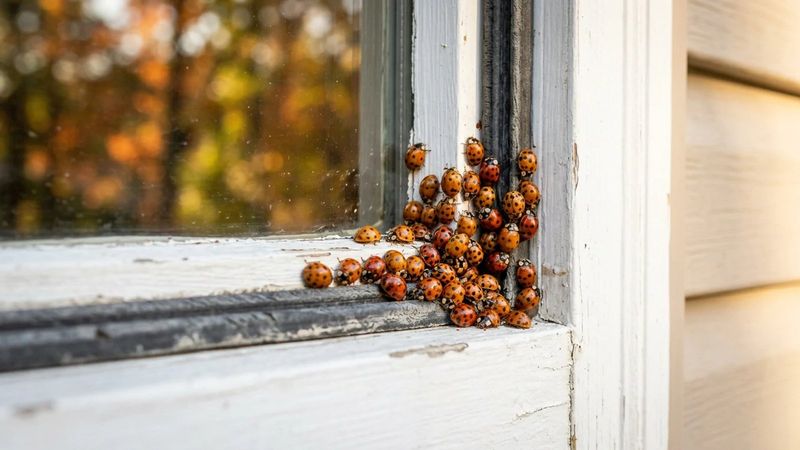
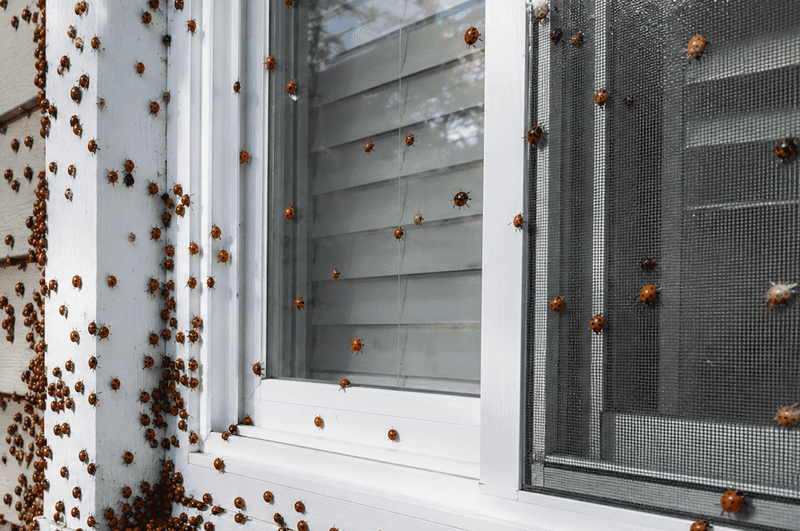
When days shorten and temperatures drop, adult beetles go looking for a place to wait out winter. In nature, that might be a rock crevice or a cliff face.
A house, with its tall light-colored walls, can look a lot like one.
Watch the sunny sides of your home on a warm October afternoon. University of Minnesota Extension notes that beetles often congregate on buildings, and sun-exposed surfaces are common spots.
From there they crawl toward any opening they can find.
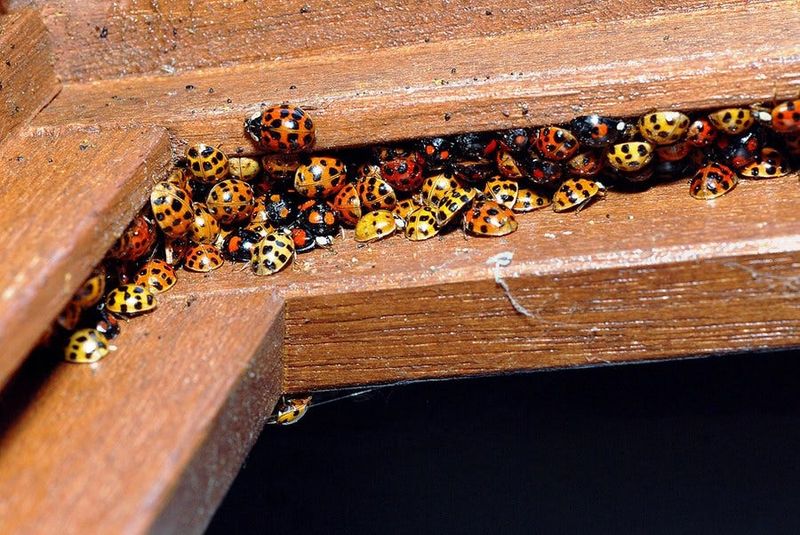
Common entry points include gaps around windows and doors, siding, vents, and utility openings. Once inside, beetles slip into wall spaces and other tucked-away areas.
They may stay quiet until a warm spell wakes them up.
That brings up a frequent worry. A beetle on your curtain in January does not mean a colony is breeding in your house.
Virginia Cooperative Extension describes how these beetles overwinter in buildings instead of reproducing there.
Winter and spring sightings generally involve beetles that entered the previous fall. A sunny day can stir them, and they wander into view.
Purdue’s guidance reflects the same seasonal pattern.
A household nuisance, not a home infestation
Picture the worst case and then scale it back. These beetles do not chew on your home’s structure, and they do not get into your pantry and infest stored food.
Extension sources describe them as a nuisance. University of Minnesota Extension offers practical guidance for living with the yearly swarm.
The mess comes from the beetles themselves. When disturbed, they can release a smelly yellowish fluid that stains walls, curtains, and other surfaces.
A crushed beetle can leave a mark and an odor, so gentle handling pays off.
Virginia Cooperative Extension covers the household effects in more detail, including odor and staining.
Some beetles may bite or pinch. Extension sources generally describe this as minor, though the exact wording varies.
Most people will never notice it.
Allergies are a separate issue. A 2006 case series documented hypersensitivity to these beetles in some patients.
That small report does not tell us how common such reactions are, so it would be wrong to call them typical.
If you notice sneezing, itchy eyes, or other symptoms around beetles, take them seriously and talk with a health professional. Purdue Extension also lists these beetles as a nuisance pest and discusses their effects on homes.
Seal entry points and remove indoor beetles
Timing matters most, so start before the beetles show up. Purdue reports that fall congregations in Indiana begin around mid-October.
Aim to finish your repairs well ahead of that date.
Work through the outside of your home in this order. Seal cracks and gaps around windows, doors, siding, vents, and utility openings.
Repair damaged screens, then add door sweeps or weatherstripping where doors meet the floor or frame. University of Minnesota Extension stresses these exclusion steps as the foundation of control.
Some beetles will still get in. Sweep them up or vacuum them instead of crushing them.
Extension advice on the yearly swarm includes this approach.
Empty the vacuum promptly. Beetles can crawl back out, and dead ones or their secretions can cause odor or stains if they sit in the bag or canister.
Pesticides are not the first move. If you consider one, use only a product labeled for the intended site and follow the label directions.
Indoor sprays or foggers may not reach beetles hiding in wall voids, so they can disappoint you.
Think of the calendar as your best tool. A caulk gun in September beats a vacuum in November.