
Why Millipedes May Enter Georgia Garages and How to Keep Them Out
Finding a small, curled-up, many-legged creature on the garage floor is enough to make anyone stop mid-step. Millipedes sometimes gather around homes in large numbers, and garages are an easy place for them to wander in.
Knowing what they are and why they show up helps you respond calmly. A few simple habits can cut down on how many end up inside.
Identify the millipede before you act
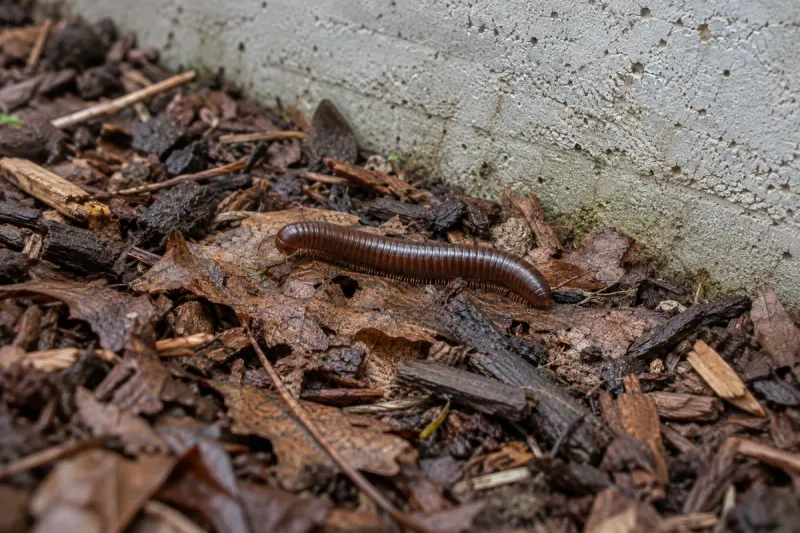
Slow, rounded, and often curled into a coil when touched, a millipede looks quite different from the fast, flattened centipede people sometimes confuse it with. The easiest clue is the legs.
Millipedes have two pairs of legs on most body segments, while centipedes have one pair per segment.
Speed is another giveaway. Millipedes plod along, and centipedes dart for cover.
That matters because the two need different handling. Centipede bite warnings do not apply to millipedes, so there is no reason to treat a millipede like a biter.
Millipedes feed mainly on decaying plant material, which explains why they hang around leaf piles and damp mulch. University of Georgia Extension notes that they do not carry diseases, so they are mostly a nuisance rather than a health threat.
That said, they are not entirely harmless. Some species release defensive fluids that can irritate skin or eyes, and a crushed millipede may stain a surface.
Skip bare-hand handling, and wash up if you do touch one. Details on telling the two groups apart are also covered in University of Kentucky Entomology guidance.
Why millipedes may appear around homes
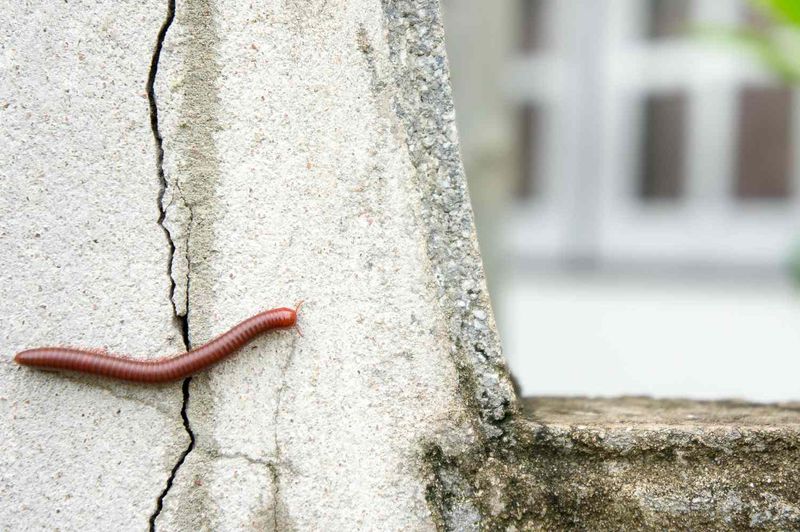
Extension sources describe millipedes moving in large numbers during seasonal migrations, and some of those groups end up around houses. UGA confirms that millipedes may enter Georgia homes this way, usually through gaps around doors or foundations.
So a crowd near your garage is believable.
It is a different thing to say millipedes are pouring into Georgia garages right now. No source reviewed shows an unusual statewide surge.
Plenty of people simply notice them in one yard or on one street, and that can happen in any given year.
Timing is also worth handling carefully. Reports of fall activity come from places outside Georgia, so fall should not be treated as the usual migration season here.
Clemson Extension and others describe movement at different times of year and after weather changes.
What sets a migration off is not well understood. University of Kentucky Extension says migrations can coincide with heavy rain, but the cause is unclear.
Alabama Extension points to unfavorable conditions in general, which can include dry spells.
So if you see a bunch of millipedes after a storm, rain may be part of the story, but you cannot know that from the weather alone. A better use of your time is to look at what your property offers them.
Reduce damp shelter near the garage
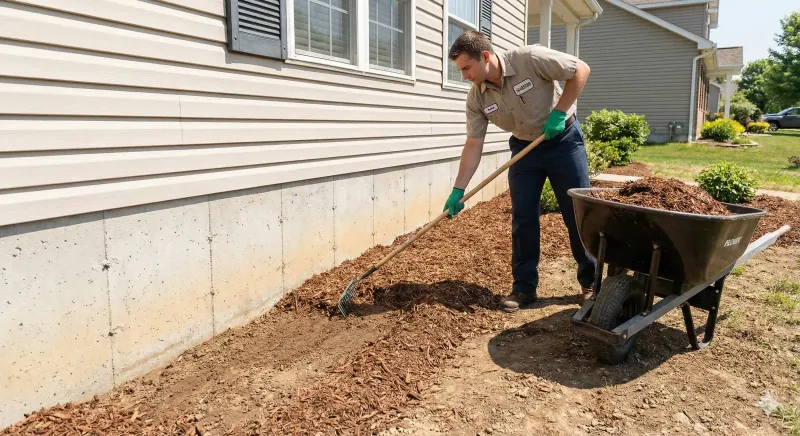
Picture a millipede’s ideal hangout: dark, damp, and full of rotting plant bits. Leaf litter, grass clippings, thick mulch, thatch, compost, and spots under boards or rocks all fit that description, according to Clemson Extension.
The closer those spots sit to your garage wall, the more likely millipedes are to wander in.
Start with a simple cleanup along the foundation. Rake leaves and clippings away from the walls and the door area.
Clear out old piles of wood, stray boards, and decaying debris that have been sitting beside the slab.
Mulch deserves a lighter touch, not a full removal. Keep beds tidy, thin out any deep layers, and leave a gap between mulch and the foundation.
The same goes for thick thatch in lawn areas next to the house.
Moisture is the other half of the plan. Fix leaking hose bibs and gutters, deal with spots where water stands, and point downspouts and runoff away from the foundation.
UGA and University of Kentucky both list moisture and decaying material as the main draws.
Think of these steps as making your yard less inviting, not as a force field. A big migration may still send some millipedes your way.
Fewer damp hiding places simply means fewer settle in right beside the garage.
Close the entry gaps
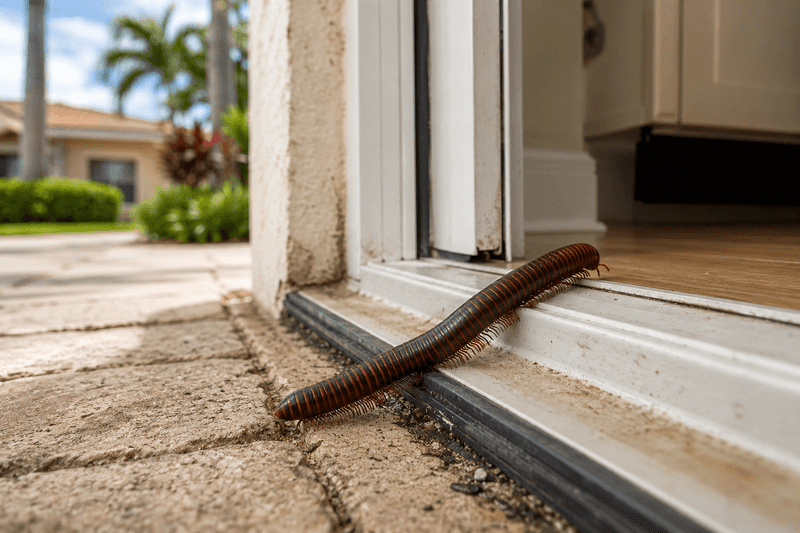
Get down low and look at the bottom edge of the garage door. If daylight shows through, or the rubber sweep is cracked, curled, or missing, that gap is wide enough for a millipede.
Replacing a worn sweep is one of the cheapest fixes you can make.
Next, check the weather stripping along the sides and top of the door, and the seal where the door meets the floor. Walk the garage perimeter on the outside too.
Both Clemson Extension and UGA point to gaps around doors and foundations as common entry routes.
Then seal what you can reach. Caulk small cracks in the foundation and where siding meets the slab.
Fill openings around utility lines and pipes, and look at the frames of any garage windows and the door to the house.
A flashlight on a dusk walk-around helps, since you may spot where millipedes are actually crossing. Mark those spots and fix them first.
Sealing is a practical way to cut down on how many get in, but it is not a guarantee. During a large movement, a few may still slip through tiny openings.
Virginia Tech Extension also stresses exclusion as part of managing millipedes that wander indoors.
Remove indoor millipedes without bare-hand contact
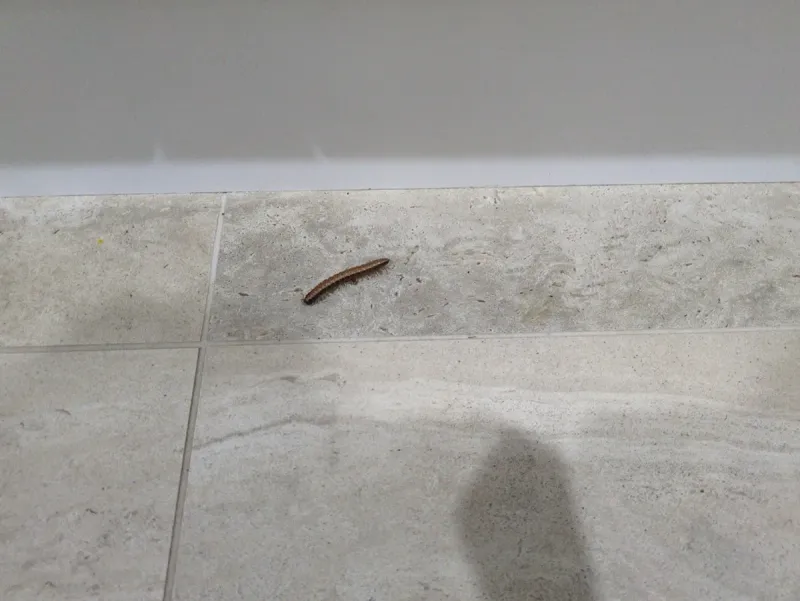
A broom and dustpan work fine for a few strays. For a larger group along a wall, a vacuum with a hose attachment clears them quickly.
University of Kentucky Extension favors this kind of removal over routine indoor spraying.
Keep your hands out of it. Some species release fluids that can irritate skin or eyes, and squashed ones may leave stains, so sweeping is cleaner than stepping on them.
If you vacuum, empty the bag or canister outside afterward.
Many millipedes dry out and die indoors, which is why a few on a dry garage floor are not a big deal. But that outcome is not guaranteed.
Virginia Tech notes they may persist where indoor humidity is high enough.
If you keep finding live ones over weeks, take a look for dampness. Check for leaks under sinks, a damp basement corner, or moisture along a wall.
University of Minnesota Extension covers this kind of moisture connection.
Sightings alone do not prove something is wrong with the structure. A damp spot is just one worthwhile thing to rule out.
For a deeper look at basic habits, Clemson’s factsheet and UGA are good places to start.
Use pesticides cautiously and follow the label
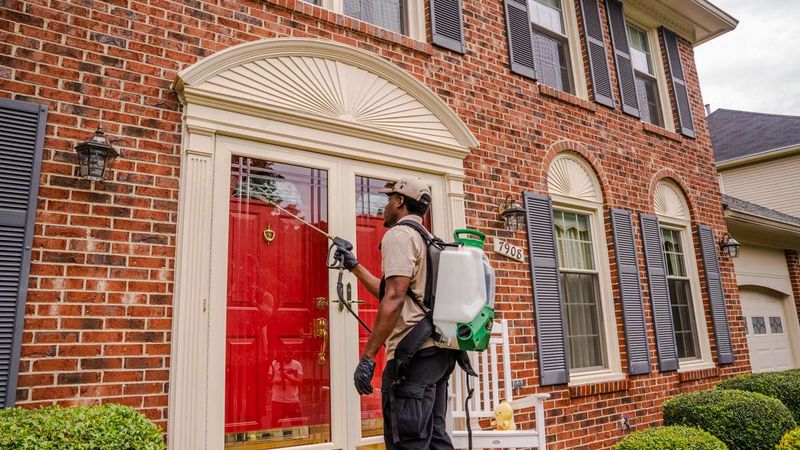
Sprays are the last tool to reach for, and they come with limits. UGA says exterior treatments may give temporary control, which means you may need to reassess rather than count on a lasting result.
Timing matters too. Alabama Extension cautions that broad spraying during a mass migration may do little.
A perimeter treatment is not a reliable wall, and it should not be expected to stop an active movement.
If you decide to try chemical control anyway, read the product label first. Choose a product labeled for millipedes and for the place you plan to apply it, such as a yard perimeter or the foundation edge.
Then follow every direction on that label, including rates, protective gear, and where it can be used.
Indoor spraying is a different matter. Do not use a pesticide inside the garage or house unless the label specifically permits that use.
For most strays, sweeping or vacuuming is simpler and avoids the risk.
Chemicals work best as a small piece of the plan, alongside drier surroundings and tight seals. A garage that offers no damp shelter and no easy way in is the best defense you can build.