
What Ohio Arborvitae Need Before Hard Freeze to Stay Thick and Green Until Spring
Every spring, Ohio neighbors stare at their arborvitae and wonder why the hedge turned brown, thin, or bent over like a tired umbrella. Most of that damage starts months earlier, in the weeks before the ground freezes solid.
A few simple steps in fall can keep these evergreens full, healthy, and bright green right through January winds and March thaws. Here is what your arborvitae really needs before winter arrives.
1. Deep Watering Until the Ground Freezes
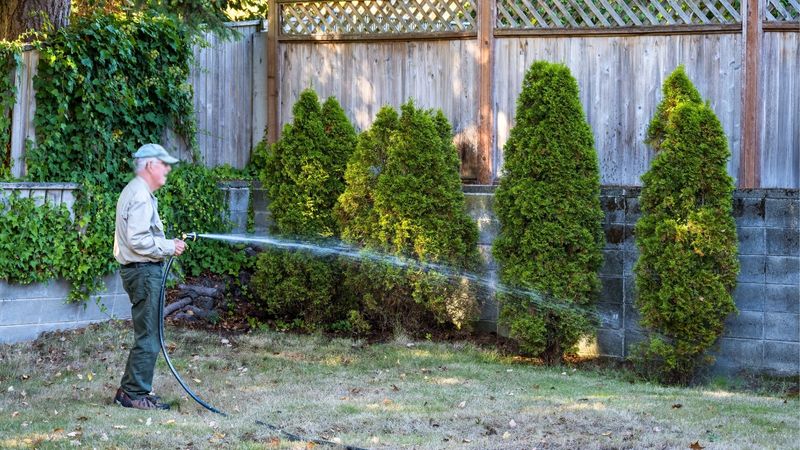
Picture a sponge left out in the wind all winter. That is basically your arborvitae from December to March, losing moisture through its needles while frozen soil keeps the roots from drinking.
The fix is simple but often skipped. Give each shrub a slow, deep soak once a week through October and November, aiming for about an inch of water.
A soaker hose or a trickling garden hose left at the base for 20 to 30 minutes works far better than a quick spray.
Keep going until the top few inches of soil start to freeze, which in much of Ohio happens around early December. If a warm, dry spell shows up in January, a midday drink helps too.
Well-hydrated plants simply hold their color better and shrug off brown tips.
2. A Fresh Layer of Mulch
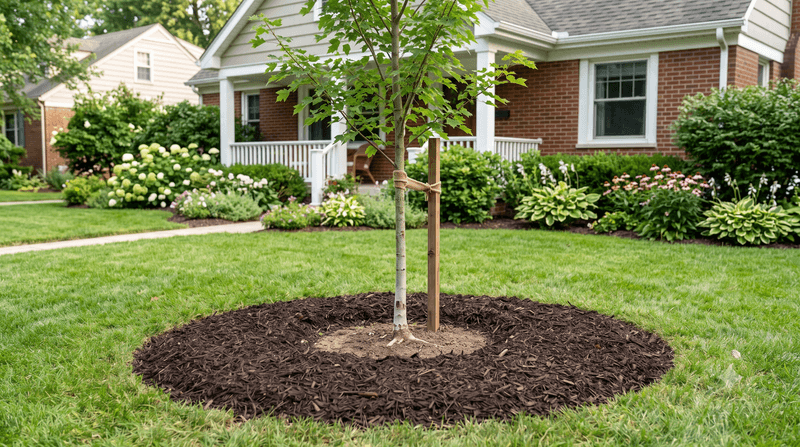
Think of mulch as a winter blanket for roots. Ohio soil swings between freezing and thawing over and over, and that constant heaving can tear tiny feeder roots and even push young shrubs partly out of the ground.
Spread two to three inches of shredded hardwood, pine bark, or chopped leaves around each plant, reaching out to the edge of the branches. Hold it back a couple of inches from the trunk so the bark stays dry and mice have fewer hiding spots.
The best timing is after a few light frosts but before the deep freeze. That way the soil has already cooled, and the mulch helps keep it at a steady temperature instead of trapping warmth that invites rodents.
3. Burlap Windbreaks on Exposed Sides
Anyone who has stood in an open Ohio field in February knows how brutal a northwest wind can feel. Your arborvitae feels it too, and that drying wind is the number one cause of winter burn.
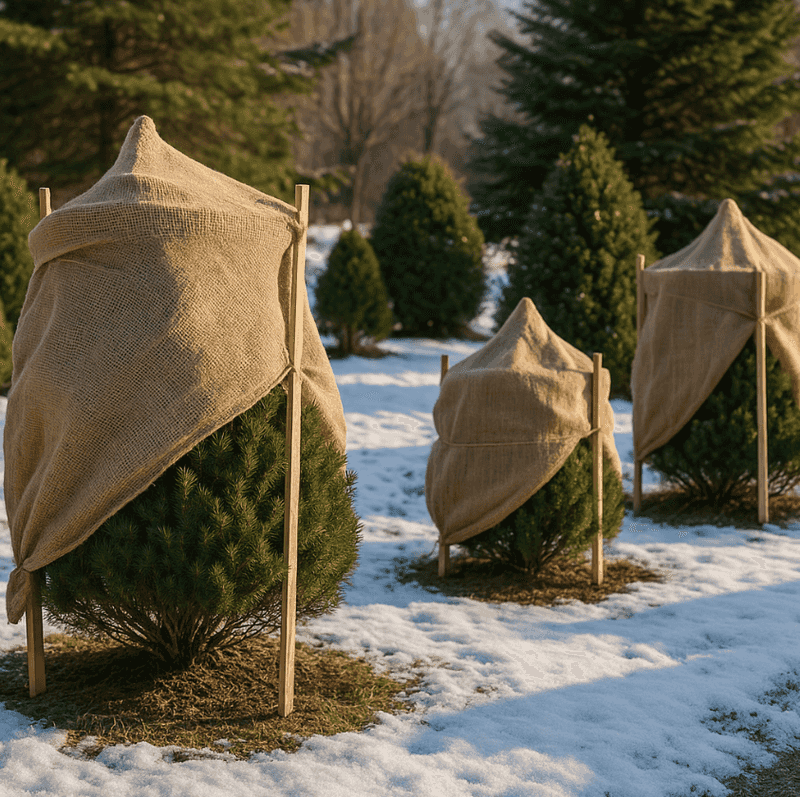
A simple windbreak makes a huge difference. Pound a few wooden stakes into the ground on the windy side, usually north and west, then staple burlap between them.
Leave a gap of several inches between the fabric and the foliage so air can still move.
Skip plastic sheeting entirely. It traps heat on sunny days and can actually cook the needles.
Burlap breathes, blocks the worst gusts, and looks tidy enough that the neighbors will just think you know what you are doing.
4. Tying Up Branches Against Snow and Ice
Lake-effect snow near Cleveland and ice storms in central Ohio share one ugly habit. They split arborvitae wide open, leaving the center of the plant flopped outward like a broken fan.
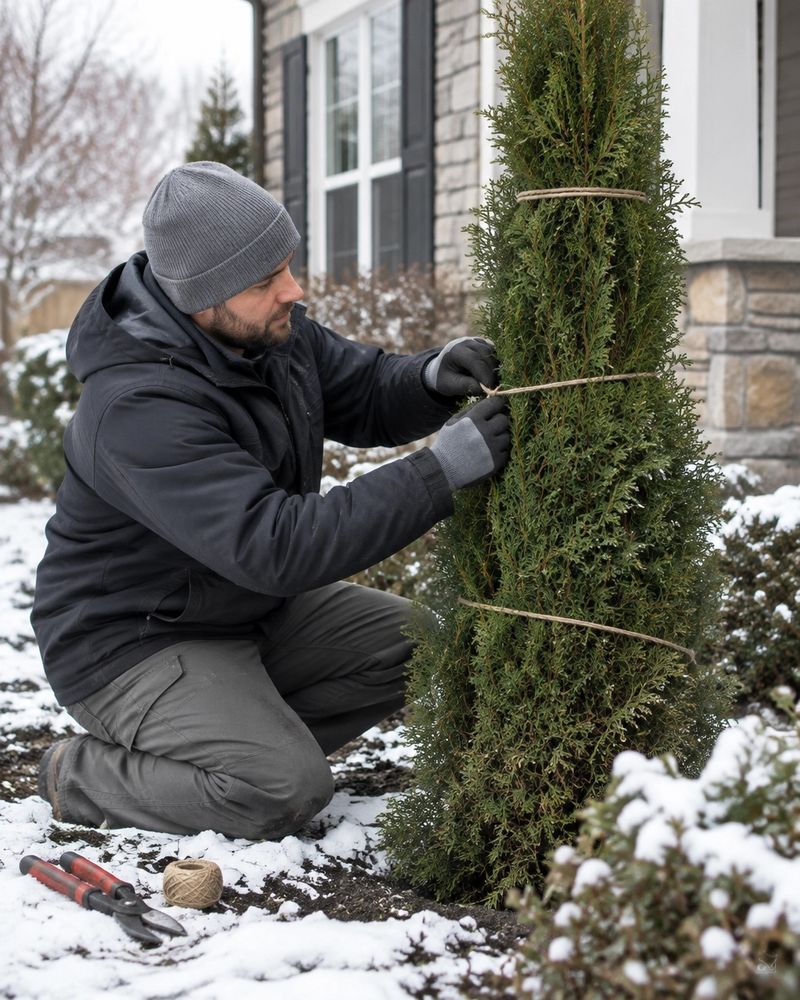
Multi-stemmed varieties like Emerald Green are especially prone. Before winter, take soft twine, old pantyhose, or wide tree tape and wrap it loosely in a spiral from the bottom up.
The goal is to gently hold the stems together, not squeeze them.
Remove the ties in early spring once the snow risk passes. Leaving them on through summer can rub bark and block air.
A ten-minute wrapping job in November can save you from a shrub that never quite recovers its shape.
5. An Anti-Desiccant Spray
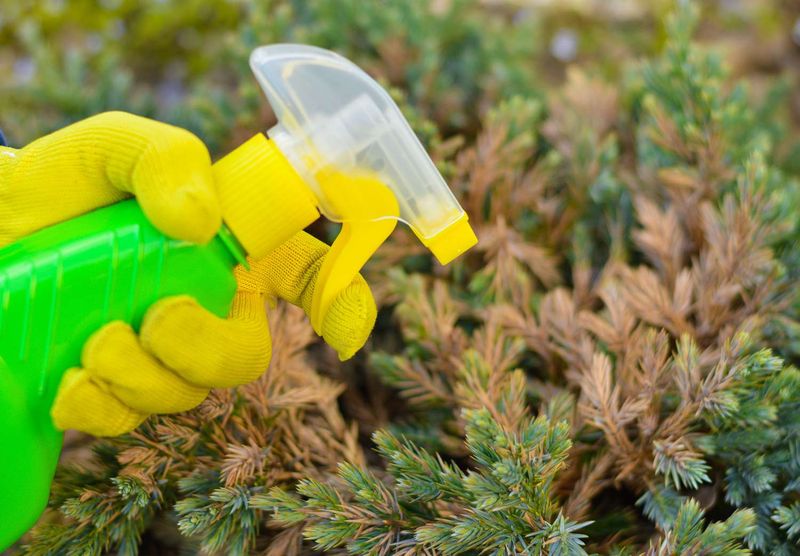
Here is a trick many landscapers swear by. Anti-desiccant sprays coat needles with a thin, waxy film that slows moisture loss, kind of like lip balm for evergreens.
Apply it on a dry day when temperatures sit above 40 degrees and are expected to stay there for at least a day. Late November or early December usually works in Ohio.
Cover the foliage thoroughly, especially on the sides facing wind and afternoon sun.
Some gardeners give a second coat during a warm stretch in January or February. It will not replace good watering, but paired with moisture it gives shrubs in exposed spots an extra edge against browning.
6. No Late Fertilizer or Heavy Pruning
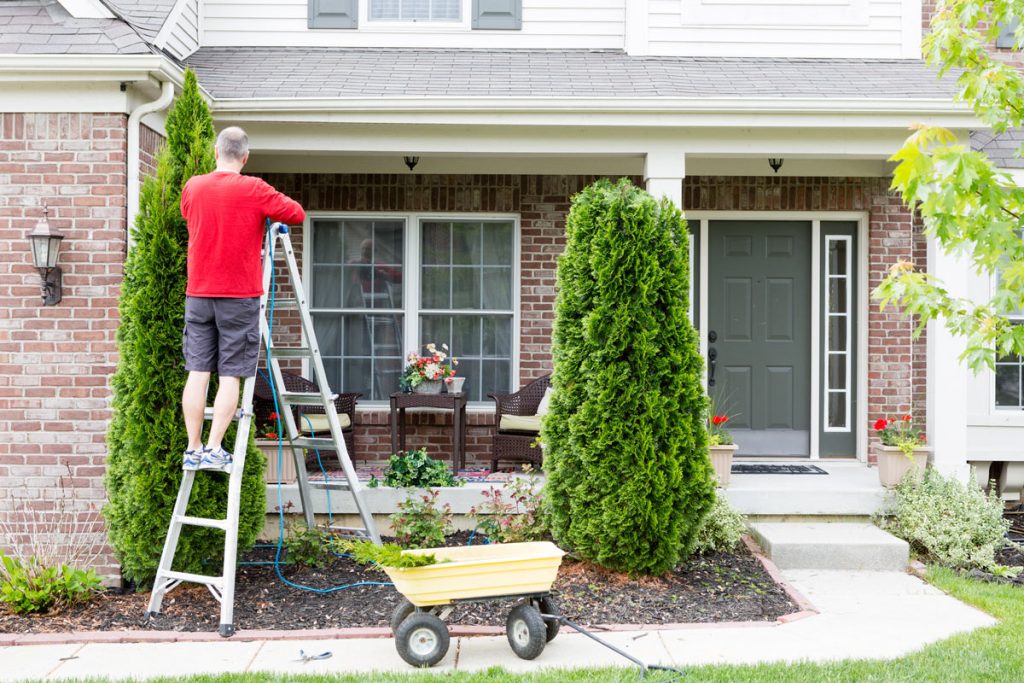
Hold the shears. As tempting as a crisp fall trim may seem, cutting arborvitae after late summer encourages tender new growth that has no time to toughen up before the cold.
That soft growth freezes, browns, and leaves bare patches by spring. The same goes for nitrogen fertilizer applied in September or later, since it pushes the plant to grow when it should be settling down.
Do your shaping in late spring or early summer instead, and feed in spring if needed. The only fall cutting that makes sense is removing clearly dead or broken branches.
Letting the shrub rest is one of the easiest ways to keep it full.
7. Protection From Hungry Deer
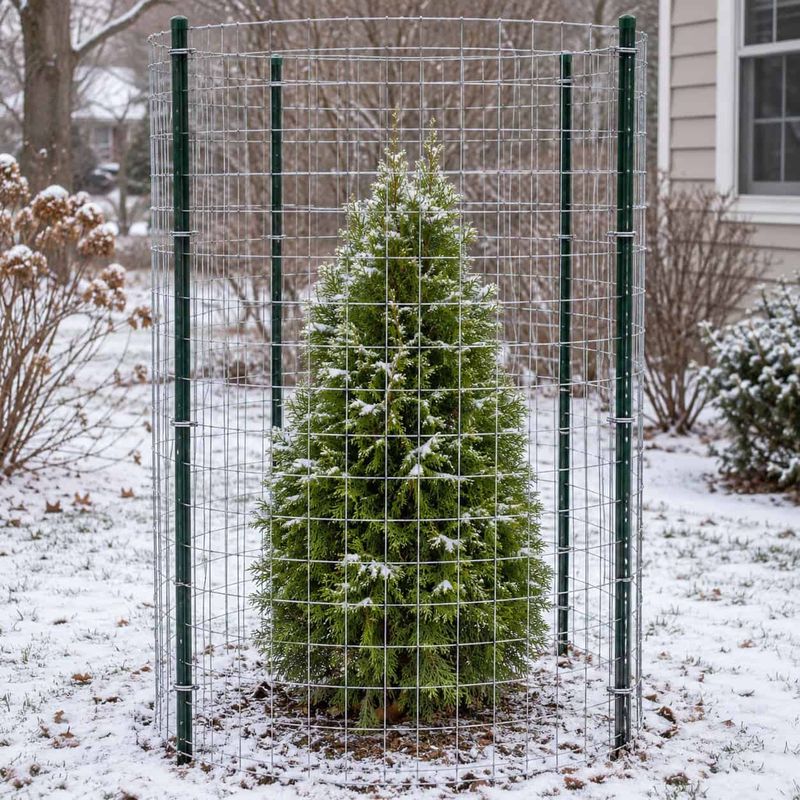
Fun fact: Ohio has roughly 700,000 white-tailed deer, and many of them treat arborvitae like a winter salad bar. Once snow covers other food, those tidy green shrubs become prime targets.
Deer browse leaves a telltale look, with the bottom stripped bare up to about five or six feet. That damage grows back slowly, if at all.
Before the snow piles up, wrap vulnerable plants in lightweight deer netting or set up a temporary fence.
Repellent sprays help too, but rotate brands since deer get used to one smell. In rural and suburban areas near woods, protection is not optional.
It is the difference between a hedge and a row of sad lollipops.
8. Clearing Away Road Salt Risks
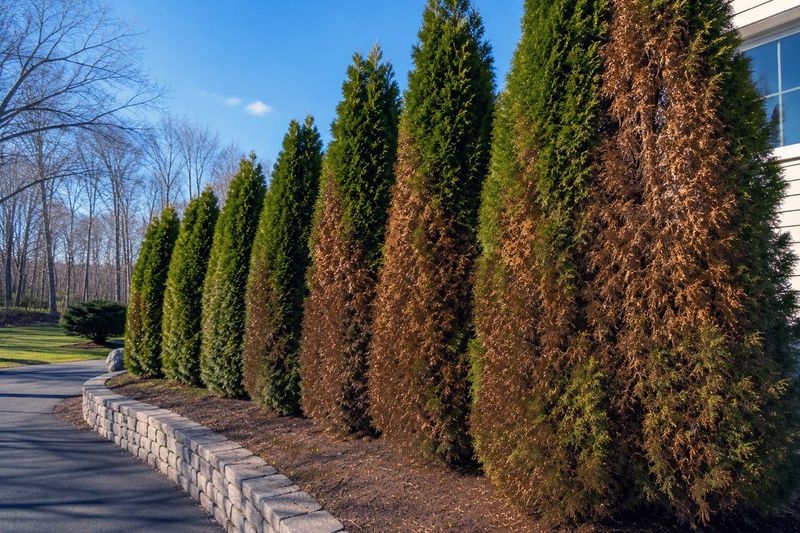
Driveway hedges live a tough life. Every time the plow passes or you toss rock salt on the walk, some of it lands on arborvitae roots and foliage.
Salt pulls moisture away from roots and burns needles, often showing up as browning on the side facing the road. Before winter, consider switching to calcium magnesium acetate or sand for walkways near shrubs.
A burlap screen on the street side can catch plow spray too. And when spring arrives, a deep soaking helps flush leftover salt down past the root zone.
Small changes like these protect hedges that took years to grow.
9. A Quick Health Check for Pests
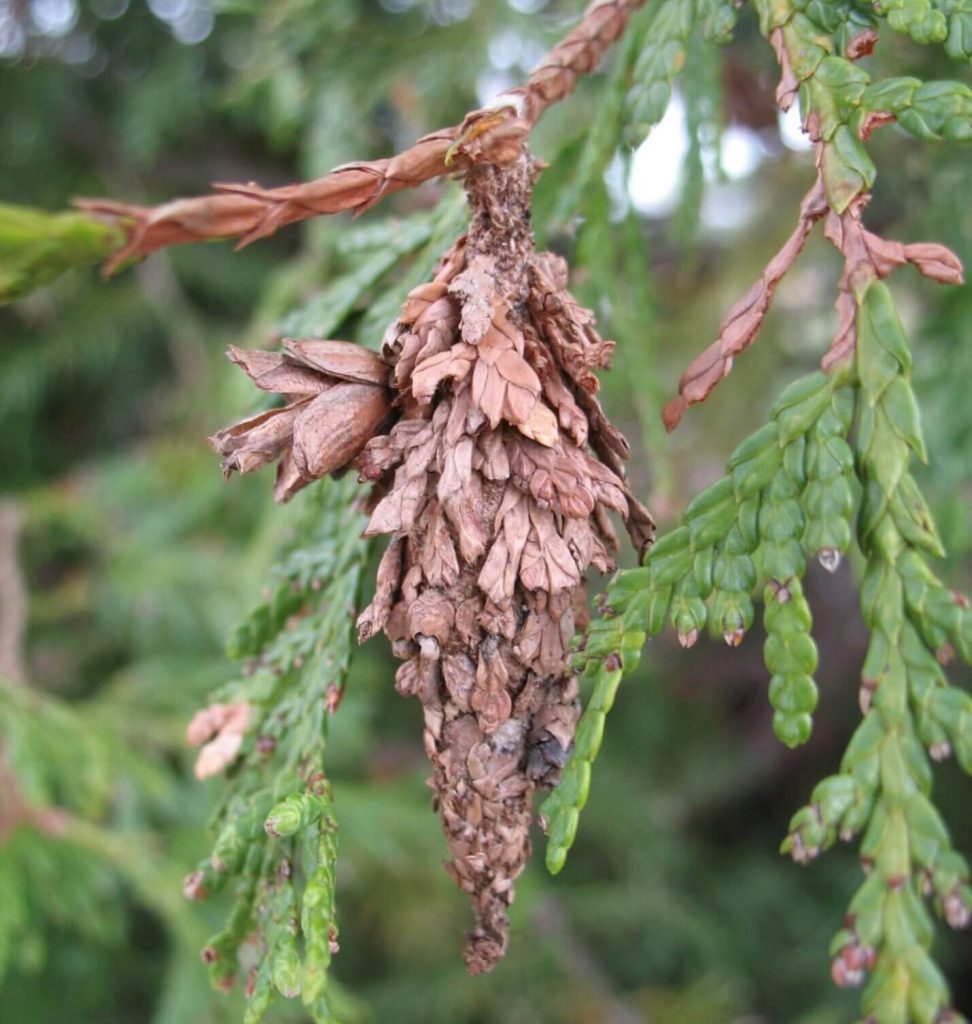
Ever noticed little brown pinecone-looking things hanging from your shrub? Those are bagworm cases, and each one can hold hundreds of eggs waiting to hatch in June.
Fall is the perfect time to pick them off by hand and toss them in soapy water or the trash. While you are close, look for spider mite stippling, brown inner needles, or soggy soil that hints at root problems.
Some inner browning in autumn is normal shedding, so do not panic.
A plant heading into winter healthy handles stress far better. Spending fifteen minutes on a careful once-over now saves you from surprises when the snow finally melts and the growing season begins again.