
Found an Old Bird Nest in Your Georgia Yard This Fall? Check Before You Clear It
You spot a dried-out nest in a shrub while raking leaves, and your first thought is to toss it. Hold on, because bird nests come with legal rules that surprise a lot of people.
The rules are not as simple as a lot of headlines claim, and the details matter for the birds and for you. Here is what federal guidance really says and how to make a smart choice in your own yard.
Federal law does not require homeowners to leave every old nest alone
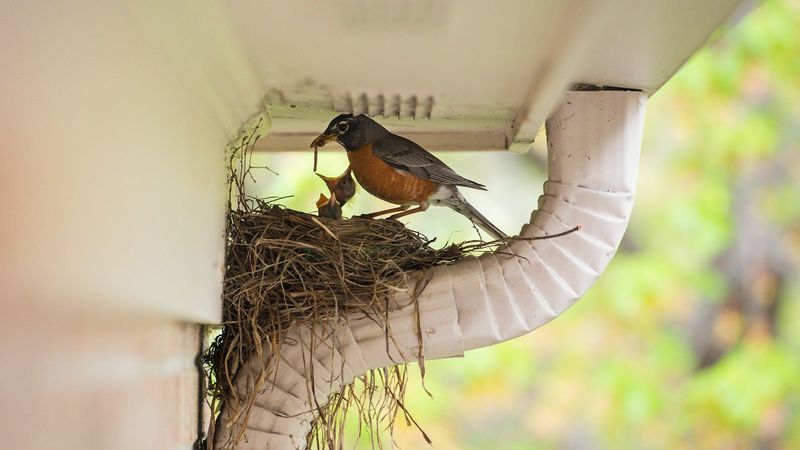
The headline version of this story says federal law forces you to leave every old bird nest alone. That is too broad.
The Migratory Bird Treaty Act does list nests among the things it covers, and the statute’s prohibitions in 16 U.S.C. § 703 are written in broad terms.
The statute is only part of the picture, though. The U.S.
Fish and Wildlife Service issued guidance on January 15, 2025, explaining how it reads the law for nests. Under that USFWS nest memorandum, an inactive migratory-bird nest may generally be destroyed without Migratory Bird Treaty Act authorization, as long as the nest and its contents are not retained.
That is a qualified rule, not a green light for any nest that merely looks old. A nest that seems abandoned may still hold viable eggs or nestlings, and the guidance does not cover that situation.
Destroying an in-use nest, or destroying a nest in a way that takes birds, nestlings, or viable eggs, requires federal authorization.
Other protections can also apply on top of the federal guidance, and some species have extra safeguards. The sensible takeaway is not that every old nest is untouchable.
It is that you need to be confident about what you are looking at before you act.
When is a nest still in use?
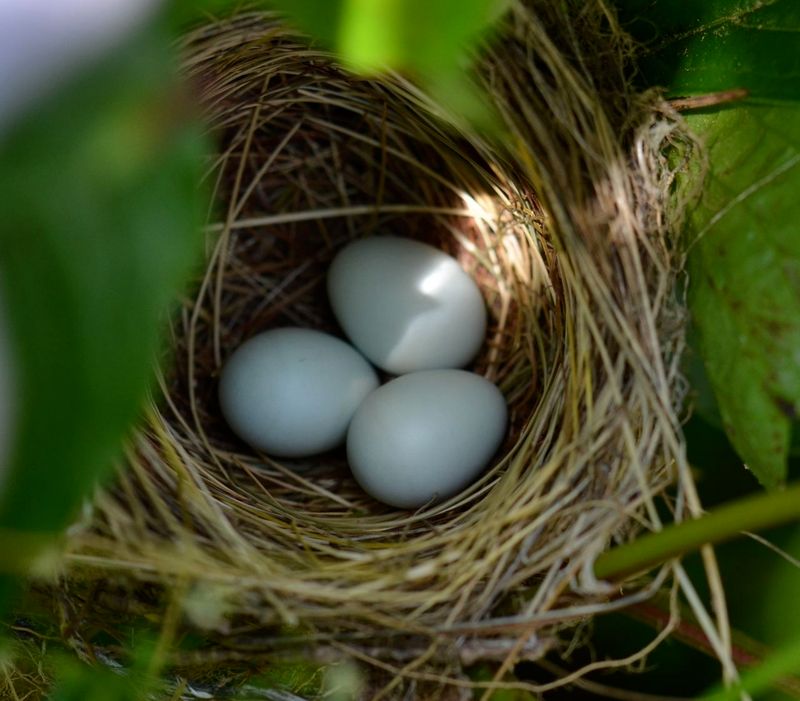
Federal guidance gives a specific definition. According to the USFWS 2025 memorandum, an in-use nest contains viable eggs or nestlings.
It stays in use until the young have fledged and no longer depend on the nest.
That last part trips people up. A nest can look quiet while chicks are still returning to it to sleep or be fed.
Fledging is a process, not a single moment.
The policy also has a quirk worth knowing. Under this specific federal policy, a bird building a nest or tending it before an egg is laid does not make the nest in use.
The nest is treated as inactive until there is a viable egg or a nestling.
That does not mean you should rip out a half-built nest because the rule allows it. Birds can lay eggs quickly, and it is hard to tell from the ground what is inside.
Checking inside a nest can also stress the birds.
Do not lean on the season, the nest’s looks, or a lack of visible eggs as proof that removal is safe. Species vary, timing varies, and some nests are tucked where you cannot see in.
If you cannot tell whether young are present, treat the nest as one you should not touch.
Destroying, keeping, and moving a nest are different acts
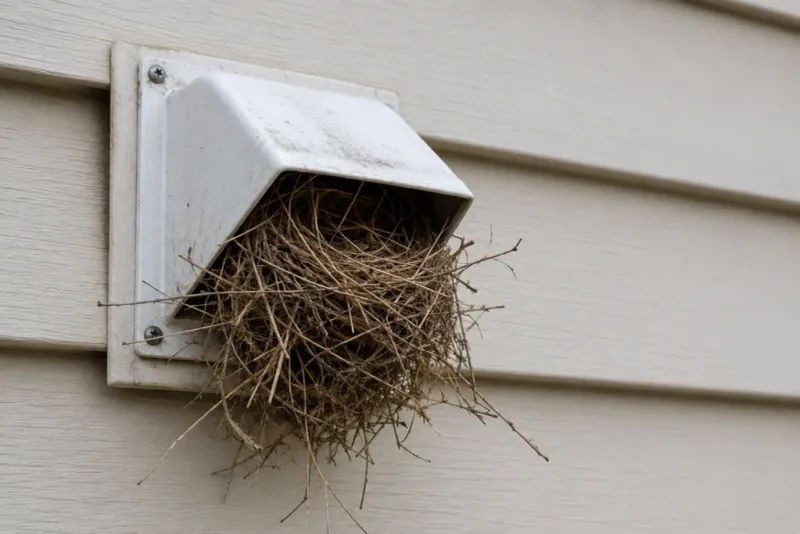
People often lump three different actions together: destroying a nest, keeping it, and moving it. Federal guidance treats them differently, and mixing them up is where homeowners can get into trouble.
Under the January 2025 USFWS memo, destroying an inactive nest does not need Migratory Bird Treaty Act authorization, but only when the nest and its contents are not retained. Once you hang on to the nest, you have moved into a different category.
Keeping a nest, for a craft shelf or a nature collection, counts as possessing it. Relocating a nest, such as moving it to another tree, is treated as collecting and possessing it, and the memo says that requires authorization.
Relocation is not the same thing as destruction, and moving a nest is not a loophole.
Meanwhile, the rule against harming active nests stays firmly in place. Destroying an in-use nest, or any action that takes birds, nestlings, or viable eggs, requires federal authorization.
So a homeowner who wants to scoop up a nest and set it in a safer spot, thinking it is the kinder choice, would actually be taking an action that needs permission. If you want a nest moved, ask the agencies first rather than guessing.
Georgia’s fall season can bring eagle nesting activity
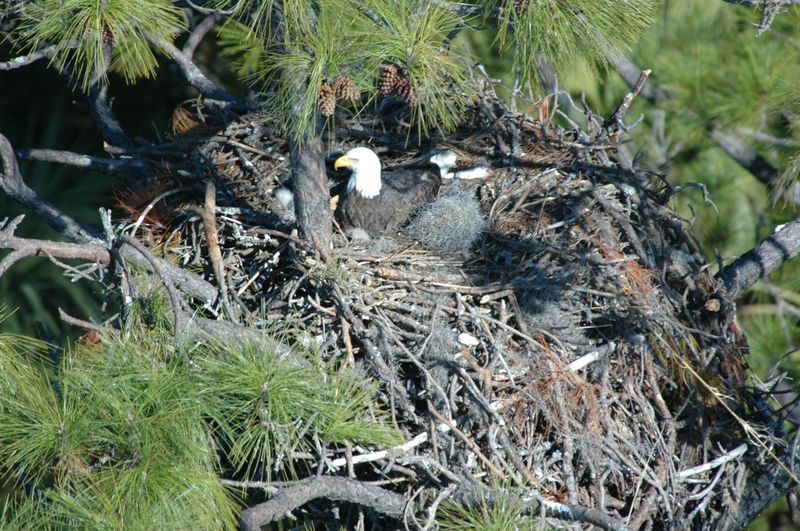
Fall feels like the end of the bird year, but not for every bird. Georgia DNR says bald eagles return to their nesting territories in early fall.
Its eagle brochure adds that nesting season in Georgia typically starts in late October or early November, with some variation by location.
That means a big stick nest in a tall tree is not necessarily abandoned just because the leaves are coming down. Your fall cleanup calendar tells you nothing about whether eagles are about to use it.
Eagle nests are also a major exception to the inactive-nest guidance described earlier. According to USFWS eagle nest removal information, bald and golden eagle nests are protected year-round under the Bald and Golden Eagle Protection Act.
A nest-take permit is required to remove, relocate, destroy, or obstruct an eagle nest, even when the nest is not in use. Being empty does not lift that protection.
Most backyard nests are small, and most are not eagle nests. Still, if you see a very large stick structure in a tall tree on or near your property, do not touch it.
Note where it is, keep your distance, and contact the authorities.
When you cannot identify the nest, leave it undisturbed
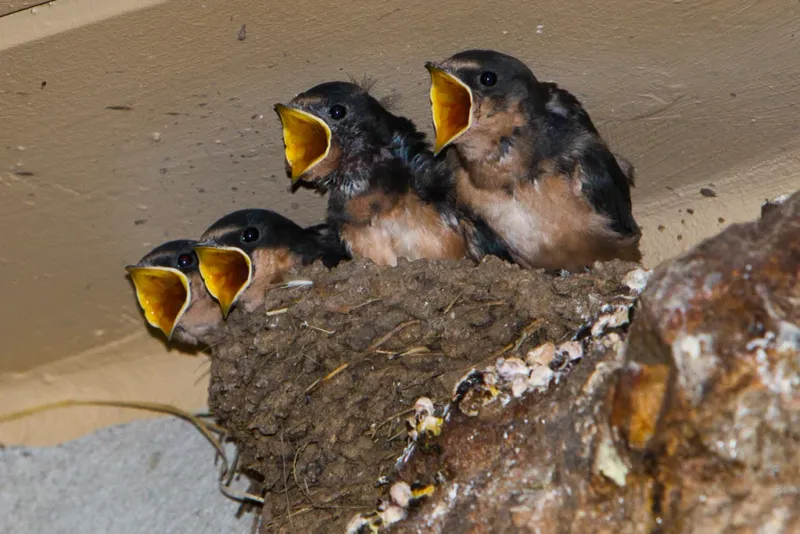
Identifying a nest is harder than it sounds. Nests from different species can look alike, and old nests can change shape with weather.
Telling whether anything is inside can be tough from the ground.
The USFWS says as much, and its 2025 memo puts the responsibility on the person destroying a nest. That person must make sure the action does not take birds, nestlings, or viable eggs.
If you cannot confidently tell the species or whether the nest is in use, the practical choice is to leave it alone. Take a photo from a distance, note the location, and contact Georgia DNR or USFWS for guidance.
That costs you very little and avoids a risky guess.
The species matters because other protections can still apply. The memo says its policy does not supersede other federal, state, tribal, or local laws, including Endangered Species Act protections for listed birds.
Georgia DNR says wild birds in the state are protected by state and federal laws, and its page on native wildlife laws lists stated exceptions including English sparrows, European starlings, and pigeons. Even so, that list is not a shortcut.
You still have to be sure which bird built the nest, and that is not always easy.
Check before you clear
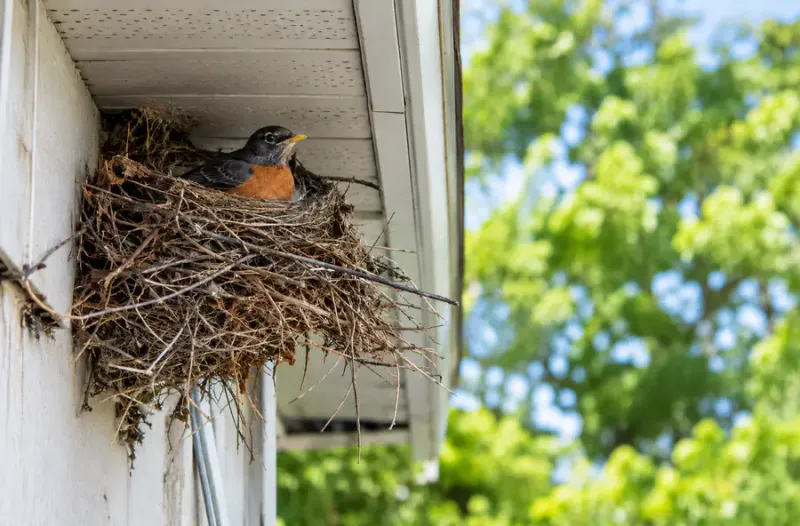
Here is a rule you can carry into any yard cleanup. Leave alone any nest that might still be in use, and do not keep or relocate a nest without checking the authorization rules first.
Treat eagle nests and nests from unknown species as special cases.
The 2025 federal guidance generally treats destroying an inactive nest differently, as long as nothing is retained and no other protection applies. For eagles, a nest-take permit is needed even for an empty nest.
A nest that looks like leftovers may be someone’s home. A quick pause costs nothing.