
Raised Mud Tubes on New Jersey Tree Trunks: When They Point to Termites and When Other Marks Are Harmless
Spotting a strange brown mark on a tree trunk can make any homeowner uneasy. Sometimes it is a raised tube of soil that termites built, and sometimes it is a harmless crust or a stain from a wounded tree.
Knowing the difference helps you decide whether to call someone or simply keep an eye on it. Here is how to read the clues without panic.
How to recognize a possible termite tube
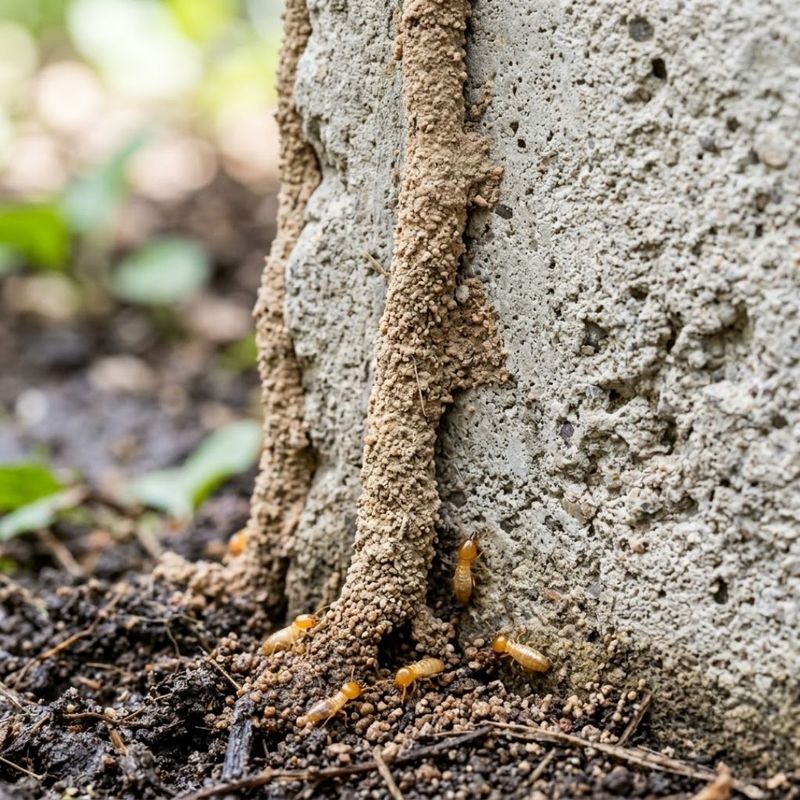
Start with the shape. A termite shelter tube is a distinct, raised ribbon of soil, often about the width of a pencil, that sits on top of the bark and runs up or along the trunk.
It looks built, like a tiny covered walkway, and it is made of dirt mixed with bits of wood and termite saliva.
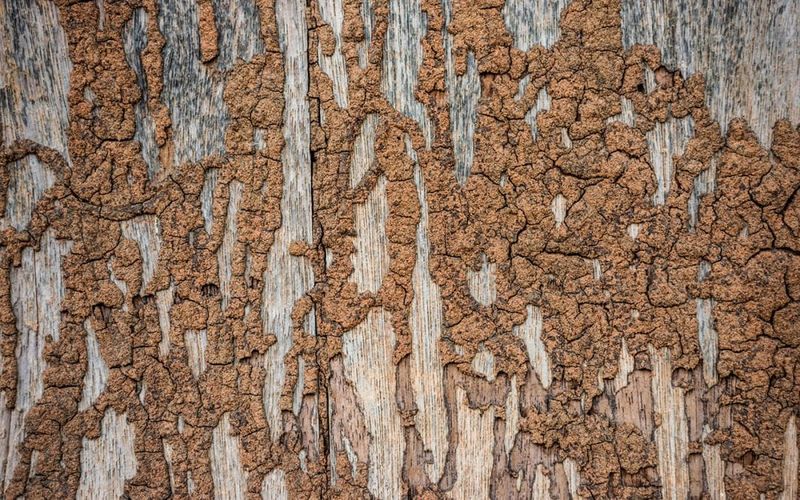
That is very different from a flat stain, a powdery film, or a crusty patch that seems to be part of the bark surface. Those marks are not raised tunnels, and they are not automatically a sign of termites.
In the Northeast, the termites that build this kind of tube are subterranean termites. Rutgers Cooperative Extension explains that they nest in the soil and build mud tubes to travel between the ground and wood.
So a raised, soil-like tube on a tree is consistent with termite activity, and it is worth a closer look.
Closer look does not mean alarm. A tube on a tree does not prove that the tree is unhealthy, and it does not prove that termites have reached your house.
It simply tells you that termites may be using that spot as a travel route.
Penn State Extension, in its guide to eastern subterranean termites, describes these tubes as protection from dry air and predators. If the mark you found matches that description, take a photo and keep reading before you decide what to do next.
What termite activity can mean for the tree
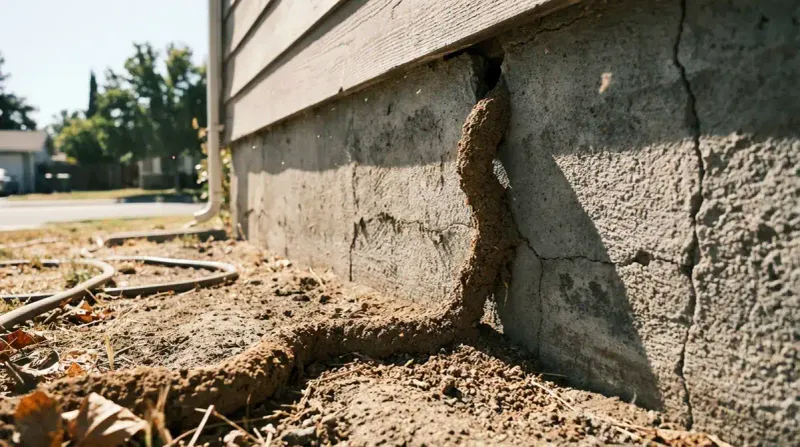
Subterranean termites live in the soil, and the tubes are how they cross open air to reach wood. A tube on a trunk shows that termites are traveling there.
It does not tell you what they are eating once they arrive.
Termites commonly feed on dead wood, roots, and stumps. As the UC IPM program notes, they may occasionally attack living plants, but that is not the usual pattern.
So a tube on a trunk is not proof that termites are chewing healthy living tissue. Many trees carry dead branches, old wounds, or decaying roots that attract termites while the rest of the tree carries on normally.
Think of the tube as a clue about where termites are moving, not a health report. A tree with full leaves, solid wood, and no cavity may be doing fine even with a tube on its bark.
The picture changes if the tree also shows significant decay, hollow areas, or a lean that worries you. Those problems deserve their own assessment, and they are about the tree itself, not just the tube.
Termite signs alone are not a reason to assume the tree is dying or must come down.
When a crust or streak may be something else
Plenty of marks on bark look odd without having anything to do with termites. Two common look-alikes are lichen and slime flux.
Lichen forms flat, crusty or leafy patches that seem fused to the bark. They are often gray, green, or yellowish, and they do not stand up off the surface like a tunnel.
According to Penn State Extension, lichens are harmless to trees, and removing them can injure the bark. Leave them alone rather than scraping or scrubbing.
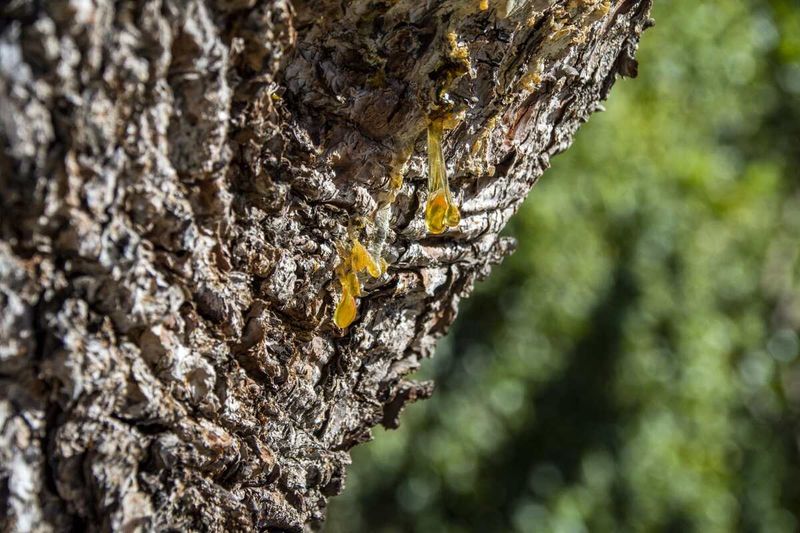
Slime flux looks completely different. It is liquid that seeps from a wound, such as an old pruning cut or crack, and it can run down the trunk as a dark, wet streak.
It can look slimy and sometimes smells foul. Iowa State University Extension covers this kind of oozing and how it stains bark.
A simple way to sort them out is to ask three questions. Is the mark raised and built like a tube?
Is it flat and crusty? Or is it wet and flowing from a wound?
Appearance is a helpful clue, but it will not always settle the matter, especially with a dried streak or weathered material. If you cannot tell what you are looking at, take clear photos from a few angles.
Then share them with a pest professional or a tree expert.
A tree tube does not prove the house is infested
The worry most homeowners have is simple: if termites are on the tree, are they in the house? A tube on a tree alone does not establish that.
Termites can live in yard soil, stumps, and buried wood without ever touching a structure.
Still, termites near a home deserve attention. Rutgers recommends a thorough inspection when termites are found near a foundation, because that is where a problem could move from the yard to the building.
Notice the wording. The advice is to inspect, not to assume damage.
A tube on a tree is a reason to look around, not a prediction that your home has been harmed.
Distance matters in a practical way. A tree far from the house is a weaker concern than one growing against the foundation or touching siding.
A tube on a tree beside the house raises the value of a careful check.
Treat it as a prompt for calm, methodical checking. If nothing else turns up, you have learned something useful about your yard.
If you do find more signs, you have caught them early and can bring in a professional with good information.
Check nearby areas without assuming the problem is solved
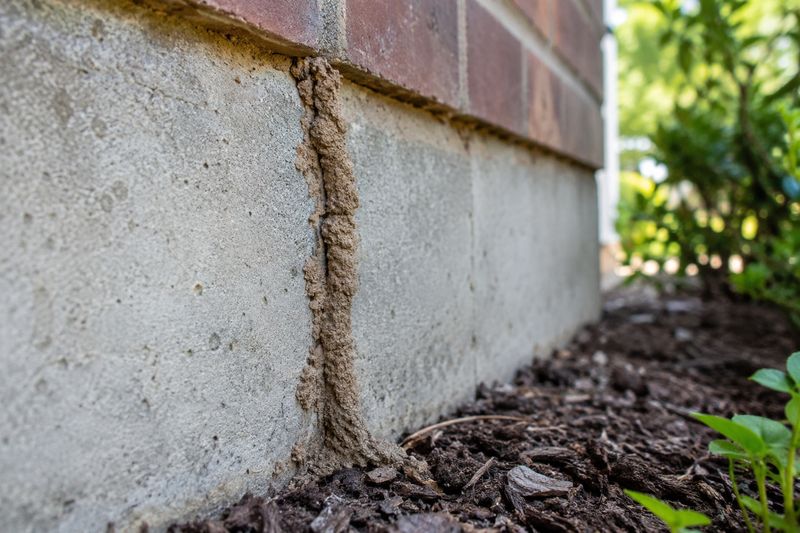
Begin by photographing the mark from a few angles, with something small like a coin beside it for scale. Then decide whether it is a raised, soil-like tube or a flat stain or growth.
Those photos also help a professional later.
Next, look at the base of the tree and the ground around it. Then check the foundation, the crawl space if you have safe access, and any exposed structural wood such as sills, porch posts, or steps.
You are looking for more tubes or wood that looks damaged.
Rutgers lists foundations and other spots with moisture and wood material as priorities, and Penn State Extension describes where tubes tend to show up on masonry and wood. Use a flashlight and stay out of tight or unsafe spaces.
Be careful about one assumption. A tube that looks empty may be abandoned, but it may also be an old section of a route still in use elsewhere.
Missing termites do not reliably mean activity has ended, and old and active signs can be hard to tell apart.
For the same reason, knocking the tube off does not control anything. Removing visible material does not reach the colony in the soil.
Rutgers advises arranging a professional termite inspection if you find signs on the foundation or structural wood, or termites near the foundation.
Choose the right professional for the concern
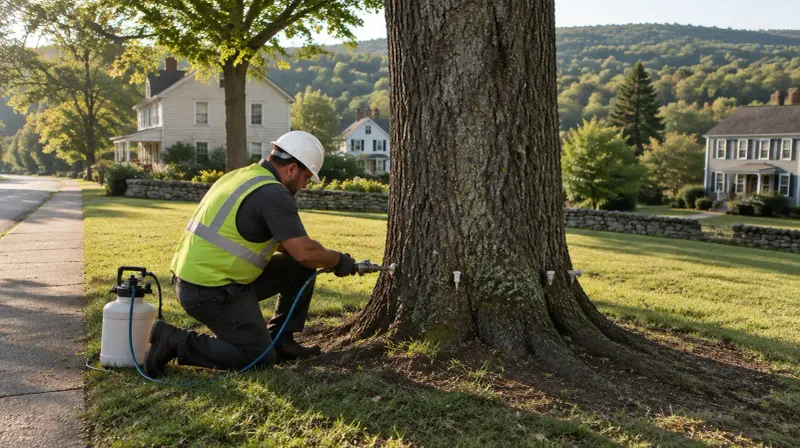
Two different worries can show up together, so it helps to match each one to the right expert. A termite concern calls for a pest professional.
A tree concern calls for someone who understands trees.
Call for a professional termite inspection if tubes or damaged wood appear on the home’s foundation or structural wood, or if termites are found near the foundation. Rutgers backs that kind of thorough check in its termite prevention guidance.
Arrange a tree diagnosis if the tree has substantial damage, decay, a cavity, or a safety concern such as a heavy lean or large dead limbs over the house. The aim is to learn the tree’s actual condition, not to guess from the tube.
Removal should not be decided from termite signs alone.
Rutgers describes Licensed Tree Experts as qualified to diagnose tree problems, and in its guide to hiring a tree care professional it notes that New Jersey tree-care businesses must meet state registration requirements. Ask to see credentials before work begins.
If you are unsure which expert you need, start with the one tied to the strongest sign. Wood damage on the house points to the termite inspector, and a hollow or cracked trunk points to the tree expert.
A muddy-looking mark is only a question. The raised tube is simply the one that is worth asking out loud.