
Tiny Flies in an Iowa Bedroom: Finding Where They Actually Started
A few tiny flies drifting around your bedroom lamp or window can be annoying, especially when winter keeps everything closed up tight. The spot where you see them may not be the spot where they were born.
Several kinds of small flies live indoors, and each one grows up in a different kind of damp material. Learning to read the clues helps you find the real source before you reach for a spray.
Is the bedroom where they started?
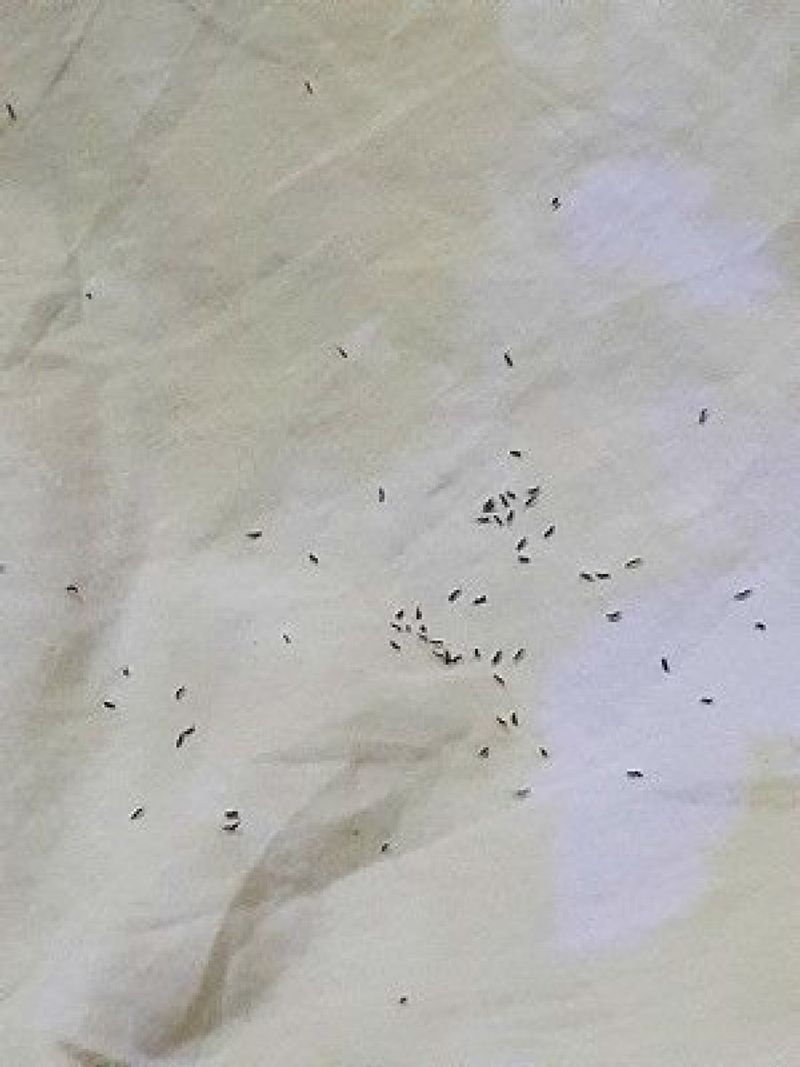
Spotting a few flies near your pillow feels personal, but the bedroom may only be where they end up. Adult flies often drift toward light, so a lamp, a window, or a glowing phone screen can pull them in from another room.
They could also have grown up right there, so the bedroom stays on the list of places to check.
Several kinds of small flies live in homes. Iowa State Extension lists fungus gnats among common indoor flies and says houseplants, especially overwatered ones, are a common breeding site.
It also notes that other species breed in homes, so a plant is only one possibility.
Think of what you see as a set of clues. Fungus gnats are small, slender, and dark.
Drain flies are fuzzy and moth-like. Fruit flies are often tan with red eyes.
University of Minnesota Extension describes these and other household flies. Still, looks and location can point you in a direction without proving anything, and some small flies will not match any of these.
Here is the plan. Try to identify the fly, perhaps by catching one on a piece of clear tape and looking closely.
Then check the damp or fermenting places where that kind could be growing, in the bedroom and in nearby rooms. Treating the bedroom itself comes last, after you know what is feeding the flies.
Why winter does not identify the source
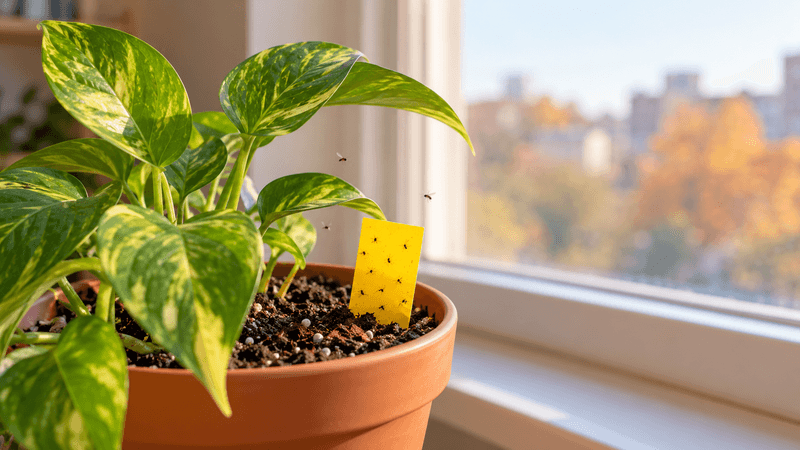
Cold weather makes indoor flies easier to notice, but it does not prove the cold sent them inside. With windows sealed, any flies in the house have nowhere else to go.
They hang around the places where they were already living.
Fungus gnats are a good example. Colorado State Extension explains that they can reproduce indoors all year.
A population can quietly continue through January with no outdoor help at all.
Plants also change in winter. Many use less water when light is weak and growth slows, so potting mix can stay damp longer than it does in summer.
Damp mix is the kind of material fungus gnat larvae live in, which is one reason a winter watering habit might matter.
Windows add another twist. University of Minnesota Extension notes that adults may collect at windows.
So a cluster of flies on the bedroom glass may have come from a plant down the hall, or from a pot on that very sill.
Season, then, is only background. The flies you see still need to be identified, and their breeding spot still needs to be found.
Check houseplants for fungus gnats
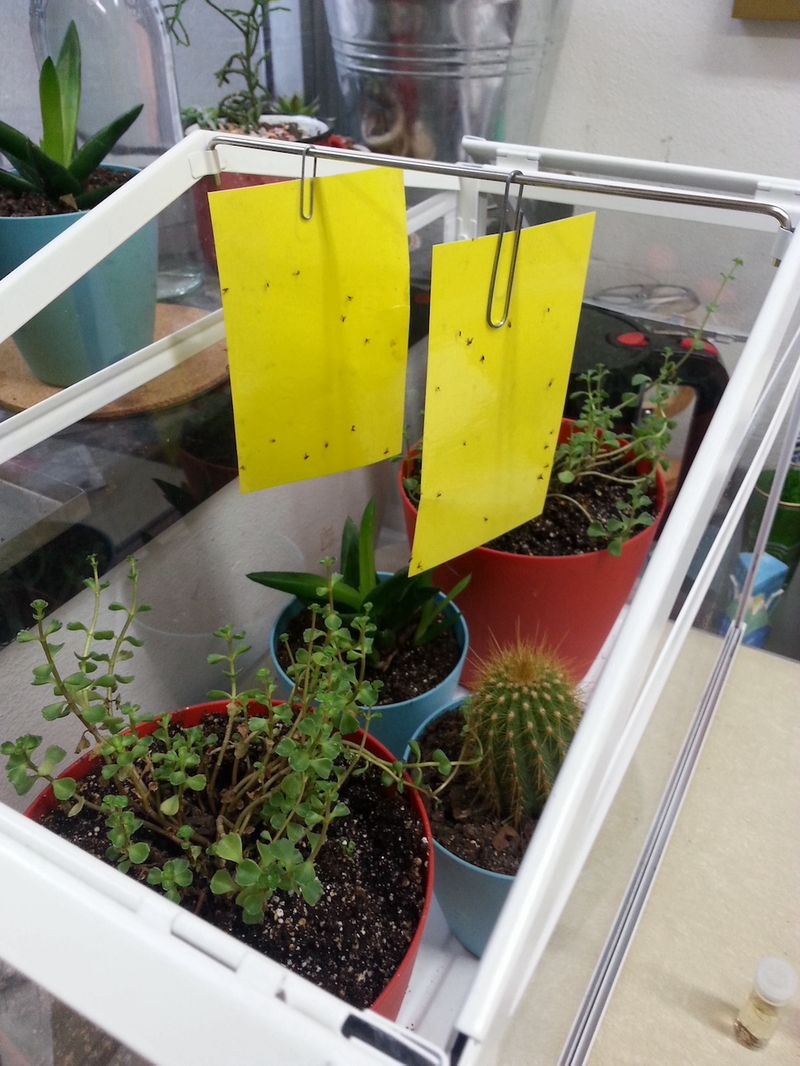
Picture small, slender, dark flies hovering near a plant or walking across its soil. They may also gather at a nearby window.
That scene is a clue pointing toward fungus gnats, though it is not proof, since other small flies can look similar from a distance.
The adults are not where the trouble grows. University of Minnesota Extension describes larvae living in the growing medium and feeding mainly on fungi and decaying matter.
Damp potting mix is where the next generation develops.
If flies rise when you water a plant or run over its soil, change the moisture. Iowa State Extension suggests letting the soil surface dry between waterings, as far as that particular plant tolerates.
Some plants hate dry soil, so follow each plant’s needs. Also empty any standing water from saucers.
Yellow sticky cards are useful for catching adults and tracking whether activity rises or falls. But Iowa State guidance on diagnosing houseplant pests makes clear the cards do not deal with larvae in the soil.
Use them as a monitor, not the whole fix.
One bit of reassurance: fungus gnats generally pose little threat to people or plants, and the adults do not bite. They are mostly a nuisance, so you can take your time investigating.
Look for drain flies near damp drains
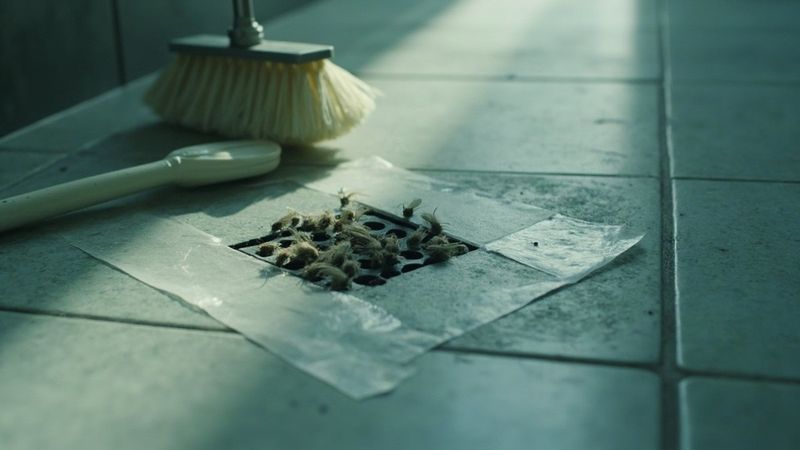
Fuzzy, moth-like flies resting on walls near a sink, shower, or floor drain are worth a closer look. Their shape and their location together suggest drain flies.
That is a clue to follow up, not a final answer.
The reason drains matter is what builds up inside them. Penn State Extension explains that moth fly larvae develop in damp organic buildup in drains.
A bathroom attached to your bedroom, or a basement floor drain a few steps away, could be the source.
To test a suspect drain, cover the opening with a clear container or a suitable tape, leaving the seal snug enough to trap anything that emerges. Check it after a day or so.
If flies show up inside the container, you have found a likely breeding spot.
Then deal with what is feeding them. Remove the damp organic buildup, or use an appropriate biological drain treatment that is labeled for the job and follow its directions.
University of Minnesota Extension points to removing breeding material rather than treating adults alone.
Skip bleach. It is not an effective way to eliminate the buildup, and it should never be mixed with other cleaners because that can release dangerous vapors.
Clearing the gunk does the real work.
Fruit flies can have sources beyond fruit
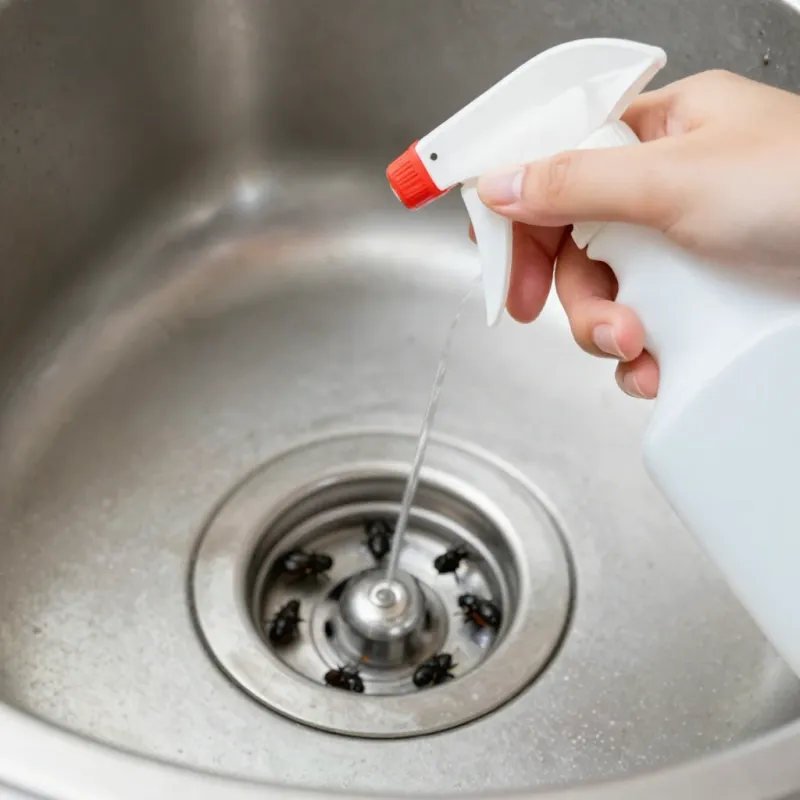
Small tan flies with red eyes may be fruit flies, though color and size alone cannot settle it. University of Minnesota Extension describes them this way, and it is a handy starting point for an investigation.
Begin the search with anything ripening or fermenting, such as bananas, tomatoes, or forgotten produce in a bag. Then widen it.
Look at trash cans, recycling bins with sticky containers, garbage disposals, and slow or seldom-used drains.
Fruit does not have to be present. Iowa State Extension notes that another moist, fermenting source can keep these flies going.
A film of old residue in a drain or a damp spill under a bin can do the job.
Once you find a suspect spot, remove it. Toss spoiled produce, rinse recycling, clean the bin, and scrub out the drain or disposal with a brush.
Take the trash out, too, if it has been sitting.
Traps and sprays may reduce the adults you see, but they leave the breeding material behind. Without removing it, new flies keep appearing.
Cleaning up the source is what ends the cycle, and it often happens in the kitchen rather than the bedroom.
Some winter visitors are not tiny flies
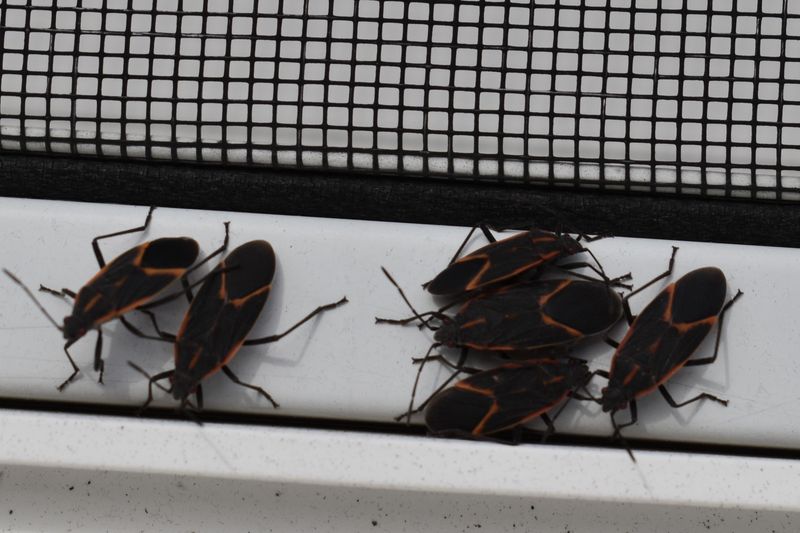
It is tempting to blame every little winged thing on the cold, but tiny flies are not a good fit for the idea of overwintering pests. Some other creatures really do move in for winter, and they look different once you check.
Boxelder bugs are one. Iowa State Extension describes them entering homes to shelter through winter.
They are true bugs, not flies, and they do not reproduce indoors.
Cluster flies also spend winter in houses. According to University of Minnesota Extension, they are about 3/8 to 1/2 inch long.
That is much larger than fungus gnats or fruit flies, so size is a quick way to tell them apart.
If what you are seeing is a speck-sized fly, these visitors are probably not the explanation. Keep your attention on plants, drains, and fermenting material instead.
Trace the breeding source before treating
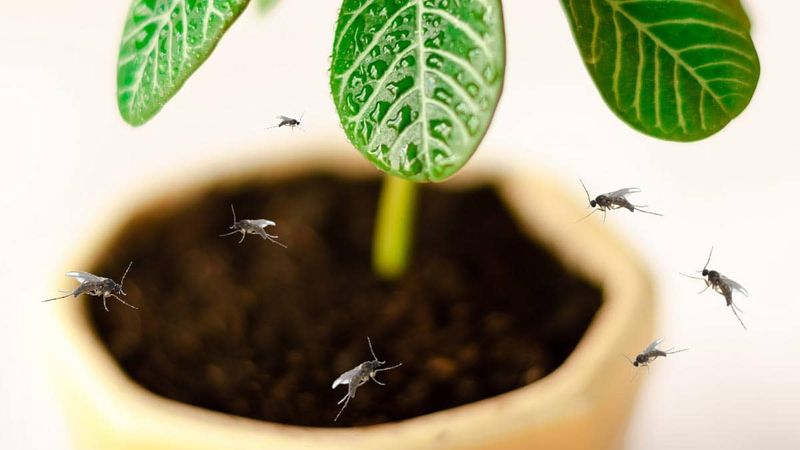
A simple rule can guide you. Let what the fly looks like and where it appears tell you what to inspect, then remove whatever material is sustaining it.
A damp plant pot, a drain with buildup, or a fermenting spill each calls for a different fix.
None of this means your home is dirty. Different flies use different moist or fermenting materials, so a well-kept house can still have a pot of soggy mix or a slow drain.
Iowa State Extension shows how varied those sources can be.
Resist spraying the whole room. Iowa State calls insecticides unnecessary and ineffective for houseplant fungus gnats.
If you still consider a pesticide, EPA guidance says to follow the label and use it only where it permits.
Flies are tiny, but they leave a trail if you are patient enough to follow it.