
Leafless Vines in Wisconsin: Is Porcelain Berry the Culprit on Your Tree or Fence?
Once the leaves drop, a thick tangle of vine can suddenly show itself, wrapped around a maple trunk or draped over a back fence. It looks like it has been there a long time, and it is hard to tell what it is.
One invasive vine that Wisconsin officials want people to watch for is porcelain berry, but plenty of native vines look similar in winter. This guide shows what to check, what can fool you, and how to get help before you cut anything.
Porcelain berry is a suspect, not proof of a statewide surge
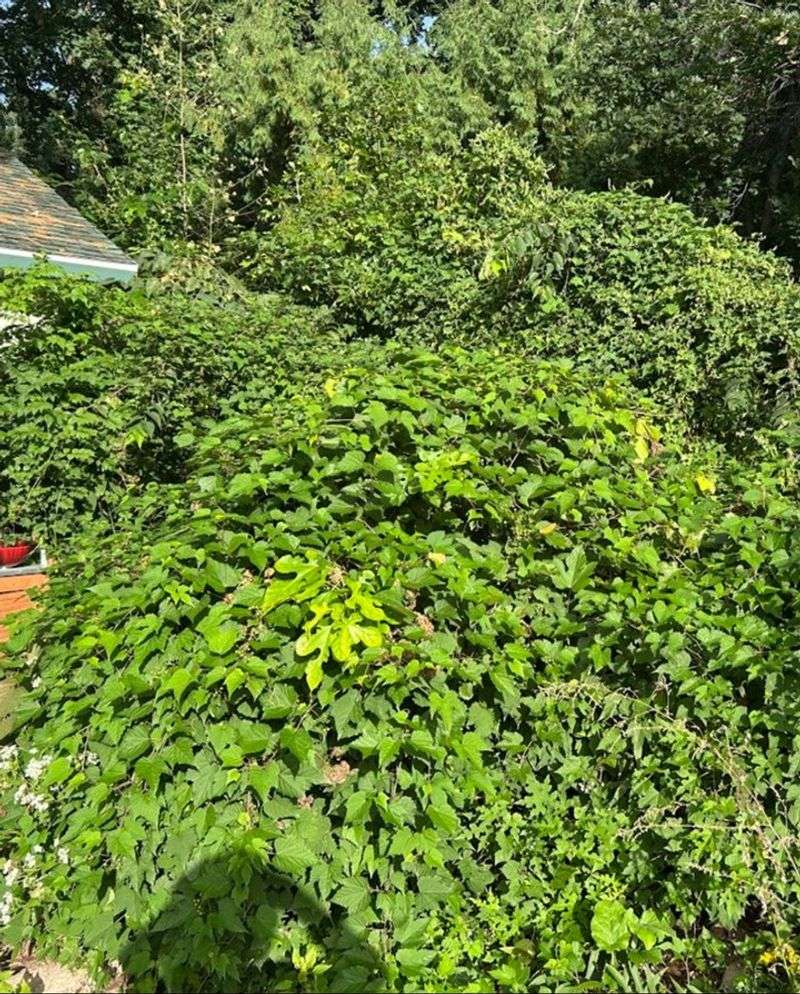
A bare vine gripping a tree can look sinister, and it is natural to wonder what it is. Porcelain berry is a fair first suspect.
Wisconsin DNR lists it as a prohibited invasive vine that can grow up to 15 feet in one season, blanket native plants, and climb trees and shrubs.
Still, a suspect is not a confirmed culprit. A 2020 DNR alert reported a discovery in Door County and described the Madison-area population as the largest known at that time.
An older DNR control FAQ also named west Madison as the state’s largest known site.
Those records show a real concern worth watching. They do not show that porcelain berry is smothering yards across the state right now, and the reviewed sources do not say that.
They also cannot tell you what is growing on your own tree or fence, so the next sections focus on clues you can check.
What a leafless vine can—and cannot—reveal
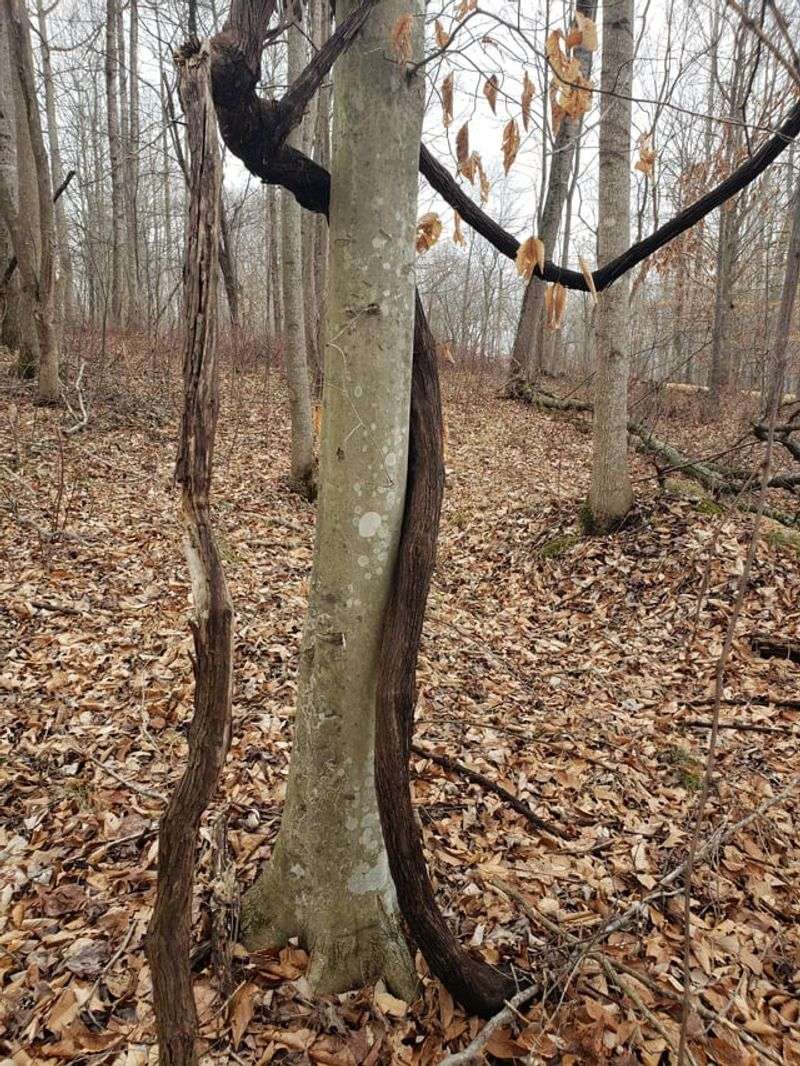
Leaf drop gives you stems and bark to study. According to the DNR winter identification guide, porcelain berry bark is beige with small raised pores called lenticels, and older stems may develop a diamond-like pattern.
Wild grape tends to have shaggy, peeling bark on older stems, so bark can help tell those two apart.
The pith, the center of a cut stem, is another clue. Porcelain berry’s pith is described as solid and bright white, while wild grape’s is brown.
The DNR fact sheet also describes the white pith.
Checking pith means cutting a stem. If the vine is growing on a tree, ask for identification help before you cut or remove anything.
Virginia creeper complicates things. Bark alone is less useful for separating it from porcelain berry, and its pith varies, so a pale center does not settle the question.
The guide is also marked as a 2019 draft and admits that porcelain berry, wild grape, and Virginia creeper can be hard to distinguish without leaves. Treat every trait as a clue, not a verdict.
Check for native lookalikes and another invasive vine
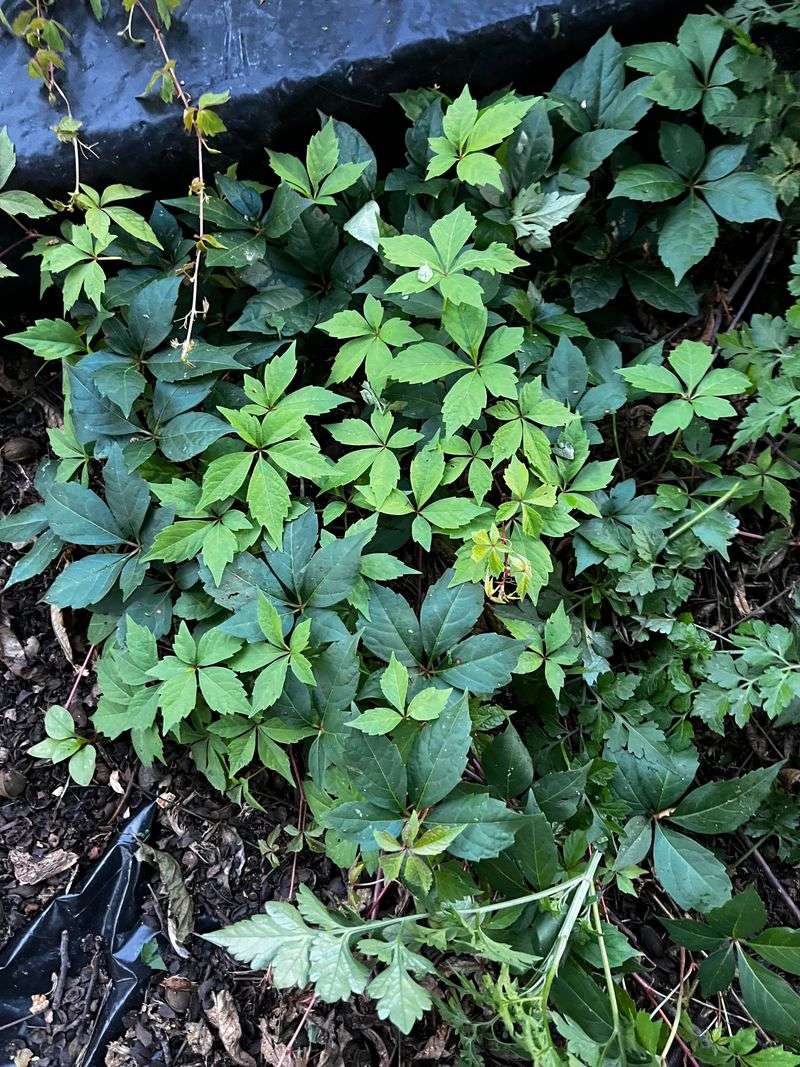
If you have a few leaves or berries left, they can help. Porcelain berry leaves range from heart-shaped to lobed, with tendrils opposite the leaves.
Its fall berries can be pink, purple, or blue with pale spots.
Virginia creeper usually has five leaflets per leaf and blue-black fruit. It is native to Wisconsin, and UW-Madison Extension notes that it grows vigorously and can envelop nearby plants if unmanaged.
Vigorous does not mean invasive. Wild grape also climbs, so a vine’s spot on a trunk or fence tells you nothing about its species.
Porcelain berry is not the only invasive vine to consider. Oriental bittersweet has alternate, rounded leaves, and in fall its capsules split to show red-orange fruit.
It can girdle, shade, or weigh down trees.
Look at where the fruit sits. Oriental bittersweet clusters grow in the leaf axils, while native American bittersweet carries clusters at the branch tips.
Hybrids can blur these lines, which is another reason to ask for help instead of guessing.
Document a suspected plant and report it
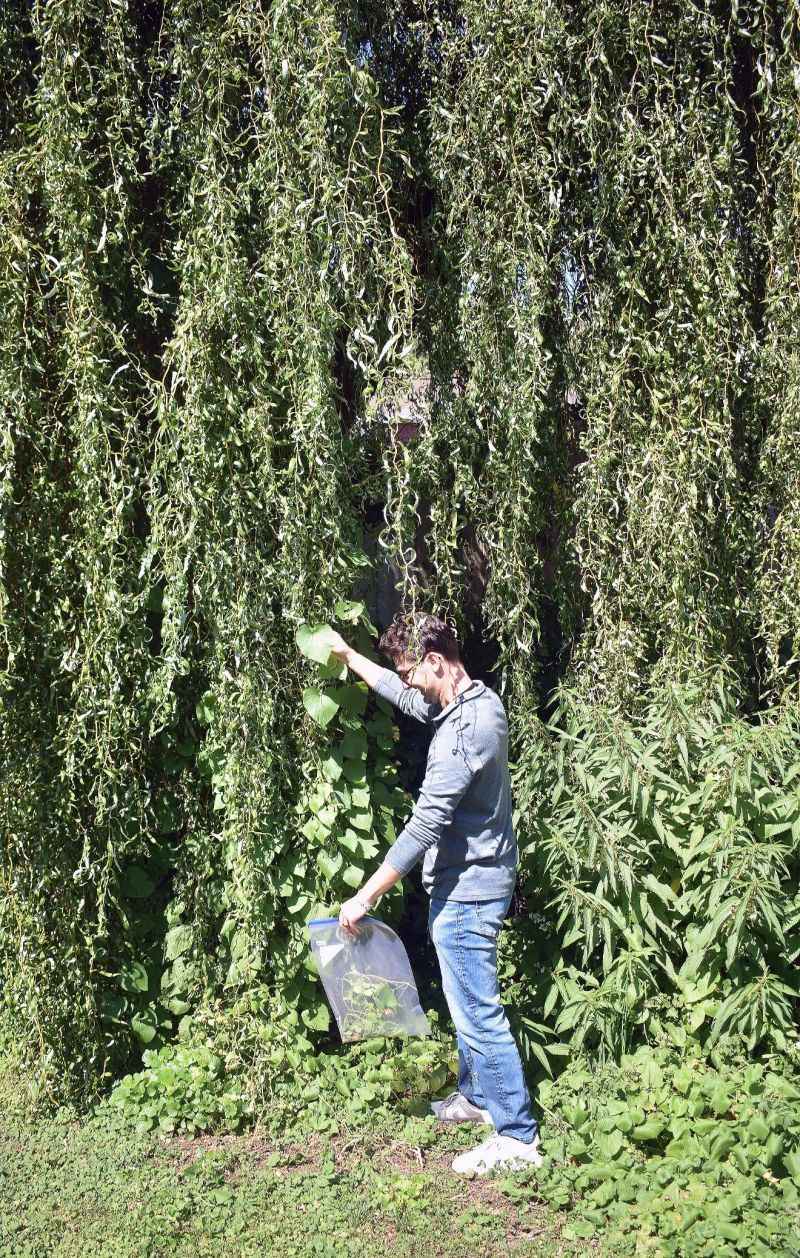
Before you reach for pruners, reach for your phone. Take clear photos of the whole vine, the bark, any stem ends, and any leaves or fruit that remain.
Add a wider shot showing where the plant is growing.
Write down roughly how much of it there is, such as a single stem or a patch along a fence line. Wisconsin DNR accepts reports of terrestrial invasive plants through its online form or by email.
Include the location, the population size, and your identification evidence.
Reporting is a way to get expert eyes on a plant you are unsure about. It does not mean you have confirmed porcelain berry, and the answer may turn out to be a native vine.
Either result is useful, because you will know what you are dealing with before deciding on any action.
Choose control methods that limit harm and spread
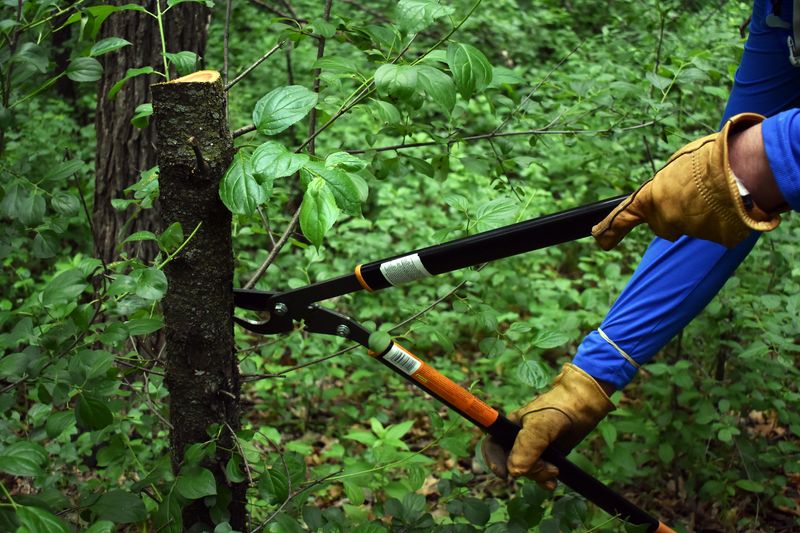
Good control starts with a good identification, then depends on plant size, whether it is fruiting, and the site. DNR lists hand-pulling small porcelain berry plants before they fruit and cutting or mowing vines to prevent flowering.
These steps control the plant but do not eradicate it. Cutting or mowing after seeds develop can spread them.
Tree safety matters too. A DNR porcelain berry FAQ warns against pulling freshly cut vines down from trees or yard features because that can cause damage.
It advises waiting until the dead vines have dried and their tendrils have weakened. That advice is specific to porcelain berry, not a rule for every vine.
Herbicide is another option, and DNR control guidance lists cut-stump and fall basal-bark methods. Always follow the product label and protect nearby plants and sensitive sites.
If you lack the knowledge or equipment, hire a qualified applicator. Safety statements about one treatment project do not apply to every product or yard.
For disposal, keep plant material from spreading. DNR’s general advice includes bagging invasive plant material and using landfill disposal where it applies, so check current state guidance and local arrangements.
Expect to repeat the work over several seasons, since no single treatment is a guaranteed fix.
Let identification guide the next move
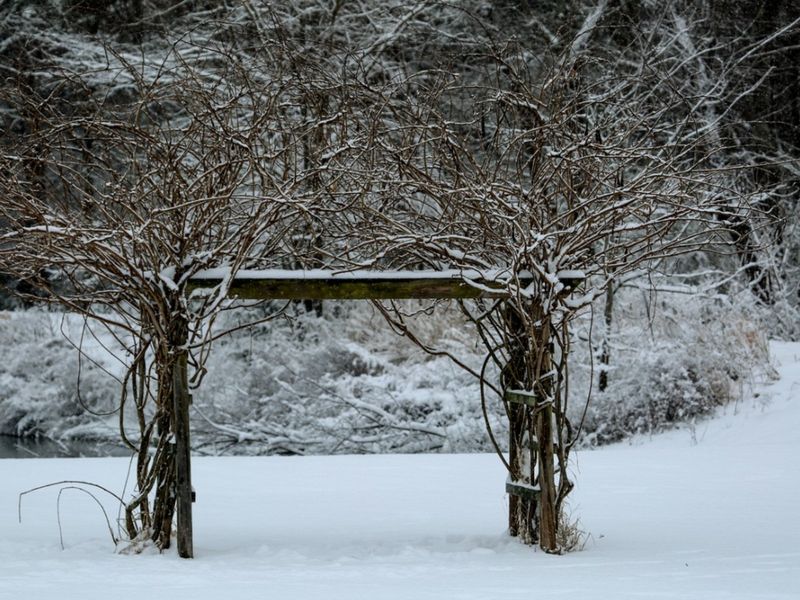
Bare branches show structure that summer leaves hide, but winter clues have limits. Photograph the vine, send a report to DNR if porcelain berry seems plausible, and leave an uncertain vine on its tree.
The DNR FAQ explains why yanking is a poor idea.
A vine in winter keeps its secrets until you look closely. Let the name come first, and the plan will follow.