Get the latest garden guides in your inbox →
Gardening Latest
  • General Gardening
  • Lawn Care
  • Plant Care
  • Composting
  • Soil Health
  • Backyard
  • Garden Muse Magazine
  • General Gardening
  • Lawn Care
  • Plant Care
  • Composting
  • Soil Health
  • Backyard
  • Garden Muse Magazine
  • News
  • Gardening Calendar
  • Garden Structures
  • Vegetable Garden
  • Vertical Garden
  • Raised Beds
  • Hydroponics
  • General Equipment
  • Community Gardens
Garden Themes
  • Spiritual Garden
  • Hydroseeding
  • Seeding and Laying Sod
  • Artificial Grass
  • Lawn Care Equipment
  • Plants
  • Trees
  • Planting Tools
  • Composting Basics
  • Fertilizer
  • Alternative Growing Mediums
  • Front Yard
  • Backyard Activities
  • Landscaping
Gardening Latest

Explore by state

Which state is your garden in?

Currently viewing Kentucky

All states

Northeast

  • Connecticut —
  • Delaware 13
  • Maine —
  • Maryland 3
  • Massachusetts 15
  • New Hampshire —
  • New Jersey 3
  • New York 9
  • Pennsylvania 9
  • Rhode Island —
  • Vermont —

Southeast

  • Alabama 3
  • Arkansas —
  • Florida 3
  • Georgia 3
  • Kentucky 14
  • Louisiana 2
  • Mississippi —
  • North Carolina 1
  • South Carolina 13
  • Tennessee —
  • Virginia 2
  • West Virginia —

Midwest

  • Illinois 2
  • Indiana 4
  • Iowa 13
  • Kansas —
  • Michigan 3
  • Minnesota 2
  • Missouri 2
  • Nebraska —
  • North Dakota —
  • Ohio 3
  • South Dakota —
  • Wisconsin 14

Southwest

  • Arizona 3
  • Colorado —
  • Nevada —
  • New Mexico —
  • Oklahoma —
  • Texas 2
  • Utah —

West

  • Alaska —
  • California 3
  • Hawaii —
  • Idaho —
  • Montana —
  • Oregon —
  • Washington —
  • Wyoming —

No state matches that search.

Site menu

Gardening Latest
  • General Gardening
    • News
    • Gardening Calendar
    • Garden Structures
    • Vegetable Garden
    • Vertical Garden
    • Raised Beds
    • Hydroponics
    • General Equipment
    • Community Gardens
    Garden Themes
    • Spiritual Garden
  • Lawn Care
    • Hydroseeding
    • Seeding and Laying Sod
    • Artificial Grass
    • Lawn Care Equipment
  • Plant Care
    • Plants
    • Trees
    • Planting Tools
  • Composting
    • Composting Basics
  • Soil Health
    • Fertilizer
    • Alternative Growing Mediums
  • Backyard
    • Front Yard
    • Backyard Activities
    • Landscaping
  • Garden Muse Magazine

Explore

  • About GardeningLatest.com
  • Contact Us

Get the latest from the garden

New guides on lawn care, plants and backyard projects, sent when they go up.

Subscribe →

Follow

  • Facebook
  • X
  • Pinterest
  • YouTube
Kentucky Gardening

Those Little Mud Chimneys in Your Kentucky Yard May Be Crawdad Burrows

You mow the lawn one morning and spot a little tower of mud with a hole in the middle.

HC

By Hattie Combs

November 19, 2026 · 6 min read

Those Little Mud Chimneys in Your Kentucky Yard May Be Crawdad Burrows

You mow the lawn one morning and spot a little tower of mud with a hole in the middle. It looks like something built overnight by a very small construction crew.

In Kentucky, one possible builder is a burrowing crayfish, also called a crawdad. Here is how to size up the clues, what they can and cannot tell you, and what to do if the mound is just in the way.

At a glance

Where
Kentucky Gardening
Hardiness zone
7 0 to 10°F
Read
6 minutes
Published
November 19, 2026

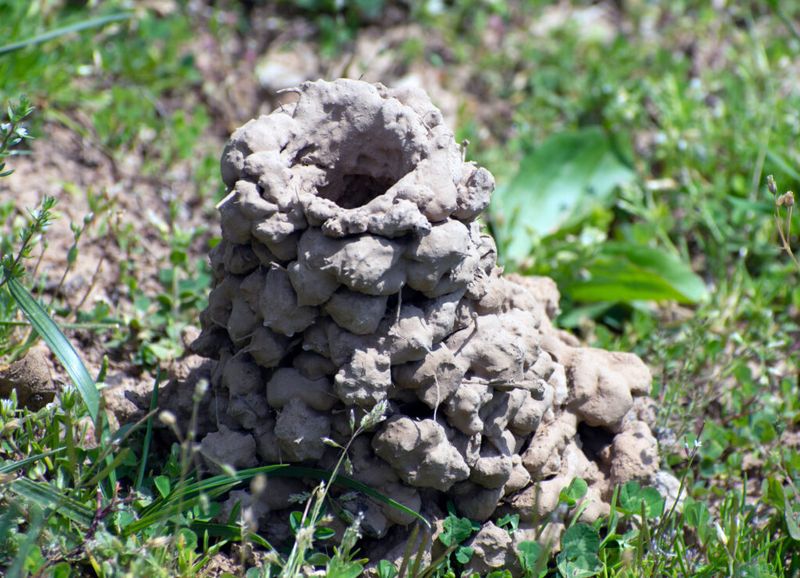
A round opening and a mud mound can point to crayfish
A round opening and a mud mound can point to crayfish
© moundvillepark

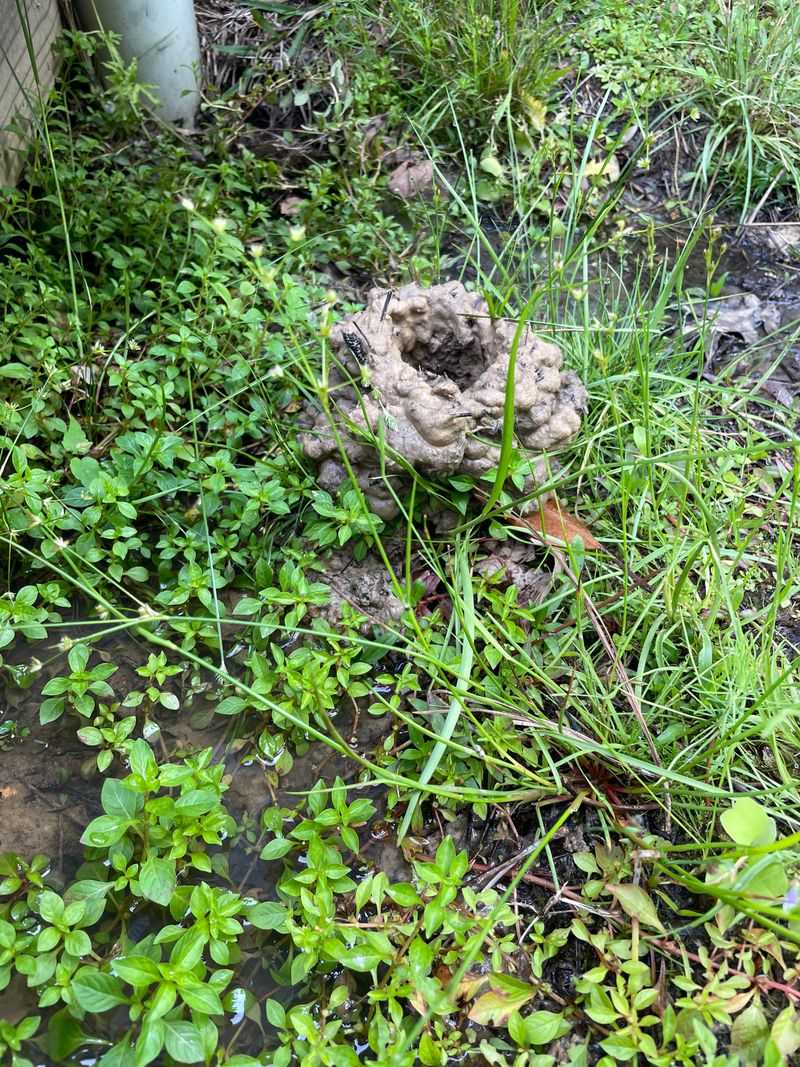
Picture a pile of mud pellets, about the size of a coffee mug at most, stacked around a round hole in soft ground. That is the classic look of a crayfish chimney.

Kentucky Fish and Wildlife notes that the state has seven species considered terrestrial or burrowing crayfish, and it describes the mud chimneys they build.

So when you find a raised mound of dug-out mud around a round opening in soft, damp soil, a crayfish burrow is a reasonable guess. University of Kentucky entomologists explain that crayfish can push the mud they excavate up above the entrance as they dig.

The result is a little tower that can look oddly tidy.

A guess is as far as the mound alone can take you. The sources show that crayfish make these chimneys, but they do not tell us how often a given yard mound belongs to a crayfish.

Treat the clues as a plausible lead rather than proof.

A few extra details can strengthen your hunch. Look at the ground itself: is it spongy, low, or slow to dry after rain?

Check whether the hole is round and fairly smooth, and whether the mud looks like clumped balls or pellets rather than loose, sandy soil. Each answer that fits makes a crayfish a little more believable, though none settles the question.

Wet ground can be a clue, even without nearby open water
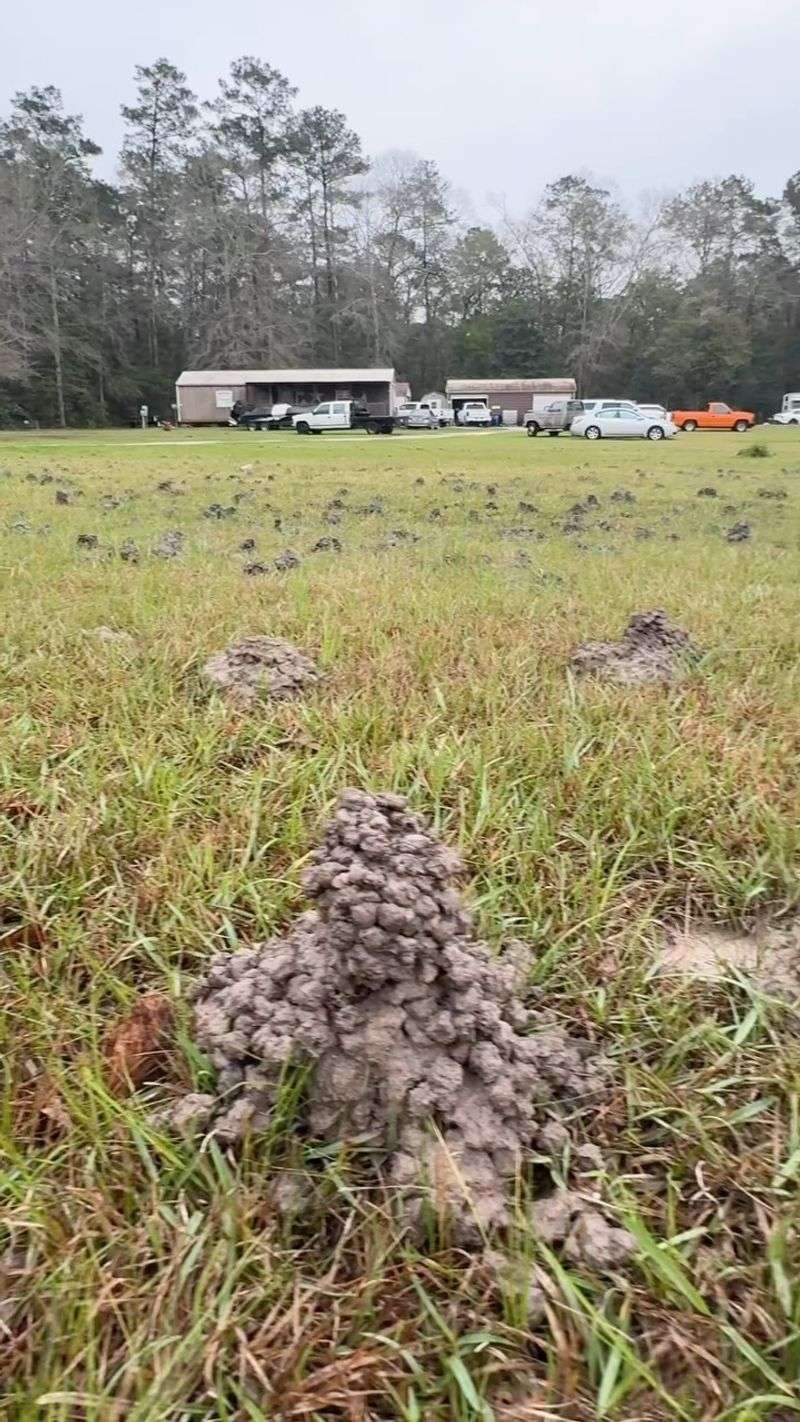
Wet ground can be a clue, even without nearby open water
© crayfishcrawfishcrawdad

Where the mound sits matters. Crayfish burrows turn up in damp, low-lying places such as ditches, wet meadows, pastures, and fields that stay soggy for part of the year.

If your mound is in a spot where water collects or the soil stays squishy, that fits the picture.

Kentucky has several terrestrial or burrowing crayfish, and Kentucky Fish and Wildlife notes that many other crayfish in the state are not in that group.

Here is the surprising part: you do not need a pond or creek nearby. The Army Corps of Engineers wetland manual lists crayfish burrows as something found in wet meadows and pastures, even when no open water is visible.

So a yard with no stream in sight can still hold one.

Burrowing species may dig down toward the water table, which is why the wet soil matters more than a visible shoreline. University of Kentucky describes burrowing crayfish and their ties to groundwater and wet soils.

Think of wet ground as a helpful bit of context. A mound on a dry, sunny, well-drained slope makes a crayfish less likely, and a mound in a low, soggy corner makes it more likely.

Neither guarantees the answer, so keep looking at the hole and mud before you decide.

A simple test is to note when the soil dries out. Poke around the area after a few sunny days.

If it still stays damp while the rest of the lawn is dry, that tells you something about what lives underneath.

How digging can create a mud chimney
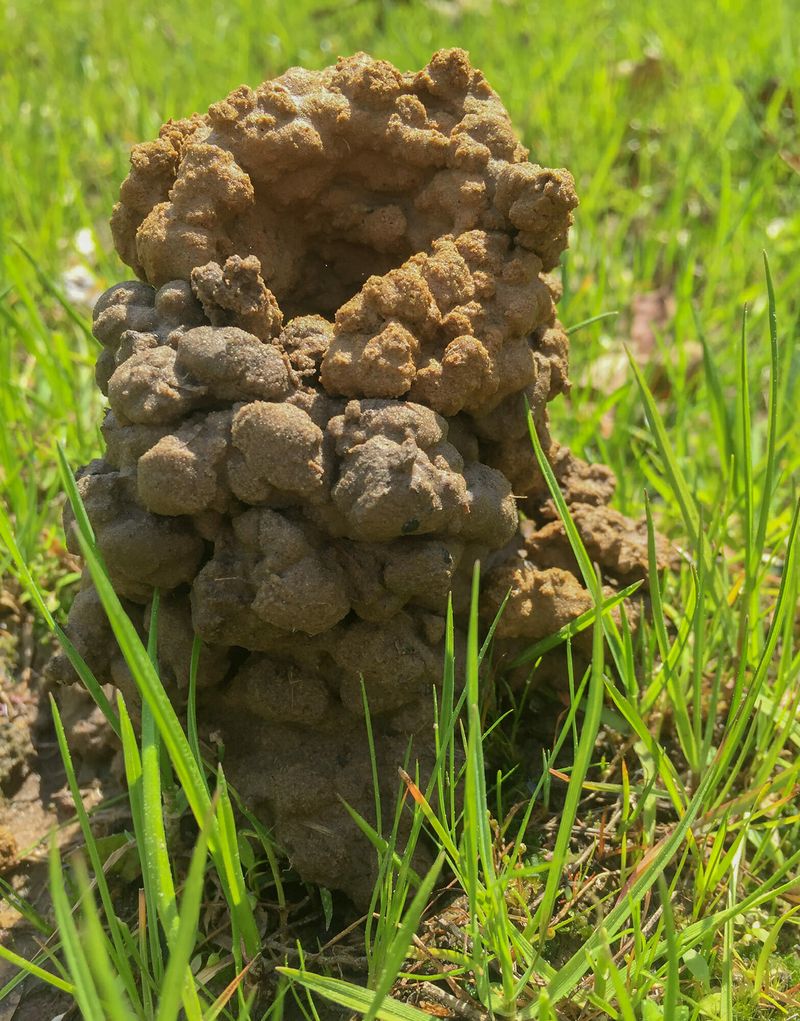
How digging can create a mud chimney
© Encyclopedia of Alabama

Chimneys come from simple housekeeping. A crayfish digs a tunnel, and all that loosened mud has to go somewhere.

Carrying it up and setting it down around the opening builds the mound a little at a time.

University of Kentucky explains that crayfish can push excavated mud above the entrance as they burrow. Over days or weeks, the pile can grow taller and look like a small chimney.

Rain may flatten it, and fresh digging can rebuild it.

For a sense of scale, the Army Corps manual describes crayfish burrow openings up to about 2 inches across, often with chimney-like mud mounds. Treat that as a handy reference point.

Your opening could be smaller, and a size match does not prove anything.

If you want to watch, check the mound on several mornings. A mound that looks fresh, with damp, rounded mud pellets, suggests recent digging.

Old, crumbly, grassed-over piles usually mean the digging stopped a while ago.

A mound cannot identify a species—or settle every case
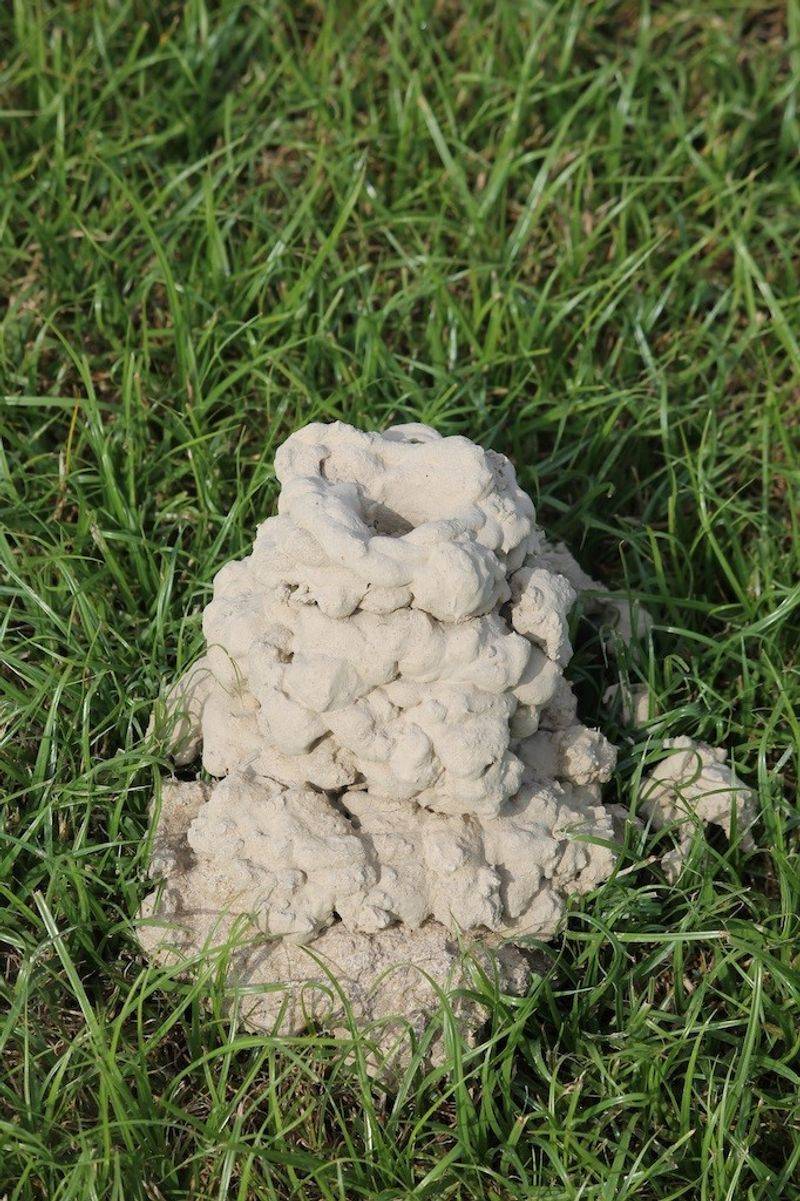
A mound cannot identify a species—or settle every case
© BugSpray.com

Even a perfect-looking chimney leaves big questions open. Kentucky has several terrestrial or burrowing crayfish, and Kentucky Fish and Wildlife notes that many other crayfish in the state are not in that group.

The shape of a chimney does not tell you which species built it, so skip the species guess.

Burrowing is not the same everywhere, either. University of Kentucky describes primary, secondary, and tertiary burrowers, which depend on burrows to different degrees, and a Journal of Crustacean Biology study found that burrow structure differs among four species.

Not every crayfish digs, and those that do dig in different ways.

Then there is the matter of other builders. Mud daubers are wasps that make mud nests, but the Texas Apiary Inspection Service describes nests attached to sheltered surfaces such as eaves, walls, or garages.

The Missouri Department of Conservation offers similar guidance on these wasps.

A hole in open ground with a chimney around it looks different from a mud tube stuck to a wall. Still, some wasps nest in soil, so location and construction both count.

When the clues clash, treat the answer as unsettled.

What homeowners can do about a nuisance mound
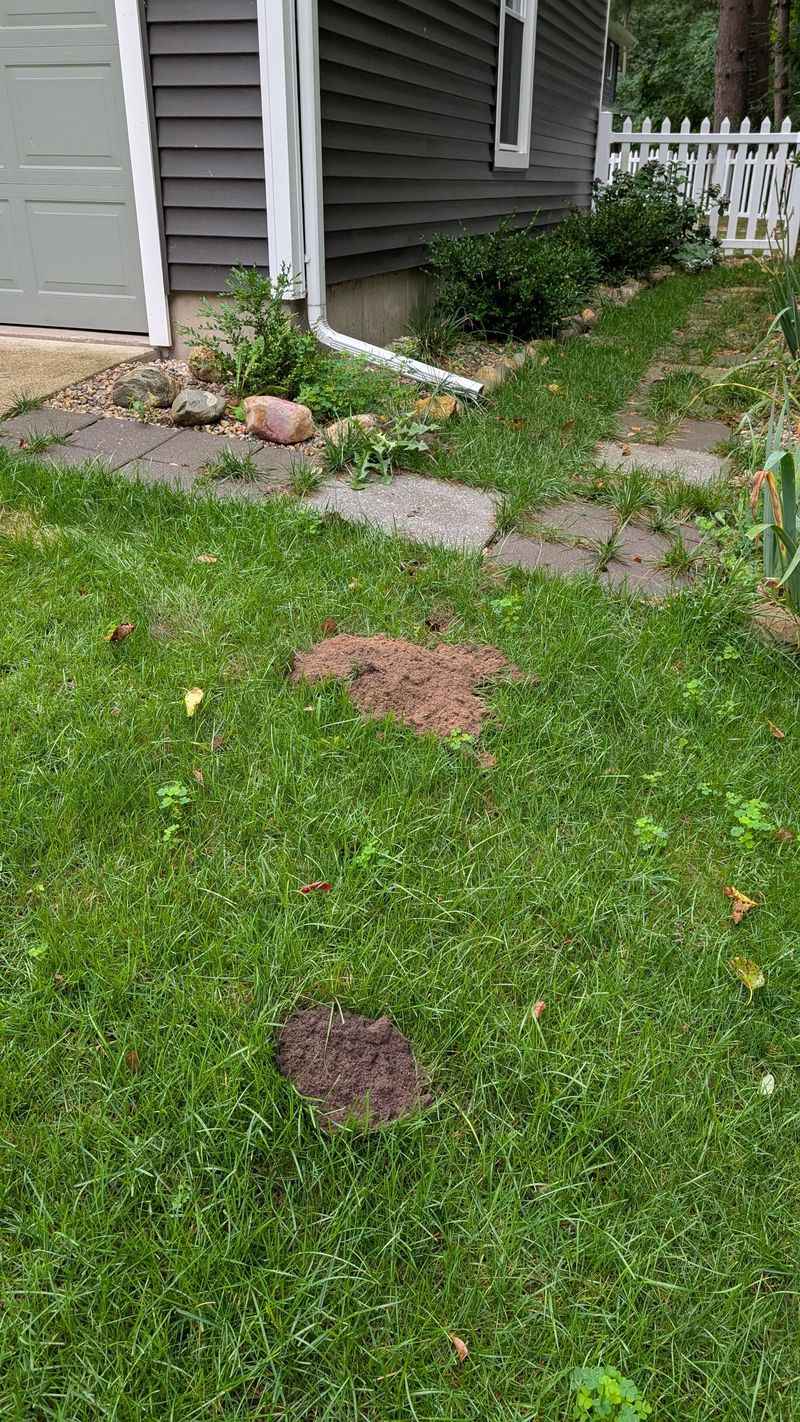
What homeowners can do about a nuisance mound
© Reddit

If the mound only gets in the way of the mower or spoils the look of the lawn, the fix is gentle. You can rake it smooth, or break it up with a garden hose.

NC State Extension guidance on crayfish in turf lists both as options.

The same guidance says turf damage is usually not significant, so there is no need to panic. A few mounds are more of a cosmetic annoyance than a lawn emergency.

Extension advice also generally discourages trying to reduce crayfish populations.

Skip the pesticides. NC State warns that pesticides can move through wet soils and affect organisms that were never the target, and it does not recommend controlling crayfish that way.

For the same reason, do not pour chemicals into the burrow.

New mounds may appear after rain or more digging, so a quick rake now and then is usually enough. If the area stays soggy, mounds may keep coming back.

Living with a few is also fine, since the animals are part of the local wildlife.

Treat the chimney as a clue, not a guarantee
Treat the chimney as a clue, not a guarantee

A round hole, a mound of dug-out mud, and damp ground make a crayfish burrow a fair guess, in line with what Kentucky Fish and Wildlife describes for burrowing species. Appearance alone will not confirm the animal or its species, though.

Notes and photos beat certainty here. Whatever lives below, the mound is a small sign that your yard has soft, wet ground, and University of Kentucky shows how varied crayfish life underground can be.

Share this story
HC

Written by

Hattie Combs

More from Hattie Combs →

About Gardening Latest

Gardening Latest provides in-depth guides to maintaining and enhancing your garden and backyard. Learn how to make the most of the space you have and create a beautiful garden.

More about us →

Latest stories

  • Wisconsin GardeningHere’s What To Do Next If You Spot A Yellow Jacket Nest Near Your Wisconsin Home

    Here’s What To Do Next If You Spot A Yellow Jacket Nest Near Your Wisconsin Home

    44 min ago
  • Iowa GardeningHearing Coyotes Howl Near Your Iowa Home Late at Night? Here’s What It Really Means

    Hearing Coyotes Howl Near Your Iowa Home Late at Night? Here’s What It Really Means

    45 min ago
  • Massachusetts GardeningHearing Scratching in Your Massachusetts Walls at Night? Flying Squirrels Are One Possibility

    Hearing Scratching in Your Massachusetts Walls at Night? Flying Squirrels Are One Possibility

    1 hr ago
  • Delaware GardeningA Virginia Opossum Crossing Your Delaware Yard on a Cold Night Is Generally Normal Wildlife Activity

    A Virginia Opossum Crossing Your Delaware Yard on a Cold Night Is Generally Normal Wildlife Activity

    1 hr ago
  • Kentucky GardeningKentucky’s Northern Short-Tailed Shrew Has a Venomous Bite, and Your Fallen Leaves Make Good Habitat

    Kentucky’s Northern Short-Tailed Shrew Has a Venomous Bite, and Your Fallen Leaves Make Good Habitat

    1 hr ago

Gardening by state

Stories for your state, and the hardiness zone most of it gardens in.

Keep exploring

Read next

All Kentucky Gardening →
Kentucky GardeningKentucky’s Northern Short-Tailed Shrew Has a Venomous Bite, and Your Fallen Leaves Make Good Habitat
Kentucky Gardening

Kentucky’s Northern Short-Tailed Shrew Has a Venomous Bite, and Your Fallen Leaves Make Good Habitat

1 hr ago
Kentucky GardeningFound A Yellow Jacket Nest Near Your Kentucky Home? Here’s What To Do Next
Kentucky Gardening

Found A Yellow Jacket Nest Near Your Kentucky Home? Here’s What To Do Next

6 hr ago
Kentucky GardeningDo This To Your Outdoor Faucets Before A Hard Kentucky Freeze Splits The Pipe Inside Your Wall
Kentucky Gardening

Do This To Your Outdoor Faucets Before A Hard Kentucky Freeze Splits The Pipe Inside Your Wall

Yesterday

More from Kentucky Gardening

  • 7 Harmless Kentucky Critters That Send People Running Because They Look Venomous

    Nov 17
  • Why Kentucky Yuccas Shoot Up Those Giant Flower Stalks and Whether You Should Cut Them Off

    Nov 17
Back to top

Leave a response Cancel

Your email address stays private. Required fields are marked with an asterisk.

Gardening Latest

In-depth guides to maintaining and enhancing your garden and backyard: how to make the most of the space you have, and how to make it beautiful.

  • Facebook
  • X
  • Pinterest
  • YouTube

We may earn a portion of sales from products or services that are purchased through our site as part of our affiliate partnerships with retailers.

Explore

  • About GardeningLatest.com
  • Contact Us
  • Terms and Conditions
  • Privacy
  • Editorial Note:
  • FTC Disclosure

Newsletter

New garden guides and seasonal tips, straight to your inbox.

We’ll email you a link to confirm. Unsubscribe any time.

Almost there! Check your inbox and tap the link to confirm.

© 2026 Gardening Latest. All rights reserved.

Back to top