A buzzing hole in the lawn or a steady stream of wasps near the porch can make your heart jump. Before you grab a spray can, it helps to know what you are really dealing with.
Not every nest near a home has to be removed, but some situations call for expert help. Here is how to sort out which one you have and what to do next.
Foraging wasps do not prove a nest is nearby
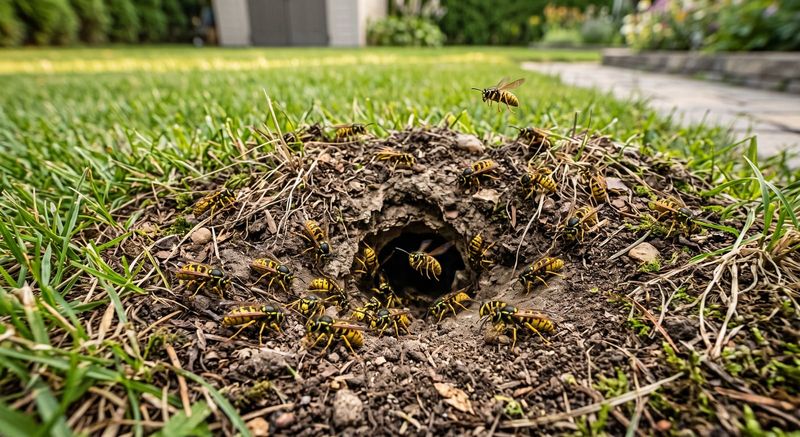
Seeing a few yellowjackets around your yard does not mean a colony lives there. University of Kentucky entomologists explain that foraging workers can travel hundreds of yards from their nest, so the wasp on your soda can may have come from a neighbor’s property or a wooded edge down the road.
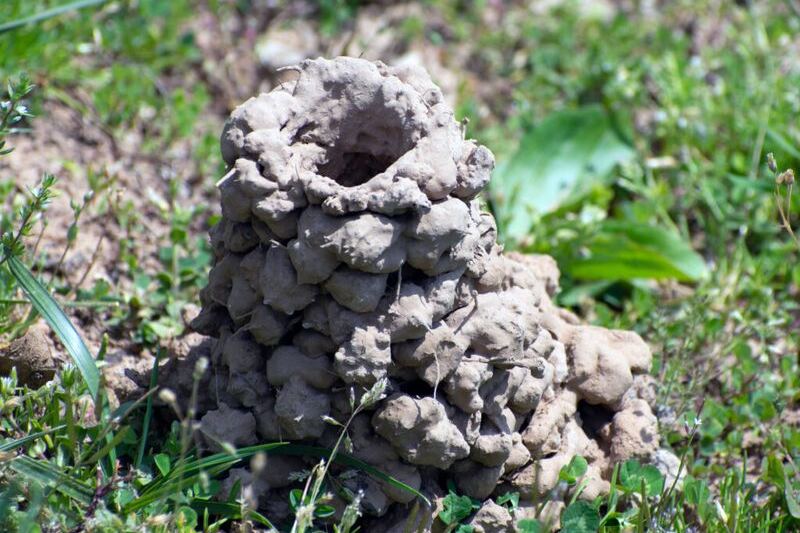
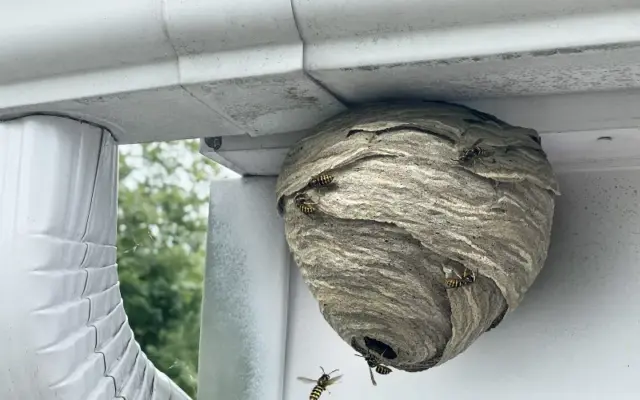
When a nest is present, it is often hidden. Yellowjackets in Kentucky commonly nest underground in old rodent burrows, but they can also settle in wall voids, attics, crawlspaces, hollow logs, and other cavities, as described in the University of Kentucky guide to hive wasps.
One useful clue is traffic. If you watch from a safe distance and see workers flying steadily in and out of one hole or gap, that spot may be the nest entrance.
Watching from afar is fine, but do not walk up to look closer, and never poke at the opening.
Traffic at a hole tells you where insects are going. It does not tell you which insect they are.
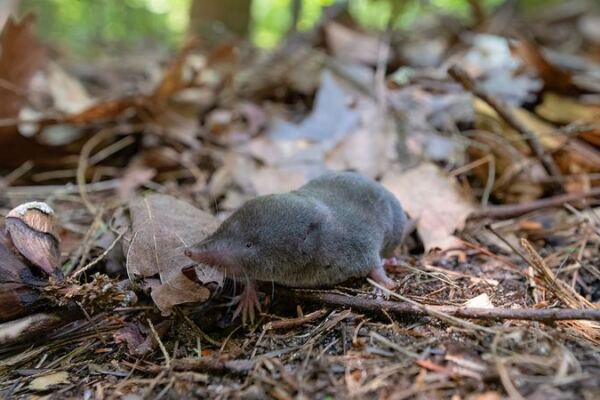
Other black-and-yellow insects and other wasps can look similar, and a ground hole or papery nest alone does not prove the species. Penn State’s page on the yellow-legged hornet is a good reminder that look-alikes exist.
If you are unsure what you are seeing, keep people and pets away and ask your local extension office or a pest professional to help identify it.
Judge the risk by exposure, not distance alone
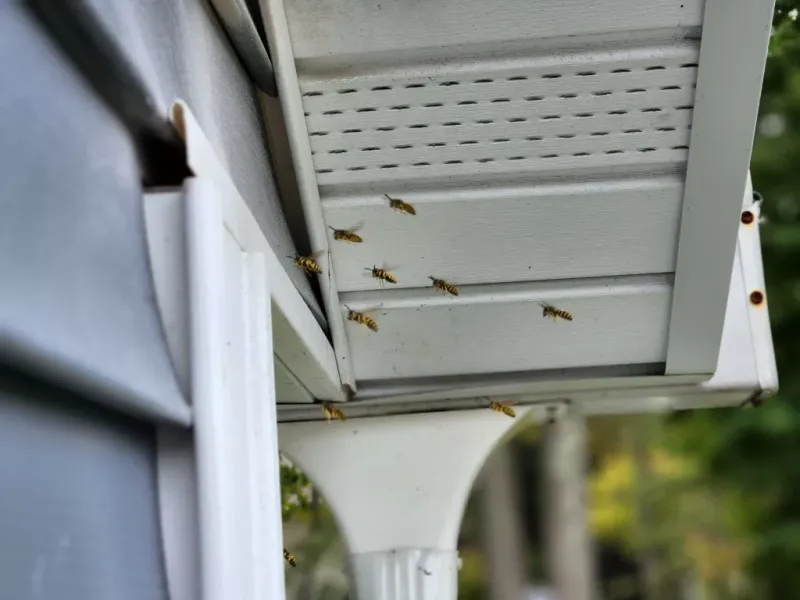
Here is the main test: how likely is anyone to bump into this nest? Distance matters, but only in relation to exposure.
A nest that is merely near a home is different from one that people may accidentally disturb or cannot avoid.
Ask a few plain questions. Can everyone in the household reliably stay away from the entrance?
How close is it to a doorway, a path, or a lawn someone must mow? Is the nest inside a wall, attic, or other part of a structure?
Does anyone nearby have a known sting allergy?
A nest in a far corner of the yard, behind a fence or brush pile, that nobody visits is a very different case from one beside the steps. University of Kentucky notes that yellowjackets defend a nest when it is disturbed, so the risk comes from disturbance, not from the nest simply existing.
Penn State Extension specifically flags nests close to homes for people with known sting sensitivities and nests inside walls or attics for professional treatment.
So an out-of-the-way nest may not need immediate removal. If your answers point toward frequent contact, a structure, or an allergy, treat the situation more seriously.
Keep people and pets clear while you decide
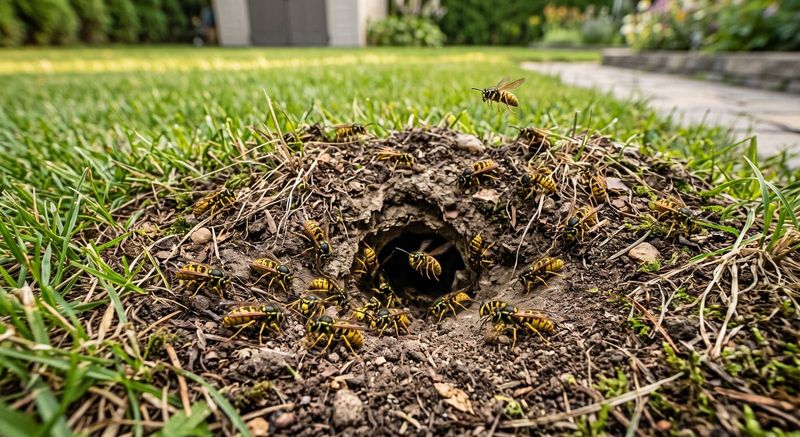
While you sort out the next step, the safest move is simple: stay away. Keep children and pets from the area around the entrance, and do not mow, trim, or play near it.
Marking the area from a distance, such as keeping a gate closed, can help everyone remember.
If a wasp lands on you or buzzes close, resist swatting. Quick swings can provoke it.
Move away calmly and steadily instead.
Food and trash draw yellowjackets in. University of Kentucky guidance points to sanitation as a central way to cut down on encounters.
Cover drinks and food outdoors, check cans before sipping, and keep trash lids tight. Rinse recycling and pick up fallen fruit.
You may notice more wasps in late summer and fall. Colonies grow through the warm months and are near their peak then, so foraging becomes more conspicuous, as noted in the University of Kentucky public health pest management publication.
A worker seen away from the nest is generally less likely to sting unless provoked, so one wasp at the patio is not an emergency. Keep your distance from the nest itself, and use that time to decide on a plan.
When is professional help the safer choice?
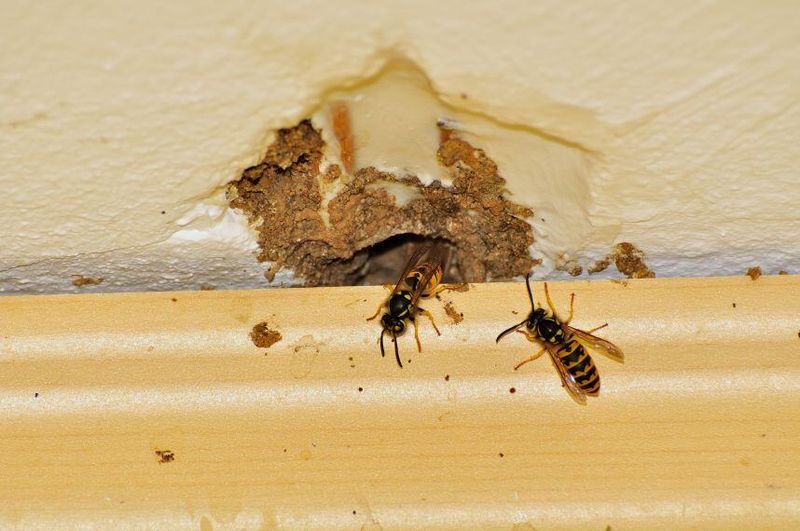
Some situations are better handled by a licensed pest-management professional. Call one if the nest is in a wall, attic, or other building cavity.
Call one if it sits beside a place people must use, such as an entry door, a driveway, or a walkway.
Also call if you cannot keep the area clear, or if anyone nearby has a known sting allergy. In any of these cases, the chance of an accidental run-in is too high to leave to luck.
Difficult access is a big reason. University of Kentucky advises considering a professional when a nest is hard to reach.
Working around a hidden or awkward opening makes it easy to disturb a defensive colony and get stung many times.
Nests in buildings add another problem. Penn State Extension says nests inside walls or attics call for professional treatment, since wasps can end up inside living space if the nest is mishandled.
Professionals have protective gear, training, and products labeled for the job. Until they arrive, keep people and pets away from the entrance and do not try to block or poke it.
DIY shortcuts can make the hazard worse
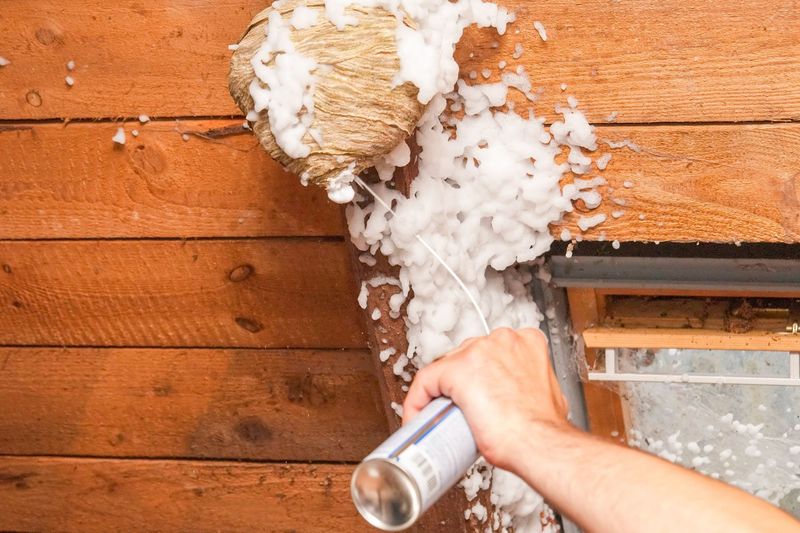
Internet advice for wasp nests can sound confident and still be dangerous. Plugging a hole in a wall is one example.
Penn State warns that yellowjackets may chew through interior walls when their exit is blocked, which can send them into the home.
Fire and gasoline are also bad ideas. Penn State Extension cautions that fire and common fuels risk injury and property damage, and they do not make the job safe.
Another myth is that darkness solves the problem. Colonies are less active at night, but nest defenders can still sting after dark, according to the University of Kentucky.
Walking up with a flashlight can be just as risky as doing it by day.
If you still consider a pesticide, use only a product labeled for that specific use, and follow its label exactly. The EPA states that using a pesticide inconsistently with its label is unlawful.
Labels set restrictions and precautions that differ from one product to the next, so one product’s directions never carry over to another. You can see how specific they are in an EPA-registered product label.
When in doubt, a professional is the safer route.
An out-of-the-way nest may be temporary
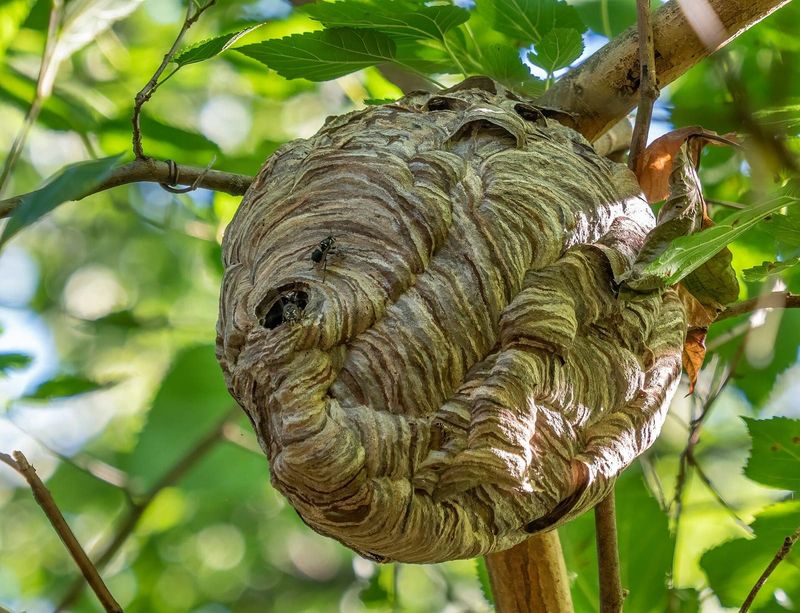
Leaving a nest alone can be reasonable when everyone can reliably avoid it and its location does not create an unacceptable risk. Think of a hole at the far edge of a wooded lot that no one walks near.
Most Kentucky yellowjacket colonies are annual. The colony grows through the warm months, then dies off in late autumn, and University of Kentucky notes that abandoned nests are not reused.
Waiting until winter is an option only if people can avoid the nest until then. It is not a sound default for an active nest in a wall, by an entrance, or in a busy part of the yard.
An empty nest does not guarantee a wasp-free spot, either. New queens start colonies each year, and, as Michigan State University Extension describes, a favorable area can attract a new nest nearby in a later season.
Traps may catch some wasps, but University of Kentucky describes their benefit as marginal, and they will not solve a yellowjacket problem. Avoidance and sanitation remain the practical tools.
Paper-bag decoys are not a proven fix either.
Recognize a serious reaction and get emergency help
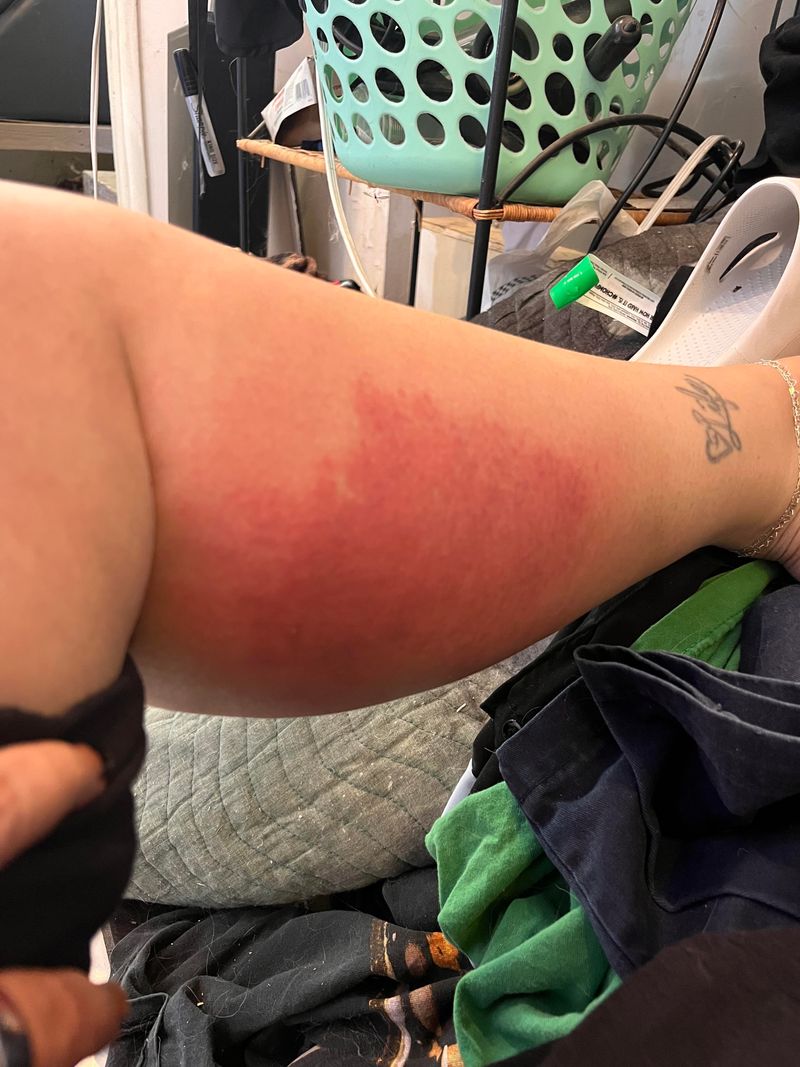
Most stings cause pain, redness, and swelling at the spot. Some people, though, have a serious allergic reaction, and that needs urgent care.
Mayo Clinic’s first-aid guidance for insect stings lists warning signs that call for emergency help. These include trouble breathing, swelling of the face or throat, dizziness or fainting, and hives.
Other signs of a serious reaction can also be a reason to call. If you see any of these after a sting, seek emergency help right away.
Do not wait to see if symptoms pass, and do not try to judge how bad it is yourself. Home care is not a stand-in for urgent treatment.
Move away from the nest first so no one gets stung again, then get help.
Choose the safest next step for your situation
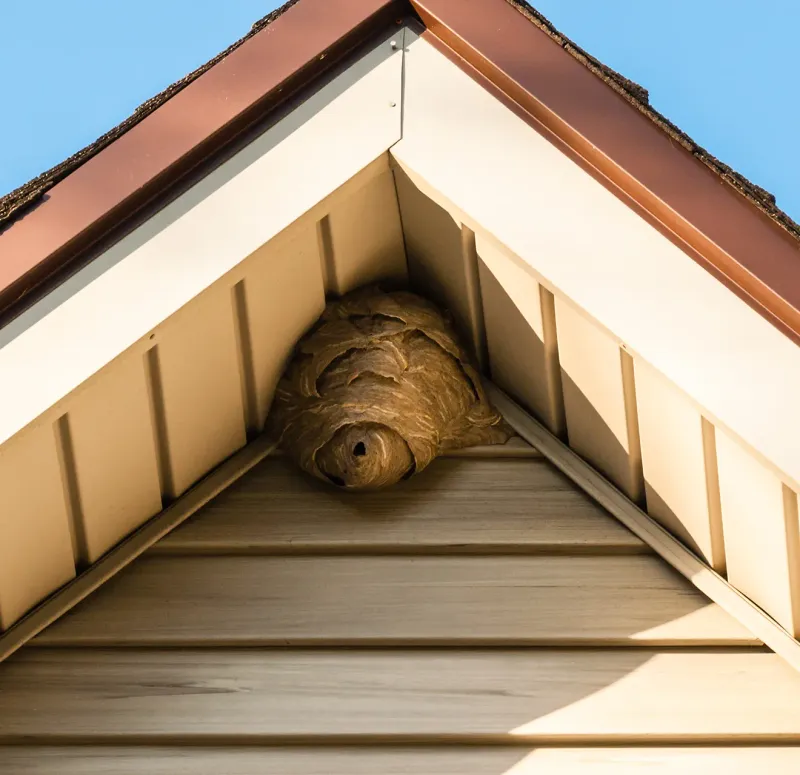
Start by keeping clear. Then ask whether people can truly avoid the nest, and how its location affects exposure, as University of Kentucky advises.
If a wall, a doorway, or a person’s allergy makes avoidance unreliable, bring in a professional, a step Penn State Extension backs for these cases.
A nest is a problem of access, not just of address.
Share this story