Yes, a New York rule can cost you real money if you haul the wrong firewood to your cabin. Untreated wood from outside the state generally can’t come in, and untreated wood from inside the state has a distance limit.
Whether your load is legal depends on a few details, like where the trees grew and what paperwork you carry. A quick check before you load the truck can save you a fine and a ruined trip.
New York’s rule covers more than a stack of split logs
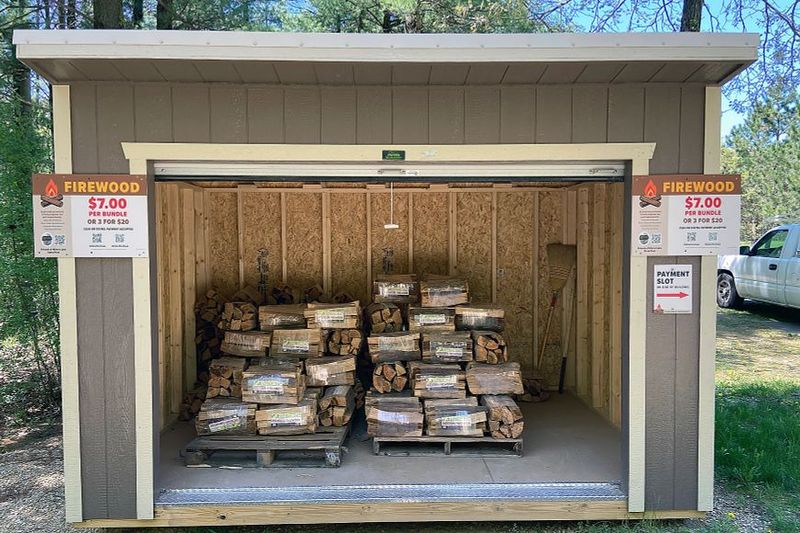
Many people picture firewood as neat, split logs from a store. New York’s rule is wider than that.
According to NYSDEC firewood guidance, it covers wood of any species, cut or uncut, split or unsplit, if it is meant to be used as fuel. A pile of fallen branches you plan to burn can count.
The rule has two basic restrictions. Untreated firewood from outside New York generally cannot be brought into the state.
Untreated firewood grown in New York is limited to moving no more than 50 miles in a straight line from its source or origin.
The reason is simple. Insects and diseases can hide in wood, and a load driven across the state or over a border can carry them to forests that have no defense.
That does not mean every load holds pests. It means the state would rather stop the risk before it spreads than try to fix it afterward.
The rule is also statewide and not limited to winter. Winter just happens to be when many cabin owners fill a truck bed and head north.
The same limits apply in July as in January.
Not every load is illegal, either. Whether yours is fine depends on treatment, origin or source, distance, paperwork, and sometimes a stricter local quarantine.
The next step is figuring out the part that trips people up most: where the wood actually came from.
Where did the wood actually grow?
The distance rule is tied to where the wood came from, not where you bought it. The relevant point is the wood’s source or origin, which is where the trees were grown.
The store, the seller’s yard, your cabin, and your driving route do not decide the answer on their own.
Fifty miles also means a straight line, as defined in the state regulation text. Road miles do not count.
Picture a ruler across a map rather than a trip on your odometer.
For commercially sourced wood, a producer may designate a source within 50 miles of where the wood was grown. That source can differ from the store or seller.
A seller’s address does not qualify a load automatically, so look for a label or receipt that names the source.
There is one narrow exception. Untreated wood from your own property can be used on that same property.
It is not a general allowance to haul wood you cut at home to a separate cabin, even if you own both places.
To check an untreated in-state load, find where the trees grew, measure the straight-line distance to your cabin, and confirm it is within 50 miles. If you cannot say where it grew, treat that as a warning sign.
Per NYSDEC, the origin is the key detail.
Untreated wood needs proof of its origin
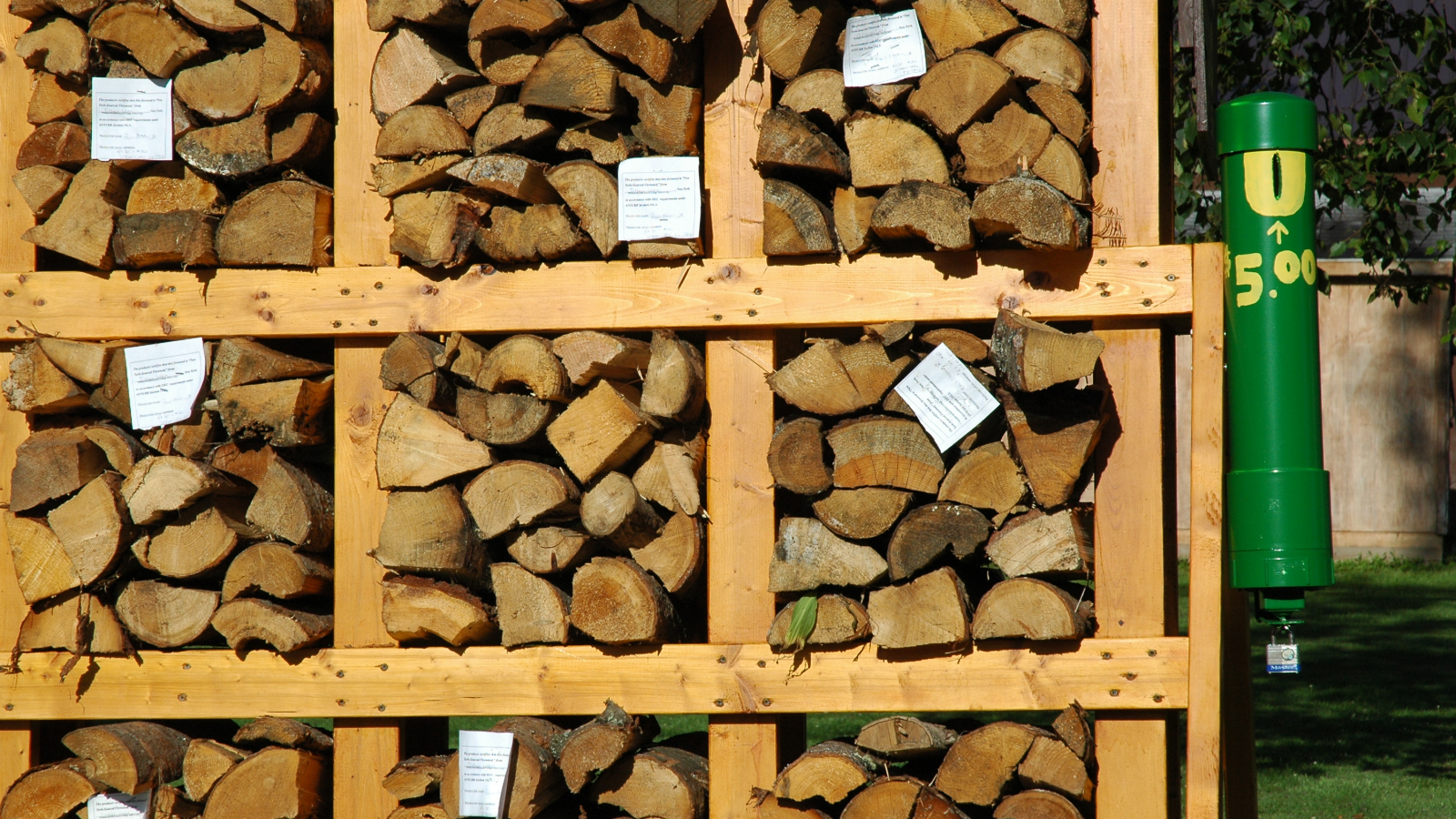
If your wood is untreated, paperwork is how you show where it came from. Buyers should keep a receipt or label that identifies the wood’s source.
Think of it as a ticket that travels with the load.
If you cut the wood yourself for personal use, you need more. NYSDEC says you must complete and carry its Self-Issued Certificate of Origin.
The form identifies the origin as where the trees were grown, so fill it out before you leave, not at a gas station on the way.
Timing matters. Per NYSDEC guidance, the documentation is required while the wood is in transit.
You may discard it after arrival, unless you plan to move the wood onward to other sites. In that case, keep it.
You may hear that some places are exempt from documentation. The regulation does have documentation exemptions for firewood already on certain non-state properties where it will be burned.
Those exemptions concern paperwork at the destination. They do not allow you to bring otherwise prohibited wood into New York or move it past the distance limit.
Keep treatment documents separate in your mind. Treated wood follows a different path, covered next.
For untreated wood, the simple test is whether an officer could look at your papers and see where the trees grew.
Qualifying heat treatment can allow longer trips

Treatment is the main way firewood can travel farther than the untreated limit. To qualify, wood must reach at least 160°F (71°C) at its core for 75 minutes.
With the required documentation, the regulation allows treated wood to move beyond the untreated-wood limit.
The words core and wood are the important part. The standard is measured inside the wood, not by the temperature of the kiln or oven.
A hot kiln does not prove the center of each log got hot enough for long enough.
Documentation is how you prove it. Look for the NY-approved treated-firewood or pest-free label on the package.
An accepted phytosanitary or plant-health certificate can also serve as proof.
Be skeptical of marketing words. According to NYSDEC, seasoning is not an acceptable treatment.
Kiln-drying counts only if it meets the specified treatment standard. A bag that says seasoned, aged, or kiln-dried but has no proof of the required treatment does not establish eligibility.
A practical example: you find a bundle at a roadside stand with a handwritten sign saying kiln-dried. Without an approved label or certificate, treat it as untreated and apply the origin and distance rules instead.
If you’re bringing wood from another state, treated and documented wood is the path to take.
What a firewood violation can cost
The penalties are spelled out by NYSDEC. According to its firewood page, violations are subject to a $250 fine, a $100 civil penalty, and up to 15 days in jail.
These are separate items, so they should not be rolled into one $350 fine.
The wood itself is at risk too. Officers may order it returned, confiscated, or destroyed.
That means a load you paid for or spent a weekend cutting could be lost on the spot.
These are potential consequences. They do not mean every violation brings every penalty.
Still, the range is wide enough that a guess about your load is a poor plan.
The best way to stay clear of all of it is cheap and quick. Check where the wood grew, whether it is untreated or properly treated, and whether your paperwork matches.
Do that in the driveway, before the first log goes into the truck.
Buying near the cabin lowers the guesswork
For most cabin owners, the easiest low-risk choice is to buy firewood close to the cabin. Then check that the receipt or label identifies the wood’s source.
That keeps the origin short and the paperwork simple, and it lines up with NYSDEC camping guidance, which also covers firewood rules.
If your wood is coming from another state, the rules are stricter. Confirm that it is treated to the required standard and properly documented before you cross into New York.
Being within 50 miles of your cabin does not make untreated out-of-state wood acceptable, because the general rule bars importing it.
Quarantines add another layer. Pest-specific quarantines can be stricter than the general firewood rule, and NYSDEC says the more restrictive rule applies.
Check current requirements for your route and destination before you go.
One documented example is the Asian longhorned beetle. New York Agriculture and Markets reports an active quarantine in Central Long Island.
It is an example of a local, stricter rule, not a statewide restriction.
So the practical plan is short. Buy local when you can, read the label, and only haul from elsewhere when treatment and paperwork are clear.
Check the load before you leave
Run through four quick questions before departure. Where did the wood grow, or what source is designated on the label?
Is it untreated or properly treated with proof? If untreated, is it within the 50-mile straight-line limit and not from outside New York?
Do you have the receipt, label, certificate, or treatment documentation in the vehicle?
Then check for any stricter quarantine along your route and at your destination. NYSDEC’s firewood page is a good starting point.
A warm cabin is worth a few minutes of planning. The best fire is the one nobody questions.
Share this story