
A Fast, Long-Legged Bug in Your Maryland Bathroom? It May Be a House Centipede, and Human Envenomation Is Rare
You flip on the bathroom light, and something grayish with a blur of legs shoots across the floor. It can look startling, but a quick look at the facts can calm things down.
A fast, long-legged visitor may be a house centipede, an animal that eats other small creatures in your home. Knowing what it is, how risky it really is, and what to do next can save you a lot of worry.
Could that blur be a house centipede?
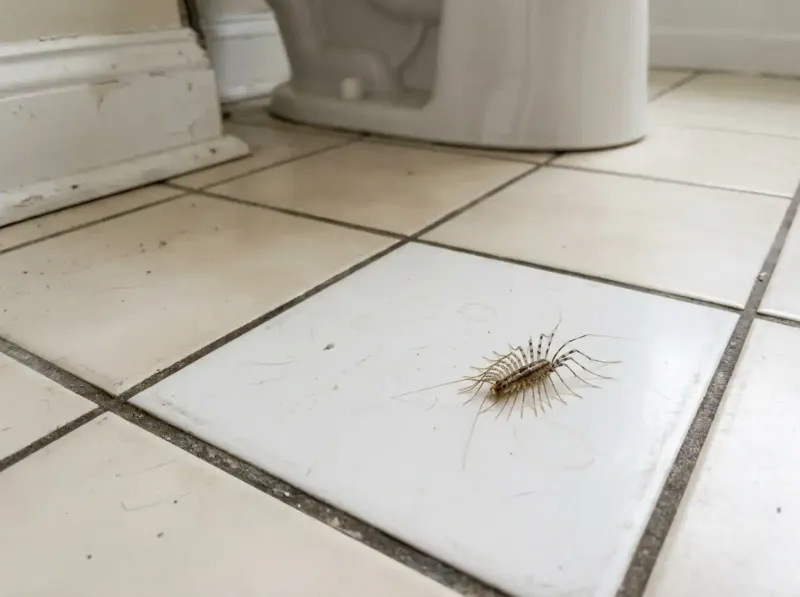
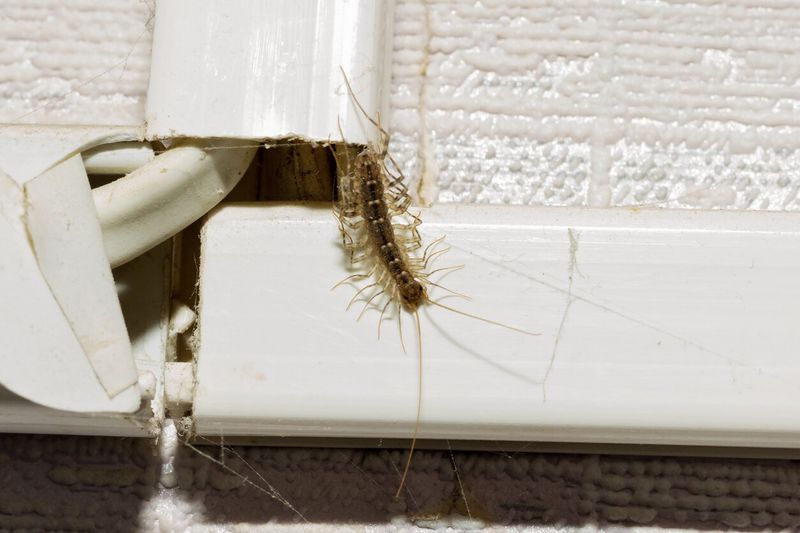
Picture a body about an inch long, maybe a bit more, wearing a set of legs that seem far too big for it. That is the usual look of a house centipede.
Adults are grayish or yellowish and have 15 pairs of long, striped legs, and those legs make the animal appear much larger than its body really is, according to Penn State Extension.
Speed is another clue. A house centipede tends to dart in short bursts, then freeze, which is why people often describe it as a blur.
Long antennae at the front and a pair of trailing appendages at the back add to the spidery, unsettling look.
Still, a fast creature on a bathroom floor is not proof of its identity. University of Maryland Extension notes that house centipedes turn up in bathrooms, but that does not mean every bathroom visitor is one.
Silverfish, other centipedes, and similar crawlers can cause confusion.
If you can, count the legs or snap a clear photo from a safe distance. Treat your guess as a likely match until the animal has been examined or clearly pictured.
It can deliver venom, but people are rarely envenomated
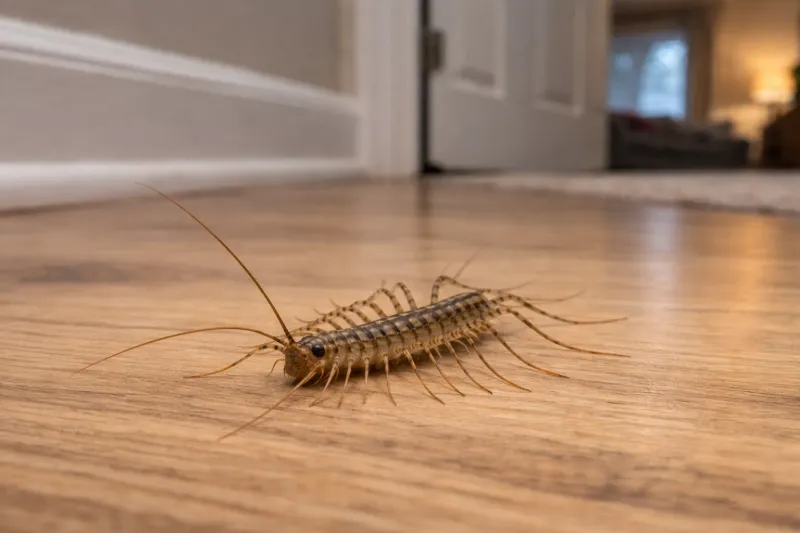
“Venomous” is a correct word for this animal. A house centipede has modified front legs that deliver venom, which it uses to subdue prey and to defend itself, as described by the Connecticut Agricultural Experiment Station.
That fact can sound alarming, yet the real-world picture is much calmer. The same source says human envenomation is very rare and tied to rough handling.
The animal is shy, and it would rather run than confront anything its own size or larger.
When it does happen, the usual result is temporary, localized pain. MedlinePlus says a house centipede bite is usually not dangerous, though it also notes that some centipede bites can hurt and allergic reactions are possible.
Be careful about stories that involve large tropical centipedes. Those species are a different matter, and their effects should not be assumed for the small house centipede in your bathroom.
The practical rule is simple: do not pick one up. Looking is safe, and handling is where trouble starts.
A predator, not a guaranteed pest solution
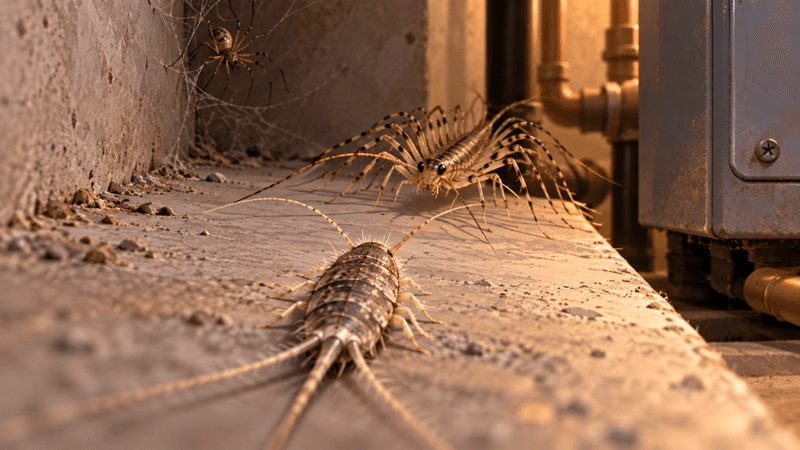
Most of a house centipede’s day is spent hunting. Its menu includes insects, spiders, and other small arthropods, and some of those are pests people do not want around.
The Connecticut Agricultural Experiment Station adds that house centipedes do not damage household goods.
That is the creepy-yet-helpful twist. An occasional centipede may quietly remove a few bugs you never noticed.
But helpful is not the same as dependable. Nothing in the sources measures how much pest control one centipede actually provides, so it would be a mistake to count on it.
A single hunter will not clear out a real problem with ants, roaches, or other pests.
If you are seeing lots of bugs, the better move is to find where they come from and fix that. University of Maryland Extension describes centipedes as predators that feed on household arthropods, which is a bonus, not a plan.
Think of it as a side effect of sharing space with a small wild animal. It is a perk if you can live with it, and no reason to invite one in.
A tub sighting does not prove it came through the drain
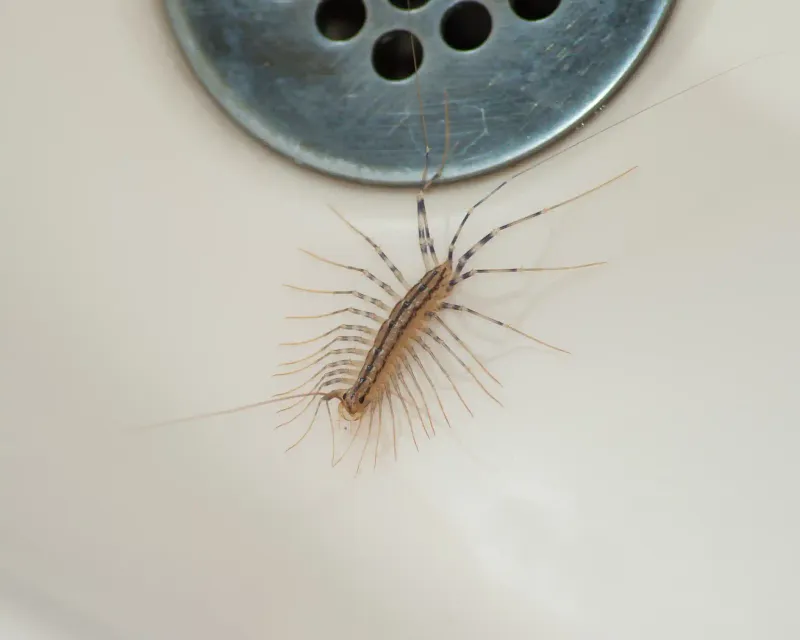
Nothing sparks a shriek like a long-legged creature in the bathtub. The natural guess is that it crawled up the pipes, but that story does not hold up.
Extension experts describe a simpler explanation, and it is a bit sad for the centipede.
A tub or sink has slick, steep sides. A centipede wandering along the floor or wall can tumble in, then find it cannot climb back out.
University of Wisconsin Extension explains that centipedes can become trapped in smooth-sided fixtures.
Bathrooms are also attractive because they are damp, and Iowa State University Extension points out that bugs often end up in tubs and sinks by falling in.
So where the animal is found says little about how it got into the room. It may have slipped in under a door, through a gap near a pipe, or from a nearby room.
Seeing it in the basin only tells you where it got stuck.
Leave it alone or move it outdoors
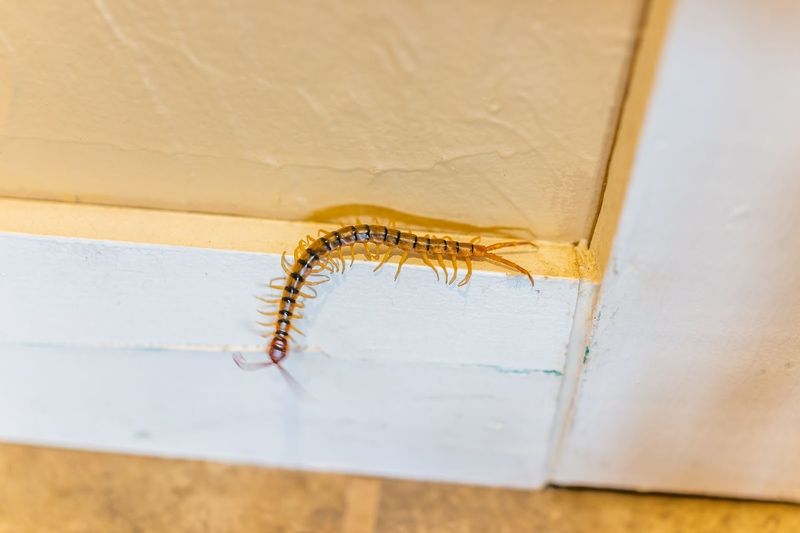
You have two reasonable choices, and neither involves a fight. If you can tolerate it, an occasional centipede generally does not need any control.
University of Maryland Extension says as much.
If you would rather it not share your space, the same source suggests escorting it outside. You can do that without touching it.
Lay a wide cup or a jar over it, slide a stiff card underneath, and carry it to a door or a shady spot in the yard.
Work calmly, since quick movements make it bolt. Keep your fingers clear of the animal at all times, because rough handling is what leads to envenomation, as MedlinePlus guidance on centipede bites reflects.
There is no need to spray pesticides for one visitor. Whether you coexist for an evening or send it outside, both are fine.
Neither one asks you to adopt it as a houseguest.
Repeated sightings call for an indoor check
Seeing a centipede once is a moment. Seeing them again and again is a message.
The sensible response is to look around your home, not to assume something terrible is going on. One or a few sightings do not prove an infestation, and there is no magic number that says when to act.
Start with moisture. The Connecticut Agricultural Experiment Station suggests reducing excess dampness, so check for leaks under sinks, around tubs, and in basements.
Fix drips and improve airflow where air feels heavy.
Next, seal cracks and other entry points around doors, pipes, and foundations. Less access means fewer wanderers.
Then think about food. Centipedes follow prey, so frequent sightings may hint at other insects living nearby.
Penn State Extension notes that large numbers can point to prey or damp conditions. Sticky traps placed along walls can show what is actually there, a tip also found in UC Statewide IPM Program guidance.
Routine pesticide spraying is not the answer. Fixing the conditions that attract them works better.
If one envenomates you, take these steps

Most people will never need this section. If a house centipede does deliver a bite or sting, though, the response is simple and calm.
The usual effect is brief, local pain, not a medical emergency.
First, wash the area with soap and water. Next, put ice on it, wrapped in a cloth or towel, and apply it in intervals rather than leaving it on continuously.
These steps come from MedlinePlus.
You can also call Poison Help at 1-800-222-1222 for guidance. The line is a good place to ask about your specific situation, especially if you are unsure how you are reacting.
Seek emergency help right away for signs of a severe allergic reaction, such as trouble breathing or throat swelling. Those symptoms are rare, but they need immediate care.
A centipede that is left alone seldom makes any of this necessary.