
A Texas Native for Fall Color: Flameleaf Sumac Can Turn Red, Orange or Yellow
Fall color in Texas can be hard to find, and many yards go plain and brown before winter. Prairie flameleaf sumac is a native plant that may bring bright red, orange, or yellow leaves to the scene.
It is not a perfect fit for every yard, and its color changes from year to year. Here is how to tell whether it belongs in yours.
Prairie flameleaf sumac offers a vivid fall-color option
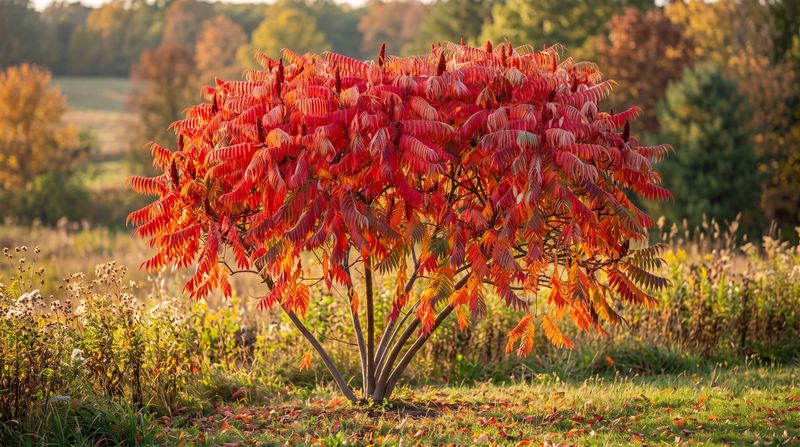
Picture a native shrub that quietly blends in all summer, then turns showy when the weather cools. That is prairie flameleaf sumac (Rhus lanceolata), a Texas native small tree or large shrub with long compound leaves made of many narrow leaflets.
The leaves can turn red, orange, or yellow in fall. The Texas A&M Tree Selector describes its fall color as reliable and its foliage as bright red, and it lists the plant as a landscape option.
That makes it a strong candidate for a yard accent, though not a promise of one uniform color.
Do not mix up its two seasonal features. The red fall foliage is one thing, and the plant’s clusters of red fruit are another.
Texas A&M Forest Service tree identification notes describe the species and its fruit, so you can tell the two apart when you look at a plant in person.
Think of flameleaf sumac as a possible specimen, a plant that can draw the eye when it does well. One shrub may glow scarlet while another a few miles away leans orange or gold.
If you like that range of color and have the space, it deserves a place on your short list.
The rest of this article covers the tradeoffs: timing, size, regional fit, and spreading habit. Those details decide whether this sumac becomes the standout of your block or a poor match for your lot.
Color and timing vary from year to year
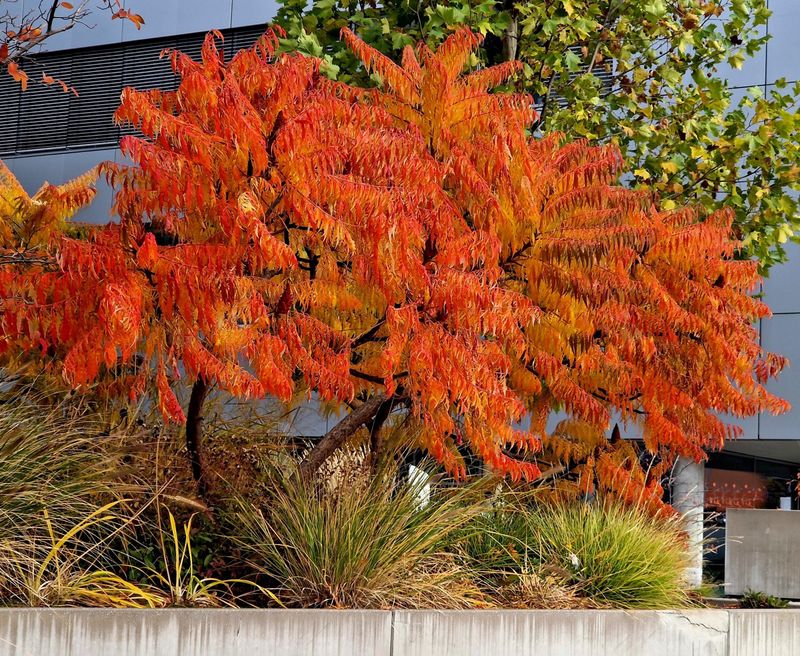
The original promise of fiery red after everything else fades is too tidy. Sources support fall color for this plant, but not a fixed order in which it turns after other trees finish.
Color can land anywhere from red to orange to yellow.
Weather plays a big role. Texas A&M Forest Service explains that drought, heat, early freezes, and plant health can all affect both the timing and the quality of fall color.
A dry, stressed year can look very different from a mild, steady one.
You may see a late-October-to-mid-November window mentioned for fall color. The Native Plant Society of Texas gives that as general guidance for North Texas trees overall.
It is not a forecast for flameleaf sumac, and it does not apply to the whole state.
The best approach is to treat the plant as a possible red show rather than a sure thing. Texas A&M’s tree selector lists bright red foliage, so red is a real possibility.
Still, the safest way to know is to watch sumacs in your own area for a season or two.
A neighborhood walk in November tells you more than any calendar. Note which shrubs have turned, what colors they chose, and how that matched the weather that year.
Know its scale and regional fit
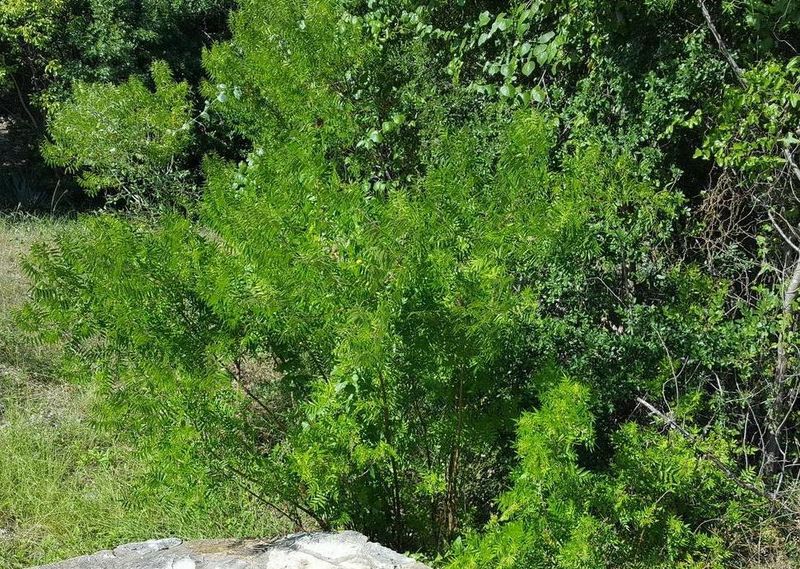
Size is where many buyers get surprised. Flameleaf sumac is usually a small tree or large shrub, not a shade tree.
The City of Austin plant guide lists it at roughly 12 feet or taller with a potential spread of 20 feet or more.
That spread matters as much as the height. Texas A&M Forest Service describes a shrub or small tree up to about 20 feet.
In practice it often grows with several stems, and it can form a thicket instead of a single clean trunk.
Range is the other half of the question. Austin’s guide lists it as native to the Blackland Prairie and Edwards Plateau.
The Forest Service describes it in Central Texas, from the Balcones Escarpment north and west toward the Trans-Pecos.
That does not make it equally right everywhere in Texas. If you live in East Texas, along the coast, or far from those regions, check with your county Extension office or a local native plant nursery before buying.
It is a poor pick if you want broad shade over a patio. It is also a poor pick for a narrow bed or a tight strip beside a fence.
Choose it only if you have open space and want a loose, natural shape.
Choose a suitable site and plant for the conditions
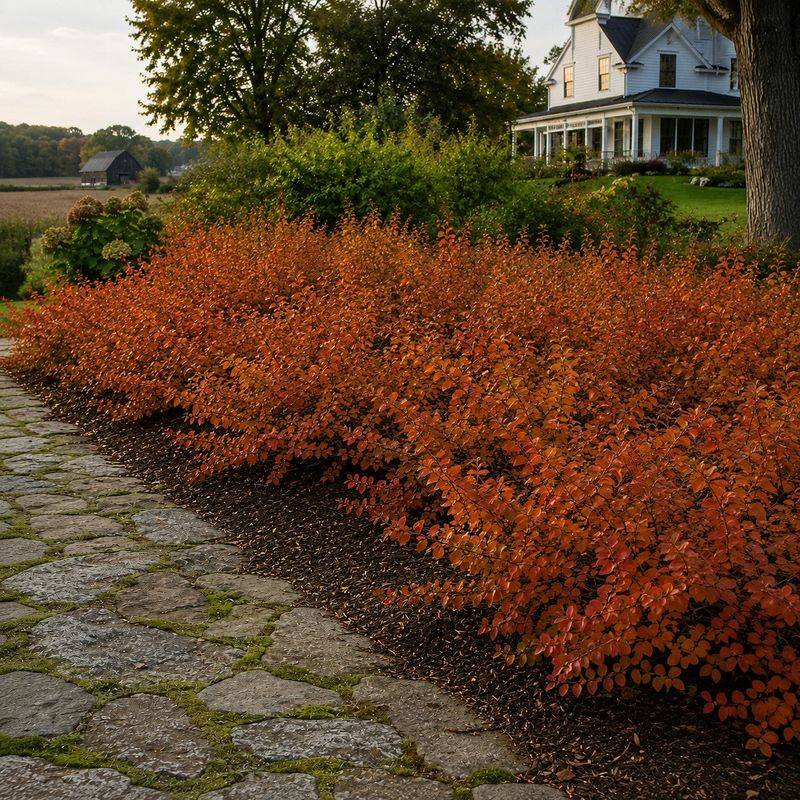
This plant likes tough spots. Texas planting guides say it does well in sun or part shade, tolerates drought, and handles alkaline soils.
The Texas A&M Tree Selector backs up these traits, which suit many caliche and limestone yards.
Austin’s plant guide adds that water needs are low once the plant is established. That makes it a fit for a yard where you would rather not run a sprinkler for a single shrub.
Leave room. Mark out a space wide enough for the plant to spread, keeping it away from walkways, foundations, and neighboring property lines.
A spot that looks empty now may be full in a few years.
For the planting itself, the advice below is general tree-planting guidance, not sumac-specific instructions. Texas A&M AgriLife Extension recommends a hole no deeper than the root ball, and watering after planting.
Skip a rigid watering calendar for the weeks that follow. Check the soil with your finger, and water more when it is dry and less when it is moist.
Rain, heat, and soil type all change what a young plant needs.
After that first stretch, let the plant’s drought tolerance do its job. Overwatering is a bigger risk than neglect for a native shrub that evolved on dry hills.
Plan for its spreading habit
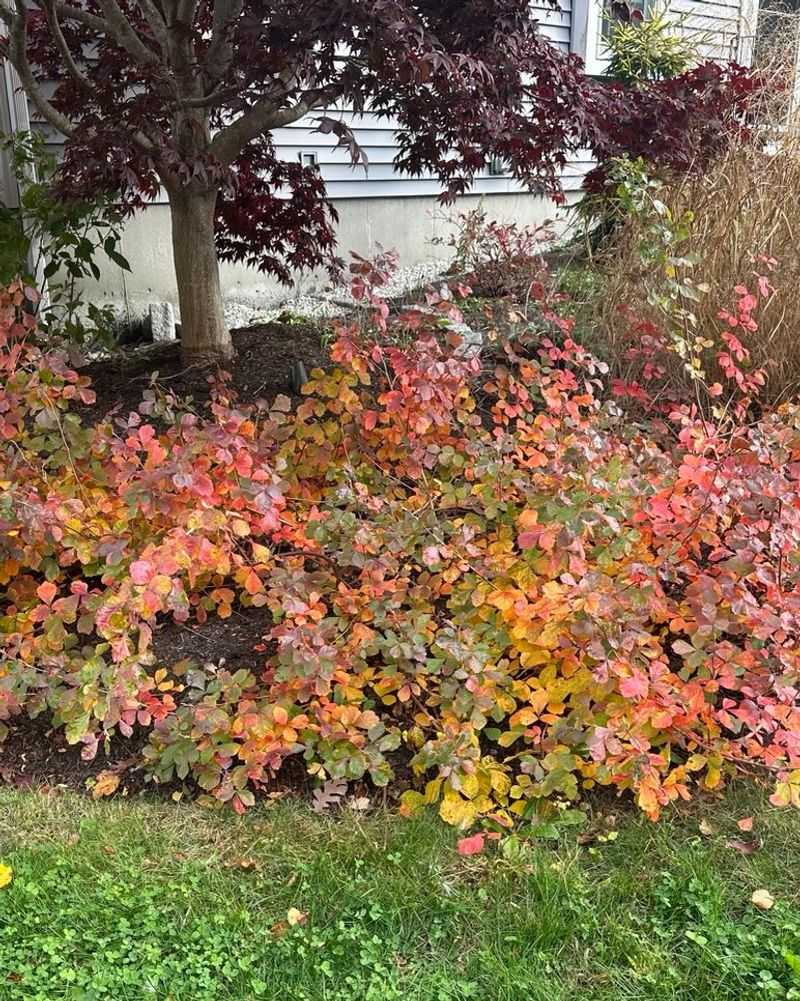
Spreading is part of this plant’s personality. Root sprouts, also called suckers, can pop up around the base and some distance away.
Texas A&M’s tree selector notes this tendency, so plan for it before you plant.
If you want a single-trunk tree shape, expect to cut sprouts back on a regular basis. Mowing around the plant helps, and pruning new shoots at the base keeps the form tidy.
Ignore them, and the plant may widen into a thicket.
Some yards suit that look well. A back corner, a fence line with open ground, or the edge of a larger lot can let it spread without trouble.
A small front lawn with a crisp border is a harder match.
The plant also has a place in ornamental use. The City of Austin plant guide supports its use in landscapes, noting its broad potential spread of 20 feet or more.
So the question is simple. Do you want a specimen given room to roam, or a plant that stays neatly in one spot?
Flameleaf sumac fits the first and rarely the second.
Flameleaf sumac is not poison sumac
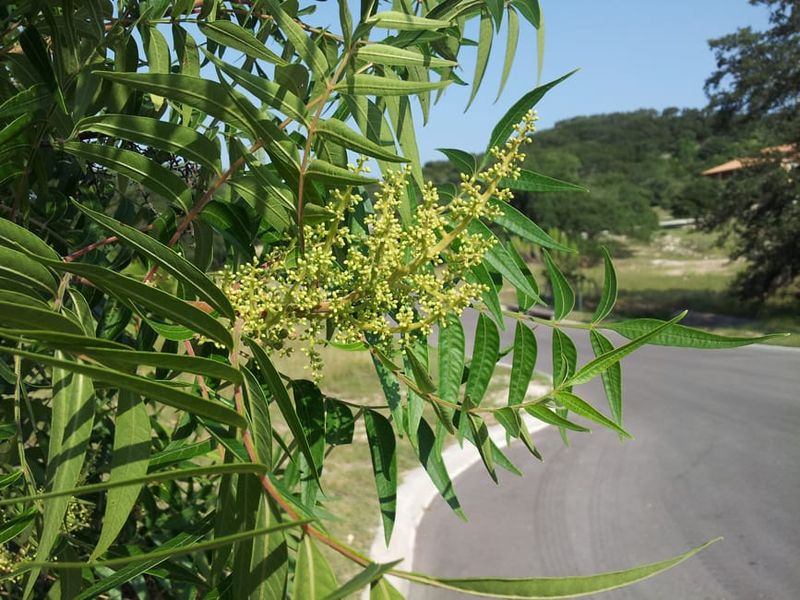
The word sumac causes worry for good reason. Poison sumac is a different plant with a different scientific name, Toxicodendron vernix.
Flameleaf sumac is Rhus lanceolata, and the two are not the same species.
Poison Control identifies poison sumac as Toxicodendron vernix and describes the skin reactions it can cause. That warning belongs to poison sumac, not to the native shrub in this article.
Fixing the name does not mean anyone can handle the plant without a thought. No one can promise it will never bother any person, so wear gloves if you are sensitive and wash up after heavy pruning.
The better habit is to identify before you touch. The Texas A&M Forest Service tree page for prairie sumac is a good place to compare leaves and growth form.
If you are unsure about a plant already in your yard, ask a nursery or Extension office to confirm it.
Consider Texas red oak if you want a larger tree
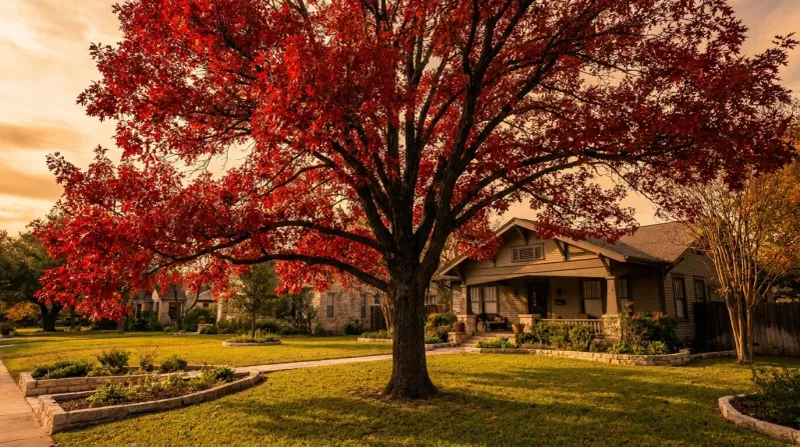
Some yards simply need more tree. If you want shade and a more traditional shape, Texas red oak (Quercus buckleyi) is a supported alternative.
The Texas A&M Tree Selector describes its fall color as brilliant red.
It is a true tree rather than a spreading shrub, so it fits lots where a large canopy makes sense. It also avoids the thicket habit that comes with flameleaf sumac.
There is a serious catch. Texas A&M Forest Service flags oak wilt as a major concern for this species.
Oak wilt is a disease that can kill oaks, so this is not a risk-free substitute.
Before planting one, learn about oak wilt in your area and ask a certified arborist or Extension office how to reduce the risk. The same care applies to pruning, since timing and wound care matter for oaks.
Flameleaf sumac stays the better match for small, dry, open spaces. Texas red oak is for owners with room overhead and a willingness to watch for disease.
Choose the accent, not a guaranteed autumn script
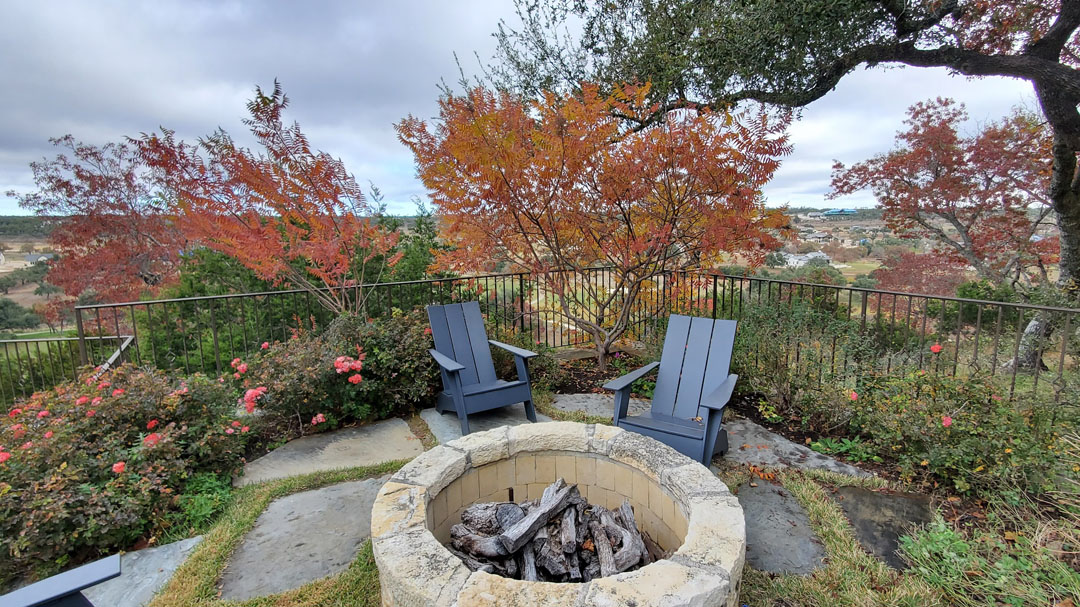
Flameleaf sumac earns a spot when you have open ground, sun, and a taste for a loose, natural look. Texas A&M and the City of Austin both support it as a tough native with real fall potential.
Weigh that against the tradeoffs. Color can be red, orange, or yellow, and Texas A&M reporting on fall color notes that weather and plant health shape the show.
It also spreads, and it does best in the regions where it grows naturally.
If your lot is tight or you want shade, look elsewhere. If you have room and local conditions match, plant one and let the season surprise you.
