
Best Patio Planters for Every Style: Terracotta, Modern, Hanging, and Vertical
A sudden gust catches the rim of a cracked plastic pot. Soil scatters across swept pavers. Water pools near the sliding door. You grab a broom and decide right then that your patio deserves containers that actually hold up. Cheap pots split. Heavy pots crack. The wrong shape blocks the walkway. Picking patio planters is not about grabbing whatever sits on the clearance rack. It is about matching material to climate, scale to space, and style to the house itself. Get it right and the containers do the heavy lifting. Get it wrong and you spend all summer mopping up dirt.
Patio Planter Ideas That Set the Tone
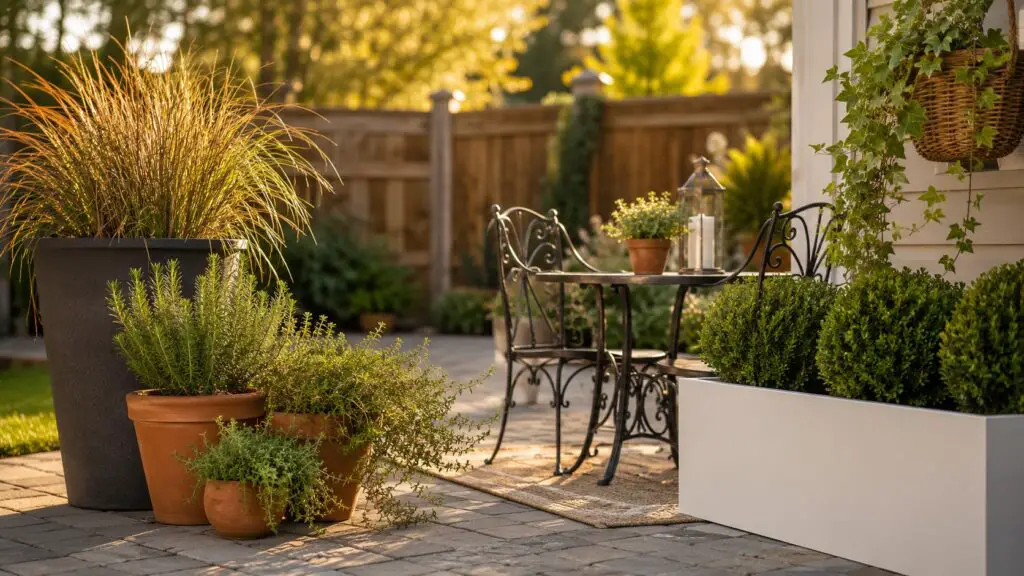
Your outdoor space needs a structural anchor. Containers provide that framework faster than furniture or outdoor rugs. The right vessel frames a seating area, softens hard paving edges, and pulls the eye toward the best view. Start by looking at your exterior walls. Brick pairs well with rough finishes. Stucco handles smooth curves. Wood siding welcomes natural tones. Match the container to the architecture and the patio stops feeling like an afterthought. Pick a direction and stick with it for at least one full growing season.
Seasonal Patio Pots for Year-Round Color
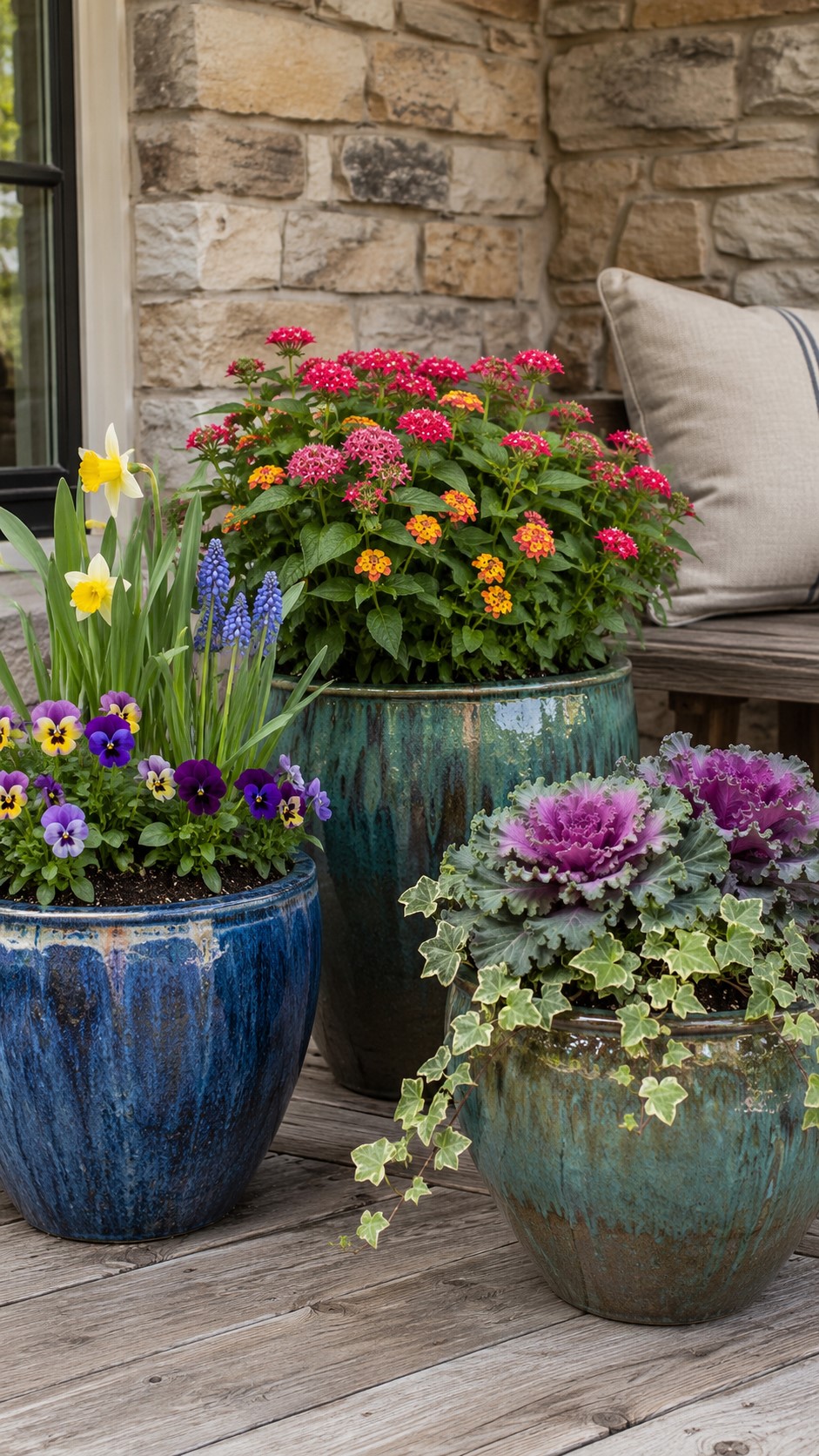
You do not need new containers every few months. You need a swap system. Keep three reliable pots on standby and rotate the plants inside. Spring calls for cool weather blooms like pansies and snapdragons. Summer demands heat tolerant workhorses such as lantana and pentas. Fall shifts to ornamental kale and trailing ivy. Winter survives on evergreen branches and dried seed pods. Refresh the top two inches of soil during each change. Add a slow release fertilizer pellet mix and the roots keep pushing. This method saves money and keeps the patio looking alive regardless of the calendar.
Planter Setups That Welcome Guests
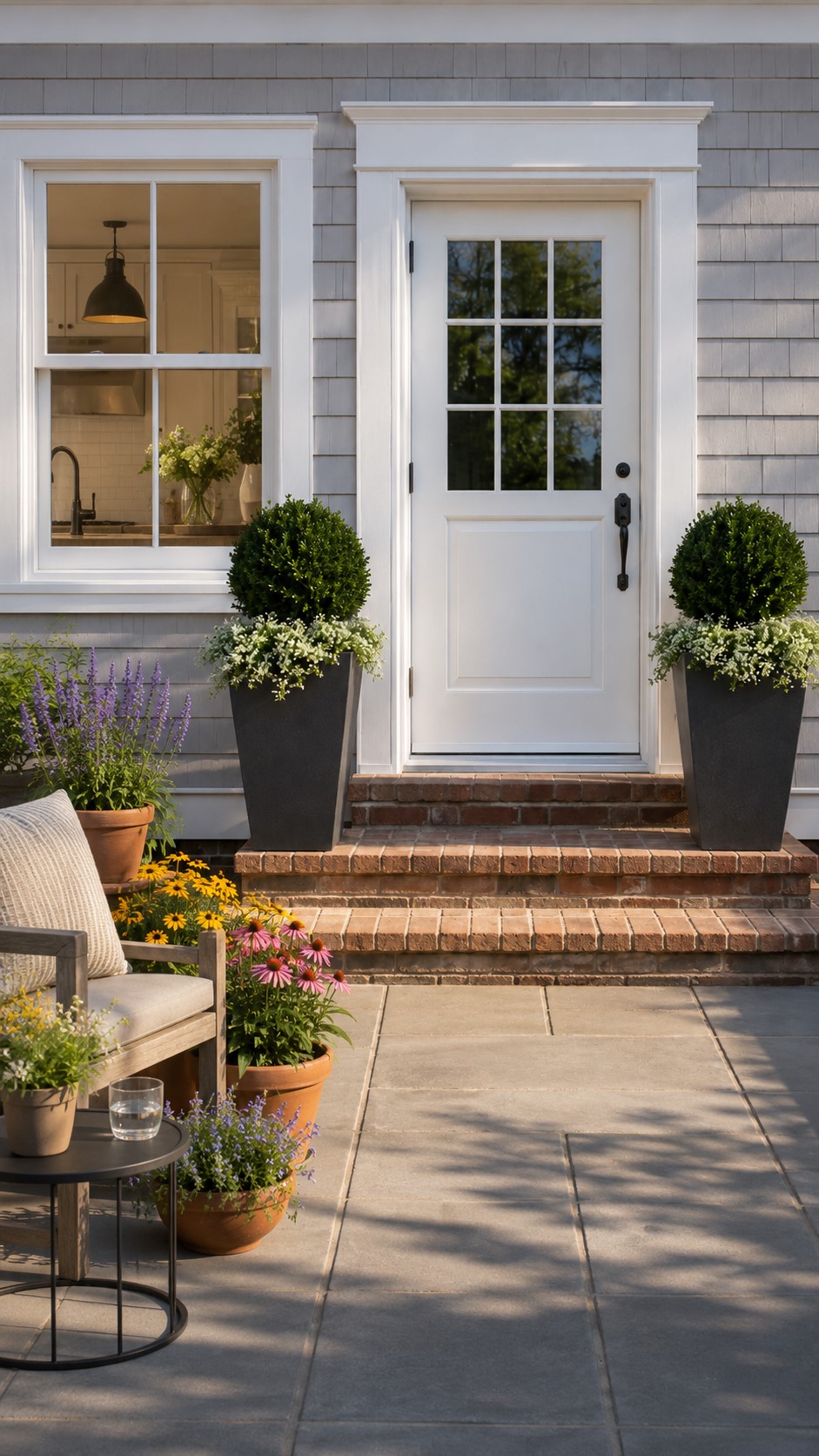
Entryways need clear boundaries. Flank the door with matching containers to create symmetry. Keep the height below the door handle so sight lines stay open. Use a tall grass or structural shrub in the back. Fill the middle with mounding foliage. Let a soft spiller drape over the front edge. Step back and check the walkway. You should have at least three feet of clear space between the pot rim and the path. Crowded entries feel chaotic. Clean lines feel welcoming. Sweep the pavers weekly and wipe down the pot rims to keep the entrance sharp.
Terracotta Patio Planters for Rustic Charm
Clay brings warmth to cold stone and concrete. The material breathes. Air moves through the walls and excess moisture escapes. That natural drying cycle protects roots from rot. The trade off is frequent watering. Terracotta dries out fast in full sun. Group these pots near a hose or install a simple drip line. The patina that develops over time adds character. White mineral deposits mean your water is hard. Scrub them with vinegar or lean into the weathered look. Clay ages gracefully when you let it.
Clay Pot Gardening Tips for Healthier Roots
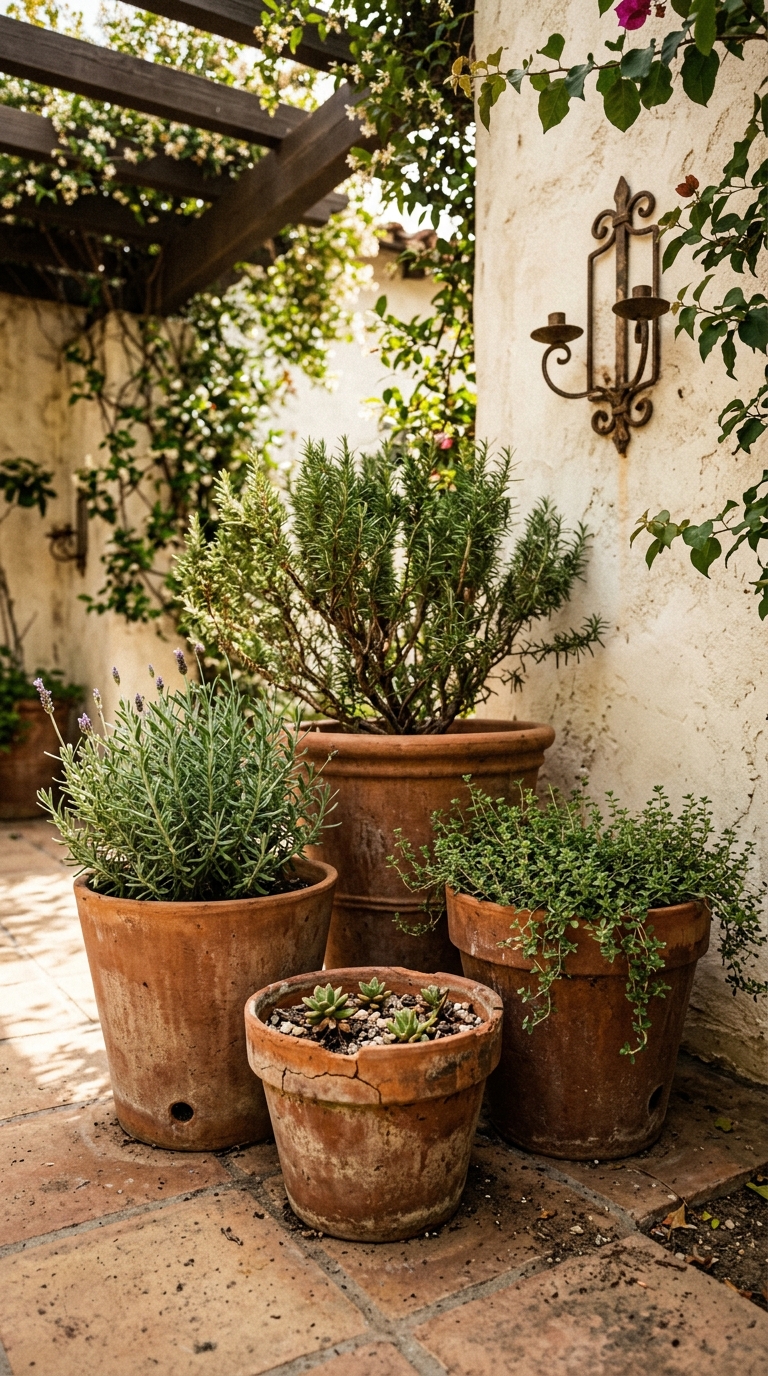
Drainage holes are non negotiable. Drill extra holes if the factory only punched one. Line the bottom with a single layer of landscape fabric to keep soil from washing out. Skip the gravel myth. Rocks at the bottom actually trap water higher in the pot. Use a light potting mix with perlite or pumice. Heavy garden soil turns into a brick inside clay walls. Water until it runs freely from the base. Wait until the top inch feels dry before soaking again. Your plants will reward you with steady growth instead of sudden wilting.
Painted Terracotta Pots That Break the Mold
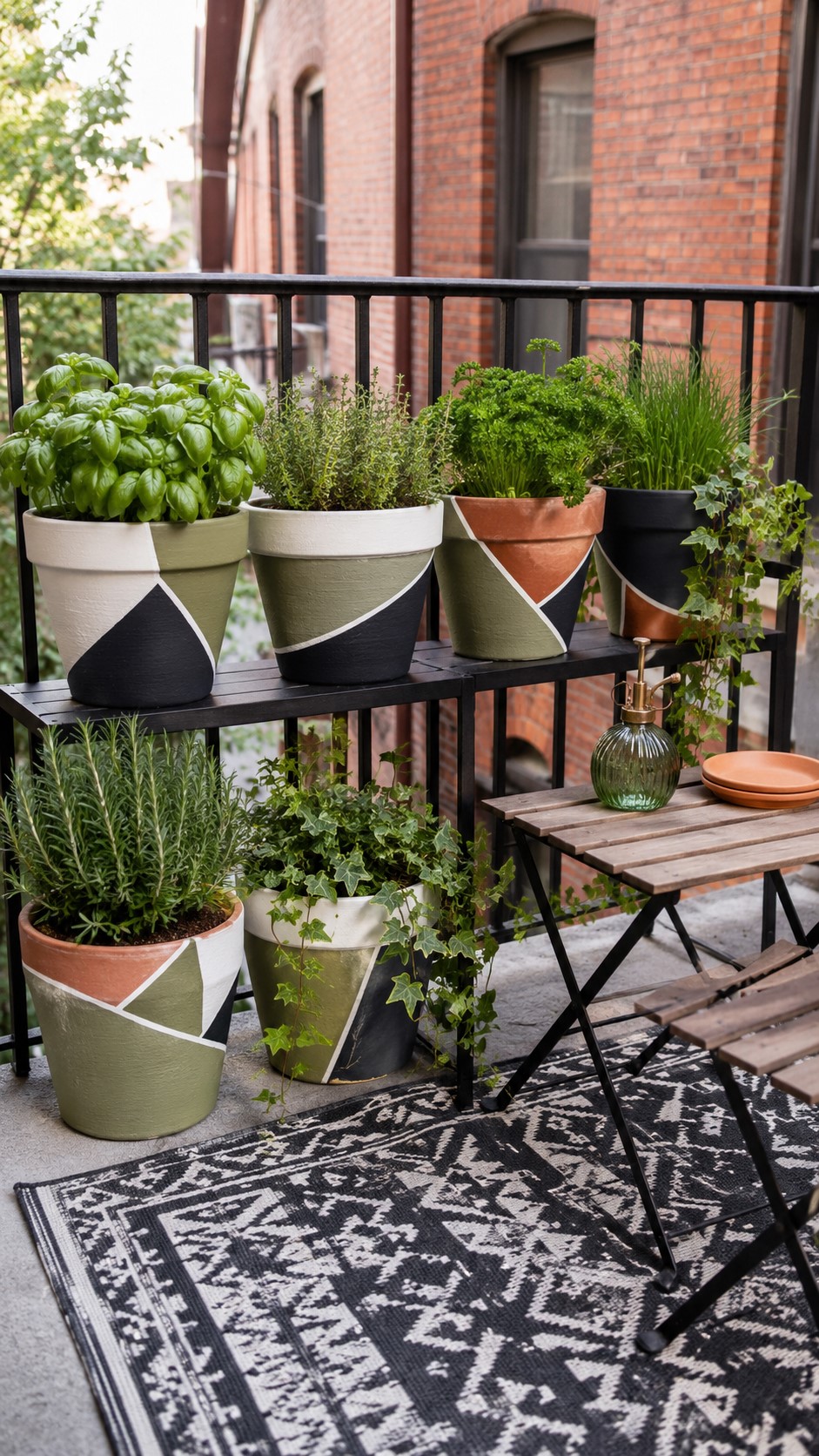
Raw clay does not have to stay brown. Exterior acrylic paint sticks well to clean, dry surfaces. Sand the rim lightly and wipe away dust. Apply a masonry primer first. Two thin coats beat one thick gloppy layer. Seal the outside with a matte outdoor varnish. Leave the inside unpainted so the clay can still breathe. Stick to colors that complement your trim or door. Sage green, charcoal, and warm white age gracefully. Neon fades fast and fights with surrounding foliage. Touch up chips each spring before the growing season starts.
Modern Patio Planters With Clean Lines
Sleek containers strip away ornamentation. They rely on shape, finish, and negative space. Fiberglass and powder coated metal dominate this category. Both materials stay light and resist cracking. The smooth surfaces reflect light and make small patios feel larger. Keep plant choices simple. One structural specimen per pot works better than a crowded mix. Modern styling fails when the foliage turns messy. Prune regularly and wipe down the container walls to maintain that sharp profile. Clean lines demand clean maintenance.
Geometric Garden Planters That Steal the Show
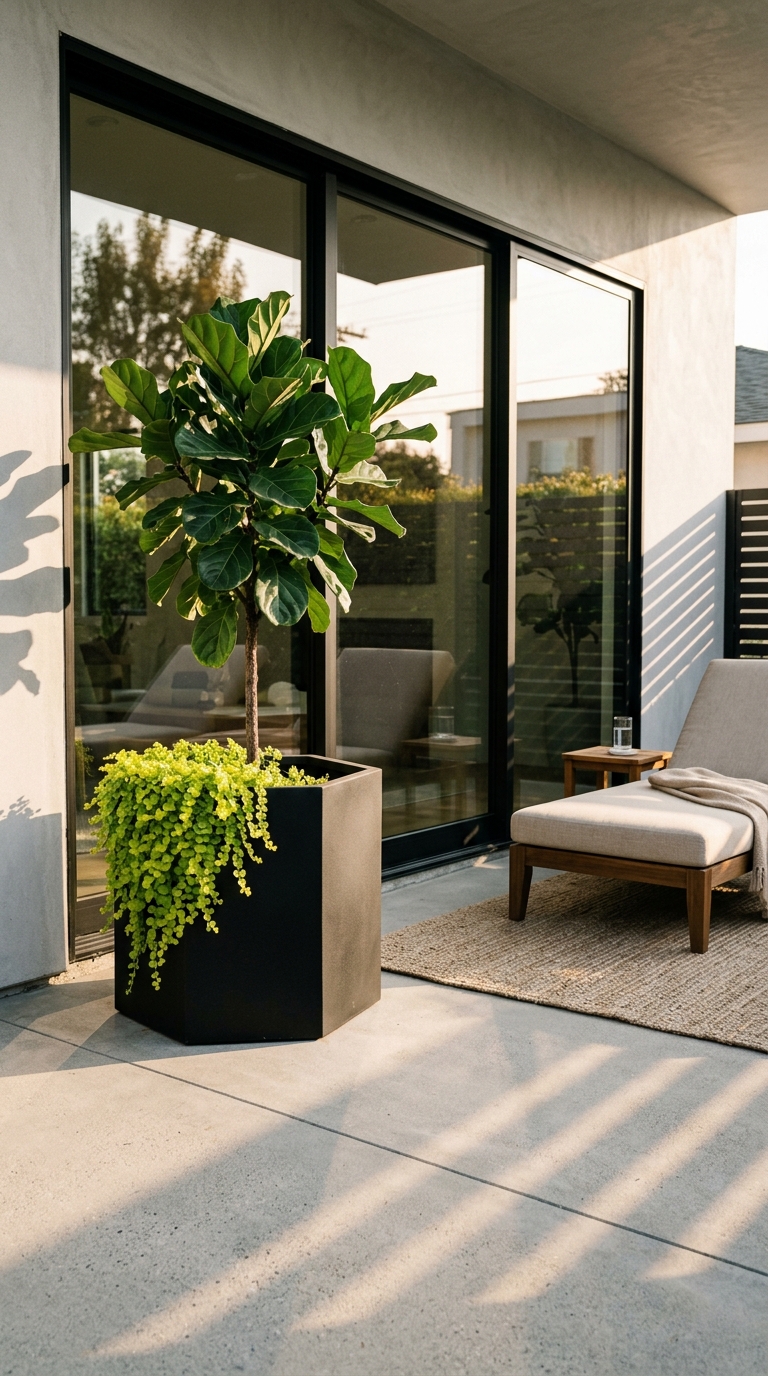
With modern patios angles create tension. Hexagons, rectangles, and tapered cylinders draw the eye upward. Place geometric pots against flat walls to amplify their shape. Avoid pairing them with busy patterned tiles. The contrast turns chaotic fast. Fill sharp containers with soft, flowing plants to balance the hardness. Ferns, ornamental grasses, and weeping rosemary spill over edges without fighting the lines. Step back and check the sight lines from your main seating area. The container should frame the space, not block it. Rotate the pot quarterly to prevent uneven sun bleaching on one side.
Concrete Patio Pots for Industrial Edge
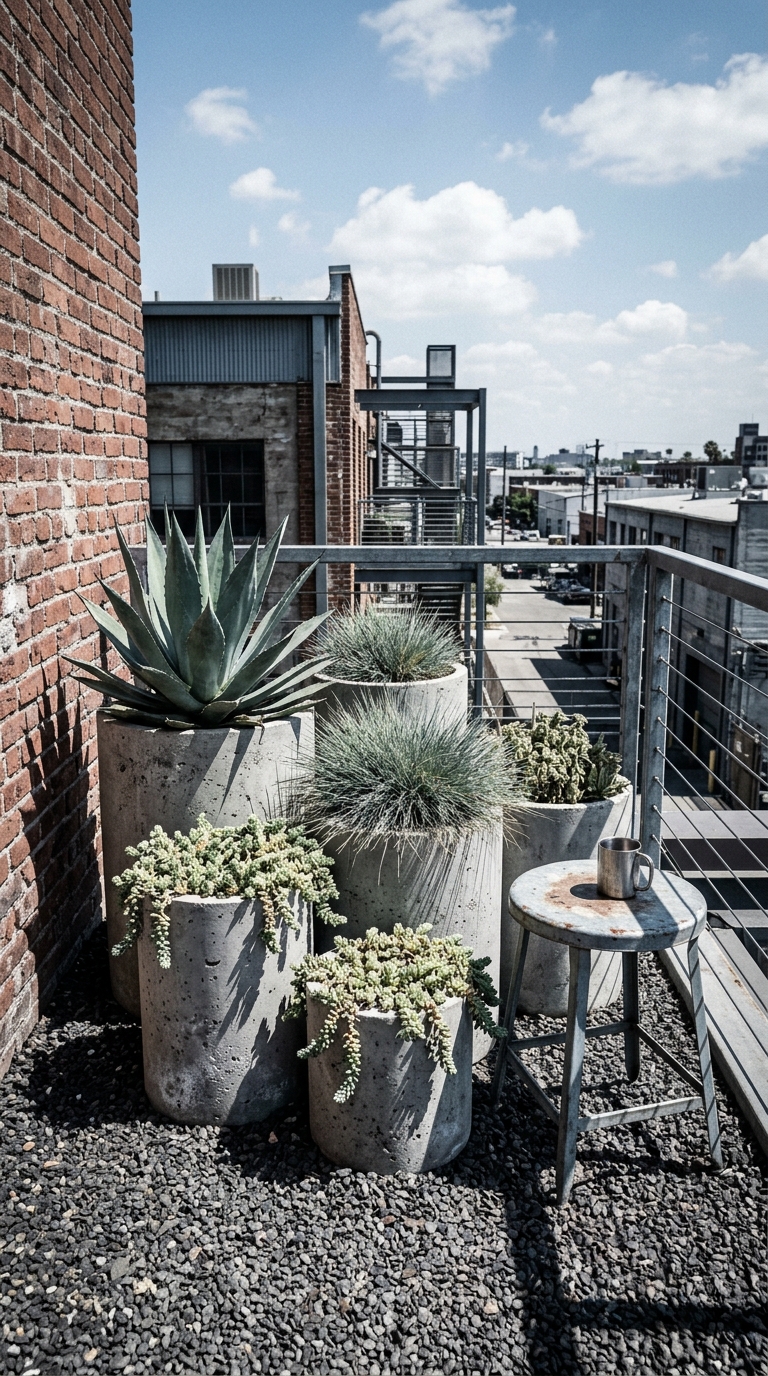
Concrete carries weight and presence. It anchors windy corners and survives freeze thaw cycles when properly sealed. The material leaches lime during the first few months. That raises soil pH and stresses acid loving plants. Cure new concrete pots by soaking them in water for three days. Drain and dry before planting. Drill drainage holes with a masonry bit if they arrive sealed. Pair concrete with drought tolerant succulents, agave, or olive trees. The gray tone makes silver foliage pop. Keep saucers underneath to protect wood decks from alkaline runoff.
Hanging Patio Planters That Free Up Floor Space
Floor space disappears fast on small patios. Look up. Ceilings, eaves, and pergola beams offer unused real estate. Hanging containers keep foliage at eye level and open the ground for chairs and tables. The trick is weight management. Wet soil and mature roots add pounds fast. Use sturdy hooks rated for at least twenty pounds. Check mounting points monthly. Wind swings baskets and loosens hardware over time. Install a pulley system if you hate dragging a step ladder outside for watering. Gravity does the work when you plan the hardware correctly.
Balcony Hanging Baskets for Tight Corners
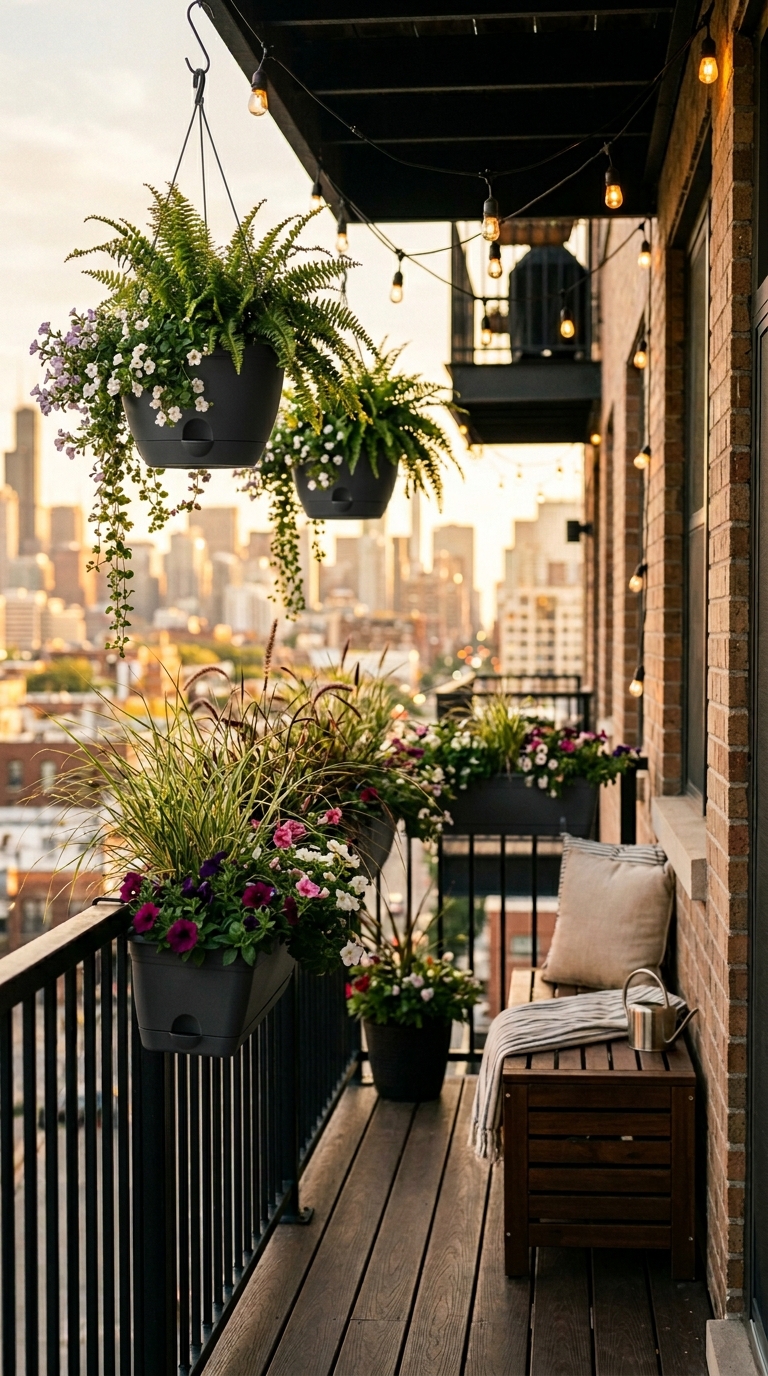
Railings and corners trap dead air. Hanging baskets break up that stagnation. Choose lined coco coir or molded resin inserts. Coir breathes well but dries quickly. Resin holds moisture longer and suits hot exposures. Mount brackets to the top rail or underside of the eave. Keep the basket center at least six inches away from the wall. Airflow prevents mildew on the back side. Water from the top until it drips through the liner. Catch the runoff with a temporary saucer or water early before neighbors step outside.
Trailing Patio Plants That Cascade Beautifully
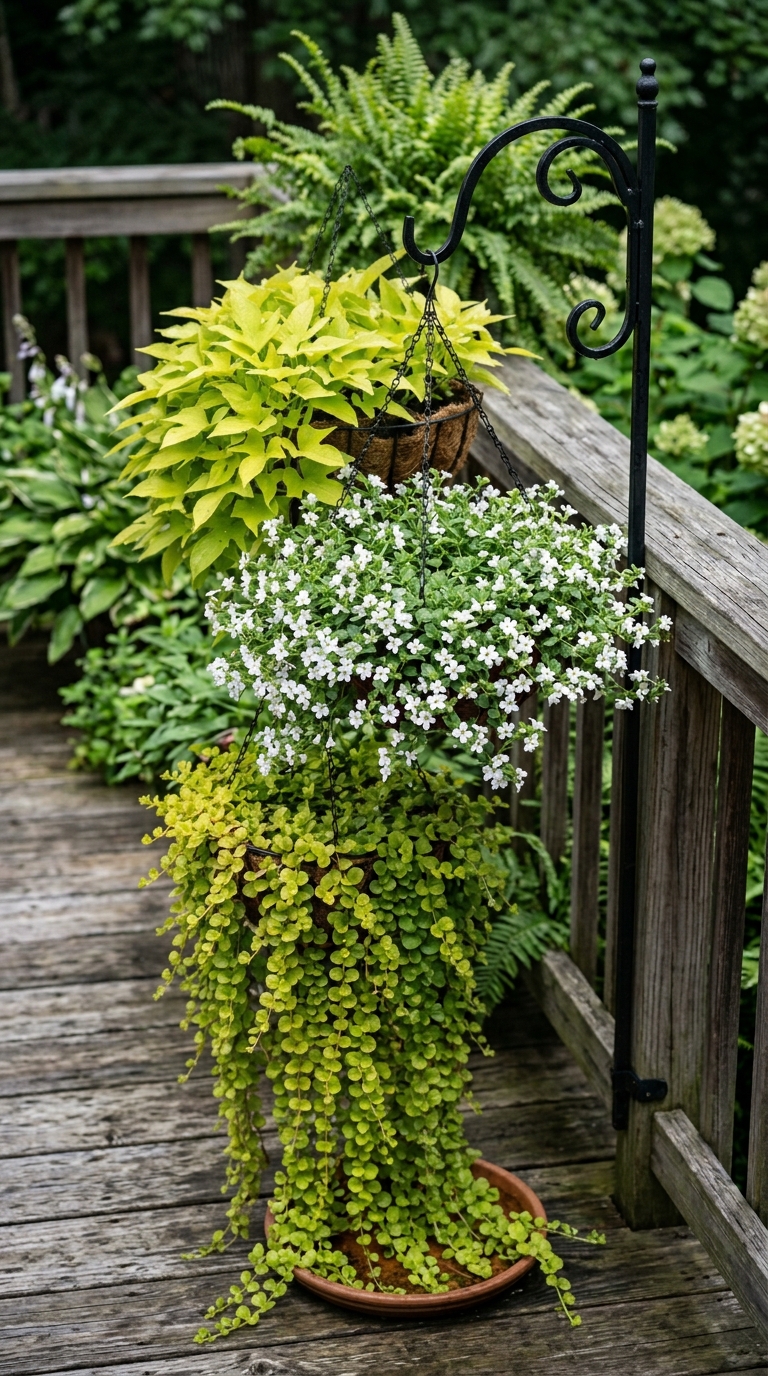
Spillers do the heavy lifting in suspended pots. Sweet potato vine covers fast and tolerates heat. Creeping Jenny spills in bright chartreuse and handles partial shade. Bacopa produces tiny white flowers that bounce back after rain. Plant trailers near the outer edge of the basket. Tuck the root balls slightly inward so stems drape outward instead of tangling at the base. Pinch back leggy growth every three weeks. The cut ends branch out and create a fuller curtain. Feed with a liquid fertilizer every ten days during peak summer.
Vertical Patio Planters for Narrow Spaces
Narrow side yards and slim balconies demand upward thinking. Ground space runs out. Wall space does not. Vertical systems stack planting zones and multiply greenery without widening the footprint. The challenge is irrigation. Top rows dry out while bottom rows stay soggy. Install a simple drip line with emitters at each level. Use the same soil mix throughout the structure. Consistent media prevents uneven drainage. Anchor the frame securely before adding wet soil. A loaded vertical garden pulls hard on fasteners.
Wall Mounted Garden Beds That Climb Up
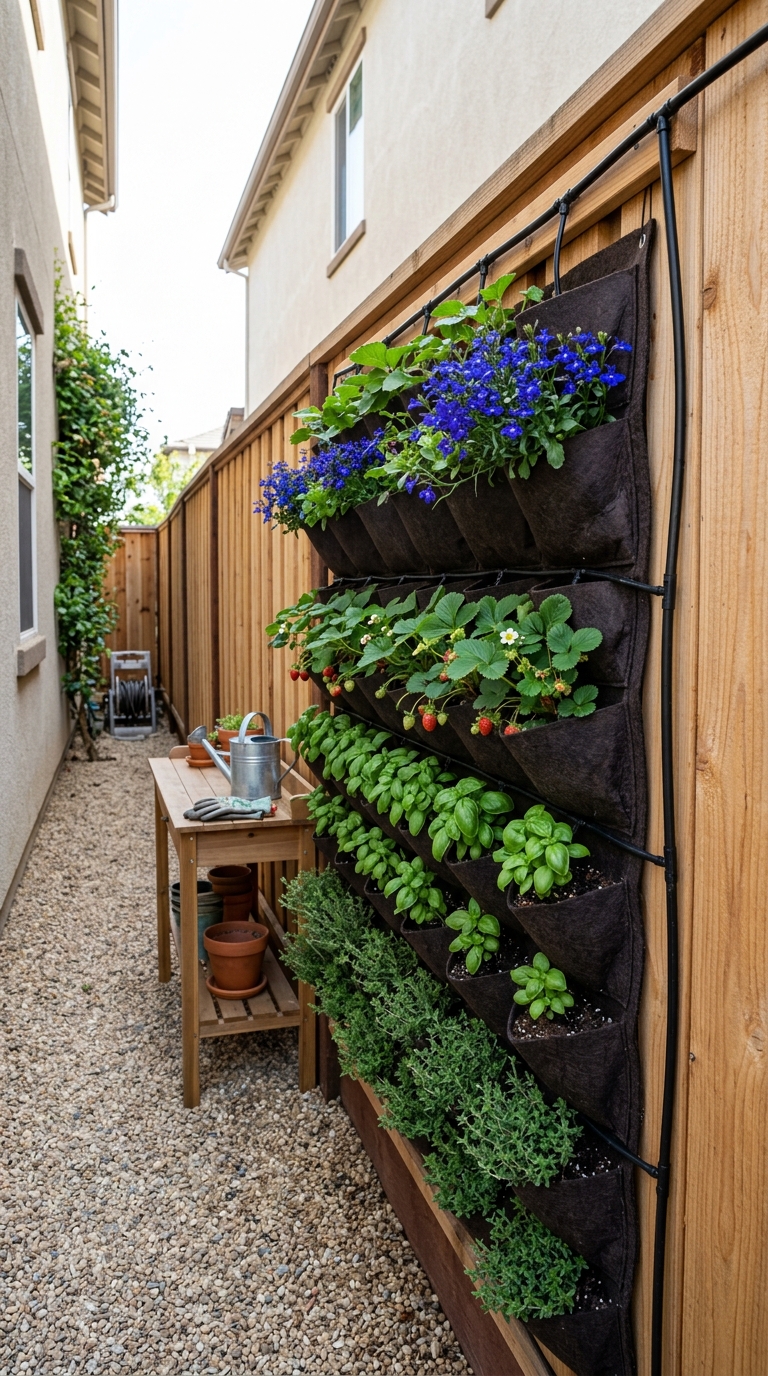
Fabric pockets and rigid panels attach directly to siding or fence boards. Check your wall material first. Vinyl siding needs special hooks that slide under the seams. Brick requires masonry anchors. Wood accepts heavy duty screws with washers. Leave a half inch gap between the planter back and the wall. That gap stops moisture from rotting the surface behind it. Plant shallow rooted herbs, strawberries, or trailing flowers. Deep taproots struggle in thin panels. Harvest frequently to keep the weight manageable and the plants productive.
Tiered Patio Plant Stands That Multiply Greenery
Freestanding shelves solve rental restrictions. No drilling. No wall damage. Just set the stand on level pavers and load the tiers. Place heavy pots on the bottom shelf. Light baskets go up top. Rotate the stand a quarter turn each week so every side catches sun. Uneven light causes lopsided growth and weak stems. Check the leg caps monthly. Plastic feet crack under UV exposure and metal legs rust. Replace worn caps before the stand wobbles. A stable tier multiplies your planting area without crowding the walkway.
Small Space Patio Planters That Work Hard
Tight patios punish poor planning. Oversized pots block doors. Tiny pots dry out in hours. Scale matters more than quantity. Measure your usable floor space before buying anything. Leave clear paths to seating and grills. Choose containers that serve double duty. A wide planter can act as a low room divider. A tall narrow pot screens a utility meter. Pick plants that grow up instead of out. Columnar evergreens and climbing vines add height without stealing square footage.
Railing Planter Setups for Apartment Balconies
Balcony railings offer free mounting zones. Saddle planters drape over the top bar and secure with adjustable brackets. Measure the rail width before ordering. A loose fit tips in the wind. A tight fit cracks the plastic. Add a secondary zip tie or metal cable for safety. Fill with lightweight potting mix. Skip garden soil. It compacts and adds unnecessary weight. Plant wind resistant varieties like ornamental grasses, sedum, or compact petunias. Water slowly to avoid dripping on neighbors below. A drip tray catches excess and keeps the peace.
Corner Patio Pot Ideas That Fill Dead Zones
Corners collect shadows and forgotten furniture. Turn them into green anchors. Wedge shaped containers fit flush against two walls. Round pots work when pulled six inches away from the corner. That gap allows air circulation and prevents mold on the siding. Stack three pots in descending height to create a layered effect. Use the tallest spot for a structural plant. Fill the middle with bushy foliage. Let the lowest pot spill onto the pavers. Corners handle shade well. Hostas, ferns, and coral bells thrive where direct sun rarely reaches.
DIY Patio Planter Ideas You Can Build Fast
Store bought containers drain wallets fast. Building your own cuts costs and guarantees exact dimensions. You do not need a full workshop. A drill, a saw, and exterior grade screws handle most projects. Start with simple boxes or stacked crates. Line them properly and they last for years. Skip pressure treated lumber if you plan to grow edibles. Cedar and redwood resist rot naturally. Sand rough edges before assembly. Seal cut ends with exterior wood stabilizer. A weekend build outperforms cheap resin pots that crack by August.
Wooden Planter Box Plans for Weekend Builders
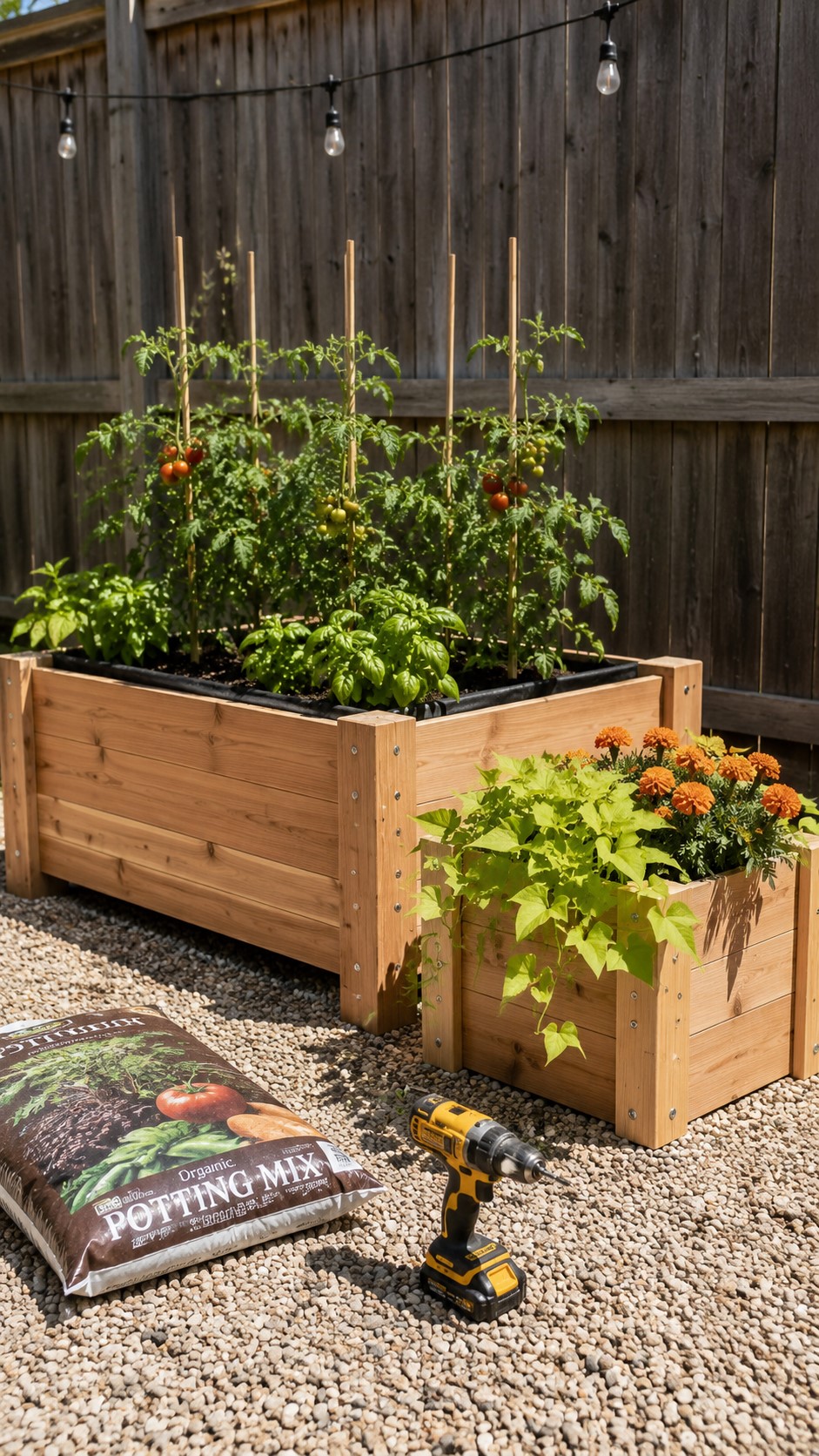
A basic rectangular box requires four side panels and a bottom board. Cut the sides to your desired height. Attach them to corner posts using exterior screws. Drill half inch drainage holes every six inches along the base. Line the interior with heavy duty landscape fabric. Staple the fabric to the top edge and trim the excess. Fill with a mix of potting soil, compost, and coarse sand. The fabric keeps dirt inside while letting water escape. Add metal corner brackets if the box exceeds three feet in length. Long spans bow under wet soil weight.
Upcycled Garden Containers That Cost Almost Nothing
Thrift stores and garage sales hide solid vessels. Metal buckets, ceramic crocks, and wooden crates all work with minor prep. Clean every find with soap and water. Scrub away old mineral deposits. Drill drainage holes in the bottom. Metal requires a step bit. Ceramic needs a diamond tip drill and steady pressure. Add a coat of rust inhibitor to vintage tin. Line wooden crates with plastic sheeting and punch holes through the liner. Skip containers that held motor oil or chemical cleaners. Residue leaches into soil and kills roots fast.
Outdoor Planter Styling Tips for a Polished Look
Random pots scattered across a patio look like an afterthought. Grouping creates impact. Pull containers into clusters of two or four. Odd numbers work in garden beds. Even numbers suit structured patios. Leave breathing room between each vessel. Crowded rims trap humidity and invite fungus. Match the pot finish to your outdoor furniture hardware. Black frames pair with charcoal planters. Bronze accents warm up terracotta. Keep the palette tight. Three finishes maximum per zone. Restraint reads as expensive.
Mixing Planter Textures Without the Clutter
Smooth fiberglass next to rough clay creates contrast. That contrast keeps the eye moving. Place a matte pot beside a glazed one to break up shine. Avoid pairing three glossy containers in a row. The reflection turns harsh under midday sun. Use foliage to bridge material gaps. Broad leaves soften sharp edges. Fine needles complement curved walls. Step back and squint. If the pots blend into a single blob, swap one finish for something rougher. Texture separation makes each container stand out.
Patio Pot Arrangement Ideas That Balance Scale
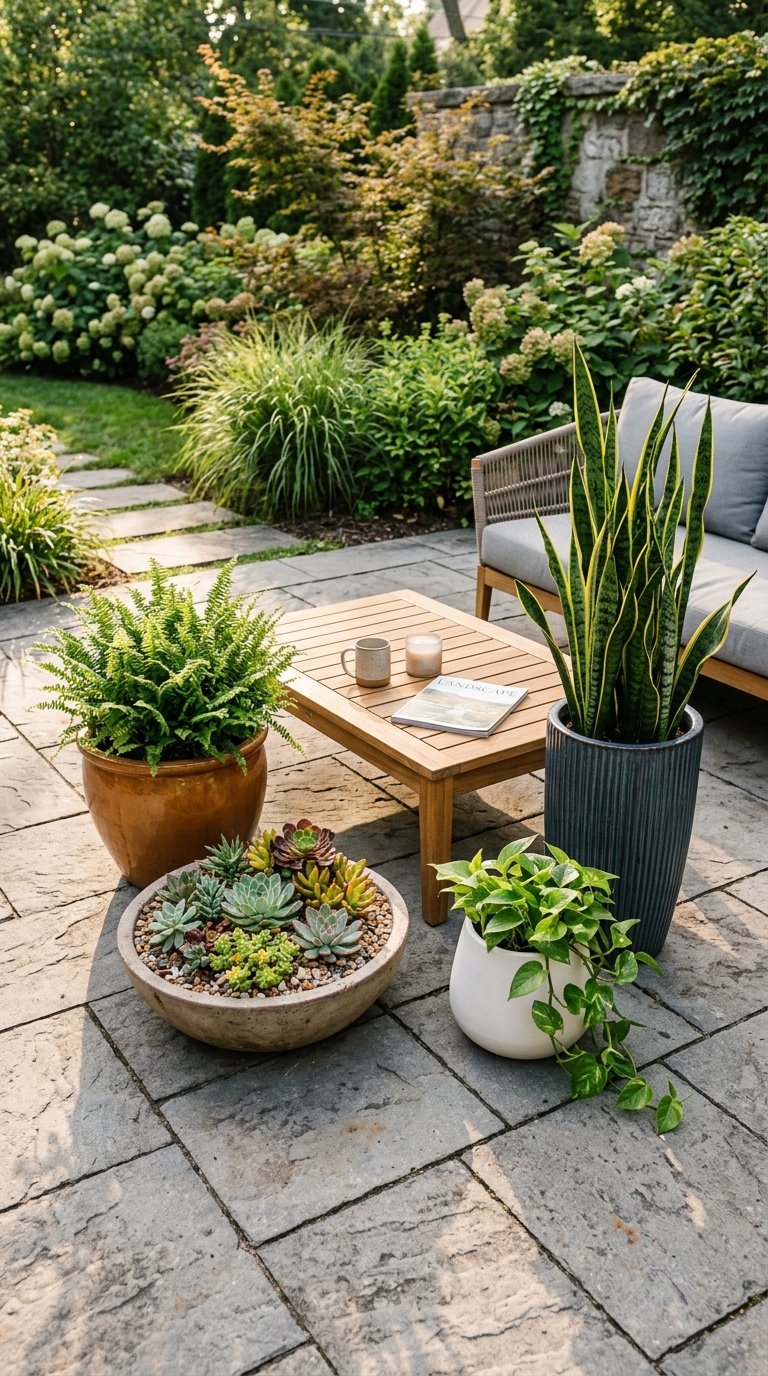
Scale dictates comfort. A massive pot next to a bistro chair overwhelms the seat. A tiny pot beside a sectional sofa looks lost. Match container volume to furniture mass. Heavy sofas need wide, grounded planters. Slim chairs pair with tall, narrow vessels. Arrange groups in a loose triangle. Place the tallest pot in the back corner. Set the medium pot slightly forward. Tuck the smallest pot near the edge. This layout guides the eye through the arrangement instead of stopping it dead. Keep walkways clear and the patio breathes.
Budget Friendly Patio Planters That Look Expensive
High end containers rely on proportion and finish, not price tags. You can replicate that look without draining your account. Focus on shape first. Clean lines and balanced ratios read as custom. Hide cheap materials behind strategic placement. Tuck thin plastic pots behind sturdy wooden crates. Wrap flimsy rims with jute rope or outdoor rated tape. Buy soil in bulk bags instead of small boxes. Propagate trailers from friend cuttings. Spend your money on one statement pot and fill the rest with smart hacks.
Thrifted Garden Planters With Hidden Potential
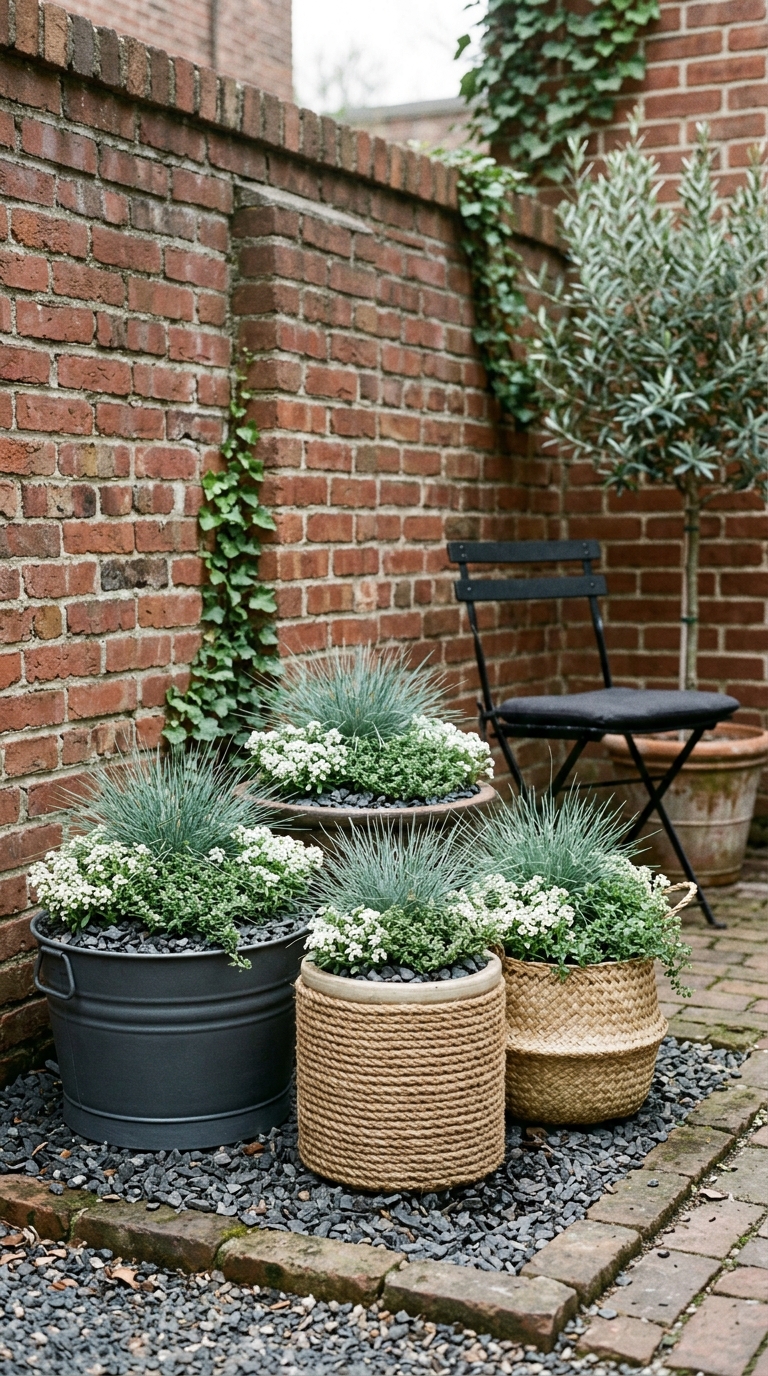
Secondhand shops overflow with overlooked vessels. Look for solid construction and intact drainage. Hairline cracks in ceramic spread fast once frozen. Tap the side with a knuckle. A clear ring means the structure holds. A dull thud signals internal damage. Sand chipped rims and apply exterior primer. Two coats of matte spray paint unify mismatched finds. Stick to neutral tones. Charcoal, olive, and warm white blend with any exterior. Replace cracked saucers with flexible rubber trays. The swap costs pennies and stops leaks immediately.
Low Cost Container Gardening Hacks That Actually Work
Smart shortcuts save cash without sacrificing plant health. Line the bottom third of deep pots with crushed leaves or pine cones. The filler reduces soil volume and improves aeration. Reuse nursery pots as inner liners. Drop them inside decorative containers for easy seasonal swaps. Collect rainwater in a covered barrel. Tap water contains chlorine that stresses sensitive roots. Mulch the soil surface with gravel or bark. A thin layer cuts evaporation and keeps splashed dirt off the patio. Small adjustments compound over a growing season.
Your Next Container Move
Stop staring at the empty corner. Measure the space. Pick three containers that match your exterior finish. Fill them with light potting mix and plants that suit your sun exposure. Group them tight enough to feel designed but loose enough to allow airflow. Water until it runs clear from the base. Step back and adjust the spacing. The patio will shift from blank slab to living room in one afternoon. Grab a trowel and get your hands dirty. The pots are waiting.
