
Clematis Trellis Ideas for a Pretty Climbing Garden
The fence is bare, the wall looks flat, and the patio has that slightly unfinished feeling that makes you keep moving pots around as if one more terracotta planter will solve it. Then clematis enters the picture. One plant, one good support, and suddenly the garden has height, flowers and a reason for the eye to slow down.
That is the real power of good clematis trellis ideas. They don’t need to be grand or expensive. They need to fit the space, suit the plant and look as though they belong there once the flowers have taken over. Clematis can soften a fence, dress up a plain wall, frame a path, climb from a patio pot or turn a front yard into something much more charming than another strip of lawn.
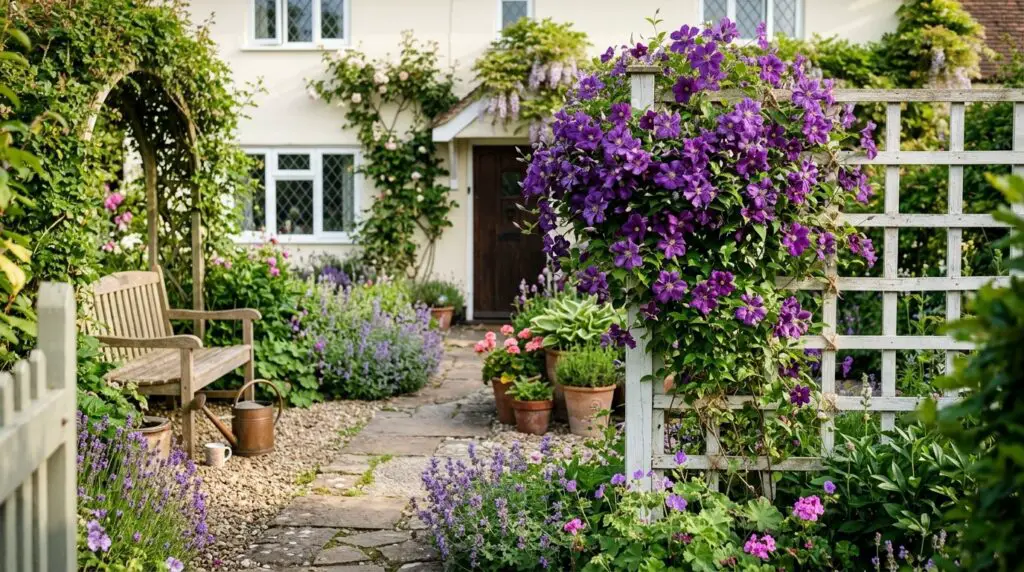
There is one catch, of course. Clematis is not a vine that clings to brick like ivy. It climbs by twisting its leaf stems around narrow supports, so the trellis has to give it something slim to hold. Thick posts, wide boards and chunky rails may look sturdy, but the plant will often need wire, mesh or fine slats added before it can make proper progress.
Clematis Trellis Ideas Start With the Right Support
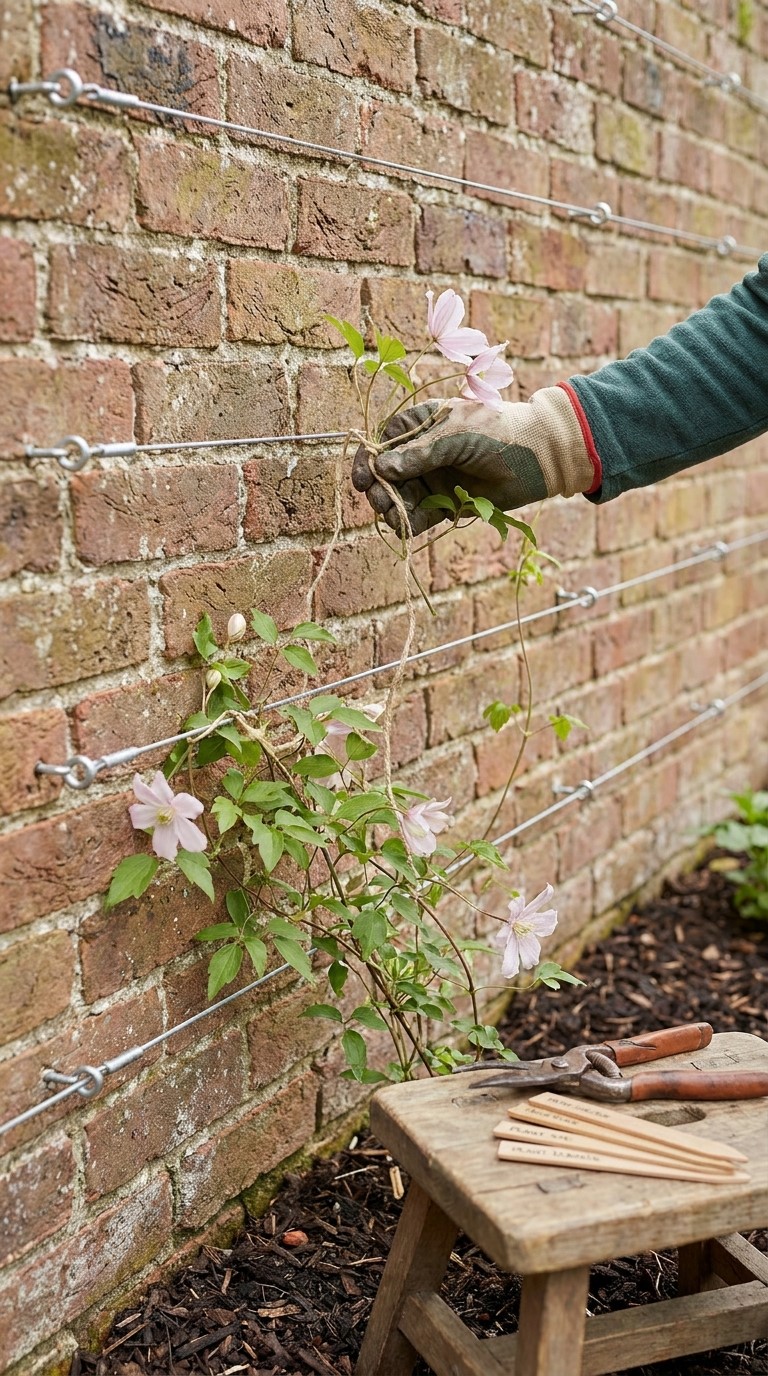
The best clematis trellis ideas begin with a simple question: can the plant grip it? A lovely wooden panel can still fail if the gaps are too wide or the bars are too thick. Clematis wants fine support, which is why wire grids, narrow battens, mesh panels, metal obelisks and slim trellis strips usually work better than heavy timber alone.
A good support also gives the plant room to breathe. When clematis is pressed too tightly against a fence or wall, the stems can become tangled and airless. Leave a small gap behind panels where you can. It helps the plant dry after rain, and it makes pruning less of a wrestling match later.
Clematis Trellis Ideas for Choosing Wood, Wire or Metal
Wooden clematis trellis ideas tend to suit cottage gardens, farmhouse spaces and soft mixed borders. A painted timber trellis against a fence can feel calm and settled, especially in white, sage, charcoal or weathered gray. The plant will bring the movement. The support can stay quiet.
Wire and metal supports give a cleaner look. They’re good for modern gardens, narrow side yards and walls where you don’t want the trellis to become the main event. A black metal grid can look smart even in winter, while tensioned wires almost disappear once the clematis fills out. That can be a blessing when the flowers are the whole point.
Clematis Trellis Ideas for Matching Trellis Size to Clematis Growth
Some clematis stay compact, and some behave like they’ve been waiting all their lives to swallow a shed. Before you buy a trellis, check the mature size of the variety you want. A small patio clematis may be happy on a modest obelisk, but a vigorous type needs a wider frame, a fence run or an arch.
Scale matters for looks too. A tiny trellis on a tall wall can seem nervous, like a picture hung too high in a room. A huge arch over a narrow path can feel heavy. The support should look right before the plant covers it. Then, when the flowers arrive, the whole thing feels generous rather than accidental.
Clematis Trellis Ideas Against Fence Panels
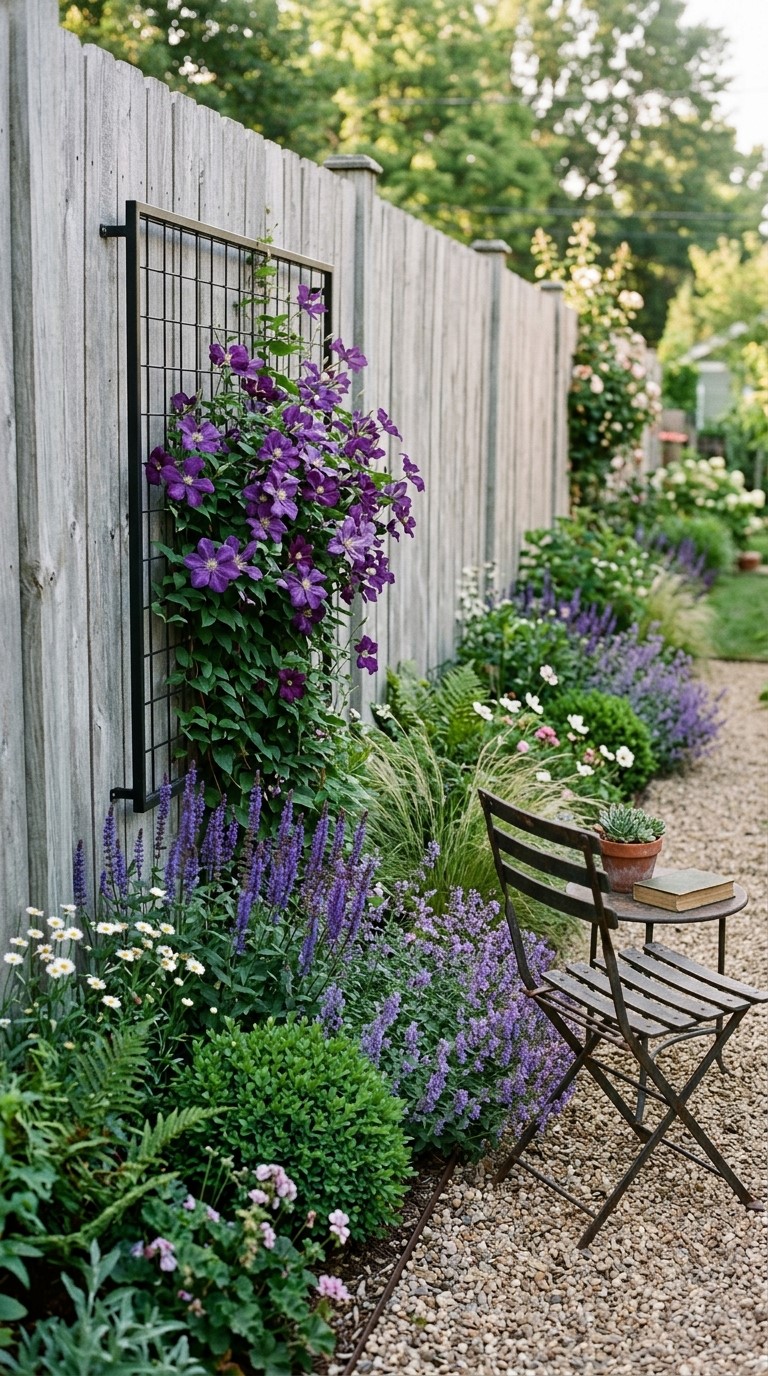
Fence panels are one of the easiest places to use clematis trellis ideas because they already give you a long, flat background. The trick is not to expect the fence itself to do all the work. Most fence boards are too wide for clematis to grip well, so add a layer of trellis, mesh or wire in front.
A clematis-covered fence can change the mood of a garden fast. It can hide tired timber, soften a boundary and add flowers at eye level, which is where people actually notice them. This is especially helpful in smaller gardens where the fence is always in view, whether you like it or not.
Clematis Trellis Ideas Against Fence Lines With Mixed Planting
Clematis looks less stiff when it grows near other plants. Try it behind roses, catmint, hardy geraniums, salvia or low shrubs so the base doesn’t look bare. This also helps shade the roots, which clematis often appreciates in hot weather.
A fence line can become too busy if every inch is covered with a different climber. Pick one or two spots where clematis can make a strong statement. A single flowering panel behind a bench or at the end of a path often works better than a whole fence smothered in growth.
Clematis Trellis Ideas Against Fence Corners and Awkward Spots
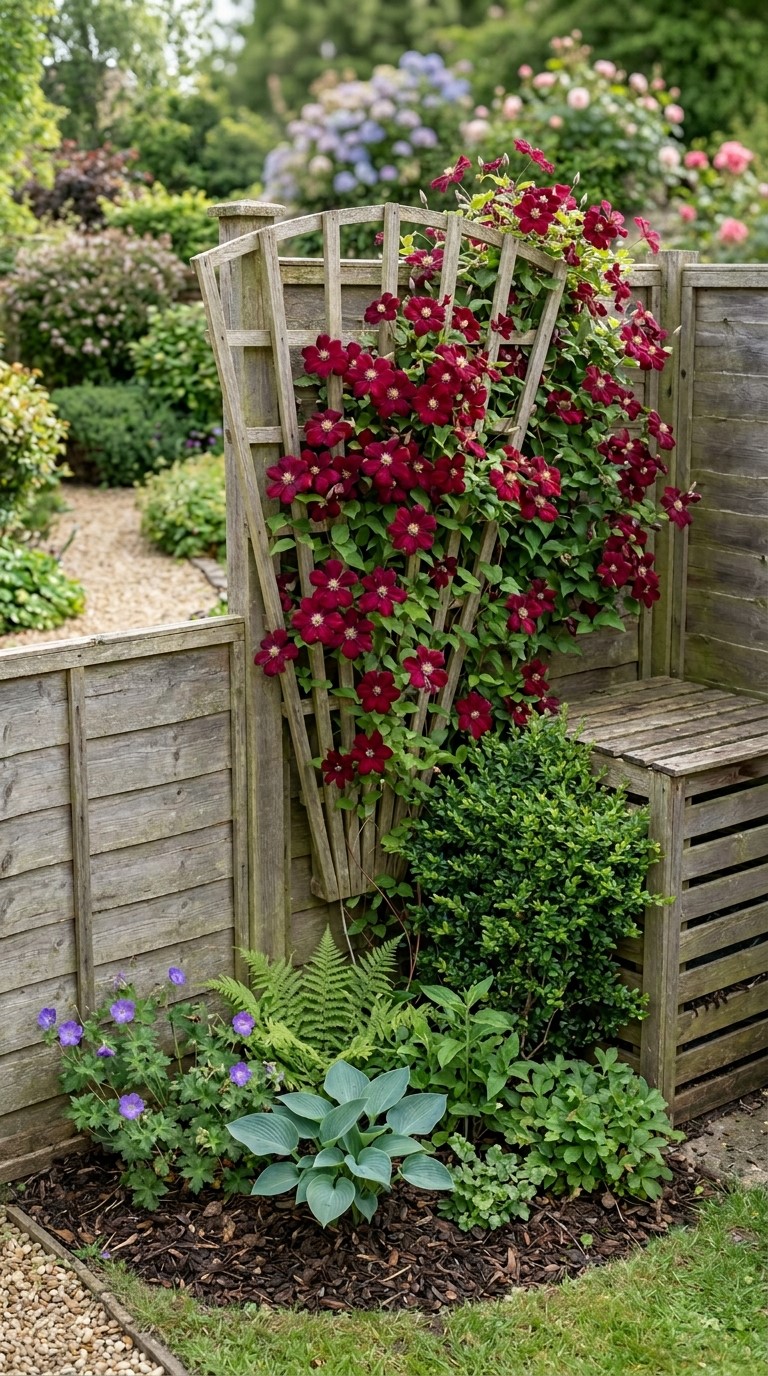
Every garden has a corner that feels a bit neglected. It might be where two fences meet, where the bins sit or where nothing seems to grow well. A simple corner trellis with clematis can pull attention away from the awkwardness and give the space a reason to exist.
For narrow corners, use a slim fan trellis or a tall rectangular panel. For wider spots, try a freestanding screen set a little forward from the fence. Plant around the base with low flowers or foliage so the clematis doesn’t look like it was dropped there as an afterthought.
Clematis Trellis Ideas for Pots and Small Patios
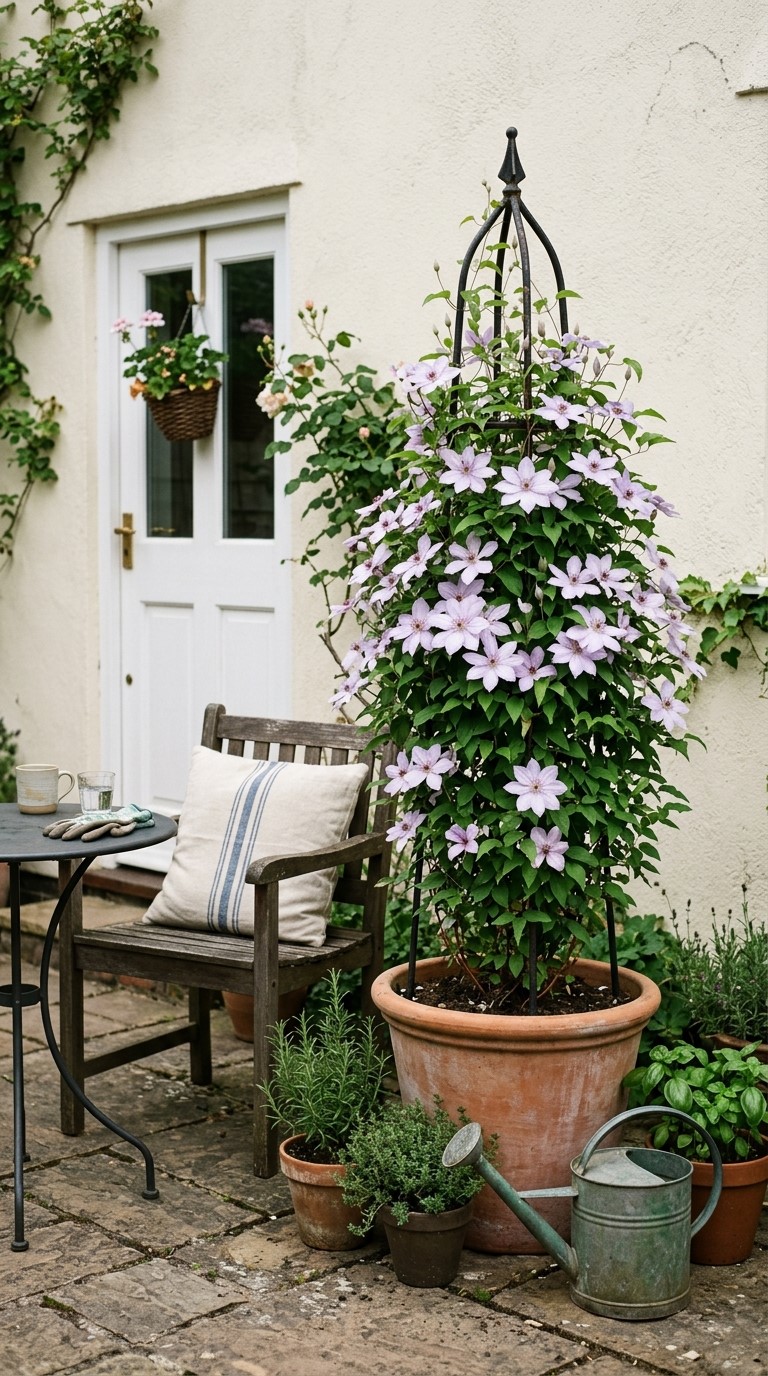
Clematis trellis ideas for pots are perfect for gardeners who don’t have much ground to play with and can be useful as dividers of space. A deep container, a strong support and the right variety can bring climbing flowers to a balcony, porch, courtyard or paved patio. This is where clematis earns its keep.
The pot has to be large enough to hold steady moisture and keep the plant comfortable. A shallow container will dry out too fast, especially beside a sunny wall. Choose a deep pot with drainage holes, use a rich potting mix and add mulch over the surface. The flowers may be up high, but the roots do the heavy lifting.
Clematis Trellis Ideas for Pots With Obelisks
An obelisk is one of the neatest clematis trellis ideas for containers because it gives height without needing a wall or fence. It also looks good before the plant fills in, which matters on a patio where every pot is on display.
Choose an obelisk that sits firmly in the container, not one that wobbles the first time the wind gets bored. Metal obelisks suit cleaner spaces, while willow or painted wood feels softer. Train the first stems with loose ties, then guide new growth around the frame as it starts to climb.
Clematis Trellis Ideas for Pots on Balconies
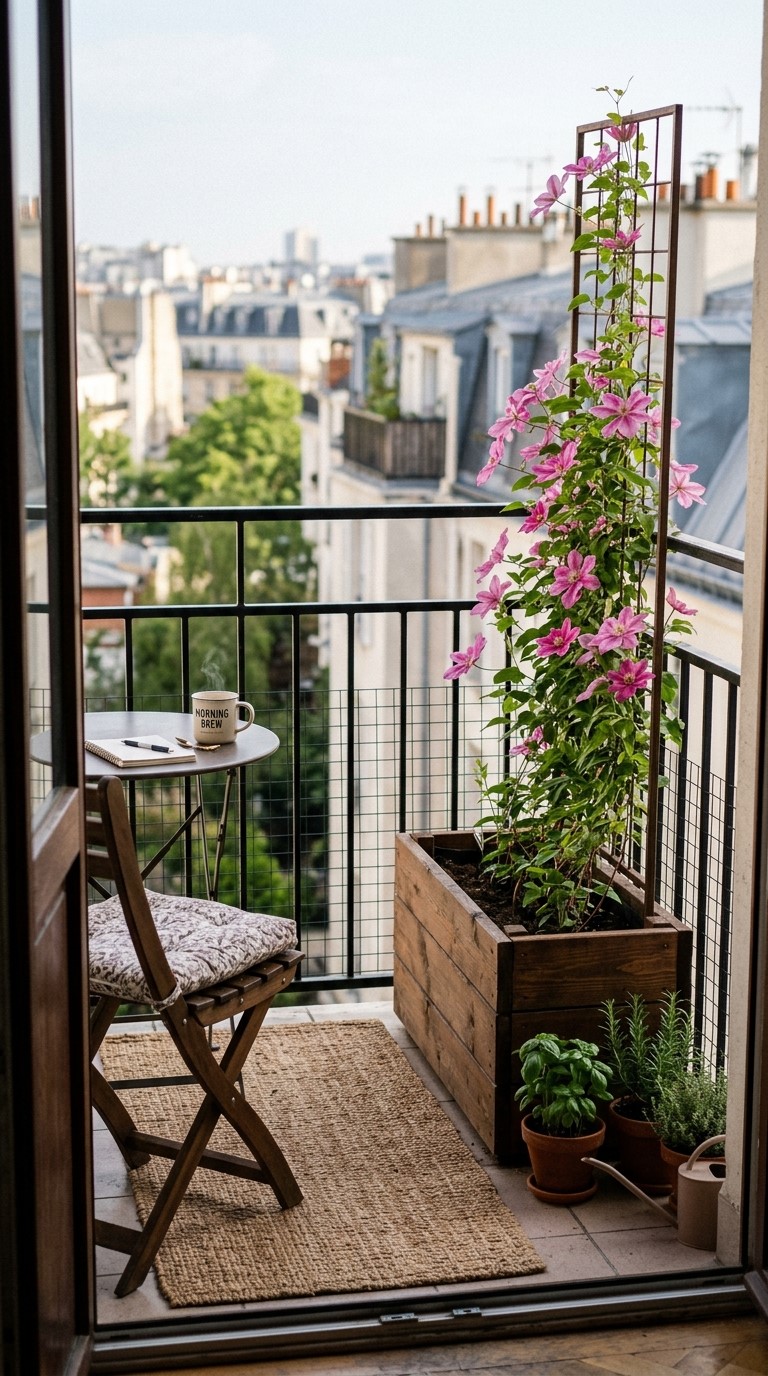
Balcony clematis needs a little more planning. Wind can dry out pots and push tall supports around, so the container should be heavy enough to stay put. A compact variety is usually the safer choice, especially if the balcony is narrow or shared with furniture.
Use a trellis that can be secured without damaging the building. A pot with a built-in trellis works well, as does a low obelisk tucked against a sheltered wall. Keep the shape tidy with pruning, because a balcony vine that sprawls into the next chair stops being charming pretty fast.
Clematis Trellis Ideas for Walls That Need Color
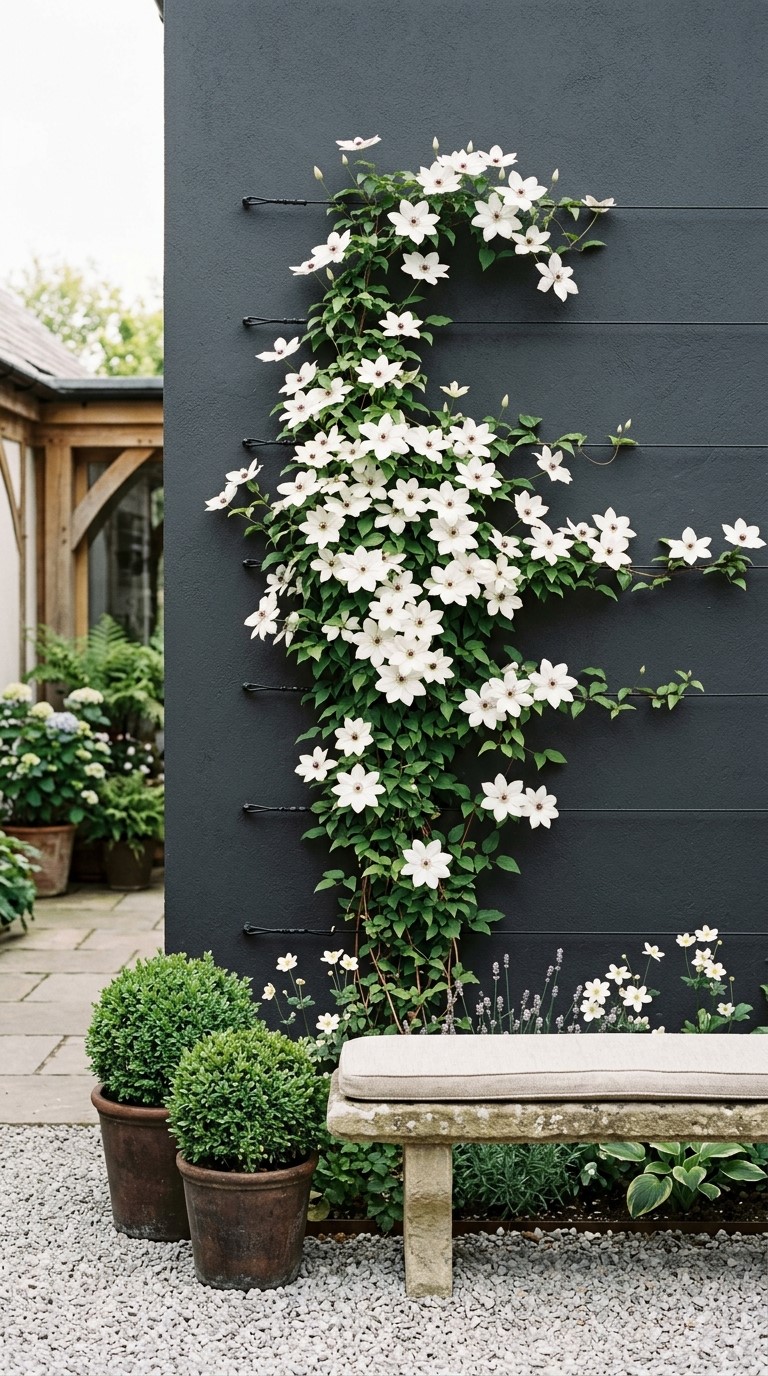
Blank walls are begging for clematis trellis ideas, but they need the right kind of support. Clematis will not cling to smooth render, brick or siding on its own. It needs wires, a mounted trellis or a grid placed just off the wall so the stems can wrap and climb.
This can be one of the most elegant ways to grow clematis. A plain garage wall can become a floral backdrop. A house wall beside a patio can feel softer. A side return that once felt like a passageway can become part of the garden instead of the bit you hurry through.
Clematis Trellis Ideas for Walls With Wire Systems
A wire system is a clean choice for wall-grown clematis. Install horizontal wires with eye hooks, keeping the wires slightly away from the surface. This gives the plant grip, airflow and enough space to move without being crushed against the wall.
Spacing the wires matters. If they’re too far apart, new stems may flop before they find support. Start low enough for young growth to reach, then run wires upward at steady intervals. The result can look simple and neat, especially on brick, painted render or dark exterior walls.
Clematis Trellis Ideas for Walls Beside Windows
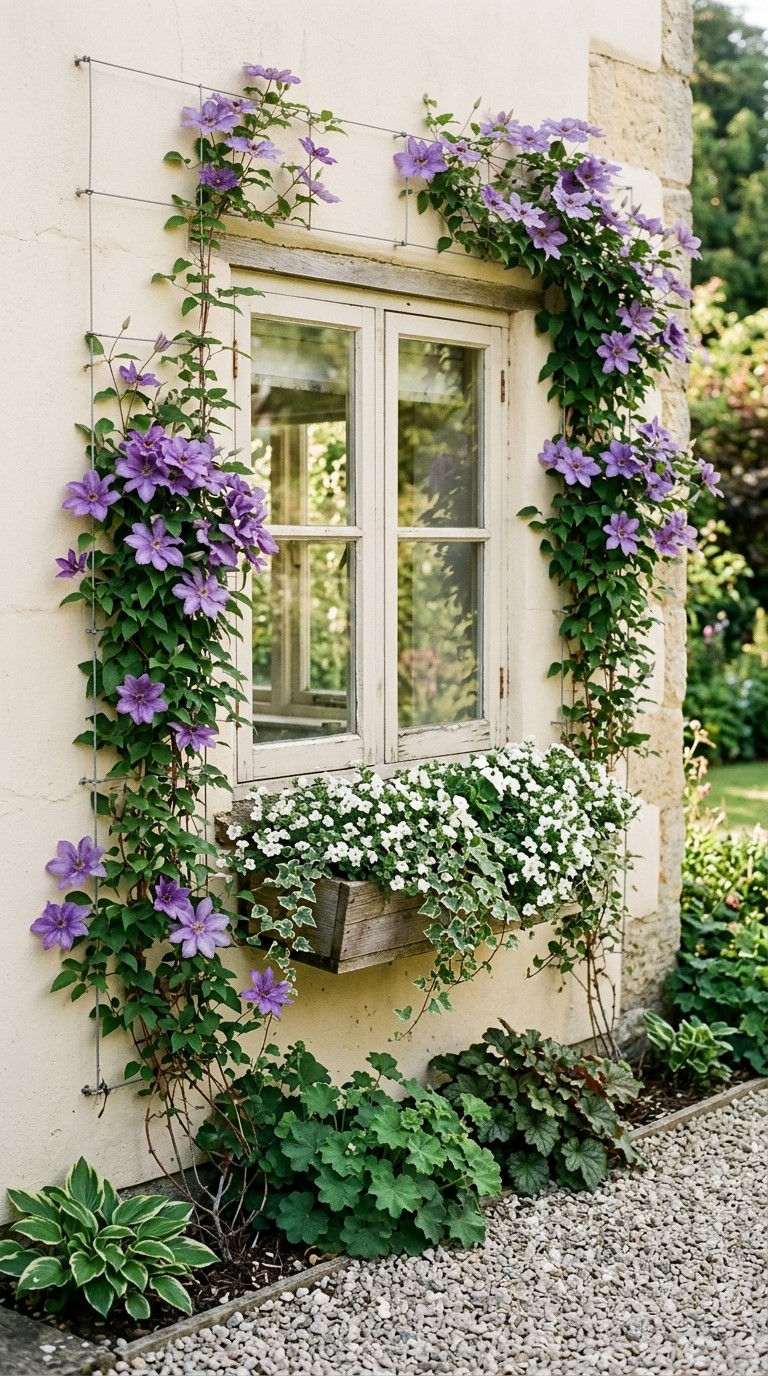
Clematis around a window can be beautiful, but it needs manners. The goal is to frame the window, not cover the glass, vents, gutters or shutters. Place the trellis or wires to guide the plant around the sides rather than straight across the opening.
This works especially well with pale flowers against brick, purple flowers against cream walls or white clematis against dark siding. Prune with the window in mind. A little discipline here keeps the whole thing from turning into a leafy curtain you never asked for.
Clematis Trellis Ideas DIY Gardeners Can Build
DIY clematis trellis ideas don’t need to look homemade in the sad sense of the word. A few straight timber battens, a painted frame, a wire grid or a simple branch support can look better than something bought in a hurry. The plant will do a lot of forgiving once it grows.
The main rule is strength. Clematis stems can become heavy after rain, and a mature plant has more weight than it appears to have in its first year. Fix trellises well, use outdoor-grade materials and check the support before the growing season starts. A collapsed trellis in July is not a romantic garden problem. It’s a mess.
Clematis Trellis Ideas DIY With Timber Battens
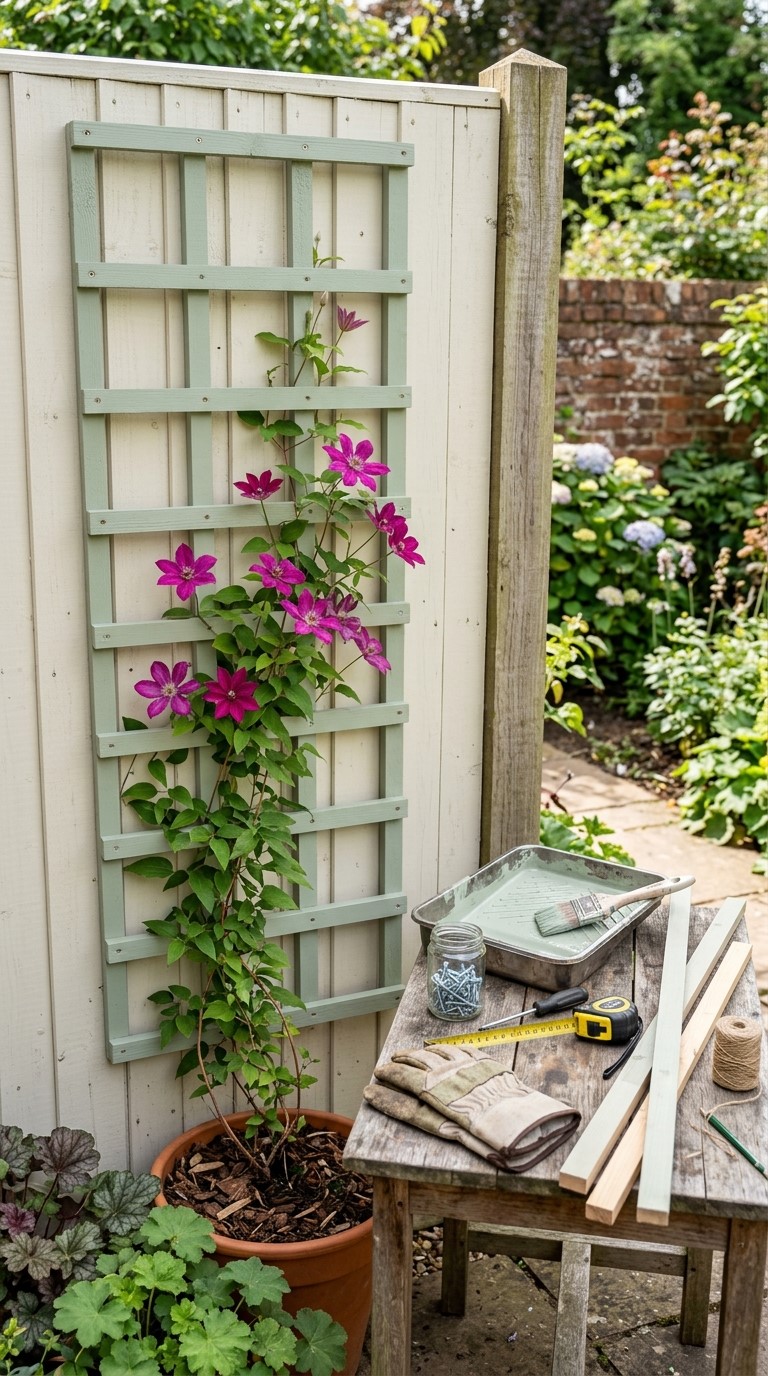
Timber battens are easy to work with and can be made to fit a fence, shed or wall. Build a rectangular frame, then add narrow vertical and horizontal strips with enough gaps for the plant to move through. Paint or stain the timber before planting so you’re not trying to work around tender stems later.
A painted timber trellis can match exterior trim, garden furniture or fence color. That small detail helps the support feel part of the garden. For a cottage look, use white or soft green. For a sharper look, black or deep charcoal can make pale clematis flowers stand out.
Clematis Trellis Ideas DIY With Wire Mesh
Wire mesh is one of the most useful clematis trellis ideas for DIY gardeners because it gives the plant many gripping points. It can be fixed inside a timber frame, attached to fence posts or used behind a more decorative front panel.
Choose mesh that looks neat enough to see in winter. Cheap, flimsy mesh can sag, and once the plant is established, fixing it becomes annoying. A sturdy galvanized or dark-coated mesh panel usually looks better and lasts longer. It’s not glamorous, but clematis doesn’t need glamorous. It needs grip.
Clematis Trellis Ideas Front Yard Gardens Can Use
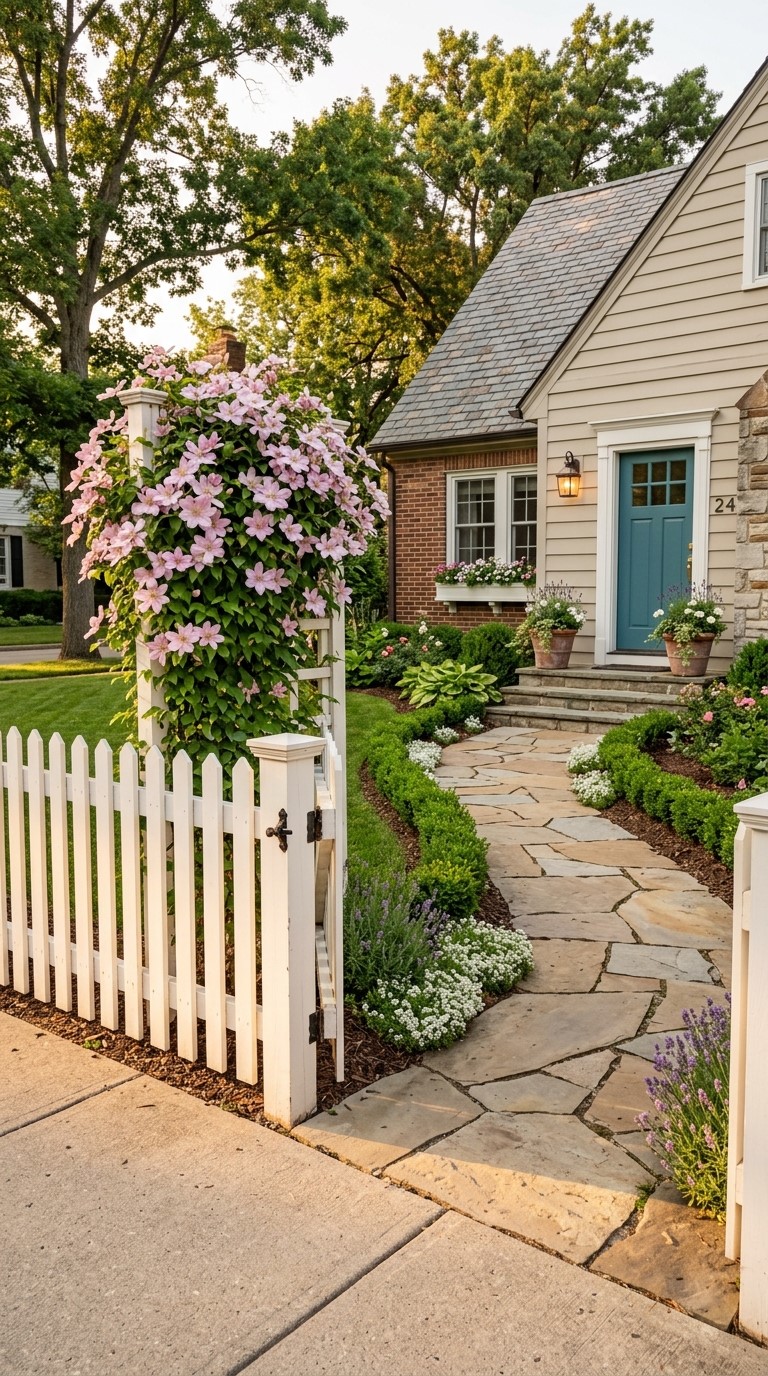
Front yard clematis trellis ideas need a little polish. The front of the home is where messy growth, crooked supports and tired pots become much more noticeable. That doesn’t mean everything has to be formal. It just means the trellis should look cared for, even when the plant is between flushes of flowers.
Clematis can be a lovely front yard plant because it adds charm without taking up much ground. It can climb beside a gate, soften a porch post or add color to a fence near the path. Used well, it makes the entrance feel more personal without crowding the space.
Clematis Trellis Ideas Front Yard Entryways
A clematis near the front path can make the entrance feel more welcoming. Try a slim trellis beside the door, a pair of matching pots with compact clematis or a small arch over a side gate. Keep the support in scale with the house so it doesn’t look theatrical.
Front entry plants need to behave. Choose varieties that suit the space, prune them at the right time and tie in loose growth before it starts grabbing at handrails or door trim. A flowering vine should feel generous at the front door, not like it’s trying to come inside with you.
Clematis Trellis Ideas Front Yard Fence Features
A front fence is a good place for one strong clematis moment. Add a trellis panel behind the plant, then keep the surrounding planting simple. Low shrubs, neat edging or a few repeat flowers can make the clematis look more settled.
This is also a good way to brighten a plain boundary without replacing the whole fence. One flowering section near the gate or along the path can do enough. More is not always better, especially in a front yard where every extra detail has to earn its space.
Clematis Trellis Ideas for Arches and Garden Paths
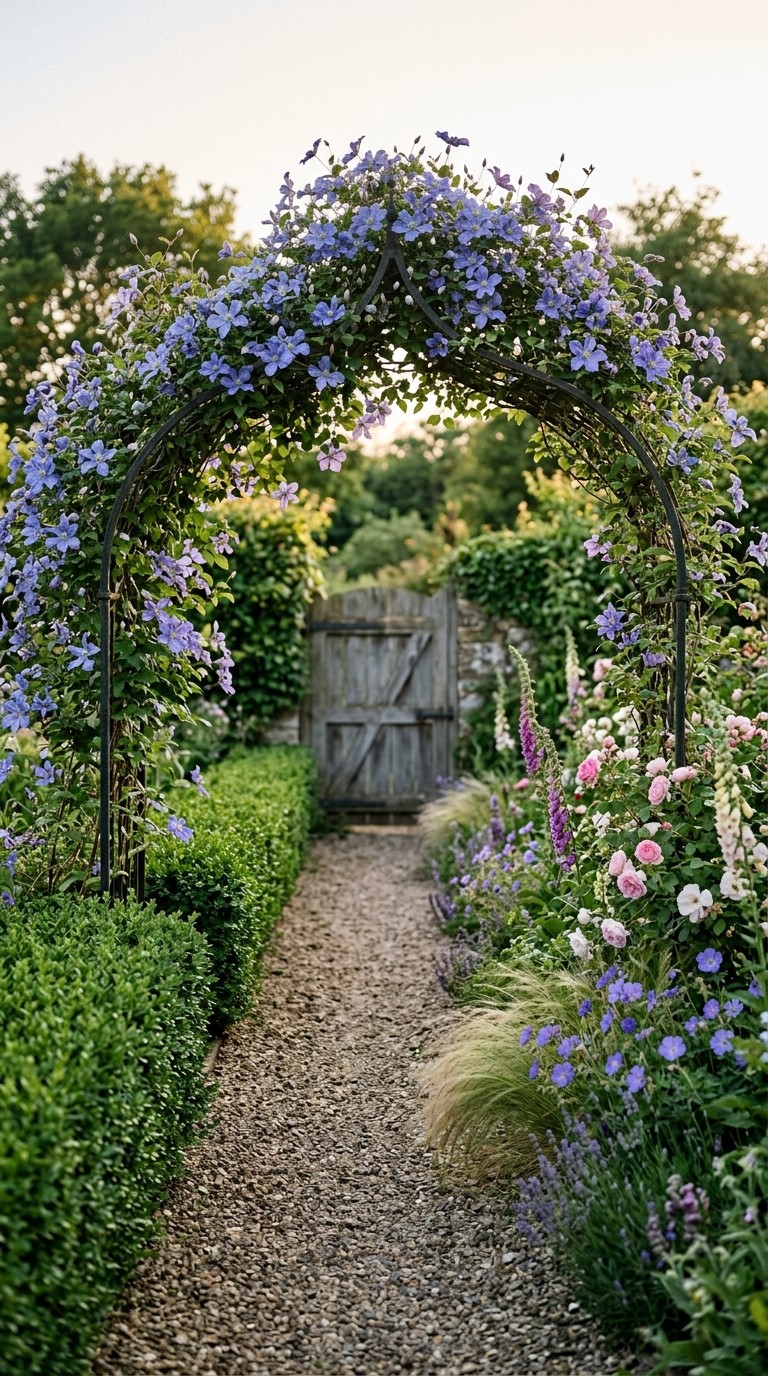
Clematis trellis ideas for arches bring a different feeling to the garden. A flat support gives you flowers on a surface. An arch gives you flowers overhead, and that changes how the space feels when you walk through it. It turns a path into a small event.
The arch has to be strong enough for the mature plant and wide enough for people to pass through without brushing wet leaves. Metal arches can look slim and clean. Wooden arches feel warmer and more solid. Either can work, but flimsy arches are rarely worth the trouble.
Clematis Trellis Ideas for Arches With Roses
Clematis and roses are a classic pairing because they make each other look better. The rose gives structure and often scent. The clematis adds another layer of flower and can extend the season if you choose the right variety. It’s a partnership that looks relaxed when it’s planned with some care.
Don’t plant both too close together in dry soil and expect magic. Give each plant room, feed them well and guide the young stems before they tangle. Soft pink roses with purple clematis can look lovely. White roses with deep red clematis feel richer and more dramatic.
Clematis Trellis Ideas for Arches in Small Gardens
Small gardens can still use arches, but the proportions matter. A narrow metal arch over a path, a half arch against a wall or a small entry arch between two planting areas can add height without eating up the ground.
Keep the planting around the arch fairly calm. If the base is packed with too many competing plants, the arch can look crowded before the clematis has even started. A few low perennials, a mulch edge and one good climber can be enough. Small spaces often look better when they’re edited.
Clematis Trellis Ideas for Planting, Training and Pruning
Even the best clematis trellis ideas need good planting and training. Plant the clematis where its roots can stay cool and its top growth can reach light. If planting near a wall or fence, set it out a little from the base so rain can reach the soil. Walls can create dry strips that punish new plants.
Training starts early. Young clematis stems are easier to guide when they’re soft, so don’t wait until they’ve formed a knot. Use soft ties and attach stems loosely to the trellis. As new growth appears, spread it across the support rather than letting everything race straight up the middle.
Clematis Trellis Ideas for Root Shade
Root shade can be simple. Add mulch, place a low shrub nearby or plant small perennials around the base. The point is to keep the root area cooler and reduce moisture loss, especially in full sun.
Don’t bury the crown under a pile of wet mulch. Leave a little breathing room around the stems. Clematis likes steady moisture, but soggy stems and poor airflow can lead to trouble. Think comfort, not smothering.
Clematis Trellis Ideas for Pruning Access
Pruning is much easier when you can reach the plant. That sounds obvious until a clematis has grown behind a fixed panel, through a rose and into the gutter. Leave space around wall trellises, don’t overfill narrow arches and check the pruning group for your variety.
Some clematis flower on old wood, some on new growth and some need only light tidying. A plant label can save you from cutting off the season’s flowers by mistake. If the label is gone, watch when it blooms for a year before making big cuts.
Clematis Trellis Ideas That Make the Garden Feel Finished
A clematis trellis can be practical, decorative or quietly useful. The best ones are often all three. They give the plant a place to climb, but they also fix something in the garden that felt flat, bare or unresolved.
A fence may need a wire grid and one strong-flowering clematis. A patio may need a deep pot and a sturdy obelisk. A front path may need a small arch that makes coming home feel a little nicer. None of these changes has to be complicated. The point is to give the vine the right support, then let the flowers do what they came to do.
Clematis has a way of making a garden look more cared for than it was the week before. That is a useful trick. And if the trellis is well chosen, the plant will keep repeating it every year: climbing, flowering, softening the hard lines and making the ordinary parts of the garden feel like they were worth noticing all along.
