
Potting Shed Ideas for a Garden Workspace You’ll Want to Use
A good potting shed earns its space every time you reach for a trowel. It keeps seed packets dry, gives muddy tools a proper home and saves the kitchen from trays of compost. Yet many sheds become crowded with cracked pots, stiff hoses and half-used supplies.
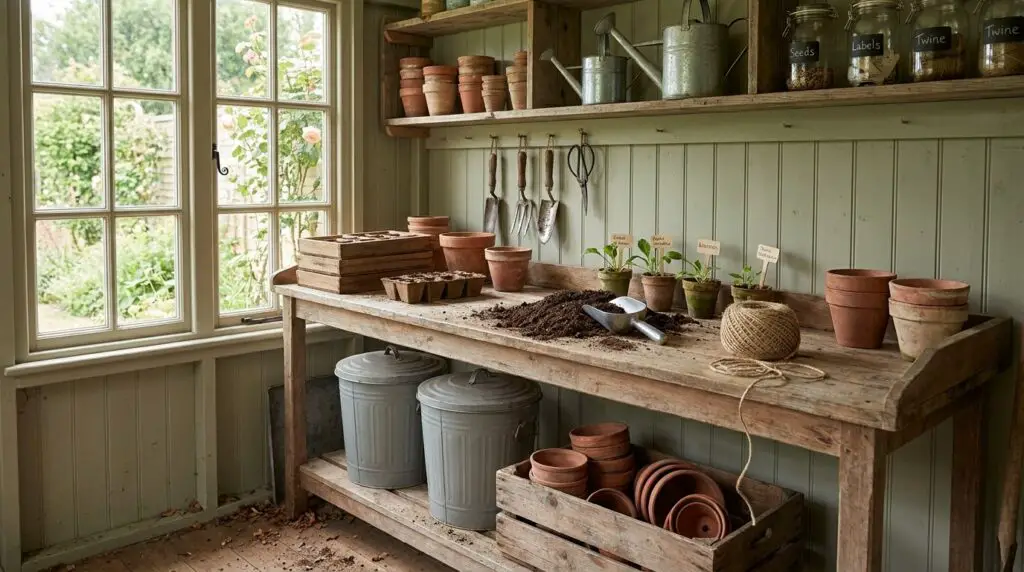
The problem usually begins with the layout, not the size of the building. The strongest potting shed ideas start with the jobs you do each week. Seed sowing, repotting, tool cleaning and plant storage all need slightly different arrangements. Once those tasks have a clear place, the shed becomes easier to use and far simpler to keep tidy. It can still look lovely, but the work needs to come first.
Plan Potting Shed Ideas Around the Work You Do Most
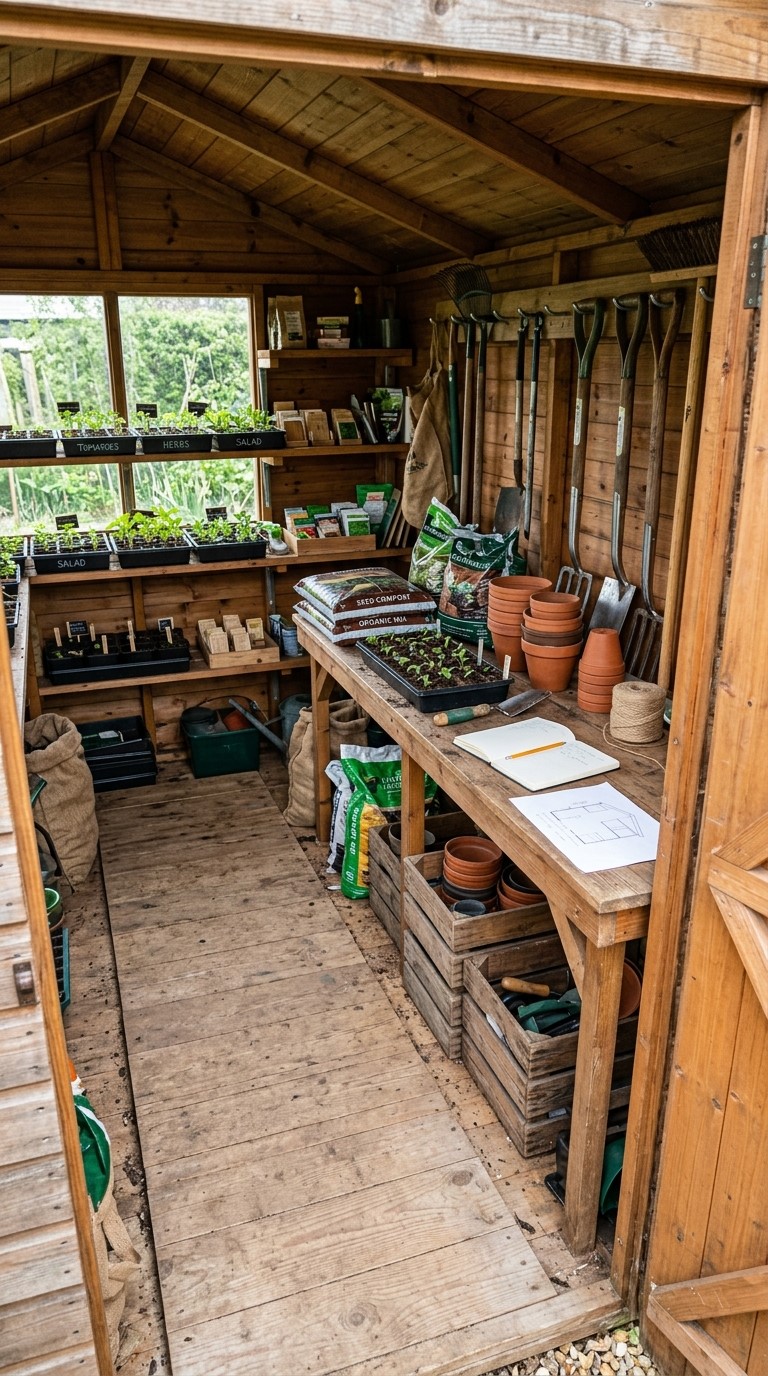
Before adding shelves or choosing paint, decide what the shed needs to help you do. A gardener who raises trays of seedlings needs bright light and broad surfaces. Someone who spends more time dividing perennials may care more about a tough bench, compost storage and quick access to hand tools. Write down the five jobs you do most often. That list will tell you where the bench belongs and which supplies need to stay close.
A Potting Shed Layout Should Follow Your Main Gardening Tasks
Start with the main work surface and build the potting shed layout around it. The bench should sit near compost, pots and labels so you can complete a job without crossing the room several times. Keep one section clear for dirty work and another for seeds or clean trays. Leave a direct route from the door to the bench. A narrow walkway soon becomes irritating when you are carrying a heavy pot or a full seed tray.
Small Potting Shed Ideas Need Zones Rather Than More Furniture
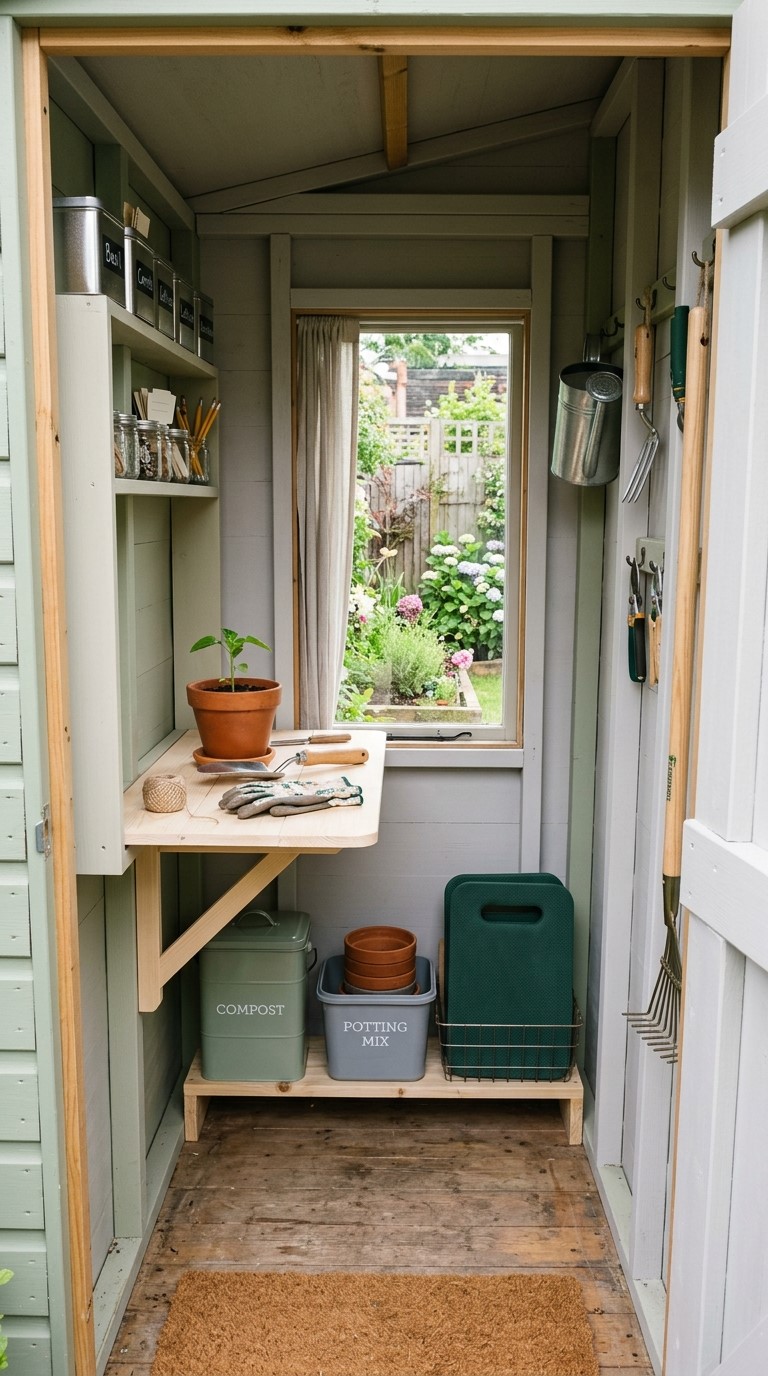
Small potting shed ideas work best when each section has one clear purpose. Give one wall to the bench, one wall to hanging tools and a dry shelf to seeds or labels. Extra cabinets and decorative chairs can turn a compact shed into an obstacle course. Fold-down benches suit tight spaces, while narrow shelves above head height can hold light pots or spare trays. Keep compost and watering cans low where they are easier to lift.
Build Potting Shed Interior Ideas Around a Strong Workbench
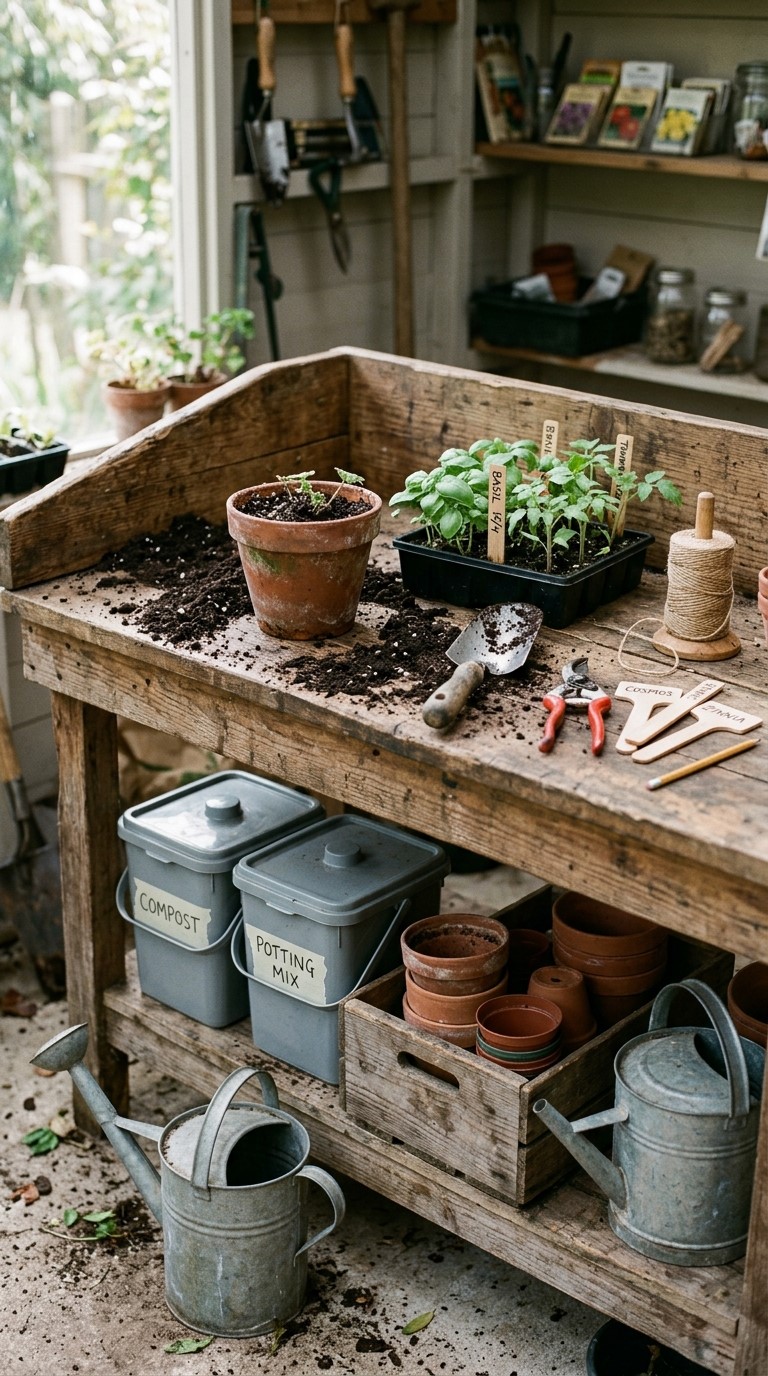
The workbench sits at the centre of most potting shed interior ideas. It needs enough depth for a seed tray, a few tools and a bag of compost without everything sliding onto the floor. Height matters as well. A low bench makes even a small task hard on your back. Timber is easy to repair, while metal or tiled tops cope better with wet compost. A removable tray can provide a washable surface without changing the whole bench.
A Potting Bench Setup Should Handle Mess and Quick Cleanups
A practical potting bench setup needs a solid top, a raised back and open storage underneath. Keep a scoop, hand fork, plant labels and twine close by. Compost can sit below in lidded bins that pull forward when needed. A shallow lip around the bench edge helps stop soil falling into gaps. Add a removable mixing tray, plus a small brush and dustpan. Cleaning becomes much easier when everything required is already in the shed.
Shed Lighting Ideas and a Garden Sink Save Repeated Trips Indoors
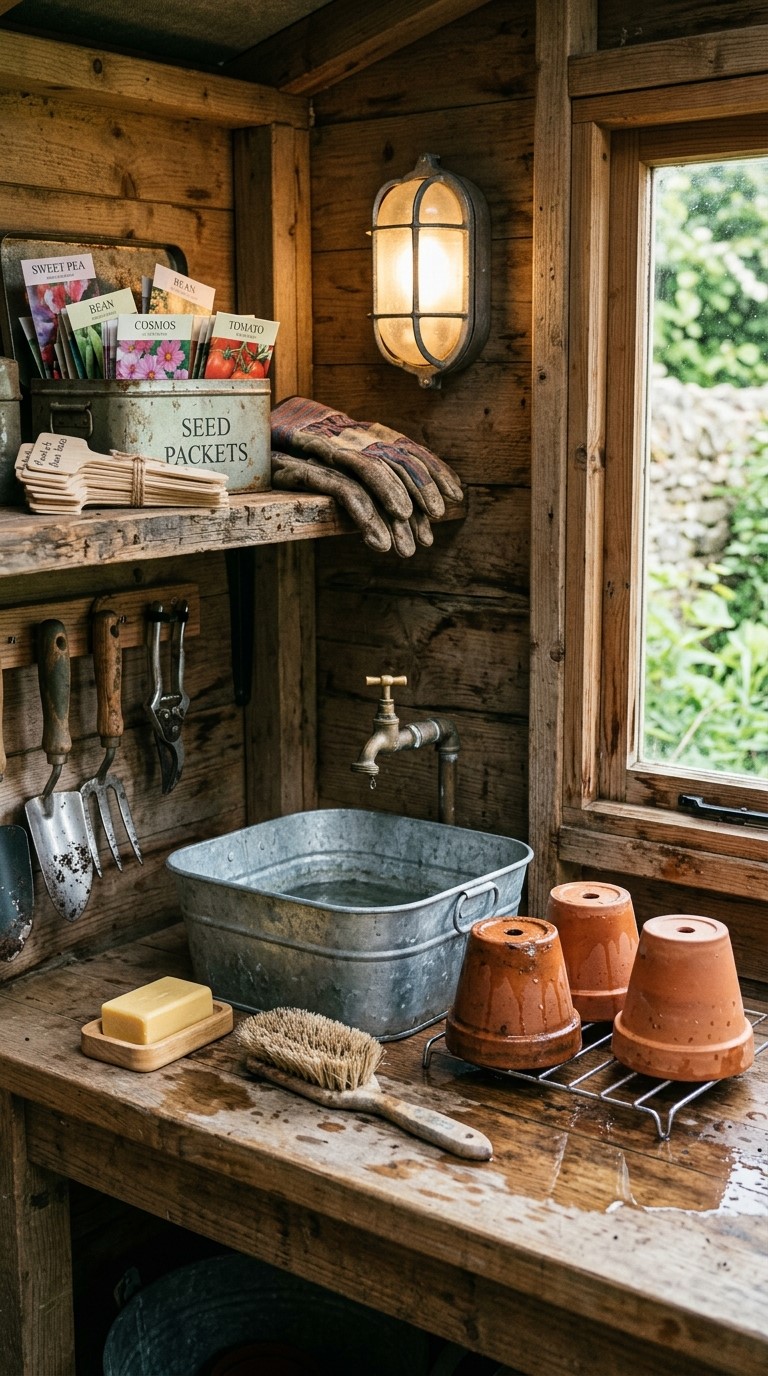
Good shed lighting ideas begin with natural light. A window beside the bench helps with sowing, reading seed labels and checking leaves for pests. Battery lights can cover dull afternoons or early starts, with one above the bench and another near the door. A small garden sink is useful for washing pots and tools. In sheds without plumbing, a water container with a tap can do the job. Plan drainage carefully and empty exposed pipes before freezing weather.
Use Potting Shed Storage Ideas to Keep the Floor Clear
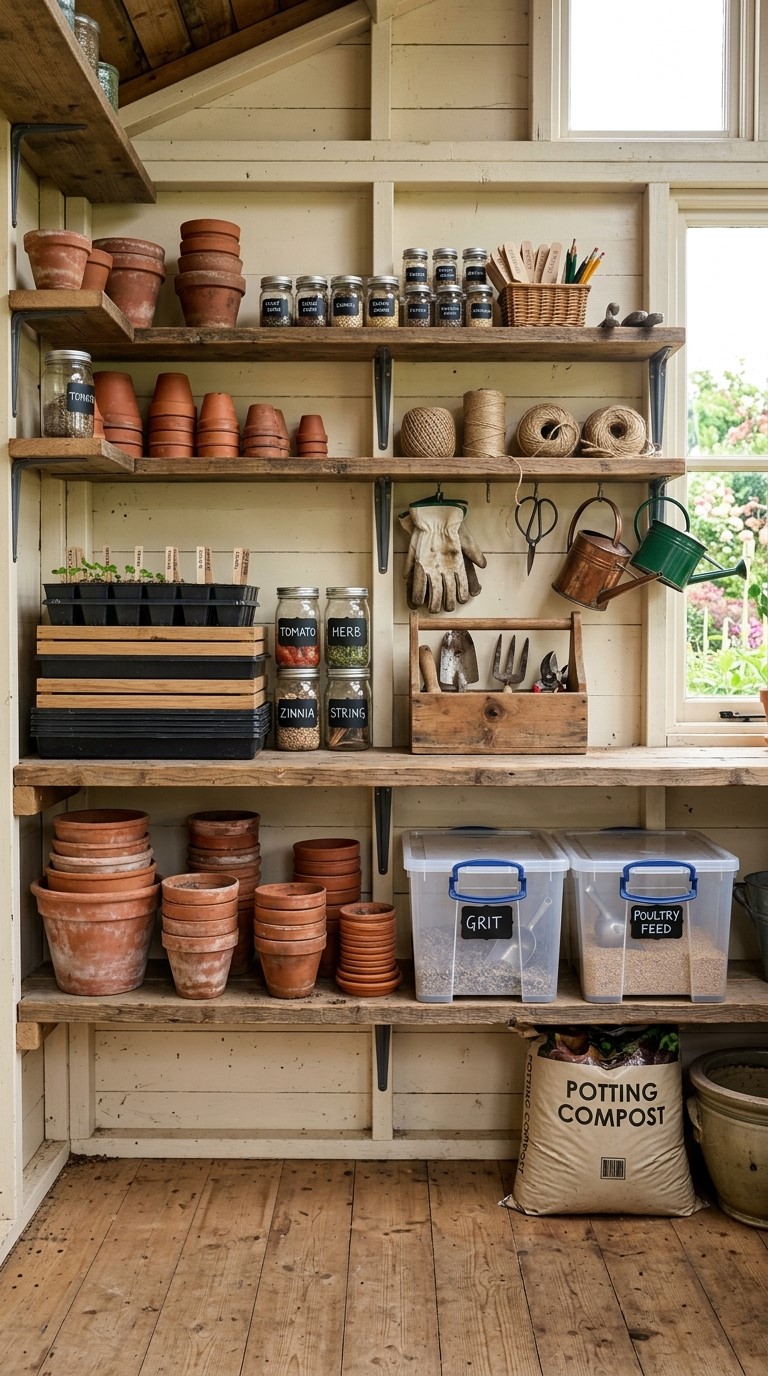
The floor is valuable working space, so potting shed storage ideas should move supplies onto walls and shelves. Everyday items belong between waist and shoulder height. Seasonal stock can sit higher, while heavy bags and filled containers should remain low. Keep only current supplies in the shed. Old chemicals, split compost bags and cracked trays take up room long after they stop being useful. A spring clear-out can recover more space than another cupboard.
Shed Shelving Ideas for Soil, Trays and Everyday Supplies
The best shed shelving ideas match shelf depth to the items being stored. Narrow shelves suit labels, small pots and bottles. Deeper lower shelves can hold compost bins, watering cans and stacked trays. Adjustable shelves are handy because garden supplies change through the year. Use sealed tubs for grit, feed and seed compost, then label them clearly. Leave some open space as well. Shelves packed edge to edge are hard to use, and items at the back are soon forgotten.
Vertical Shed Storage Keeps Long Tools Under Control
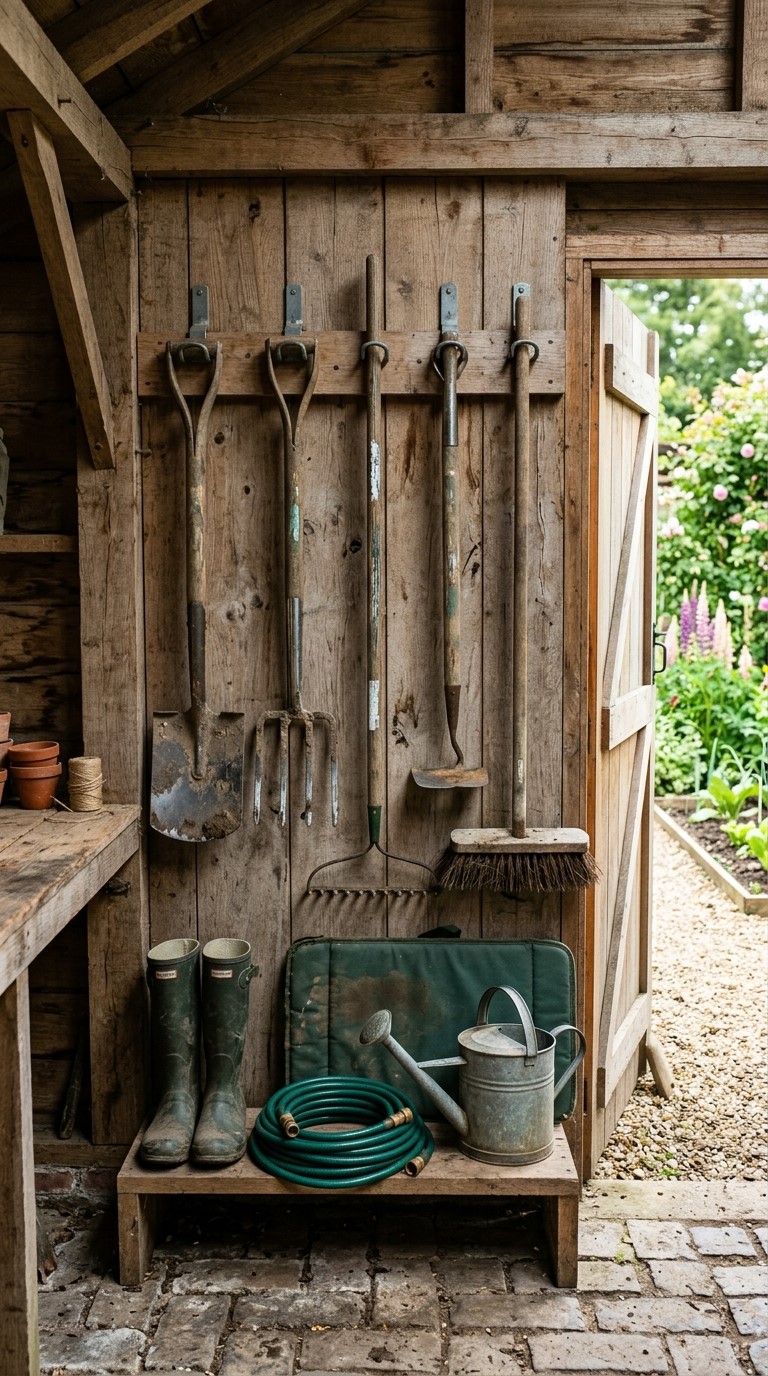
Vertical shed storage is ideal for spades, forks, rakes and hoes because these tools need height more than depth. Strong wall clips or rails keep them upright and stop handles falling across the floor. Store the tools you carry outside most often near the door. Hooks can hold kneeling pads, baskets and coiled hose, while watering cans can sit on a low shelf. Check wall fixings before hanging heavy tools, especially in sheds with thin timber panels.
Keep Potting Shed Organization Ideas Easy to Maintain
Potting shed organization ideas should stay simple during busy months. A system with too many boxes and tiny categories will be ignored as soon as spring arrives. Give each common item one obvious home and make sure it can be returned with one hand. A small basket for tools that need cleaning can help. Instead of leaving muddy secateurs on the bench, drop them into the basket and deal with them at the end of the session.
Garden Tool Organization Works Better Close to the Door
Garden tool organization should reflect how equipment moves in and out of the shed. Hand forks, trowels and secateurs belong near the entrance or beside the bench. Gloves can hang from clips, while muddy boots sit on a washable tray. A narrow rack stops small tools disappearing into drawers. Keep sharpening stones, oil and spare blades together so maintenance takes less effort. Sharp tools need a secure position above the reach of children and pets.
Seed Storage Ideas and Clay Pot Storage Need Different Conditions
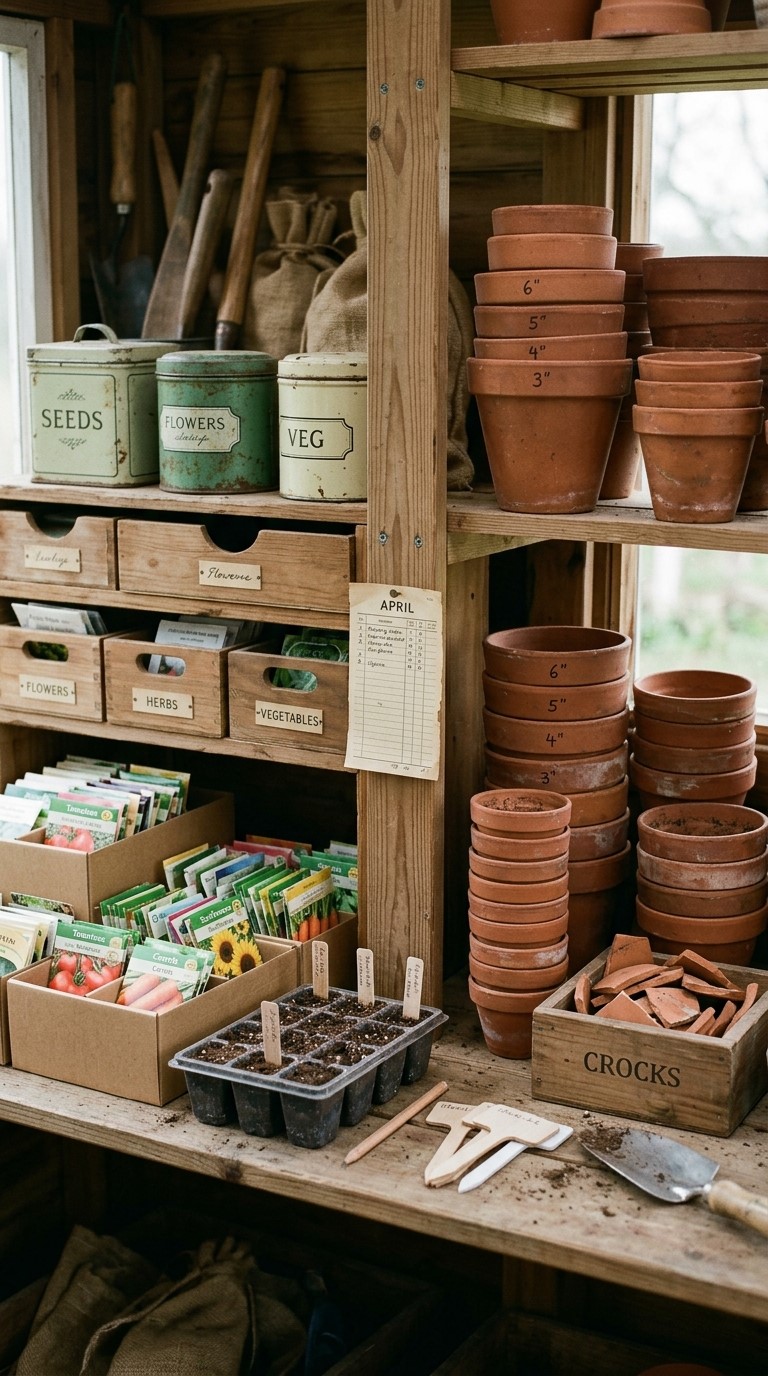
Seed storage ideas should focus on dryness, steady temperatures and easy sorting. Tins, drawer units or sealed boxes all work. Grouping packets by sowing month can be more practical than arranging them by plant name. Clay pot storage can be more open. Stack pots by size on a strong shelf, placing paper between delicate pieces. Keep chipped pots in a separate box for drainage crocks or labels. Damaged pieces should have a clear use or leave the shed.
Give Rustic Potting Shed Ideas a Working, Lived-In Feel
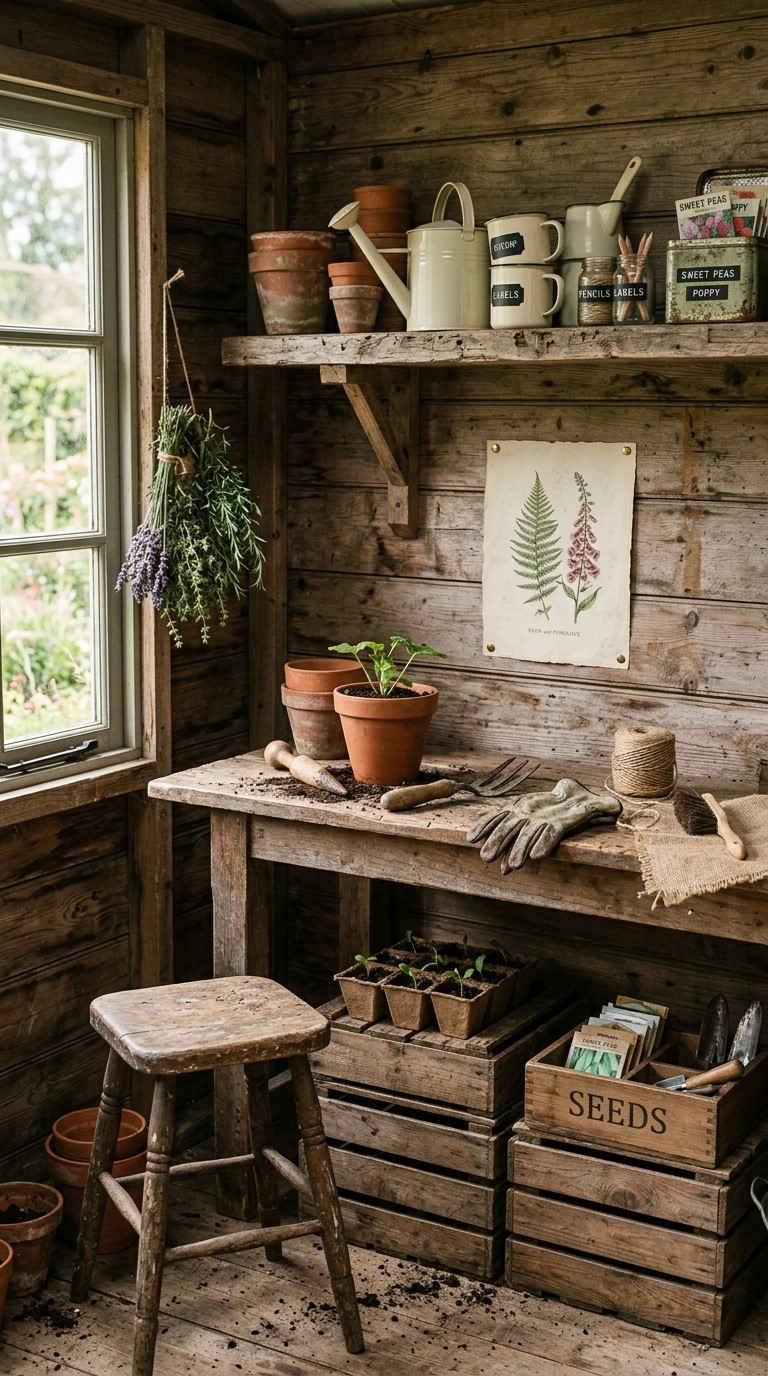
Rustic potting shed ideas suit a room already filled with timber, terracotta and old tools. Reclaimed shelves, worn crates and enamel containers can add character while doing a real job. The risk comes from turning every wall into a display. A potting shed still needs room for compost, dripping trays and muddy equipment. Choose a few older pieces with useful storage, then leave the rest of the room plain enough for gardening.
Cottage Shed Decor Should Leave Space for Real Gardening
Cottage shed decor can warm up the room without making it crowded. A small curtain, painted shelf or botanical print may be enough to soften hard surfaces. Enamel tins work well for labels and twine, while an old stool can hold a basket of gloves. Repeat a small group of materials so the room feels connected. Painted timber, aged metal and terracotta sit together easily. Keep soft fabrics away from damp compost and wet tools.
Vintage Garden Storage Looks Better When It Has a Job
Vintage garden storage works well when each piece earns its place. Old drawers can hold seed packets and spare plant ties. Wooden crates suit pots or trays, while metal tubs can collect tools waiting to be cleaned. Check older wood for pests, weak joints and sharp splinters before bringing it indoors. Rusty metal needs cleaning as well. Modern sealed boxes still make sense for anything that needs protection from moisture, even in a rustic room.
Compare DIY Potting Shed Ideas With Ready-Made Buildings
DIY potting shed ideas give you control over size, window placement and internal fittings. Converting an existing garden shed may cost less when the roof and base are sound. A new building offers more freedom but brings extra work and materials. Ready-made sheds are quicker to install, though the advertised price may cover only the shell. Benches, shelves, flooring and paint can add a surprising amount, so compare complete setups rather than headline prices.
Potting Shed Plans Must Match Budget, Skill and Local Rules
Good potting shed plans begin with measurements. Check the available footprint, door clearance, roof height and path access. Leave enough room to move compost bags or a wheelbarrow without scraping walls or planting. The base, roofing and drainage deserve the first share of the budget. Check local building rules, property boundaries and rental restrictions before work begins. Electricity and plumbing may require qualified help. A modest shed on a dry, level base will usually serve you well.
Greenhouse Potting Shed Ideas Need Separate Growing and Storage Areas
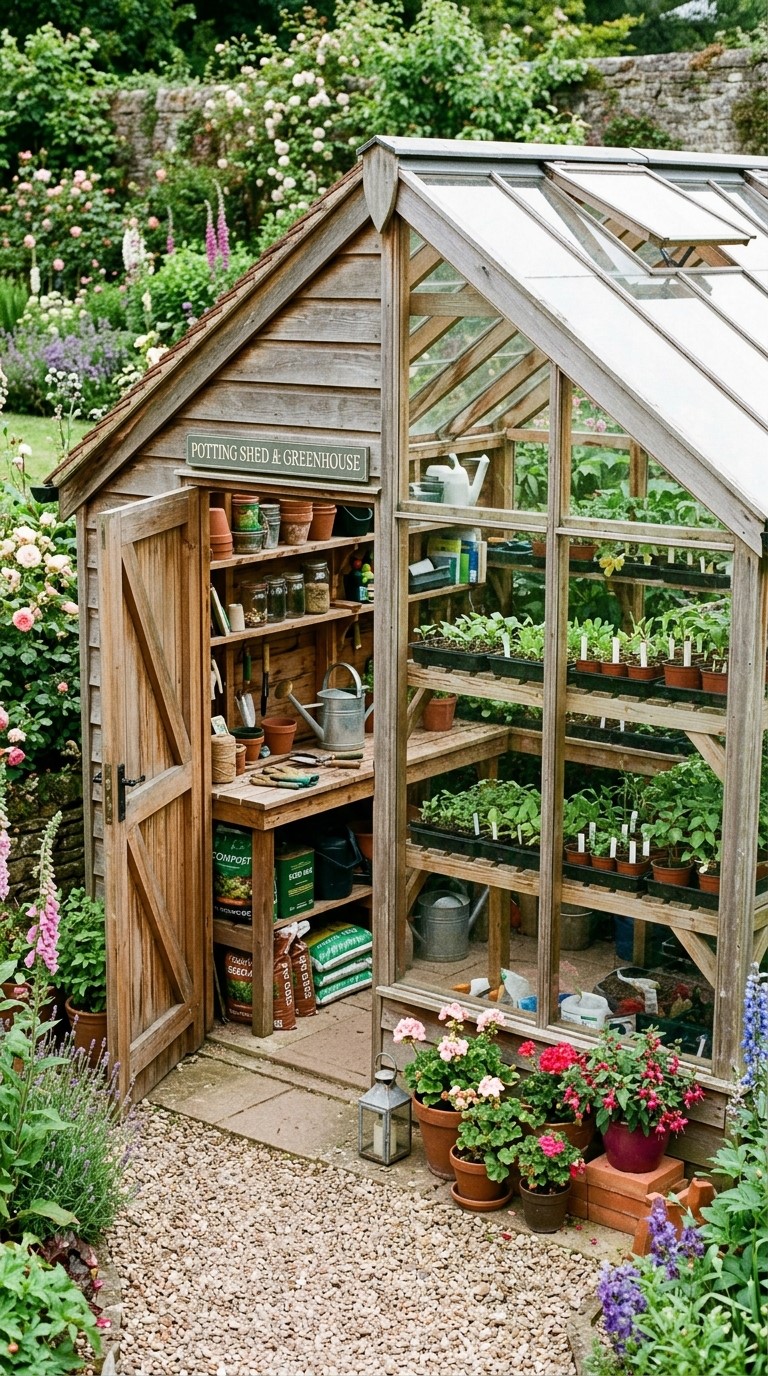
Greenhouse potting shed ideas combine a bright growing area with a more sheltered workspace. The glass section can support seedlings and tender plants, while the solid section holds tools, compost and equipment away from strong sun. Ventilation matters because temperatures can rise fast. Seeds, feeds and garden chemicals should stay in the cooler side. Place the potting bench close to the dividing wall so plants can move between areas without a long carry.
Finish With Potting Shed Exterior Ideas That Suit the Garden
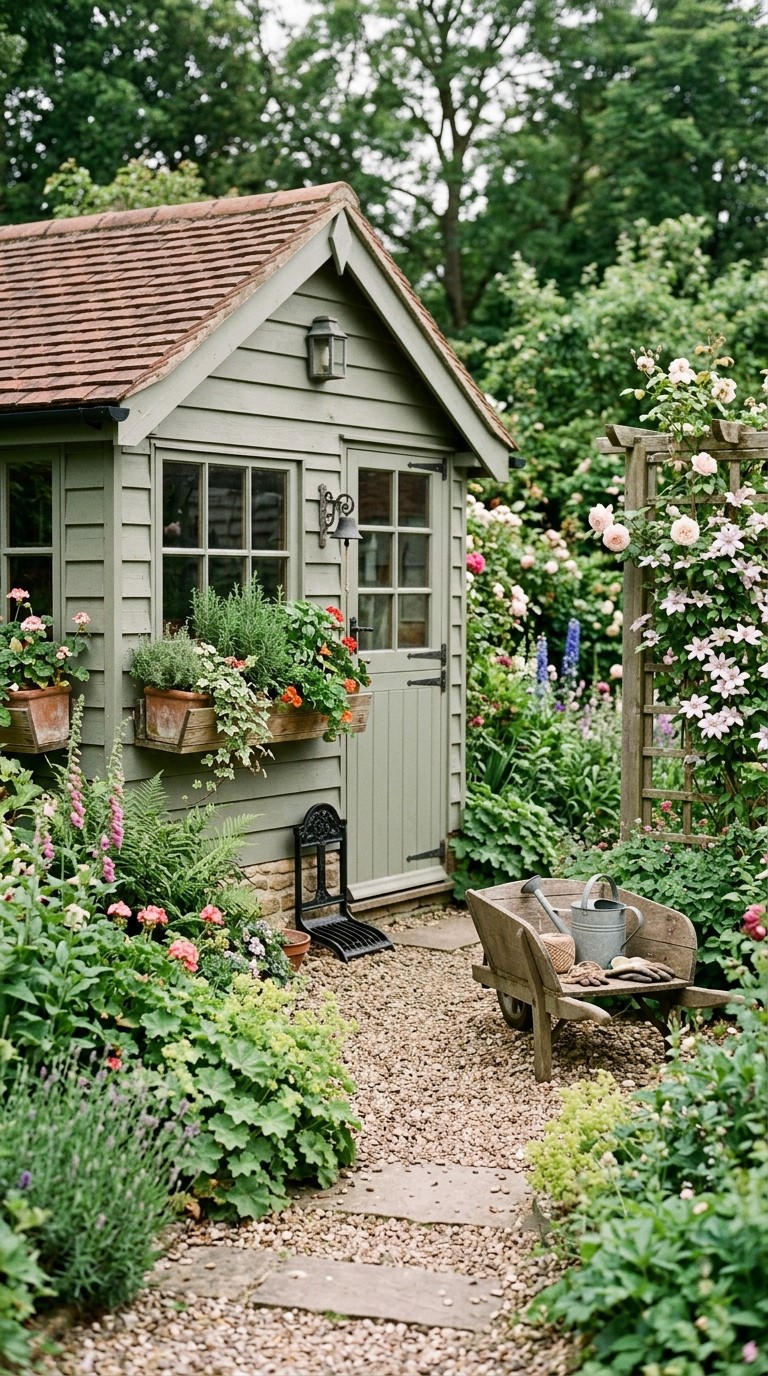
Potting shed exterior ideas should connect the building with the rest of the garden. Paint colour, planting and paths all affect how the shed feels from the house. Dark greens and soft greys often settle into surrounding foliage, while pale colours can brighten a shaded corner. Access still comes first. A path needs enough width for a wheelbarrow or large compost bag, and shrubs should stay clear of doors, vents and timber walls.
Shed Landscaping Ideas Can Soften a Plain Structure
Simple shed landscaping ideas can make a basic building feel settled. Gravel paths, stepping stones and low planting around the front edge are good places to begin. Herbs near the door are handy, while small flowers can soften the base. Climbers need a separate trellis rather than direct attachment to timber walls. This leaves space for air and makes maintenance easier. Avoid large shrubs close to the structure because roots and branches can cause problems as they grow.
Painted Garden Shed and Window Box Ideas Add Character
A painted garden shed can repeat a colour used on the house, fence or garden furniture. Test paint on a small area because colours often look stronger outdoors than they do on a sample card. Window box ideas work well for herbs or trailing flowers, provided the boxes have secure fittings and good drainage. A boot scraper, sturdy hook or covered shelf may add more value than decorative signs. Keep the entrance clear and easy to use.
Bring Your Potting Shed Ideas Together With a Final Edit
Once the shed is fitted out, remove anything that blocks movement or has no clear role. Stand at the doorway and look at the route to the bench. You should be able to reach tools, compost and pots without shifting several objects first. Keep decor that makes you enjoy the room, but do not let it claim working surfaces. One favourite print, an old clock or a row of terracotta pots can add enough personality.
Potting Shed Decor Ideas Should Earn Their Space
Potting shed decor ideas work best when each piece is useful or genuinely liked. Small ornaments collect dust fast in a room used for soil and water. Live with the finished layout for a month before adding more. You will soon notice which corners stay empty and which surfaces attract clutter. That information is more helpful than copying a styled photograph. The shed needs to fit your habits, your tools and the way you garden.
A Garden Workspace Stays Useful With a Five-Minute Reset
A garden workspace is easier to return to when the previous job has been cleared away. Spend five minutes after each session brushing the bench, closing compost bins and returning tools to hooks. Keep a cloth, brush and waste tub close by so cleanup does not require another trip. During the busiest weeks, aim for usable rather than perfect. A clear work surface and safe floor are enough to keep the shed doing its job.
A Potting Shed Worth Walking Into Every Day
A successful potting shed does not need a large budget or a magazine-perfect interior. It needs a solid bench, sensible storage and enough clear space for real gardening jobs. Once those basics are right, paint, vintage pieces and planting can bring in character without getting in the way. The shed should support the garden outside it. When tools are easy to find and supplies stay dry, small jobs feel lighter and bigger projects become less chaotic. That is what makes a potting shed worth having. It gives your gardening work a proper home and leaves more time for the plants.
