
Final Mowing Heights for Virginia Lawns: Practical Targets for Tall Fescue and Bermudagrass
Your last few mows of the year can shape how your lawn looks when winter ends. But Virginia lawns are not all the same, so one number will not fit every yard.
The right height depends on the type of grass you grow. Here is how to match your mowing to your lawn this fall.
Identify the grass before choosing a height
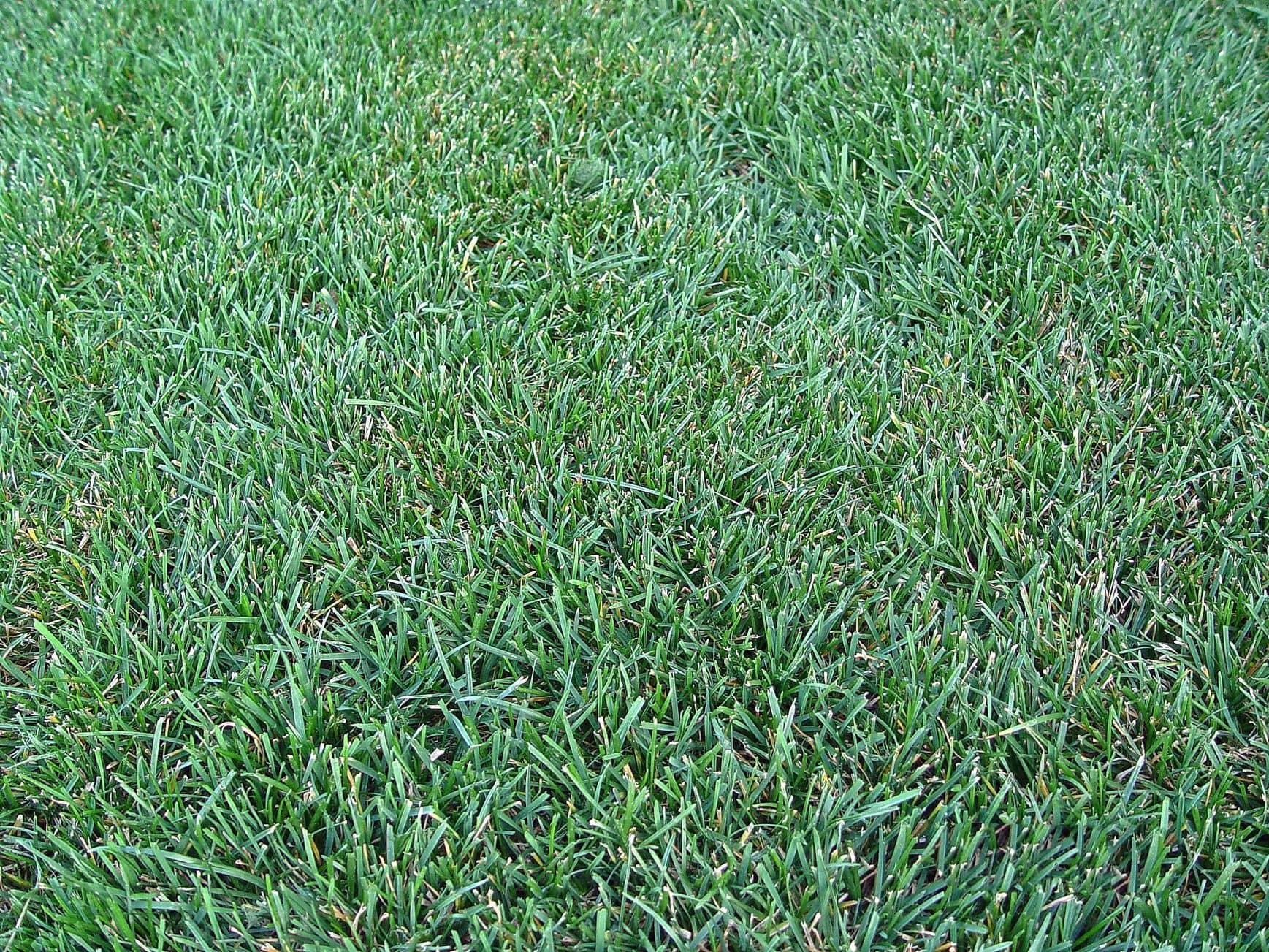
Virginia has no single final mowing height that fits every lawn, and no one cut can guarantee a healthy winter. Before you set your mower deck, figure out which grass you actually have.
That one step decides almost everything else.
Tall fescue is a cool-season grass. Bermudagrass is a warm-season grass that goes dormant in winter.
Virginia Cooperative Extension keeps separate maintenance calendars for cool-season turfgrasses and for bermudagrass, because the two grow on different schedules. The bermudagrass calendar is written for athletic fields, so it is not a homeowner mowing schedule.
This article covers two kinds of lawns: tall fescue, and bermudagrass that has not been overseeded with winter grass. It does not apply to fine fescues or other grasses that simply have fescue in the name.
Virginia guidance treats tall fescue and fine-leaf fescues as different groups.
For tall fescue, Virginia Extension’s SMART Lawns booklet points to about 3 to 4 inches as a practical target. For non-overseeded Bermuda, Virginia Tech turfgrass guidance describes letting the fall canopy reach roughly 1.75 to 2 inches as growth slows.
Treat both numbers as practical targets, not universal rules. Cultivar, how the lawn is used, and local conditions can all shift what works best for your yard.
Keep tall fescue near its usual height
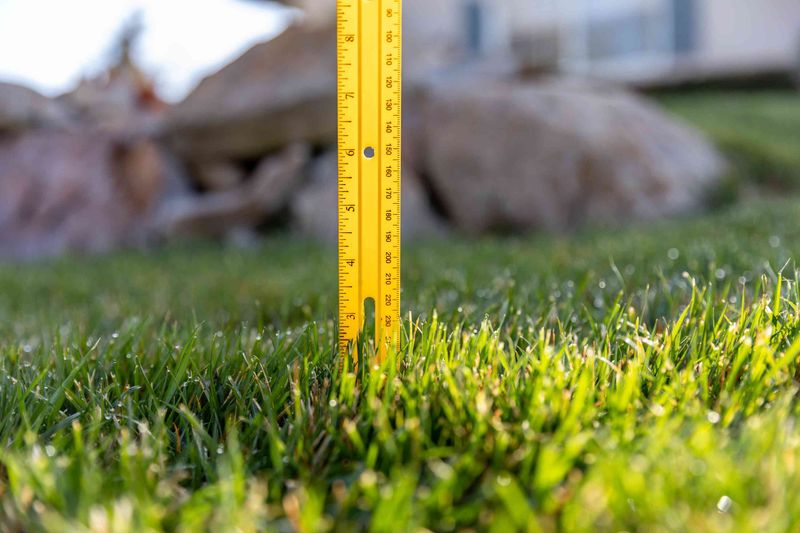
For a tall fescue lawn, about 3 to 4 inches is a sensible height to aim for through fall. Virginia Extension’s homeowner guidance in the SMART Lawns booklet recommends that range.
If your lawn is already cut at that height, you do not need to change anything for the last mowings.
The simplest plan is to stay close to your usual mowing height. If the grass has grown unusually long, move toward the lower end of the range over a few cuts.
A sudden, aggressive final cut is not part of the guidance.
You may see a lower number elsewhere. A Virginia Tech regional turfgrass chapter lists 2 to 3 inches as a typical maintenance range.
That is a general height for the growing season, not a special winter target. The same chapter notes that heights vary with cultivar and use.
Keep this advice for tall fescue only. Fine fescues and other cool-season grasses may have different preferred heights.
You may also hear that cutting fescue very short in fall helps it green up faster in spring. The Virginia guidance reviewed does not support that idea, and it does not recommend scalping fescue before winter.
A steady, moderate height is the safer path.
Let non-overseeded Bermuda reach its fall height
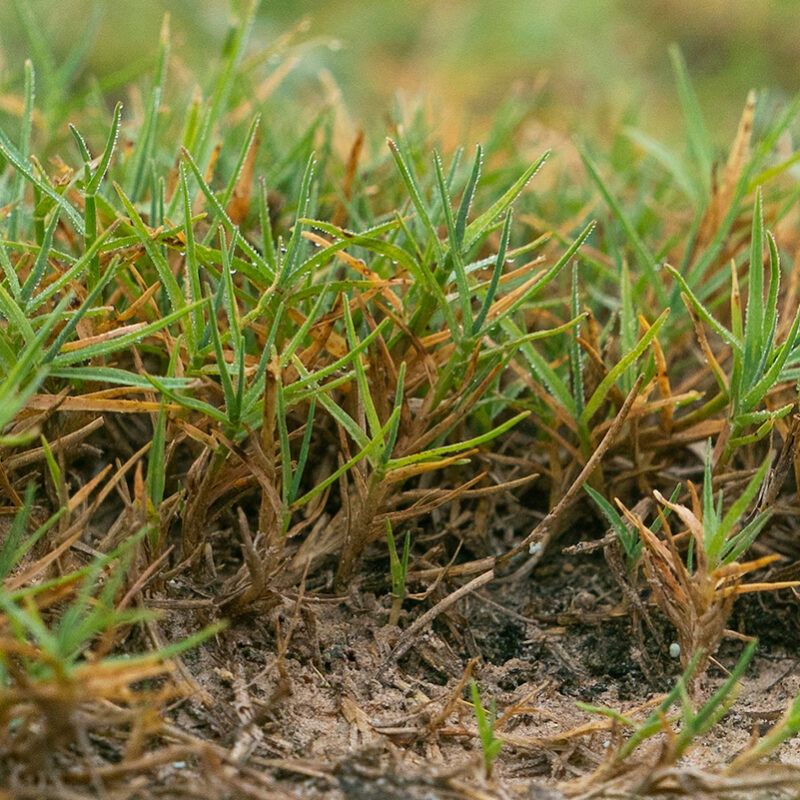
Bermudagrass works on a different clock. As fall growth slows, Virginia Tech turfgrass guidance describes letting the canopy rise to roughly 1.75 to 2 inches.
The guidance links that taller fall height with more stored carbohydrates and better winter hardiness.
That extra height is meant to help, not to promise results. It does not guarantee the lawn will avoid winter injury, and it does not promise an earlier spring green-up.
Height is only one of several cultural practices that matter.
Think of it as a canopy target rather than a deadline. You are not required to make a final cut on a certain date.
Instead, you let the grass settle into that taller range as growth tapers off, and you mow only as needed to keep it there.
One caution about sources. The Virginia Cooperative Extension bermudagrass maintenance calendar is written for athletic fields.
It is useful background, but it is not a homeowner mowing schedule, so do not copy its dates onto a home lawn.
This target is for non-overseeded Bermuda. If you overseed with a cool-season grass, your lawn needs different care.
Separate fall Bermuda care from spring mowing
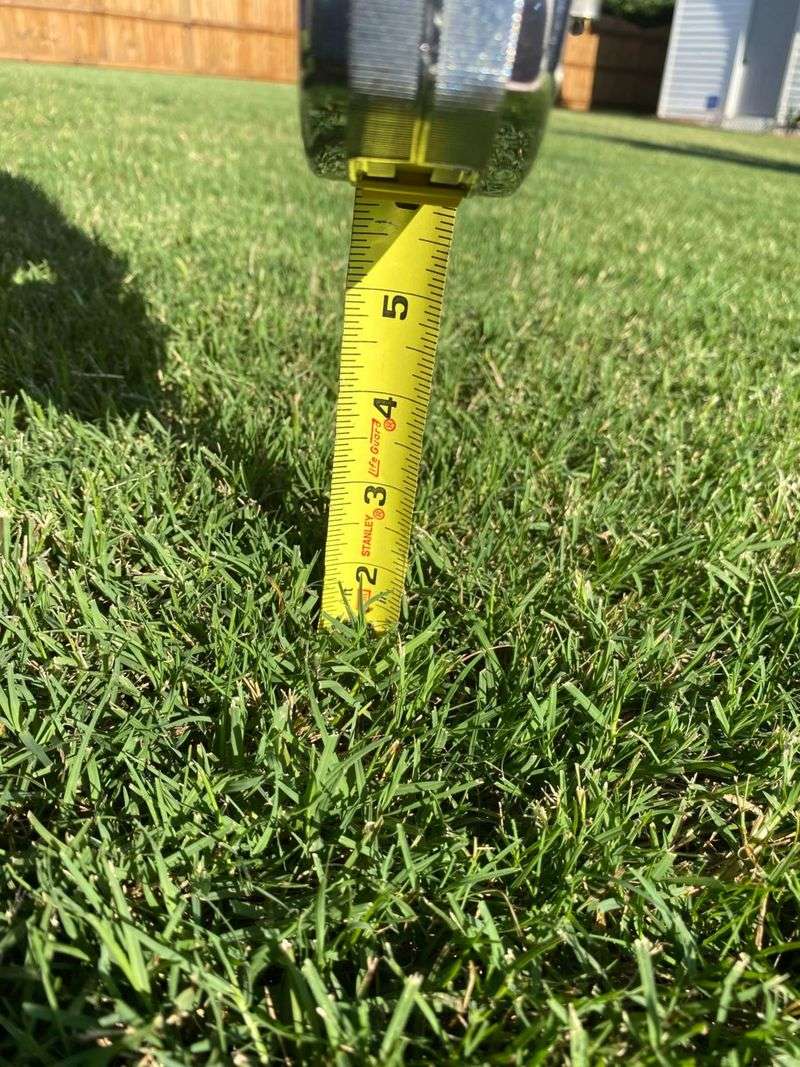
Fall and spring call for different mowing on Bermuda. The taller fall canopy of about 1.75 to 2 inches is meant to support the grass heading into dormancy.
Spring mowing has a different job.
In spring, Virginia Tech’s turfgrass guidance describes a first mowing near 1 inch for a lawn. The idea is to help warm the soil and encourage green-up.
After the lawn has fully greened up, the guidance suggests moving toward about 1.5 inches.
So a Bermuda lawn may go from a taller fall height, to a lower first cut in spring, to a middle height once it is growing well. Each step fits its season.
None of them is a promise of faster green-up or a guarantee of a healthy winter.
Keep the seasons from blurring together. The low spring Bermuda approach does not apply to fall fescue care.
A tall fescue lawn should not be dropped to 1 inch in fall or spring because a neighbor’s Bermuda is cut that way.
If you are unsure which grass you have, sort that out first. Mixing up the two is the easiest way to cut a lawn at the wrong height.
Mow gradually while the grass is growing
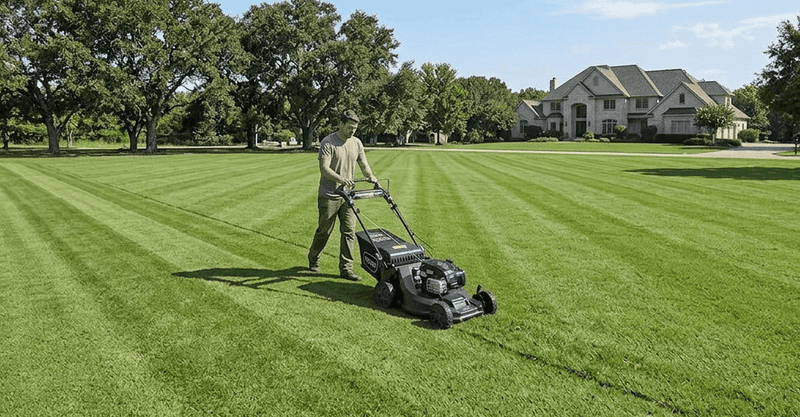
Turning height targets into a routine is mostly about pacing. Mow while the grass is actively growing, and mow as often as needed to keep it from getting too long.
Your final mowing of the year is simply the last one the growing grass needs.
That means there is no fixed calendar date for it. Weather, grass type, and growth all play a role.
A mild fall may call for another mowing in a spot where a cold snap has already stopped growth.
Follow the one-third rule for either grass: remove no more than one-third of the leaf blade in a single mowing. The Virginia Tech regional turfgrass chapter says this helps prevent scalping and the loss of stored carbohydrates.
If the lawn has grown too tall, do not fix it in one pass. Lower the deck a little at a time over several mowings until you reach your target.
For example, a tall fescue lawn that has reached 6 inches should step down toward 4 inches instead of being chopped to 2.
Also skip mowing when the grass is wet. University of Maryland Extension advises against it.
Wait for the blades to dry, and the cut will be cleaner and easier on the lawn.
Manage leaves and moisture as well as height
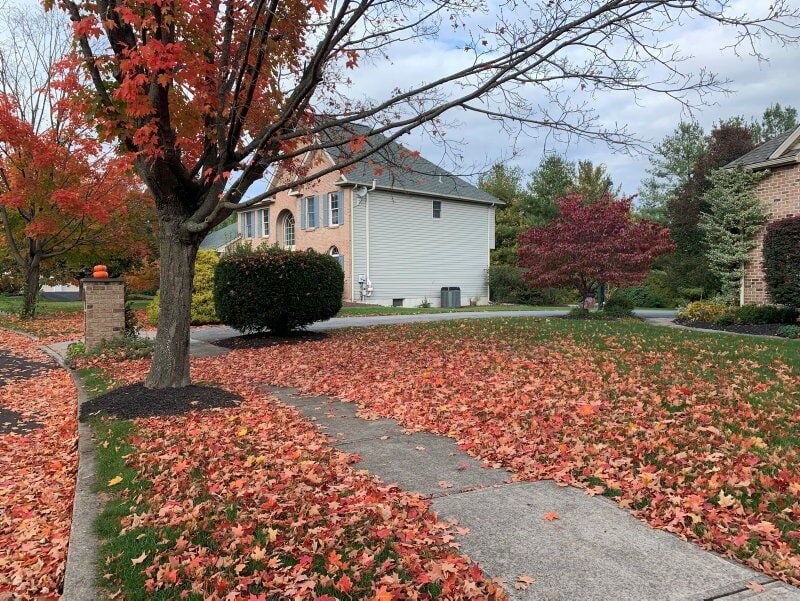
Height is only part of the winter story. No mowing height alone can prevent snow mold or ensure a healthy lawn through winter.
Conditions on the ground matter just as much.
University of Maryland Extension points to long-lasting moisture, snow or leaf cover, and matted grass blades as conditions that favor snow mold. The same guidance recommends continuing to mow while turf is still growing so it does not go into winter too long.
A heavy, wet layer of leaves is a common problem. It can press the grass flat and hold moisture against it for weeks.
Remove the leaves, or run over a light layer with a mower to chop them into small pieces that settle between the blades.
Penn State Extension’s gray snow mold page also treats the disease as tied to these cold, damp, covered conditions. It is a reminder that fall nitrogen practices and matted vegetation can play a part too.
None of these steps removes the risk entirely. Think of them as ways to avoid giving disease an easy setup.
Combine them with sensible mowing, and you have done what you reasonably can.
Use a species-specific target, not an extreme last cut
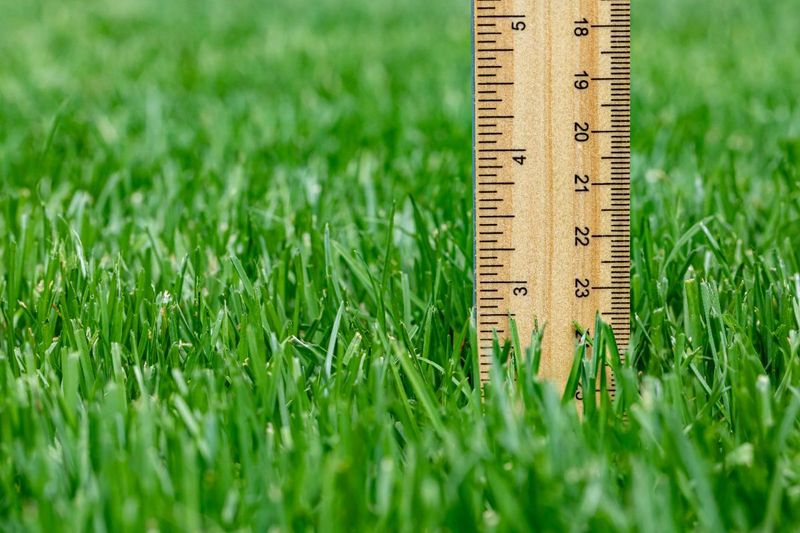
Keep tall fescue near 3 to 4 inches, as the SMART Lawns booklet suggests. Let non-overseeded Bermuda reach roughly 1.75 to 2 inches in fall, following Virginia Tech’s turfgrass guidance.
Skip the last-minute scalp for either one.
These are practical targets, not a statewide rule, a set date, or a promise of winter health. A lawn that is mowed sensibly and kept clear of heavy leaves is simply in a better spot to wake up in spring.
