
Hearing Coyotes Howl Near Your Wisconsin Home at Night? What Their Calls Can and Cannot Tell You
A long, wavering howl drifts through the dark, followed by a burst of high yips, and suddenly you are wide awake. Many Wisconsin families hear this kind of late-night concert and wonder what is going on out there.
Coyote calls do carry information, but they are not a message you can translate word for word. Here is what the sounds can tell you, what they cannot, and how to respond calmly.
Coyotes communicate with calls, not word-for-word messages
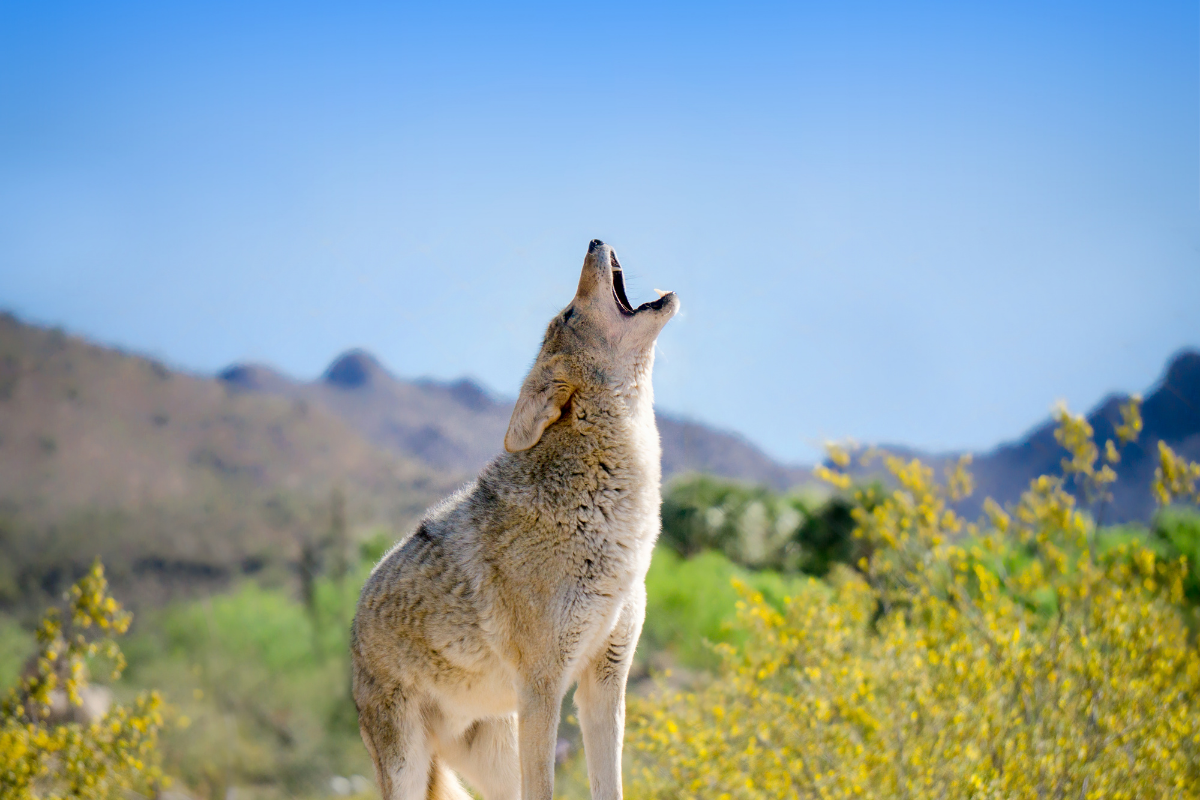
Picture a neighborhood bulletin board where each animal pins up a note saying it lives here. Howls and yips work a bit like that.
Research on coyote calls describes them as a way to communicate, announce that a territory is occupied, and help coyotes keep their distance from one another.
That is a broad purpose, not a dictionary. Calls can differ with a coyote’s age, sex, and social status, so two howls that sound alike to your ears could mean different things to the animals.
Nobody can listen from a back porch and say exactly what a single howl means.
You may read that coyotes howl to check in with the pack or to reunite after being apart. Those are possible explanations at best, and they cannot be pinned to any particular sound you hear.
Social contact may be one job calls do, but it is not a certain answer for tonight’s concert.
It also helps to know that not every coyote belongs to a pack. Coyotes can live alone, in pairs, or in family groups, so the word pack does not fit every caller.
The UW-Madison Extension overview of fox and coyote ecology is a handy place to learn more about how these animals live.
So think of calls as clues that coyotes are around and keeping in touch, not as a secret code you can crack.
Why fall changes the likely context
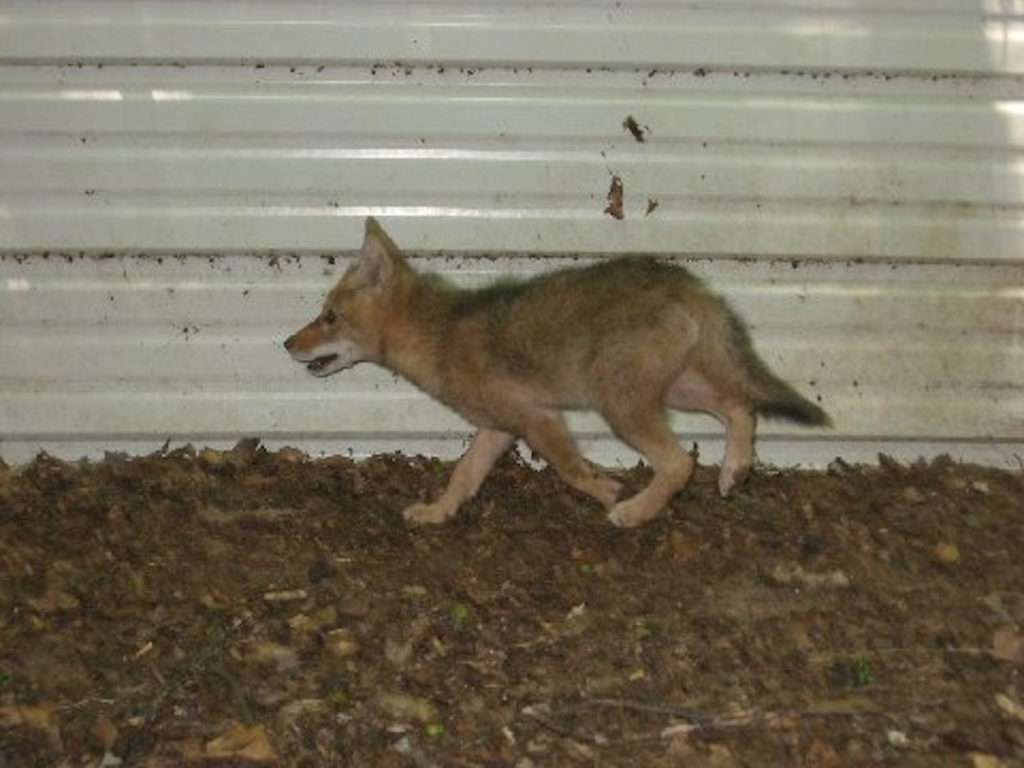
Late fall in Wisconsin sits in a different part of the coyote calendar than many people expect. According to the Wisconsin DNR, young coyotes often leave their parents in fall or winter.
That makes dispersal a reasonable possibility when you hear calls this time of year.
Compare that with the usual breeding schedule. The DNR says coyotes typically mate in February or March, and pups are generally born in April.
So late-fall howls are not likely to be mating chatter or pup-rearing noise, even though that idea gets repeated a lot.
A young coyote striking out on its own may be moving through unfamiliar ground, which could mean more calling or more sightings in some places. That is a possibility, not a diagnosis.
Nothing about a particular howl proves a young animal is dispersing, and you cannot tell age from sound alone.
Coyotes also do not keep a howling calendar. They can vocalize in any season, and one research paper reports that howling is more common around breeding season and dispersal.
For a November night, dispersal is the seasonal piece that fits best.
A practical way to use this: treat fall calls as a reminder that coyotes are moving around, and take a quick look at your yard for anything that might attract them.
A chorus can sound bigger than it is
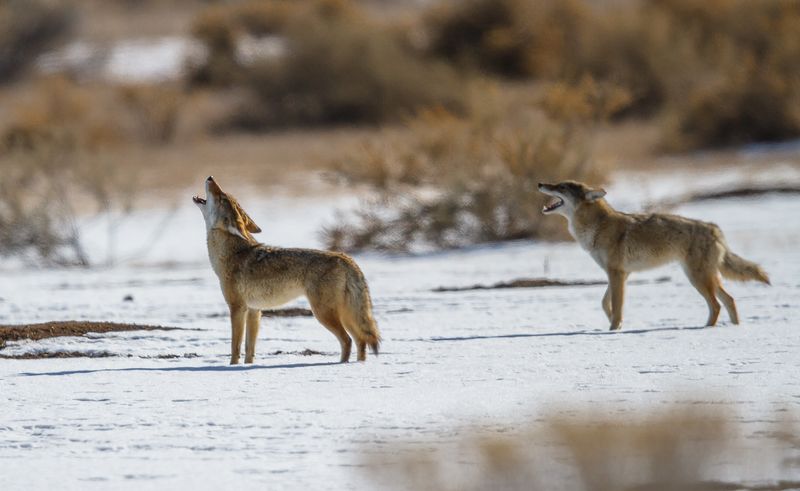
Ever counted voices in a coyote chorus and come up with a crowd? You are in good company, because the human ear is easily fooled here.
Yips, barks, and howls overlap and bounce around, so two animals can sound like a small army.
A listener study shows how far off guesses can be. In the study, 427 listeners in southern Texas estimated how many coyotes were on recordings of one to four animals.
On average they overestimated the group size by nearly twofold.
That was a Texas study using recordings, so it says nothing about how many coyotes live in Wisconsin. What it does show is that counting voices is unreliable.
Hearing more calls than last year does not prove the local population has grown.
Distance matters too. Sound can carry well beyond your yard, and coyotes may be heard from up to about 3.2 kilometers away depending on conditions.
A loud chorus may be coming from a field or woodlot far from your house.
As for the full moon, it does not make coyotes howl. The same research found howling was not linked to moonlight intensity.
Neither the sound nor the moon can tell you exactly where a caller is or what it is doing.
Does a nighttime howl mean danger?
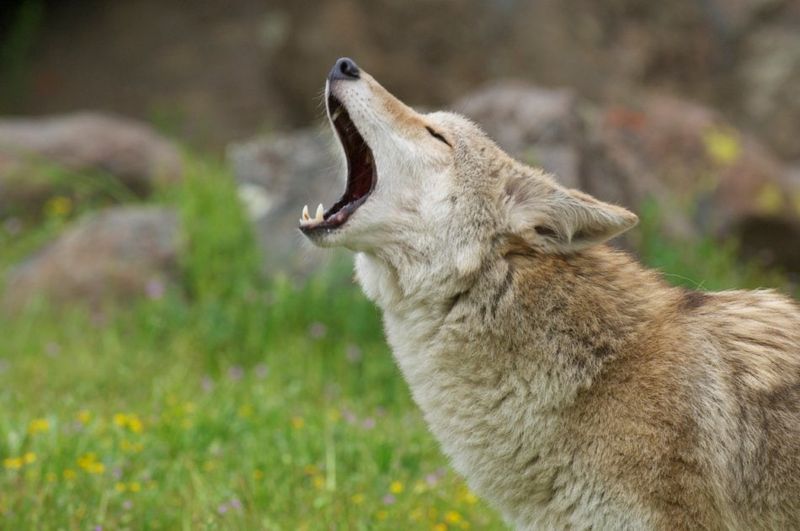
Sounds in the dark feel louder and closer, which is why a howl can set your heart racing. But a sound is only a sound.
A howl by itself does not show that a coyote is heading for your house or has any interest in you.
Wisconsin’s wildlife officials put the risk in perspective. The Wisconsin DNR says attacks on people are exceptionally rare.
It also notes that coyotes may attack small pets, so that is where extra care belongs.
That is not a guarantee that nothing will ever happen, because wild animals are wild. It does mean the howl is not the warning sign.
What deserves your attention is behavior, such as a coyote that walks toward people, seems unafraid, or acts strangely in daylight.
Here is a simple check. If you hear calls from far off while your pets are inside and your yard is tidy, there is nothing you need to do except maybe enjoy a little wildness.
If your small dog is about to go out for a late bathroom break, step out with it, turn on a light, and keep it close.
Treat the sound as a cue to be thoughtful, not a reason to panic.
Make your yard less inviting

Coyotes are opportunists, and an easy meal can turn a passing visit into a habit. The best way to cut down on run-ins is to remove the food.
The UW-Madison Extension guidance on coexisting with canids lays out the basics.
Start with the obvious rule: never feed coyotes, on purpose or by accident. Secure trash in bins with tight lids, and keep pet food indoors rather than on the porch.
Even a bowl left out overnight can draw them in.
Birdseed is a sneaky one. Spilled seed attracts mice and other rodents, and rodents attract coyotes.
Sweep up under feeders regularly, especially before dark.
Then look at your pets. Supervise them outside, keep dogs leashed where coyotes are present, and keep cats indoors.
Small pets are the ones most at risk, so a few minutes of watching can matter a lot.
A neighborhood can do all of this and still see a coyote trot by now and then. That is normal, since coyotes travel through yards, parks, and trails.
These steps are about lowering the odds of conflict, not about promising that coyotes will never appear.
If a coyote comes close, respond to its behavior
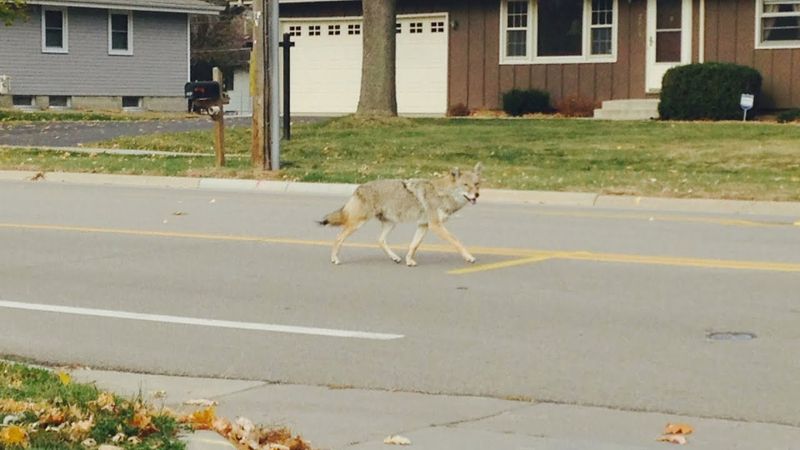
Most coyotes you see will be passing through or keeping their distance, and that does not call for any action. Behavior is what matters.
If one approaches you or acts unusually, it is time to haze it.
According to Public Health Madison and Dane County, hazing means making yourself look big, shouting or clapping, and, if it is safe, throwing objects in the coyote’s direction, not at it. The goal is to remind the animal that people are not something to approach.
There are clear times not to haze. Leave alone any coyote that appears sick or injured, one that is with pups, or one near a den with pups.
Do not approach it, feed it, or try to investigate a den. The Extension guidance advises against all of those.
If a coyote keeps approaching or becomes aggressive, leave the area. In Madison and Dane County, you can then call the local animal-services number listed by Public Health Madison and Dane County.
That contact applies only there, not across the state.
If you live elsewhere in Wisconsin, contact your local animal-control authority or a relevant wildlife agency, such as your area’s DNR office. Looking up that number now, before you ever need it, saves time later.
Listen for communication, not a warning
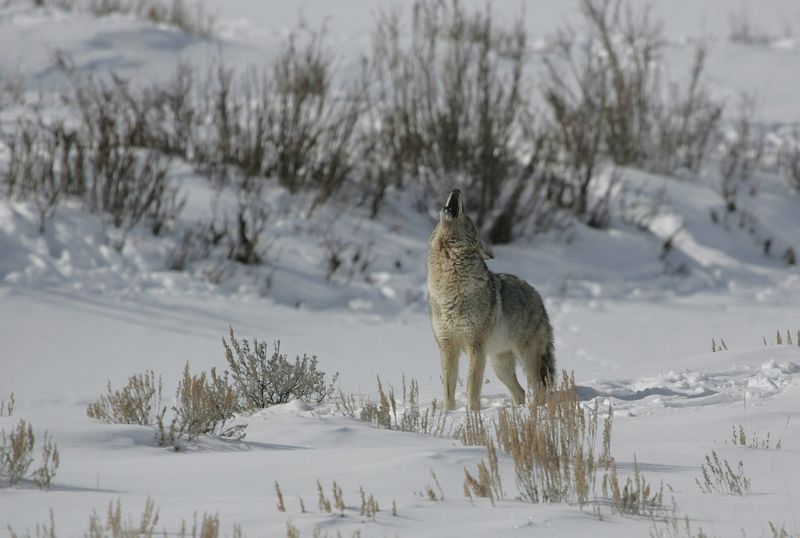
Coyote calls are communication, and in late-fall Wisconsin, young animals leaving home are one plausible reason you are hearing them, according to the DNR. No chorus or single howl reveals an exact message, a head count, or a threat.
Let what the animal does, not what you hear, steer your response. The night’s best soundtrack may simply be the wild neighbors reminding each other where they live.