
Heating a Greenhouse in Winter Without Using a Natural Solution
Winter greenhouse growing feels a bit like keeping a tiny ecosystem alive, you’re balancing light, moisture, airflow, and temperature while the world outside is doing its best to freeze everything solid. The good news is you can hold onto a surprising amount of warmth without relying on a gas or electric heater, as long as you plan for heat capture in the day and slower heat loss at night.
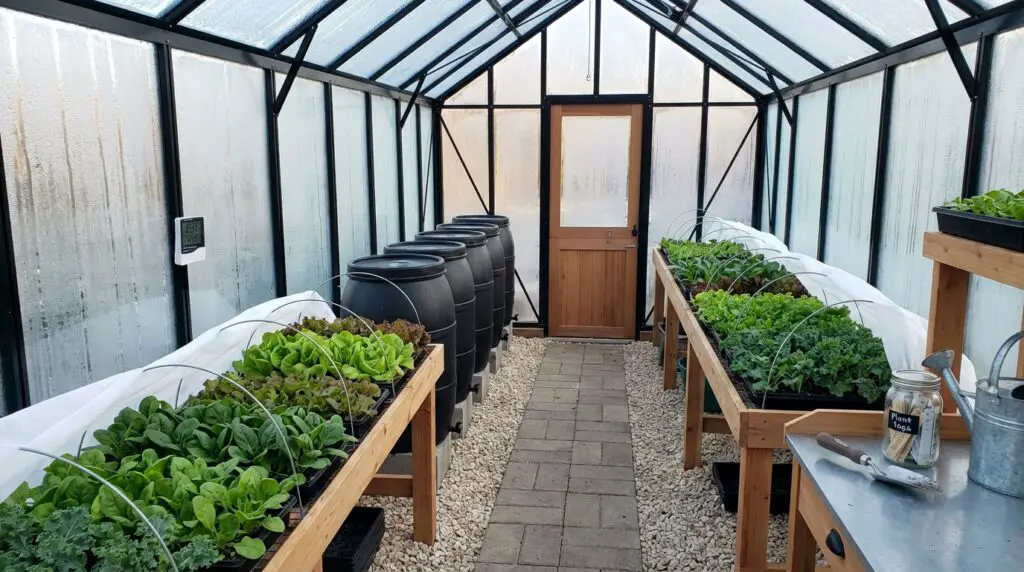
A winter greenhouse works best when it behaves like a thermos, sunlight goes in, warmth gets stored, and cold air has a harder time stealing it back. The heart of that strategy is thermal mass, and few options are as practical, safe, and affordable as water barrels.
Start with the goal: steady temperatures, not tropical heat
Most winter damage happens during fast swings, sunny afternoons that spike, followed by hard drops after sunset. Plants handle cool days far better than repeated freeze-thaw cycles, and they often cope with lower overall temperatures if nights stay a little more stable.
Before changing anything, decide what you want to protect:
- Cool-season crops (lettuce, spinach, brassicas) often only need frost buffering.
- Tender seedlings need higher minimums, even a few degrees can matter.
- Citrus, herbs, and container plants tend to dislike cold roots more than cold leaves.
Even a passive setup can raise night temperatures, smooth the daily roller coaster, and reduce frost pockets near leaves.
Understanding thermal mass, the greenhouse’s heat “battery”
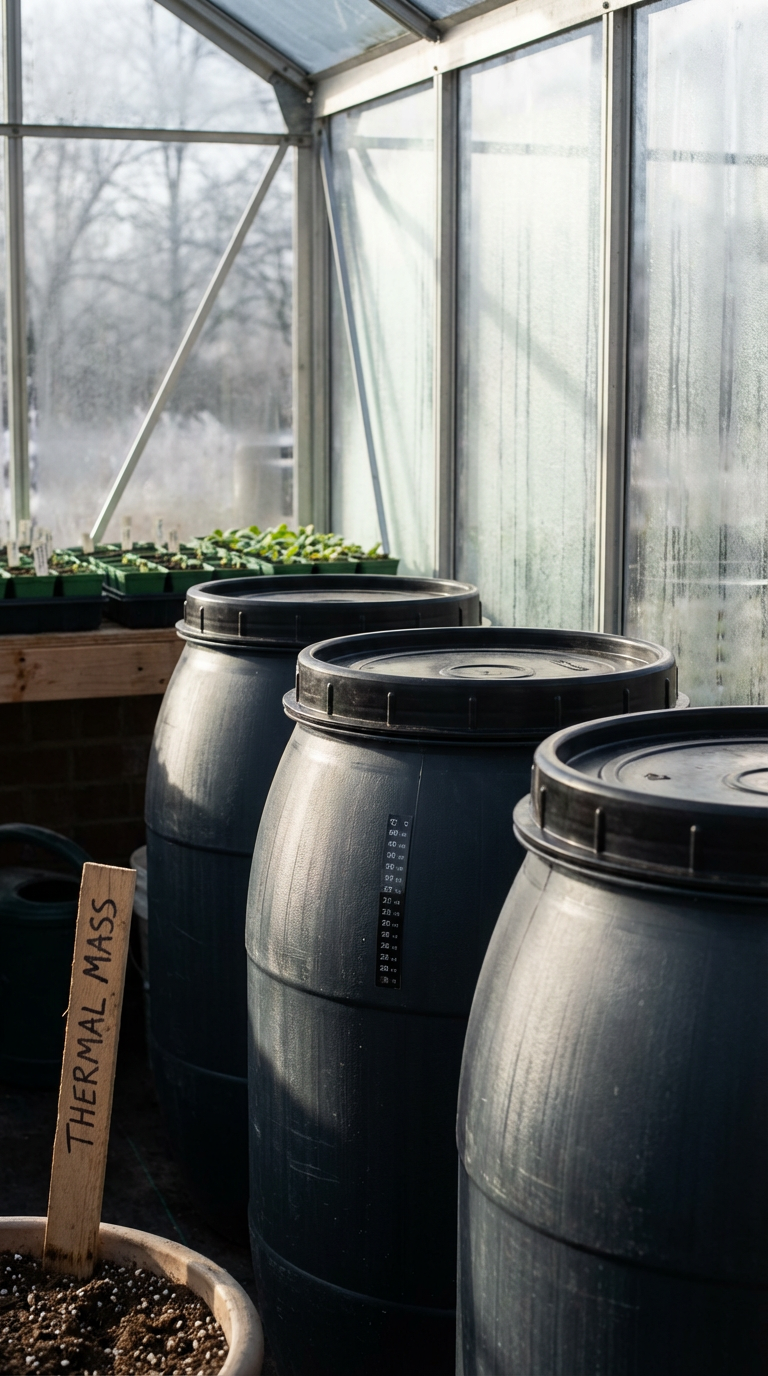
Thermal mass means a material can absorb warmth, hold it, then release it later. In a greenhouse, the sun provides the “charge” during the day. After dark, thermal mass releases stored heat slowly, delaying the temperature plunge.
Water shines here because it stores a lot of heat for its size. A barrel that feels boring in summer can become your winter workhorse, quietly soaking up sunlight while you’re busy elsewhere.
Why water barrels work so well
Heat absorption during the day
Sunlight warms the air, benches, floor, and any dark surfaces. Water warms more slowly than air, which is exactly what you want. As the greenhouse heats up, the water acts like a sponge for warmth, reducing afternoon spikes.
Heat release at night
After sunset, the air cools first. Water cools more slowly, giving heat back as the greenhouse temperature drops. That slow release can lift nighttime lows, especially on clear days followed by cold nights.
A simple “water wall” effect
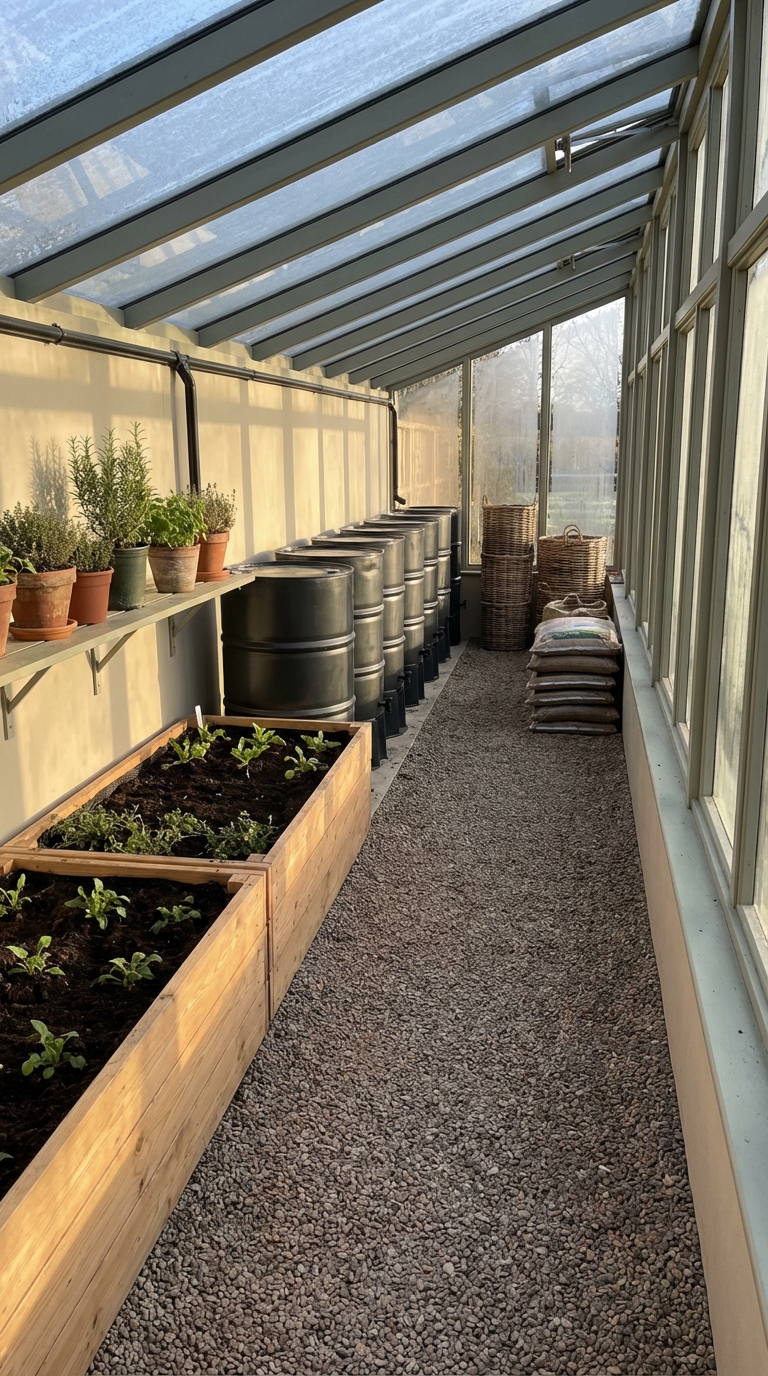
A row of barrels along the back wall works like a passive radiator. Warmth stored across a large surface area leaks back into the greenhouse in a steady, gentle way.
Sizing the system: how much water is enough?
No single number fits every greenhouse because winter sun, wind, glazing type, and outside lows vary widely. Still, a practical approach works well:
- Use more water if your greenhouse gets strong winter sun and drops sharply at night.
- Use less water if space is tight or you only need mild buffering for hardy crops.
- Aim for a setup you can live with daily, plants still need room, access, and airflow.
A small greenhouse often benefits from a few barrels placed well, rather than wall-to-wall water that blocks growing space and makes maintenance annoying.
Placement that pays off: where barrels do the most work
Put thermal mass where sun can reach it
Barrels that live in shade won’t charge up. Place them where winter sun hits for the longest stretch, often along the north wall in many Northern Hemisphere setups, since growing beds and plants tend to occupy the brighter south side. Local sun angles matter, so watch where light falls in midwinter and follow that pattern.
Keep them out of your main workflow
Water barrels become permanent once filled. Position them so you can still:
- open doors and vents
- reach beds without squeezing sideways
- water and harvest without stepping over things
Spread heat storage across the house
A single cluster in one corner helps that corner most. A long run along the back wall creates more even buffering. If you only have room for two or three, place them where the cold hits hardest, often near the back wall or the side facing prevailing winds.
Barrel setup details that improve performance
Color matters
Dark barrels absorb more solar warmth. If you already own light-colored barrels, a coat of exterior-safe dark paint can help. Keep paint on the outside only, and let it cure fully before bringing barrels near plants.
Lids are non-negotiable
Open barrels invite algae, mosquitoes, humidity spikes, and accidental spills. Tight lids keep the system clean and safer.
Leave some air space at the top
Water expands slightly as it warms. A small gap under the lid reduces pressure and mess.
Think about stability
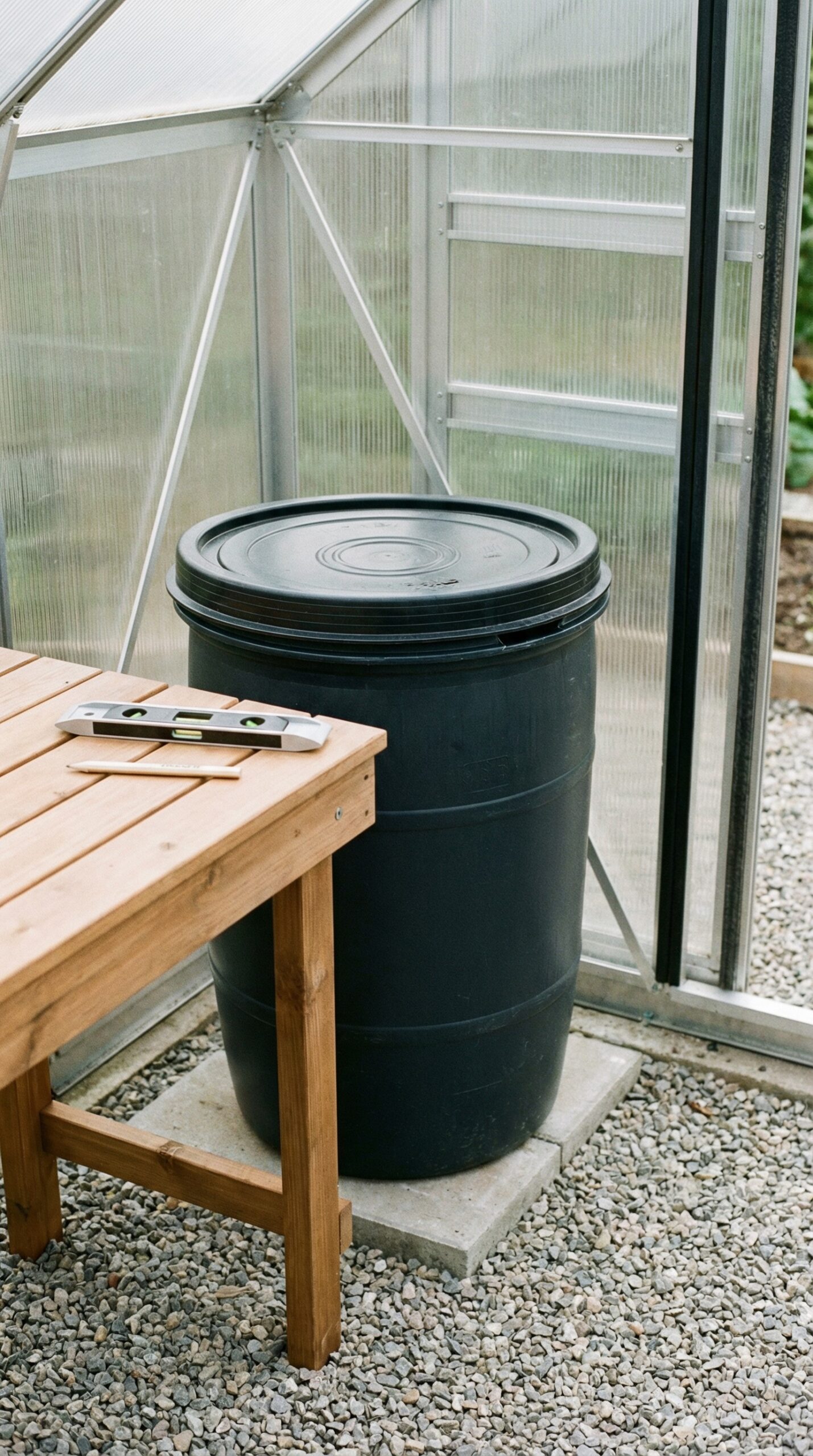
A full 55-gallon barrel is heavy. Place barrels on a solid, level base, and avoid wobbly platforms. A greenhouse floor that shifts can turn a “set and forget” plan into a constant headache.
The biggest limitation: barrels buffer, they don’t “control”
Water thermal mass doesn’t behave like a thermostat. It can’t promise an exact minimum temperature, and it struggles during:
- long stretches of cloud cover
- extreme cold lasting many days
- windy weather that strips heat quickly
- greenhouses with lots of air leaks
A smart winter setup uses barrels as the anchor, then pairs them with heat-loss blockers so the stored warmth stays inside longer.
Thermal Battery Greenhouse: Turning the Soil Underfoot Into Stored Heat
If you love the idea of thermal mass but want something built into the greenhouse itself, a thermal battery takes the same principle and scales it up
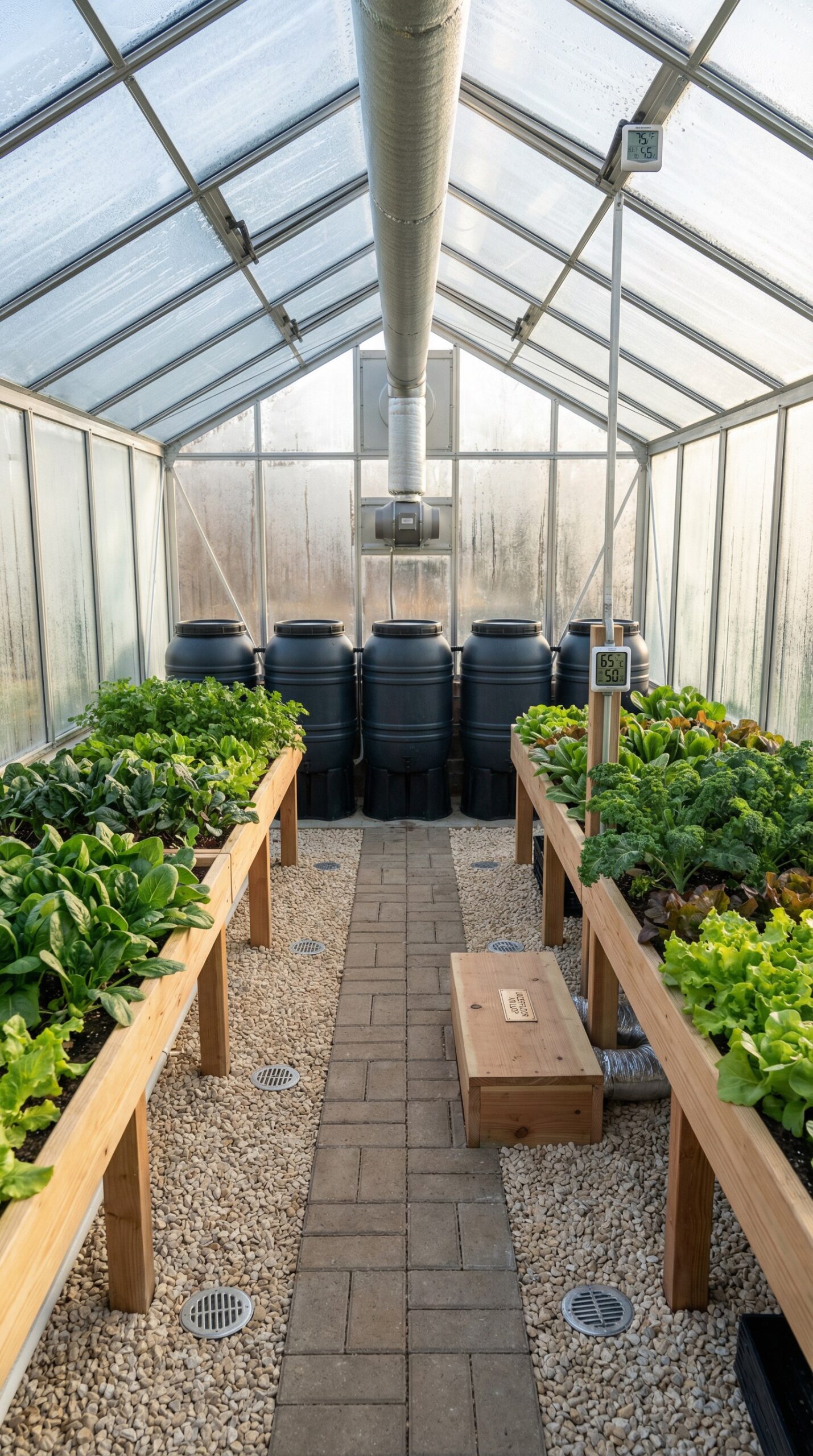
A thermal battery greenhouse uses the ground beneath the structure as a giant heat store. Instead of relying only on barrels, pavers, or brick, the greenhouse “banks” surplus daytime warmth in the soil, then taps it later when temperatures drop. Gardeners often call this setup a climate battery or GAHT (ground-to-air heat transfer), and while it sounds technical, the basic idea is simple: move warm greenhouse air underground, let soil hold the heat, then bring that warmth back when you need it.
Warm air gets pulled from the greenhouse during sunny hours, then pushed through a network of buried pipes. As that air travels underground, heat transfers into the surrounding soil, and the air returns to the greenhouse cooler and steadier, which can reduce overheating on bright winter days. After sunset, the airflow can run again, pulling stored warmth back up, so the returning air comes in a few degrees warmer than the greenhouse air it replaced. Think of it as a slow, steady temperature “buffer,” not a quick blast of heat.

A thermal battery tends to make the most sense when you’re building new, doing a major greenhouse upgrade, or setting up a larger structure where barrels would steal too much growing room. Installation usually involves excavation, buried tubing, a fan system, and thoughtful layout so air moves evenly. Good performance depends on winter sun, decent insulation, and soil conditions that allow heat transfer, wet ground or a high water table can limit what the system can do.
Practical expectations matter here. A thermal battery can smooth temperature swings, reduce how fast the greenhouse drops at night, and help you hang onto daytime heat that would normally get vented away. Cold snaps can still overwhelm any passive setup, so hardy crop choices, inner row covers, and strong draft control remain part of the winter plan. For many growers, the best mindset is “stacking advantages,” barrels and insulation work in almost any greenhouse, while a thermal battery is a bigger project that can pay off where winter sun is reliable and the greenhouse footprint is large enough to justify the build.
Keep the warmth you collect: insulation that still lets light in
Sunlight is your fuel, so insulation must reduce night heat loss without turning the greenhouse into a dim cave.
Seal drafts first
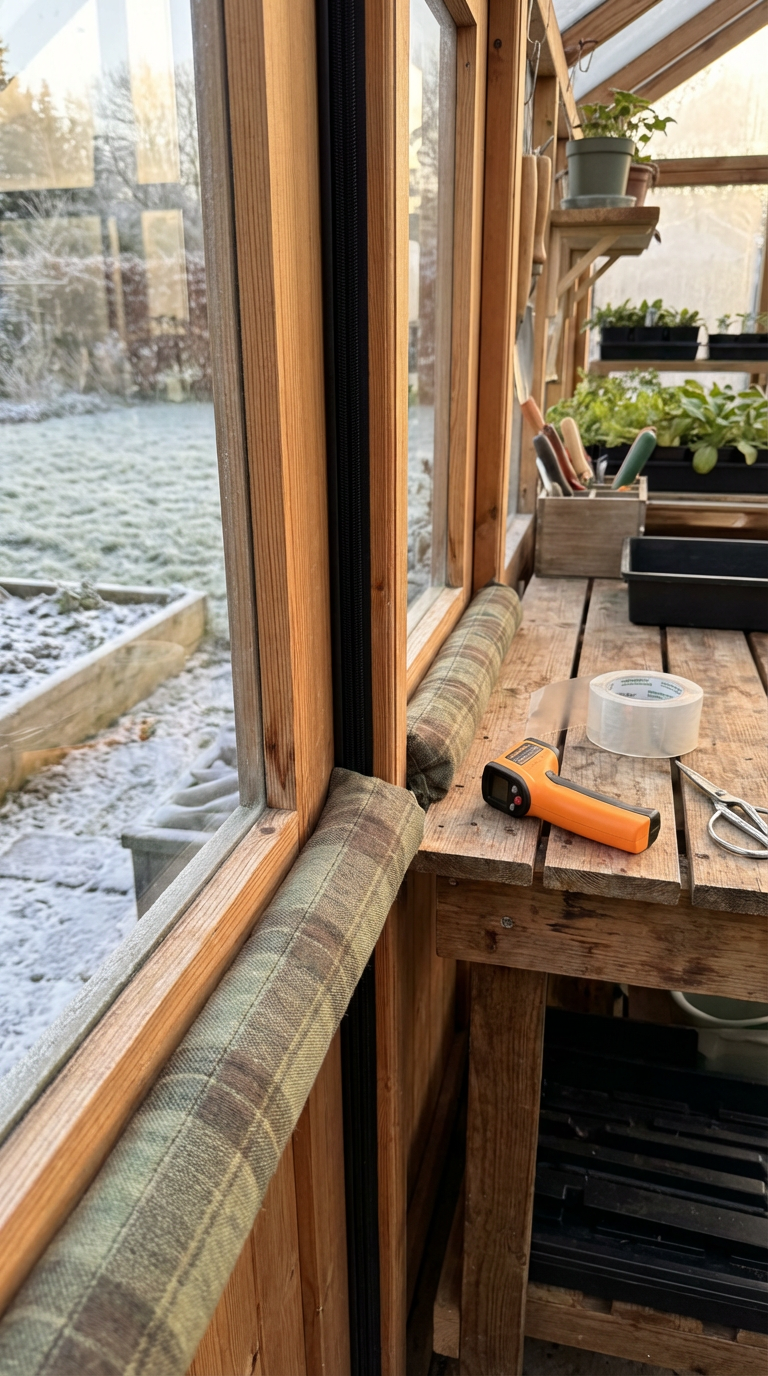
Air leaks waste warmth faster than most people expect. Check:
- door gaps and latches
- baseboards where panels meet the frame
- corners around vents
- glazing overlaps
Weatherstripping and simple seals can make a bigger difference than adding more thermal mass.
Add a second layer inside
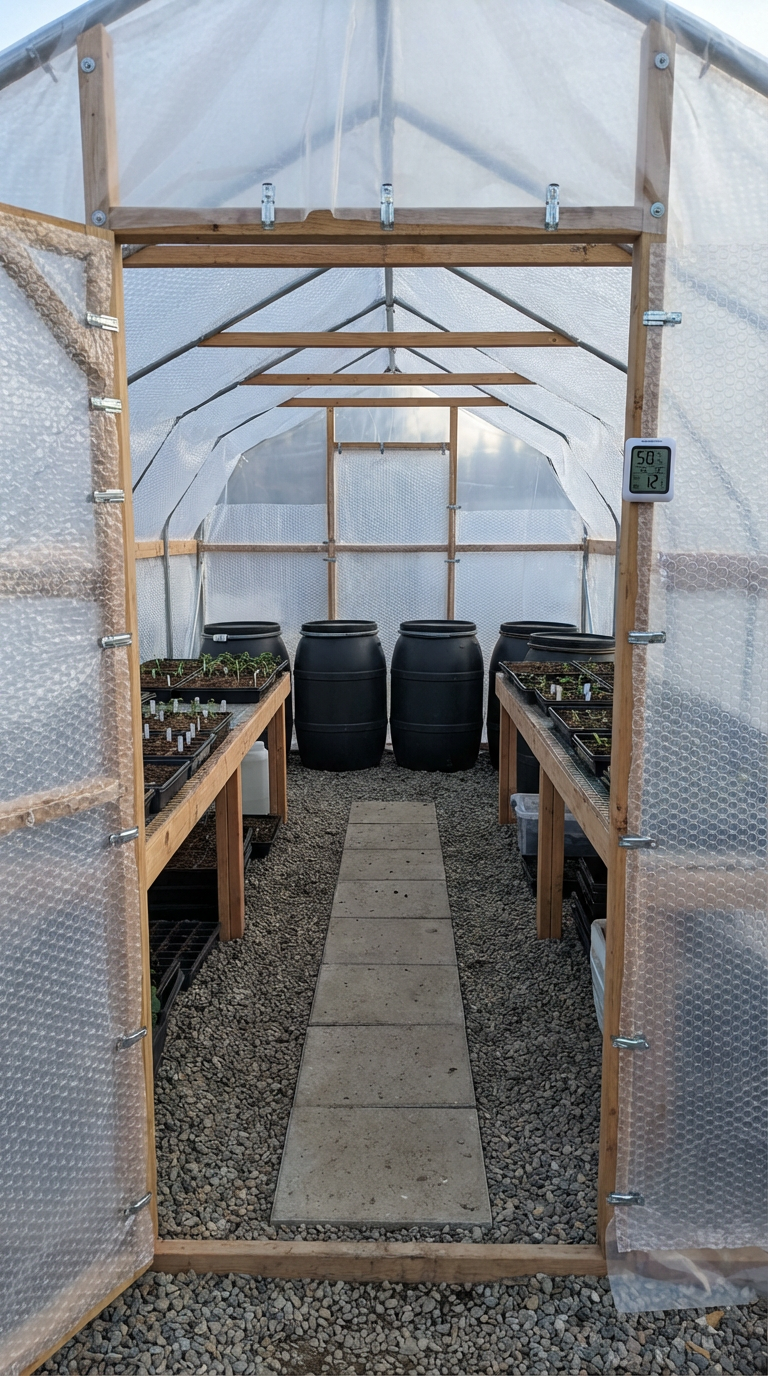
A second interior layer creates a dead-air pocket, slowing heat loss. Options vary by greenhouse type, but the idea stays the same: trap still air without blocking too much light.
Use nighttime insulation thoughtfully
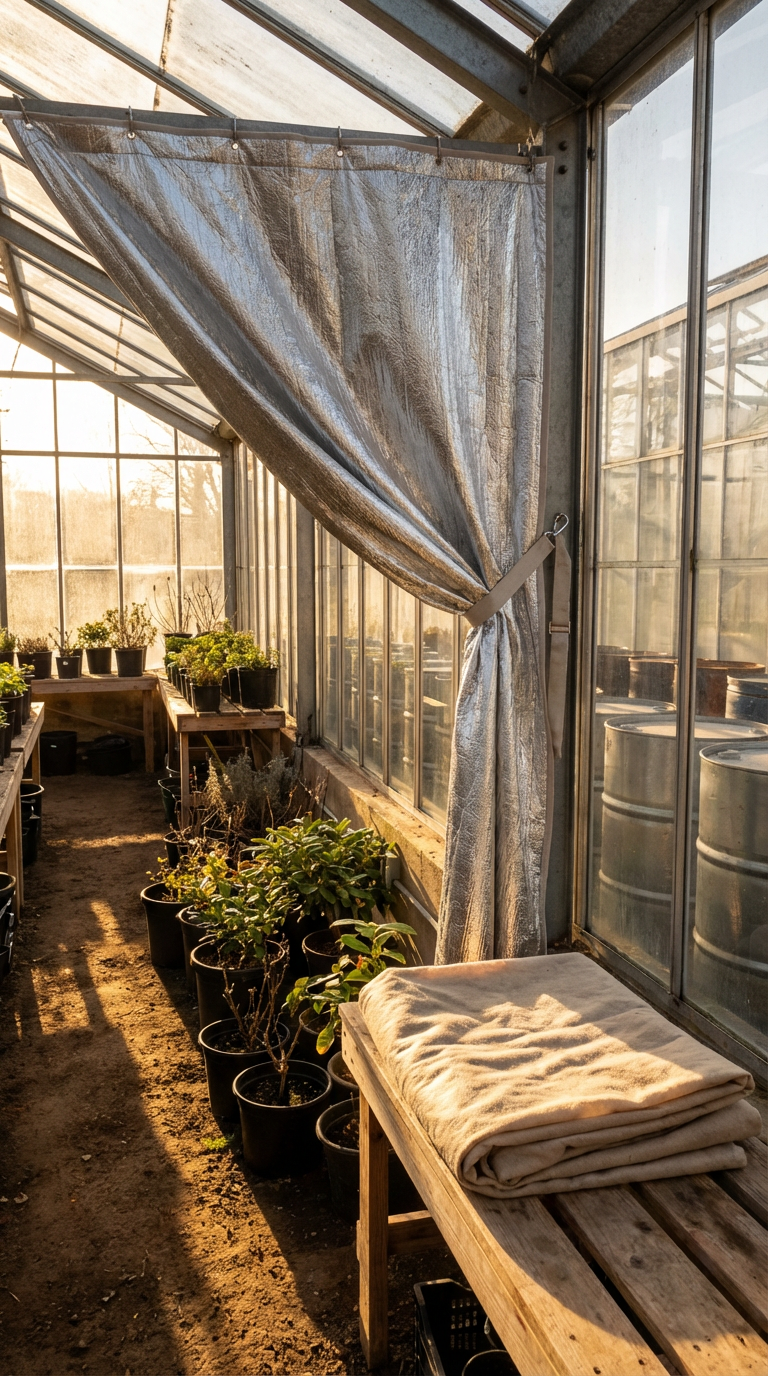
Thermal curtains or insulating blankets work best when they cover the glazing after sunset, then get opened early to welcome morning sun. A curtain system can feel fussy, yet it often turns “almost warm enough” into “reliably protected” for cool-season crops.
Reduce heat loss from the ground
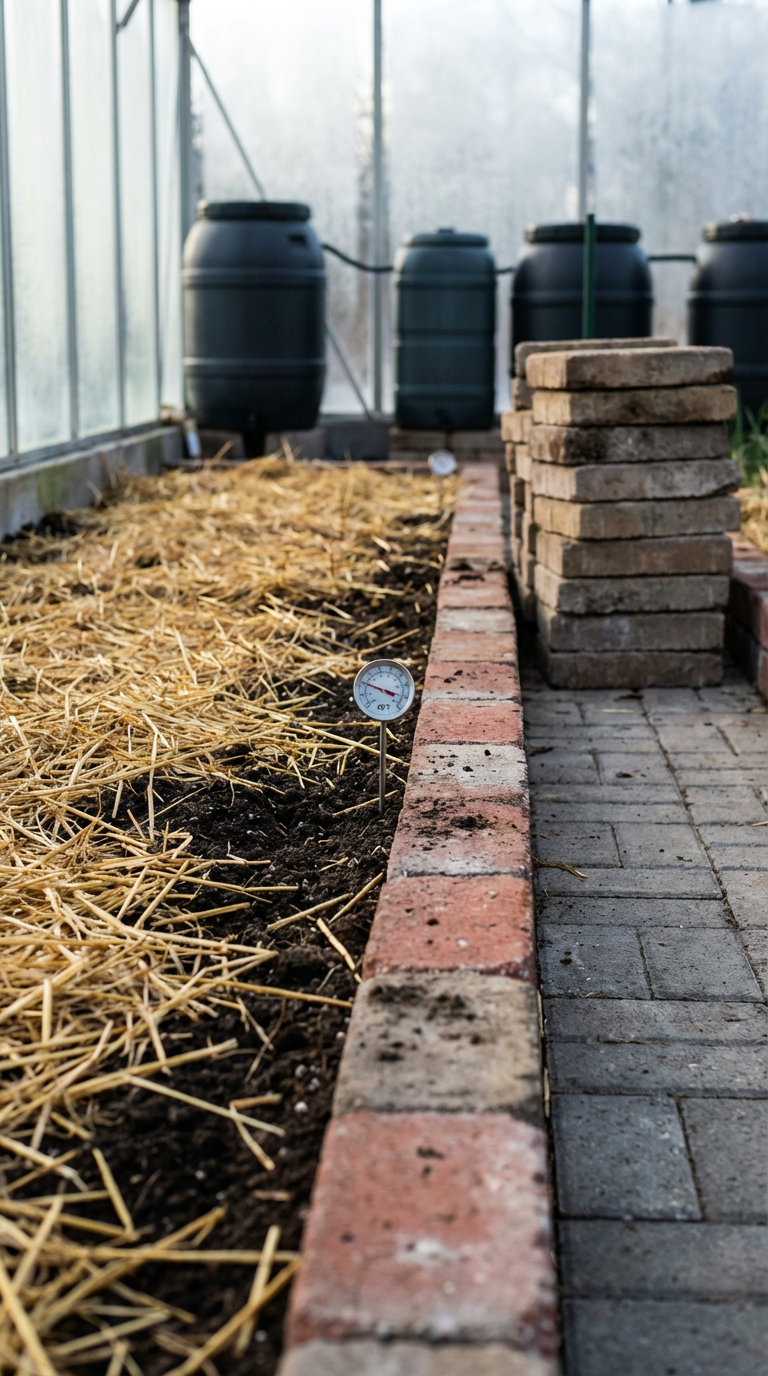
Cold soil acts like a heat sink in the worst way, it pulls warmth out of the greenhouse air. A few strategies can help without getting complicated:
- Raised beds warm faster than ground-level planting.
- Mulch reduces overnight heat loss from soil surfaces.
- Walkway choices matter, compacted gravel and pavers can store daytime warmth, while bare wet soil often stays cold.
A dry greenhouse floor usually feels warmer than a damp one, moisture steals heat as it evaporates.
Pair barrels with stone, brick, or pavers for a bigger effect
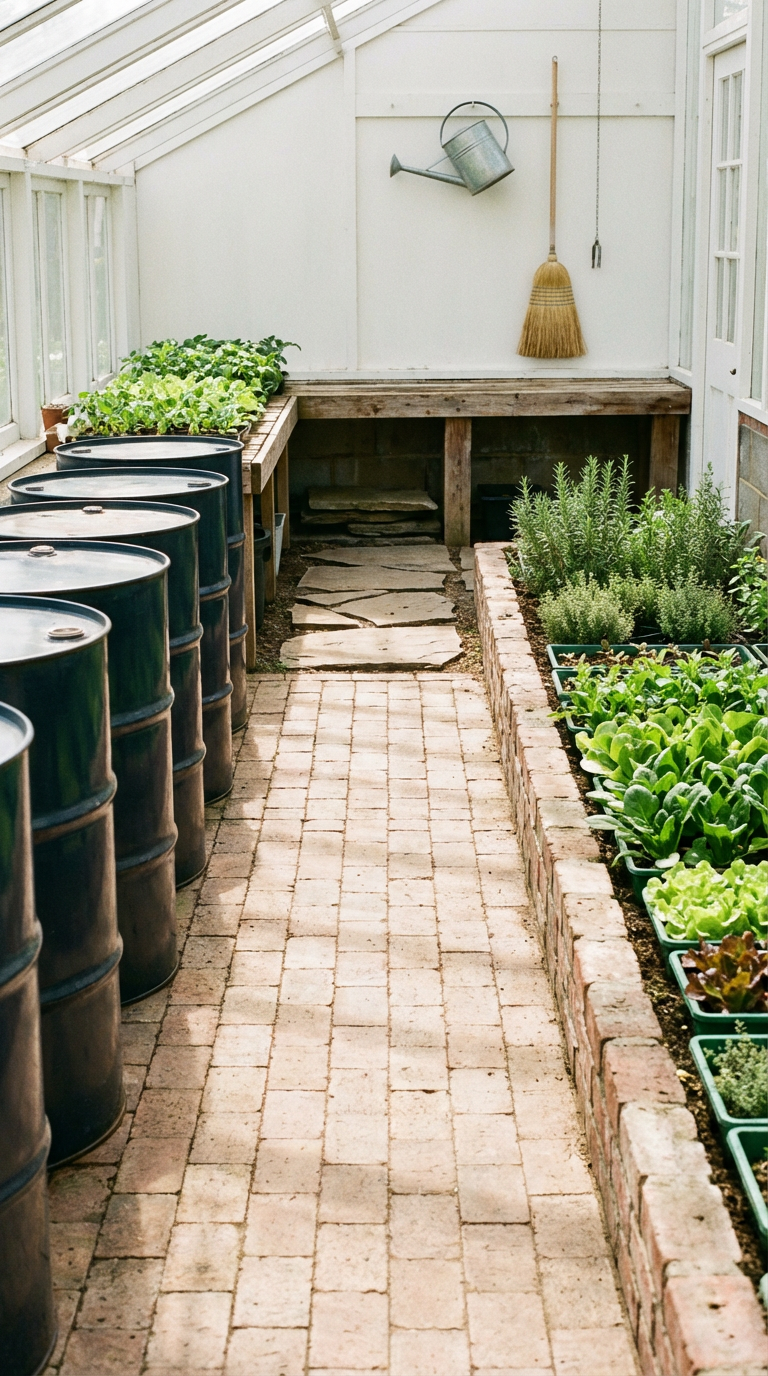
Water does the heavy lifting, yet mixing materials can spread heat storage across the whole space.
- A paver path down the center can store warmth where air circulates.
- A brick border along beds can buffer root-zone swings.
- Flat stones near the sunniest wall can add small, steady heat release.
Barrels provide the bulk storage, while hard surfaces smooth local cold spots near plant level.
Use a “microclimate inside a microclimate” approach
Even a well-prepped greenhouse often has warm and cool zones. Instead of fighting that, use it.
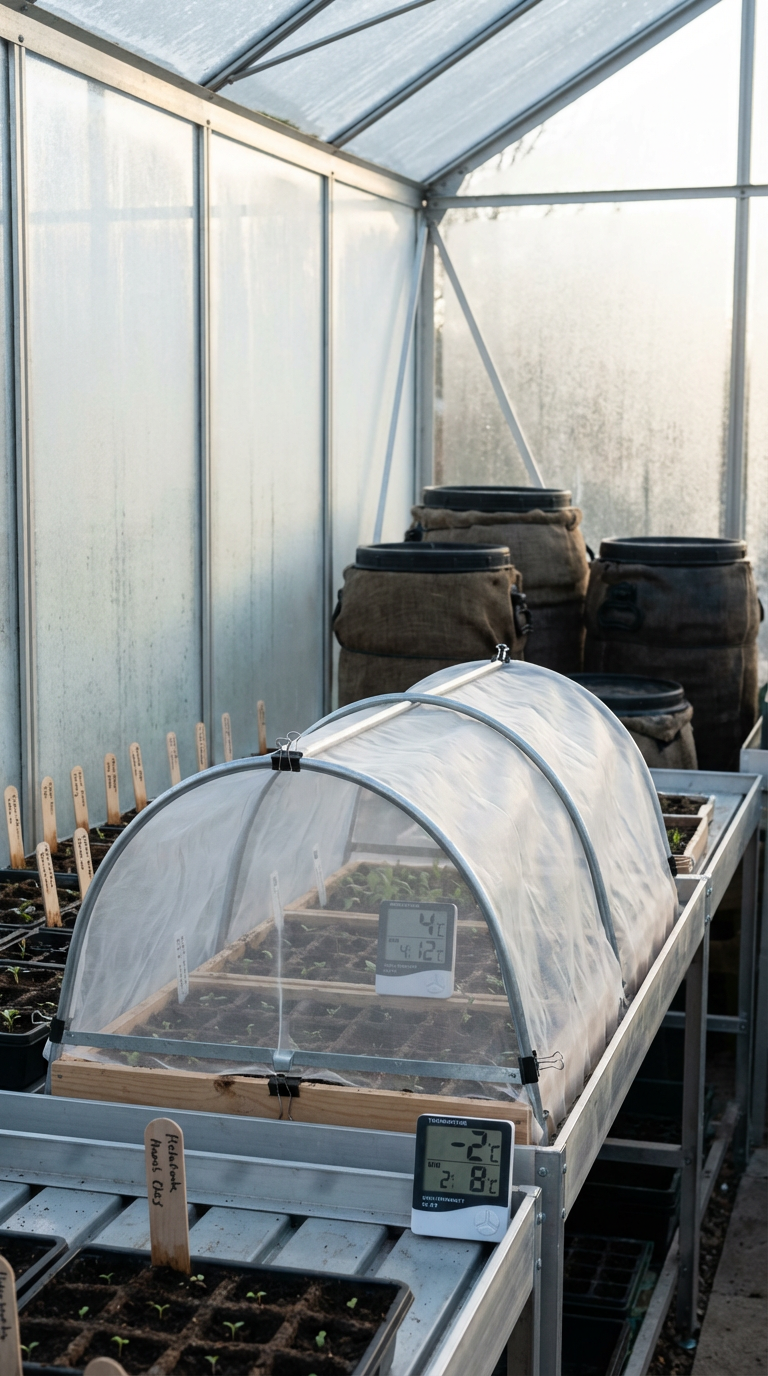
Create a protected inner zone at night
Row covers, low hoops, and simple frost cloth inside the greenhouse trap a layer of warmer air around plants. Warmth from barrels then has a smaller space to support.
For seedlings or tender starts, a small inner tent can make a noticeable difference, especially on clear nights that drop fast.
Keep plants off cold surfaces
Benches, shelves, or even sturdy crates can lift pots away from cold floors. Roots often suffer first, and a few inches of elevation can help.
Ventilation still matters in winter
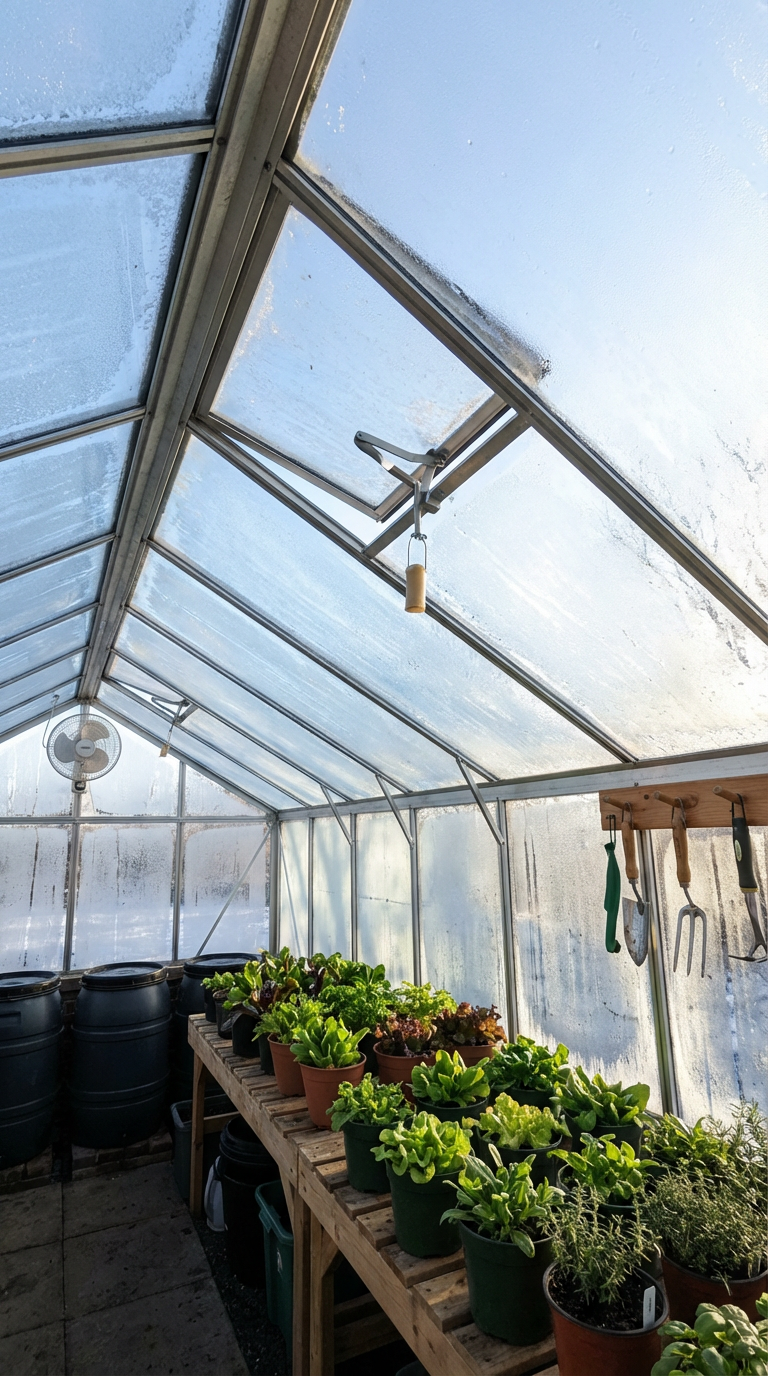
Warmth without airflow invites mildew, damping-off, and fungal problems. Winter ventilation looks different, though.
- Vent during the warmest part of the day, often late morning to early afternoon.
- Avoid blasting plants with icy drafts, small openings beat wide doors.
- Close early enough to trap the day’s stored heat before sunset.
Humidity control gets easier when watering is timed early, leaves dry by evening, and air can circulate around dense plantings.
Compost heat, a natural boost when barrels need help
Compost generates heat as it breaks down. In a winter greenhouse, compost can serve as a living heater when managed well.
Ways gardeners use it:
- A compost pile in a corner (space allowing) adds gentle warmth, plus carbon dioxide that plants use.
- A hotbed under a planting area, using active compost beneath soil, warms roots in a focused zone.
Compost heat takes attention, it needs the right mix and moisture to stay active. For many gardeners, compost works best as a support act rather than the main plan, especially if winter time is limited.
Smart layout choices that raise winter performance
Even small shifts in arrangement can help barrels and sunlight do more.
Keep taller items on the north side
Tall shelving on the sunny side casts winter shadows right where you don’t want them. Place tall storage, potting benches, and bulk items where they won’t block low-angle sun.
Group plants by cold tolerance
Hardy greens near cooler edges, tender plants closer to the warmest zone near thermal mass, makes the whole greenhouse easier to manage.
Avoid clutter near glazing
Pots pressed against cold panels often suffer leaf chill and condensation drip. A small gap improves airflow and reduces cold contact.
Temperature monitoring that stays simple
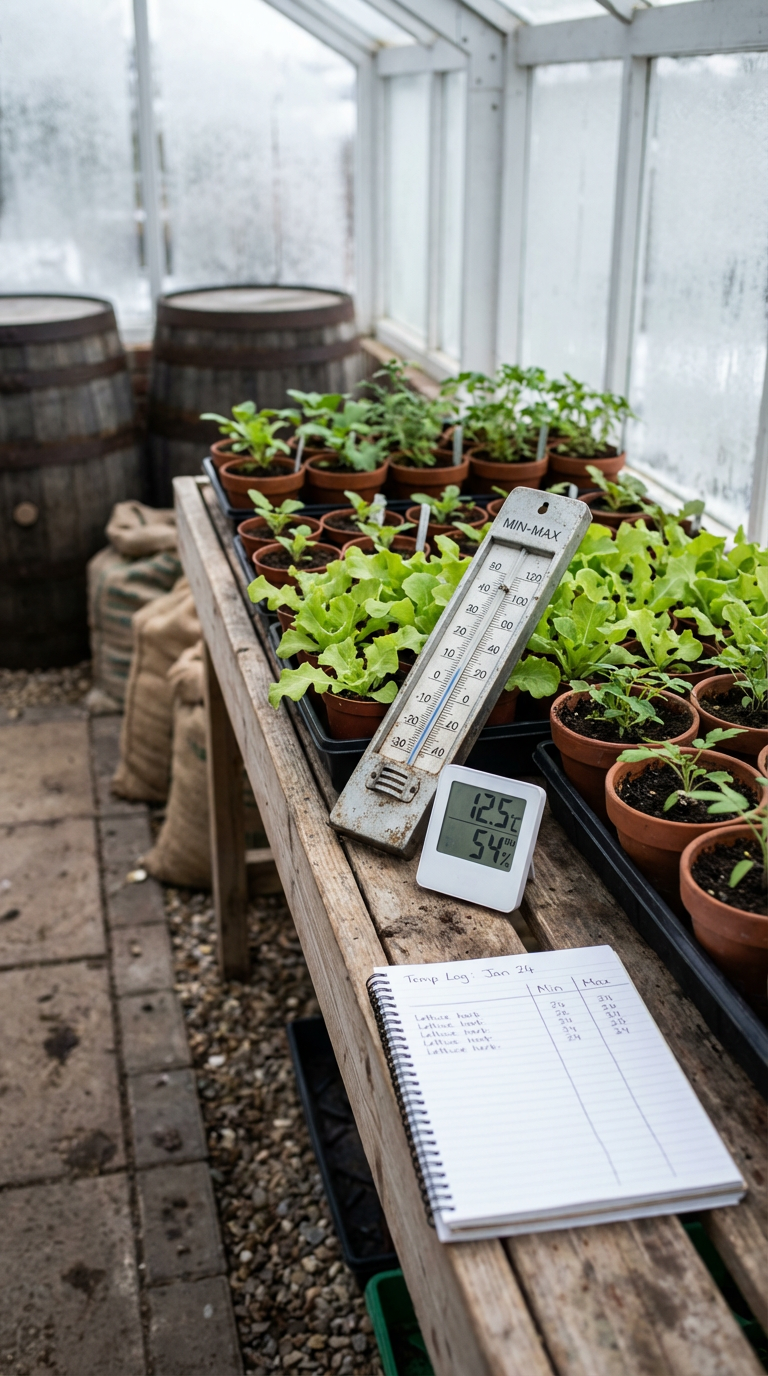
Guessing winter temperatures leads to surprises. A basic min-max thermometer, placed at plant height, tells you what matters: the overnight low near your crops.
If you can, use two readings:
- one near the coldest edge
- one near the barrels or inner protected zone
Patterns appear fast, and you’ll know whether you need more thermal mass, better seals, or an inner cover on the coldest nights.
Practical maintenance tips for water thermal mass
Keep barrels clean and stable
Wipe condensation and dust off barrel surfaces now and then. Cleaner surfaces absorb sun better, and you’ll spot leaks early.
Watch for winter algae in sunny houses
Even with lids, light can sneak in through translucent plastic. Opaque barrels reduce that issue.
Plan your spring transition
Barrels stay useful year-round, yet summer overheating becomes a risk. Shade cloth, vent timing, and moving heat-loving plants away from the barrel wall keeps summer from turning into a sauna.
A realistic expectation: what passive heat can and can’t do
Passive strategies often keep a greenhouse warmer than outside, reduce freeze events, and protect cool-season crops through winter in many climates. Extreme cold can still win, especially in a lightweight greenhouse with thin glazing and strong wind exposure.
A well-built passive setup tends to deliver these wins:
- fewer frosty mornings inside
- slower temperature drops after sunset
- less stress on leafy crops
- better seedling survival in shoulder seasons
For gardeners in harsh winters, passive methods often turn the greenhouse into a reliable season extender, while true tropical warmth may still require active heat on the coldest nights.
Final thoughts
Winter greenhouse warmth isn’t about one magic trick, it’s a stack of small advantages working together. Water barrels provide the backbone, storing sunlight in the day and giving it back at night, while sealing drafts, adding nighttime insulation, and creating inner plant zones help that stored heat stay where it belongs.
Once the system is in place, winter growing becomes less of a daily rescue mission and more like a steady rhythm, sunlight captured, warmth saved, plants kept productive. That kind of stability sets you up for earlier spring starts too, and it turns your greenhouse into a true year-round space rather than a fair-weather hobby.