
Low Maintenance Perennial Border Ideas for Busy Homeowners
Saturday morning starts with good plans. Coffee in hand, you step outside ready to enjoy the garden, and within five minutes you’re pulling weeds, cutting spent blooms, and wondering why that “easy” flower border feels like a second job.
That’s the problem with many traditional borders. They look beautiful in photos, but in real life they demand constant care. Deadheading, dividing, staking, watering, replacing tired plants, and trying to keep everything upright can turn a relaxing garden into a weekly chore list.
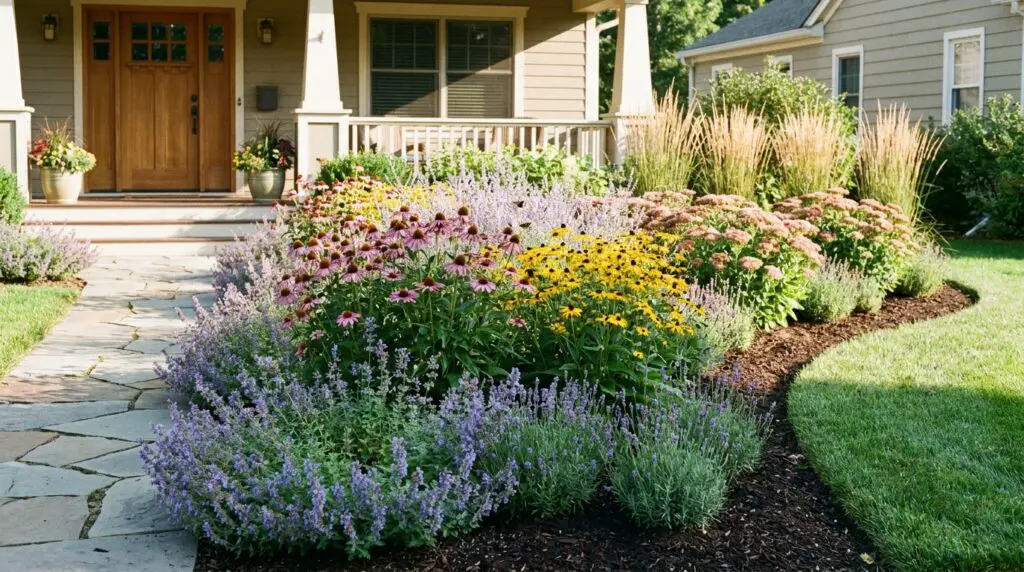
A low maintenance perennial border changes that. It gives you structure, color, and a garden that feels finished without asking for your full attention every weekend. The right perennial combo can keep the space looking polished through the seasons while asking far less from you.
For busy homeowners, that balance matters. You want a border that softens the edge of the lawn, adds curb appeal, and makes the yard feel cared for. But you also need plants that can handle a missed watering, a busy week, or a Saturday when you’d rather sit outside than work outside.
That’s where smart perennial border planning pays off.
Why a Low Maintenance Perennial Border Works So Well
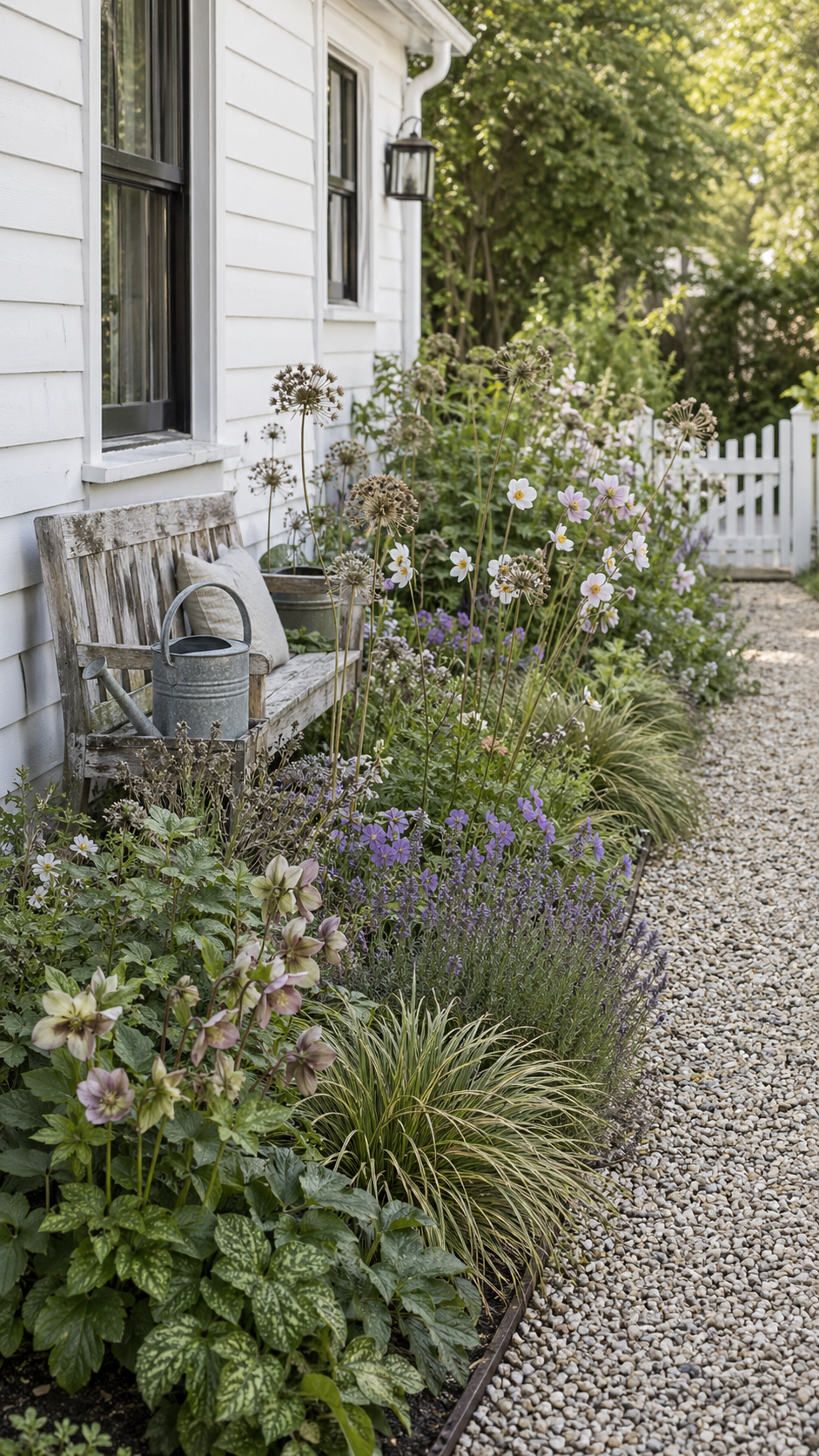
A low maintenance perennial border is built around one simple idea: plants should do most of the work themselves.
Instead of relying on short-lived flowers that need replacing every season, perennial border plants return year after year. Once established, they settle into place, fill gaps, and create a garden bed that looks stronger with time.
This is the big difference between a border that always needs rescuing and one that slowly becomes easier to manage. A good perennial border has roots. Literally. And once those roots are settled, the garden becomes more forgiving.
The Real Problem With High-Maintenance Flower Borders
Many flower borders are planned for quick color, not long-term ease. That often means high-demand annuals, delicate blooms, floppy stems, and plants that need constant trimming to stay neat.
The result is a garden that looks wonderful for two weeks and tired for the next ten.
A no fuss perennial border avoids that cycle. It focuses on hardy plants with strong structure, long bloom times, and foliage that still looks good when flowers fade. This matters because blooms are only part of the picture. Leaves, seed heads, stems, and plant shape all help the border look finished.
Busy homeowners don’t need a flower bed that peaks for a short window and then collapses into a mess. They need a border that can carry itself.
How a Low Maintenance Perennial Border Saves Time Without Looking Plain
Low maintenance does not mean boring. In fact, some of the best perennial garden border ideas rely on repetition, texture, and shape more than constant flowers.
Think ornamental grasses beside coneflowers, or soft catmint paired with sturdy daylilies. Picture sedum standing upright in late summer while lavender keeps the edge neat and fragrant. These combinations create color and movement without needing daily fuss.
An easy perennial border looks full because the design is doing the work, not because you’re out there every afternoon with pruning shears.
The trick is choosing plants that have more than one good moment. A plant that flowers, keeps tidy foliage, and adds winter seed heads is far more useful than one that gives a short burst of color and then demands cleanup.
What “Low Maintenance” Really Means in a Perennial Garden Border
Low maintenance does not mean no maintenance. Every garden needs some care. But it should feel manageable.
In a perennial garden border, low maintenance means fewer plants that need deadheading. It means choosing perennials that suit your light and soil. It means spacing plants properly so they are not fighting for room by midsummer. It also means using mulch, edging, and repetition to make the whole bed easier to care for.
A low maintenance flower border is not about doing nothing. It is about doing the smart work at the start, then enjoying the results for years.
That difference matters. A rushed border creates more work later. A planned border slowly becomes easier.
How to Plan Low Maintenance Perennial Border Ideas That Last
Good low maintenance perennial border ideas begin before the first plant goes in the ground.
It’s tempting to start by buying flowers. We’ve all done it. You walk through the garden center, see something blooming, and suddenly it’s in the cart. But the best borders begin with the site, not the plant tag.
Start With the Right Location for Your Perennial Garden Border
Look at how the space behaves through the day. Does it get full sun, part shade, or deep afternoon shade? Does water sit there after rain, or does the soil dry fast? Is it near a path where plants may flop over and get in the way?
These answers shape everything.
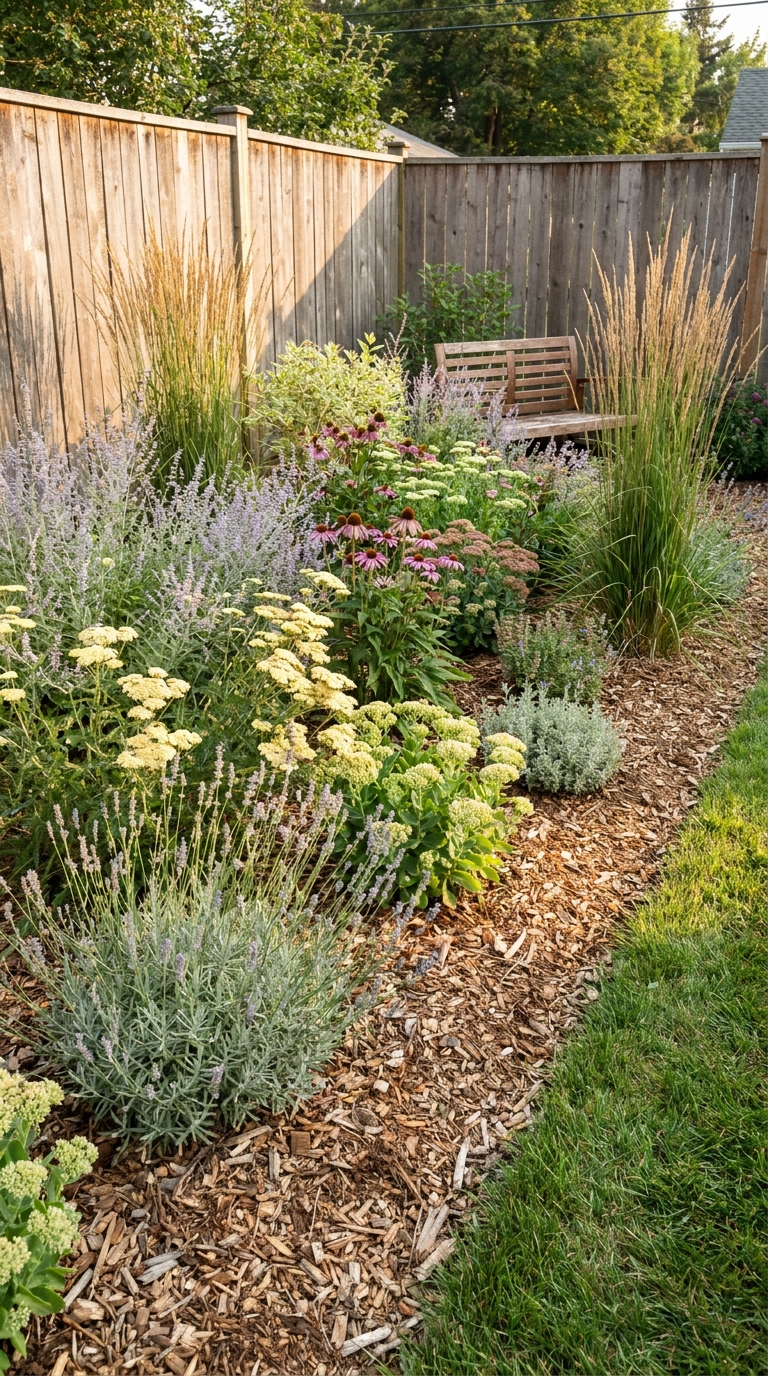
A full sun border that is low maintenance with perennial needs tough, sun-loving plants like lavender, yarrow, coneflower, and black-eyed Susan. A shade low maintenance perennial border needs hostas, ferns, heuchera, and astilbe instead.
Matching plants to place saves frustration later. A plant that is happy in its spot naturally needs less help.
Match Full Sun or Shade Low Maintenance Perennial Border Plants Correctly
This sounds obvious, but it is one of the biggest reasons borders fail.
People fall in love with a plant at the garden center and try to force it into the wrong spot. Sun plants stretch and fade in shade. Shade plants burn in open heat. Moisture-loving plants struggle in dry soil. Drought-tolerant plants sulk in heavy, wet ground.
Choosing the right plants from the start gives you a border that holds its shape and stays healthy with less work.
It also reduces pest and disease problems. Strong plants are less likely to attract trouble than stressed plants. So the easiest maintenance task is often the one you avoid by planting wisely in the first place.
Use Layering for a Low Maintenance Perennial Border That Looks Full
Place taller plants at the back, medium growers in the middle, and lower edging plants near the front.
This classic layout works because it creates depth without chaos. Tall ornamental grasses, Russian sage, or taller coneflowers can anchor the back. Mid-height plants like salvia, daylilies, and sedum can fill the center. Low growers like catmint, hardy geranium, or creeping thyme can soften the edge.
Layering also helps block weeds by letting plants fill space naturally. A low maintenance perennial border combinations plan should always think in layers, not single plants.
The goal is for each plant to have a job. Some provide height. Some give color. Some cover soil. Some keep structure after the flowers pass.
Leave Enough Space for Easy Care and Better Growth
Crowding looks good for one season and becomes a headache by the next.
Give plants room to reach mature size. That means fewer divisions, less mildew, and better air flow. It also makes it easier to weed, mulch, and trim when needed.
Read the mature width on the label, then believe it. A small plant in a pot can become a three-foot clump faster than you expect.
Your future self will be grateful when the border looks full without becoming tangled.
Best Low Maintenance Perennials for an Easy Care Perennial Border
The best easy care perennial border plants are reliable, long-lasting, and happy to stay put.
These are the garden workhorses. They may not always be the flashiest plants at the garden center, but they earn their place by looking good with less fuss.
Long Blooming Perennials That Keep Color Going
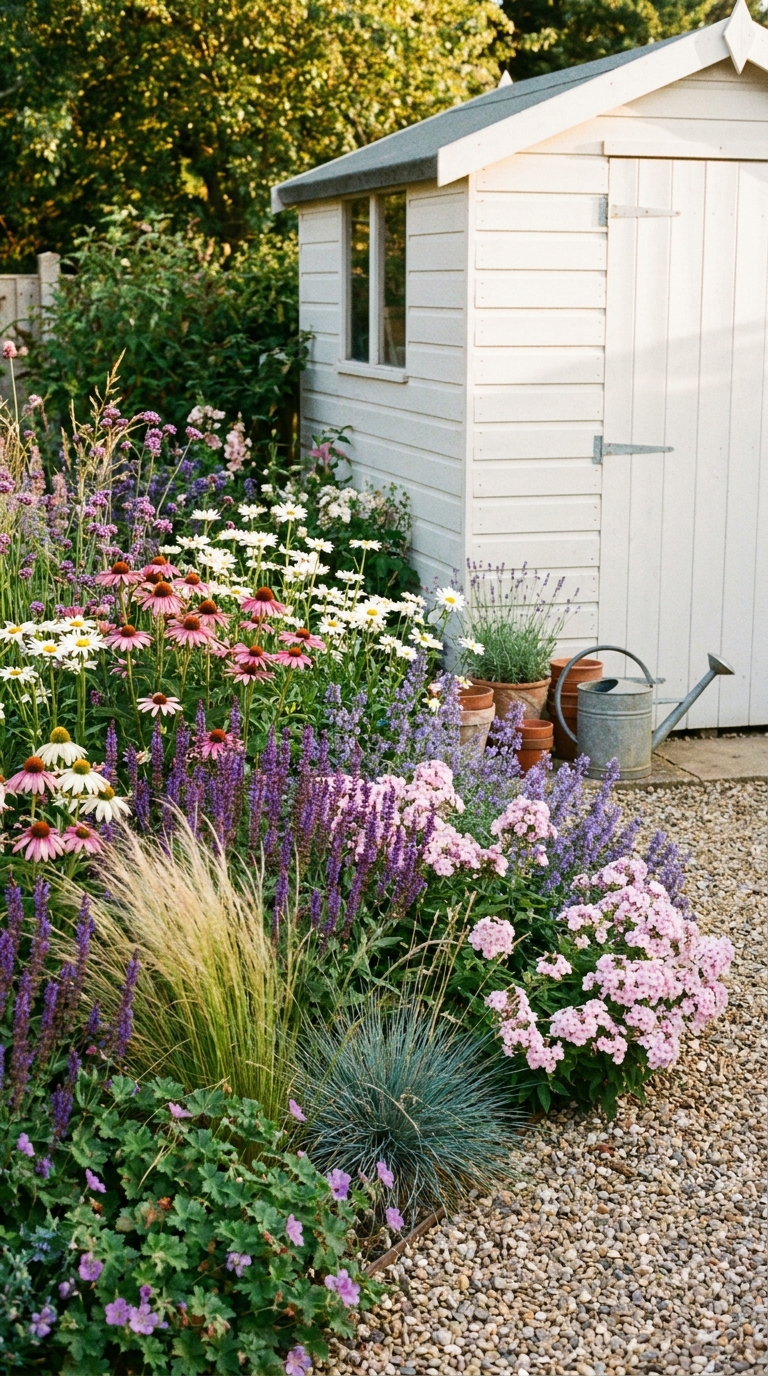
Coneflowers, salvia, coreopsis, nepeta, and black-eyed Susan are strong choices for long blooming perennials.
They flower for weeks, attract pollinators, and handle normal garden conditions without drama. Many also have seed heads that look attractive after bloom, which helps the border carry into late summer and fall.
Adding even two or three long blooming plants can keep a perennial flower border looking lively from early summer into autumn.
For a sunny border, try purple coneflowers with yellow black-eyed Susan and soft blue catmint. It’s a simple combination, but it gives color, contrast, and a relaxed cottage feel without much work.
No Deadhead Perennials for a No Fuss Perennial Border
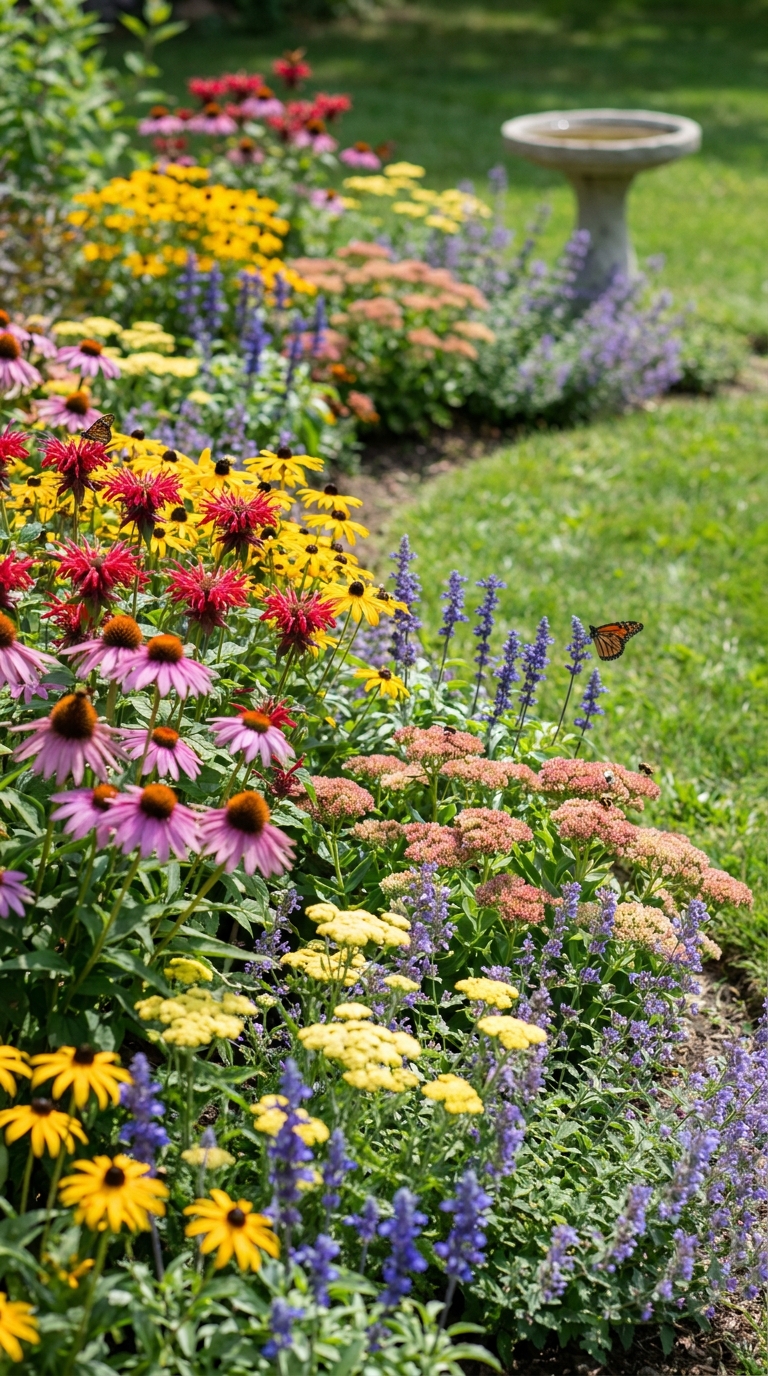
Some flowers keep performing without constant cleanup.
Russian sage, sedum, hellebores, ornamental grasses, and many hardy geraniums all help create a no deadhead perennial border. Their shape stays attractive even after peak bloom.
This is useful because deadheading is one of those garden tasks that sounds small until you’re doing it every week.
A no fuss perennial border should not fall apart if you skip pruning for a while. Plants with tidy habits, strong stems, and attractive faded blooms are your friends here.
Hardy Perennials That Return Year After Year
Peonies, daylilies, hostas, sedum, and black-eyed Susan earn their place because they are dependable.
They survive winter, return strong, and often improve with age. Many of these plants can stay in place for years with only light seasonal care.
For busy homeowners, hardy perennials are the backbone of an easy care perennial garden.
This is where a border begins to feel less like a project and more like part of the home. The plants come back, fill out, and create a sense of rhythm in the yard.
Drought Tolerant Choices for a Full Sun Low Maintenance Perennial Border
If your border gets hot afternoon sun, drought tolerant perennials are a smart move.
Lavender, echinacea, yarrow, sedum, Russian sage, and ornamental grasses handle dry spells better than thirstier plants. Once established, they can often cope with less watering, especially if the soil is mulched.
That is exactly what a full sun low maintenance perennial border should do.
A good sun border can feel bright and generous without being needy. Pair silver foliage with deep green leaves, soft purple blooms, and golden flowers for a border that looks warm and alive even in late summer heat.
Shade Low Maintenance Perennial Border Plants That Still Feel Bright
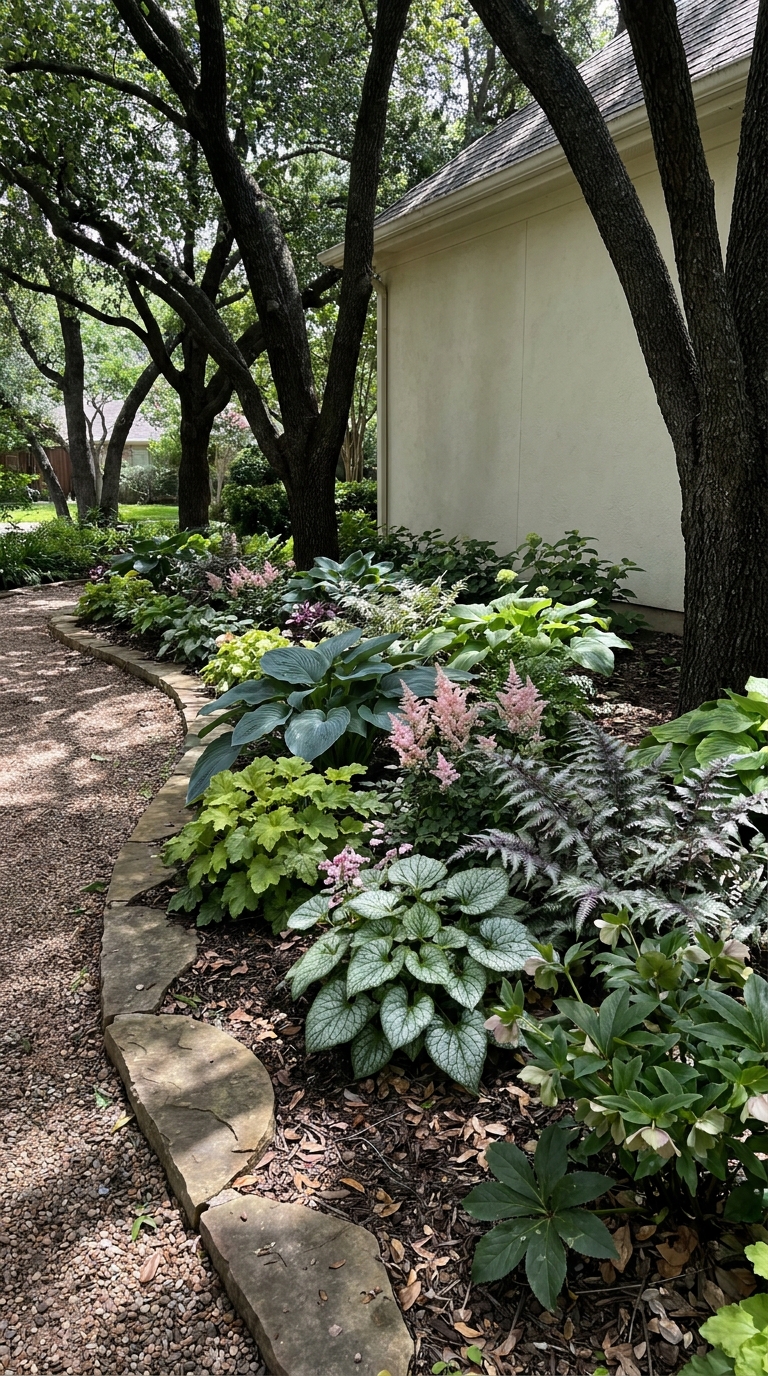
Shade gardens can feel forgotten, but they often become the calmest and most beautiful part of the yard.
The key is choosing plants shade borders for shape and texture, not just flowers. In shade, foliage matters more. Leaves can brighten dark corners, create contrast, and make a border feel lush even when blooms are limited.
Reliable Shade Perennials for Structure and Color
Hostas, heuchera, ferns, brunnera, and astilbe are classic shade perennials for good reason.
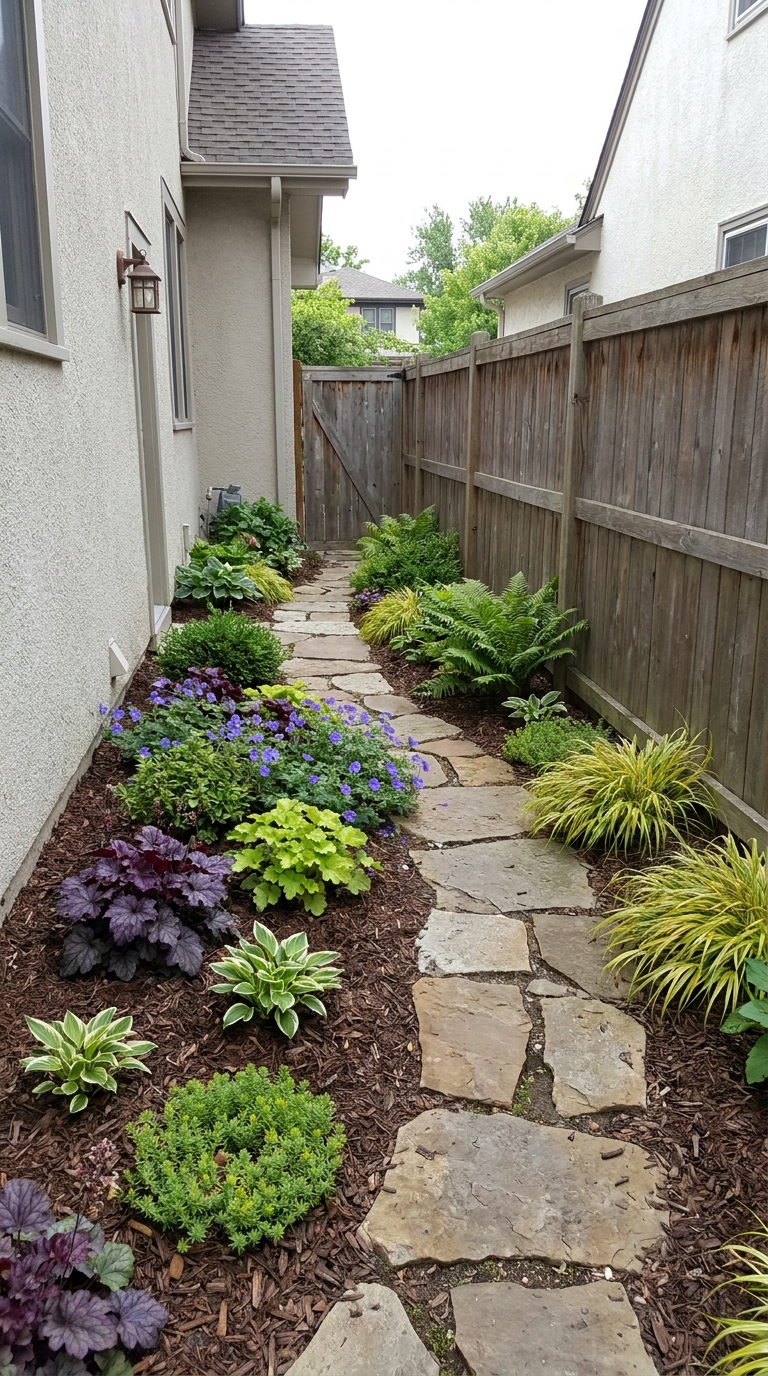
They bring strong leaf shape, dependable growth, and soft color without much fuss. Hostas offer bold leaves. Ferns add fine texture. Heuchera brings burgundy, lime, caramel, or silver tones. Astilbe adds soft plumes when the border needs a little lift.
A shade low maintenance perennial border built around these plants feels rich even when little is blooming.
Foliage Plants That Reduce the Need for Constant Flowers
Leaves do a lot of heavy lifting.
Silver brunnera, dark heuchera, blue-green hostas, and bright chartreuse foliage can keep a border interesting all season. That means you do not need nonstop flowers to make the garden feel alive.
This is one of the easiest ways to reduce maintenance while keeping strong visual impact.
In a shady border near a porch or side path, foliage can also make the space feel cooler and more settled. It gives the eye somewhere to rest.
Part Shade Perennial Border Ideas for Flexible Garden Spaces
Many gardens sit somewhere in between full sun and full shade.
Part shade perennial border ideas work well with plants like coral bells, Japanese anemones, hydrangeas, hellebores, and hardy geraniums. These plants handle changing light and offer longer seasonal interest.
They are flexible, which usually means less stress for the gardener.
A part shade border can be one of the easiest spaces to manage if you choose plants that are not fussy about exact conditions. The goal is not perfection. It is steady performance.
Front Yard Low Maintenance Perennial Border Ideas for Better Curb Appeal
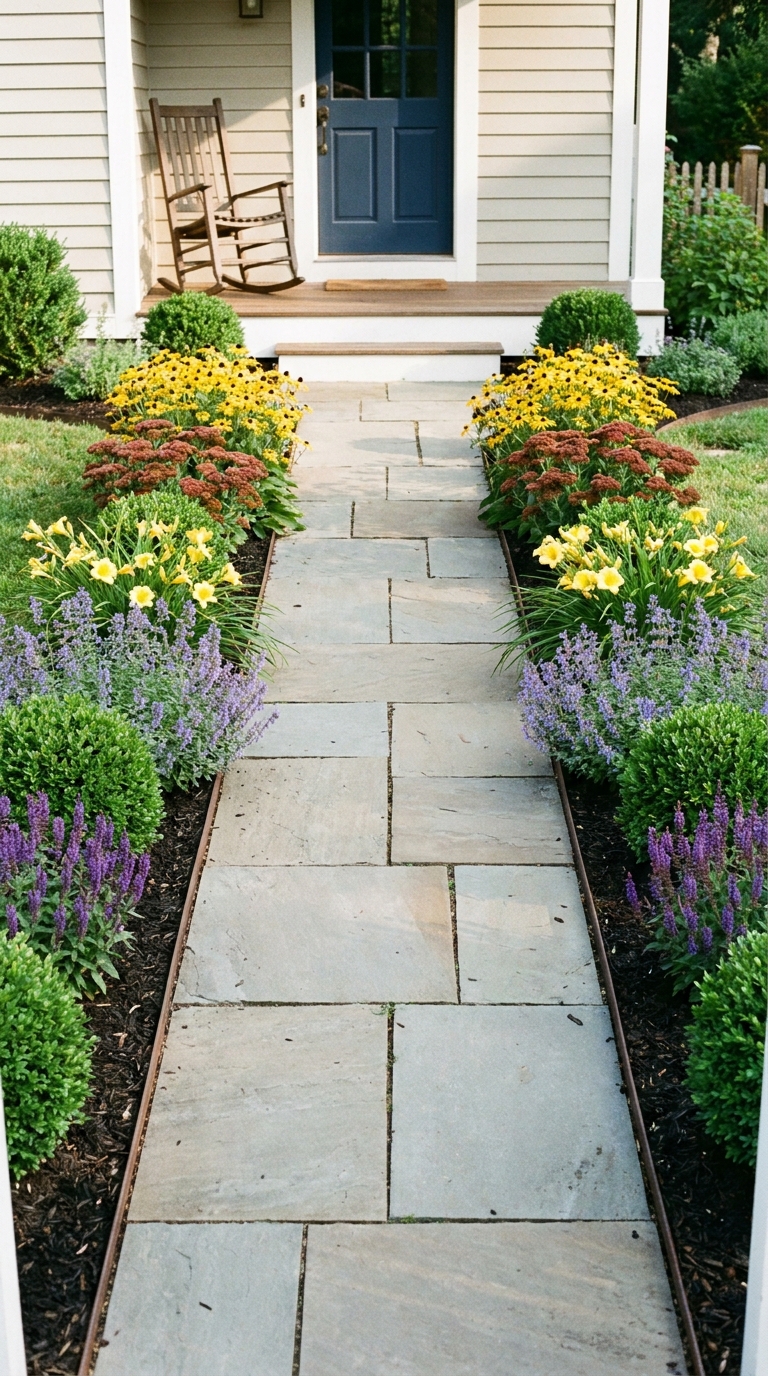
The front yard carries pressure. It is the first thing people see, and somehow it always feels like it should look perfect.
The good news is it does not need complicated planting to look polished. In fact, simple front yard low maintenance perennial border ideas often look better than crowded ones.
Framing Walkways With a Low Maintenance Perennial Flower Border
Simple borders along paths create clean structure.
Use repeating groups of lavender, salvia, catmint, or compact ornamental grasses mixed with hardy perennials. This keeps the front yard low maintenance perennial border tidy and easy to follow.
It also makes the entrance feel welcoming without overfilling the space.
For example, a walkway border could use catmint along the edge, coneflowers in the middle, and compact grasses at intervals. It’s soft, colorful, and easy to read from the street.
Creating a Tidy Front Yard Border That Always Looks Finished
Evergreen anchors help here.
Boxwood, dwarf grasses, small shrubs, or neat mounds of foliage paired with flowering perennials give the border shape even in winter. That prevents the empty look many borders get in the off-season.
A tidy structure makes everything else feel easier.
When the bones of the border are strong, the flowers can come and go without the whole bed looking neglected.
Using Repetition to Make Front Yard Borders Feel More Designed
Repeating the same plants creates calm.
Instead of ten different flowers in ten different colors, use three or four reliable plants repeated across the border. It looks cleaner, stronger, and far easier to manage.
This simple trick makes a low maintenance perennial garden border feel professionally planned.
Repetition also helps when you shop. Instead of buying one of everything, you can buy in groups of three, five, or seven. The result feels more balanced and less random.
Low Maintenance Perennial Border Combinations That Work Together
A good border is not just a collection of pretty plants. It is a group of plants that make each other look better.
That’s why low maintenance perennial border combinations are so useful. They give you a plan to follow.
Simple Three-Plant Low Maintenance Perennial Border Combinations
A three-plant combination is often enough for a small border.
Try catmint, coneflower, and sedum for a sunny space. Catmint softens the edge, coneflower brings summer color, and sedum gives late-season structure.
For shade, try hosta, fern, and heuchera. The leaves provide contrast, and the planting stays interesting without relying on constant bloom.
For a hot, dry border, try lavender, yarrow, and ornamental grass. This combination gives fragrance, color, and movement with little water once established.
Simple combinations are easier to maintain because you learn what each plant needs. And because there are fewer plant types, the border feels calmer.
Mixed Perennial Border Pairings for Long Seasonal Interest
For longer seasonal interest, combine plants that peak at different times.
Hellebores can start the year in shade. Salvia and catmint can carry early summer. Coneflowers and black-eyed Susan can take over in midsummer. Sedum and grasses can finish the season.
This kind of mixed perennial border avoids the “all at once” problem, where everything blooms together and then disappears.
You want a border with handoffs. One plant finishes, another begins, and the garden keeps going.
Easy Plant Combinations for Small Garden Borders
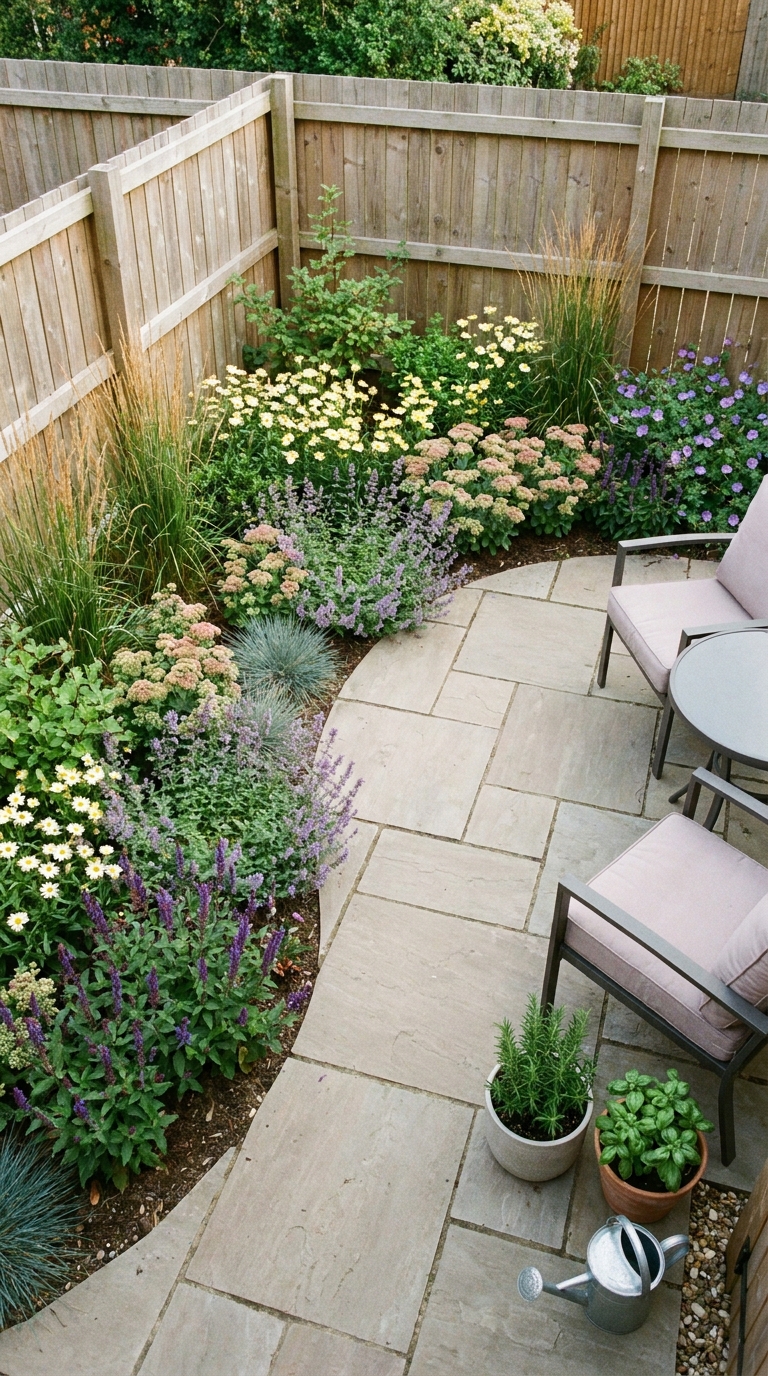
Small garden borders need restraint.
Choose compact plants that will not swallow the space. Dwarf daylilies, compact salvia, small hostas, hardy geraniums, and low sedum can all work well.
In a narrow border, use fewer varieties and repeat them. A line of catmint with pockets of coneflower and sedum can look far better than a cramped mix of too many plants.
Small borders are also easier to mulch and weed, so they can be a great place to start if you’re building a low maintenance garden from scratch.
Simple Design Tricks for a Low Maintenance Perennial Garden Border
The plants matter, but the design details make maintenance easier.
A few practical choices can save hours over the season.
Mulching to Reduce Weeding in a Low Maintenance Perennial Garden Border
Mulch is one of the simplest ways to cut down garden work.
It helps hold soil moisture, reduces weed growth, and gives the border a clean finished look. Organic mulch, such as shredded bark or composted leaf mold, also improves the soil as it breaks down.
Keep mulch a little away from plant crowns so they do not rot. A two-inch layer is usually enough for most perennial borders.
This one task can make the whole bed feel easier to manage.
Edging That Keeps a Low Maintenance Perennial Flower Border Looking Neat
A clean edge can make even a simple border look polished.
Stone, brick, metal edging, or a crisp spade-cut edge can help separate the flower border from the lawn. This reduces grass creeping into the bed and makes mowing easier.
For busy homeowners, edging is not just decorative. It is a maintenance tool.
A good edge gives the garden a clear boundary. And that boundary helps the whole yard look cared for, even when the plants are between bloom cycles.
Using Evergreen Structure in a Low Maintenance Perennial Border
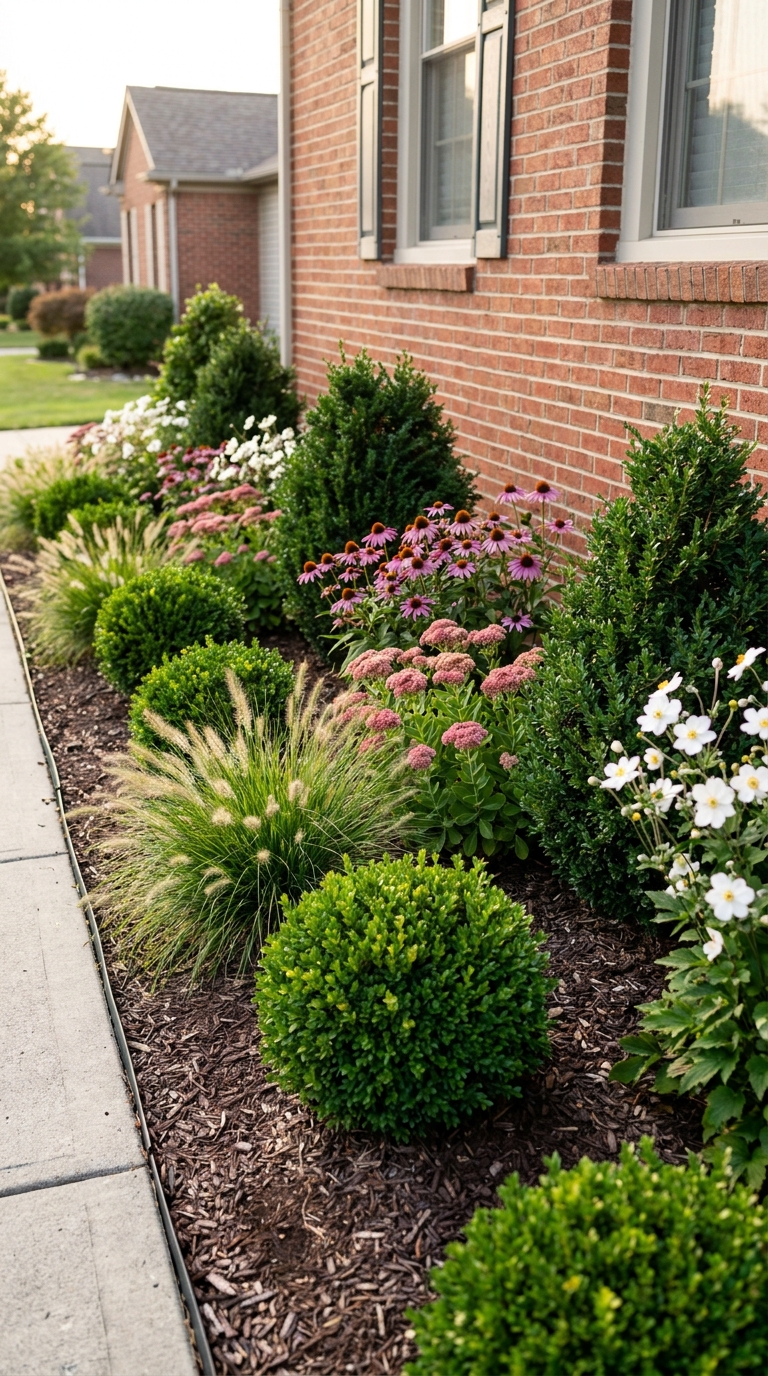
Evergreen structure keeps the border from disappearing in winter.
Small shrubs, compact evergreens, or clumping grasses can hold the space when perennials die back. This is useful in front yards, along paths, and anywhere the border is visible from the house.
You do not need many evergreen plants. A few well-placed anchors can be enough.
They give the border shape, and the perennials bring seasonal change around them.
Common Mistakes That Make a Low Maintenance Perennial Border Harder to Manage
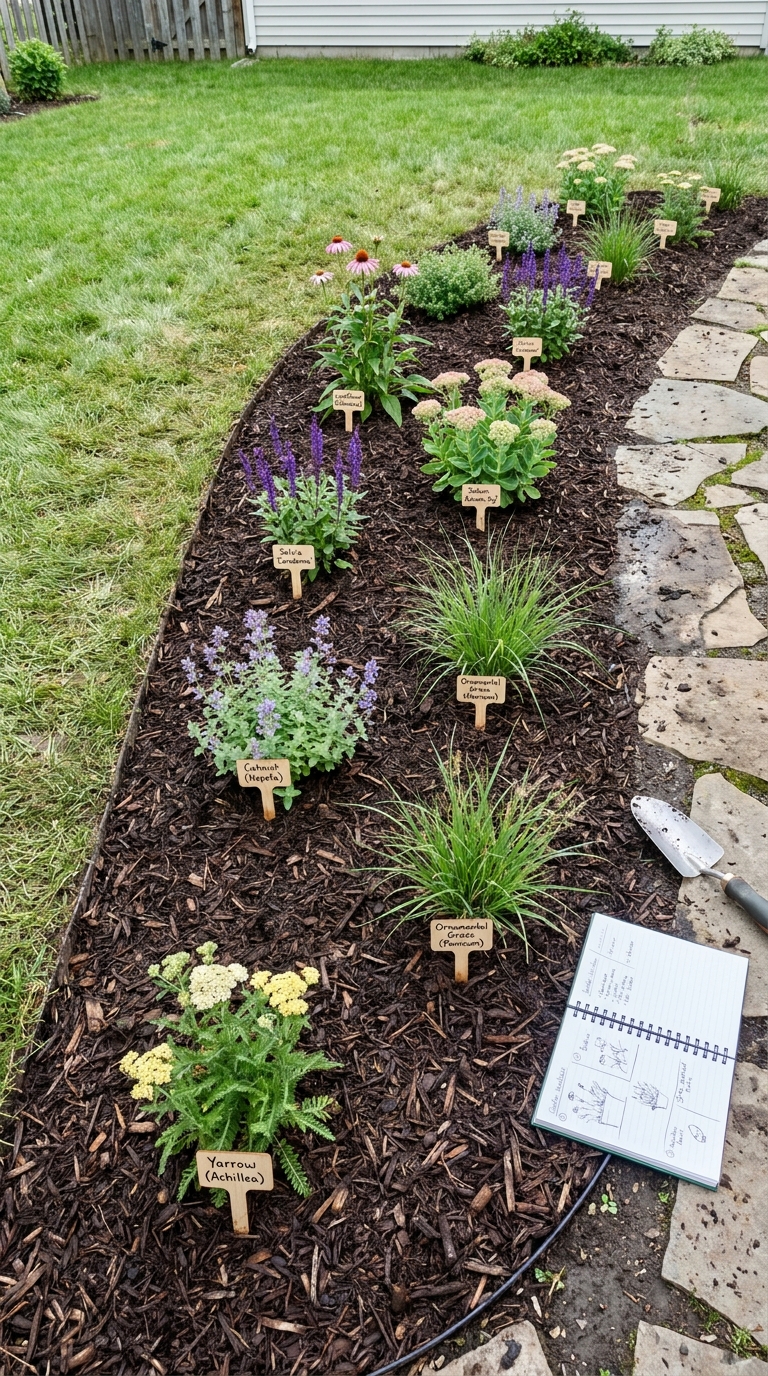
A border can become high maintenance fast if a few choices go wrong.
The good news is most mistakes are easy to avoid once you know what to watch for.
Planting Too Many High-Demand Flowers in a Perennial Border
Some plants are beautiful but needy. They may need staking, deadheading, extra watering, or frequent dividing.
There is nothing wrong with including one or two favorites, but do not build the whole border around plants that need constant help.
A low maintenance perennial border should be mostly made of steady performers. Add the demanding plants as accents, not the foundation.
Ignoring Mature Plant Size in a Low Maintenance Perennial Border
This is a common mistake.
Small nursery plants make it easy to overplant. The border looks full right away, but by next season everything is crowded. Crowded plants compete for light, trap moisture, and become harder to care for.
Spacing may look bare at first, but mulch can cover the gaps while plants grow.
Patience saves work.
Choosing Perennial Border Plants for Looks Instead of Garden Conditions
A plant can be gorgeous and still wrong for your yard.
If your soil is dry, choose drought tolerant perennials. If your border is shady, focus on shade plants. If deer are common in your area, consider deer-resistant choices where possible.
When plants match the conditions, they grow with less drama.
That is the real secret behind most low maintenance perennial border ideas. It is not about finding magic plants. It is about finding the right plants for the right place.
A Garden That Gives More Than It Takes
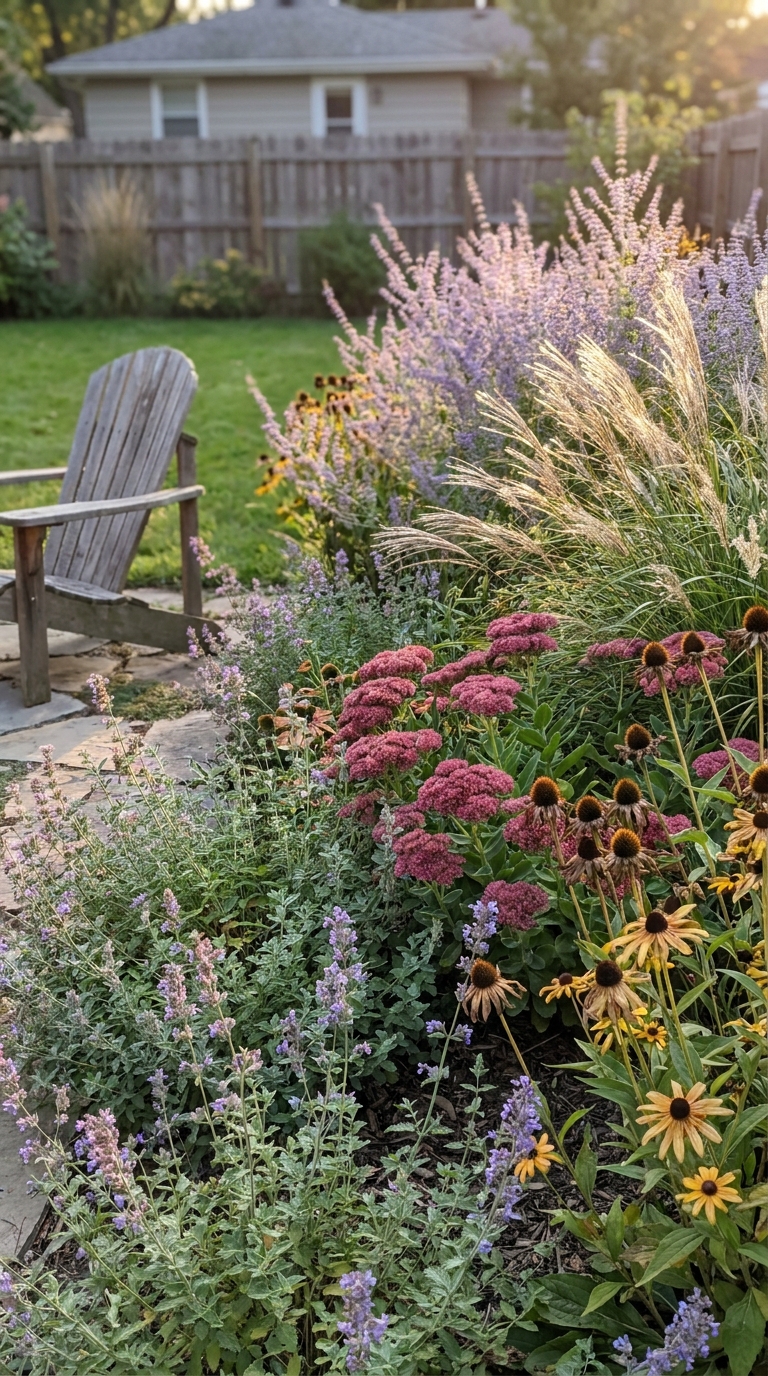
The best low maintenance perennial border is not the one with the most plants. It is the one that fits your real life.
A border should welcome you outside, not make you feel behind before breakfast. It should hold color through the seasons, soften the edges of the house, and still leave room for weekends that do not involve hauling a watering can.
Start with one section. Choose hardy plants that suit your space. Build simple perennial border combinations that can grow into themselves. Use mulch, clean edging, and repetition to make the bed easier to manage from the start.
Over time, the garden begins to settle. The plants return, fill out, and knit together. The border starts to look like it belongs there.
And honestly, that is what most of us wanted in the first place. A garden that looks cared for, feels calm, and gives more beauty than work.
