
Square Foot Gardening: The Small-Space Method That Actually Works
You don’t need a big backyard to grow real food. You need a plan that doesn’t turn into a messy, weedy guessing game by week three. That’s why square foot gardening has stuck around: it takes the “where do I put what?” stress and replaces it with a simple grid you can actually follow.
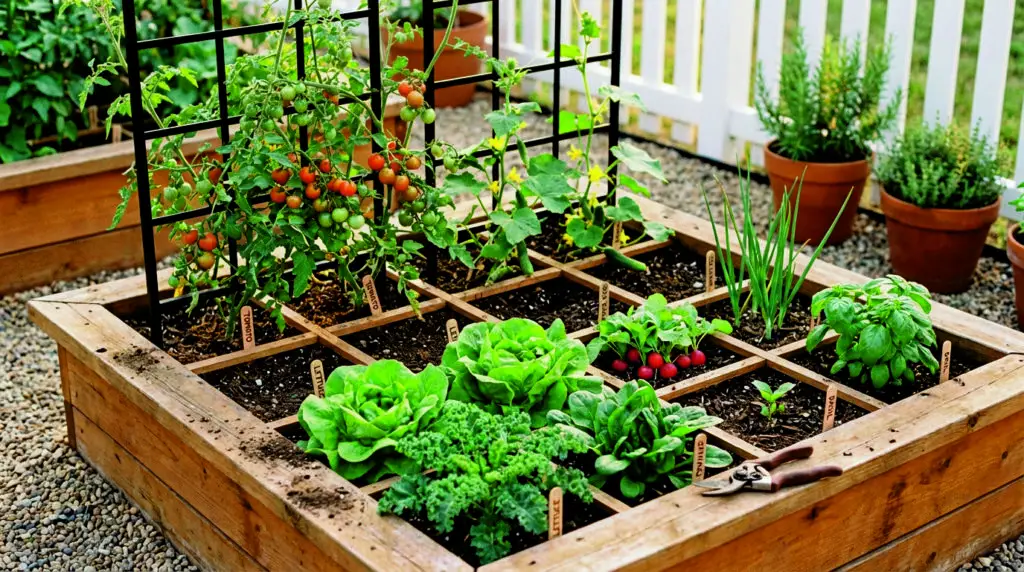
The idea is almost laughably straightforward. You build (or set) a raised bed, add a rich, fluffy soil mix, then divide the surface into 1-foot squares. Each square becomes its own tiny “plot,” planted by spacing rules that match the crop’s mature size—so you’re not overplanting, and you’re not wasting space either. Many guides use the same quick-count categories (like 1, 4, 9, or 16 plants per square) to make spacing feel visual instead of technical.
What Square Foot Gardening Is (and What It’s Not)
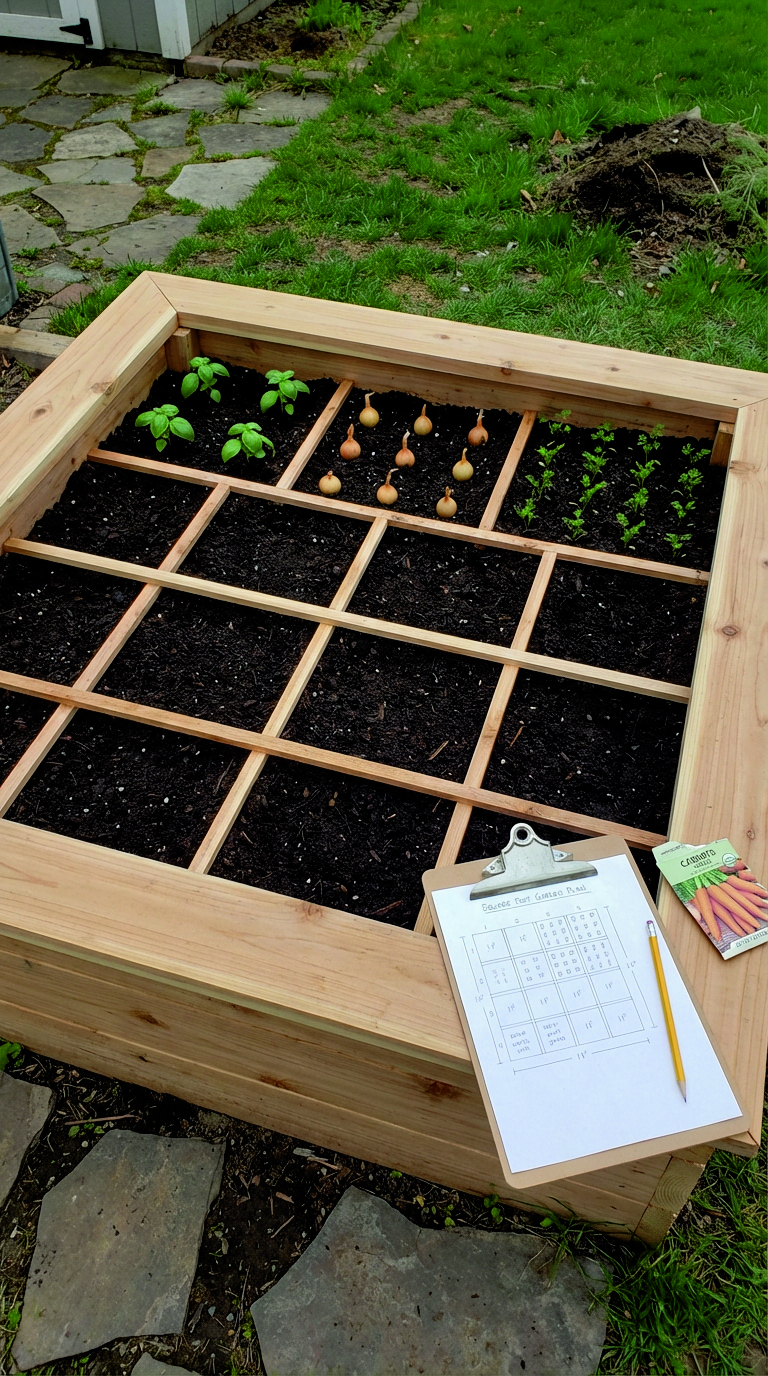
Square foot gardening is raised-bed gardening with a grid mindset. Instead of planting long rows with wide paths, you plant in a compact bed divided into one-foot squares, and each square gets a specific crop at a specific spacing. The grid is the whole point: it keeps you from guessing, crowding, and “forgetting what you planted where” halfway through the season.
What it’s great for
It shines when you want structure. Beginners love it because it answers the most annoying questions upfront: how much to plant, where to plant, and how to keep things manageable. It also works beautifully for small spaces—patios, narrow side yards, little suburban plots—where every bit of growing area matters.
What it won’t do for you
It won’t replace sun. Fruiting crops like tomatoes and peppers still need strong light. It won’t replace consistent watering either, because raised beds dry out faster than in-ground gardens. Square foot gardening is a method, not a miracle—just a very practical one.
Choosing a Bed Size and the Best Spot
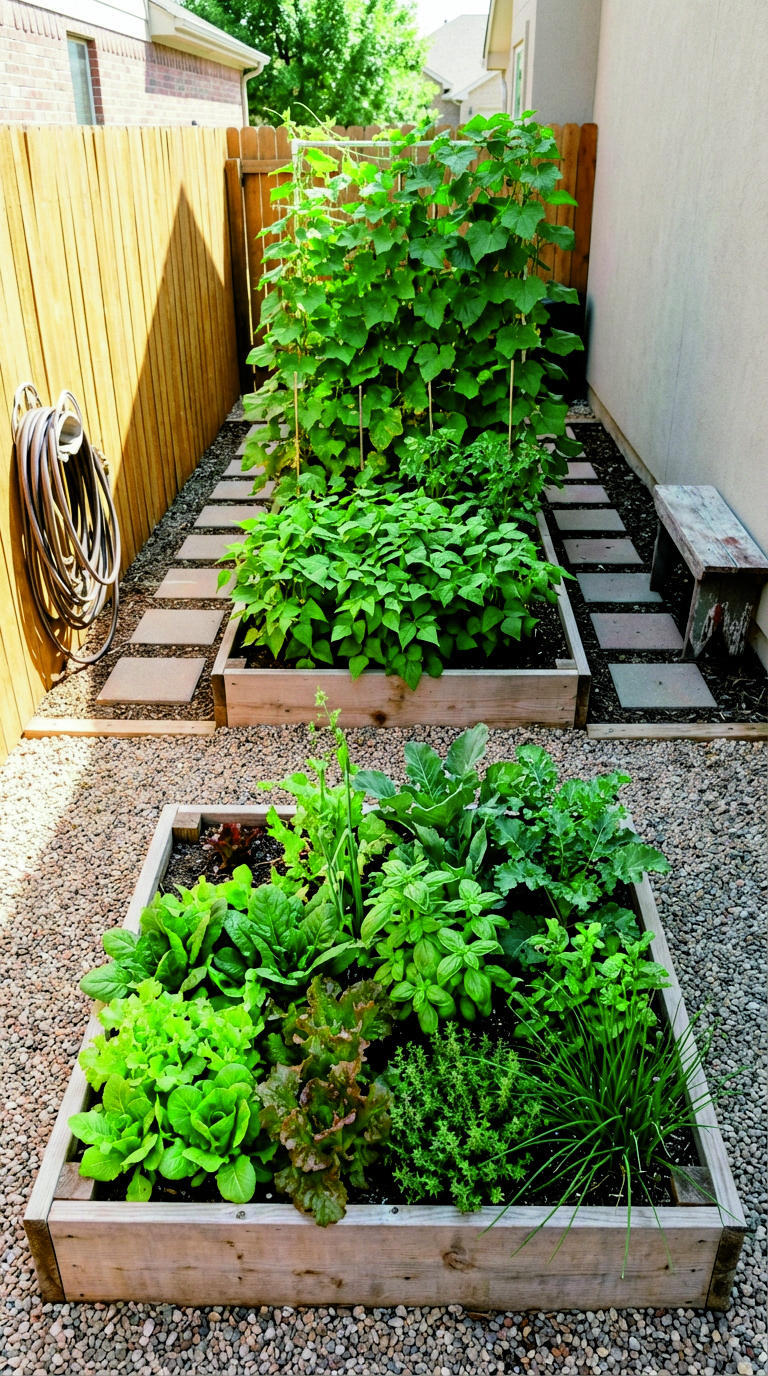
If you’re starting fresh, a 4×4 bed is the easiest win. It gives you 16 squares, which is enough variety to feel exciting without feeling like a chore. It’s also reachable from all sides, which matters more than people expect. Once you step into a bed even “just this once,” you compact the soil and roots pay the price.
A 4×8 bed is a great next step if you want more production or you’re feeding more than one person. Just plan for access: either leave walking space on both long sides or keep the bed narrow enough that you can comfortably reach the center.
Sun first, convenience second
Pick the sunniest spot you’ve got. Six to eight hours of direct sun is the sweet spot for a “full menu” bed (greens plus fruiting crops). If you have less sun, don’t quit—just shift your plant list toward greens, many herbs, and some root crops.
And be honest about convenience. If your bed is far from the hose, you’ll water less. If it’s close enough to see every day, you’ll catch problems early and you’ll harvest more often.
Building the Box Without Overcomplicating It
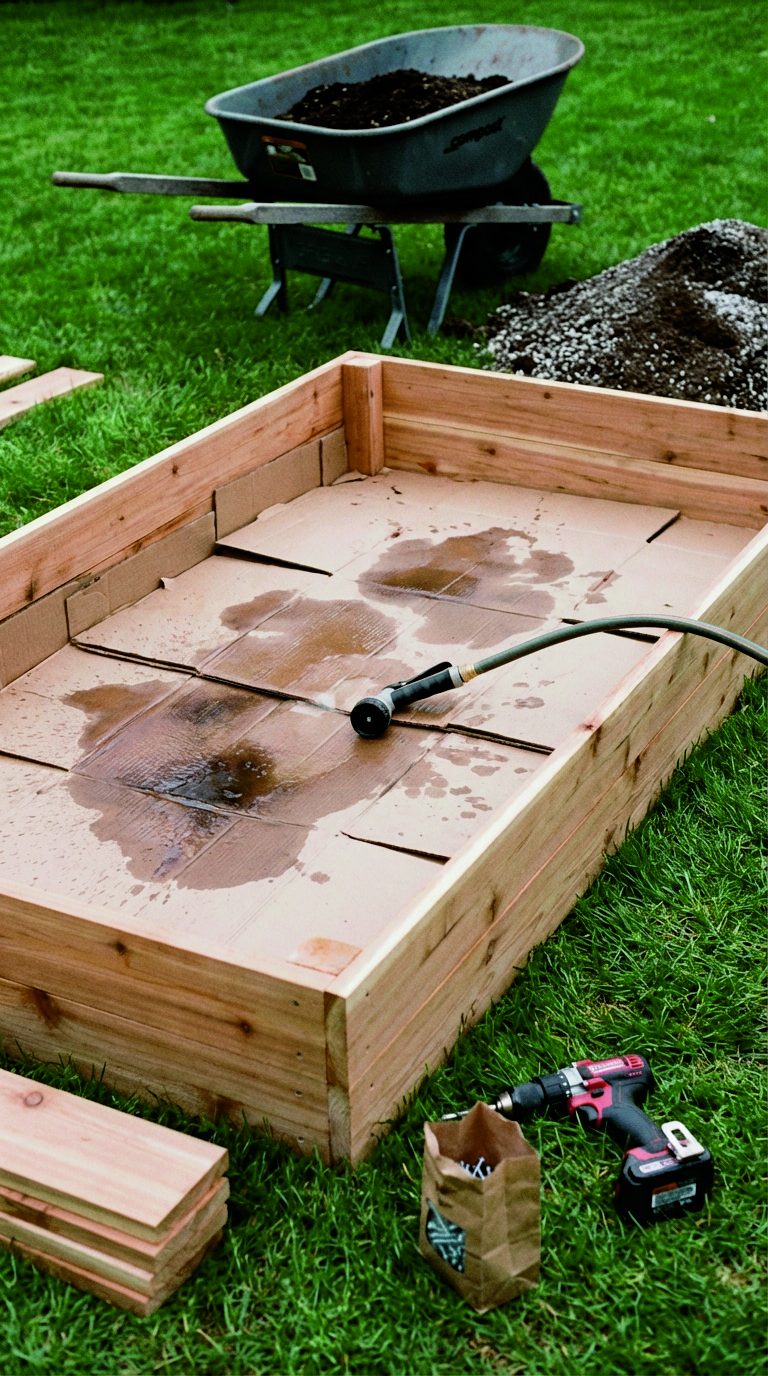
Keep the box simple and sturdy. Untreated wood, metal panels, or a raised-bed kit all work. Don’t get stuck chasing the perfect materials list. The real goal is a bed that holds soil, drains well, and lasts.
How deep should it be?
Six inches can work for many crops, especially leafy greens and herbs. But if you can go 10–12 inches, it’s more forgiving. Deeper beds hold moisture better, buffer temperature swings a little more, and let roots stretch out without hitting a “hard stop.”
The easy weed-blocking trick
If you’re placing the bed on grass or weedy ground, lay down overlapping cardboard first. Wet it, then fill your mix on top. It smothers most weeds, breaks down over time, and saves you from battling grass runners all season.
Soil: The Make-or-Break Ingredient
Square foot gardening is intensive, and intensive gardening asks a lot from the soil. This is not the place for heavy yard dirt that turns into a brick, or bargain “fill soil” that drains too fast and grows weak plants.
You want a mix that’s light, holds moisture, drains well, and feeds plants steadily.
A simple soil mix that works
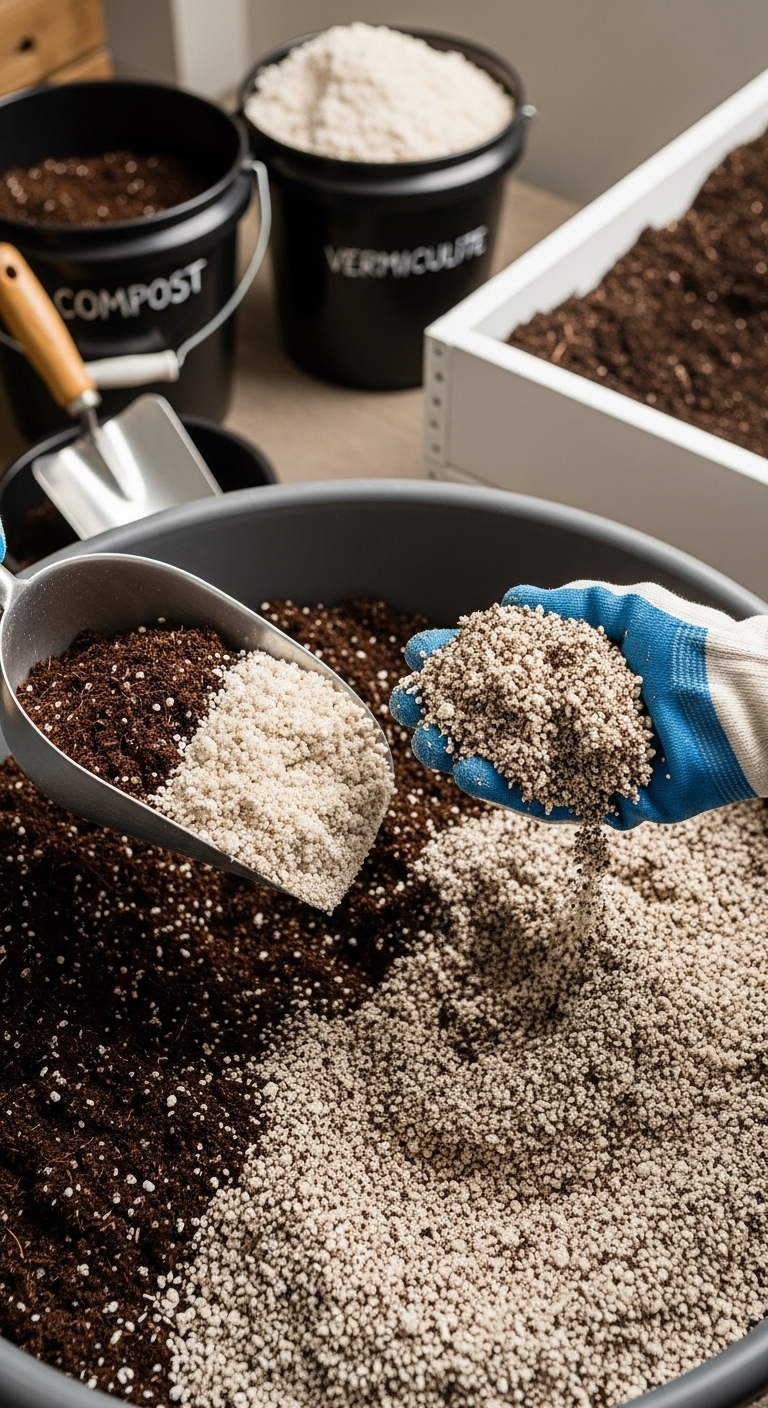
Many square foot gardeners use a three-part blend:
- A moisture-holding ingredient (often peat moss or coconut coir)
- A lightweight aeration ingredient (often coarse vermiculite)
- A generous amount of compost (ideally blended from different sources)
You don’t have to worship an exact recipe, but you do want that “fluffy cake crumb” texture that stays easy to dig into even after watering.
Compost quality matters more than you think
If your compost is weak, your plants will be weak. If your compost is rich and diverse, your bed stays productive. A blended compost (from a few different inputs) tends to perform better than relying on a single type. Think of compost like a pantry: variety makes meals better.
The Grid: The Tiny Step That Changes Everything
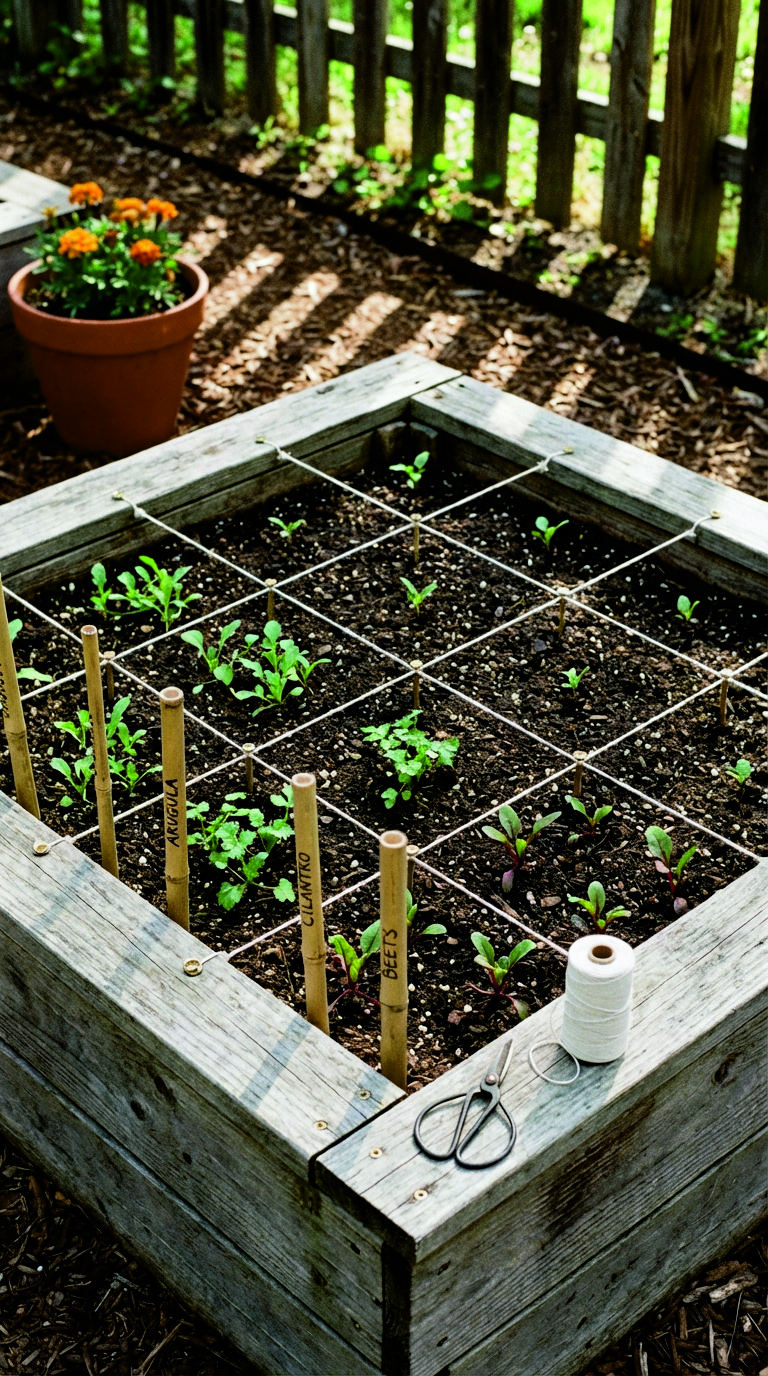
The grid is what makes this method feel calm. One-foot squares keep spacing honest and planning visual.
Easy ways to make a grid
Use what you’ll actually maintain:
- String tied to screws along the edges
- Thin wood slats laid across the top
- Durable twine stapled in place
- Even narrow strips of bamboo
The grid doesn’t have to be fancy. It just has to stay put long enough for you to plant and keep track.
Spacing Rules That Don’t Make Your Brain Hurt
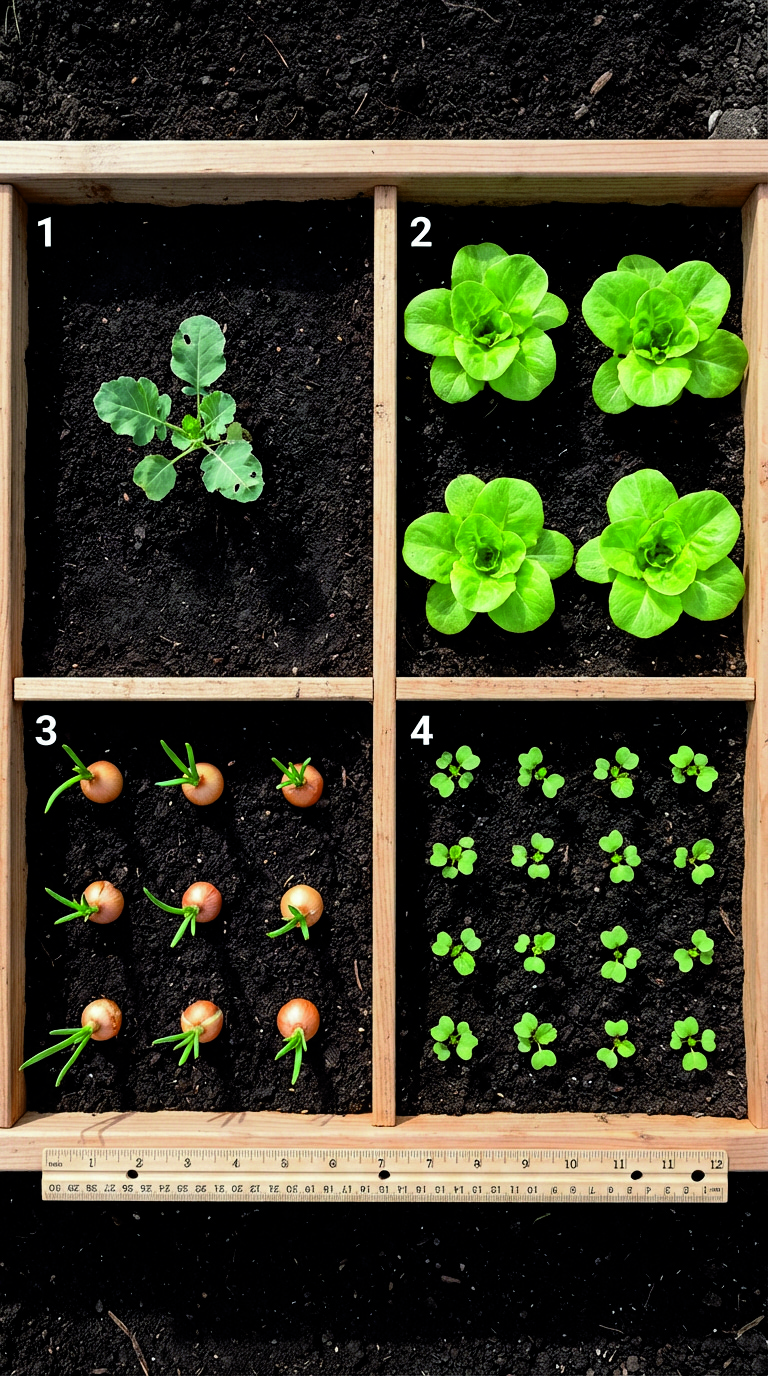
This is where square foot gardening feels like cheating—in a good way. Instead of reading a seed packet and translating row spacing into real life, you plant by square.
A common starting point looks like this:
- 1 plant per square for large plants (think: broccoli, peppers, eggplant, tomatoes—especially if you’re trellising)
- 4 plants per square for medium plants (many lettuces, bush beans, some roots depending on variety)
- 9 plants per square for smaller crops (spinach, beets, onions)
- 16 plants per square for small quick crops (radishes, carrots—usually with thinning)
How to use seed packets without getting confused
Seed packets often talk about “row spacing,” which doesn’t help much in a grid bed. Focus on the plant spacing instead. If it says plants should be 6 inches apart, that’s your clue for how many can fit in a one-foot square.
A quick reality check on sprawling crops
Some plants don’t naturally behave in a one-foot box. Squash, pumpkins, melons, and some cucumbers can take over unless you train them upward. That doesn’t mean you can’t grow them—it just means you need a plan (usually vertical support and more than one square).
Planning Your Squares So the Bed Doesn’t Turn Into Chaos
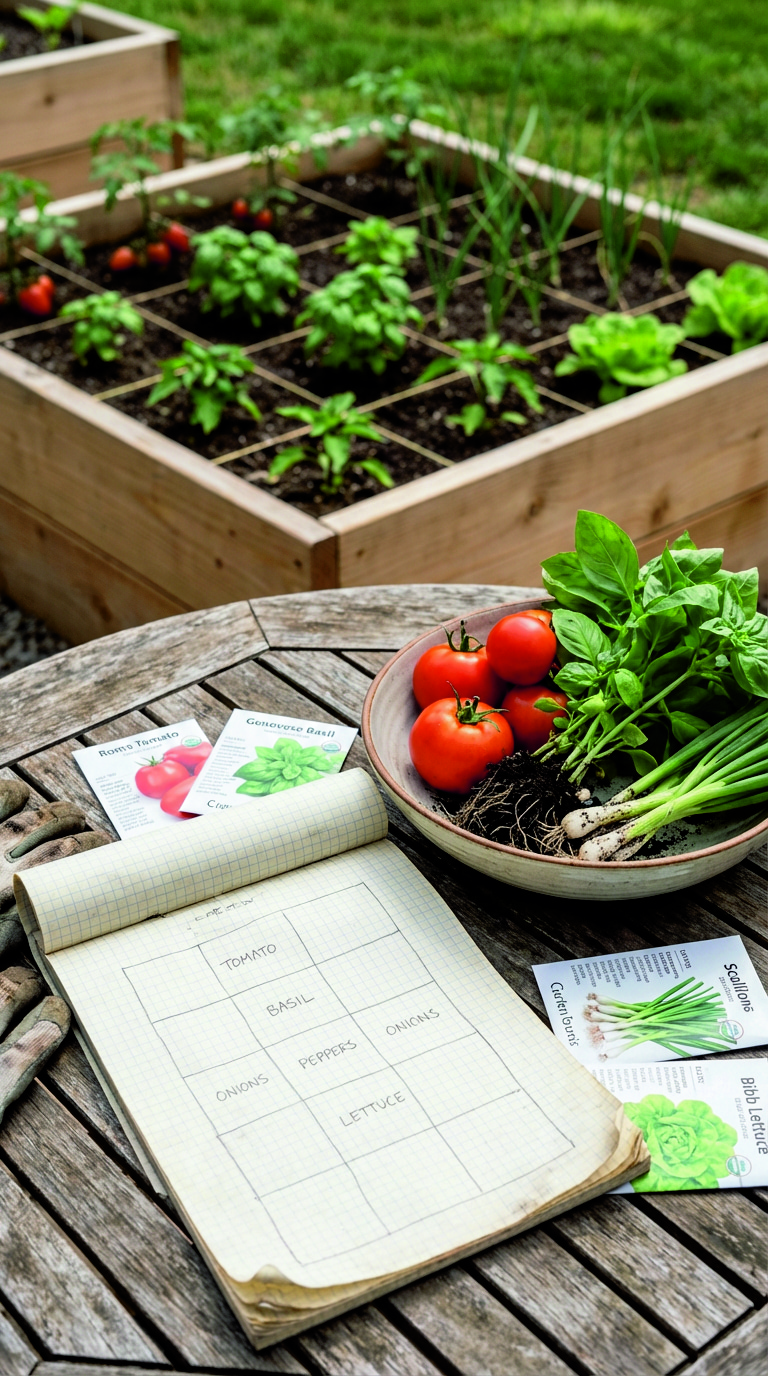
Before you plant, pause and plan. Not because you need perfection, but because a five-minute plan saves you from “why did I plant tall stuff in front of short stuff?” regret later.
Start with what you actually eat
This sounds obvious, but it’s the most common mismatch. If nobody in your house eats kale, don’t plant kale “because gardening people do.” Build your bed around meals:
- Salad people: lettuces, spinach, radish, scallions, herbs
- Salsa people: tomatoes, peppers, onions, cilantro
- Stir-fry people: bok choy, green onions, carrots, snap peas, herbs
Put tall crops where they won’t shade everything
If you’re using a trellis, treat it like a wall. Place it on the north side of the bed (or the back, depending on your layout) so it doesn’t cast shade across your whole grid. Then place shade-tolerant crops closer to that side.
Vertical Growing: The Space Multiplier
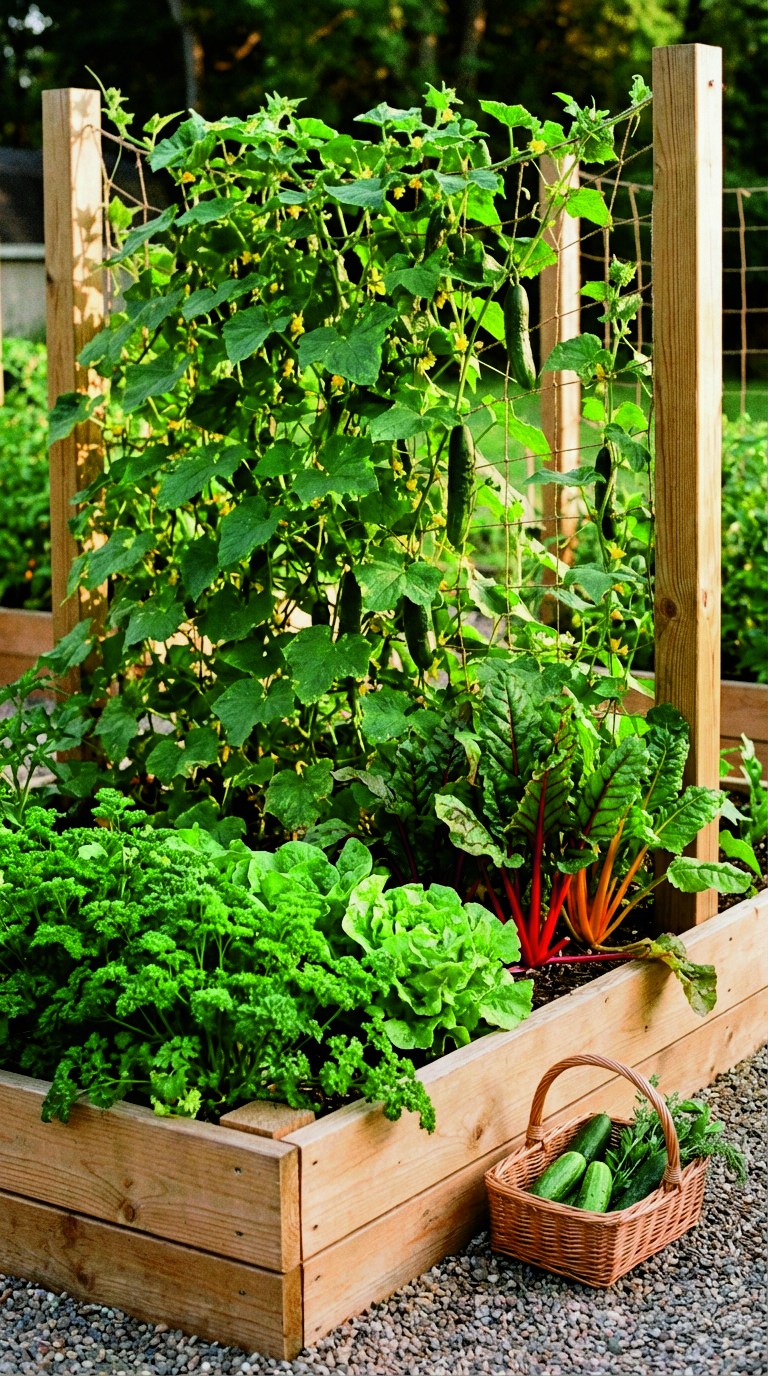
If square foot gardening has a secret weapon, it’s growing up.
What to trellis
- Tomatoes (especially vining types)
- Pole beans and peas
- Cucumbers
- Smaller melons (with support)
Vertical growing gives you more harvest per square because vines stop stealing ground space. It also improves airflow, makes harvesting easier, and keeps fruit cleaner.
Simple trellis options
- Netting stretched between sturdy posts
- A cattle panel arch or panel along one side
- Bamboo teepees for beans and peas
- String trellises anchored tightly (tight matters)
Watering and Mulch: The Part That Keeps It Low-Stress
Raised beds dry out faster, especially in warm or windy weather. If watering feels like the thing that will break your gardening mood, make it easy on yourself.
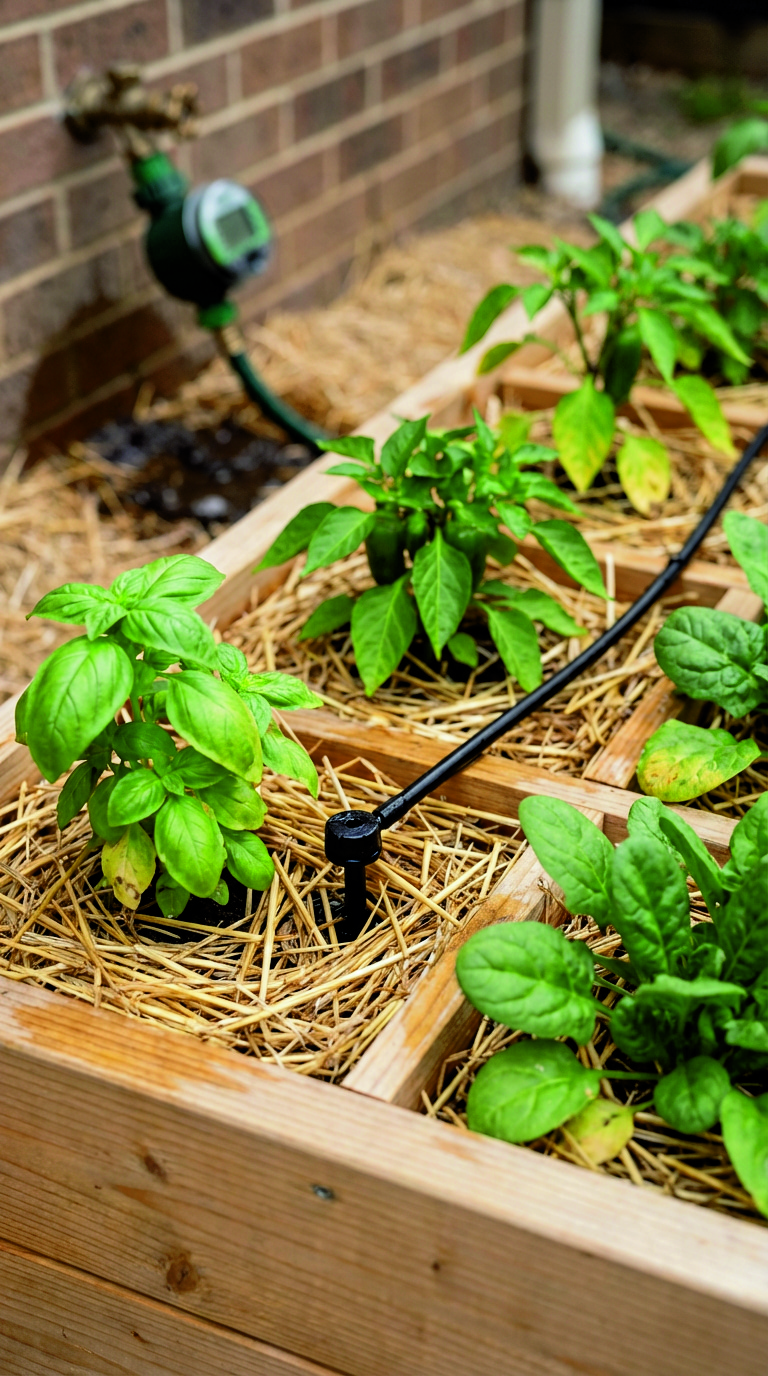
Make watering consistent
You can hand-water, but do it deeply and regularly. If you want the lowest drama setup, a soaker hose or drip line is a game changer. It turns watering into a quick routine instead of an all-day guilt spiral.
Mulch is not optional in an intensive bed
A thin layer of mulch helps in three ways: it slows evaporation, softens soil temperature swings, and reduces weeds. Straw, shredded leaves, or fine bark work well. Keep mulch a little away from plant stems so you don’t invite rot.
Feeding the Bed: How to Keep It Productive All Season
Because you’re planting more densely, the bed uses nutrients faster. The simplest, most reliable strategy is to add compost regularly.
The “reset the square” habit
After you harvest a square, add a trowel or two of compost and mix it into the top few inches before replanting. It’s a small action that keeps the bed from “running out of steam” midseason.
When you might need extra help
If plants look pale, growth is slow, or fruiting crops aren’t thriving, you may need a gentle supplement—especially for heavy feeders like tomatoes. Keep it simple and light. Overfeeding can be just as messy as underfeeding.
Succession Planting: How You Keep Harvesting Instead of Waiting
This is where square foot gardening starts feeling like a steady little food machine. As soon as a square finishes, you replant it.
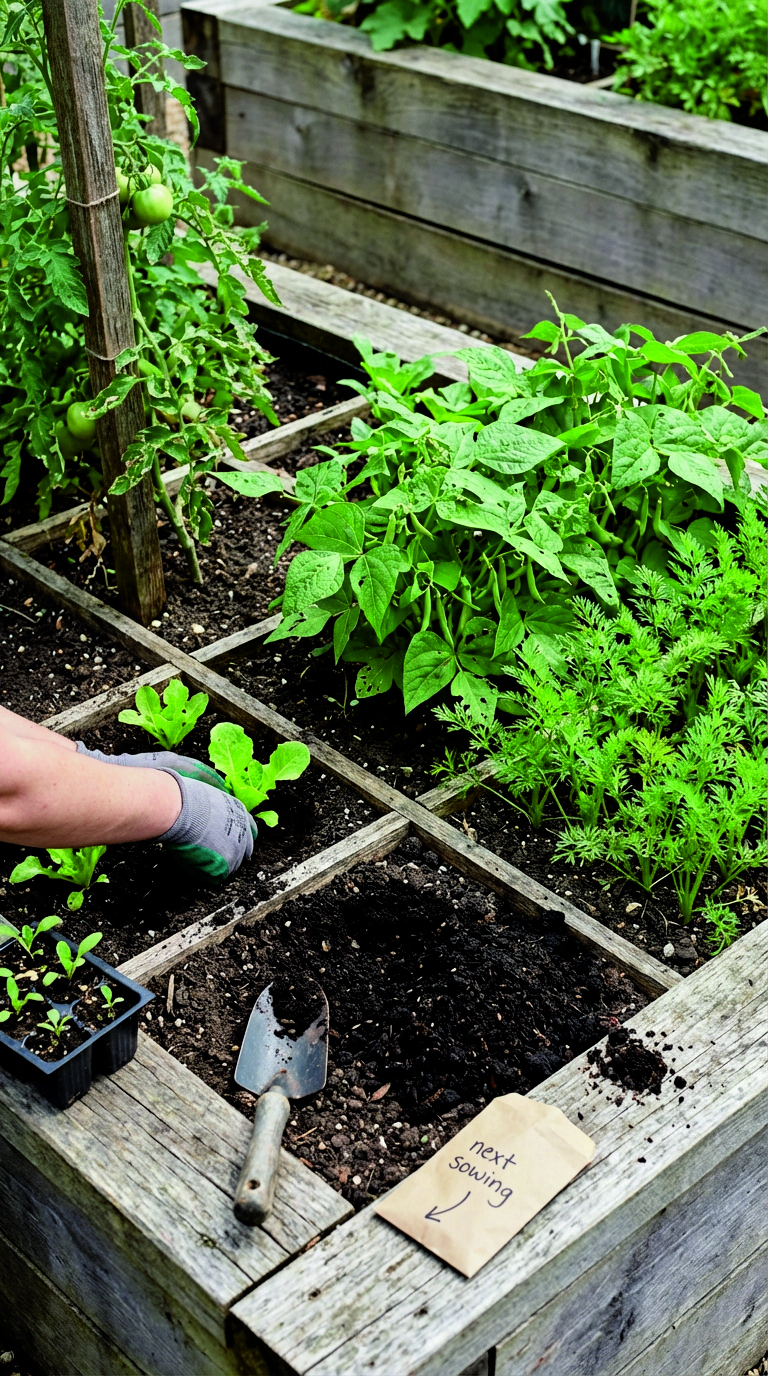
Two easy ways to succession plant
- Replant right after harvest: radishes come out, lettuce goes in. Early peas finish, bush beans follow.
- Stagger planting dates: instead of planting all your lettuce at once, plant a new square every week or two so you get a steady supply rather than one overwhelming harvest.
Keep seedlings “on deck”
If you can, start a few seedlings in small pots while squares are still growing. Then when a square opens up, you transplant immediately. It keeps the bed full and keeps your momentum going.
Sample Layouts You Can Copy
These are meant to be practical, not precious. Treat them like templates you can adjust based on what you love to eat.
4×4 Salad Bed
- 4 squares: mixed lettuces (succession planted)
- 2 squares: spinach (cool season) or heat-tolerant greens (warm season)
- 2 squares: radishes (repeat plantings)
- 2 squares: scallions or bunching onions
- 2 squares: herbs (basil, parsley, cilantro—rotate based on season)
- 2 squares: a trellis edge with peas in cool season or cucumbers in warm season
4×4 Salsa Bed
- 1 square (trellised): tomato
- 1 square: peppers (1–2 plants depending on size)
- 2 squares: onions (or scallions if you prefer)
- 1 square: cilantro (cool weather) then basil (warm weather)
- 1–2 squares: bush beans (easy and productive)
- Remaining squares: lettuce for tacos, radishes, or a small space for garlic chives
4×8 Family Staples Bed
- One long side: trellis line (tomatoes + cucumbers/peas/beans in season)
- Several squares: lettuces and greens rotated through the season
- Several squares: carrots/beets/onions (roots are great grid crops)
- A few squares: herbs for cooking (basil, parsley, thyme—whatever you use)
- A flexible “swing zone”: quick crops you can replant often (radish, arugula, baby greens)
Common Mistakes (and Quick Fixes That Save the Season)
Everybody makes these. The trick is catching them early and adjusting without drama.
Overcrowding
Square foot gardening is efficient, but plants still need airflow and room. If a square turns into a dense mat, thin it. Yes, it hurts a little. But it hurts more to watch everything struggle.
Ignoring shade from trellises
A trellis can shade half your bed if it’s placed poorly. Move the trellis to the north/back side if possible, and reserve the shadier squares for herbs, greens, or crops that tolerate a bit less sun.
Weak soil
If plants are small and unimpressed, add compost, loosen the top layer, and mulch. You can rescue a disappointing bed faster than you think—especially if you improve the soil and get watering consistent.
Planting everything at once
A bed planted “all at once” often means a bed harvested “all at once,” followed by empty squares. Succession planting keeps the bed working for you.
Final Thoughts: Why This Method Sticks
Square foot gardening isn’t just about saving space. It’s about saving your energy. The grid gives you structure, the raised bed keeps things tidy, and the “one square at a time” approach makes gardening feel doable even when life is busy.
Start with one bed. Learn what you actually like growing. Notice which squares you harvest constantly and which ones you forget about. Then adjust. That’s the quiet genius of this method: it’s flexible, it’s forgiving, and it makes a small space feel like it has real potential—season after season.