
The Fast-Growing Trees Texas Homeowners Regret Planting Once the Repair Bills Start
A tree that shoots up ten feet in two years sounds like a dream when your new Texas yard is bare and baking in the sun. But some of the quickest growers come with hidden costs, like cracked foundations, clogged pipes, and limbs that crash onto roofs during storms.
Knowing which trees cause the most trouble can save you thousands of dollars and a lot of heartache. Here are ten speedy trees that many Texans wish they had skipped.
1. Silver Maple
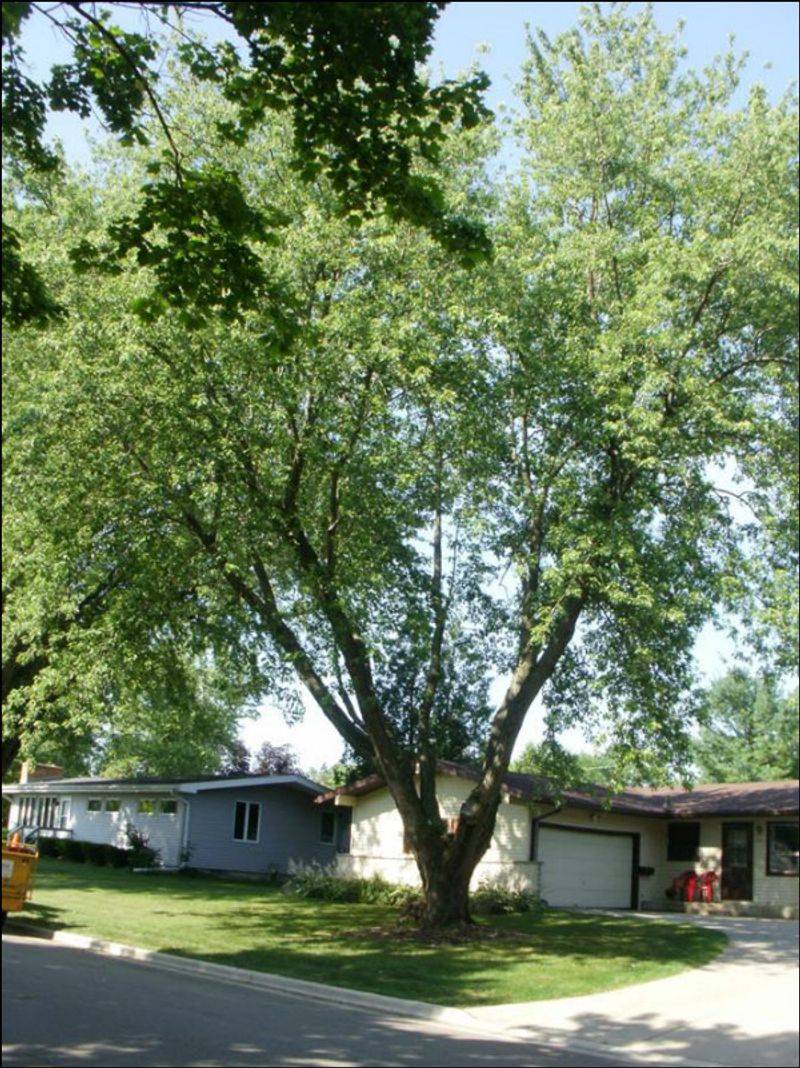
One plumber in Dallas jokes that silver maples keep him in business. He is only half kidding.
Few trees chase water as aggressively, and their roots will happily wrap around a cracked sewer line and fill it like a sponge.
Silver maples can add three feet of height a year, which is why nurseries once sold them by the truckload. The wood, sadly, does not keep pace with the growth.
It stays soft and brittle, so ice storms and spring winds often snap big limbs without warning.
Add in shallow roots that heave sidewalks and a thirst that struggles in Texas droughts, and you have a tree that looks great for a decade before turning into a repair list. Red maple or Shantung maple are safer picks for shade.
2. Bradford Pear
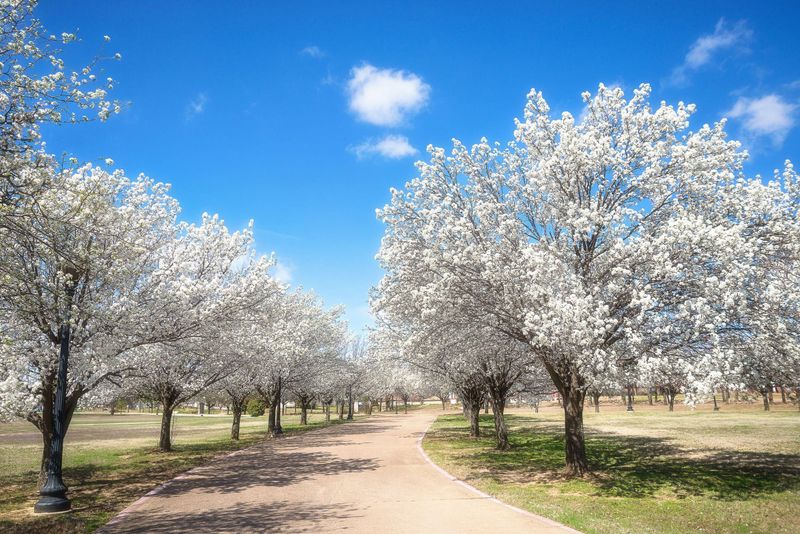
Every March, Bradford pears burst into clouds of white blossoms, and every March, neighbors start complaining about the smell. Some describe it as rotting fish.
That odor is only the first strike.
The real problem is the branch structure. Limbs grow upward in tight V-shaped angles, and as the tree hits about 20 years old, those weak joints split apart.
Many Texas homeowners have woken up after a thunderstorm to find half the tree lying across a car or fence.
Worse still, Bradford pears cross-pollinate with other pear varieties and spread into fields and roadsides as thorny, invasive thickets. Texas A&M experts now urge people to remove them rather than plant more.
If you love spring flowers, a Mexican plum or Texas redbud gives you blooms without the breakup.
3. Arizona Ash
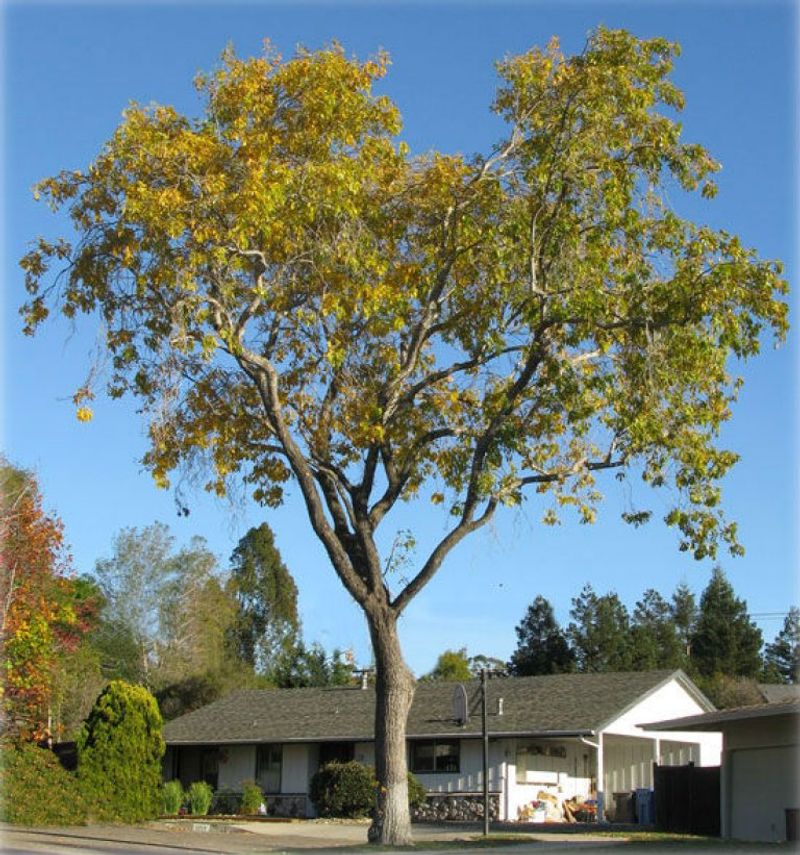
Back in the 1970s and 80s, builders across Texas planted Arizona ash in almost every new subdivision. They grew fast, gave quick shade, and made model homes look established.
Now many of those same trees are dying all at once.
Arizona ash typically lives only 20 to 30 years in Texas. As it ages, the trunk rots from the inside, branches drop, and the tree becomes a hazard looming over roofs.
Removal of a large one can easily cost $1,500 or more.
The emerald ash borer, a beetle that has wiped out millions of ash trees nationwide, has also reached Texas. That makes planting a new ash a risky bet.
Cedar elm and live oak grow slower but stick around for generations.
4. Mimosa Tree
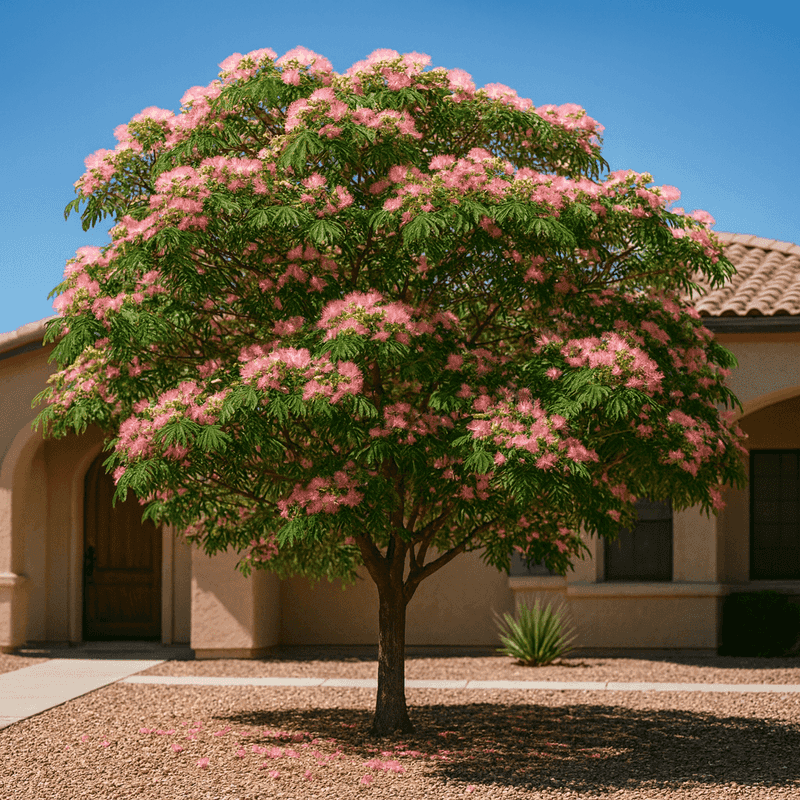
Pink, fluffy, and smelling sweet, the mimosa looks like something out of a fairy tale. Kids love the feathery leaves that fold up at night.
Then summer ends, and the cleanup begins.
Mimosas drop flowers, leaves, and long brown seed pods nonstop. Those seeds sprout everywhere, in flower beds, cracks in pavement, and your neighbor’s yard.
Pool owners especially dread them, since the debris clogs filters and skimmers.
The trees are also short-lived and prone to a fungal disease called mimosa wilt, which can kill them within a few seasons. Texas lists mimosa as invasive in many areas.
A desert willow offers a similar dreamy bloom with far less mess.
5. Chinese Tallow
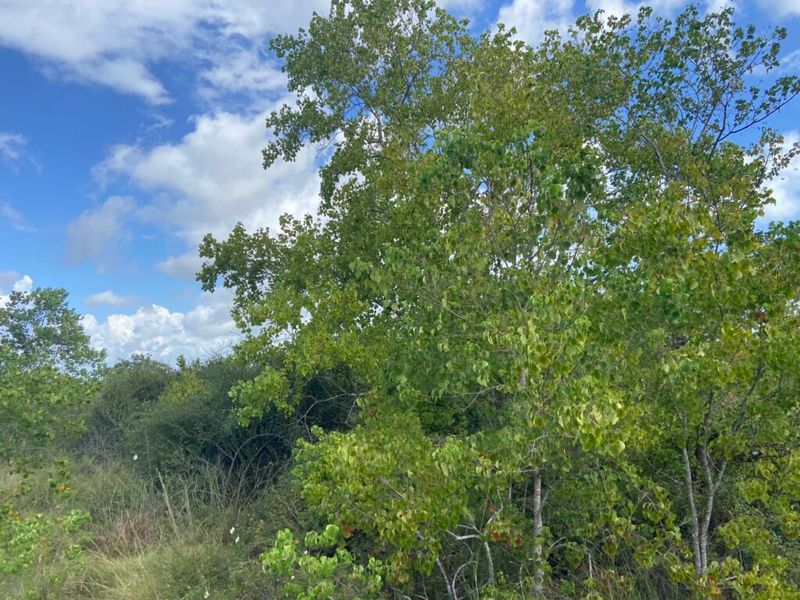
Here is a fun fact with a sour twist: Chinese tallow was once promoted as a source of soap and candle wax, thanks to its waxy white seeds. Today, it is one of the worst invasive trees on the Texas Gulf Coast.
Homeowners love its fiery fall color, which is rare in the Houston area. But birds spread the seeds far and wide, and tallow quickly crowds out native plants in prairies and wetlands.
In your yard, you will be pulling seedlings for years.
The roots are aggressive near pipes, and the sap can irritate skin. Many Texas cities now ban selling it.
For fall color, try Chinese pistache, which behaves itself.
6. Cottonwood
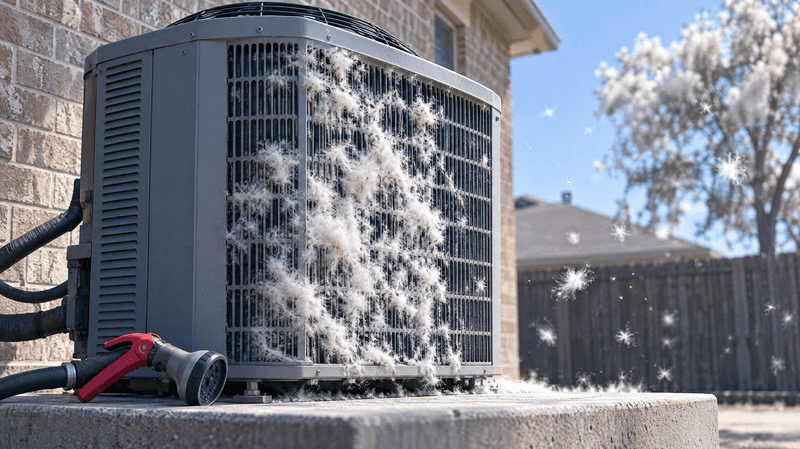
Ever seen it snow in May? Under a female cottonwood, it happens every year.
The fluffy seeds float everywhere, sticking to screens, clogging AC units, and blanketing pools.
Cottonwoods are native and beautiful near rivers, where they belong. In a backyard, though, they can top 80 feet with massive roots that hunt for water in septic systems and foundations.
Clay soils in North Texas make that root pressure even more damaging.
The wood is weak, so big limbs fall during storms. If you already have one, choosing seedless male varieties helps a little.
Otherwise, give cottonwoods space far from your house.
7. Weeping Willow
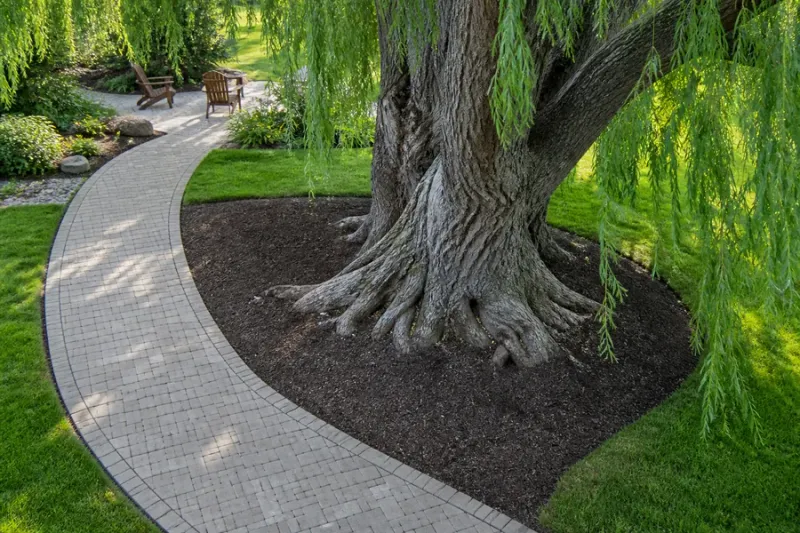
Picture a weeping willow and you probably imagine a quiet pond and a summer picnic. Picture one ten feet from your house, and a plumber should come to mind.
Willow roots are among the most notorious for invading water and sewer lines. They can travel three times the width of the canopy.
In dry Texas summers, they head straight for the moisture in your pipes.
Willows also struggle in Texas heat, often looking ragged and shedding twigs constantly. They rarely live past 30 years here.
Keep them by large ponds on acreage, never near a slab foundation.
8. Hackberry
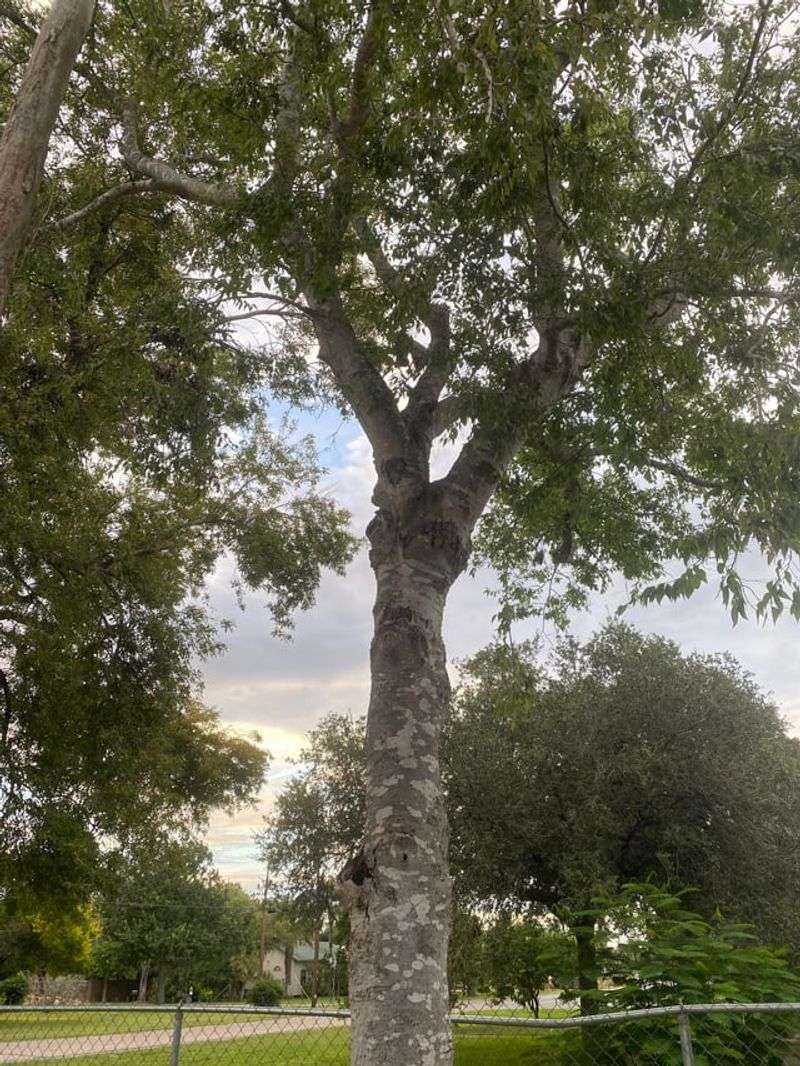
Nobody plants a hackberry on purpose, at least not usually. Birds drop the seeds along fence lines, and before you know it, a 30-foot tree has appeared seemingly overnight.
Hackberries attract aphids that drip a sticky honeydew onto cars, patios, and outdoor furniture. Black sooty mold then grows on that sticky film.
Owners also deal with weak, brittle wood and branches that break in wind.
Because they often sprout right next to fences and foundations, the roots can push walls and crack concrete. Remove young ones early.
It is much cheaper than dealing with a full-grown tree later.
9. Chinaberry
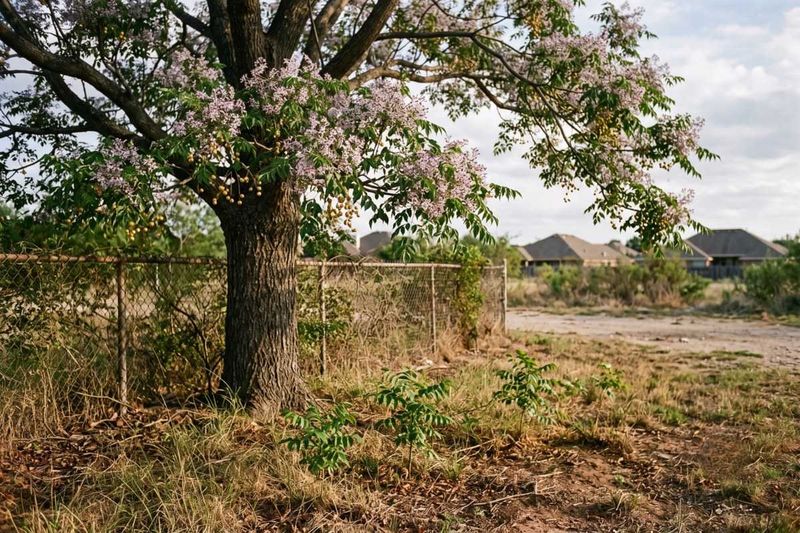
Grandma might have had one in the yard, and nostalgia keeps chinaberries around. They grow fast, give dense shade, and smell lovely in spring with purple blooms.
Then come the berries. Bright yellow and hard as marbles, they cover lawns and sidewalks and are toxic to people, dogs, and livestock.
Birds spread them, turning chinaberry into an invasive pest across Texas.
The tree also suckers from its roots and has fragile limbs. Swap it for a native soapberry or Mexican buckeye for that old-fashioned charm without poison berries.
10. Leyland Cypress
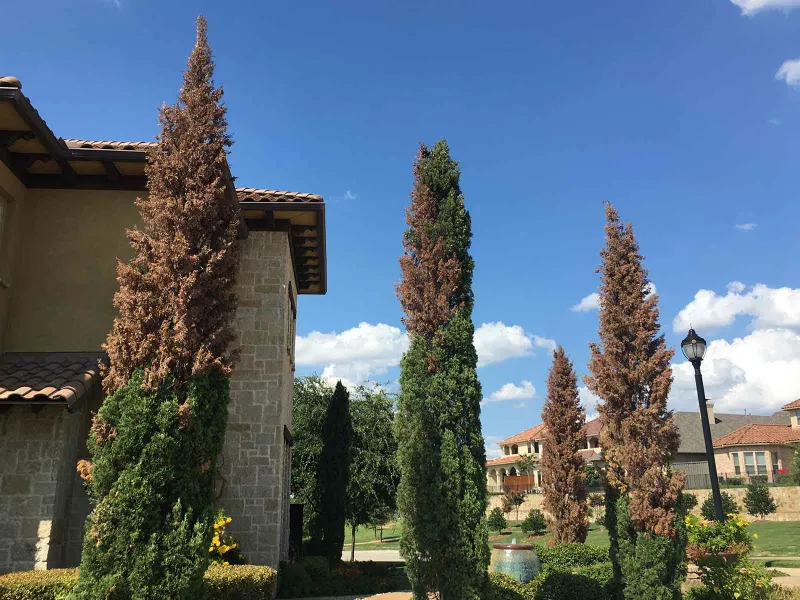
Want a privacy screen fast? Leyland cypress promises one, growing three to four feet a year.
Many Texans plant a row along the fence and celebrate their new green wall.
The celebration rarely lasts. Leylands hate Texas heat and drought, and they are prone to canker diseases that turn them brown from the inside out.
Entire rows can die within a few years, leaving gaps and a costly removal job.
Their shallow roots also make them topple in high winds. For a tougher screen, try Eastern red cedar, Nellie R.
Stevens holly, or wax myrtle. Your fence line and wallet will thank you.
