
The Lightning-Fast Basement Bug Minnesota Homeowners Panic Over Is Actually Eating Your Spiders and Roaches
A long-legged creature darting across a basement floor can make anyone stop in their tracks. The house centipede looks odd and moves fast, but it is a predator that feeds on other small creatures.
Knowing what it eats, whether it can hurt you, and what its presence might mean can help you decide what to do. Here is a calm, practical look at your options.
How to recognize a house centipede
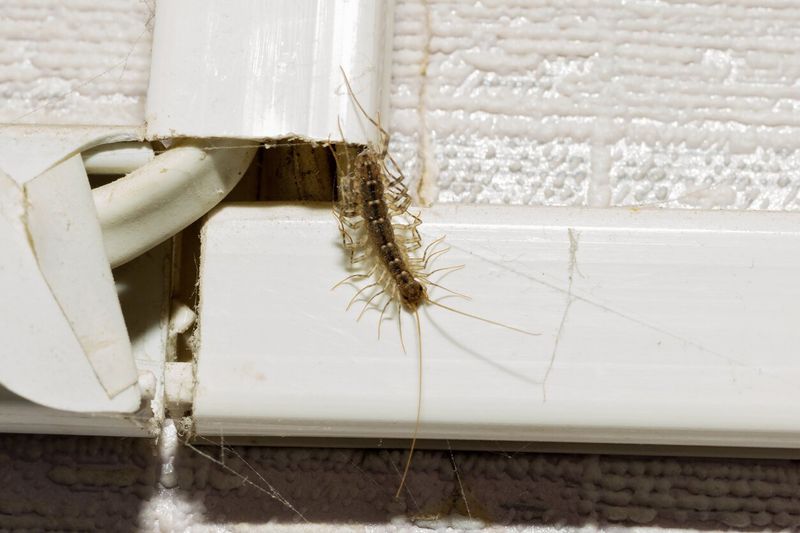
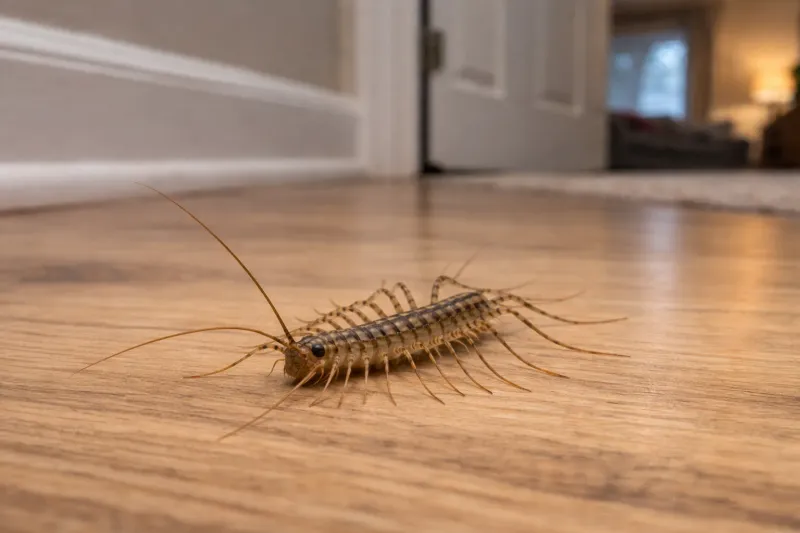
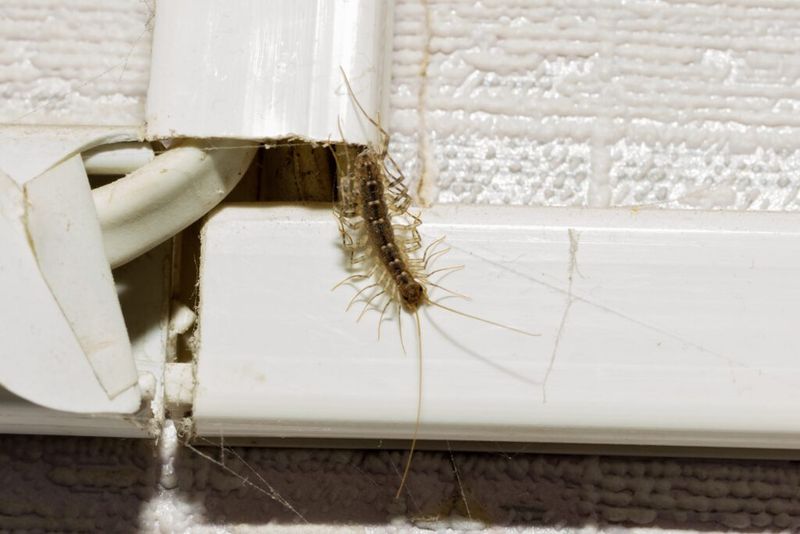
A house centipede (Scutigera coleoptrata) has a flattened body that looks brownish or grayish-yellow, often with darker stripes running along the back. The body is fairly short, but the legs make it seem much bigger than it is.
Count the legs if you ever get a good look from a distance. An adult has 15 pairs, and they are long, banded or striped, and trail out behind it.
The back pair is especially long and can look almost like a tail.
Two long, thin antennae stretch out from the head. They are constantly in motion, feeling the way ahead as the animal travels along walls and floors.
It helps to know what group this animal belongs to. A house centipede is an arthropod, not an insect.
Insects have six legs, while centipedes have many more, so the leg count is a quick way to tell them apart. MedlinePlus describes centipedes as flattened, many-legged arthropods.
Other creatures can look similar at a glance. University of Minnesota Extension covers sowbugs, millipedes and centipedes together, which is useful if you are not sure what you found.
A flattened body, striped legs and long antennae point to a house centipede.
A fast-moving predator, but not a guaranteed pest solution
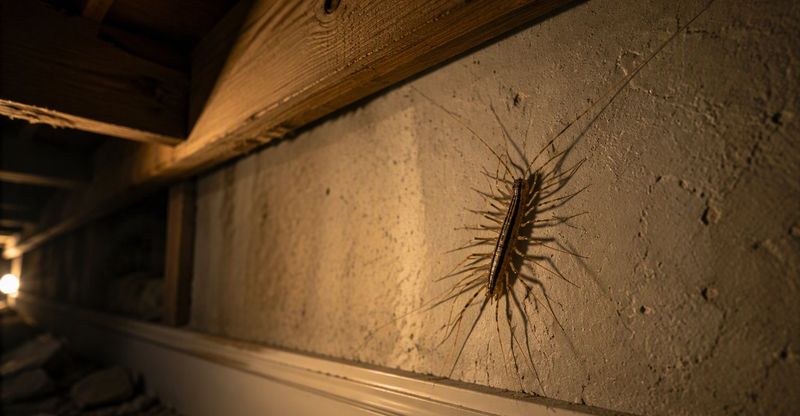
Two separate facts are worth keeping apart here. House centipedes move quickly, and they hunt living arthropods.
Nothing in the sources connects the first fact to the second, so there is no basis for saying that speed is how they catch their meals.
As for the menu, Kansas State Extension lists spiders and cockroaches among the prey of house centipedes. They also eat other insects and small arthropods they come across.
That is where the evidence stops. Knowing what a species can eat does not tell you what the one in your basement has eaten.
It might have found a spider last week, or it might have found nothing worth the effort.
The same goes for pest control. No source puts a number on how much a single centipede reduces pests in a house, so it would be wrong to count on one to clear out spiders or roaches.
If you have a real roach problem, a centipede will not be the fix.
There is one useful clue, though. Penn State Extension links frequent house centipede sightings with other arthropods being available as food.
That is a reason to look around, not a diagnosis.
Seeing one hurry across the floor can feel unsettling, and that is understandable. A more helpful view is that it is a predator doing what predators do, with results that vary from house to house.
What their venom means for people
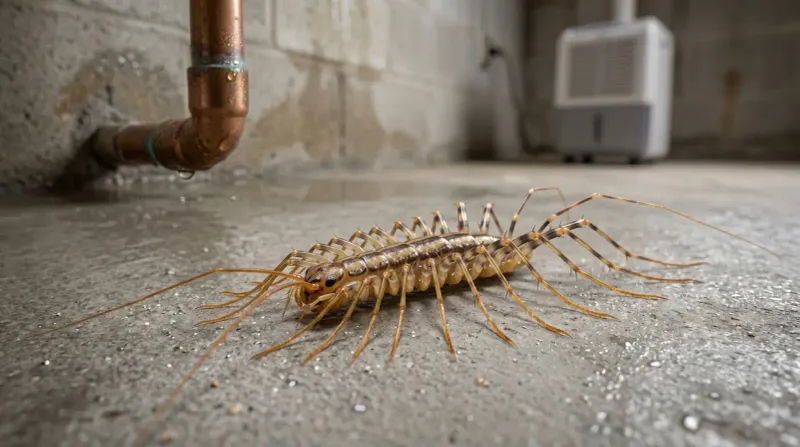
House centipedes have venom-delivering appendages near the front of the body. They use them to subdue prey, which is how the venom gets its job done on spiders and insects.
For people, the picture is far less dramatic. University of Minnesota Extension says bites are rare and the appendages are too small to break human skin.
Poison Control likewise describes house centipede bites as usually not dangerous.
Usually not dangerous does not mean impossible. Medical sources do document a house centipede bite, so it is best not to pick one up or press on one with bare hands.
A cup and a piece of paper, or a vacuum, keeps your hands out of the picture.
If a bite does happen, wash the area with soap and water. Then contact a poison center for guidance.
In the U.S., call Poison Control at 1-800-222-1222.
Get urgent care right away for signs of a severe allergic reaction, such as trouble breathing or swelling of the throat. MedlinePlus lists the same kinds of warning signs for centipede bites in general.
A house centipede is not the same as a large, medically significant centipede from other parts of the world. Its venom matters to its prey much more than to your household.
What a winter sighting does—and does not—tell you
Spotting a house centipede in January can feel odd, and you are right that it is unusual. University of Minnesota Extension says they are rarely seen indoors in winter.
Outdoors, the story is different. Kansas State Extension describes house centipedes overwintering outdoors in protected habitats, such as sheltered spots near buildings.
So winter is not a dependable season for indoor centipede activity, and it is not a season to count on for pest control either. A winter sighting is a single observation, and it does not point to one clear cause.
A few practical questions can help you make sense of it. Was it near a damp corner, a floor drain, or a laundry area?
Was it close to a foundation crack or a window well? Jotting down where and when you saw it makes later sightings easier to compare.
None of this means you imagined it or that something is wrong. It simply means the sighting is a small clue, not a forecast of a winter-long indoor crew.
How to interpret repeated sightings
One centipede is a sighting. Seeing several, or the same spot again and again, is a pattern worth a closer look.
University of Minnesota Extension and Penn State Extension both tie numerous house centipedes to other arthropods being around as food. That is a prompt to investigate.
It does not prove a cockroach problem, and it does not tell you which pests are present or how many.
Damp hiding places are the other thing to check. Look behind water heaters, under sinks, around floor drains, and along basement walls where moisture collects.
Sticky traps can help here. Cornell’s New York State IPM fact sheet includes traps as a way to monitor house centipedes.
Place them flat along walls and in corners where you have seen activity. Check them every week or so and note what turns up.
Crickets, spiders, or other small arthropods on the trap give you hints about what else may be living there, while an empty trap is useful information too.
Treat the results as clues, not a diagnosis. If you find signs of a specific pest, you can then choose steps aimed at that pest.
Reduce moisture and entry points before considering pesticides
Start with moisture, since damp spaces suit house centipedes and the prey they hunt. University of Minnesota Extension points to reducing excess moisture as a key step.
Fix leaking pipes and dripping fixtures, and run a dehumidifier in damp basements. Make sure gutters and downspouts carry water away from the foundation.
Even small improvements can make a space less inviting.
Next, clear clutter. Stacks of boxes, piles of paper and stored items on the floor give small creatures places to hide.
Moving things onto shelves and away from walls makes a basement easier to inspect.
Then seal the ways in. Caulk cracks and gaps around the foundation, doors and windows, and check weatherstripping on basement doors.
Penn State Extension recommends this kind of exclusion work.
Sticky traps are an option too, either to monitor activity or to reduce numbers. Cornell’s fact sheet advises nonchemical measures and recommends against indoor insecticides for house centipedes.
Extension advice on pesticides is not unanimous. Minnesota Extension allows them after other methods have been tried, with cautions to follow the label.
For that reason, lead with the nonchemical steps and skip routine spraying. If you do consider a product, read the label closely and follow it exactly.
Leaving one alone is a choice
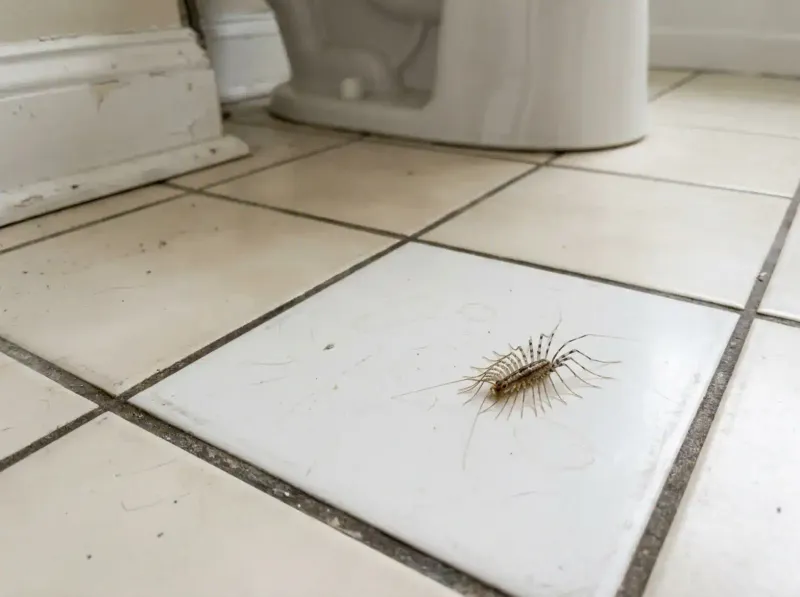
Here is a simple rule. If you are comfortable with it, you can leave a single centipede alone.
If you would rather not share your basement, cut down moisture and seal entry points.
Predation is documented, but nobody has measured how much pest control one centipede provides in a home, as Minnesota Extension and Penn State Extension suggest. If you keep seeing them, monitor and inspect instead of panicking.
Either way, the choice is yours, and a quick look around your basement will tell you more than the centipede will.