
These Poisonous Mushrooms Are Showing Up In New York Yards, Here’s How To Tell Them Apart
After a few rainy days, you might step outside and find a whole crop of mushrooms popping up across your New York lawn. Some are harmless, but others can make pets and people very sick, or even worse.
Many of the dangerous ones look a lot like safe, tasty kinds, which is why knowing the differences really matters. Here are ten toxic mushrooms you might spot in your yard and the clues that help you tell them apart.
1. Death Cap (Amanita phalloides)
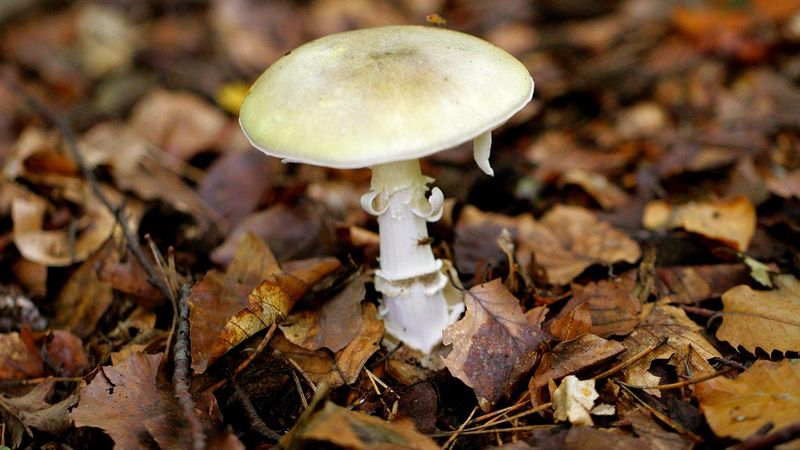
Responsible for most mushroom poisoning deaths around the world, the death cap is the one every New Yorker should know by sight. It has turned up under imported trees in parts of the Northeast, often near oaks and chestnuts.
Look for a smooth cap in shades of olive, yellow-green, or even nearly white. Underneath, the gills stay bright white, and there is usually a skirt-like ring on the stem.
The biggest giveaway hides underground: a cup-shaped sac called a volva wrapped around the base.
Here is the scary part. Symptoms often wait 6 to 12 hours to show up, and by then the liver may already be damaged.
Survivors describe feeling better for a day before things get much worse, so never wait to call poison control if someone may have eaten one.
2. Destroying Angel (Amanita bisporigera)
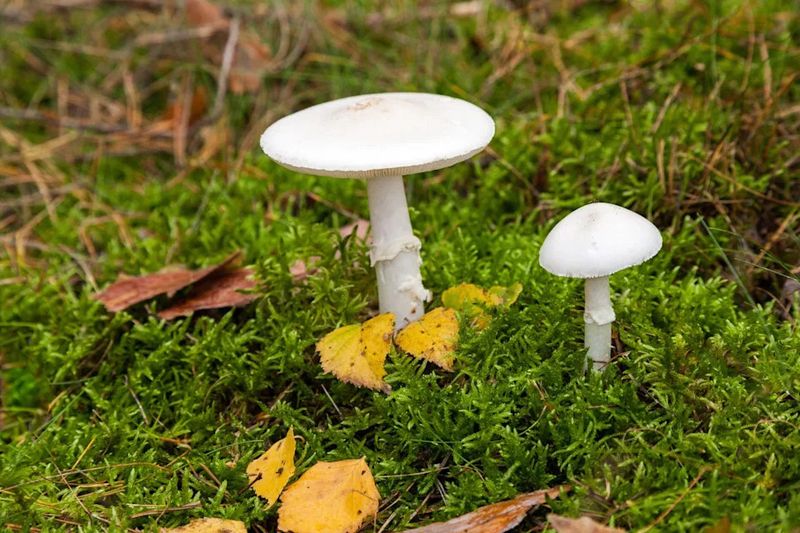
Beautiful and deadly, the destroying angel looks almost too elegant to be dangerous. It is pure white from top to bottom, standing tall on lawns that border woods across upstate New York and Long Island.
Beginners sometimes confuse young ones with button mushrooms or puffballs. That mistake can be fatal, since this species carries the same liver-wrecking toxins as the death cap.
To spot it, check for white gills that never turn pink or brown, a delicate ring on the stem, and a sac at the base. Dig gently around the stem when you investigate, because that cup is often buried in soil or leaf litter.
3. Green-Spored Parasol (Chlorophyllum molybdites)
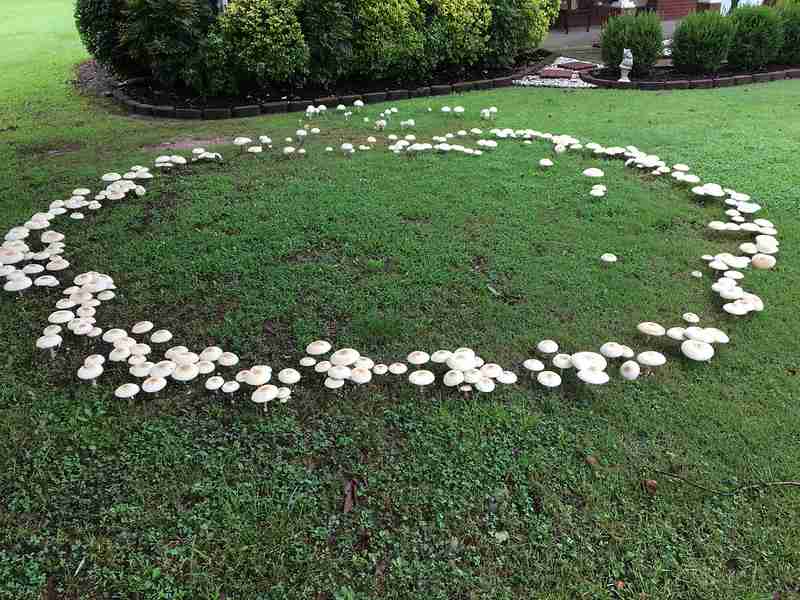
Ever seen a perfect circle of big white mushrooms in a lawn? There is a good chance you met the green-spored parasol, the most common cause of mushroom poisoning in North America.
The caps can grow as wide as a dinner plate, with tan or brown scales scattered across the top. They love freshly watered grass, golf courses, and parks.
It rarely kills, but it can cause hours of nasty vomiting and stomach cramps. The best trick for identification is a spore print: lay the cap on white paper overnight, and this one leaves a greenish dust instead of white.
4. Jack-O’-Lantern Mushroom (Omphalotus illudens)
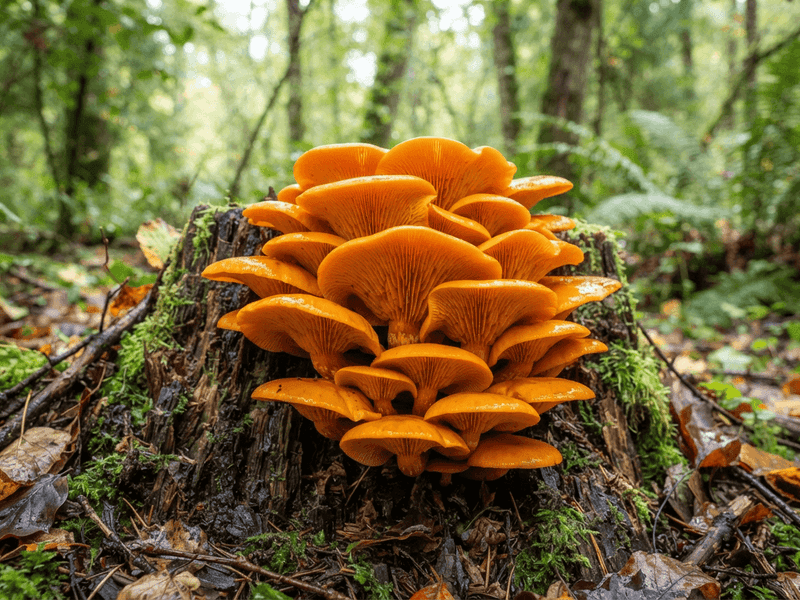
Bright orange clusters sprouting from a stump in fall might look like a gift from nature. Foragers often mistake them for chanterelles, which are a prized edible.
Jack-o’-lanterns grow in thick bunches from buried roots or dead wood, while chanterelles usually grow alone on the ground. Their gills are sharp and knife-like, unlike the blunt ridges of a chanterelle.
Fun fact: the gills of fresh specimens can glow a faint green in total darkness. Eating them will not kill you, but they bring severe cramps and vomiting.
5. Fly Agaric (Amanita muscaria)
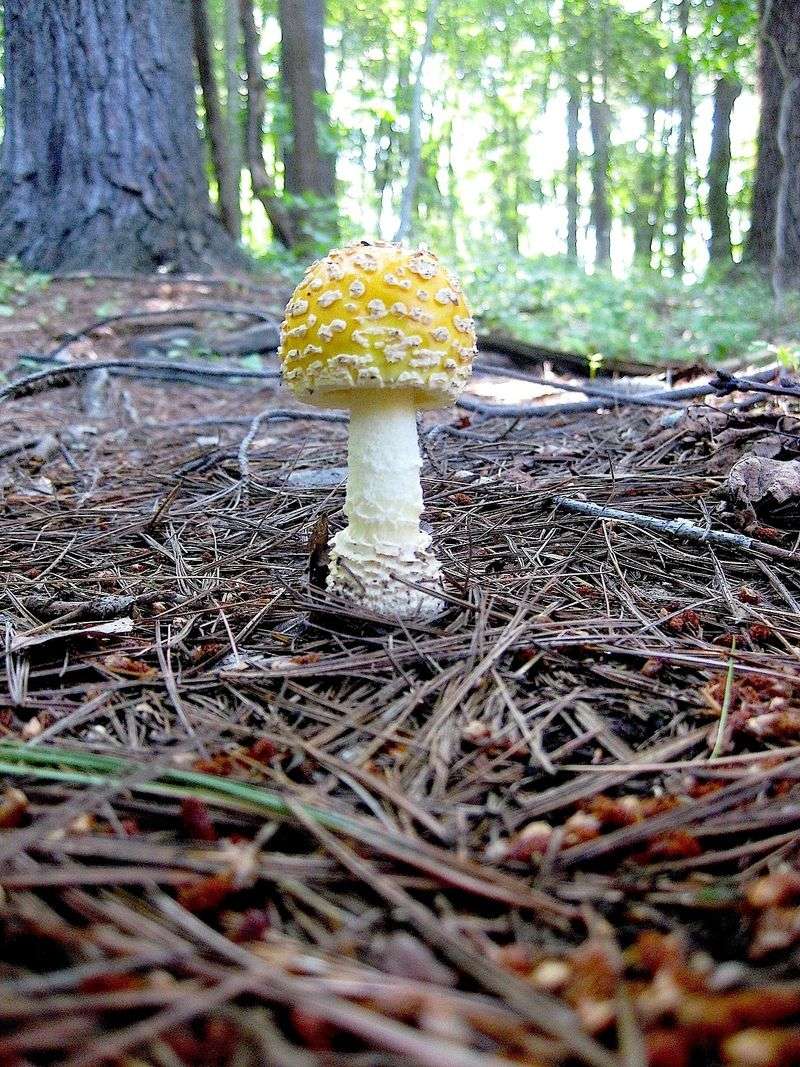
Picture the classic fairy tale mushroom with a polka-dot cap. That is the fly agaric, and in New York it usually shows up in yellow or orange rather than storybook red.
White wart-like patches dot the cap, and the stem has a ring plus a bulb at the bottom. It favors spots near pines, spruces, and birches.
Its toxins mess with the brain, causing confusion, dizziness, and sometimes seizures. Dogs seem drawn to it, so keep an eye out if you have a curious pup.
6. False Morel (Gyromitra esculenta)
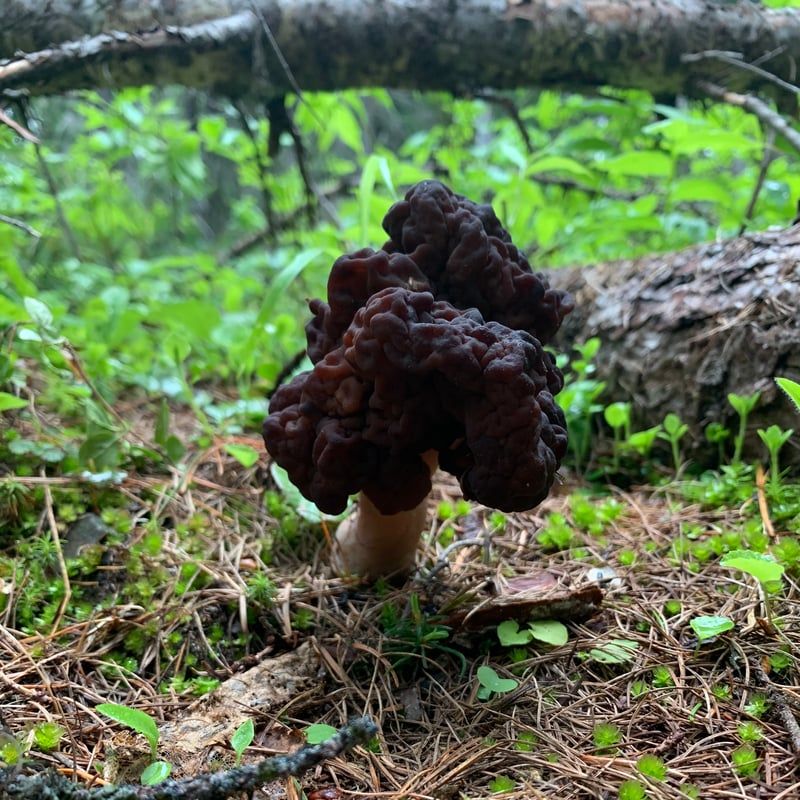
Spring morel hunters, listen up. The false morel arrives around the same time as the real thing, and it fools people every year.
Its cap looks lumpy and brain-like instead of honeycombed with pits. Slice one in half: a true morel is completely hollow, while a false morel has cottony stuffing inside.
The toxin inside can attack the liver and nervous system. Even the fumes from cooking it have made people ill.
7. Deadly Galerina (Galerina marginata)
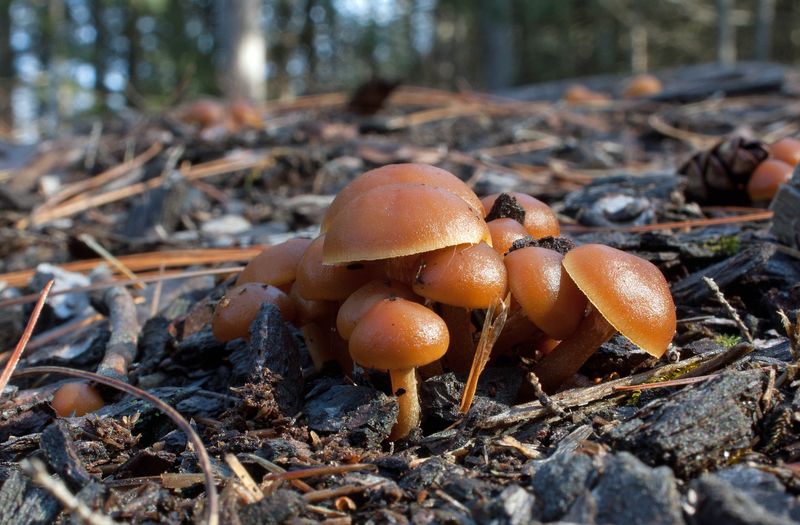
Small, brown, and boring is how most people would describe it. That plain look is exactly why the deadly galerina is so dangerous.
It grows in clusters on rotting wood and mulch, and it contains the same toxins as the death cap. People sometimes mistake it for honey mushrooms or other little brown edibles.
Check for a thin ring on the stem and a rusty brown spore print. Honestly, the safest rule is to skip every little brown mushroom you find.
8. Panther Cap (Amanita pantherina)

Sneaky like its namesake, the panther cap hides in plain sight with a brown cap sprinkled with white spots. It acts like a darker cousin of the fly agaric.
Look at the base for a neat collar-like rim around the bulb. That detail separates it from several harmless lookalikes.
Poisoning brings delirium, muscle twitching, and deep sleep. Pets are especially at risk because of their smaller size.
9. Sulfur Tuft (Hypholoma fasciculare)
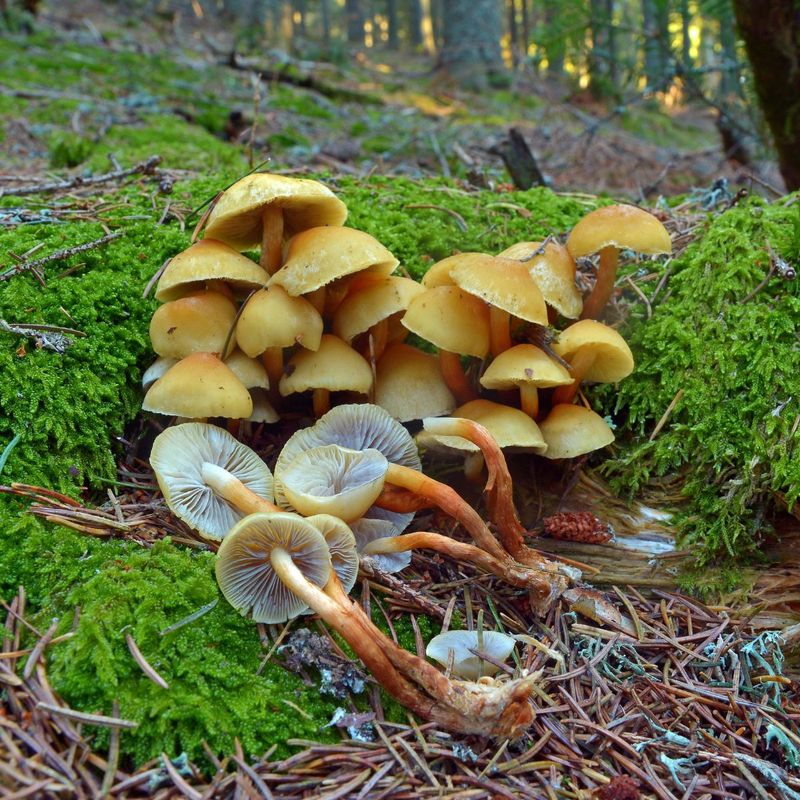
Bright as a highlighter, sulfur tuft clusters glow yellow on old stumps from spring through late fall. They grow in packed bunches that are hard to miss.
The gills turn greenish and then purple-brown as they age. A taste test, which you should never do, would reveal a very bitter flavor.
Eating them leads to vomiting and diarrhea. They are often confused with the edible brick cap, so leave the yellow ones alone.
10. Inky Cap (Coprinopsis atramentaria)
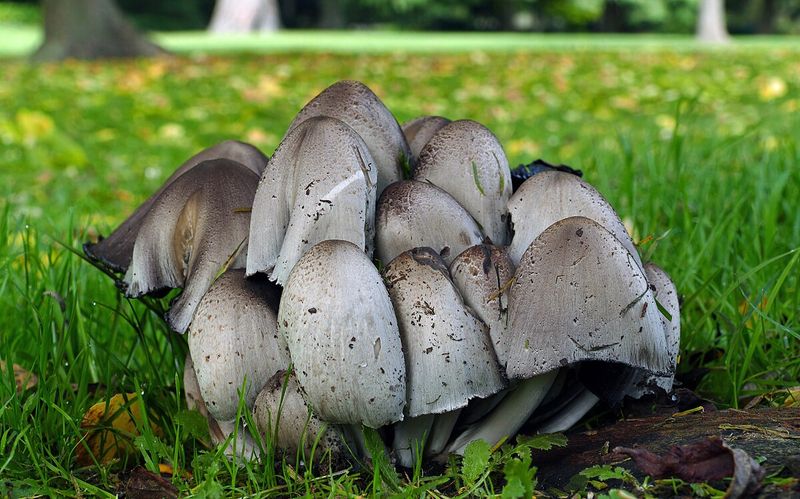
Watch an inky cap long enough and it melts into black goo. That strange trick makes it one of the most fascinating lawn mushrooms around.
The gray, bell-shaped caps pop up in grass and near buried wood after rain. On its own it is not very toxic.
The catch comes with alcohol. Drinking within a few days of eating it causes flushing, racing heart, and nausea, which is why it earned the nickname tippler’s bane.
Teach kids to look, not touch, and pull these from yards where pets play.
