
Visible Honeycomb Exposed On An Indiana Tree Means Trouble For The Bees
You look up and spot wax comb hanging from a tree branch, with bees crawling all over it. It looks like a wild sight, but it carries a message about the coming cold.
Indiana winters are hard on bees that have no shelter. Knowing what you are seeing helps you keep your family safe and get the right help.
Is it a swarm or an established colony?
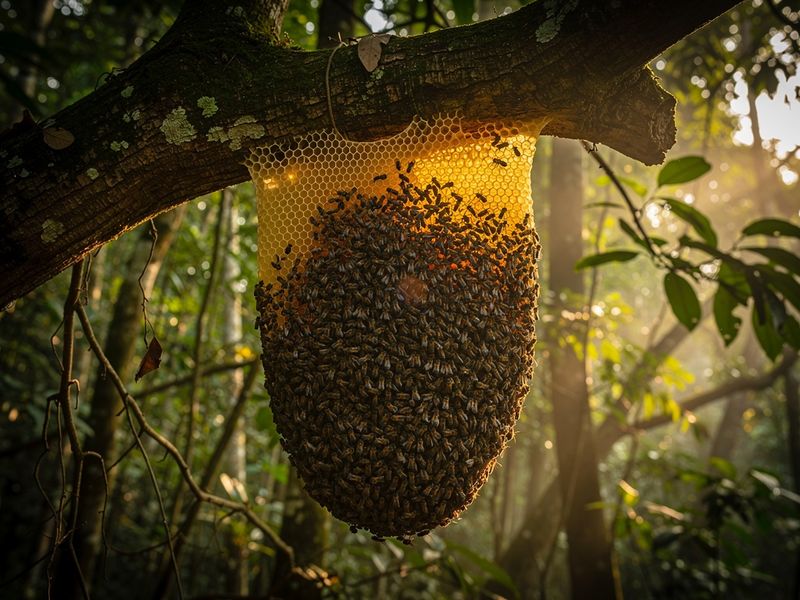
Not every clump of bees on a tree is a swarm. A temporary swarm is a ball of bees with no comb, usually resting while scouts look for a new home.
If you can see wax comb, the bees have moved past that stage.
According to Indiana DNR, a swarm is a cluster waiting for a place to settle. Bees on visible comb have begun building a nest.
Mississippi State Extension describes that as an established colony, not merely a swarm.
A simple clue helps here. Look for pale, waxy sheets under or among the bees.
A cluster with no sheets of comb is a swarm. A cluster attached to wax is a colony that has started to set up housekeeping.
The difference matters for safety. Mississippi State Extension guidance explains that bees guarding an established nest are more likely to sting than bees in a temporary swarm.
They have comb, brood, and stored food to protect.
So treat any bees on visible comb with respect. Stay back, watch from a distance, and avoid assuming they are just passing through.
Exposed comb leaves a colony vulnerable to winter
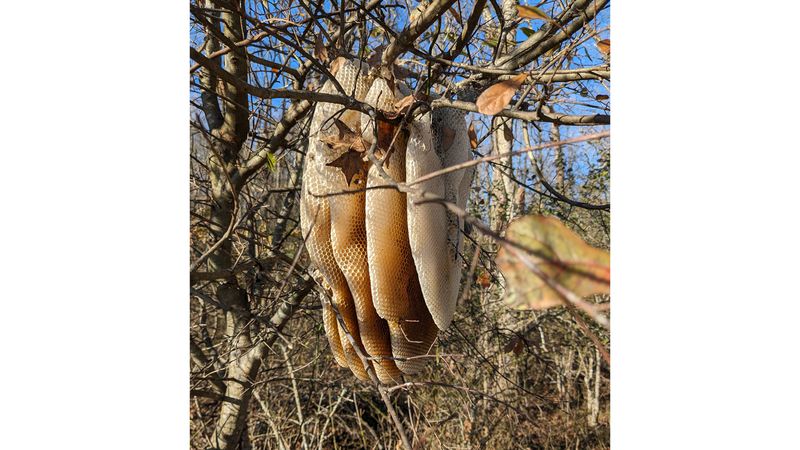
Picture a nest with no walls and no roof. An open branch gives bees little protection from wind, freezing rain, and snow.
Wax comb hanging in the open also makes an easy target for hungry animals.
Indiana DNR says colonies nesting on exposed limbs will not make it through Indiana winters. Mississippi State Extension words it more carefully, saying most exposed-comb colonies do not survive winter because of cold and predators.
A fair way to put it is this: most exposed-comb colonies are unlikely to survive an Indiana winter. That is a strong warning, but it is not a promise about every nest.
UC IPM notes that exposed colonies can last for a while, even until fall, but are usually ended by predators and bad weather.
The risk comes from exposure, not from how big the nest looks. A small nest and a large one on an open branch face the same lack of shelter.
If you see one in late summer or fall, you may have a stretch of time to arrange help from a beekeeper. Waiting for winter to settle things on its own is not a plan that protects people or the bees.
A hollow tree is a different case
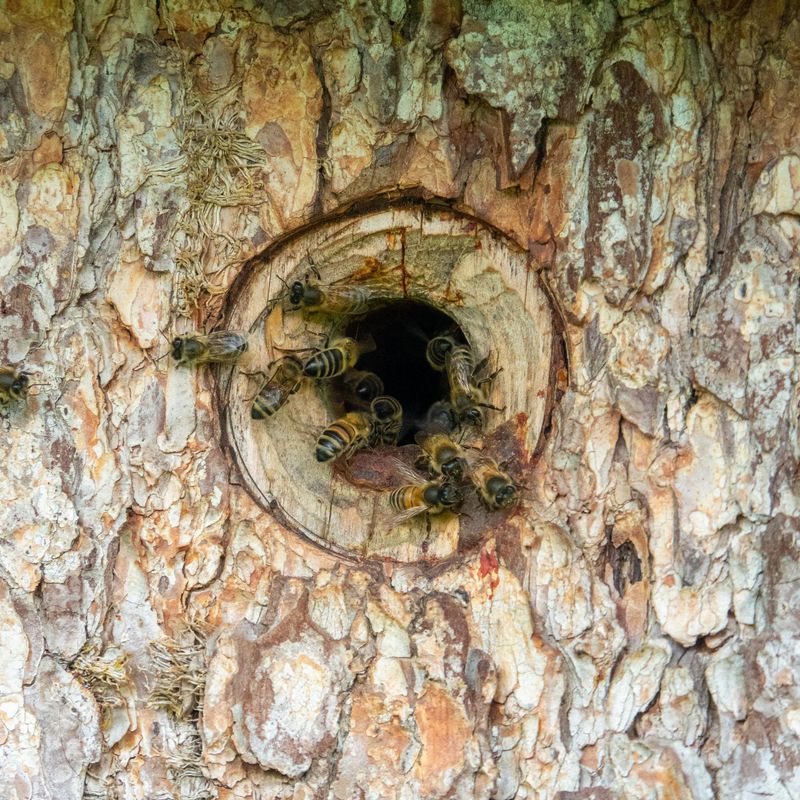
Bees living inside a hollow tree are in a very different spot. A cavity wraps the colony in wood, which cuts wind and softens the cold.
Indiana DNR describes hollow trees as a preferred home for honey bees.
That is why the warning about open branches does not stretch to every wild colony. You might see bees coming and going from a knothole, and no comb at all.
That points to a nest hidden inside, with more shelter than a branch can offer.
Shelter is only part of the story. Cornell’s overwintering guidance lists weather, housing conditions, and enough food stores as factors in whether a colony makes it through winter.
Nobody can look at one tree and predict how a particular colony will fare.
Timing is a separate matter. Indiana DNR also says swarms that arrive after July 1 may not survive unless a beekeeper helps strengthen them.
That statement is about late swarms in general, and it is not the same as the warning about exposed limbs.
Keep the two ideas apart. One is about when a swarm shows up, and the other is about where a colony has built its nest.
Keep your distance from comb-building bees
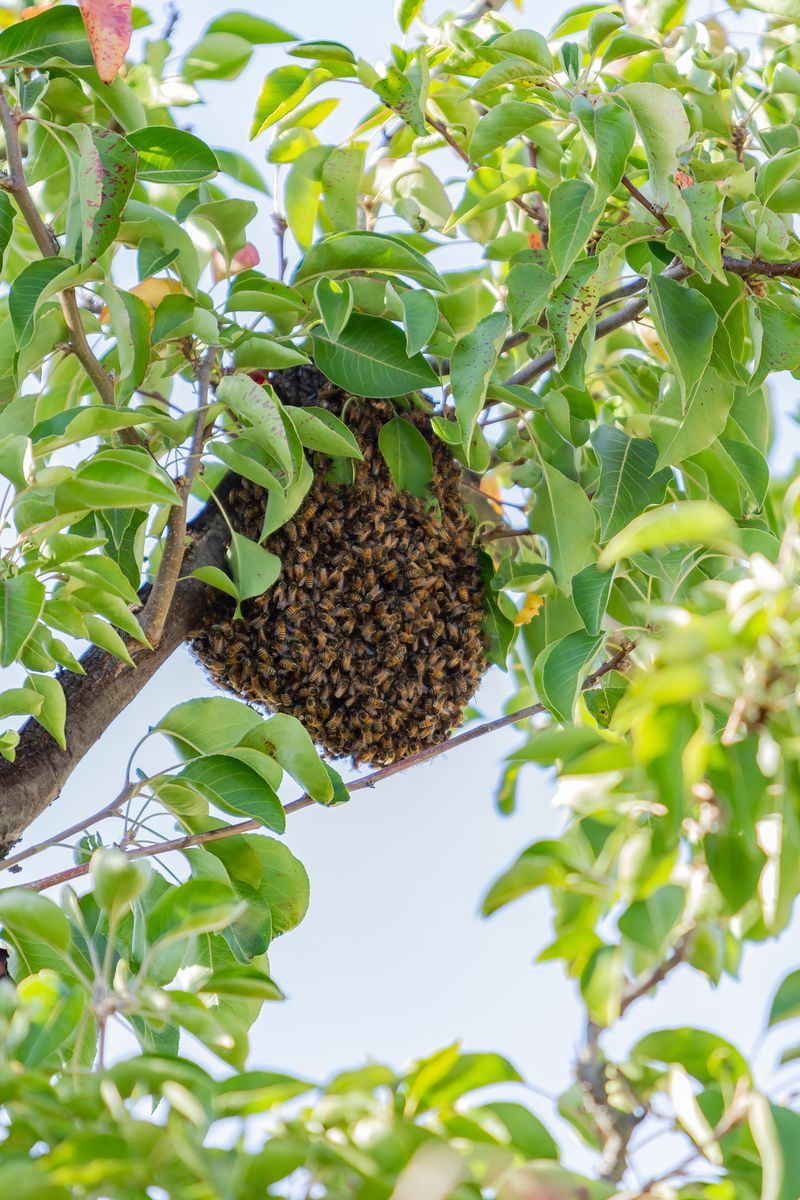
The safest move is the simplest one. Keep people and pets well away from the tree.
Children and dogs are curious, so steer them to another part of the yard.
Do not touch the nest, shake the branch, spray it, or try to remove it yourself. Mississippi State Extension warns that disturbing bees can provoke defensive behavior, and bees protecting an established nest are more likely to sting.
Indiana DNR also says not to spray swarms. Insecticide may anger the bees and scatter them without solving anything.
It also harms insects that you may want to keep around.
You may hear that a ball of bees without comb often leaves on its own. That can be true for a temporary swarm.
It is not a reason to stand beside a comb-building colony and hope.
Instead, mark the area mentally, avoid mowing or trimming near that tree, and move on to the next step: calling someone who handles bees.
Contact a local beekeeper with useful details
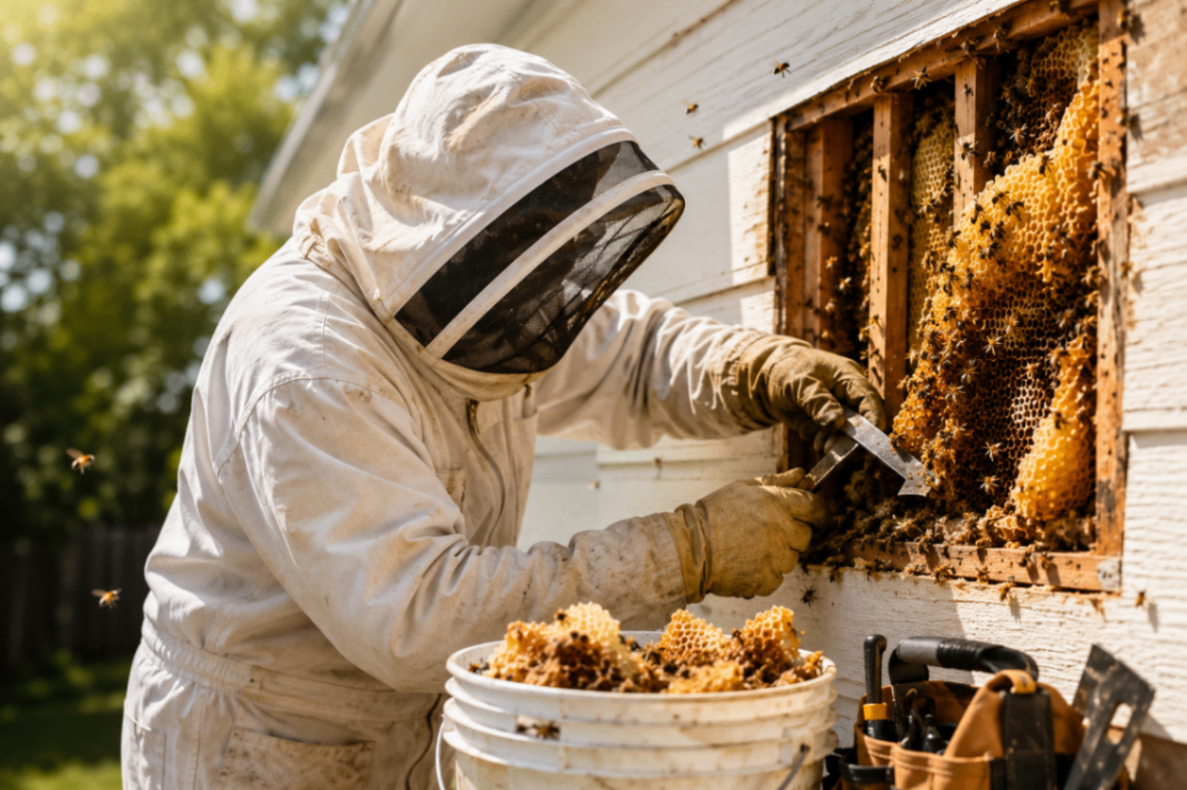
Your best resource is the beekeeper list kept by Indiana DNR. The Indiana Beekeepers Swarm List connects the public with local beekeepers who may be able to help.
Before you call or email, gather a few facts. Note where the bees are on your property and how high up the nest hangs.
Think about how long the bees have been there, and estimate the size of the cluster.
Those details help a beekeeper decide quickly whether they can help and what gear they would need. A nest ten feet up a thin branch is a different job than one low on a sturdy limb.
Be realistic about the outcome. Individual beekeepers decide whether to take a job and what to charge, and DNR says it does not control those prices.
A tree location does not make removal automatically easy or free.
If the first person cannot help, try another name on the list. A little patience and clear information go a long way.
Send a photo if you are unsure what you found
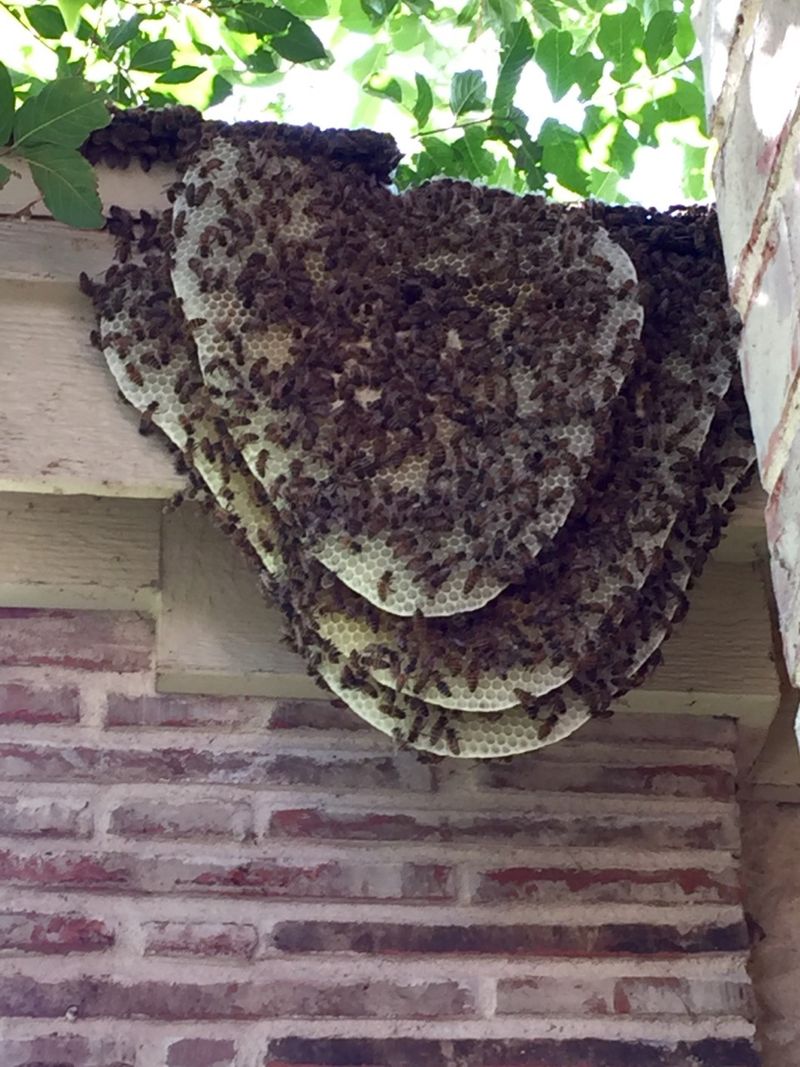
Plenty of people mix up honey bees with wasps and hornets. The nests give it away.
Honey bee nests are made of wax, while wasp and hornet nests are made of paper, as noted on the Indiana DNR swarm list page.
Wax comb looks pale and has neat rows of cells. A paper nest looks gray or tan, with a papery, layered texture.
Still, the way to tell them apart is not to creep closer for a better look.
Use your phone’s zoom from a safe distance instead. Take a clear photo, then send it to a local beekeeper along with the location and height of the nest.
They can often tell you what you have from a single picture.
If it turns out to be something other than honey bees, you will know before anyone gets hurt. If it is a colony, you have already started the conversation.
Staying back costs nothing, and a photo is often all it takes to get good advice.