
What a California Yard Swarm After Rain Can and Cannot Tell You About Termites
A cloud of winged insects rising from the yard after a rain can make anyone stop in their tracks. For many California homeowners, the first thought is that the house is being eaten from the inside.
The truth is more measured, and a few simple observations can show you what the swarm means. Knowing what to look at first can save you worry and help you decide whether to call a professional.
Rain can cue a termite flight, but it is not a diagnosis
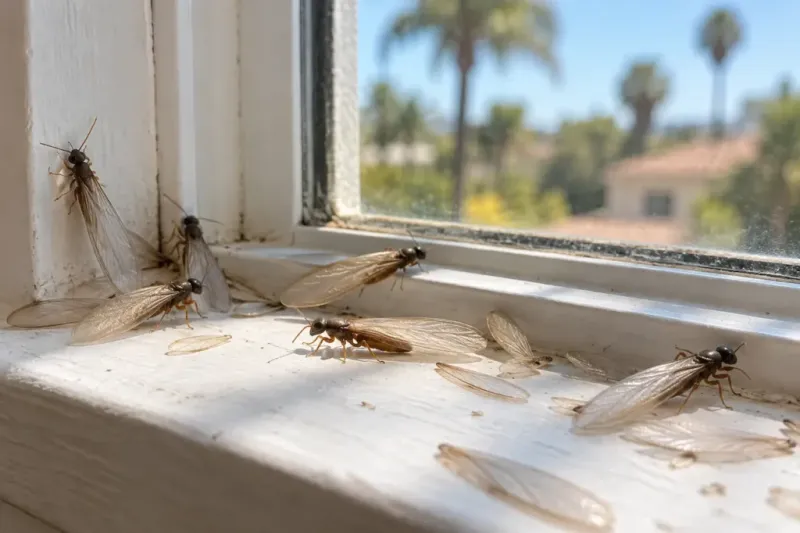
Warm, sunny weather after a fall or spring rain is a common cue for some subterranean termite flights in California. According to UC Integrated Pest Management guidance, the timing varies by species, season, and region.
Rain is a cue for some flights, not a schedule that holds across the whole state, and not every rainy day brings a swarm.
These flights are how mature colonies send out young reproductive termites to start new colonies. Seeing them means termite colonies exist somewhere nearby.
It does not tell you that your house is one of the places they live.
That difference matters. UC Agriculture and Natural Resources separates a swarm in the air from confirmed activity in a structure.
Insects fluttering around the yard are a reason to look closer, but they are not proof of an infestation inside your walls.
It also helps to know that California has more than one kind of termite. Subterranean termites nest in soil and are the ones most tied to rain-linked flights.
Drywood termites can live in dry wood without any contact with soil, and dampwood termites favor wet or decayed wood. Each type has its own habits, and each needs a different management approach, so a sighting after rain does not explain every termite problem.
Think of the swarm as a prompt to gather information. You are not yet facing a diagnosis, only a good reason to pay attention for the next few days.
Check whether the insects are termites or flying ants
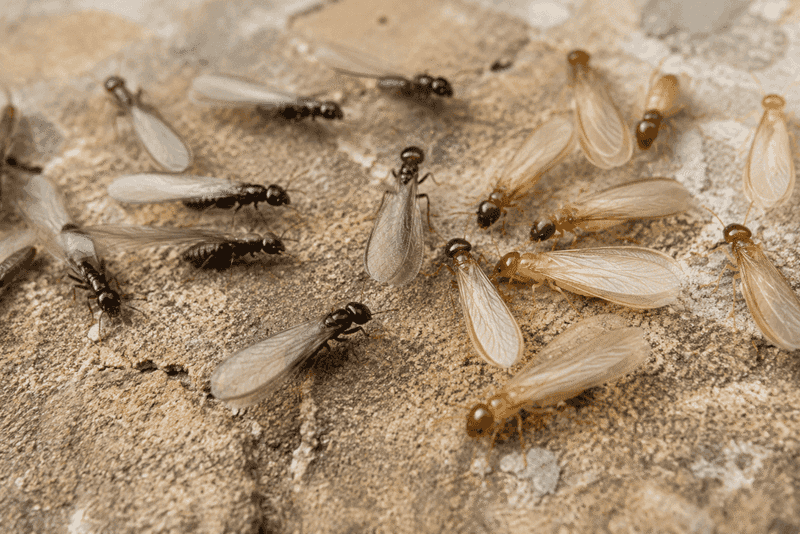
Plenty of winged insects show up around the same time of year, and flying ants are the most common lookalike. A close look, or a clear photo you can zoom in on, usually helps.
Focus on three features: antennae, waist, and wings.
Termite swarmers have straight, beadlike antennae. Their bodies have a broad waist, so the body looks like a thick, even tube.
All four wings are about the same size. Flying ants have elbowed antennae, a pinched waist, and front wings that are longer than the back pair, as described in UC IPM termite guidance.
You may also find small piles of discarded wings on windowsills, in spider webs, or on the ground. Swarmers shed their wings after landing.
Wings are a useful clue, but they may not settle identification on their own, because other insects also drop wings. The UC ANR handout Termite Swarms: Should I Panic? offers more help with telling them apart.
If you can, catch a few in a clear jar or tape one to a white card and photograph it. Keep this step separate from the bigger question.
Confirming that an insect is a termite tells you what it is, but it does not tell you whether the house has a problem. That answer depends on where the insects appeared and what you find on the structure, which the next sections cover.
Where the swarmers appeared changes what you can infer
Your own notes about the swarm may be the most useful evidence you have. While it is fresh, take photos or a short video.
Write down the time, the weather, and exactly where the insects were.
Ask yourself a simple question. Were they flying through the air in the open, or did you see them coming out of something?
Possible spots include a patch of soil, a stump, a stack of stored wood, or part of the building itself.
Termites drifting through the air tell you that colonies are swarming somewhere nearby. Insects emerging from one specific spot are more telling.
As UC ANR explains, emergence points to a colony at that location.
If that spot is close to the house, checking nearby parts of the structure becomes more relevant. Even so, emergence from a stump or soil patch does not prove the house is infested.
It simply makes a closer look more worthwhile.
If you decide to have an inspector visit, share your photos and your notes about the location. Tell them what you saw, where you saw it, and whether anything was indoors.
That background helps them know where to focus, and it keeps the visit from starting from zero.
Look for signs that connect termite activity to the structure
A swarm in the yard is weaker evidence than signs on the building itself. With a flashlight, walk around the parts of the house you can safely reach.
Look along the foundation, in crawl space entrances, at garage walls, and around wooden trim, decks, and fences touching the house.
Several signs deserve attention, according to UC IPM:
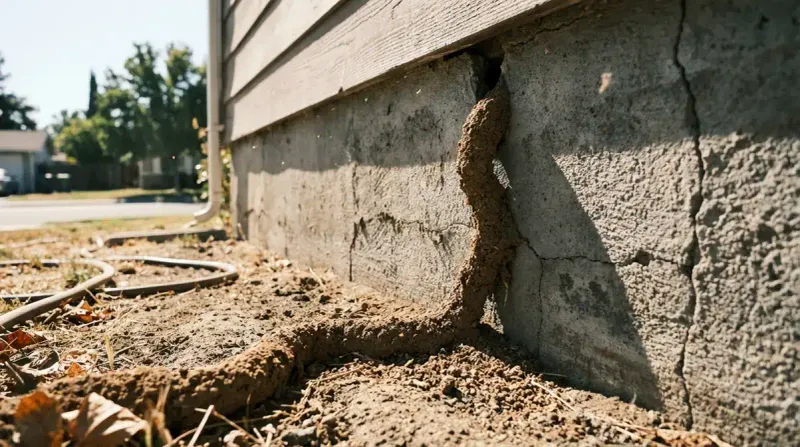
Earthen shelter tubes, often called mud tubes, are thin tunnels of soil that run over foundations or walls. Wood that is damaged, blistered, or darkened is another flag.
Live termites found inside wood are a third. Drywood termites leave a different clue: small pellets that collect in little piles below tiny openings in the wood.
Finding one of these is a bigger deal than seeing a swarm outside. Each one is a reason to bring in an expert, not a conclusion you should draw yourself.
Hidden activity can be hard to spot. Termites often work inside wood or behind walls, so a clean-looking house does not guarantee nothing is happening.
A trained inspector knows where to look and what the evidence means.
Resist the urge to poke, scrape, or break open suspicious wood to figure out the species or the extent of damage. Photograph what you see, leave it as it is, and note the spot.
That record is more useful to an inspector than a disturbed one.
Indoor swarmers or other warning signs call for an inspection
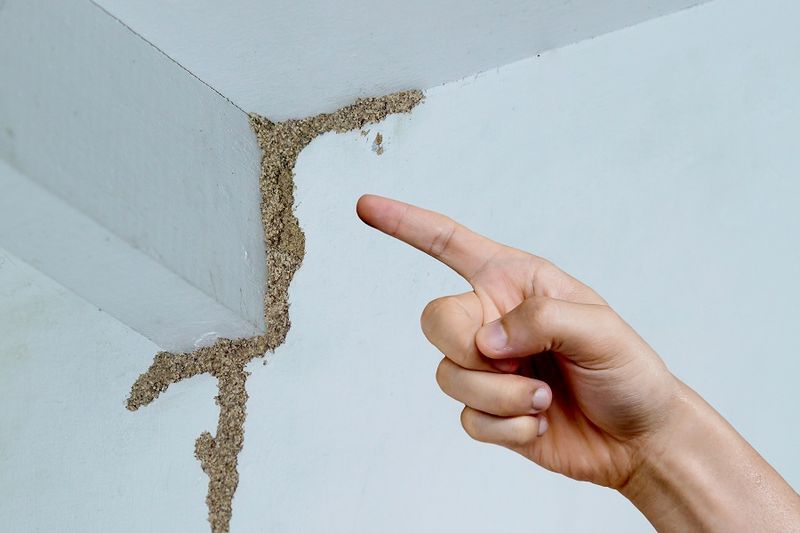
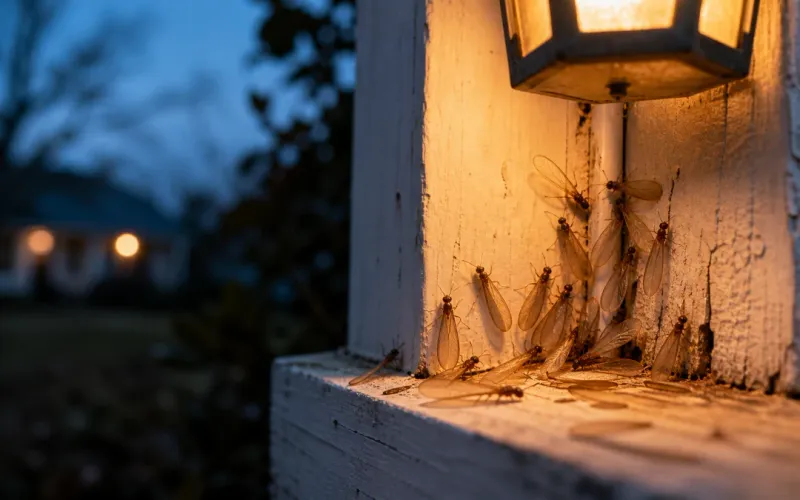
Some situations call for a licensed pest management professional. The first is swarmers found indoors, on windowsills, around lights, or inside rooms.
The second is insects that appear to come out of the building itself. The third is a swarm that comes along with other signs of termite activity, such as mud tubes, damaged wood, or pellets.
UC IPM advises that a suspected infestation be assessed by a licensed pest management professional. Because concealed activity is hard to judge on your own, a trained inspection is the dependable way to find out what is going on.
Not every outdoor swarm needs treatment. If winged termites flew around the yard, nothing else looks wrong, and you saw no sign of them in the building, you may reasonably decide to keep watching.
There is no magic swarm count or distance from the house that settles the question, so rely on what you actually observed.
To find a professional, use the California Structural Pest Control Board license lookup. It lets you confirm that a company or individual holds a current license before you invite them in.
When you call, bring your photos, your notes on where the insects appeared, and any suspicious spots you found around the house. Clear information makes for a more focused inspection.
Reduce conducive conditions and avoid relying on sprays
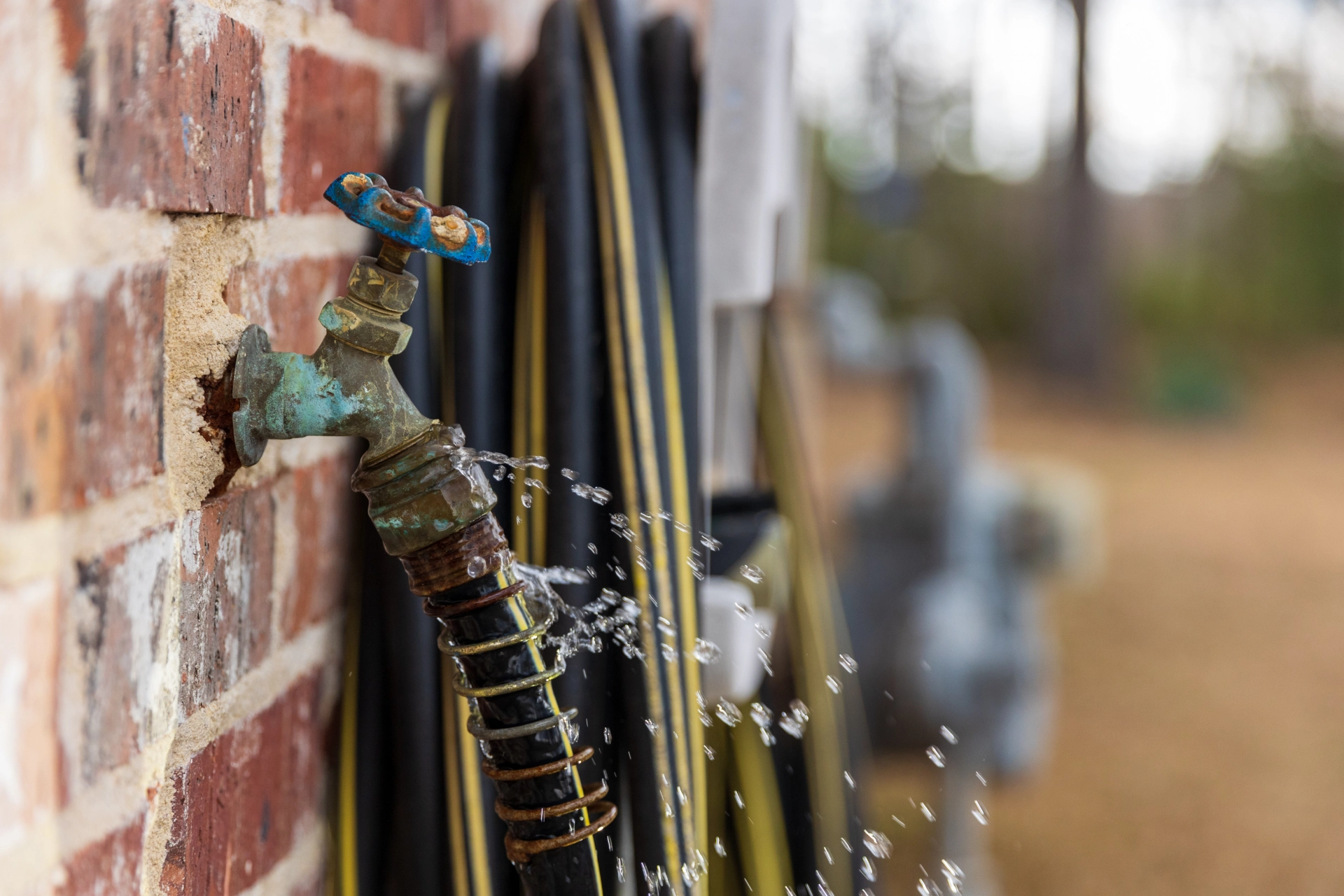
While you watch and plan, a few steps make the property less welcoming to termites. Fix leaking pipes, faucets, and gutters.
Keep crawl spaces and foundation areas ventilated and dry. Avoid letting wood touch soil, and stack firewood and wood debris well away from the house.
These steps match UC IPM recommendations. They reduce conducive conditions, but they are not a diagnosis and not a guaranteed treatment.
A house with careful upkeep can still have termites.
It is tempting to grab a can of spray when winged insects fill the air. Resist that.
The EPA notes that products that only kill termites on contact have not demonstrated structural protection. Killing a few visible swarmers does nothing about a hidden colony.
Effective termiticide applications often need trained professionals, and any product you do use should be applied exactly as its label directs. Leave professional-grade treatments to licensed applicators.
If it helps to have a simple path, here it is. Identify the insects.
Note where they appeared. Check the accessible parts of the house for structural signs.
Then seek a licensed inspection if the evidence calls for it.
A swarm is a message about your neighborhood, and what you do with it depends on what you find at home.