
Why Pulling Creeping Charlie Often Disappoints in Pennsylvania Lawns, and What Works Better
You yank out a mat of Creeping Charlie, and a few weeks later it seems to be right back. That frustrating cycle is common in Pennsylvania yards.
Pulling is not always the problem, but how much of the plant you leave behind matters a lot. Here is what actually helps, and what to expect along the way.
Creeping Charlie spreads through runners that root at nodes
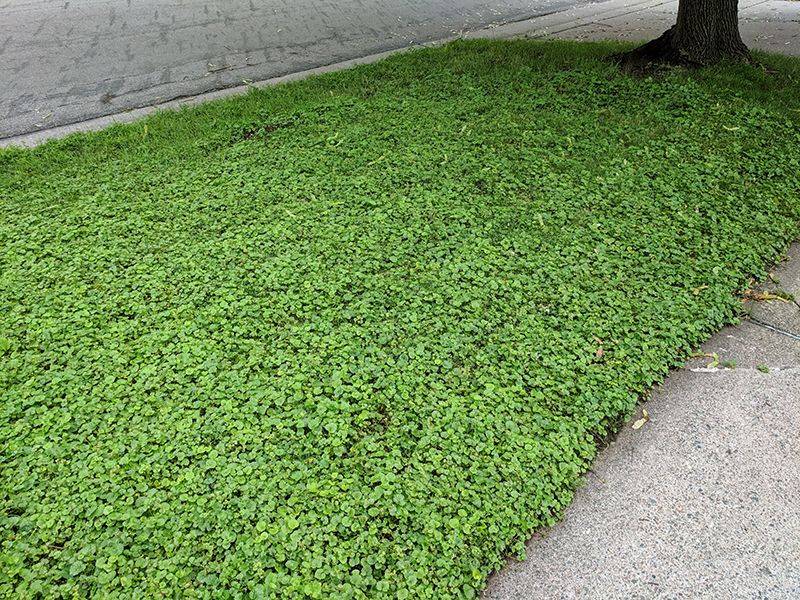
Creeping Charlie, also called ground ivy (Glechoma hederacea), is a perennial weed. It comes back year after year instead of dying off with the first hard frost.
Its main way of getting around is the stolon, a creeping stem that grows along the surface of the soil.
Those runners can send down roots at their nodes, the joints along the stem, wherever they touch soil. That is how one small patch can slowly become a wide mat.
Iowa State Extension describes this creeping, rooting habit as the reason the weed is so persistent in lawns and gardens.
You will often find it in shady, moist, or thin turf, such as under maples or along the north side of a house. But it is not limited to those places.
University of Illinois Extension notes that it can also grow in sunny areas, so a bright lawn is not automatically safe.
This growth pattern explains why removal so often falls short. If a stem that has already rooted stays in the ground, it can keep growing and spread again.
That does not mean every pulled scrap becomes a new infestation, but leftover rooted sections are a real risk. Knowing where the runners go is the first step to dealing with them.
Incomplete pulling can allow regrowth, but pulling can work
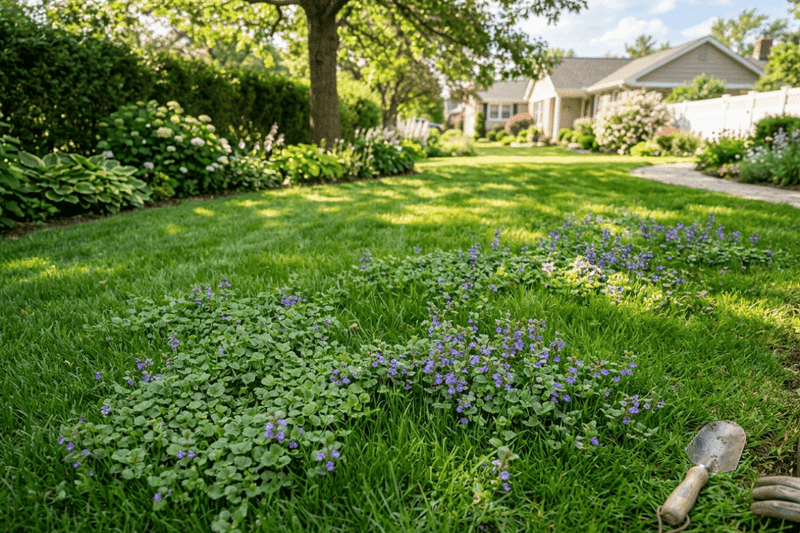
The idea that pulling makes Creeping Charlie worse is too strong. The real problem is incomplete removal.
When you tug on a runner, it often snaps, and rooted stolon sections stay behind and grow again.
Penn State Extension says hand removal is usually ineffective in lawns unless the stolons with their nodes are removed. In a thick, spreading lawn infestation, that is a tall order.
Pulling by hand is rarely the best choice for a large area.
For a small patch, though, careful work can pay off. Try pulling or digging after rain or a deep watering, when the soil is soft and the runners release more easily.
Take out all stems and roots, then bag or dispose of the debris so pieces cannot re-root.
Iowa State Extension notes that persistent hand removal may take several growing seasons. Check the spot every week or two and remove new growth as soon as you see it.
University of Illinois Extension also says removal can work when all stems and roots come out.
If the patch keeps growing faster than you can clear it, that is a sign to consider another approach.
Use a labeled post-emergence treatment for established lawn infestations
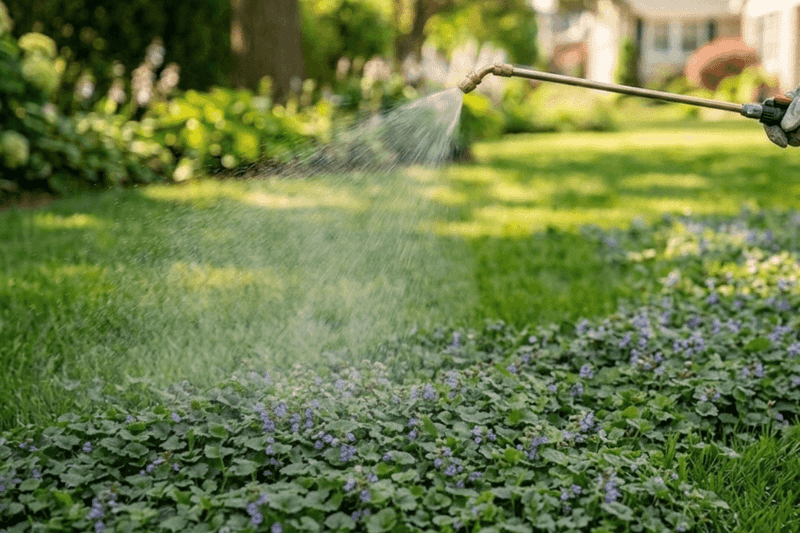
When Creeping Charlie has settled across a lawn, pulling it all out may not be realistic. In that case, a post-emergence product labeled for ground ivy is the better-supported option.
Post-emergence means it is used on weeds that are already growing.
Penn State Extension identifies triclopyr, fluroxypyr, or combinations of the two as typically providing the best control. Look for those names in the ingredient list, and confirm that ground ivy appears on the label.
Penn State also says pre-emergence herbicides do not control it effectively, so skip those for established patches.
Expect to look at the results before deciding what to do next. Wait and see how the patch responds, then repeat only if the product label allows it.
Control may take more than one treatment, and in stubborn cases it can stretch across more than one season.
University of Illinois Extension also points to herbicide treatment for lawn infestations that hand removal cannot keep up with.
Home remedies deserve caution. Borax, for example, gives inconsistent results, can damage turf, and is not labeled as an herbicide.
Stick with products designed and labeled for the job, and check your local Penn State Extension office if you are unsure which one fits your lawn.
Fall is common, but spring can also work
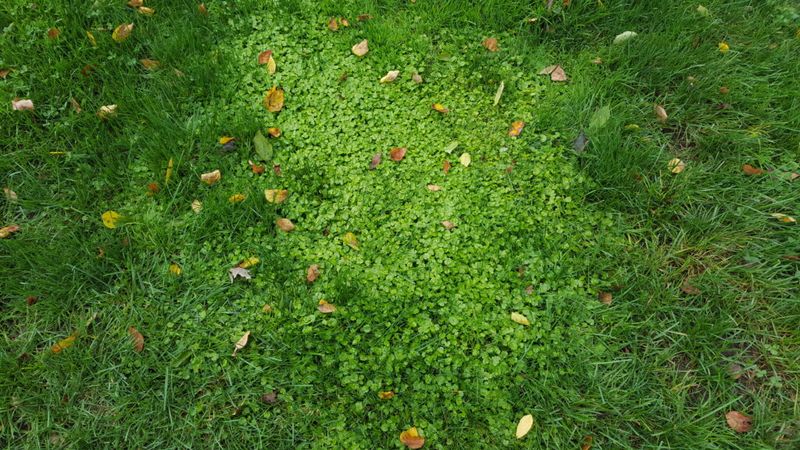
Fall gets most of the attention for good reason. Penn State Extension says treating after the first frost can help active ingredients move down to the crown tissues, compared with spring.
That makes fall a commonly recommended window.
Spring is not off the table, though. University of Illinois Extension advises treating when weeds are actively growing, in mid-spring to early summer or in mid-to-late fall.
Purdue recommends treating at or just after spring flowering, with added fall applications.
A peer-reviewed field study in Indiana and Tennessee found that fall often performed well, but spring also gave good control when an effective herbicide was used. The effect of timing was inconsistent from place to place.
In other words, the product you choose can matter as much as the season.
So there is no single best date for every Pennsylvania lawn. Weather, the product, and your site all play a part.
Read the label for timing directions, and ask your local extension office what fits your area.
Follow the label to protect your lawn and nearby plants
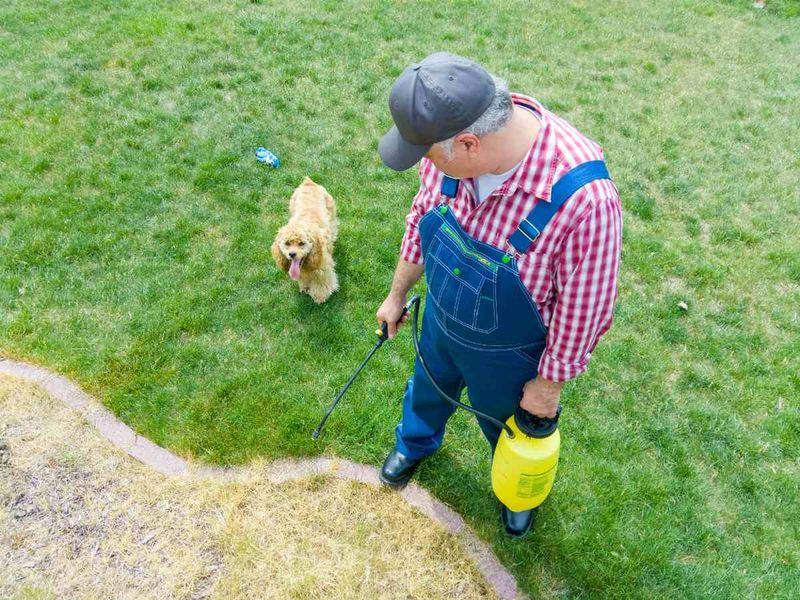
With any herbicide, the label is the rulebook. The EPA explains that pesticide labels contain legally enforceable directions and restrictions.
Read the whole thing before you open the container, not just the front panel.
The label tells you where the product can be used, what protective equipment to wear, which weather conditions to avoid, and when people and pets may return to the treated area. Do not guess at any of these.
If a direction is unclear, check with your local extension office.
Lawn herbicides can injure desirable broadleaf plants, and that includes flowers and vegetables. Rutgers Cooperative Extension cautions about drift and about applying products near trees and shrubs.
Wind can carry spray farther than you expect, so pay attention to conditions on application day.
A product made for lawns is not a product for garden beds or vegetable plots. If Creeping Charlie is growing among your perennials or vegetables, careful hand removal is the safer path.
For more everyday habits, the EPA’s pesticide safety tips are a handy reference for storing, handling, and using products responsibly.
Improve turf competition to help limit reinvasion
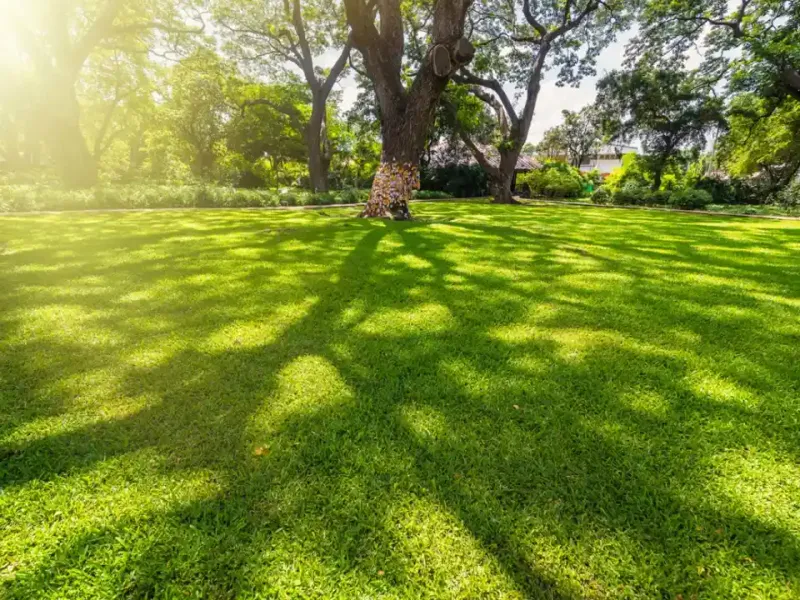
Treating the weeds you have is only half the job. A thin lawn leaves open soil and gaps that Creeping Charlie is happy to fill.
Thicker turf gives it less room to move back in.
University of Illinois Extension suggests shade-tolerant grasses, mowing higher (around 3 inches), and overseeding in fall. Taller grass shades the soil and helps turf compete.
Overseeding fills thin spots before weeds do.
Some places simply are not good for grass. In heavy shade, turf may never thrive no matter how well you care for it.
Penn State Extension suggests considering a suitable ground cover in such spots instead of fighting to keep grass alive.
Keep the purpose of these steps clear. They help reduce reinvasion and improve competition.
They are not a cure for an established infestation, so do not expect better mowing alone to clear out a thick mat of Creeping Charlie. Pair them with removal or a labeled treatment.
Plan for control, not an overnight cure
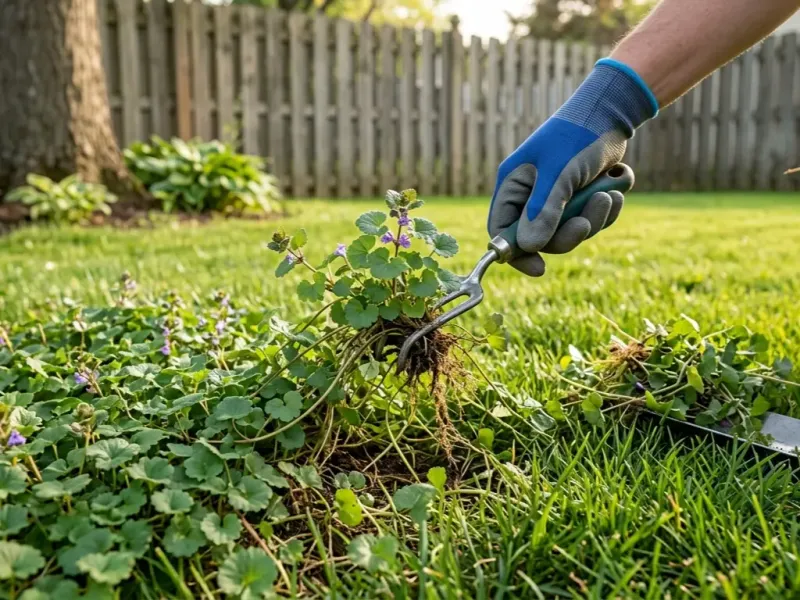
Start with the size of the problem. Small patches can be dug out carefully, while established lawn infestations may call for a labeled post-emergence product, used at a suitable time and repeated only if the label allows.
Reassess before each step, and build up the turf afterward. The Penn State guidance notes that repeat treatment over multiple years may be needed.
Pulling is not harmful by itself, and fall treatment is not a guarantee. Even field research shows results vary by site.
Creeping Charlie rewards the patient, not the hurried.
