
Winter Garden Balcony Ideas for a Cosy, Plant-Filled Space
A balcony doesn’t have to become a cold, forgotten ledge until spring arrives. Hardy plants, suitable pots and a comfortable seat can keep even a small outdoor space useful through winter. Leave some corners open and easy to reach. A good winter balcony feels calm, practical and alive, with enough room to step outside without knocking over pots and a lantern.
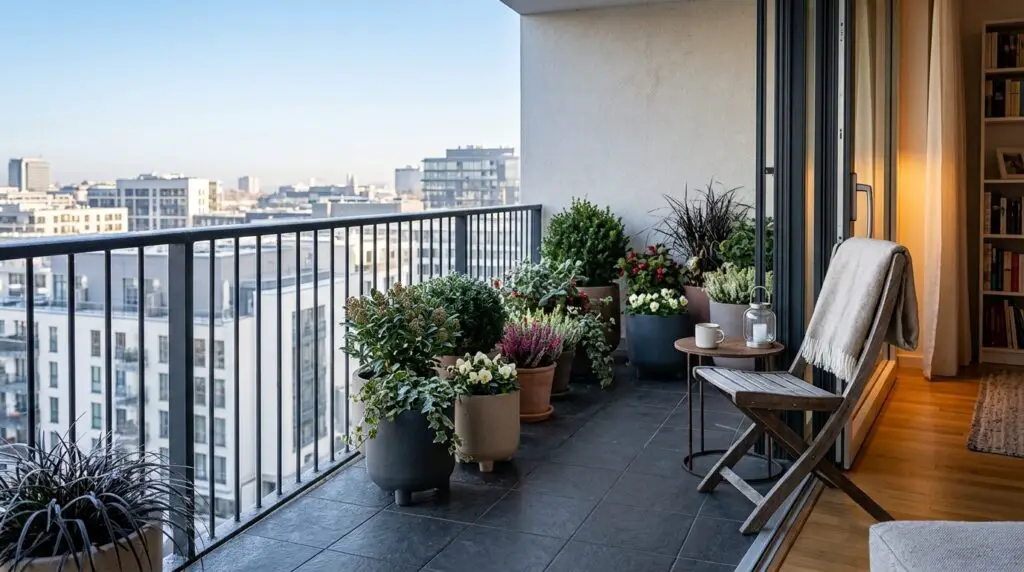
Winter gardening on a balcony does need a little planning but creative ideas can transform the space. Containers lose heat faster than garden soil, wind can be fierce several floors up and covered balconies may receive almost no rain. Once you understand those conditions, the rest becomes easier. These winter garden balcony ideas cover plants, containers, weather protection, lighting and layout, with options for renters and narrow spaces although not specific Christmas ideas.
Start With a Practical Winter Balcony Garden Plan
Check the Light Before Buying Winter Balcony Garden Plants
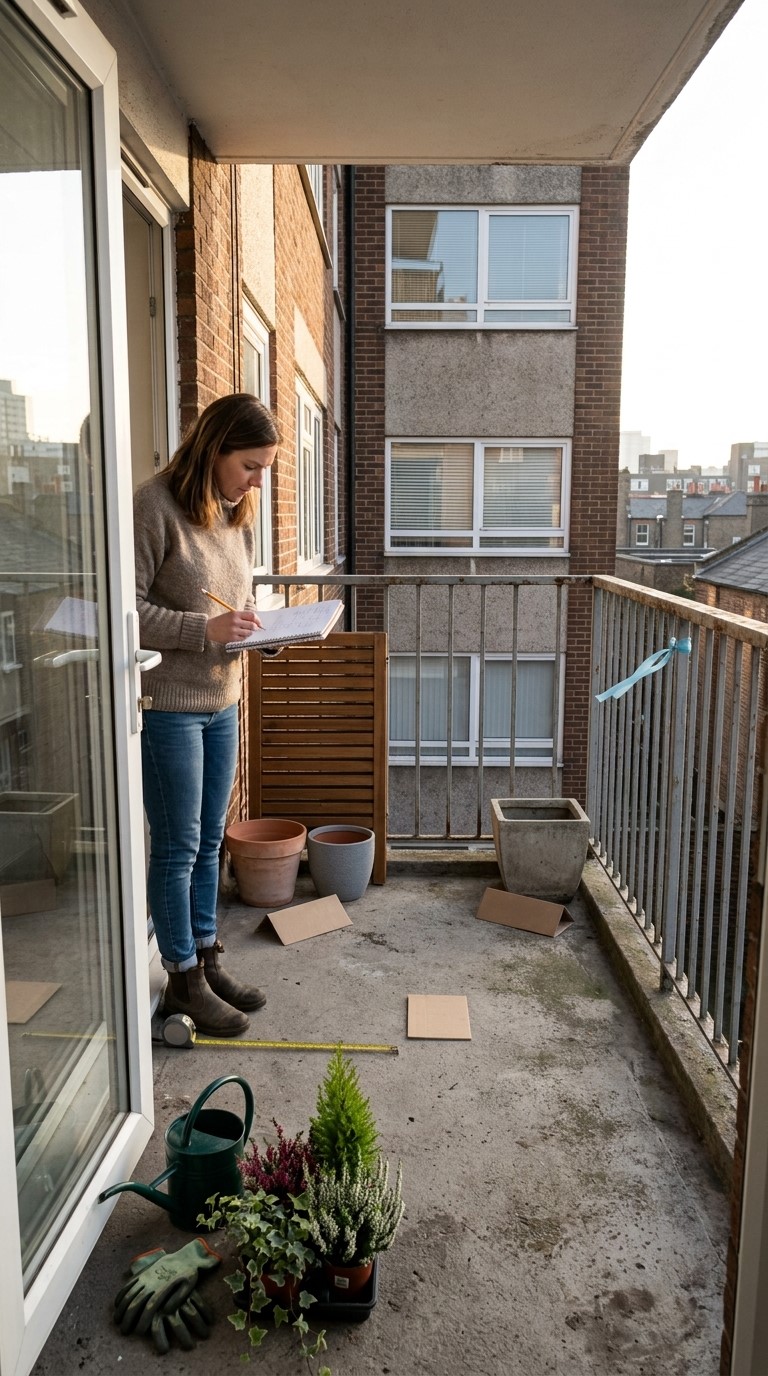
Winter sunlight sits lower in the sky, so nearby buildings and balcony walls can cast much longer shadows. A spot that felt sunny in July may receive very little direct light in January. Check the balcony in the morning, at midday and in late afternoon. Choose plants for those conditions. Hellebores, ivy and some ferns can cope with shade, while winter-flowering pansies and many herbs prefer a brighter position.
Read the Wind in a Cold-Weather Balcony Garden
Wind is often the toughest part of winter balcony gardening. It rocks tall plants, dries compost and can push lightweight pots across smooth flooring. Place sturdy evergreens near exposed edges and smaller plants close to a wall. A slatted screen can reduce strong gusts without trapping damp air. Heavy pots help, but check the balcony’s weight limits before adding large ceramic containers filled with wet compost.
Protect Walking Space on a Small Winter Garden Balcony
Measure the floor before arranging pots or furniture. Keep a clear line between the door and the main seating area, with enough room to carry a watering can or move a planter indoors. Narrow balconies often work better with plants grouped at one end instead of spread along both sides. That single choice makes the space feel wider and leaves room for daily use, which is the point of keeping it open in winter.
Choose Winter Balcony Garden Plants for Cold Months
Build Structure With Evergreen Balcony Plants
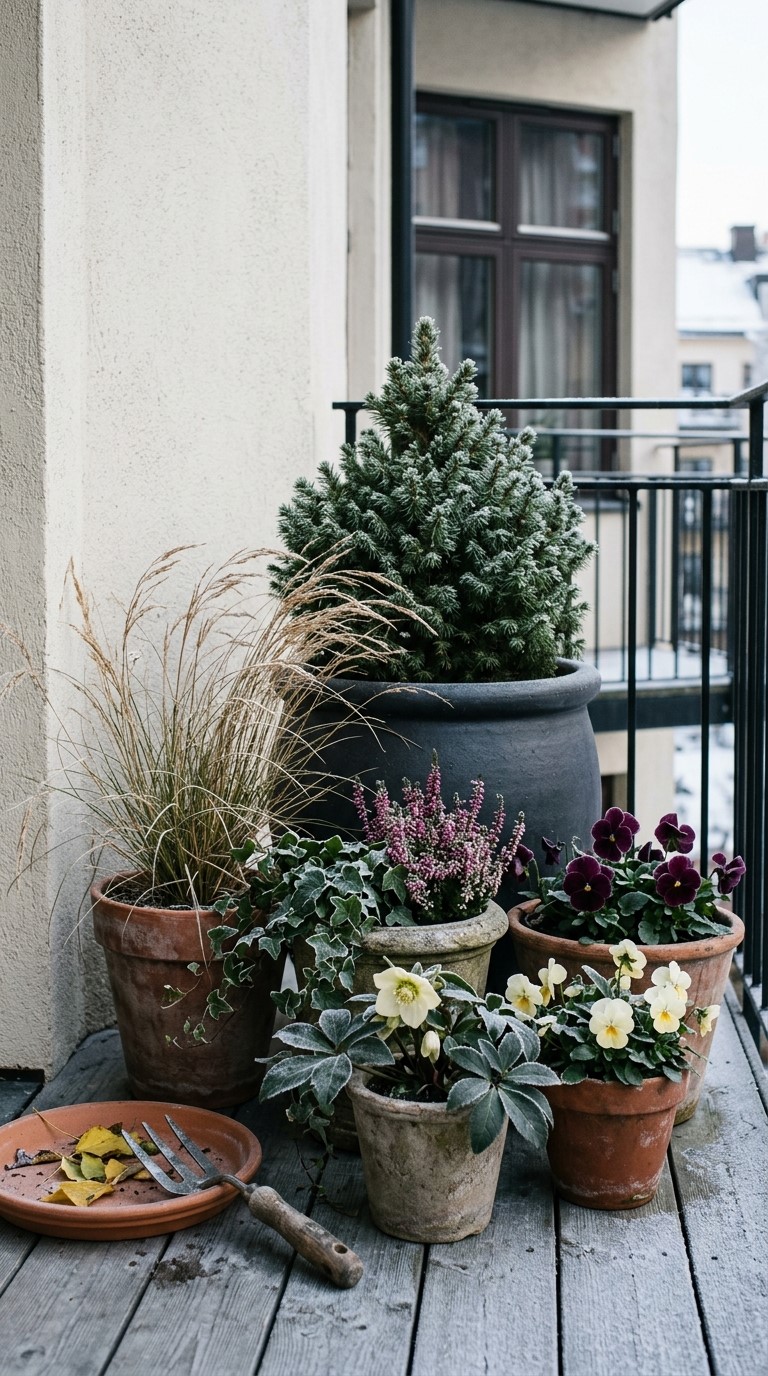
Compact evergreens give a winter balcony its backbone. Dwarf conifers, small-leaved ivy, skimmia and compact euonymus can all work in containers when the pot size suits the plant. Avoid anything that will outgrow the space within a year or two. One well-shaped evergreen in a generous pot can do more than six tiny plants lined along the rail. It also looks good through the window when the weather keeps you indoors.
Add Colour With Winter Flowers for Pots
Pansies, violas, winter heather, cyclamen and hellebores can bring colour during the colder months, though suitability varies by climate and exposure. Choose one main colour and one softer shade. Deep plum with cream feels grown-up, while white flowers beside dark green foliage suit a clean modern balcony. Plant flowers near the front of containers where they can be seen from indoors. Deadhead spent blooms and remove yellowing leaves before they turn into damp mush.
Keep Texture With Ornamental Grasses in Winter Planters
Ornamental grasses bring movement and fine detail to winter balcony planters. Their faded leaves and seed heads can look especially good beside broad evergreen foliage. Choose compact types that remain tidy in pots, and place them where wind won’t flatten them against a wall. Leave attractive seed heads through winter, then cut back as the variety requires. Avoid tall, top-heavy grasses on an exposed upper-floor balcony.
Pick Containers for a Winter Garden Balcony
Use Frost-Resistant Winter Garden Pots
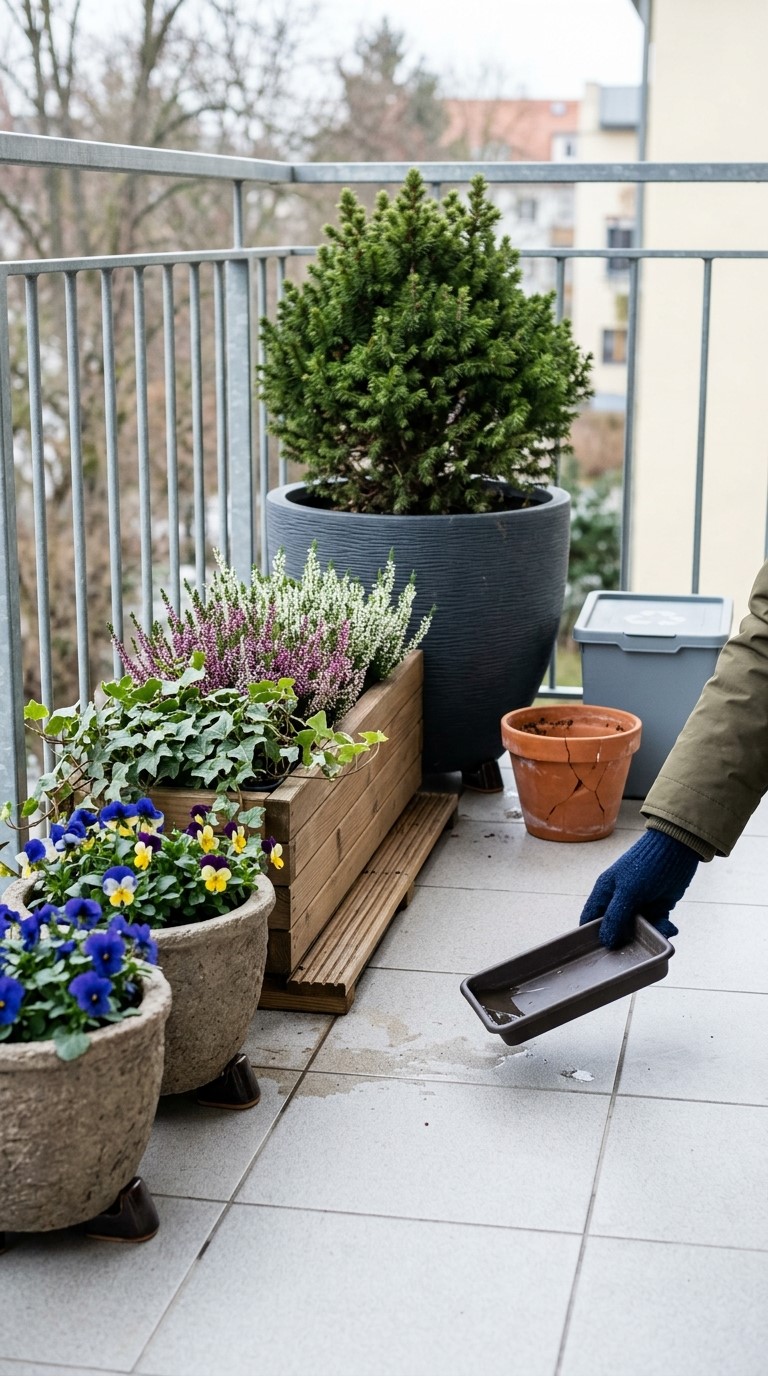
Terracotta looks lovely, yet porous pots can crack when water freezes inside the clay. Frost-resistant ceramic, resin, timber and good-quality plastic are often safer choices for cold balconies. Check that every pot has open drainage holes before planting. Large containers protect roots better because their compost changes temperature more slowly. Tiny decorative pots are better used as covers for removable nursery pots, provided water can’t collect around the inner container.
Group Winter Container Garden Pots for Shelter
Pots placed close together give one another a little protection and create a stronger visual display. Put taller plants at the back, medium containers through the middle and low flowers near the front. Leave small gaps for airflow and access to drainage holes. Grouping makes watering faster, which helps on cold mornings when wet sleeves have little appeal. Odd numbers can work, but balance and available space matter more than a fixed design rule.
Lift Balcony Winter Planters Above Wet Floors
Pot feet, low plant stands and removable slatted bases help water drain away after rain. They can also reduce staining on tiles or concrete. Check beneath trays and mats every few weeks because damp leaves and trapped water can create slippery patches. On a covered balcony, empty saucers after watering rather than leaving roots to sit in cold water. The setup should protect the floor without making every planter look as though it is balanced on stilts.
Make Small Winter Garden Balcony Ideas Work Harder
Grow Upward in a Tiny Winter Balcony Garden
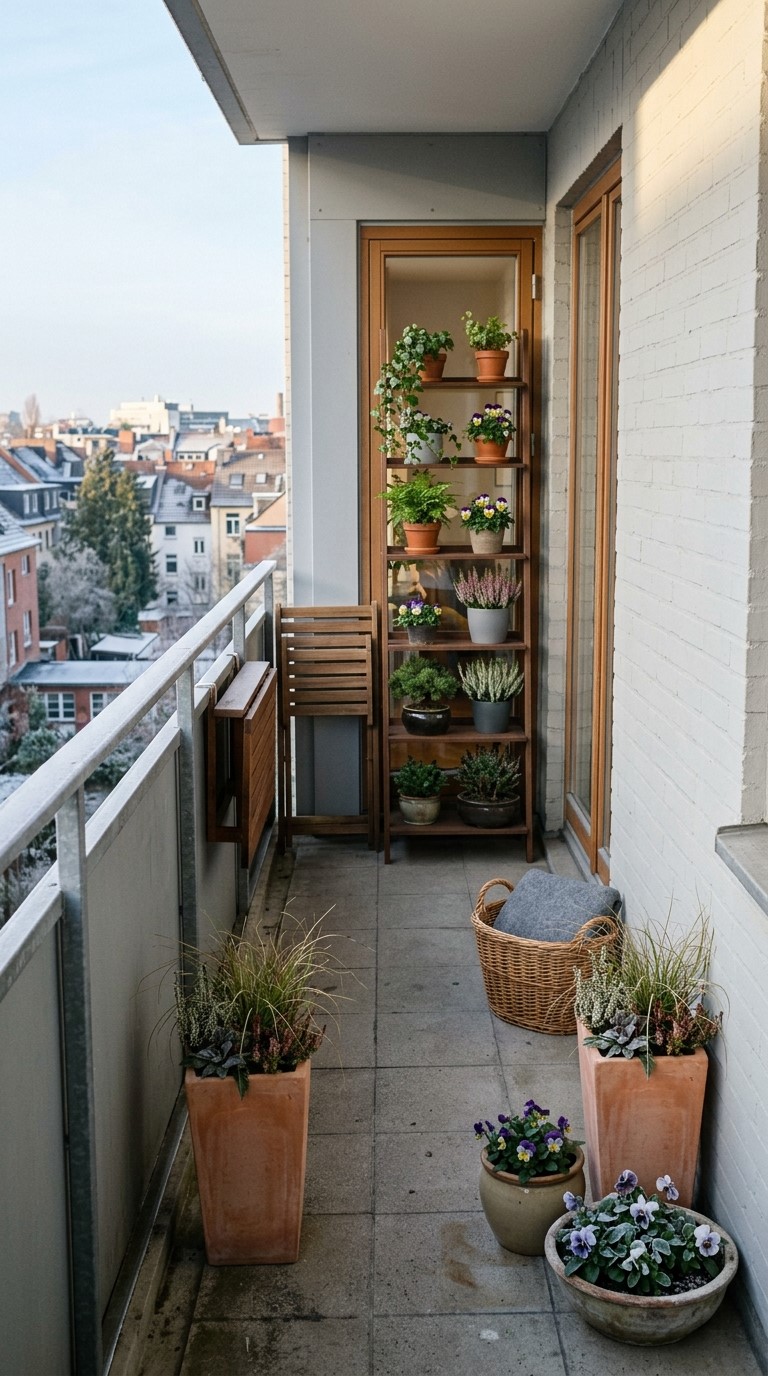
Small balcony spaces can need additional thought. A freestanding ladder shelf or narrow plant stand can hold several small containers while using little floor space. Keep heavier pots on the lowest shelf and lighter ones above. Make sure the unit cannot tip in strong wind. Railing planters may also help, but they must fit the rail properly and comply with building rules. Avoid hanging anything above public walkways unless the fixing is approved and secure. Falling pots are a poor contribution to neighbourhood life.
Turn Corners Into Compact Balcony Garden Displays
Balcony corners often end up collecting empty pots, old compost bags and things nobody wants inside. Give one corner a proper job instead. A tall evergreen at the back, a medium pot of ivy and a low bowl of winter flowers can create a complete display in a small footprint. Repeat one container colour to hold the group together. This concentrated arrangement usually looks better than scattering small pots along every edge and windowsill.
Add Foldable Furniture to a Small Winter Balcony
A folding bistro chair or slim drop-leaf table suits a tight space. It can be opened for a sunny lunch, then closed when plants need moving or the floor needs cleaning. Choose weather-resistant furniture that doesn’t become dangerously slippery when wet. Cushions should be easy to carry indoors. One comfortable chair with a view beats a pair of cramped seats that nobody can use without tucking in their knees and apologising to the rosemary.
Use Apartment Winter Balcony Garden Ideas Without Damage
Try No-Drill Planters in a Renter-Friendly Winter Balcony Garden
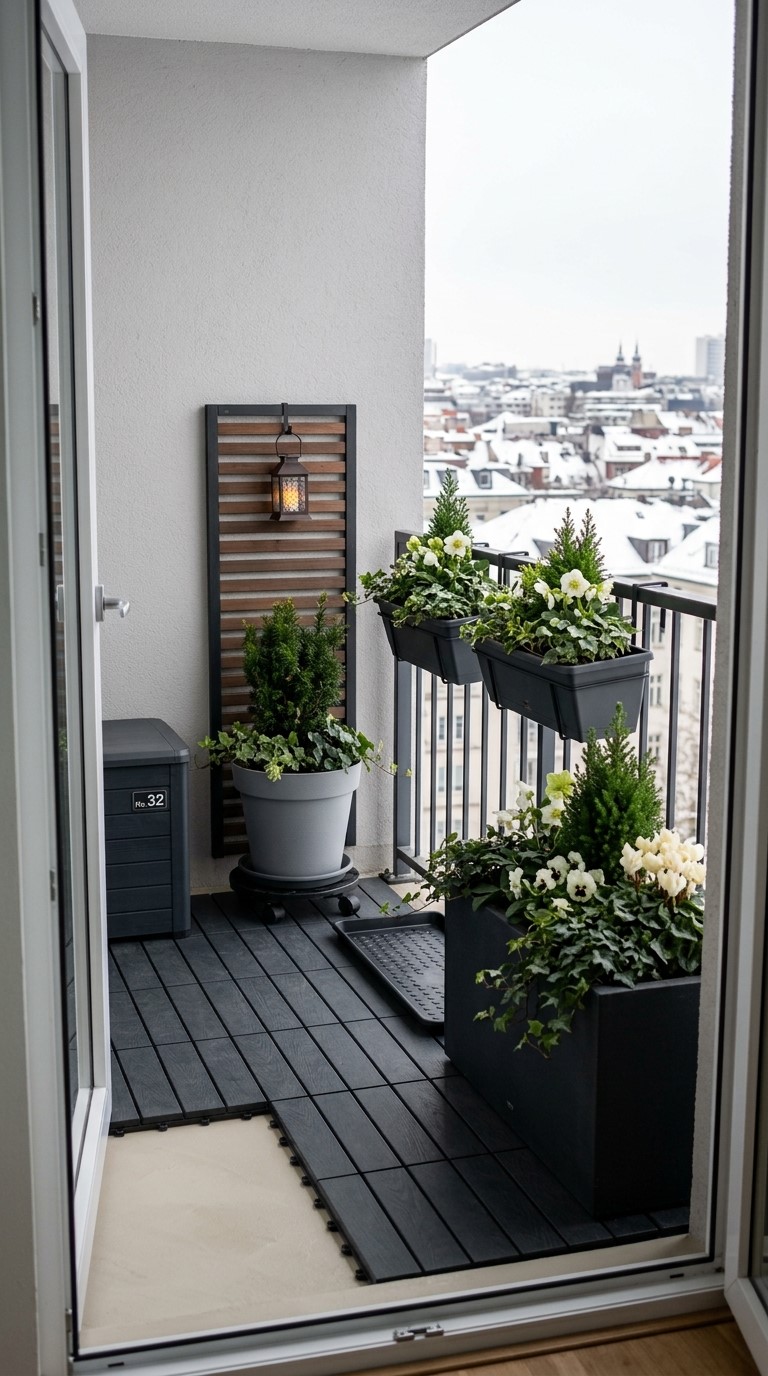
Freestanding troughs, weighted planter boxes and properly fitted railing containers offer useful planting space without permanent fixings. Choose products made for the exact width and shape of the rail. Homemade hooks and loosely tied pots may seem clever until the first winter gale. A narrow planter placed on the floor beside the railing is often the safer answer. Add tall grass or a compact evergreen if you want height without attaching anything to the building.
Protect Floors in an Apartment Balcony Garden
Waterproof trays can catch drainage, while removable outdoor tiles make a tired floor feel cleaner and warmer underfoot. Both need regular lifting so moisture doesn’t remain trapped beneath them. Avoid rugs that stay wet for days or shed fibres into drainage outlets. If the balcony has a drain, keep it clear of compost and fallen leaves. A neat floor makes the planting look better and stops the area near the door becoming a muddy patch after every watering.
Choose Portable Winter Balcony Garden Containers
Lightweight resin and plastic pots are easier to move than heavy stone or thick ceramic. They also reduce the load on the balcony. Place larger containers on wheeled caddies with locking castors, but check that wheels cannot roll in strong wind. Handles can be useful, provided they are strong enough for a pot filled with damp compost. Portable containers allow plants to be grouped for shelter or moved closer to the wall during cold snaps.
Add Cosy Winter Garden Balcony Ideas Without Clutter
Create a Cosy Winter Balcony With Simple Seating
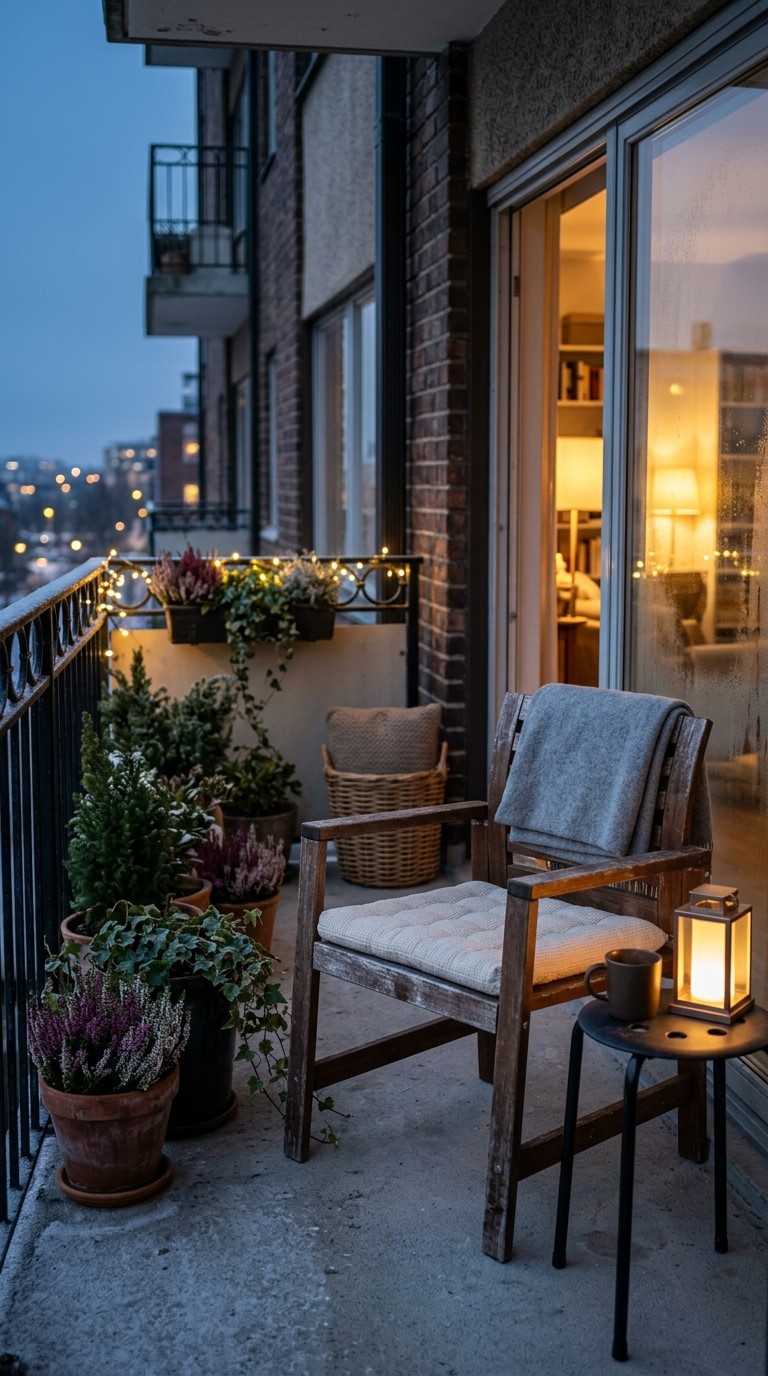
Position the seat where it catches the best available sun and has a pleasant view. On a narrow balcony, this may mean placing one chair at the far end rather than facing it towards the building. Add a washable seat pad and a blanket stored just inside the door. A small stool can serve as a side table and extra plant stand. Skip bulky outdoor sofas unless the balcony is genuinely wide enough to leave clear access around them.
Bring Warmth With Winter Balcony Lighting
Outdoor-rated string lights, rechargeable lanterns and small wall lights can make the balcony pleasant after sunset. Use warm white bulbs aimed at plants or seating, not neighbouring windows. Solar lights may struggle on a shaded winter balcony, so check the charging requirements before buying. One lantern beside a chair and a short run of lights along a shelf often feels calmer than covering every rail with flashing bulbs.
Pair Natural Winter Balcony Decor With Plants
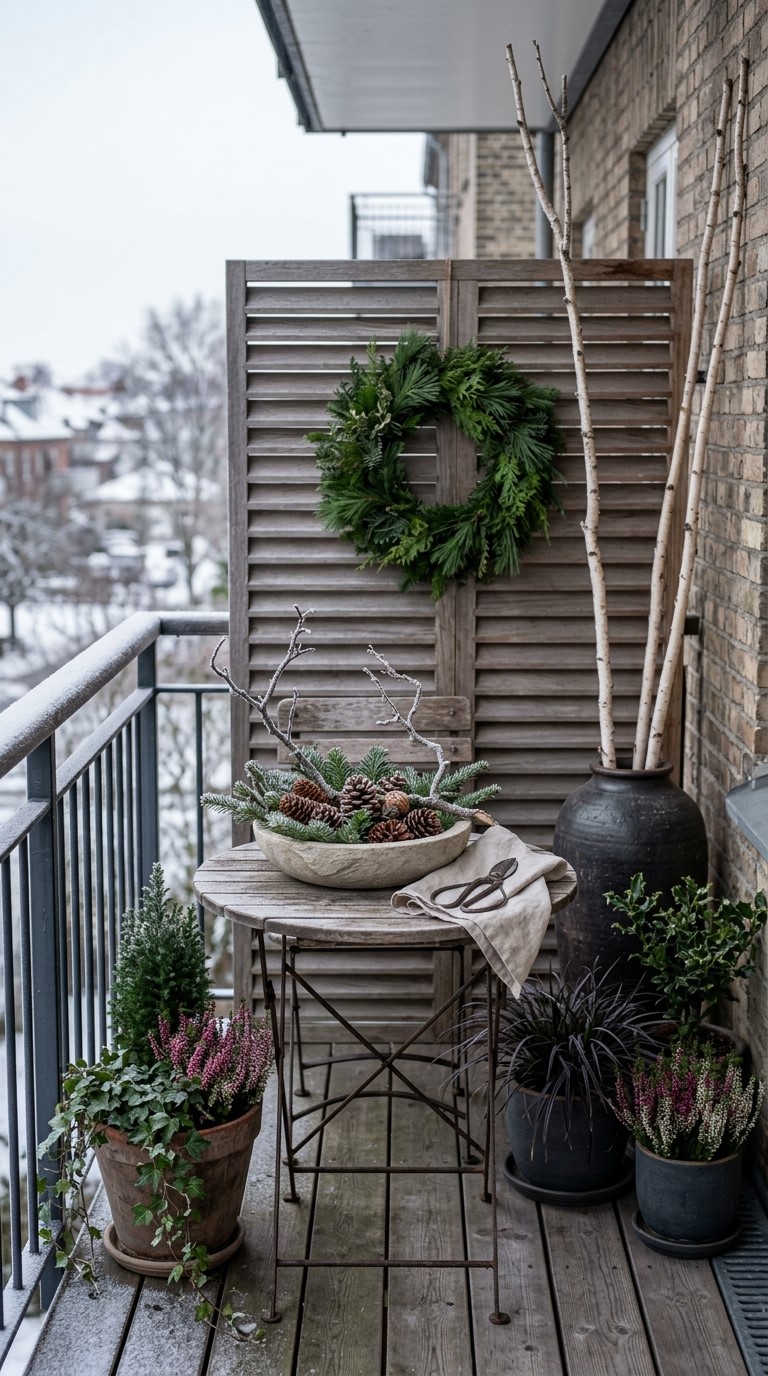
Evergreen cuttings, bare branches, pinecones and a simple outdoor wreath sit easily beside winter plants. Keep loose decorations low and secure so they don’t blow away. Avoid pushing cut branches into the crowns of living plants, where damp can collect. A shallow bowl of cones on the table or a few branches in a heavy pot is enough. Seasonal decor should make the balcony feel cared for, not turn it into a storage area for leftover holiday pieces.
Protect a Winter Balcony Garden From Bad Weather
Insulate Cold-Hardy Potted Plants
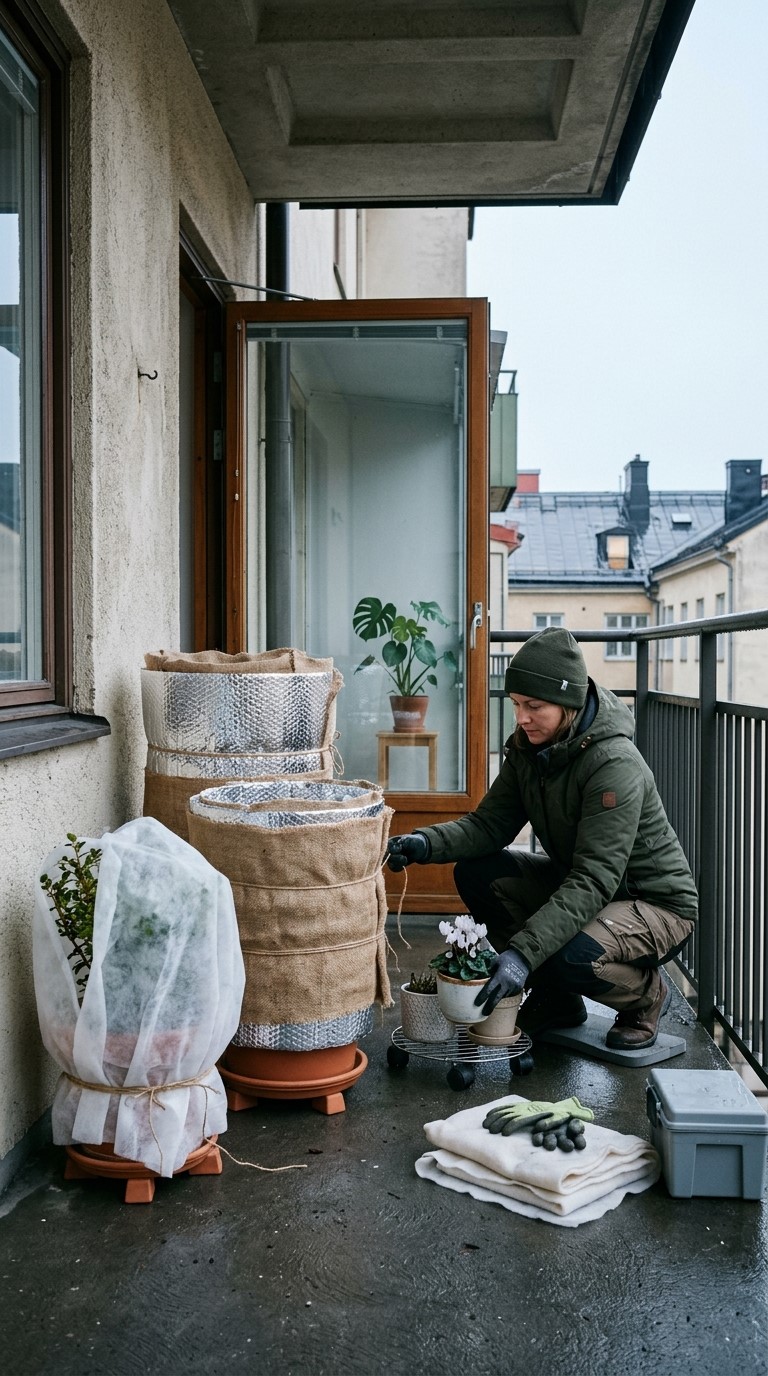
Wrap vulnerable pots with hessian, horticultural fleece or reusable insulating material, then secure it without blocking drainage holes. The roots often need more protection than the top growth. Grouping containers near a wall can reduce exposure, and placing smaller pots inside larger outer pots adds another buffer. Don’t wrap foliage tightly for long periods because trapped moisture can encourage rot. Remove or loosen covers during milder spells when the plant needs light and air.
Move Frost-Sensitive Balcony Plants Into Shelter
Tender plants may need a bright, cool indoor place during severe cold. A sheltered porch, unheated room or enclosed balcony can be better than a hot living room, where dry air and sudden warmth may stress them. Before carrying pots indoors, check for pests and remove dead leaves. If a container is too heavy to move, slide it closer to the building wall and add insulation around the pot before temperatures fall.
Improve Drainage in Winter Garden Pots
Cold, wet compost causes more trouble than cold alone for many container plants. Clear fallen leaves from the soil surface and check that drainage holes remain open. Reduce watering as growth slows, but don’t allow evergreens to dry out completely. Covered balconies may still need regular watering because rain never reaches the pots. Test the compost with a finger several centimetres down rather than watering by habit. Empty full saucers once excess water has drained.
Keep Low-Maintenance Winter Balcony Garden Ideas Manageable
Choose Hardy Plants for an Easy Winter Container Garden
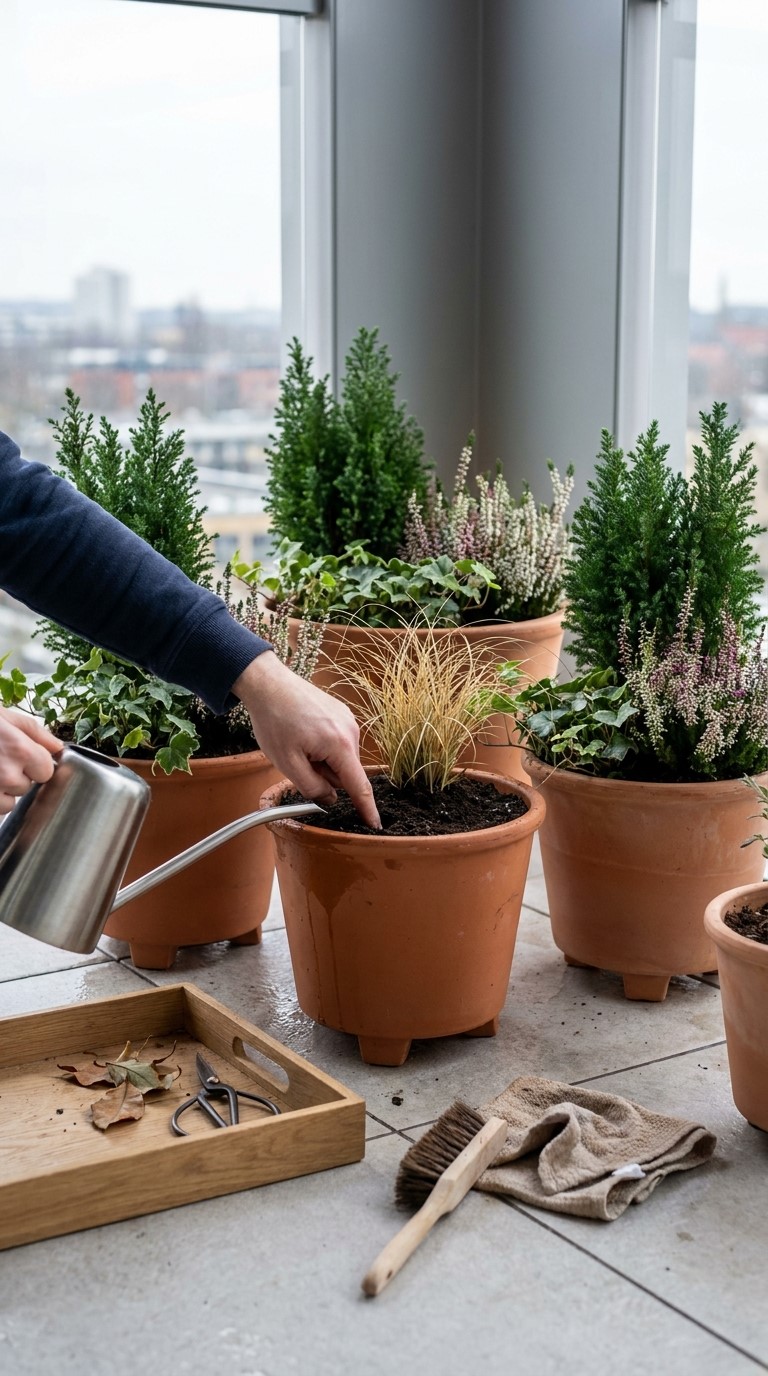
Pick plants known to cope with the local climate and the balcony’s exposure. Repeat the same varieties instead of buying one of everything that looks appealing at the nursery. Shared needs make watering and protection much simpler. Compact evergreens, ivy, winter heather and suitable grasses can form a dependable base. Add replaceable seasonal flowers near the front. If a plant needs constant rescuing, it probably belongs somewhere less exposed.
Adjust Watering for Winter Balcony Plants
Winter pots still need checking, especially beneath roofs and overhangs. Water on milder mornings so excess moisture has time to drain before temperatures fall at night. Aim the water at the compost rather than soaking foliage. Windy balconies can dry faster than expected, while shaded pots may stay wet for days. The finger test remains more useful than a fixed weekly schedule. Plants are rather unimpressed by calendars.
Check Winter Balcony Planters After Storms
After strong wind or heavy rain, spend a few minutes checking the balcony. Straighten leaning pots, tighten approved fittings and remove snapped stems. Make sure screens, shelves and lights remain secure. Clear blocked drains before the next downpour arrives. This habit catches problems while they are easy to fix. It also protects neighbours below, since loose tools and lightweight containers have no business becoming airborne.
Shape Winter Garden Balcony Design Ideas Around Daily Life
Zone a Narrow Winter Balcony Garden
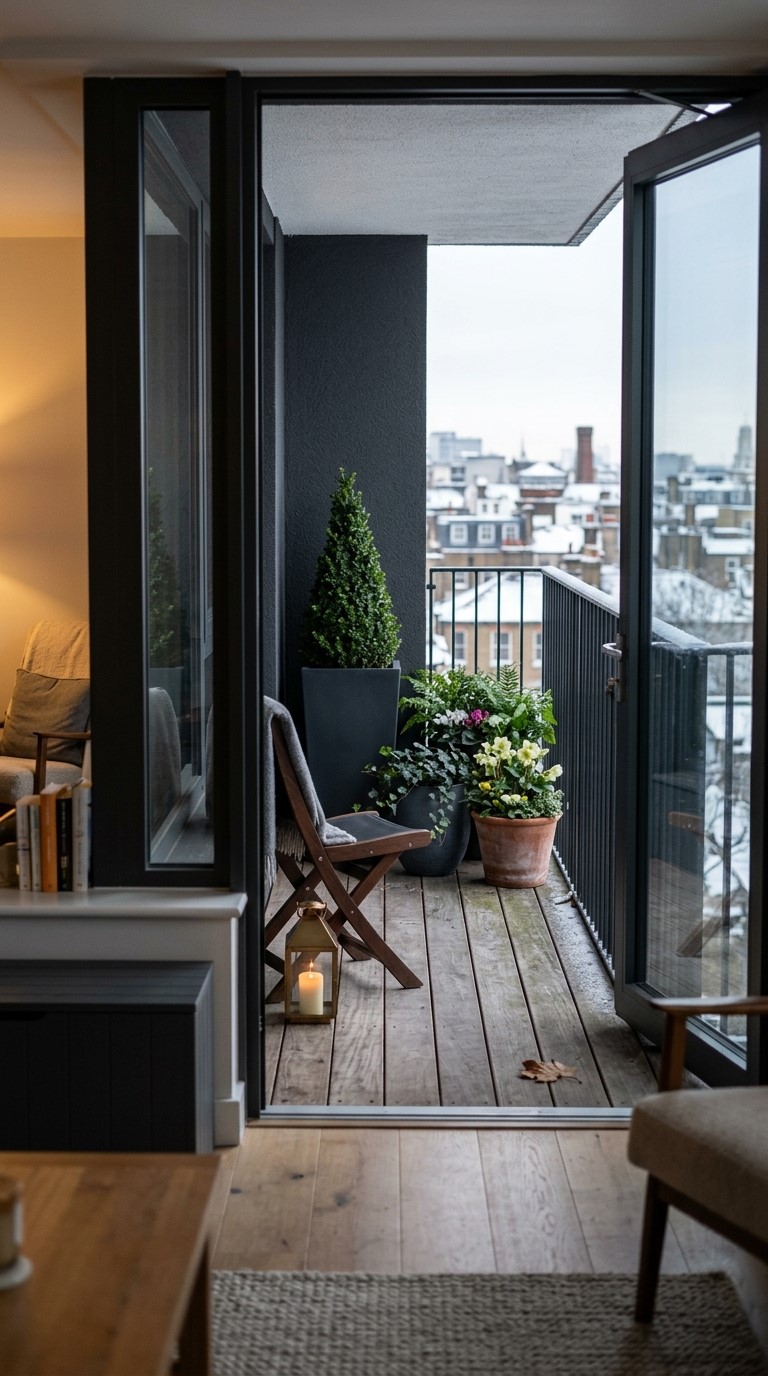
Place most plants along one side or gather them at the far end, then protect a clear route from the door. A tall planter can draw the eye outward and make the balcony appear longer. Keep low pots near seating so they don’t block the view. Storage should be closed and weatherproof, with nothing piled against drainage points. Every item should earn its place because narrow balconies expose clutter with ruthless efficiency.
Frame the View With Modern Winter Balcony Plants
Two matching containers near the outer corners can frame the view without filling the centre. Another option is one strong group opposite the main window, where it becomes part of the room’s winter outlook. Use clipped evergreens, grasses or ivy for clean shapes, then add a small amount of flower colour. Avoid lining identical pots along the entire railing unless privacy is the main aim. Repetition works best when it leaves some breathing room.
Balance Colour in a Winter Garden Balcony Design
Choose a limited palette for pots, foliage and flowers. Charcoal containers with dark green leaves and cream flowers suit a modern apartment. Terracotta tones, timber and deep plum flowers feel warmer. Repeating the same colour in three or four places connects the space without making it look overly arranged. Bright seasonal decorations can still appear, but give them one defined area rather than scattering them among every planter.
Keep Your Winter Garden Balcony Alive Until Spring
A winter balcony can remain part of the home long after summer furniture has been packed away. Begin with the conditions, choose a few dependable plants and give their roots proper protection. Then add one comfortable seat or a warm light so the space has a reason to be used. Small changes count. Two sturdy planters by the door can shift the whole view from the living room.
The quieter months also give you time to notice what the balcony needs before spring arrives. You may discover a wind tunnel, a neglected sunny corner or a planter that never drains properly. Fixing those problems now creates a stronger base for new growth later. The balcony won’t look like June in January, nor should it. Winter has its own shapes, colours and pleasures, even several floors above the ground.
