
Winter Garden Solutions for Urban Homes With Heavy Shade and Little Space
A small shaded garden can still feel alive in winter. It simply needs a different starting point from the sunny plots that fill most gardening pages. In an urban terrace, townhouse courtyard or compact suburban yard, each square metre has several jobs. People need a clear route to the gate. Bins need access. Walls hold damp. Neighbouring buildings block the low winter sun. Then the kitchen window looks straight at the darkest corner for months.
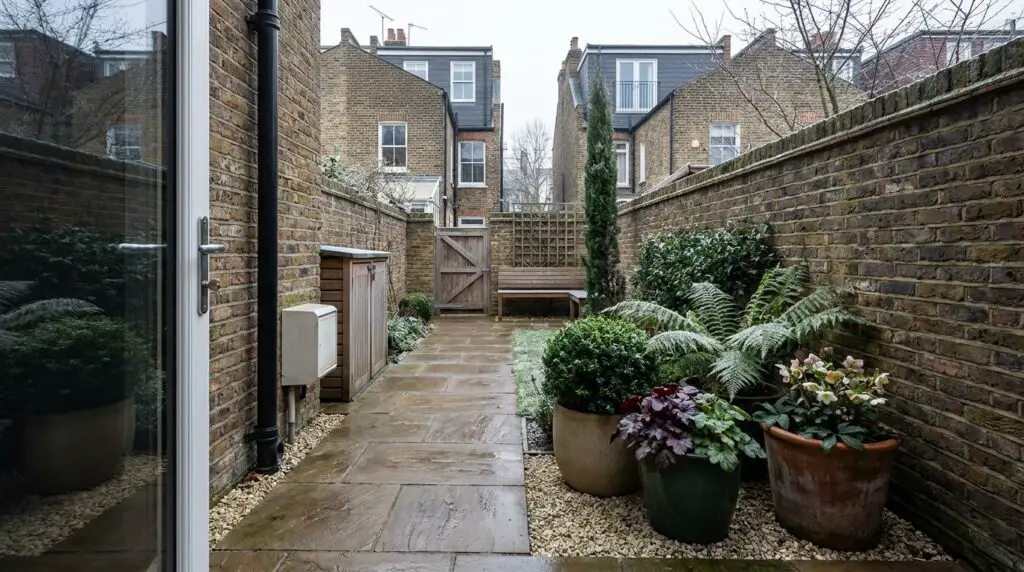
Buying more plants rarely fixes those problems. It can make the garden feel tighter and leave you with extra pots to water, move and protect. A better plan begins with the view from indoors, the route through the garden and the few places where planting will count most. Think of the space as three small zones: one for movement, one for planting and one that gives you something good to look at from the house.
Start Winter Shade Garden Ideas With a Clear Reading of the Space
Heavy shade is rarely equal across a whole garden. A wall near the house may receive reflected light, while the strip behind a shed stays gloomy all day. A north-facing boundary can be cold and damp, yet brickwork near the back door may hold a little warmth. Watch the garden during a winter day before moving pots or ordering plants. Morning, noon and mid-afternoon checks will show where light appears. Look for moss, slow-drying paving, dry soil beneath eaves and places where rain gathers.
Map a North-Facing Winter Garden Before Buying Plants
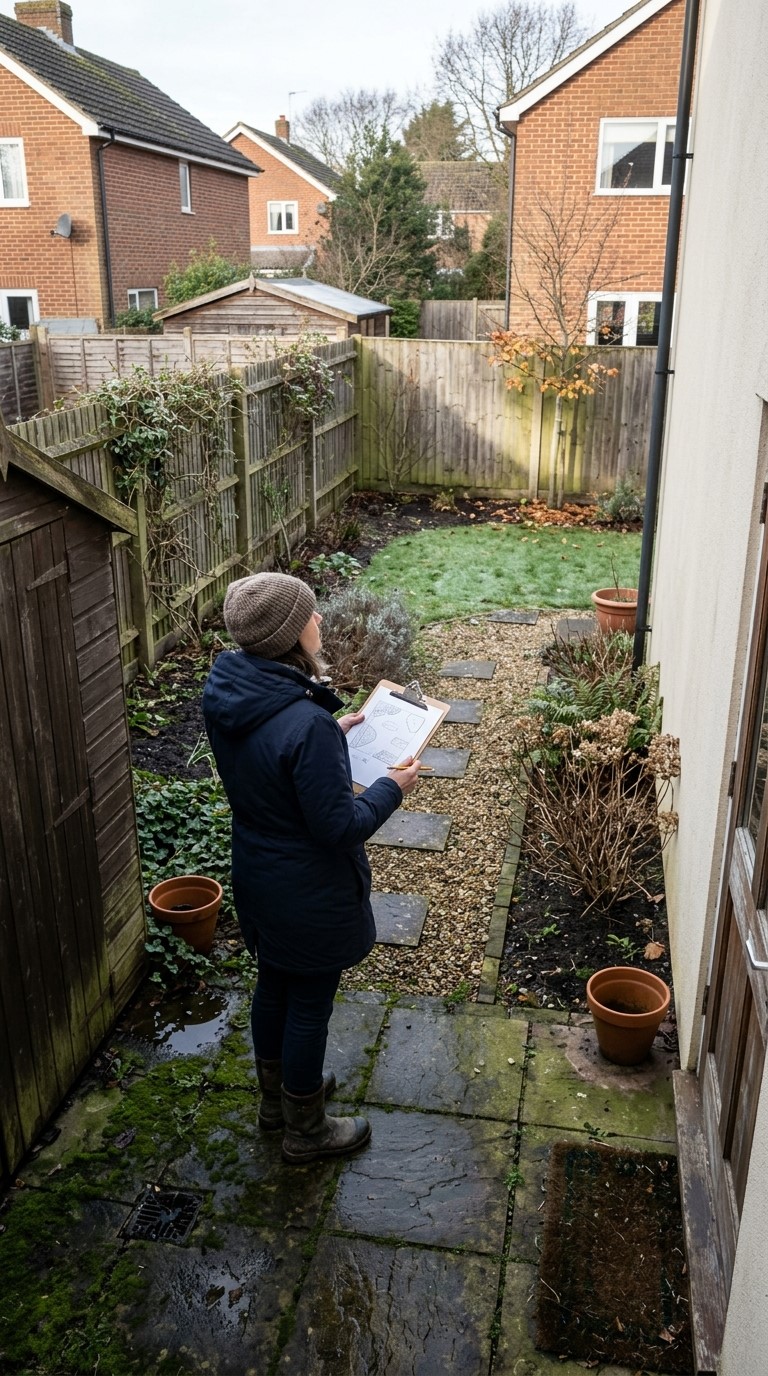
Mark three broad conditions: deep shade, bright shade and brief sun. Deep shade often sits behind walls or beneath dense evergreen growth. Bright shade receives open sky or reflected light without direct sun. Brief sun may last only an hour, but it can suit a container that needs a little extra warmth. This simple map stops every dark corner being treated the same. It also helps you reserve better light for plants that need it and avoid planting the coldest, wettest patch out of sheer optimism.
Protect Walking Space in Small Winter Garden Ideas
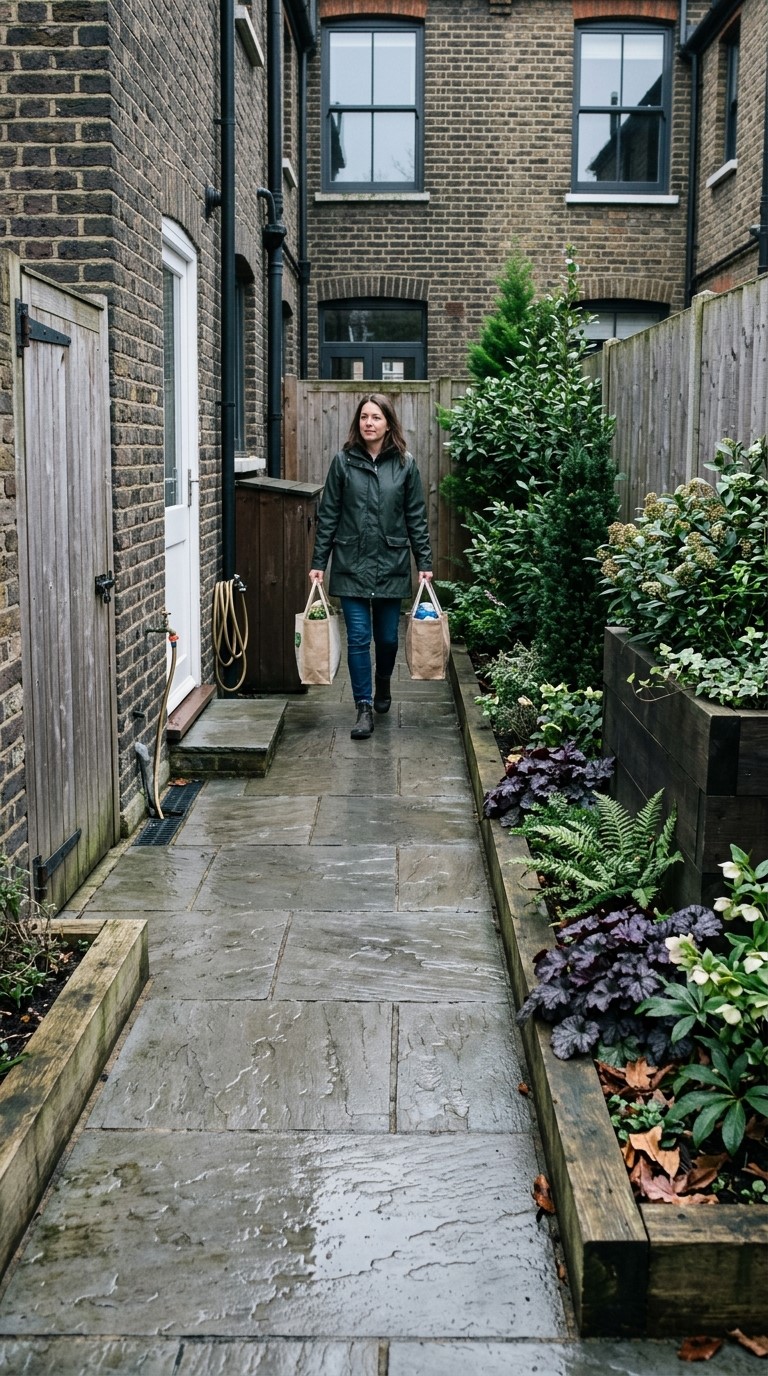
Winter exposes every awkward route. Wet leaves stick to paving, coats catch on branches and a badly placed pot becomes a daily annoyance. Mark the line between the back door, gate, bins and shed. Keep it wide enough to walk without turning sideways. Plant beside this route rather than inside it. Low foliage near the house and taller forms farther away can draw the eye outward. One obvious path often makes a small garden feel larger because the space reads clearly instead of looking like a storage area with plants squeezed around it.
Divide Small Urban Winter Garden Ideas Into Three Working Zones
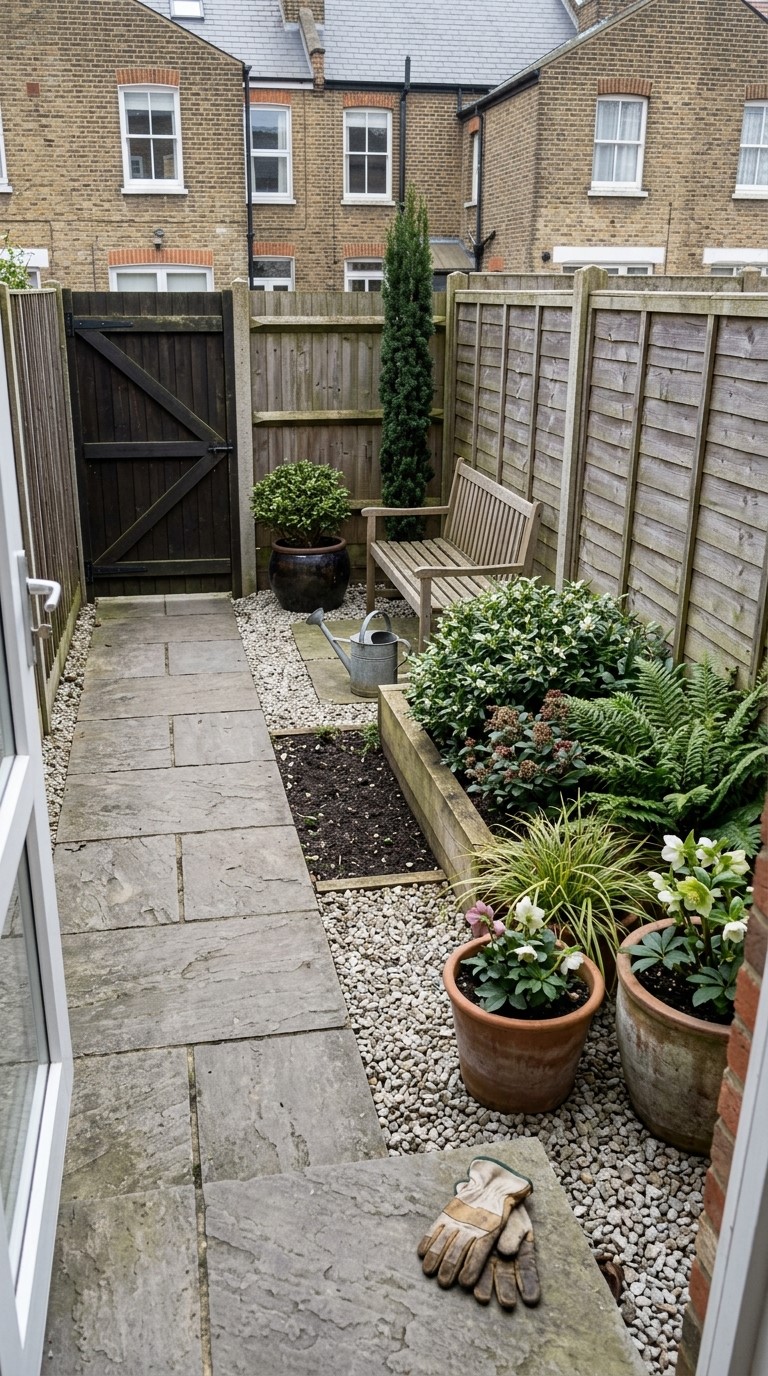
A compact garden becomes easier to plan when it stops trying to be one complete scene. Give one area to movement, one to most of the planting and one to the view from indoors. These zones can overlap, but each needs a clear main job. The planting zone might be a bed against a fence or three large pots near a wall. The viewing zone may be the same group seen from the kitchen. The movement zone can be a clean path and an open patch beside the door.
Give a Small Shaded Backyard One Main Planting Area
Choose the part of the garden that is visible, reachable and least likely to interfere with daily life. This could be the far corner of a townhouse yard, the side of a patio opposite the door or a narrow bed beneath a fence. Concentrating plants there gives the eye somewhere to settle and makes winter care less fiddly. Group plants with similar water and light needs. Three generous containers often look stronger than nine small pots spread around every edge, and they cope better with sudden cold or a missed watering.
Urban Winter Garden Ideas in the View From Indoors
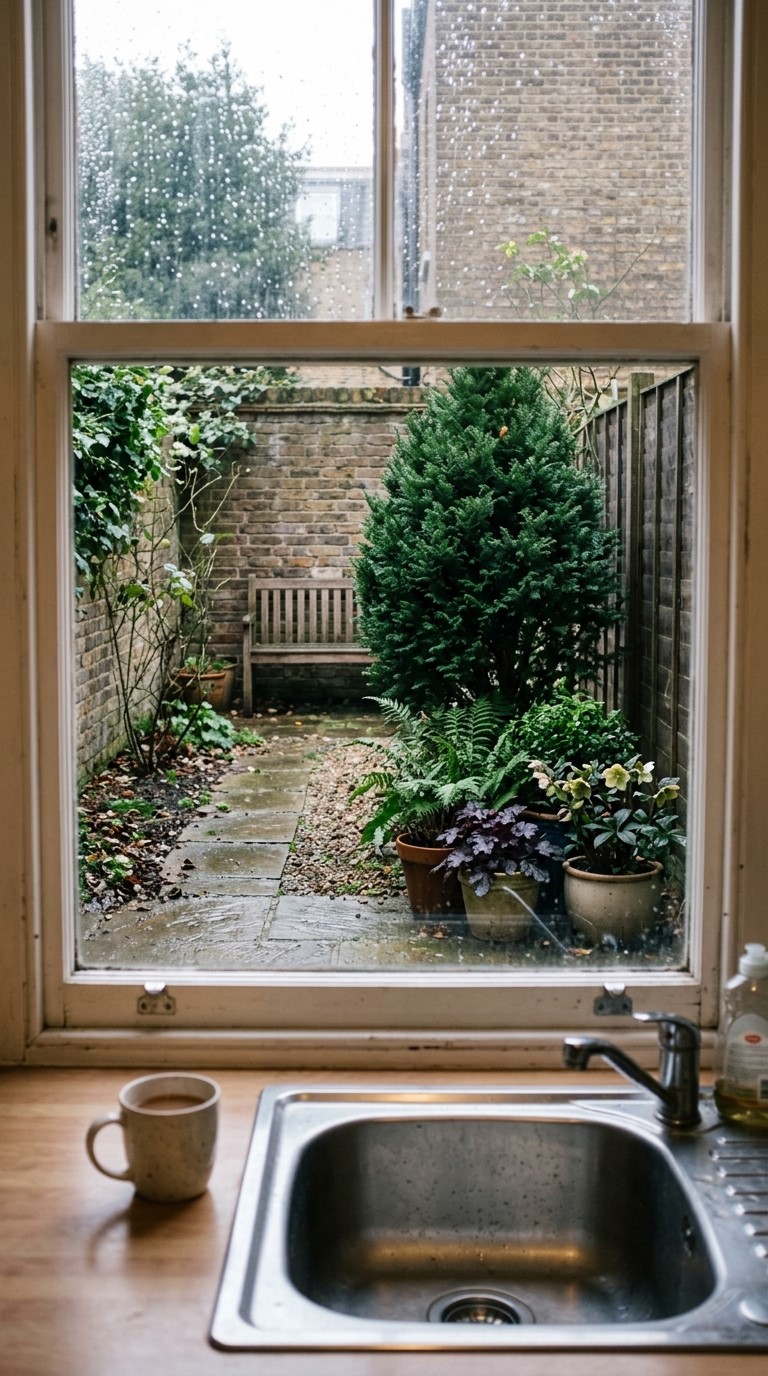
Most people spend more time looking at their winter garden through glass than standing in it. Stand at the kitchen sink, dining table or chair you use in the afternoon. Notice which wall, corner or patch of ground sits in the centre of the view. Give that spot one firm shape, such as a compact evergreen shrub, a dark glazed pot, an arching fern or a simple bench. Smaller plants can sit around it, but leave some ground visible. Winter light is flat and clutter becomes hard to ignore.
Find Hidden Room With Narrow Side Yard Winter Garden Ideas
Side passages are often storage corridors, and there is no point pretending otherwise. They can still hold greenery if the route remains clear. Use one boundary for planting and leave the other plain. Planting on both sides can make a passage feel pinched, especially when bins, tools and shopping bags need to move through it. Look above ground level instead. A slim trough on legs, a narrow rack or a trellis can carry plants without stealing much floor space. Keep drains, gates, meters and taps easy to reach.
Build a Vertical Side Yard Garden Along One Boundary
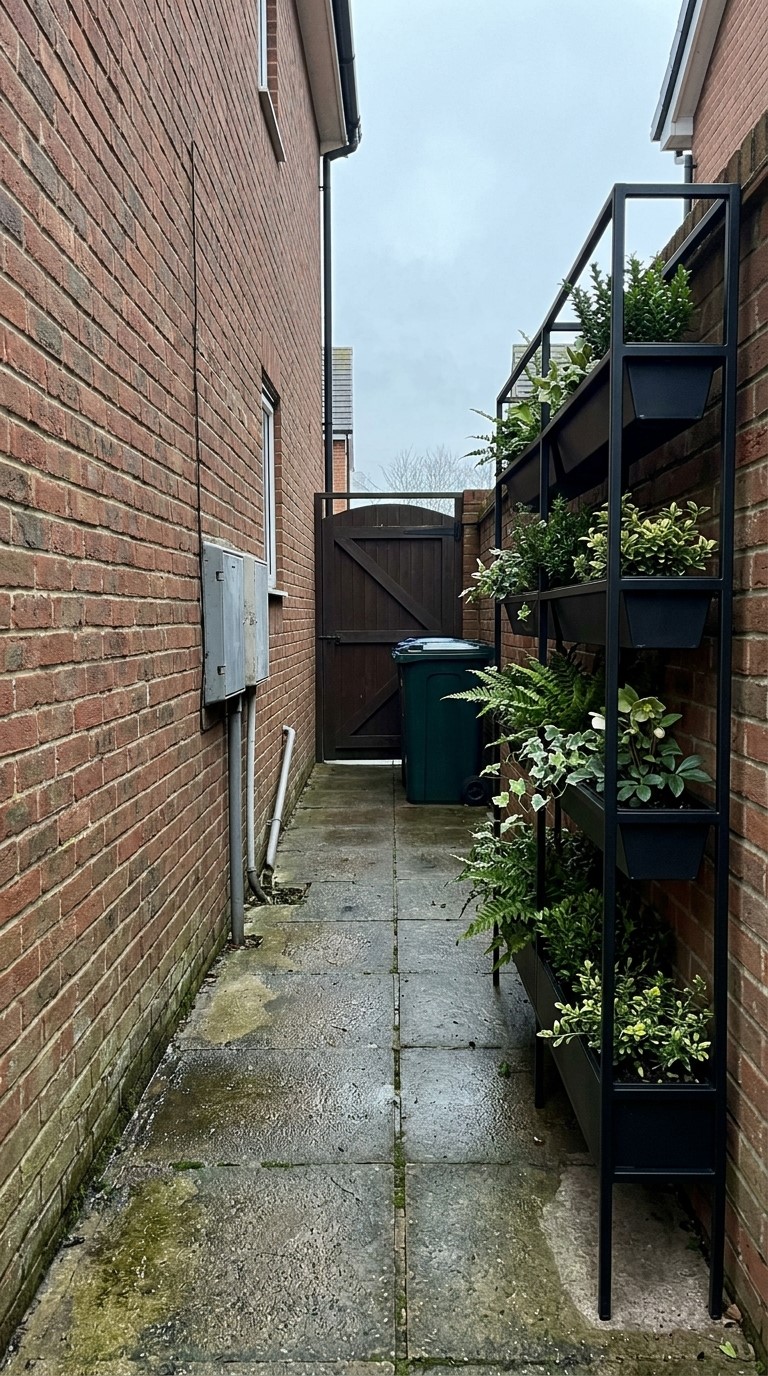
Vertical planting helps most when it is restrained. One tall unit with a few well-spaced pots is easier to live with than a wall packed from top to bottom. Leave gaps so light and air reach the plants. Renters can use freestanding ladder planters, narrow metal frames or rail-mounted troughs where permitted. Fixed supports need sound walls and enough space behind them for air. Place the tallest unit where it will not darken a window, block a gate or force people to brush past wet leaves.
Use Winter Container Garden Ideas for Shade as Movable Structure
Containers suit shaded urban and suburban homes because they can sit above poor soil, move away from maintenance points and bring plants close to windows. They can also shift when the low winter sun reaches a new corner or when a dripping gutter turns one patch into a puddle. A few larger pots hold moisture more steadily and give roots better protection than many tiny ones. Choose frost-suitable containers for your climate, keep drainage holes open and raise pots slightly where water tends to collect beneath them.
Choose Winter Pots for Shade by Scale, Not Quantity
Start with the available space, then choose the pot. A narrow doorway may suit one tall container. A blank wall might take a low trough and one upright pot. A sheltered corner can hold three sizes grouped close together. Leave visible paving around the group so each plant can be seen and reached. Large containers become very heavy once filled, so settle their position before planting. Fibreclay or sturdy plastic may suit renters and anyone who expects to move pots more often than stone or thick ceramic.
Group Evergreen Container Plants Around One Focal Point
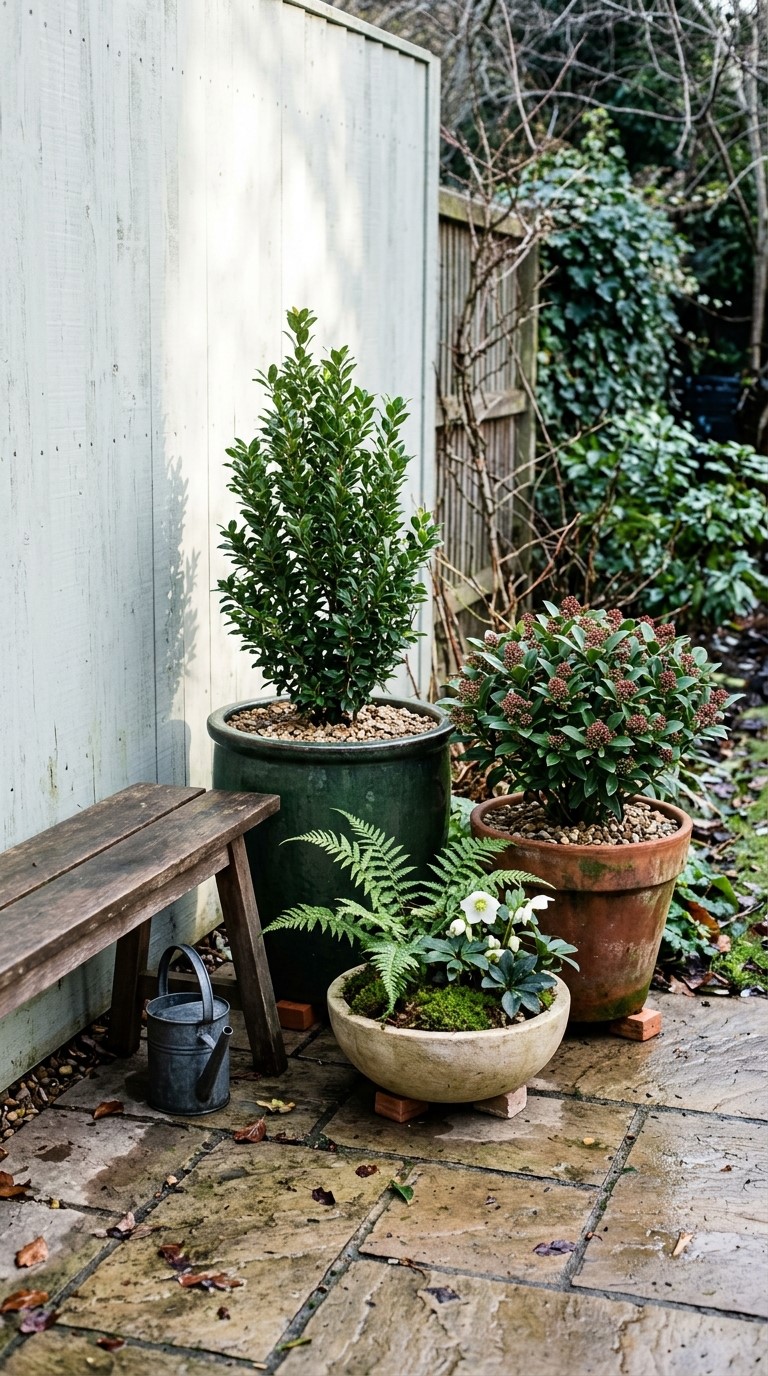
Evergreen container plants provide a steady shape when flowers are scarce. Place them around one focal point, such as a bench, doorway, wall panel or the end of a path. Mix leaf forms rather than collecting many colours. A small upright shrub beside a rounded plant and an arching fern creates enough contrast for a compact display. Dark foliage can sit well against pale brick, while lighter green leaves show more clearly against a dark fence. Gravel or bark on the pot surface can reduce compost splash and give the group a cleaner finish.
Choose Winter Plants for Shade by Form and Staying Power
Flowers have their place, but shape and foliage carry a shaded garden through winter. Start with plants that keep a clear form in the colder months, then add a smaller amount of seasonal colour. Check mature height and width before buying, since a compact nursery plant may soon lean into the path or cover a window. Look for slow-growing or compact forms, and check local hardiness. A plant that remains evergreen beside a warm city wall may lose leaves or suffer damage in a colder, more exposed suburban plot.
Start With Evergreen Shade Plants That Keep Their Shape
Compact sarcococca, skimmia, small hollies, some euonymus and hardy ferns can provide winter form, depending on the soil and local climate. Sarcococca works well near a path or door because its small winter flowers can carry a sweet scent. Skimmia offers neat evergreen foliage and can suit containers with the right compost. Repeat one or two dependable plants rather than buying a different shrub for every pot. Check berry requirements, soil preferences and mature width, since those details matter far more than the photograph on the label.
Add Winter Foliage Plants With Strong Contrast
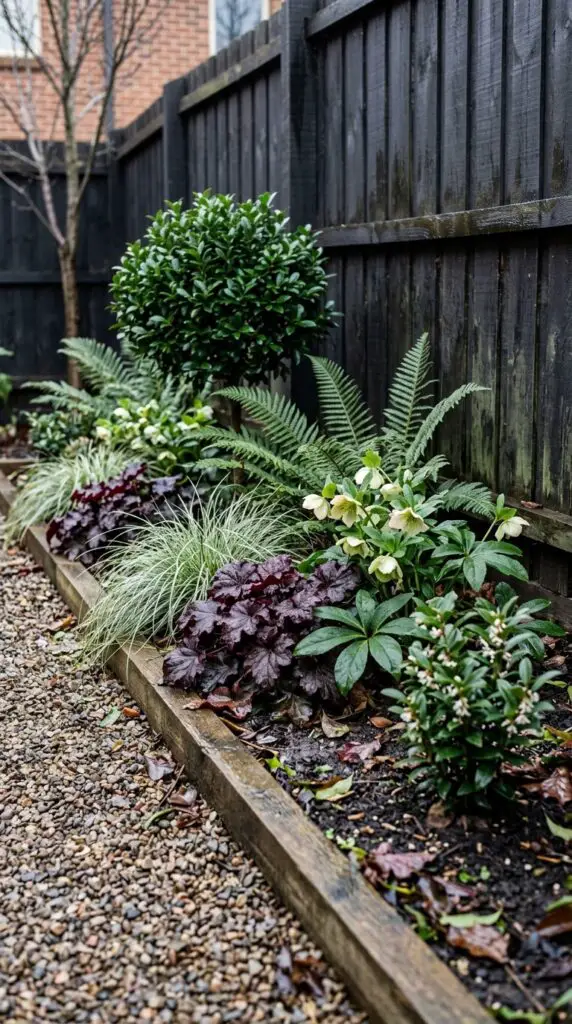
Ferns, heucheras, hellebores and shade-tolerant carex can add different leaf shapes around an evergreen base. Pair broad foliage with fine leaves and matt surfaces with something glossy. Keep the colour range narrow, perhaps deep green, silver-green and one burgundy note. Hellebores can flower in winter or early spring where conditions suit them. Heucheras form low mounds, though some handle winter wet better than others. Ferns vary in hardiness and winter leaf cover, so buy for the site rather than choosing by colour alone.
Use Shade-Tolerant Shrubs Without Losing the Path
A compact shrub can soften a hard boundary, screen a bin area or cover part of a low window. Mature width is the key measurement. Low spreading shrubs often consume more path space than expected, while an upright form may fit a narrow bed with less trouble. Set shrubs back from paving so wet leaves do not brush against legs. Keep thorny plants away from doors and tight passages. In a very small garden, one good shrub may be enough. Give it room instead of fighting its natural shape with constant clipping.
Adapt Small Shaded Courtyard Garden Ideas to Damp Walls
Courtyards can trap cold air and stay damp long after rain. Their walls also dominate the view, so each pot and surface carries more visual weight. Begin with drainage and airflow. Leave a gap between containers and masonry, raise pots above paving and clear fallen leaves before they become a wet mat. Pale finishes can lift the space, but brilliant white often looks stark and shows grime. Warm grey, muted cream, soft stone and weathered terracotta usually sit more comfortably beside winter foliage.
Brighten a Low-Light Courtyard With Reflective Surfaces
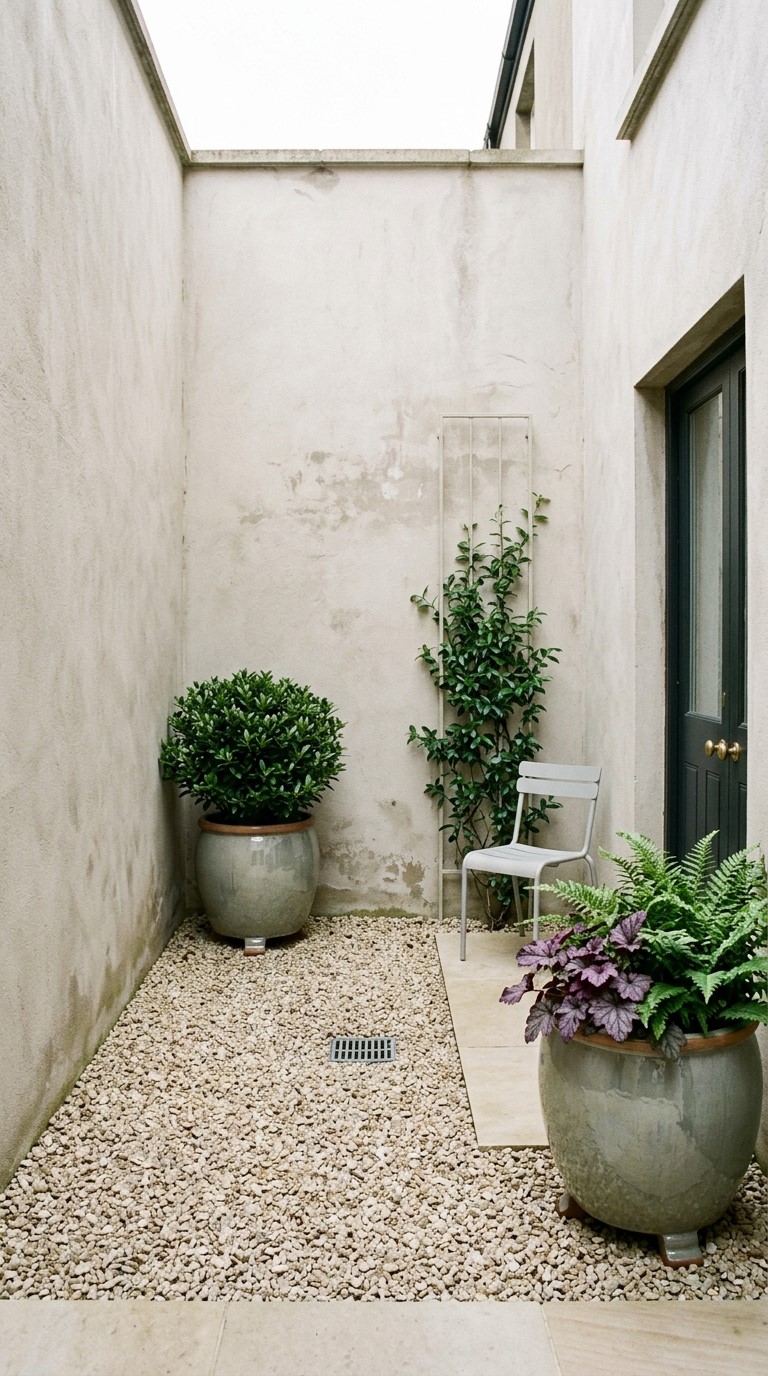
Glazed pots, light gravel and a pale wall can send a little available light through an enclosed garden. Use them in measured amounts, since too many shiny surfaces make a tiny courtyard busy. A single glazed pot in the darkest corner may do more than a row of ornaments. Garden mirrors need careful placement so birds are not drawn toward the reflection and strong sun is not sent into windows. A pale panel or metal trellis can be a safer choice. Cleaning algae from paving and pots can also make the area feel lighter.
Improve Winter Front Garden Ideas for Shade Around Daily Life
A small shaded front garden has to cope with bags, parcels, bins and people arriving in wet weather. Planting should make the entrance feel cared for without slowing any of that down. Begin with two useful areas, perhaps beside the door and near the front boundary, then leave the route between them open. Heavy pots are safer where wind funnels between houses, though they still need drainage and a stable base. Keep foliage clear of house numbers, lights, locks and doorbells, and avoid sharp leaves at hand height.
Frame a Shaded Front Garden With Two Planting Groups
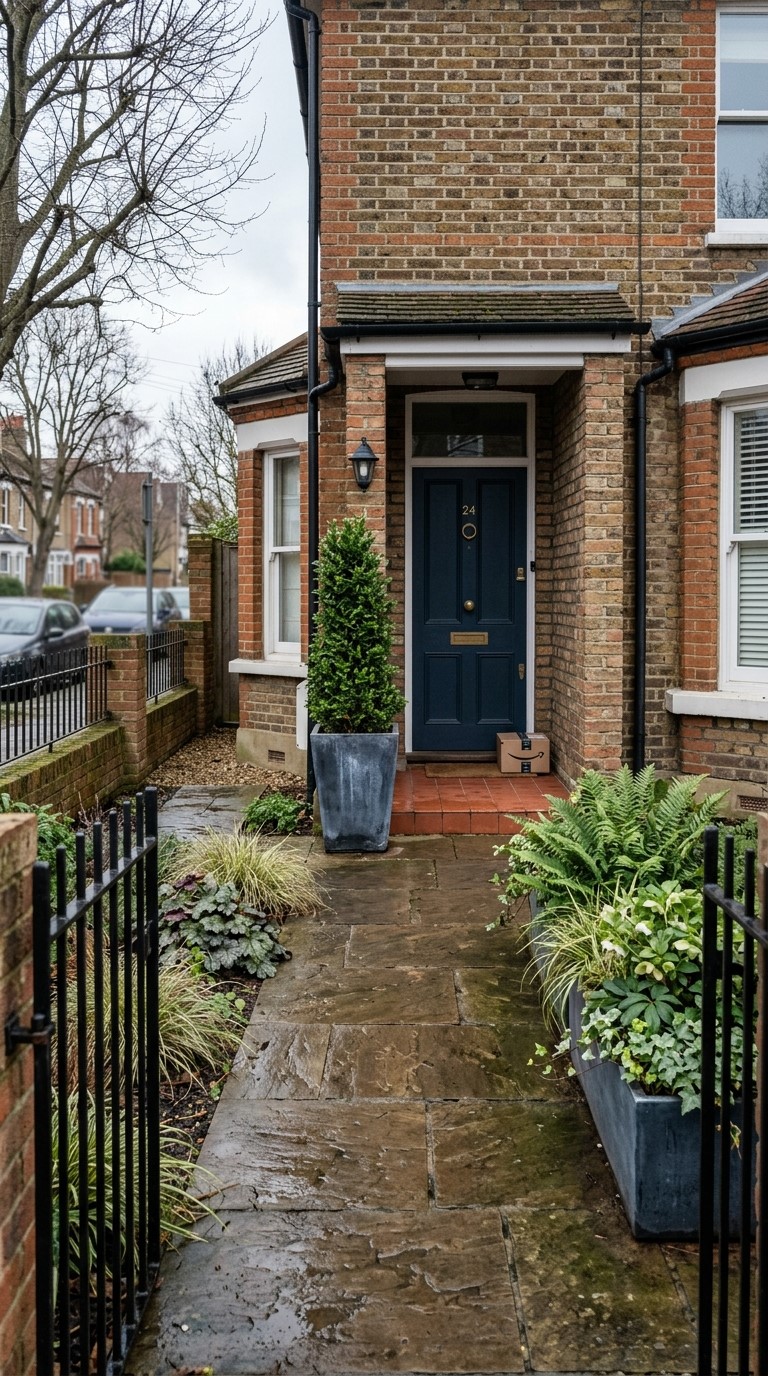
Two planting groups create a simple rhythm without crowding the entrance. They do not need to match. One could be a tall pot beside the door, while the second is a low trough near the path. Repeat one plant or container finish to connect them. Check each spot separately, since a dry porch and an open boundary can have very different conditions. The porch may receive little rain, while the front edge is hit by wind. Water sheltered pots when the compost begins to dry, even during a wet winter.
Choose Low-Light Entrance Plants That Stay Neat
Neat plants keep their foliage away from locks, steps and the main route. Compact evergreen plants, ferns and restrained seasonal pots can work well. Remove dead leaves before they stick to the paving and cut away damaged stems after rough weather. Use seasonal colour as a small accent rather than filling every available pot. A container of cyclamen or hellebores near the door may be enough. In a tiny entrance, every object announces itself, so a few healthy plants and a clear path feel better than a dozen tired containers.
Keep a Low-Maintenance Winter Garden Under Control
Small gardens are quick to tidy, but they also show neglect fast. Set a short winter routine. Clear fallen leaves from drains and plant crowns, check pots after heavy rain and water containers beneath eaves during dry spells. Remove broken stems before they rub against healthy growth. Leave some gaps after summer plants die back. Empty ground gives you access and lets winter forms stand out. Move one pot or trim one crowded edge before buying something new. In a compact garden, taking something away can make the largest difference.
Check Cold-Hardy Potted Plants After Rain and Frost
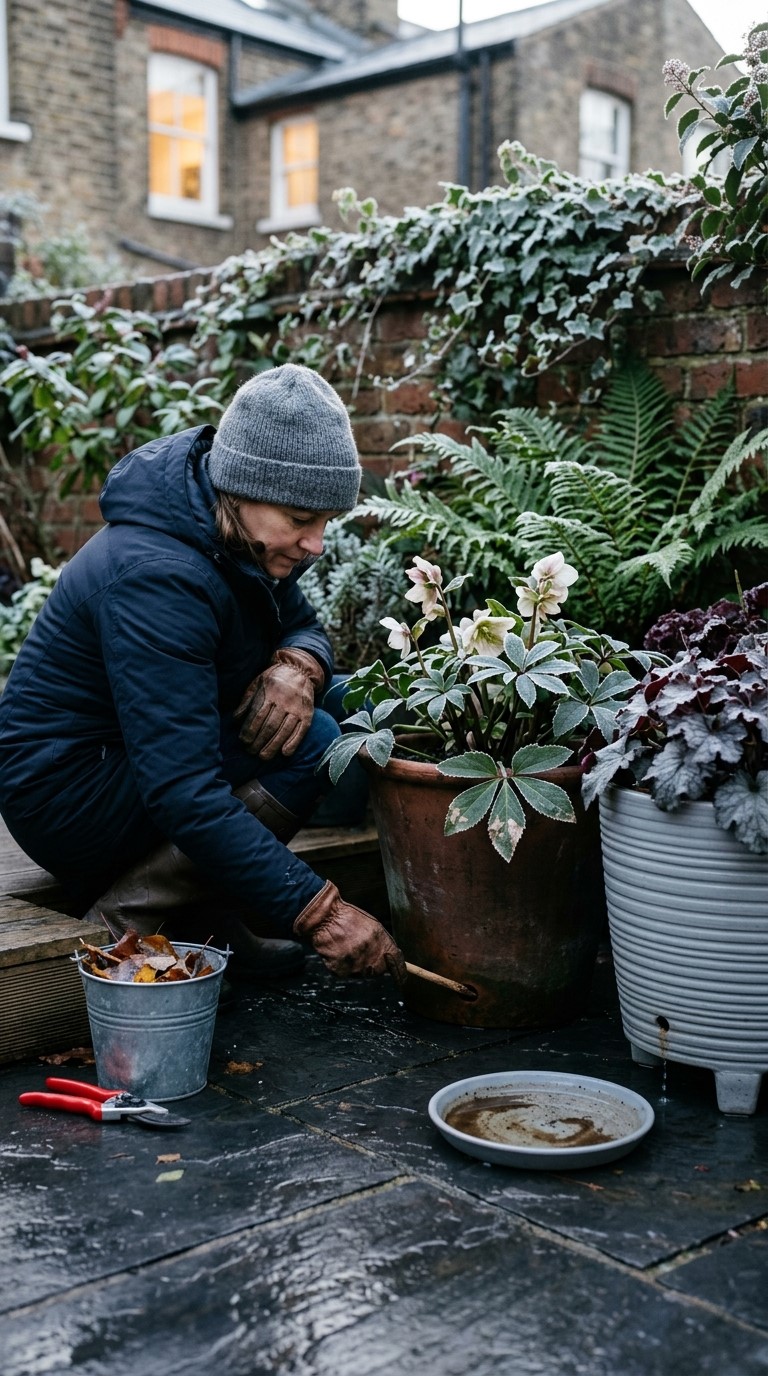
Cold-hardy plants can still fail in soaked compost. Check that water leaves each pot freely and that roots or compacted soil have not blocked the drainage holes. Empty saucers after rain and raise pots slightly above paving. After frost, wait before cutting every damaged leaf, since some top growth may protect the crown during another cold spell. Remove anything soft, rotten or diseased, then let local conditions guide the rest. A sheltered city garden may recover sooner than an exposed suburban plot only a few miles away.
A Winter Garden Worth Looking At
A shaded garden with little space does not need to copy a sunny country plot. It needs a clear route, one strong planting area and a view that gives something back during the months spent indoors. Those choices can change a dark courtyard, narrow side yard or compact suburban garden without forcing more plants into it. Work with shade as a real growing condition. Put dependable foliage in the hardest places and save brighter pockets for plants that need them. Keep containers grouped, paths open and winter care simple. The garden will feel settled rather than squeezed, with enough life to make the kitchen window a better place to pause on a grey morning.
