
Sluggish Flies at Sunny Ohio Windows May Be Cluster Flies That Overwintered in Your Walls
You spot a slow, buzzing fly on a sunny window in the middle of winter and wonder where it came from. In Ohio, one possible answer is the cluster fly, an insect that can spend the cold months tucked inside a building.
These flies are harmless to people, but they can be annoying when they show up in numbers. Knowing what to look for and how to keep them out can save you a lot of swatting.
Are Those Flies Actually Cluster Flies?
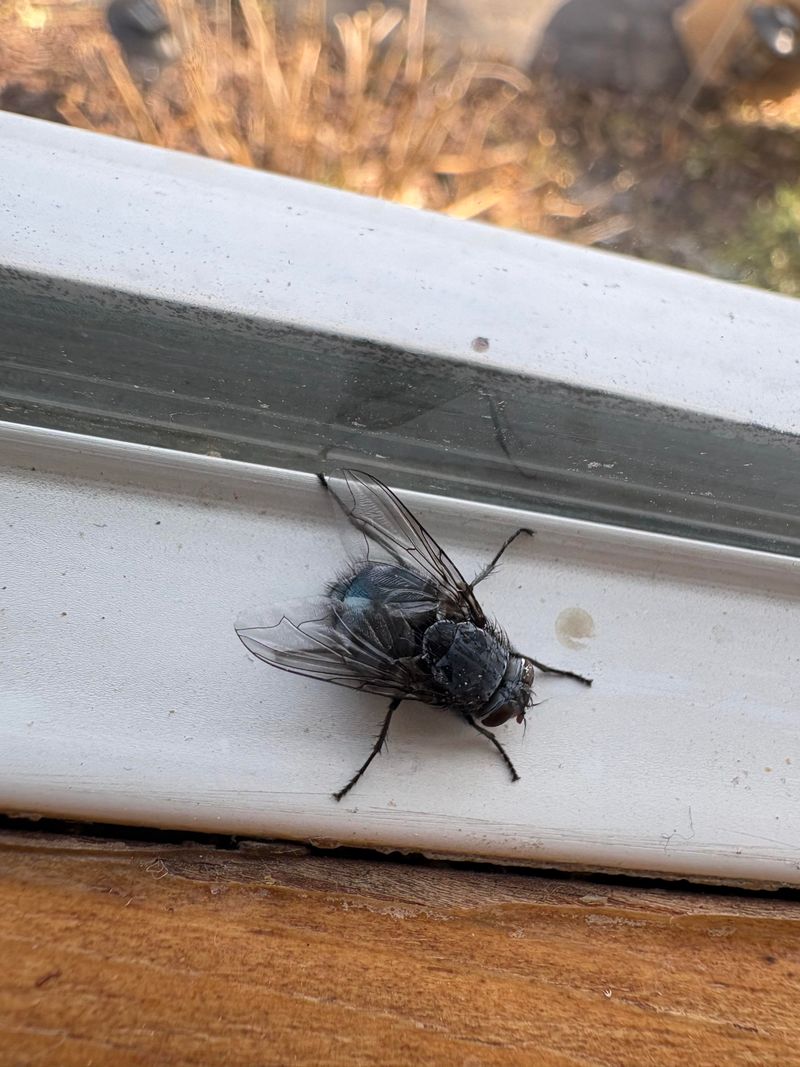
Start with a close look at the fly itself. Cluster flies are generally gray, move sluggishly, and look larger and sturdier than tiny fungus gnats.
Some have short yellow or golden hairs on the thorax, the middle part of the body, according to Utah State Extension. They look a lot like house flies, which is why people often mix them up.
Cluster flies are common across Ohio, and an Ohio-focused Ask Extension response recommends keeping them out of the home as the main strategy. Still, a sunny window and a cold month do not identify a fly on their own.
Plenty of insects end up at windows because they are drawn to light and warmth.
Other flies can also sneak inside for winter shelter. Illinois public health guidance separates cluster flies from face flies, which also move into buildings to wait out the cold.
The two can look alike to a casual observer.
So treat cluster flies as a reasonable possibility, not a settled answer. Note the size, color, and how slowly the fly moves.
If the exact identity matters for deciding on control, collect a specimen and have it confirmed by your county Extension office or a pest professional before you act.
A Wall Void Can Be Winter Shelter
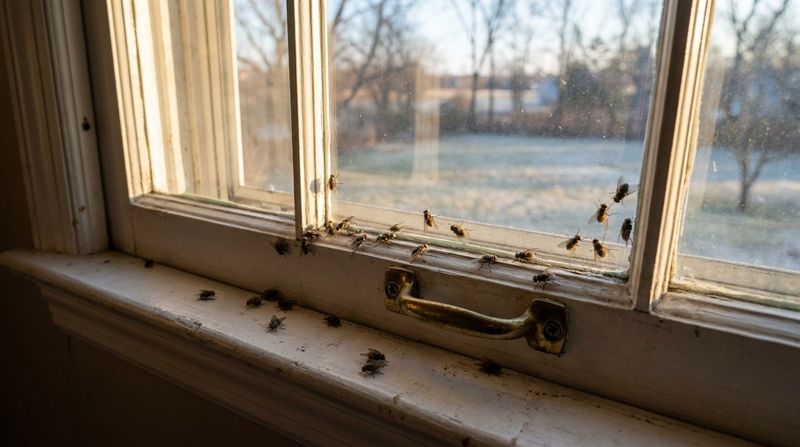
Late summer and fall are when adult cluster flies go looking for a place to wait out the winter. They slip through small exterior gaps and settle into attics, wall voids, and other protected cavities, as described by Colorado State Extension.
Once inside, they stay mostly still through the coldest weeks.
Warmth changes that. University of Maryland Extension reports that cluster flies often become active on warm, sunny winter days.
A wall heated by afternoon sun can wake them, and some then wander out of the cavity into living areas.
That is why a south or west facing window can suddenly collect slow flies in January or March. Once they drift toward the light, they tend to bump against the glass and then crawl or buzz weakly.
This pattern makes cluster flies a plausible explanation, but it does not prove where any single fly came from. Some may have come from an attic, some from a wall void, and some may be another species altogether.
Utah State Extension also lists upper levels and wall voids as typical shelter spots, so those are sensible places to think about when you plan prevention.
Why Houseplants Aren’t the Usual Source for Cluster Flies
Many people blame the nearest houseplant, but that guess does not fit cluster flies. Their larvae develop as parasites of earthworms, not in potting soil or household garbage, according to Utah State Extension.
The adults you see indoors began life outdoors, in lawns and fields.
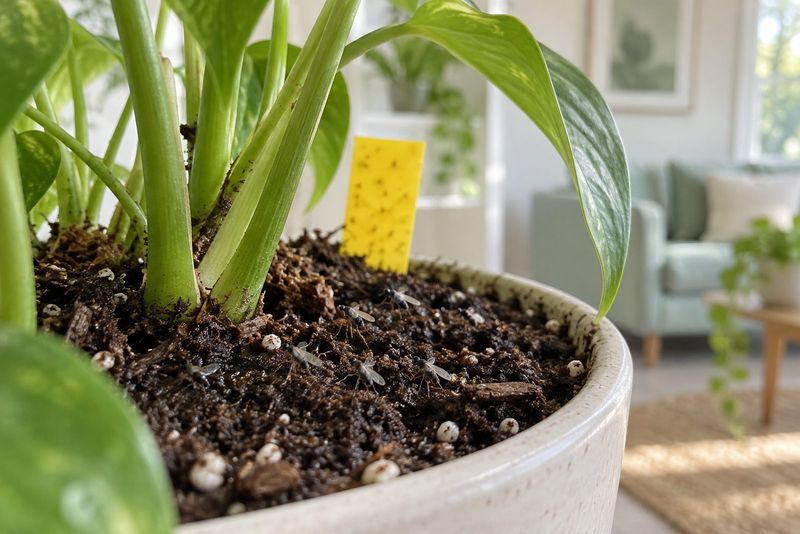
That does not mean plants are never involved with indoor flies. Fungus gnats really do grow up in damp potting soil.
Cornell IPM describes them as about one-eighth inch long, with long legs and antennae, and they are drawn to light, so you may notice them near windows too.
Size is a handy clue. A tiny, delicate fly hovering around a pot is a different story from a stocky gray one crawling on the glass.
The Illinois Department of Public Health also describes cluster flies as larger, housefly-like insects.
Treat these as clues, not a final verdict. If tiny flies keep appearing near constantly wet soil, check the pots.
If large, slow flies show up on sunny walls and glass, a building cavity becomes a more reasonable suspect.
What to Do About Flies Already Indoors
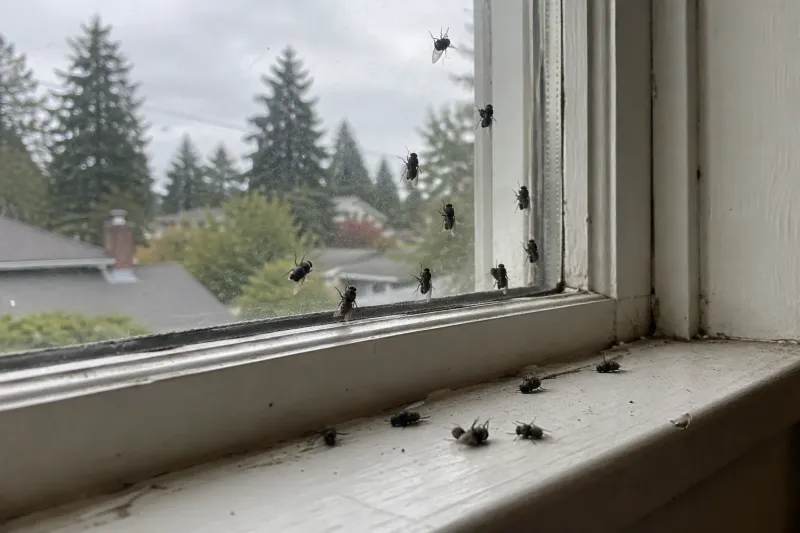
For flies you can see, keep the response simple. Vacuuming or swatting works, and extension guidance from Utah State supports both.
Sluggish flies are easy to catch, so a hose attachment along the window frame can clear a lot of them in minutes.
If more keep showing up, do some detective work before assuming a big hidden population. Confirm what the insect is, since the Illinois guidance notes that look-alikes such as face flies can also overwinter indoors.
Then walk the outside of the house and look for gaps, loose siding, or torn screens where insects could get in.
It can be tempting to set off a fogger, but that is not a dependable fix. Foggers do not reach insects hidden in cracks and wall voids, and the National Pesticide Information Center warns that misuse can create health, pet, fire, and explosion risks.
If you do decide to use any pesticide product, follow the directions on its current label exactly. A pest professional can also help when the problem is persistent.
Seal Entry Gaps Before Fall
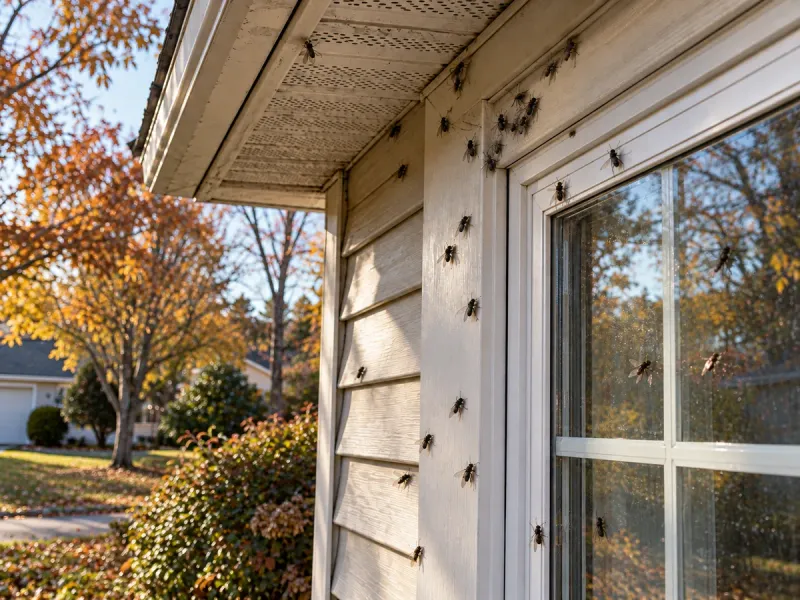
Keeping flies out beats chasing them later. Exclusion means closing the small gaps they use to get in, and University of Maryland Extension recommends doing this work in summer.
For Ohio homes, the sensible goal is to finish before fall entry begins.
Walk the outside of the house and look closely. Check around window and door frames, siding edges, utility lines, and the spot where the roof meets the walls.
Seal suitable cracks with a good exterior caulk or similar material.
Screens matter too. Ohio Ask Extension guidance emphasizes sealing exterior gaps and keeping screens in good repair, so patch tears and fix loose frames.
There is one important limit. Sealing pest gaps is not the same as closing off openings a building needs.
Attic and soffit vents provide ventilation, so cover them with fine screening instead of blocking them. Extension guidance calls for screened vents and intact ventilation alongside sealed entry gaps.
Different regions use different calendar dates, so do not borrow another state’s deadline. Plan around your own house and finish well ahead of the season when flies start looking for shelter.
A Likely Pattern, Not a Certain Diagnosis
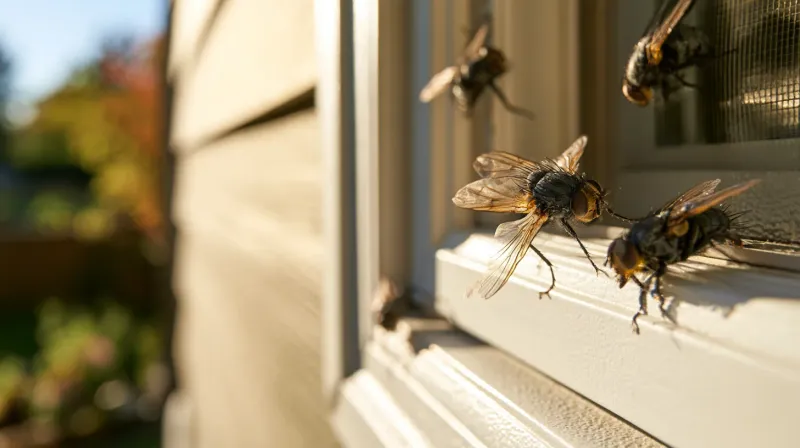
A slow fly on a sunny window may be a cluster fly that overwintered in a wall void or attic, but the window alone cannot confirm that. Look at the insect first, vacuum or swat the ones you see, and then seal suitable gaps and maintain screens without blocking ventilation, as Maryland Extension and Ohio Ask Extension advise.
A fly on the glass is a clue, and the real answer is usually found outside, along the walls.